

 Passport






A Man Called Baraboo
06/02/09 | 43m 54s | Rating: TV-G
Mark Tully, Author From about 1600 through 1850, determined men in bark canoes, known as Voyageurs or "travelers," paddled up the rivers and streams of the Great Lakes watershed hoping to trade a few simple tools and trinkets for thick, valuable beaver skins. Mark Tully gives a first-person multi-media presentation of the fascinating, true story of one of these Voyageurs-- "A Man Called...


Copy and Paste the Following Code to Embed this Video:
A Man Called Baraboo
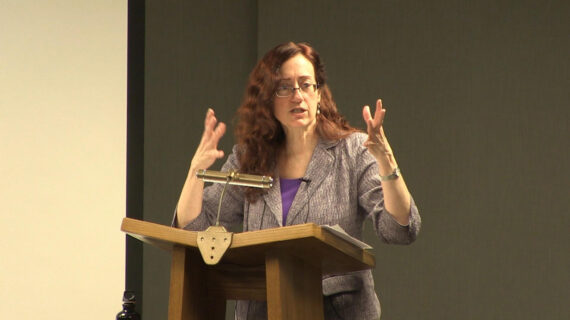
cc >> Okay, good afternoon and welcome to another edition of History Sandwiched In at the Wisconsin Historical Museum. Today, I'm especially happy to be here for this one. What I usually do here at the museum is I take tours of fourth graders and others through the museum. And one thing I do, which really impresses the daylights out of them, is to tell them about the origin of their town's name. They think I know everything. But I look it up. ( laughter ) So I owe a special debt of gratitude to today's speaker, who is Mark Tully. And he has actually helped me out so much by writing a book on the origin of the town and village of Baraboo. In fact, he did so much work on this, it ended up as a book, "A Man Called Baraboo," which you can get, by the way, at our bookstore. I'm sure Mr. Tully would be happy to sign your copy. But also, I'm happy that he came because my favorite part of history is the fur trade. So he's here to talk about the fur trade, and "A Man Called Baraboo." Please welcome to the Wisconsin Historical Museum, Mark Tully. ( applause ) >> Bonjour! ( light laughter ) My my name is Franois Barbeau. My father's name is Jean Barbeau. And he came to Quebec from France in 1686. Now at this time, New France, which central around Quebec, there was a lot of threats from the English and New England, and from the Dutch in New Amsterdam. And so the French government was sending a lot of company-- "French Marines," to garrison the various posts in New France. And my father came over as one of these soldiers. There were more militia. They were called the Companies of Marine because the Navy paid their salary. And as part of his pay at the end of his term of service, he was given some land and he took up farming. And I was born in a little town called Levis, just across from Quebec City, here. I was born in 1698. I grew up raising pigs and chickens. I had a total of 16 siblings. It seemed like my mother was always pregnant. Most of them didn't survive infancy. We had about four that survived to adulthood out of the 16, which was very common back then. Of course, as we took our produce back and forth to the great city of Quebec, I saw the voyageurs and their colorful outfits telling their tall tales of being back on the frontier. But at that time, I was still young, and my life of adventure would have to wait a bit. So I took up farming when I reached my 20s, like my father had before me. And probably in Levis. I met a nice girl, Therese. We married and had two wonderful children, Pierre and Therese. Now, my dear wife died shortly after the birth of our daughter, Therese. And it was a very sad day indeed. The complications of childbirth. In those days, it could be very serious. But you don't want to hear about that. You want to hear about my adventures. My whole life, there were wars. All I can remember, we were always at war. In France. In Europe. A constant string of wars. And in 1747, we were in the middle of a war called the War of Austrian Succession. The English call it King George's War. And I found myself at a little place called Michlimackinac, right here, 700 miles from my home in Quebec. It was the end of the earth. It was a fairly substantial post. It was surrounded by a log fort. And with lots of row houses, lots of traders, lots of military people there to protect the straits. The straits were only a few miles wide, and it was a major point for fur trades to come and go, and for Indian allies, and if anyone wanted to launch a military expedition into the interior, that would be a good place to try to defend, because it was so narrow, right there. As I said, there were quite a few row houses, several hundred inhabitants, including Mr. Charles de Langlade, that you may be familiar with. He lived there at the same time that I was present. And at the end of my term of service, after King George's War in 1748, as part of my pay, the French government was offering trade licenses to men who had served in the military. And I was fortunate enough to get one of those. I had to send to Montreal for it. It cost me 600 livres, which translates more or less into $6,000. That got me a canoe from Montreal, a canoe du nord. That's a 20-foot canoe. It could hold two tons of trade goods. It was fully equipped with everything I needed to engage in the trade. And I had six men that agreed to sign on and go with me on my adventure into the upper Fox River. Their names were Dominique Bordeaux, Louis Joseph DuSault, Antoine Leonard, Pierre Mineronne, Jean Lavalet, who had the bow position, and Louis Lalande had the stern. The senior man takes the stern. That was Louis. And the second senior man, which was Jean, takes the front of the boat. They're in charge of making sure that we're on the right course and maintaining the boat. We set out in September of 1749. With fair weather, we could make about 25 miles a day. If the weather was rough, we could maybe make four miles a day. The first stretch we went across was the Straits of Mackinac, which is a very treacherous stretch of water. The two lakes come together. Weather patterns change very quickly. In the canoe, you do not want to be caught out in open water during a storm. They are paper thin, and very, very fragile. The support of the water is what really keeps them floating. They couldn't possibly hold even a man's weight if they were up on dry land. That would be Louis Lalande at the back. He's in charge. He's the one that, even though I'm the bourgeois, I am the boss, he's in charge of the boat. He's in charge of saying when we start and when we stop. Whenever we stop, if we have to go on shore, we can never drag that canoe up on shore, it's too fragile. So we have to jump in the water, take everything out of the canoe, and then lift it up and carry it on shore. So we don't stop very often. Many times, we will just be paddling along and we'll take a tobacco break. We call that a pipe. We have a pipe about every hour or two. And usually, Louis will just have us double our strokes for a while, actually, have the men double their strokes. I don't do any of the paddling. I'm the bourgeois. And then we will just coast for a little while, while the men quickly get a few puffs on their pipes before we continue on. If we need to go ashore without unloading the canoe, Louis and Jean will jump out, go on shore and fell a few small trees. Then they will lay them out over the water so that the branches of the tree hold the canoe in position offshore, so it doesn't wash ashore and get broken on the rocks. If the weather agrees, we have sails on the canoe, which is a great relief to the men. The paddles are only about five inches wide. That's to spare the men of fatigue. We'd rather make slow steady progress than not make any progress at all because everyone's muscles are too sore. So when the wind is in an appropriate direction, we can put up the sails. If the weather is bad, we have what we call a degrade. That's where we unload the canoe, bring it up on shore and pitch a camp. We don't want to be on the water if there's anything more than about two-foot-high waves. Because just the wave action as that 20-foot-long canoe breaks through the waves, can cause it to break its spine. We'd also pull ashore at night and set a fire. We would hold the canoe up against the fire and look for light coming through the hull, so we could fix any holes, tears or cracks in the caulking. By mid-October, we'd made it to the top of Le Bay, to a place called Fort St. Franois, right here. And there was a small post with some French traders living there at the time. So we probably stayed a few days to rest and to catch up on any news, and do a little bit of trading with some of the Indians that might have been living in the area. That was about half-way to where we were going. As the crow flies, it looks like it's two-thirds, substantially more than half-way. But the last stretch of our journey would be up the Fox River, which is a very serpentine route. It keeps having switchbacks, and it takes forever. It's very easy to lose our way. The first major obstacle we came to on our whole journey were these rapids. They're not very deep rapids. They're not very treacherous. So we could just lighten the load on the canoe by taking a few things out and the men could go over the side and pull it up through the rapids, as these men are doing here. But that was the first major obstacle that we encountered along our way. After almost a month of paddling, this was my view, for almost a month. I'm sitting in the middle. That's Jean's back. I've got every inch memorized. So after about a month of paddling, we're running low on supplies. We've been subsisting mostly on pemmikan, which is dried meat suspended in fat, and this lovely biscuit. I'd throw one of these out so you could look at it, but I'd be afraid of killing someone. They are hard as rocks. And so, this is what we've been living on, besides what we can trade with the Indians. We also may do a little hunting along the way, if we see waterfowl, in particular. But we're not going to do excursions back into the woods chasing after deer and moose. If there happens to be some geese or ducks in a marshy area up ahead, we may try to sneak up and hunt some of them. But most of our food, we're going to trade with the Indians. After a full month, we finally make it to the portage. There, we rest for a few days. We'd haul everything across. It's one of the shortest portages in the fur trade system. You can see the dotted lines here of all the various fur trade routes. There's also a portage down here by what you call Chicago. And there's another one that's not listed here. But there's actually a portage up into here that would get you into the Mississippi River. The portage with the Wisconsin River was the shortest one. That's the one we decided to take. And I didn't have a destination really in mind. I might have heard some rumors while we were at Fort St. Franois about a wonderful little stream just below the portage. Or I may have gotten word from Charles de Langlad at Michlimackinac. But at any rate, after we crossed the portage, we paddled downstream. And the first stream we came to on the west bank, we decided to stop. It was the perfect place. It had a south facing exposure. It was a wetland. There was a bit of a marsh, so there was a lot of low lumber and trees that we could harvest to build our post. And most importantly, because of the series of wars that have been going on, the Indians hadn't had any trade goods in almost a decade. So they're desperate to trade with us. So it was a perfect place for setting up the trade. Our post was very simple. There are no nails used in its construction. It is all lashed together. We sink posts in the four corners, two parallel posts in each corner, and then just stacked up the logs in between them and lashed it all together. On the ends, we stood posts up vertically in a shallow trench and backfilled that. And over the top, we lashed rafters covered with cedar or elm bark. And that's all held down by poles lashed into place. Even our fireplace is made out of sticks, lined with mud to help keep it from catching fire. The palisade, we just finished a war that involved the Indians. There may still be hostile nations in the area. We'd dig a shallow trench all the way around the post, stand upright posts, and then you'll note all the cord wood to get us through the winter is stacked against the base of the walls. This serves two purposes. First of all, it helps reinforce the bottom of the wall so that it can't be forced over. And also, in the event of an attack, it forms a firing step, so we can climb up on the wood and be able to shoot at our antagonists. It's a modest post. No real door to it. But it kept the elements off, and it served its purpose. Why did we go all this way? This creature here. The beaver. The beaver is not the most valuable fur, but it was the most abundant. There were several other animals that were much more valuable. But the beaver was used for making hats. Hats were all the rage in Europe. It's not the long soft hairs. Those all get shaved off, these beautiful soft hairs. They all get pulled off. It's the downy underfur that makes a very thick, dense, waterproof fur. Very fashionable. So we are primarily after the beaver. Bear skins, deer skins, racoon, elk skins were all more valuable than the beaver skins. But the beaver lived in large colonies, so it was much easier to harvest large quantities of them. And they're very much in demand. We'd have no problem finding a buyer for our furs. You can see on this that beavers are about in the middle of the list as far as value. Three livres in modern money is about $30 a piece. And that's about what a raw beaver fur goes for today, too. Of course, we didn't do any of the hunting ourselves. We stayed in our little trading post. The hunting was left to the Native Americans. They wanted our trade goods, so they would go out. In the winter, they would split up into small family groups. There was a large Sauki village just downstream from where we were. They would split up and go off into what would become known as the Barbeau Hills. And they would hunt the beaver and bring them down to the post. Word spread of our presences very quickly, because they hadn't had trade goods in quite some time. So they would've been anxious to trade. And they would've been bringing in furs almost immediately, probably before we had the post done. We stayed all winter. We'd come out in the winter for a few reasons. You saw in the previous image that the Native Americans could walk right out on the ice to harvest the beaver. They were in their little huts in the impounds. Also, that's when the furs are the thickest, so that's when it's the best time to collect the furs. In the spring, we had to wait till all the ice was out. We couldn't take any chances, even though at our post, the ice might be gone, we have to go north, and there might still be ice. So we'd usually wait till May. Because ice like this would just shred our canoe. And if we got into an area where it was along the shoreline, we wouldn't be able to pull ashore. So we had to wait until the ice was completely out. We went back to Michlimackinac with our furs. Hopefully we had parceled out all of our trade goods. And then we would get reimbursed for our furs. The agents in Montreal would then buy our furs. The people we were trading with were mostly the Sauki and the Renards, the Sauk and the Fox Indians. And you can see even here, this image is from about 100 years after they were trading with me. They're wearing woolen blankets, where they used to be wearing fur coats. They've become completely dependant on the trade goods. Even as early as 1650, some of the tribal elders were complaining that the younger generation had lost contact with the old ways. They could no longer make bows and arrows. They were dependant on the European guns. They were dependant on the European knives. They worked very well for us as traders. A few examples I can show you. This is a flint knife. It's a skinning knife that was found in Coon Valley, Wisconsin. Now, you can imagine trying to butcher. All of you have done butchering, I'm sure. So you can imagine what it'd be like to butcher with a little piece of flint that you hold in your hand. That fits perfectly right in here, and you scrape with it. And you can imagine what a Native American would think when we traded him one of these. It's just a cheap, inexpensive sheet metal knife that had one edge sharpened. A wooden handle. A few rivets holding it together. But it was so much sharper and so much easier to use that what he was used to, that he would give us several beaver skins for one of these. An axe. This is a stone axe. A few hundred years ago, it's what the Indian people were using. This one was probably of Potawatomi origins. You can imagine trying to cut down a tree with something like that. You didn't really cut down the tree. You pounded it into submission. ( laughter ) You could imagine the value that something like this might have. It's just a short little steel trade axe. This is made of iron, which is much less expensive, and the steel is set into the bit, so that we can keep the cost down. But you can imagine how much value the Native Americans might place on something like this. I mentioned guns. This is very typical of the type of gun we were trading with the Indians. It's a smooth bore. It's about a 20-gauge or a.62 caliber, a flint lock firing mechanism. You put powder in the pan, close it down, load all the parts you need down the barrel. The advantage of a smooth bore, you can put shot, you can put round ball, you could put broken glass, you could put gravel. Anything that goes down, can be made into a projectile. Then it's all packed down. And you're ready to fire. The beautiful thing about this is the Indians are not only dependant on us for the gun, but they're also dependant on us for the powder. It's ready to fire. You simply cock it back all the way. You pull the trigger, you get a shower of sparks that ignites the power in the pan. There's a small hole in the barrel, like a cannon. It lights the main charge and the charge comes out. The better quality guns fire almost instantaneously, no different from one of your modern firearms. But the trade guns were often inferior. There's many, many instances of these guns blowing up in the user's face, or parts just falling off. And of course, if you're missing the cock or the pan, then what you have is a very expensive club. ( laughter ) Starting fires. A hundred years ago, in the 1650s, when an Indian wanted to start a fire, he took two sticks and he'd rub one between his hand and drill it into a piece of cedar or some other dry wood to try to get plant fibers, sawdust, or other wood shavings to ignite. You can imagine when we introduced the flint and steel, how much more convenient it was to start fires. Just strike a spark immediately. The rest of the process is almost identical. We take a piece of plant fiber-- And in this case, I have what we call charcloth. It's a little piece of cloth that has been put into a container and burned, a sealed container. And because fire needs fuel, heat and air, we take away the air and end up with little sheets of charcoal. Now, the Indians would probably use the cupped fungus from the side of a tree. Yes sir? >> In the 21st century, we have things that protect us from the smoke and the fire. ( laughter ) >> Is there one nearby? ( laughter ) >> Let's find out! >> I have done this. >> Very well, we will use care, thank you, sir. Just a few strikes. Oops. That was my good flint, too. A few strikes and you make a mess. A few strikes, and in theory, you would... ( laughter ) It's actually catching here. Normally, you would catch a spark on the charcloth and then blow on it and use this to light the fire. But it's being obstinate. But you can see how with one of these drills, it can take 20 or 30 minutes to start a fire. The fastest I've ever seen anyone start a foot-high flame that burned through a piece of string, two sticks in the ground and a piece of string one foot off the ground, starting with a flint and steel, getting the flame high enough to burn through that string. The fastest I've seen it done is 20 seconds. The longest I've seen it done is 20 minutes. ( laughter ) But you can see how quick it was, even if it's damp, the flint will still spark, whereas if your wood gets damp you go cold and hungry. Ah, when the Indians wanted to boil water, they would use a bark vessel, tied up at the corners with wattup. Full of water. They'd put stones in the fire, and when they'd get good and hot, you'd pull them out with a stick or a piece of bark, lift them quickly and drop them into the water. And if you do that enough times, it comes to a boil. Now, men in particular, imagine what your little woman would think if you came home with one of these and said, "Here, honey." ( laughter ) So you could see how very quickly the French trade goods, and the English. The English actually offered better trade goods out of the Hudson Bay. But you can see how very quickly the old ways would be cast aside and the new technology could very quickly and easily take over. That is all I have for you at the moment. And I'd be happy to answer any questions that you may have. Yes? >> I heard that voyageurs... ( inaudible ) >> Yeah, I don't know that that's true. I think it's kind of a folklore sort of thing. You've got to remember that people didn't have recreation time back then, and didn't learn how to swim. I mean, it's just-- You didn't-- There's issues with hygiene also, it's like, oh, they didn't bathe. Well, you couldn't bathe. Bathing didn't become a regular thing until central heating was invented. Because you take off all your clothes and go in the river. It's not heated. And you're going to get out, and the wind blows, and you're going to be cold. >> What if the canoe tips over? >> You're pretty much done anyway, so. It's going to be cold. You're wearing all your clothes. You know, I've heard those sorts of things. I haven't been able to verify any of that. But I think it's kind of a folklore. They also said they all had skinny little waists and really big shoulders in order to fit into these canoes. Well, if you're doing nothing but this all day, for eight hours a day, yeah, you're going to be walking around like this, too. It wasn't that they were genetically built that way, they just did a lot of paddling. Any more questions? Yes, ma'am. >> Can you say something about the French trading versus the British trading in this area. This was all French trading that came into Wisconsin? >> Well, Hudson Bay was a huge influence on the fur trade. The British goods were much higher quality. The French were producing junk and they were cheating on it, as well, like the fire steel that wasn't working for me. They would sometimes-- I've got one in the case over there. These would sometimes have two pieces to them. And the French would cut them in half and sell them as two, and things like that. The British trade goods out of Hudson Bay were fabulous, much higher quality. The blankets in particular were highly sought after. And the Fox Indians in particular, and some of the Midwestern tribes, would actually travel all the way to Hudson Bay to trade rather than trade locally. And the first two Fox wars, there were two wars between the French and the Fox Indians in the 1730s, somewhere right in there. And those were pretty much fought with the French because the French were mad because they were trading with the British, and they were trying to prevent them from doing that. So the Hudson Bay was a major concern for the French. >> The French in Wisconsin, were they related to those up on La Pointe and in Bayfield? There was a trading area there. Were the companies that traded in this area all part of a consortium of some kind? >> The French system was a little different from the British system. It was all individual licenses. And you basically got a license and fended for yourself, do your own thing. The English system-- The Indians, some authorities suggest that the Indians actually preferred the English system, because they would come in, establish a company, set up a fort, and stay there. So they knew exactly where the English were. They knew where to get their stuff. And the French tended to kind of move around and set up these little posts, mingle with the women and that sort of stuff. So according to some authorities, the English system was actually preferred by the Native Americans, because they did things a little differently. The English government also put little stricter controls on it than the French government. The French, you had these "couriers du bois," runners of the woods, that were kind of pirates. And they were doing fur trading and things like that without a proper license. And then of course, there was the Mettis culture, which was the cross between French and the Indians. They were living in the Indian villages and things like that. So the French kind of infused themselves more into the Indian culture than the British did. The British kind of came and said, "We're the British," boom. This is our boundary, as the British do. And they pretty much stayed put in their forts. Peter? >> Was Prairie du Chien at about the same time, or was it before? There were posts there. >> There were some store houses there. There were posts there. I'm thinking that the fort really got established, it was a little bit later, 1770s. Franois Barbeau was here in 1749. One of the advantages of all these little wars that were going on, is that this area had already been hunted out by about 1720. I mean, the beaver were gone. And those couple of Fox wars, and those bled right into King George's War, nobody was coming this way. There was no trading going on. It allowed the beaver population to rebound. So for that chunk of the early first quarter of the 18th century, more or less, there wasn't a whole lot of trading going on. You had some fellows in the 1600s, all up the Mississippi, and Prairie du Chien. Then, there's nothing for a while. Even Franois Barbeau, when he went to Fort St. Franois and Le Bay, that was all rundown. That post had just been abandoned and left for 20 or 30 years. And they just recently reoccupied it. So the fur trade in Wisconsin, for that about 20-year period before 1749 was almost non-existent. Paul? >> Can you tell us something about what you're wearing? >> I would love to. Can you fill us in on the French names? My French pronunciation is horrible. ( speaking French ) This is the voyageur sash. It's his pockets. Normally, period clothing doesn't. They'll have pocket flaps, but they don't actually have pockets. And part of the reason why is that when you're moving around and you're bending and stuff, things start poking you and getting in the way. So the sash is where he keeps his knife. He would have his cup in there. They probably wear it a little higher. We're used to wearing things kind of low, because that's where we wear our jeans and stuff. But if you keep it high, it keeps everything out of the way. You have full freedom of movement without things moving around and whacking together. ( speaking French ) These are Indian boots. They're essentially moccasins with a built-in elk hide gator wrapped up. These are lined with sheep's wool, which is extremely warm. Thanks for asking. And they would've lined them with leaves, or animal fur, or whatever. I've done winter trekking in these, and they're better than any modern boots you can get your mitts on. They're very flexible. You've got free movement. The only trick is that they are extremely hazardous on grass and stuff. When they get a little bit damp, they tend to slip really bad. I'm wearing breeches, which are what, culottes in French. They probably would've gone with the more traditional Indian breech cloth, just a cloth up between your legs, and gone bare-legged, especially when they're paddling the canoe, because they're in and out of the water all the time. I don't know how these guys did it, because you're talking fall and spring, and literally, every 20 minutes. Just when you're getting dried off, it's like, back over the side. So they probably would've gone bare-legged when they were paddling. I've got a vest underneath here. Oh, sorry, I hit the microphone. And then they probably would've worn a woolen, what they call a chemise. It's a light flannel jacket. It's a wool flannel, not the nice soft cotton flannel. It's kind of a coarse woven wool. And then, ( speaking French ), or a jacket over that. And I didn't bring my blanket coat, because I'm wearing enough layers. But they would've had a big heavy coat over the top of this made out of a blanket. And I've done winter trekking. In fact, there's a picture of me on the back of the book that I don't have a copy of handy in all my garb in northern Wisconsin. And we found, as long as you're keeping active on those snow shoes, you're burning up. But as soon as you stop, you start to get a chill. So the trick is opening and closing layers all the time, much as it is now. A lot of the modern fabrics tend to wick and allow your body to breathe, so you don't have that overheating and then extreme cool-down. The miracle fiber of the 18th century was wool. It's the only natural fiber that will keep you warm when it's wet. And so they were wearing, everything was in wool. And we all go, ooh, itchy. But they were tougher than we are so they could do it. >> Are there remnants of the trading posts still today, or all those all gone? >> There are some traces of a post, which was late 17th century, down near Trempeleau State Park. Posts like this weren't meant to last more than a winter or two. If they would've been attacked by an organized force, they were done for. The palisade was really just to act as a deterrent, you know, like a barbed wire fence, or whatever, and to keep wild animals out, and keep them from coming after their food and things like that. If there's any remnants of this post out there, his post would've been right at the mouth of the Baraboo River. There's a bit of a bluff. It's a perfect spot. The land breaks away. It's much like it is now. The Leopold Reserve is all right there on the Interstate, below Cascade Mountain. That's basically was Franois Barbeau's backyard, if you're ever traveling up and down the Interstate. Right across from Cascade Mountain, this big swamp has not changed in 200 years. >> A permanent settlement? >> The largers posts? Well, like the house down at Prairie du Chien is a good example, that big mansion that he built. Those were, really, the English posts tended to be larger. A good example would be Fort William in Canada. They've reconstructed that. It's just huge. I mean, it's absolutely huge. And you know, they had everything there. They had blacksmiths. They had all the crafts. It was a self-contained village. Michlimackinac, the one that I pictured earlier, I'm not sure how many acres that is, but we look at it and think it's teeny. To them, it was huge. It was several hundred people all living inside that thing. And that would be a more typical sized permanent post. Fort St. Franois in Green Bay was probably smaller than that. And there were lots of these little, literally, a cabin the size of this stage with a palisade around it, dotted all over the upper Midwest. And they'd use them for a season and let them fall apart. There was a question over here. >> Is that the one in Mackinac City? >> Yes, not on the island. It's right at the foot of the bridge. They're probably opening up for their summer season right about now. I highly recommend it. They've got excellent interpreters. It's amazing. They've done all archaeological investigations there. We were talking to them. The first digs they did in the 1950s, they literally just took a backhoe, dug up a bunch of dirt and dumped it through a sieve and saw what they got. That was archaeology back then. And they were using local prison labor, because it was cheap. And so now, they have students come up and do all the digs and things. And they're really taking their time. I was asking the guy, why. And he says, well, you know, think about it. In 50 years, look how far archaeology has come. This is in another 50 years, we probably won't even have to dig the ground. You'll be able to go along with seismic whatever and get three-dimensional models of objects. So they're going at it slowly. It's still archaeologically sensitive, and they're still coming up with absolutely wonderful things. So if you get a chance, it's a great family vacation. It's only about an eight-hour drive. Beautifully scenic, you follow Highway 1, I think, all the way up over the U.P. And it's great. You see a lot of the scenery has not changed. You get these, the water coming right up the bluffs, and things, and the woods going right down to the lake. It's absolutely gorgeous scenery. I highly recommend that. Yes? >> That crate, is that an accurate representation? >> More or less. About that size, maybe a little smaller. Each person in the canoe is responsible for two of them. And they supposedly weighed about 90 pounds a piece. So you'd take your bale, take it the length of the portage, come back and get your second one, and take it back down. Now, 90 pounds. These guys were shorter than I am, and of course, they were a little bit stockier. Well, I've got my stockiness in a different area. They were kind of muscular guys. So they could heft that on their back and run it across the portage pretty quickly. The biggest injuries of the voyageurs were twisted ankles and things from stepping on a rock in the water wrong, or tripping over roots and things like that along the path, and then ruptures from hefting those bales all the time and running up and down, taking them across the portages. But it's about the right size. You get two of those abreast in a canoe that's 20 feet long. And well, you've got six guys. That'd be 12 bales like that, plus each man would have a little bag of his own personal gear. Peter, you had another one? >> One or two questions. How much of the trade goods was booze? And what were some of the other items? What was the number one trade good? >> Yeah, I didn't get into that because it's kind of a touchy subject. Well, apparently, and I'm not a doctor, but my understanding is that the Native American metabolism works differently with alcohol. They become addicted to it really quick. And so, booze was extremely popular as a trade good. A lot of deals were made when the Indians were good and drunk. And that's well documented. They would get into fights. There would be a lot of trader's lives were risked, as well as a lot of stories about drunk Indians laying around the trade post and all of a sudden one of them goes nuts and pulls out a knife and starts slashing people. It was pretty touchy. And the traders used it to their advantage. And you know, would use alcohol for treaties, and for trade, and just for anything they could, because it was real easy to manipulate the Indians with it. Yes ma'am? >> Did they ever have problems with the voyageurs drinking too much? >> Each voyageur had a certain ration. And they would sometimes gamble for rations and things like that, so yeah, they could get good and drunk as well. But Paul, you had something to add? >> It's in several places, at least during the English period, with the Bourgeois, the fact that the man who ran the post who kept their notes. And I've seen it several times, I'll cite -- who says, "I'd rather deal with ten drunk Indians than one drunk Canadian." ( several people talking ) >> Sir? >> Was this area of the fort or where the little post was set up, was it continuously inhabited then, or when the fur trade died out, it sort of died out for a while, then when farmers came in then it kind of came back? >> This post pretty much just rotted away. They used it two years. He was there in 1749. He was there in 1754. He got another trade license about five years later. And as far as I could tell, used the same spot. Now, Judge Doty, who was a prominent figure in Wisconsin history in the 1830s, mentions going between Green Bay and Madison by canoe. And he specifically says he went past the remains of Baraboo's post, in like 1832. So there were probably a couple of logs still sticking up. But it was a shack. Probably, my illustration over-glorified it. It was probably small. The whole post was probably the size of a two-car garage. So there wasn't much there. And I'm sure that when they were getting ready to head back to Michlimackinac, if they're running low on fire wood, why go cut more trees, we'll just take some of the palisades, or whatever. They really weren't meant to last. They were meant to keep them sheltered for the winter. And that was pretty much it. And you know, even if you did an archaeological investigation of the site, the chances of finding anything, because there had been such a small footprint. They basically just scrape a trench and stand the palisades up and kind of backfill it and kind of hope that they stay standing. It wasn't like they had an auger and dug down four feet, or anything. So you might find some staining that's more or less in a symmetrical pattern, and that's about it. >> The name stayed, and people kind of identified that spot with the name. But really, nobody was living there for many, many years. And when people started moving in, they kind of held on to that. >> Right, and the name changed a lot over time. I mention that in the book. The Baraboo River was called "Ma-hahl-nook," for a while. It was a Winnebago word. It was called the River Belle Chasse. It was called Bonibau's Creek. And there are a lot of stories, when I was doing the research, there were 30-some-odd different stories of how it got its name. It also supposedly was named because the catfish liked to breed at the mouth of the river, and catfish were known as "barbu," which means bearded. Franois Barbeau's name translates in English as Frank Beard. So you know, that's one story. There were 30-some-odd different stories I tracked down. Now, most of the ones involving voyageurs date from the 1830s. And this was the earliest mention I found to a voyageur with that name being in that area, and the earliest reference I found to it being called Barbeau's River was in 1766. So, just change. And it got corrupted. There's six different spellings for the name, Barbeau, as well. And of course, now it's been corrupted to Baraboo. But in the period, the reason I stuck with "Barbeau" is because most of the genealogical records had it that way. So I thought if anyone wanted to do any more research, or try to chase the genealogy, it was easier for them to know they had the right guy if I stuck with that spelling. But it was even "Baribault," it was spelled. And this was on official documents. So it was just all phonetic. Nothing was standardized until the mid-18th century. Other questions? >> Where did his children settle? >> There's actually several Baraboo families in Canada. And I was fortunate enough, when I did a lecture for the Sauk County Historical Society in Baraboo, a couple came in who are direct descendants of Franois Barbeau's brother. And I think his name was is Jean Barbeau. And I pulled out the family tree, and they just traced it right down and went, yep, there we are. So that was interesting. It's not an uncommon name in French Canada. Yeah, there are still-- There's another Baraboo River, or something like that over in Michigan, as well, spelled differently. So, they were around. Additional questions? Wonderful. Well, thank you very much. ( applause ) I do have some artifacts here.
Search University Place Episodes
Related Stories from PBS Wisconsin's Blog




Donate to sign up. Activate and sign in to Passport. It's that easy to help PBS Wisconsin serve your community through media that educates, inspires, and entertains.
Make your membership gift today
Only for new users: Activate Passport using your code or email address
Already a member?
Look up my account
Need some help? Go to FAQ or visit PBS Passport Help
Need help accessing PBS Wisconsin anywhere?

Online Access | Platform & Device Access | Cable or Satellite Access | Over-The-Air Access
Visit Access Guide
Need help accessing PBS Wisconsin anywhere?
Visit Our
Live TV Access Guide
Online AccessPlatform & Device Access
Cable or Satellite Access
Over-The-Air Access
Visit Access Guide




Follow Us