

 Passport





This video is no longer available.
The Poison Squad
01/28/20 | 1h 51m 3s | Rating: NR
'The Poison Squad' tells the story of government chemist Dr. Harvey Wiley who, determined to banish these dangerous substances from dinner tables, took on the powerful food manufacturers and their allies.


Copy and Paste the Following Code to Embed this Video:
RELATED CONTENT
PBS Wisconsin – University Place
Oct, 17, 2019 – The Crusade for Food Safety at the Turn of the Century
PBS Wisconsin Blog
Jan. 27, 2020 – Q&A: Deborah Blum, The Poison Squad on American Experience
Wisconsin Public Radio (WPR)
Jan. 28, 2020 – How A Chemist And A Group Of Volunteer Test Subjects Changed America’s Food Safety Regulations
The Poison Squad
(utensils scraping)
NARRATOR
"We sit at a table delightfully spread," "and teeming with good things to eat. "And daintily finger the cream-tinted bread, "just needing to make it complete-- "a film of the butter so yellow and sweet, "well suited to make every minute a dream of delight. "And yet while we eat, "we cannot help asking 'What's in it?' "The wine which you drink never heard of a grape, "but of tannin and coal tar is made. "And you could not be certain, except for their shape, "that the eggs by a chicken were laid.
"And the salad, which bears such an innocent look "and whispers of fields that are green, "is covered with germs, each armed with a hook "to grapple with liver and spleen. "The banquet how fine, don't begin it "till you think of the past and the future and sigh, "'How I wonder, how I wonder, what's in it.'" Harvey Wiley. In 1901, government chemist Harvey Washington Wiley set out to prove that Americans were being poisoned by an ever-increasing number of new chemical preservatives secretly being added to their food. Wiley had been on a public crusade for two decades to force the government to regulate the powerful new food manufacturing industry,
when he struck upon a novel approach to raise awareness
human trials.
SARAH LOHMAN
What Wiley wanted to find out is, "If you eat enough of this, will it kill you?" It created public awareness for people to begin to question what was in their food, and I think, more importantly, question these large corporations. America was definitely the Wild West for putting all kinds of chemicals into food. It was completely unregulated. Any producer could get away with whatever they wanted.
LOHMAN
Before Wiley, there was nobody testing to see whether something was harmful or not.
NARRATOR
Wiley became the face of the pure food movement that was sweeping the country, mobilizing legions of activists allied in a fight for basic human rights that came to define the Progressive Era.
LOHMAN
This man's course in life was to make food safe. Making sure that the poorest among us could go to the store and get food that wasn't going to kill them.
NARRATOR
Wiley's controversial experiments captivated and even entertained the country, and his volunteers earned the nickname "the Poison Squad." Their sacrifice helped lead to the passage of the first consumer-protection laws in American history.
DEBORAH BLUM
The Poison Squad was one of the most influential scientific studies of the 20th century.
BRUCE WATSON
This is the first federal attempt to regulate the quality and adulteration of food. In a very real way, he's the father of the FDA. (liquid bubbling)
NARRATOR
In 1881, 37-year-old chemist Harvey Wiley was working in relative obscurity in the lone laboratory on the campus of Purdue University. Wiley had become fixated on the analysis of food products, perfecting techniques for identifying and isolating their various chemical components. Earlier that year, the Indiana State Board of Health had asked Wiley to examine the purity of commercially sold honey and maple syrup. Wiley collected samples from across the state.
Much to his surprise, his analysis revealed up to 90% of them were fake. Most of the jars labeled "honey" were just tinted corn syrup with a scrap of honeycomb thrown in to complete the deception.
LOHMAN
At the turn of the century, people would buy honey, and it was usually corn syrup. People would buy maple syrup, and it was usually corn syrup. People would buy jam, and it was usually corn syrup. You had no idea what was in your jar of jam.
You had no way to know that, because there was no labeling on these foods either.
BLUM
Wiley takes all of these samples and finds hugely widespread fraud across the board in all of these products and basically comes out and says, "If this is true in Indiana alone, "we know it's true everywhere, "So this is a national problem, and this is not acceptable."
NARRATOR
Wiley's interest in the new field of food chemistry was happening at a moment of unprecedented change in the way Americans ate. By the late 19th century, the country was in the midst of a second industrial revolution. Great advances in technology allowed for the expansion of all types of industry, from steel manufacturing and coal mining to communication and railroads. Trains now moved people and produce at a pace and distance never imagined, radically re-shaping the American landscape.
No facet of life went untouched by the great economic transformation, including the American diet. Cities swelled as millions of new laborers began working in factories. The nation's efforts to feed them sparked a boom in the new field of industrial food manufacturing.
BLUM
Post-Civil War, you start seeing a migration to the city and away from people who were living in the farm-fresh communities. So there's more and more people, more and more food has to be manufactured. The biggest purely economic development is the rise of big business. You get Pillsbury, you get Heinz, Campbell's, Nabisco.
All these big food companies emerge at this time.
NARRATOR
With industrialization came consolidation. Midwestern cities grew into major food-manufacturing hubs, where everything from wheat, corn, and livestock could be processed. By 1890, Chicago's Union Stockyards were processing over nine million head of cattle a year. (cattle mooing) And by the turn of the century, meatpacking behemoths like Swift and Armour were providing nearly 90% of the country's processed meat.
Rather than moving food from the area surrounding the city to the city, you know, you can grow your beef out in the Midwest. You can process it in Chicago, and you can bring it down into New York City, all through railroads at fairly low cost.
ERIC SCHLOSSER
The slaughterhouses of America created the notion of an assembly line. When Henry Ford came up with the assembly line for the Model T, it was inspired by the slaughterhouses in Chicago, which were applying all kinds of new notions of efficiency to food production.
NARRATOR
With mass distribution across the country, food manufacturers were running into the problem of how to keep their products fresh for market and how to do so at the lowest possible cost.
MARK BITTMAN
You didn't even have refrigeration. It hadn't been really determined how to preserve things in a way that would keep them marketable for a long period of time. There was canning, but that didn't work for everything. So what were you supposed to do?
NARRATOR
Increasingly, companies were turning to the burgeoning chemical industry for answers. By 1901, companies like Dow and Monsanto had introduced a host of new chemicals to the food supply.
BLUM
There's preservative discoveries, formaldehyde, the ability to synthesize formaldehyde. There's copper sulfate, which is a heavy metal, is used to turn vegetables greener when they're canned. Copper sulfate in particular was one that was used for a very long time. It went into green peas, and it went into pickles.
Anything that needed to look bright and fresh, copper sulfate went into it.
BITTMAN
In the 19th century, most food was still real. and then the 20th century saw the process of food going from real to something that no one had ever seen before.
SCHLOSSER
It'd be wonderful to think that there was this Eden back in American history, where everything was free range and organic and perfect, but in the 19th century, as more and more Americans were leaving the farm, and now living in cities, they had lost this direct and intimate connection with their food.
NARRATOR
Harvey Washington Wiley was born in October of 1844, knowing full well where his food came from. He grew up in a log cabin in Kent, Indiana, about a hundred miles northeast of where Abraham Lincoln had been raised just a few decades earlier. Like Lincoln, Wiley spent his youth working on his family farm. By six, he was herding the family cows back to the barn for their daily milking.
At ten, he was driving the plow.
BLUM
He would talk about the fact that he had grown up in this vanishing American idyll of a small family farm, where everything was fresh, and everything that was made was made naturally. They did churn their own butter. They did milk their own cows. So, he was very grounded in that old-time, agrarian sense of, "This is what real food is." And what I do think it led him to do is this very simple category-- real food, fake food, with nothing in between.
NARRATOR
It was young Harvey's father, Preston Wiley,
who cultivated within him one of his most enduring attributes
a fervent belief in social justice.
BLUM
His father was a farmer but was also an itinerant evangelical preacher, passionate about social justice. He was a conductor on the Underground Railroad in the part of southern Indiana where they were.
SUZANNE JUNOD
His family was very progressive. Wiley grew up in an atmosphere in which there were standards of honesty and integrity, influenced by religion. A sense that there is, you know, a right way and a wrong way. He read a lot.
His father clearly realized that education was important. He encouraged all of his family to be well-educated.
NARRATOR
Wiley was determined to use his education for good. He earned a medical degree at Indiana Medical College in 1871 and wasn't shy about expounding on the virtues of science for achieving a longer life "full of health, happiness, and hope," he noted. Then he received a degree in chemistry from Harvard, and in 1874 accepted the position to be Purdue University's first chemistry professor. But Wiley quickly grew restless with life in the classroom, finding himself more at home running experiments from within his spartan laboratory.
BLUM
He loves chemistry, he saw chemistry as a science that could do good, and that was how he wanted to use it. (car horn honks)
NARRATOR
In 1878, Wiley took a sabbatical to Europe, where he found himself on the cutting edge of food chemistry. He attended lectures of world-renowned scientists like August Wilhelm von Hofmann, the inventor of formaldehyde. It was there that Wiley became interested in European advancements in analytic chemistry and in perfecting techniques to ferret out chemical additives in food. While in Europe, Wiley saw firsthand the power of science to reform an unregulated food industry run amok.
By 1860 Britain had already passed a major law to limit chemical adulteration of food after a series of deaths caused by toxic chemical additives stirred public outrage. In one incident, over 20 people from the town of Bradford died after being poisoned by arsenic-laced food coloring in candy. By 1881, France had banned the use of the chemical salicylic acid in their wine, after French chemists sounded alarms about its toxicity. Germany also banned the chemical from its beer.
BLUM
Some of the laboratories in Europe, taking advantage of the new analytic techniques, are starting to try to get ahead of this. "Can we detect it?" Europe was ahead of us on that, and they were particularly interested in food analysis, which Wiley found fascinating and which he knew was nonexistent in the United States at that time.
NARRATOR
In America, powerful food manufacturers, from J. Ogden Armour, the leader of the massive Chicago Meatpacking Trust, to Asa Candler, the head of the industry giant Coca-Cola, faced no such prohibitions on their use of chemical additives, nor any regulation on divulging ingredients on food labels. By the end of the 19th century, the American food supply was rife with chemicals and fakes.
SCHLOSSER
The United States was unique among industrialized nations about not having food safety regulations. So, you know, there were all kinds of restrictions on American food imports in Europe, because they didn't trust the cleanliness of our food. The idea of government regulation, which was anathema to the oligarchs and the robber barons who owned this industry. "Why should government get in my way?
It has no right to interfere in the way I do business." People lied in advertising just on a routine basis. And there was no regulation of that, and people didn't even think it should be discussed. It was just a capitalist marketplace where the buyer beware, and consumers were completely unprotected.
BLUM
And these are industries that give a lot of money to very specific people in government to make sure that nothing does happen. So, that's also a factor, the ability of business to buy government.
NARRATOR
Upon his return to the U.S., Wiley was more determined than ever to investigate the American food industry and to raise public awareness about the prevalence of fake food and chemical adulterants. With new state-of-the-art lab equipment he purchased in Europe, Wiley began informal investigations into processed food, perfecting his analytic skills along the way. Soon, he was able to detect a host of chemical additives that manufacturers were routinely using to preserve their food-- chemicals like formaldehyde, sodium benzoate, and borax. Wiley wasn't so much bothered by the chemical preservatives themselves, but that the American public had no idea what they were eating and manufacturers had no requirement to tell them.
SCHLOSSER
Wiley believed very strongly that, "If you wanted to put borax in your processed food, "go ahead and do it, just have on the label "that it says borax, so that people can make a choice. "But if there's no way for you to tell the difference visually, "no way for you to tell the difference by smell, "then it's very easy for companies to lie and cheat and defraud."
NARRATOR
It was this kind of corporate fraud that offended Wiley's puritanical sense of right and wrong, and he was determined to use his science to raise public awareness.
BLUM
If what you want to do is have your science make a difference, then you've got to move it out into the larger community. He starts doing more and more public outreach. And you can actually see at Purdue, you know, he's talking in churches, he's talking to different public groups. "This is not acceptable.
"People are being cheated. "We need to step in and make this right. "We need labels. We need some kind of regulation and standards."
NARRATOR
When it came time to publish his findings of fraud in the honey and syrup industry, Wiley learned quickly how his work had touched a nerve within the industry and awakened powerful forces allied against him.
BLUM
Well, food manufacturers from the beginning were outraged by what Wiley was doing, because a lot of this had been a well-kept secret. So, the makers of fake syrups, the makers of fake honey, all of them are instantly angry about this. There was actually a pamphlet that circulated at one point called "Wiley's Honey Lie" to try to smear his reputation as a scientist and as a person. You know, all of these attacks turn out to be very personal.
JUNOD
I mean, the beekeepers should have been delighted that he had exposed what they were trying to compete with, but instead all they could see was the bad publicity it was bringing to honey overall. And so he made enemies, but he was also extremely honest and frank. And he had no subtlety in the arts of, of negotiation.
NARRATOR
The attacks only emboldened Wiley. "It was my first participation in the fray," he would later write, and he liked it. But for the trustees of Purdue University, Wiley's outspoken advocacy was unbecoming of its faculty, and by 1882, it was clear that he had worn out his welcome on campus. Wiley, as he would the rest of his career, found himself a lone voice pitted against a powerful, entrenched institution.
The U.S. Department of Agriculture was created by President Lincoln in 1862, when America was still largely an agrarian nation. Its primary mission was to provide support for American farmers. In 1883, Wiley accepted a job as the new chief of the department's Division of Chemistry-- a tiny office with a lab housed in the basement of the agency.
Prior to Wiley's arrival, the office had conducted only small food-fraud investigations. But Wiley had a bold new agenda for the fledgling bureau-- a wide-scale study of the state of American food.
BLUM
By the time he got to Washington, D.C., he's already made people angry. He's ticked off the honey producers, he's recognized that there are going to be scientists with hostility to some of his stands, and he's a little more battle-savvy than you might have expected when he comes in. And as it turns out, he's going to need to be very battle-savvy.
NARRATOR
With more money and wider reach, the chemist wasted little time enacting his plan to study American food manufacturing. His first target would be the dairy industry, including the quality and healthfulness of milk-- one of the most important foods in the American diet and one of the most vulnerable to widespread adulteration.
KUMMER
Very few cultures have had the relationship to milk that the United States has. Part of it is we were an agrarian economy that was mostly dairy, so almost every farm had some dairy. Fresh milk was what you gave your children. Milk always had this association with purity and wholesomeness.
MARK KURLANSKY
You know, for a very long time in history, it was fairly unusual to drink milk except for giving it to babies. But in America, adults started drinking milk much more than in other places. And they started drinking it a lot. But there was a problem that milk, if it wasn't very fresh, would make you sick.
BLUM
Milk production was becoming increasingly corrupt, because as you have the rise of industries which are clustered around big urban areas, you have people who are living on a very small budget, and they can't afford the wonderful, farm-fresh milk. And so the dairy industry begins coming up with creative ways to make cheap milk.
NARRATOR
By the time Wiley began his study in 1885, dairy manufacturers had learned that there was money to be made by adulterating their product. The standard formula was a pint of warm water for every quart of milk. To rid the remaining liquid of its bluish tint, producers would add whitening agents, such as plaster of Paris or chalk. For customers expecting a layer of cream on top, they might add something yellowish, perhaps a dollop of pureed calf brains.
The dangers of milk, particularly in cities, were already well-known.
KURLANSKY
In New York City, they had this odd thing where they had a lot of breweries in the city. And they would set up dairies next to the brewery, and you'd take a cow, and you'd just chain it for life to this spot. And the leftover from the brewery, it was called swill. It would sort of come through on a trough.
And it was a very poor quality of feed, and there was no hygiene at all in these places. The cows basically died standing there being milked. (cow mooing)
BLUM
These cows were so sickly, their teeth rotted out. Pretty soon they couldn't even eat. As the cow makes milk, it has to be eating food with nutrients in it. And these swill dairies actually were making milk that didn't have a lot of the nutrients that you would expect in milk.
NARRATOR
But the problem with dairy products was not simply a lack of nutrients in swill milk. Tenement houses packed with millions of laborers and the lack of proper sewage and sanitation made cities breeding grounds for bacteria and viruses that could be transmitted by spoiled milk. Milk purveyors were often selling a product laden with deadly bacteria. Outbreaks of scarlet fever, tuberculosis, and cholera were common.
KURLANSKY
Unrefrigerated milk sold in the streets in open buckets. I mean, just every imaginable opportunity for all kinds of disease. You know, it's like walking around with a Petri dish, and "What can we grow in here?"
NARRATOR
The government's testing of milk revealed problems nationwide. In one sample, researchers found worms wriggling in the bottom of the bottles. To cover up spoiled milk, the industry routinely turned to the deadly chemical formaldehyde.
BLUM
In the Civil War, people realize that formaldehyde is a great preservative. It was the number-one embalming fluid during the Civil War. Dairymen start putting formaldehyde into milk. And as it turns out, it's wonderful for them.
Apparently, it's slightly sweetish in taste. So, it would sweeten up the taste of souring milk, and then they would sell this milk. And so you actually start seeing in newspapers around the country embalmed milk scandals, because the milk starts killing people, mostly children. And the dairymen are never prosecuted.
LOHMAN
Thousands of kids were dying every single year. But, again, lacking regulation, there were no laws being broken. And the laws that were being passed locally, inspectors were just being paid off by the dairy owners.
SCHLOSSER
The example of milk is especially appalling, because milk is a food product that's being heavily marketed for children. And to see corporate misbehavior in that sphere really angers Wiley.
NARRATOR
Wiley's findings about other dairy products turned up widespread fraud and deception. Much of the butter that scientists found on the market had nothing to do with dairy products but was in fact a much cheaper compound, known as oleomargarine, made from the unprocessed scraps leftover by meatpackers. One of the things that the margarine producers had been doing was to label oleomargarine as butter. You know, sometimes they'd call it butterine, but they would label it as butter, and they would just sell it.
Nothing on the package to say it was anything but butter except, of course, it would be cheaper. And so when they went in and looked at this, they were able to show just how fraudulent that was. Wiley published the results of his study in a government bulletin, which made a persuasive case for federal regulation of the entire dairy industry. Congress held hearings but chose to focus its attention only on regulating oleomargarine.
The meatpackers struck back immediately, claiming the bill was "a campaign made out of a farmer's panic," and accusing Congress of stifling scientific progress in food manufacturing. After weeks of hearings, the Butter Act of 1886 passed. But it was a tepid piece of legislation, imposing only a small tax on oleomargarine and doing nothing to address the dangerous state of milk production across the country. It was hardly the rebuke that Wiley was looking for-- and proof that the food industry had a stranglehold on Congress.
(instruments clinking) Wiley doubled down on his efforts to raise awareness about impurities and fakery, launching studies into everything, from baking powder, spices, coffee, and canned vegetables. The results were startling. His coffee study revealed large-scale fakery-- a product made mostly of chicory, sawdust, and ash. One study on pepper revealed fillers of charcoal and coconut shells.
Canned beans were loaded with copper sulfate. He published his reports in a series of scientific digests and federal papers, which came to be known as Bulletin 13.
BLUM
So, the bulletins went to Congress, farmers would request them, food advocates would request them. But it's all within this fairly small community of people who are kind of in the know. So, Wiley actually starts realizing that this is a problem. Consumers are completely in the dark about their food.
NARRATOR
The chief chemist was not content with informing only other scientists and lawmakers. He understood that to get Congress to act on anything, he'd need to rouse the American public.
LOHMAN
He believed that scientists shouldn't just be talking to other scientists. He actually hired a science writer, um, someone who is not a chemist himself, but who was very, very skilled at taking highly technical, scientific jargon-y reports and writing them in a format that a very wide array of people could understand.
NARRATOR
Alexander Wedderburn was a writer and advocate for the burgeoning food safety movement whom Wiley hoped could translate his scientific findings for the general public. Far from the usual dry government reports, Wedderburn's write-up of Wiley's results was a take-no-prisoners account of the food industry, editorializing on what he called the "reckless disregard" for health and outright "evil practices" of many manufacturers.
BLUM
I mean the thing is so hot that Wiley is even saying to him, "You know, I think you went over the top here "in-in the way that you're kind of, you know, calling the food industry villains," and everything that he does in this report. While the report was published widely and intended to stir outrage, Wiley's public advocacy for food regulation did not sit well with his bosses at the Department of Agriculture. When it came time to publish the next installment of Bulletin 13, the agency secretary, Julius Morton, threatened to suspend the whole study, and he fired Wedderburn. In addition to making powerful enemies in the food industry, Wiley was now facing resistance from within his own ranks.
JUNOD
Morton in particular became suspicious of Wiley. Wiley was getting to a place where he was getting frustrated, his budget was getting cut. His requests for supplies, for goodness sake, were being either delayed or denied. That shows that your superiors are not valuing the work you're doing.
They're undermining it in the most humiliating ways possible, I would say. And I think he was reaching a point in his life that he was questioning the effectiveness of what he was doing. (pen scratching)
NARRATOR
In 1893, Wiley confided in his journal that he was feeling depressed. His work had been the central focus of his life. But as his bosses stymied his research, his career seemed to be foundering. That same year he lost his mother Lucinda, and shortly after, his father Preston, leaving him feeling adrift and alone.
"I was plunged at once out of my long boyhood," he noted gloomily. Wiley was middle-aged at the turn of the 20th century, and he was single. When he moved to D.C., he had moved in with a family that was renting out a room, and he was still there. And then one day he walks into the library at U.S.D.A., and there's this beautiful young librarian named Anna Kelton, and he just goes head over heels as soon as he sees her.
She is 30 years younger than him. He starts courting her. Eventually he asks her to marry him, and she says no. And, in a very sweet way, keeps her picture in his watch, even so, but, you know, sort of mourns a lost chance and goes back to his bachelor life.
(cannons boom) Wiley's professional life and his pursuit of food regulation would get an unexpected boost in 1898, after American troops were sent into Cuba during the Spanish-American war. The war was a test for the big meatpacking companies like Armour and Swift, who'd won lucrative government contracts to feed the military. The companies were paid to ship fresh cuts of beef and canned meat to the soldiers on the front lines. It wasn't long before rumors about rancid beef and canned meat reeking of toxic chemicals began cropping up in newspapers.
WATSON
When it gets down there, one Army medic opens one of the cans and says, "It smells like a human body "that's rotted and putrefied but had been preserved with formaldehyde." There's this reek of formaldehyde and industrial chemicals coming out of the beef, and eventually, the Army does a very reluctant investigation and concludes that everything's fine. And this blows up in their face.
NARRATOR
The public was outraged. And as news of the tainted rations spread, the military cover-up earned the nickname "the Embalmed Beef scandal."
KUMMER
If you damage young men, the flower of America, you get into trouble. It's young men who are in the employ of the U.S. government, and here it's being defrauded by industry. It's easy to marshal the populace's outrage.
NARRATOR
After the war, Congress held hearings on the tainted meat. The star witness was New York governor Theodore Roosevelt, who had been on the frontlines in Cuba when he saw for himself the shoddy state of the Army rations that even the flinty outdoorsman couldn't stomach.
LOHMAN
He said that he saw one of his men throwing away his rations, a can of meat, and Roosevelt asked him why he wasn't eating it. The man said he cannot. And Roosevelt picks up the can of food and tries to eat it himself and finds that he cannot.
BLUM
He looks at the can, it's full of green slime and other... I mean, it was really a disgusting thing, and he ends up saying, you know, he would rather have eaten his hat than eaten these military supplies.
NARRATOR
Congress asked Wiley to investigate. He and his team of chemists gathered samples of canned beef from military rations and store shelves across the country. Every can they opened contained a watery mix of the cheapest cuts of meat. Meat scraps were encased in a thick layer fat, and Wiley's analysis revealed that much of his sample was already decomposed.
But to his surprise, the research turned up no traces of the suspected chemical additive formaldehyde.
LOHMAN
He finds nothing other than salt. He did say that the meat was not of great quality. It was tough, it was stringy, it was fatty, it was gristly, it was disgusting. "So, is this what we should be feeding our troops, who are fighting American battles?"
NARRATOR
Wiley testified that the meatpackers used the cheapest and oldest cuts of meat as a way to save money. The men who were sickened by the food were suffering from bacterial infections transmitted by rancid beef made worse by the Cuban heat. Wiley's findings about canned meat only added fuel to his crusade to hold industry accountable.
MARION NESTLE
The question is what advantage was it to industry to produce unsafe food, and this was in the early 1900s. The food industry is not a social service or a public health agency. It's a business.
NARRATOR
Perhaps Wiley's most shocking discovery was that the canned meat that had sickened soldiers in Cuba was almost exactly what U.S. consumers were finding on their grocery shelves every day.
BLUM
The 19th century is known as the century of the great American stomachache. The diet is so bad that everyone is sick at some level. This is actually the state of the American food supply, and the American beef industry really doesn't care. And, in fact, nothing happens.
Even though this is this huge scandal, it has no actual effect on meat processing. It does raise awareness. A lot more American consumers realize that their canned meat is really horrible.
NARRATOR
By 1900, Wiley had become the country's foremost food chemist, perfecting techniques to identify a long list of chemical additives that the typical American household was only just becoming aware it was ingesting. Preservatives like formaldehyde in their pork, salicylic acid in canned fruit, borax in their country hams, and a host of other toxic chemicals could be found in almost every plate of food on dinner tables across the country. But after more than a decade of raising alarm bells about the need for food regulations, 56-year-old Harvey Wiley had grown restless with a Congress seemingly unwilling to do anything about it.
BLUM
The first proposed legislation to regulate food starts popping up in Congress in the early 1890s, and it all fails. It's stymied largely by senators and congressmen who are taking a lot of money from the food and chemical industry to make sure it's stymied. There's no pressure on Congress because the public doesn't know, and if the public doesn't know, the public doesn't care.
NARRATOR
The committee rooms of Congress, Wiley wrote, "were jammed with attorneys for the industries-- "a formidable lobby of influential men who would stop at nothing to kill legislation." Wiley realized that in order to rouse the public into action, he first needed to demonstrate the health dangers of unregulated food production and adulteration with his own scientific data. The only way to achieve this, Wiley believed, was to test these chemicals on human beings and document their effects.
JUNOD
Wiley was a chemist. He thought that chemistry could solve everything. He needed physiological data to show that there was an effect, and as a trained physician, he was looking for the physical effects on people's health, on their bodies, on their systems. His plan was simple-- assemble a group of volunteers, feed them three square meals a day with food that he selectively poisoned with commonly used preservatives, and then observe.
Wiley went to Congress to make a personal appeal for experiments that he was now calling hygienic table trials. I love that name. It's so Victorian, right? And I don't think that Congress actually knew what it was.
It was hygienic table trials. What could sound more benign than that?
NARRATOR
In 1902, much to his surprise, Congress agreed to fund Wiley's human experiments, granting him $5,000 to get started. Now all the chemist had to do was find willing test subjects.
JUNOD
Getting volunteers was sort of a crapshoot early on, because they didn't know what they were going to find. Wiley, I think he had a general idea of what he was going to do, but the logistics, and there were a lot of details that were yet to be worked out.
NARRATOR
Wiley began recruiting participants through ads in government newsletters. His ideal recruits were robust young men with a sense of adventure and strong stomachs. As compensation for participating in the study, Wiley promised subjects free food and five dollars a month. To his delight, the response was overwhelming, as young civil servants eagerly answered the call to act as his guinea pigs.
He was getting letters from all over the country. There was one, "I have a stomach that can take anything. Bring it on," basically. So, he was not really having too much trouble with recruits.
He was surprised to have people willing to travel, you know, to take part in the trials.
WATSON
I mean, think young bachelors on a government salary. The idea of not having to pay for any of your food does sound a little bit attractive. So you got them from a, you know, saving-money perspective. You've got them from a five-bucks-a-month perspective, which is not inconsiderable at the time.
And then plus they're young men in their 20s, so the idea of doing stupid stuff because it's important and cool actually has a certain ring to it.
NARRATOR
Wiley settled on 12 volunteers. In exchange for the food and pay, the men had to agree to eat only what was being served by Dr. Wiley, submit to a battery of physical examinations after each meal, and promise not to sue the federal government if they were injured in the process.
BLUM
I mean there's all these catches. They have to agree to be weighed and blood tested and urine tested and stool tested, and, um, you now, fill out all these reports and be checked by doctors and poked and prodded and they can't have snacks, and they can't go to a bar, and they can only eat what the Agriculture Department gives them.
NARRATOR
To stage his study, Wiley built an experimental restaurant in his basement lab, complete with a kitchen, dining room, and a designated cook, Chef Perry. He planned to introduce one chemical additive in varying amounts to each meal, as he studied its physical effects on the volunteers over several weeks. But Wiley quickly ran into a snag. How would he procure food that wasn't already laced with chemicals?
WATSON
So, the first thing they have to do is that they have to get food that isn't adulterated. He goes to, for example, bean manufacturers and talks to them about how they do the canning and heavily watches it to make sure there's no adulteration so everybody's getting exactly the same beans. He talks to the actual milk producers, cheese producers, butter producers. So all of these ingredients are coming in and they're super pure, so that to the extent possible he can absolutely control for just the thing he's testing.
Wiley's dining room officially opened in November 1902. With a nod to his own darkly comic nature, Wiley propped a sign next to the entrance that read, "None but the brave can eat the fare." First on Wiley's list of chemicals to test was borax, a popular industrial food preservative that was more commonly used as a cleaning product. With a table set with a variety of dishes typical of many American households, Wiley decided to disguise the borax by lacing the food with varying amounts of the additive.
LOHMAN
Probably one of the most unwholesome ways to preserve was the use of borax. It was discovered that when borax was applied to meat and also to vegetables, it reacts with the proteins in a way that firms them up, so meat that has become sort of loose and rotten, or leafy vegetables that have become sort of wilted tighten and crisp and become firm again. They maintain this appearance of being fresh.
NARRATOR
Throughout the study, Wiley needed to find new ways to hide the additive, as the men began to notice a metallic flavor to their meals. Sometimes he hid the borax in the milk, and at others, in the butter. Twice a week, the men were examined by a doctor, and required to collect their own feces, which were analyzed. Their perspiration was tested for traces of borax.
To test whether borax affected respiration, the men would breathe through a lime-water solution for three hours at a time.
LOHMAN
Wiley didn't necessarily know what would be important information and what wouldn't be, so he collected all the data. He knew it wasn't a perfect study, but this is the beginning of these sort of clinical trials, and they're still figuring it out. Some of them get borax, some of them don't, and then they see what happens.
JUNOD
We can't control for how much a given chemical, much less the mix of chemicals that someone can consume in a day, a week, a month, or a year. So, what Wiley was trying to do was narrow this down and methodically measure what's going in and what's coming out.
NARRATOR
Not long after the study began, newspaper reporters caught wind of Wiley's exploits in the basement of the Department of Agriculture.
JUNOD
A lot of people have asked about who the people participating in the trials are. Wiley took great pains to keep them quiet. They themselves were told that they were not supposed to self-identify as part of the trials. But it did become...
I mean, the curiosity on the part of the public and the reporters and everything else, you know, sort of dogged these men to know more about them.
NARRATOR
The most persistent reporter was the "Washington Post's" George Rothwell Brown, who had befriended Chef Perry and plied him for information. Soon, colorful accounts about a quirky scientist and his band of intrepid gastronomic volunteers began cropping up in the "Post."
WATSON
George Rothwell Brown gets interested in this because you have 12 young men, brave and true, eating poison for the people of the United States. Wiley doesn't want this to get out too much. I mean, he wants attention to it, but he wants the right kind of attention. He wants this to be dealt with seriously.
So he starts trying to shut down Brown. Brown starts creating stories just to fill in the blanks. My favorite was one, I think it was the borax one, in which he was saying that, uh, they had discovered that all of the test subjects, their skin became much more beautiful, rosy, flushed thanks to the borax, which was completely not true. And then the Agriculture Department was inundated from letters from people who wanted to know the right formula to improve the beautiful look of their skin.
NARRATOR
Brown's stories went national and sparked the public's imagination by bestowing the entire group with their everlasting nickname-- the Poison Squad. Though he worried the tabloid stories would undermine his scientific pursuit, Wiley conceded that, for the first time, the nation was talking about food safety.
WATSON
I mean, they refer to him as Old Borax. He's the one whose sitting there and, you know, running these guys into the ground, and "Ah, go back and pick up your hair," and, you know, "You didn't give your urine samples," and so forth and so on. Later on, when he starts realizing the value of publicity, he actually starts getting more directly involved in it and giving interviews. And I think part of Wiley, this public part was like, "Oh well, no, this is serious work we're doing," but the other part of him was like, "Yes, Poison Squad, get that name out there, "everyone's going to be familiar with it, it's got a good ring to it," because, again, he knew that the changes weren't going to happen inside the government without the public pressure.
NARRATOR
Increasingly, Wiley and his Poison Squad were becoming the public face of a new movement for pure food that had been brewing within progressive organizations across the country.
KUMMER
He was very shrewd in his choice of sample in order to demonstrate these scandals. You know, there's something Barnum, P.T. Barnum-esque, except he was fighting the good fight.
SCHLOSSER
The Poison Squad and all the elaborate rituals around it, from the menu to the slogan on the wall, it was great public relations; it was flamboyant.
NARRATOR
Before Wiley published a single result of his study, the Poison Squad had become a cultural phenomenon, and their exploits-- real or imagined-- legendary. They inspired cartoons, poems, limericks, and even a minstrel song.
LOHMAN
People loved the concept of the Poison Squad and, I mean, who wouldn't? It's, like, all these young men performing experiments on themselves, poisoning themselves. The whole thing is fascinating. There were like joke menus in the newspaper, where every other course was borax, and Vaudevillian songs about them.
One of them was "The Ballad of the Poison Squad." "We break our fast on match-head consomm, "and we eat our Prussic acid stew, "and we eat the deadliest of deadlies, and we survive, because we're the Poison Squad."
NARRATOR
Despite the media circus that was swirling the study, Wiley's human trials on borax were turning up troubling results. As Wiley increased the dosage of borax over time, the men began to show signs of serious intestinal illness, including vomiting. The cumulative health effects of the preservative were definitive in Wiley's mind, and he shared his findings in an official report. The country was transfixed by descriptions of once healthy young men laid waste by borax poisoning.
Only half of the participants, Wiley pointed out, had managed to last through the final round of testing, with the rest dropping out due to illness.
KUMMER
There were all sorts of bad effects, and by being able to add the poison himself, he could show the public, "Look what happens in these strapping, healthy young men who lose muscle mass, who can't gain weight, who can't concentrate."
LOHMAN
They would get nauseous, they would vomit. They would lose weight. They were absolutely miserable. They had headaches, they had some uncontrolled trembling.
It wasn't killing them, no one was dropping dead, but the, but the exposure to the borax was making them sick. (utensils clinking)
NARRATOR
Wiley speculated that the dosages over time had affected the volunteers' kidneys and other organs, leading to what he called "disturbances of appetite, of digestion, and of health." More research, it seemed, would be needed. But for now, the data was having Wiley's intended effect-- the public was taking notice. I think one of the reasons that this issue resonated so strongly is that everybody was eating this food, and there was no way to differentiate something that was wholesome from something that was adulterated. Particularly when you're talking about milk, butter, jam, things that seem so ordinary, to find out that they aren't what they're advertised as being is shocking.
LOHMAN
It led, then, the general public to begin to question what was in their food, and I think more importantly, question these large corporations-- if they were deserving of trust, if they really were doing the right thing, if they really did care whether or not they were hurting the general public.
NARRATOR
The results also had a great effect on Wiley himself. Long an advocate for accurate labeling, the data he was collecting were beginning to convince him that no level of chemical adulteration was safe. "The chemical and physiological data were vast," Wiley wrote. "But
the lesson they taught was unmistakable
preservatives used in food are harmful to health."
JUNOD
Wiley started out cautiously optimistic that he would find some levels of safety. One of the problems that he discovered, there were concerns about the cumulative effect. You can't label that if you eat this particular product every day for six weeks, you could have these symptoms. So, Wiley's approach to labeling had to be abandoned.
He said, "I was converted by my own research," you know? It made him realize that it wasn't just enough to say, "We should label," that there were some things that really should be taken out of the food supply. (people chattering)
NARRATOR
By late 1902, Wiley's efforts to force Congress to act on food regulation seemed to be paying off. A new food safety bill was up for debate, and hearings were scheduled in the Senate and the House, with Wiley to testify as the lead witness in both. The chemist came out swinging hard at the food industry, calling for greater regulation of chemicals in food, for the protection of the American public. "The consumer is entitled to know the nature of the substances he purchases," Wiley proclaimed, "and to be assured that their food is pure and wholesome." It didn't take long for the food manufacturers to strike back, and the attacks would be personal, portraying Wiley as a press-hungry radical opposed to business.
Anyone who took on these companies were subject to extraordinary attacks. You know, Wiley was described as anti-business simply because he objected to dangerous adulterants in food.
JUNOD
So, what we're seeing is industry taking a backdoor approach to trying to cut Wiley off at the knees. This sort of shadow industry had a whole campaign and a whole plan on how to begin to undermine Wiley's ability to regulate these chemical preservatives.
NARRATOR
In the halls of Congress and in the press, almost every facet of the food industry readily shared their outrage with Wiley's crusade. The manufacturers association was joined by the dairy industry, which depended on formaldehyde to salvage sour milk; the baking industry, which relied on aluminum in baking powder; the bleached flour industry; and the increasingly powerful chemical products manufacturers. "Dr. Wiley seems to thirst deeply for notoriety," declaimed one industry insider.
"He is happiest when looking complacently into the horror-stricken eyes of women he has just scared half to death." An editorial in the "California Fruit Grower" asked, "Let somebody muzzle the yellow chemist who would destroy our appetites." (cheering) Wiley expected the backlash from industry, but he was disappointed to discover that even the new president, the progressive lion and the trust-buster Theodore Roosevelt, was resigned to the failure of Congress to pass any food legislation. "It will take more than my recommendation to get the law passed," Roosevelt explained. "I understand there is some very stubborn opposition."
BLUM
Wiley really hoped that Roosevelt was going to be the president of his dreams. He had never been able to get a president interested in his food stuff-- you know, no matter how high profile it was, presidents ignored it, and Roosevelt was known as a progressive.
DALTON
But he was leading a Republican Party with very entrenched opposition to any kind of food regulation, and his best friend was Senator Henry Cabot Lodge, who was in the manufacturers' back pocket.
BLUM
It's obvious, one, that Roosevelt was making a lot of political calculations, and, two, that he is very close to some of these wealthy food manufacturers and really doesn't want to be disruptive to their business. And he makes a lot of choices to support the industry over Wiley's more purist position.
NARRATOR
Without Roosevelt's backing, the Food Bill of 1902 fizzled out in Congress and was never even brought up for a vote. The big food manufacturers had won. The government was being very conservative, because they were continuing to be in the pockets of these corporations and these trusts. There were lobbyists a hundred years ago, just like there are today.
BLUM
Wiley, he's a very stubborn person, and he has this one goal, and he just is not going to give up on it. What he eventually does is he drops back and decides that he needs to get better allies. He needs to use more effective ways of getting this message out. (carriage clattering)
NARRATOR
By 1904, Wiley was rethinking his approach to pure food regulation, after his defeat at the hands of big industry, and he realized that a meaningful food bill would not come by the shocking Poison Squad results alone. Fortunately, a sense of outrage was building amongst American progressives, and Wiley soon learned he had powerful new allies within the burgeoning women's rights movement.
DALTON
If you think of women as the angels of the house, which Victorians did, I think it's legitimate that women got into the political sphere as advocates of their... protecting their children, protecting their home. They're the ones buying the food. They're the ones charged with taking care of their families.
So this is information that is relevant to them. And women at the turn of the century are also organizing in many ways big and small. Women really were a formidable force. Women's reform network comes on the scene at the time that Harvey Wiley is thinking, "I need more change in public opinion, "I need more press, "I need more politicians on my side," and so they're natural allies for him.
KUMMER
Wiley is very shrewd in understanding that these women want confidence in industry. They want to be able to buy foods that aren't going to contaminate their family, and they want power. It's a time of progressive movements.
NARRATOR
Wiley hit the road, speaking to women's groups across the country, rallying them to join his crusade for food safety and to lift their voices and be heard.
JUNOD
The networking among women was very important influence. He also discovered he kind of has a knack for speaking, that preacher influence comes out a little bit. And remember, he's speaking truth, truth sometimes to power, but also truth to women. His secretary at one point said that when he came in in the mornings dressed in a top hat and coattails, she was pretty sure he was going to talk to women's groups about the need for a law.
NARRATOR
While speaking in Cranston, New Jersey, Wiley met a fiery suffragist named Alice Lakey, who introduced him to whole new network of women's organizations concerned about food safety. Together Lakey and Wiley ignited a nationwide letter-writing campaign in favor of food regulation, with a message aimed squarely at members of Congress and the president. She opened doors for him with some of the national figures. And this is in this period where he realizes he really does need an army.
Wiley wrote about the fact that, you know, women couldn't vote but they were still able, through organization and industry, to have important political power. He thought that they could accomplish whatever they wanted to in the end. He was a huge admirer of the sort of effective, powerful, undaunted quality of these women's groups. In no time, influential reform groups like the National Consumers League and the General Federation of Women's Clubs lent their voices to Wiley's crusade for pure food, recognizing food safety as part of their larger progressive agenda.
DALTON
You'd have reformers saying, "We need pure milk," or "We need to stop the bosses "from corrupting the process, from stealing votes. "We need to defend the public good and have municipal ownership of water, sewer, and subways."
KUMMER
It's the rise of trade unions. It's the rise of saying, "We now have an enormous class difference." Economic inequality starts in the first Gilded Age in the 1890s, when all these progressive movements are taking root, because the consolidation of money and power in the hands of men is something that women and trade unions start to fight. So Wiley understood that here was a pocket of protest that he could ally himself with profitably.
SCHLOSSER
Wiley, one of the most important people in the pure food movement, he was a part of a bigger movement at that period, looking for hygiene and cleanliness and wholesomeness in all kinds of aspects of American life.
NARRATOR
The pure food movement received a boost when Fannie Farmer, one of the most prominent progressive voices empowering women and a leader in the emerging movement known as domestic science, joined the cause. Farmer was the country's most prominent cookbook author and when she turned her attention to pure food, her devoted audience-- largely mothers and homemakers-- listened carefully. She alerted her readers to the dangers of "borax, salicylic acid, potassium chromate, and carbonate of soda," precisely the substances that also concerned Wiley. Fannie Farmer really promoted the domestic science movement.
She included nutritional information in her book. So even if you couldn't go to her cooking school or go to college and get a degree in domestic science, if you read "The Boston Cooking School Cook Book," you were gleaning some of that information.
BLUM
Boston School of Cooking, Fanny Farmer book, it's like an education in chemistry. It walks you through the chemical elements in food.
JUNOD
They were putting out kitchen chemistry sets, literally telling women to go buy prussic acid to test the products that they were bringing into their home. They were simple tests, sort of, but the chemistry behind them was pretty sophisticated.
NARRATOR
It wasn't long before Wiley's proselytizing for pure food attracted the attention of enterprising industry marketers, who, rather than fight against the movement, saw an opportunity to capitalize on its message. Henry J. Heinz, an industry titan, saw early the power of pure food branding.
BLUM
Henry J. Heinz, he also thought the tide was turning on this. He felt that there was new interest in safer food, and that his company could and should take advantage of this. So it wasn't as if he was just like, you know, "Let me do my good deed for the day." He saw a real reason for it.
The thing that crystallized it for him was ketchup.
LOHMAN
They came up with a formula that was much more acidic and included much more vinegar, and that made the ketchup shelf stable. Their formula was also more delicious as well as not containing any adulterants, and that's how they advertised it. They used the word "pure" again and again. Pure, pure, pure, pure.
The people packing their ketchup, they describe them as "manicured maidens clad in white." The public, because of their awareness of the horrors of adulterated food, now they wanted food that was labeled pure and sanitary, food made in the cleanest of factories.
SCHLOSSER
The more forward-looking companies realized in so many ways how government regulation would benefit them. You know, you could make an argument that far from being a radical, what Wiley was doing was rationalizing business and bringing it into the 20th century and away from this sort of rogue, 19th-century, anything-goes, corrupt model of doing business.
NARRATOR
By now, Wiley himself was in the midst of a personal transformation from enterprising government chemist to pure food evangelist.
BLUM
He becomes such a visible figure in this fight that he's both a lightning rod for everyone that hates the fight, and he's beloved by American newspapers and the American public. And so he gets a kind of political armor. He was so politically formidable that they did not want to mess with him, so he starts becoming that. He really starts this transition from being a chemist who is arguing a point to a political figure.
And that, again, is going to work for him and against him.
NARRATOR
While Wiley's popularity may have insulated him from political and industry attacks, he knew that the greatest weapon in his fight for pure food was his scientific data. By the spring of 1905, he and his team were preparing to publish the results of another Poison Squad experiment. This one centered on another common preservative, salicylic acid.
KUMMER
Salicylic acid is an acid, and so it has antioxidant effects for food, it keeps oxygen out of food, it keeps bacteria out of food, because it kills them, because it's an acid. So that's one way of retarding spoilage. (utensils clinking)
NARRATOR
The average bottle of wine sold in the United States at the turn of the century contained almost two grams of salicylic acid-- and beer nearly as much. Almost immediately, Poison Squad members selected to receive the preservative began reporting its ill effects. One complained of a "pronounced" feeling of hunger, even though he was eating a normal dinner; another described "very severe burning pains in the stomach." Almost all of the men described some degree of intestinal distress. Based on these results, Wiley concluded salicylic acid was one of the worst of all preservatives currently in use in American food products.
It's brand new. They... you put it into all kinds of food and drink products. Except that of course it causes the lining of the gastrointestinal tract to bleed, and you're not telling anyone how much of it you're putting in your product, so people are really getting a high dose of something that causes G.I.
problems. His report was picked up by the national newspapers, and the Poison Squad was again stoking public outrage. But despite the outcry, the new report did little to break the hold of industry lobbyists on Congress, where food legislation remained stalled. By 1905, it was becoming clear to Wiley that the path to food legislation lay beyond the many bought politicians on Capitol Hill.
And he chose instead to focus his energy on pressuring the White House. But Wiley's unbending approach had made him few allies in the administration, especially with President Roosevelt.
WATSON
Teddy Roosevelt's progressive, but he's also a pragmatist, and Wiley's not. Wiley's an absolutist, he's an evangelist. He was vexatious. He was unwilling to compromise.
LOHMAN
One of the things Roosevelt disagreed with him on was saccharin. (dog barking) Roosevelt had been prescribed saccharin by his doctor. It's thought that his doctor believed that Roosevelt was probably pre-diabetic, so the doctor suggested substituting saccharin. Wiley was really not behind saccharin.
He didn't really believe in its safety. So when Wiley spoke out against saccharin, Roosevelt said, you know, "My doctor prescribes that for me. A fool would say saccharin is bad for you." And Wiley is pained by these moments in his relationship with Roosevelt, but also Roosevelt can be very unforgiving sometimes too.
NARRATOR
Despite his tense relationship with Roosevelt, Wiley was convinced that, coupled with his scientific data and growing army of progressive pure food allies, especially those from the women's movement, he might be able to sway the reluctant reformer.
DALTON
Theodore Roosevelt could see the writing on the wall, which is that women could vote for president in some western states, and he saw that coming, women were going to get the vote. So they did count, they counted a lot. They're not just voters, they're publicists, they're lobbyists, they're married to people who vote, and they're a moral voice.
NARRATOR
Wiley helped organize a delegation that included the suffragist Alice Lakey, representatives from Heinz, and other progressive leaders, to meet with President Roosevelt at the White House. They carried a message of support for pure food legislation from men and women across the country and hoped to show the president that the tide was turning against unregulated industry. There's been more and more and more controversy-- largely generated by Wiley and his allies-- and Roosevelt decided he is going to at least make a recommendation to Congress. And so in December of 1905, he puts support for a food and drug law into his message to Congress at the end of the year.
And that was the first time since he had become president that he went really publicly on the record and said, "Yes, this is starting to be an untenable situation." With Roosevelt's support, Wiley was more optimistic than ever that after two decades of sounding alarm bells, the time was finally right for the passage of a pure food law. On the morning of February 10, 1906, as Wiley was busily preparing for the coming battle in Congress, the American public awoke to the shocking headlines about a scandal within the meatpacking industry. Newspapers were filled with stomach-churning details of the filthy conditions of Chicago's largest beef companies, as described in a damning new book called "The Jungle" by novelist Upton Sinclair. Sinclair had spent nearly two months working undercover, documenting the inhuman labor practices and unsanitary conditions on factory floors-- stories of rat infestations, widespread contaminated and diseased carcasses, and even of human appendages finding their way into processed meat and onto grocery store shelves.
"The Jungle" was not written as an argument for safe-food legislation. It was written as an argument on behalf of worker's rights, but it had unintended consequences. There were a number of scenes in the novel about rats, you know, getting into the meat and being turned into sausage, about how filthy the conditions were. And Americans were eating a lot of meat.
There were stories of people distracting the inspector who was there to check for tuberculosis in cows, so that cows that they knew were tubercular could just be passed through and end up in the cooling cars.
BLUM
The book describes mold-covered meat that's washed off in a bath of borax and then goes back into the food supply. The walls are scummy with rotting meat that has dried and blood spatter and germs are growing everywhere.
LOHMAN
You have the fresh cuts of meat on down to, like, the pieces of meat, on down to the scraps of the pieces of the spoiled meat, and they're all going into different products and being canned and sold to different populations who are completely ignorant of what is or isn't going into their food. (cows mooing)
NARRATOR
It was a portrait of an industry run amok, an extremely worrying depiction of America's food supply that transfixed the country. "I aimed for the public's heart," Sinclair recalled. "And by accident, I hit it in the stomach."
KUMMER
It's Upton Sinclair who stirred the public outrage about it. People were outraged at the human hands and legs that got ground up into their food. They were grossed out.
BLUM
Now you have the American public wondering if they're cannibals because of the shoddy meat production.
KUMMER
Upton Sinclair's showing the reader what it felt like and what it looked like-- the horror, the graphicness, the gruesomeness of the scenes.
NARRATOR
For President Roosevelt, "The Jungle" confirmed suspicions of the canned meat industry, which he had held since his time in the Spanish-American war.
SCHLOSSER
One of the reasons that Teddy Roosevelt was so receptive to "The Jungle" is he had personal, firsthand memory of really disgusting food being sold to the U.S. government and served to his troops. So he had a reservoir of anger at the meatpacking industry, and reading "The Jungle" just seemed to confirm his own instincts about these shoddy business practices.
NARRATOR
As letters and telegrams demanding action poured into the White House, Roosevelt dispatched his own team to Chicago to investigate the dangerous conditions Sinclair wrote about. Sinclair went and did this research, and when you read it, just like the swill milk exposs, it sounds too horrific to be believed. But then Roosevelt sends people in to see what's happening, and they come back, and their report says "Sinclair was absolutely right. These exact same things were happening."
BLUM
And when Roosevelt's team went out, they did not find people falling into the lard production, but there was one, this horrifying scene they described in which the cow falls into one of the latrines used by the workers, and they just pull it out, chop it up, and send... they don't even wash it off, it just goes right into... I mean, it was really a horrifying report.
NARRATOR
A summary of the president's report hit the "New York Times," confirming what Harvey Wiley had been saying for a long time-- that the American food industry was rotten to its core. By early 1906, Wiley could see that the debate over food safety had reached a boiling point. Upton Sinclair's writing had been the final spark Wiley had been hoping for, igniting a truly national conversation on the critical need for food safety. The public outrage over "The Jungle," and the president's backing of a food bill, gave him the momentum he needed.
BLUM
He gets a lot of letters and telegrams and messages of support. He knows that people are starting to be more engaged. And so he just believes, "This is not the moment to give up. You just keep pushing one more time," and he does.
NARRATOR
In the back rooms of Capitol Hill, Wiley pounced on his congressional allies to hold hearings on the pure food bill. Industry-friendly congressmen argued that regulation would be the death knell for business, while others warned a ban on preservatives would lead to untold deaths by contaminated food. Wiley defended the bill against its critics in two straight days of dramatic testimony. "There are hundreds and thousands of our citizens," Wiley declaimed, "who do not wish to use these chemicals in their foods.
"It is the consumers, and not the producers, who should be venting their wrath."
WATSON
He goes up against Congress. He just keeps pushing at it. Because again, you've got this evangelist. He was a showman, and there's a contemporary journalist, Mark Sullivan, who wrote about the entire theatrical spectacle of Wiley's talks and the way he would dominate the room.
And he knew he was a theatrical presence, and he used that. He used it to draw attention.
NARRATOR
Roosevelt grew tired of the debate on Capitol Hill and of the industry stonewalling. He made it known to the leadership that he wanted legislation on his desk immediately. If Congress did not produce a bill, he threatened, he would release the report that his team had conducted in Chicago, in all its damning detail.
BLUM
And the summary is so explosive that Congress does come back, and they pass a meat inspection act. They just have to, right? Everyone gets that. And in the kind of wash of the Meat Inspection Act, the food-and-drug people like Wiley say, "This is our minute."
NARRATOR
For Wiley, Roosevelt's threat was the last best hope for change, and he waited anxiously for word from Congress. As the roll was called, it was clear to senators who had fought a bill for decades that the war was finally coming to an end.
BLUM
So, the Food and Drug Act passed after the Meat Inspection Act. The one pulls the other forward and both of them pass.
NARRATOR
On June 30, 1906, Roosevelt officially signed into law both the Meat Inspection Act and the Food and Drug Act-- the first consumer-protection laws in American history. Wiley couldn't help but marvel that it took only four months since the publication of "The Jungle" to accomplish what he had been working toward for nearly a quarter century.
KUMMER
Wiley was enormously helped by his scientific backing of his studies that gave this kind of mantle of authority. Upton Sinclair could tell these shocking human stories, but Wiley could say, "Look at what I have been able to demonstrate in a lab." It was his ability to generate attention for the Poison Squad that led to the Pure Food Act.
BLUM
These are a huge, paradigm-shifting moment, because they're the first consumer-protection laws ever passed by the federal government. It's the first time that the U.S. government says, "We're in the business of consumer protection." This was a government that responded to public outrage about the quality of the food that was being produced by passing two laws. And did it so quickly, completely bipartisan, that it just takes your breath away to think about it.
It's an amazing moment in American history for the feds to finally say, "Yes, we're here to protect you in your everyday life."
SCHLOSSER
Upton Sinclair generated an extraordinary amount of publicity for the issue, but the groundwork had been laid for this legislation for years and years by Wiley. So, the actual bill itself, I give Wiley enormous credit for.
NARRATOR
President Roosevelt was not interested in assigning credit for the law beyond his own. "The Pure Food and Drug Bill became a law," the president later proclaimed, "purely because of the active stand I took."
WATSON
There's almost no episode in Theodore Roosevelt's life where he didn't write about himself as the hero of, you know... he-he won the Spanish-American War single-handedly. He's not a person to share credit. TR was an incredible egomaniac.
He wasn't going to share it with Harvey Wiley, he didn't like Harvey Wiley.
NARRATOR
In the newspapers and in public, however, the Pure Food and Drug Act would be given a different name-- "Dr. Wiley's Law." The passage of the 1906 food bill should have been a moment for Wiley to savor his victory, but he had little time to rest. It was his job to come up with new food safety standards and to ensure that the industry complied.
SCHLOSSER
Passing the law is very different from enforcing the law. It was true with antitrust regulation, it's true now with environmental regulations and food safety. Getting the bill passed is only the first step. The biggest thing that Wiley had to do after the bill was really establish, with proof, with documentation, what was safe, what was unsafe, and in what amounts.
And that would just take time. (talking in background, instruments clinking)
NARRATOR
Wiley continued to publish the results of the Poison Squad, including studies into sulfurous acid and sodium benzoate-- the preservative of choice in ketchup. (utensils clinking)
But Wiley's final Poison Squad study was his most definitive
his human experiments with formaldehyde-- the chemical favored for embalming cadavers and used throughout the meat and dairy industry. (coughing) Nearly every member of the Poison Squad became ill after only a small dose of the preservative, and Wiley discontinued the experiments.
JUNOD
If there's one study that the Poison Squad did that was never disputed, it was the influence of formaldehyde. After the Poison Squad studies, no one thought about allowing or using formaldehyde. The effects were far more serious than for some of the other chemicals that they saw.
NARRATOR
Now with the food law in place, Wiley called for a total ban on formaldehyde and every other chemical adulterant he tested in the Poison Squad. Wiley and the members of the Chemistry Division were empowered to go after food manufacturers they deemed in violation of their new regulations, prosecuting companies for tainting food products with a host of dangerous additives. Just two years after the passage of the law, Wiley and his team had seized and destroyed shipments of adulterated food nationwide. But even as Wiley racked up victories over food manufacturers, his hardline approach was increasingly coming under scrutiny.
Industry cried foul, portraying Wiley as irrational and out of control and calling for his ouster. And his boss, Secretary Wilson, was beginning to feel the political strain of Wiley's draconian approach and began to second-guess his chief chemist at every turn. There were some questions being raised as to judgment. How wise is he being in identifying his targets, the companies they were going after?
BLUM
One of the things that you find is Wilson starts suppressing Wiley's publications entirely and started cutting down on the Poison Squad studies.
NARRATOR
Wiley was facing even greater opposition from within the White House, where President Roosevelt had grown tired of the steady stream of industry lobbyists complaining about Wiley's confiscations and strict enforcement of the law.
WATSON
And that's also where he runs into conflict with Teddy Roosevelt, because he's pushing for greater regulation and greater enforcement. Teddy Roosevelt is sort of like, "We've kind of dealt with this already, "let's move on to the next thing. I got parks to make," you know. And so you've got that tension there.
NARRATOR
In 1908, in order to control what he deemed Wiley's radical impulses, Roosevelt appointed industry-friendly scientists to an internal review board, tasked with analyzing the work of Wiley's Chemistry Division. The lead scientist was Ira Remsen, the man who discovered saccharin, the president's favorite sugar substitute, which Wiley sought to ban. The Remsen board challenged the Poison Squad studies, questioning the very design and science behind its conclusions.
BLUM
They create a sort of shadow advisory board, to second guess Wiley's food safety. They actually redo some of the Poison Squad studies. And Roosevelt endorses those actions. The Remsen board really criticized some of that study design.
You know, you really needed one clear control group and one clear tainted group for comparison, and Wiley didn't do that perfectly.
NARRATOR
Wiley scoffed at their criticisms, understanding that he was now an even bigger target. Naturally, when the battle array was formed," Wiley wrote, "the first point of attack was on me." But Roosevelt, Wilson, and the food manufactures had underestimated the public support of pure food and Wiley's popularity. In newspapers across the country, the Remsen board was roundly criticized for being another tool of industry, while Wiley was lauded in editorials supporting his enforcement of the law. Once again, Wiley had outmaneuvered his adversaries and refused to be silenced.
SCHLOSSER
I think he is very much of a part of a great many reformers of the Progressive Era who looked at the injustice and wanted to make the system live up to its own ideals. If you look at so many other people in the Department of Agriculture, they didn't want to rock the boat, but there was something about him that just gave him the strength to do it. (fluid bubbling)
NARRATOR
By 1909, Wiley had grown increasingly isolated from his superiors within the Department of Agriculture. But emboldened by his public support, he continued to crack down on manufacturers in violation of the Food and Drug Act. Despite the restrictions Secretary Wilson was putting on his research, he continued to analyze a host of products, including medicated soft drinks, which were hugely popular at the time. His analysis turned up a shocking number of adulterants, like cocaine, benzoic acid, and saccharin.
But what worried him most were dangerously high levels of caffeine he was finding across the board, which led to the seizure of multiple popular drink brands. It wasn't long before he turned his sights to the country's leading soft drink, and one of the behemoths of the American food industry.
BLUM
Coca-Cola, of course, in the 19th century contained cocaine-- that was the basis for the name-- and a lot of other soft drinks did too. Wiley had gotten interested in Coca-Cola partly because he did think it was false advertising. There was no more cocaine in it, but Coca-Cola had replaced cocaine with this insane level of caffeine. And he worried about that as a, you know, unregulated stimulant.
NARRATOR
At the time, Americans consumed more than ten million gallons of Coca-Cola every year. The company marketed the beverage as an "ideal brain tonic," that "invigorated the fatigued body and quickened the tired brain," all of which Wiley saw as fraud. Coca-Cola president Asa Candler was well connected in Washington, and Coke was considered an iconic American brand. Nevertheless, Wiley was convinced that Candler was pushing a product with dangerous levels of caffeine, that he believed was a habit-forming drug.
"Our duty," he wrote to Secretary Wilson, "is clearly to protect the people of our country in every possible way."
LOHMAN
Up until the advent of soda, caffeine was something adults consumed. You drank it in tea, and you drank it in coffee, and those weren't really thought of as drinks for children. This is the first product that contains caffeine that is being marketed specifically to children. Wiley was taking on a big corporation, but I don't really think that that bothered Wiley.
I think he hoped to make an example out of Coca-Cola.
BLUM
He wanted to have Coca-Cola pull down the amount of caffeine in their Coke, and they didn't have to under the law. And the only way that he could get them to do that was to take them to court.
NARRATOR
On October 21, 1909, facing pressure from Wiley, the government seized a shipment of Coca-Cola syrup. Two years later, in March of 1911,
the trial opened
The United States v. 40 Barrels and 20 Kegs of Coca-Cola. The case immediately made headlines.
JUNOD
It couldn't have been better fireworks, it couldn't have made for better television, in terms of, you know, the battle of the great titans, and the moguls of soft drinks versus the, you know, the public servant. It was the sheer audacity and the sheer drama of the case that drew people's attention.
NARRATOR
The trial opened with dramatic testimony. The government called scientists who testified to the injurious nature of caffeine on the body and even pulled in Coca-Cola addicts, who testified about their hardship. "As the habit increased," one patient recalled, "I consumed up to a dozen drinks a day." Coke countered with its own study, by a Columbia University psychologist who dazzled the jury with charts and graphs that showed caffeine in Coke was far from hazardous and actually enhanced cognitive performance. At one point, Coke co-founder John Candler took the witness stand.
He testified that he sometimes drank as many as six glasses of Coke a day, and yet remained in good health. The spectacle of the trial had some reporters wondering if Wiley had finally reached too far in his crusade against the food industry, while others wondered whether he'd been set up to fail.
BLUM
It's a fascinating trial. Some people think that the Agriculture Department encouraged Wiley to sue Coke because they thought it would destroy him.
JUNOD
The Justice Department just thought that, "Okay, finally, we're going to show Wiley that there are limits," okay, "that there are limits to this law."
NARRATOR
By the beginning of April 1911, Wiley's case was unraveling. Two weeks later, Coke's lawyers tried a new tactic by questioning whether the government even had standing to sue the company. To everybody's surprise, the judge agreed. In an instant, Wiley's crusade against Coke was dead in its tracks.
JUNOD
To take on this project was ambitious and a little audacious, frankly. And so Coca-Cola became a cause clbre on the limits to which we're going to go to regulate a product, especially one that's popular, and not considered terribly harmful.
NARRATOR
In the aftermath, as Coca-Cola grew ever more present in the American diet, Wiley lamented, "It was a baleful condition which could have been easily avoided." Despite the professional embarrassment over the loss of the Coca-Cola trial, the year would end on a personal high note for Wiley. In 1911, the 67-year-old bachelor married his one true love, Anna Kelton, the woman who had turned him down over a decade earlier. By 1911, Anna was a well-known and outspoken suffragist who shared Wiley's passion for social reform.
LOHMAN
Wiley's friends would joke that soon, that they were going to start calling him, "The husband of the famous Mrs. Wiley," because she was out there. She was getting arrested. She was protesting in front of the White House.
Um, they had a very happy marriage, a couple of children-- pure food babies.
NARRATOR
Domestic life nor the Coca-Cola defeat did little to quell Wiley's determined efforts to enforce the food law, as he continued to hold industry accountable. But by 1912, the climate in Washington had turned decisively against food regulation and even more decisively against Harvey Wiley. Though he was battle tested, Wiley was not prepared for what his enemies, including Secretary Wilson, would do next to try to keep him quiet. After the Coca-Cola trial ended, Wiley's use of government funds suddenly came under greater scrutiny, with government auditors singling out a payment he made to an expert witness.
BLUM
One of the experts on caffeine that Wiley brought in was a eminent U.S. scientist. Wilson had approved it, but he and his minions used that contract to accuse Wiley of cheating the U.S. taxpayer.
And they really wanted him out.
NARRATOR
Without alerting Wiley, Wilson and his allies raise the issue with President Taft, recommending that the chief chemist be fired. Taft agreed. Wiley would have to go. But when the news broke in the "New York Times" on July 20, 1911, it was not the story that Wilson or Taft had expected.
Wiley had learned of his impending firing and had carefully leaked the information to the sympathetic "Times," and the newspaper reacted as he had expected. "If Taft succeeded in firing Wiley," the "Times" wrote, "it will be hailed with delight "by the food and drug adulterers and misbranders from all over the country." The story was picked up nationwide, painting the administration as industry-friendly sycophants.
BLUM
So Wiley survived this attack. He stayed on, but Wilson kept, you know, shutting him out of things and undermining him, and he finally realized he couldn't stay. On March 15, 1912, Dr. Harvey Washington Wiley officially resigned from the U.S.D.A.
after nearly 30 years as its chief chemist. The elevators and stairs leading up to his office were crowded with well-wishers mourning his departure. Tributes to his work poured in from across the country. In a heartfelt gesture, Congressman Ralph Moss from Wiley's home state of Indiana paid tribute to the chemist as someone who did more for mankind than anyone in the country.
I know that the people who worked closely with him were incredibly loyal and fervent supporters of him, whether that was within the Chemistry Bureau or any of the activists or women's leagues or grocers or packers that he worked with across the country, I think that they really admired his single-mindedness in doing something that was undeniably good.
NARRATOR
Under Wiley, the Bureau of Chemistry had grown from a half dozen employees to more than 600. "It was," he wrote, "an organization of which to be proud." 68-year-old Wiley was not out of the public eye for long. The women's magazine "Good Housekeeping" was known for its crusading spirit, and Wiley had barely left the Agricultural Department when he was offered a job as the publication's director of food, health, and sanitation. In his new position, Wiley would run a state-of-the-art laboratory to test products and advise readers on their safety.
He would also write a column on food safety and nutrition. For Wiley, it was a natural fit.
LOHMAN
What really amazed me was he had veto power over any of the advertisers in the magazine. The advertisers that really did have these pure, unadulterated products would get this "Good Housekeeping" seal of approval, which was really Wiley saying, "Yes, these are the products you should buy."
KUMMER
"Good Housekeeping" was, for at least 50 years, what women relied on. They didn't have television, they didn't have videos on websites to show them demonstrations. They had columnists like Wiley at "Good Housekeeping." This is a completely honorable way to keep in the public eye and keep pushing your ideas.
BLUM
His columns are actually cited by congressmen when they were fending off attacks on the law. So it gave him that same platform in a different way, and he used it really effectively. It was good for him.
NARRATOR
Wiley would spend the rest of his life railing against a corrupt food industry and lobbying the government to support and enforce the Pure Food Act. He remained the law's staunchest advocate even as he receded from the public eye. The Food Law was passed and signed by President Roosevelt on the 30th of June 1906. There was a powerful lobby opposed to the food law of manufacturers who wanted to make adulterated foods and drugs.
They were always on the job. And finally it was accomplished to the great benefit of the people of this country and to the protection of our health, which is the most valuable asset we have, and our lives. When he died in 1930 at the age of 85, Harvey Washington Wiley was buried in Arlington Cemetery. On his headstone were inscribed the words, "Father of the Pure Food Law." Eight years after Wiley's death, President Franklin D.
Roosevelt signed the Food, Drug, and Cosmetic Act of 1938, empowering the Food and Drug Administration-- the direct descendent of Wiley's Chemistry Division-- and providing it with real authority to protect Americans against unsafe food and drugs. Where is Wiley's legacy today? I can go to the grocery store and buy a gallon of milk, and I won't die. It's, it's that simple.
If it came from a package, if it came from a can, it's sanitary, it's trustworthy because of Wiley.
LOHMAN
His legacy, ironically, is in that we seldom think about it. It is the expectation that our food is safe. And he did that.
NARRATOR
The men of the Poison Squad were largely lost to history. Their names were hidden from public view. Though many became ill, not a single volunteer died in the course of Wiley's study, and while their service was never recognized, their contributions to science and public health were immeasurable.
BLUM
The Poison Squad was one of the most influential scientific studies of the 20th century. Harvey Wiley changed the way we think about food and food safety. One very obsessive, determined person can change the world. And he did.
ANNOUNCER
Next time... In the shadow of a world war, they were reluctant symbols of their people.
MAN
We invested so much in Joe Louis.
ANNOUNCER
But when they stepped into the ring, the world stopped and watched two men, Joe Louis and Max Schmeling, fight for the title of champion. "The Fight," next time, on "American Experience." Made possible in part by Liberty Mutual Insurance. "American
Experience
The Poison Squad" is available on DVD. To order, visit ShopPBS or call 1-800-PLAY-PBS. "American Experience" is also available with PBS Passport and on Amazon Prime Video.
Search Episodes
Related Stories from PBS Wisconsin's Blog

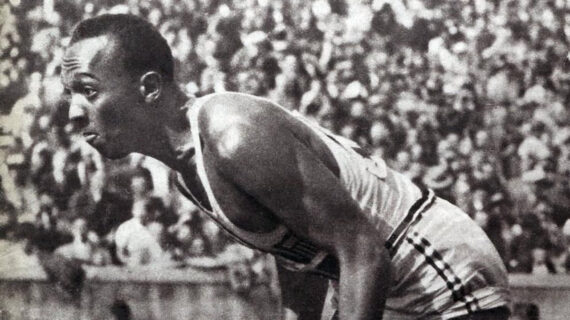
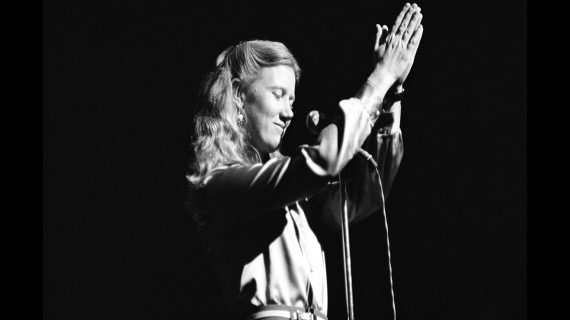
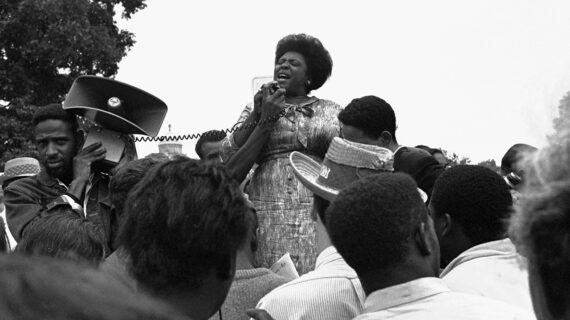

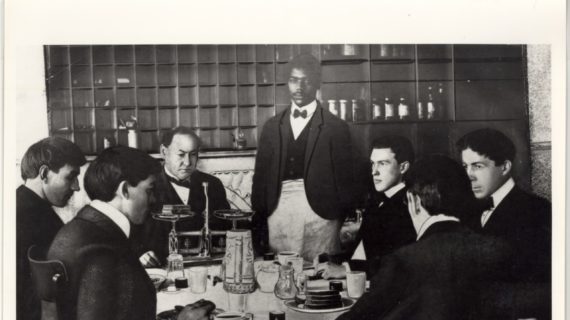

Donate to sign up. Activate and sign in to Passport. It's that easy to help PBS Wisconsin serve your community through media that educates, inspires, and entertains.
Make your membership gift today
Only for new users: Activate Passport using your code or email address
Already a member?
Look up my account
Need some help? Go to FAQ or visit PBS Passport Help
Need help accessing PBS Wisconsin anywhere?

Online Access | Platform & Device Access | Cable or Satellite Access | Over-The-Air Access
Visit Access Guide
Need help accessing PBS Wisconsin anywhere?
Visit Our
Live TV Access Guide
Online AccessPlatform & Device Access
Cable or Satellite Access
Over-The-Air Access
Visit Access Guide




Follow Us