

 Passport






At the Forefront of Migraine Surgery
11/10/15 | 27m 43s | Rating: TV-G
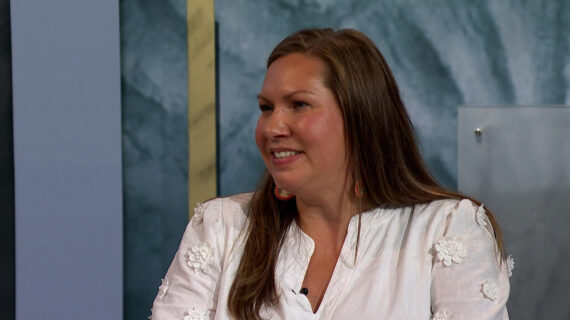
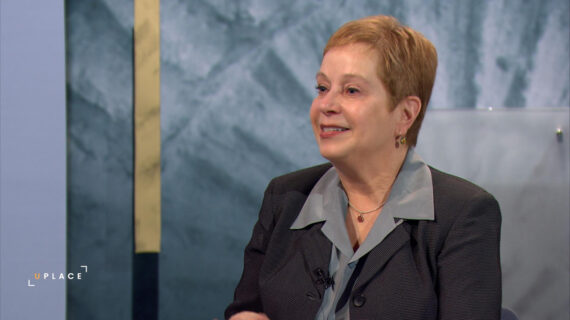
Ahmed Afifi, Assistant Professor, Plastic and Reconstructive Surgery, UW School of Medicine and Public Health and Catherine Accardi, Migraine Surgery Patient, discuss migraine pain relief through a simple nerve decompression procedure. After the treatment, approximately one-third of Dr. Afifi’s patients were relieved of their migraine pain.


Copy and Paste the Following Code to Embed this Video:
At the Forefront of Migraine Surgery
So tonight, we will have the opportunity to hear from Dr. Ahmed Afifi, who has been with the division of plastic and reconstructive surgery, here at the department for the last five years. And additionally, we'll have the privilege of hearing from a former patient of Dr. Afifi, Catherine Accardi, who is a school engagement coordinator at James Madison Memorial High School. She underwent migraine surgery with Dr. Afifi in December of 2013, and she graciously agreed to be here tonight to share her story. So, without further ado, let's have a round of applause for our first speaker of the night, Dr. Ahmed Afifi. (applause) Well, thank you all for joining us today. I just turned to Catherine and told her, I can't believe it's been two years already. So, thank you all for joining us. I know we all have busy schedules.
There's a presidential primary debate at 8
00 PM on TV, and the Milwaukee Bucks are also playing tonight, so I promise I'll get you all out of here on time. So, surgical treatment of headaches and migraines. I have presented and lectured about this many times before. Now, most of the time these lectures are for other healthcare providers and other physicians. So I know that usual reaction when people
first hear about this is
number 1, I never knew that you could actually do surgery for migraines. And the other common question is, why are plastic surgeons doing surgery for migraines? Why is a cosmetic surgeon treating headache surgically? For the coming 20 minutes, I'll answer these questions, we'll go over the procedure, who's a candidate, how the surgery works, and we'll go over the whole process. So let's agree on a few things. So migraine is a very common condition. Right now, there are more than 35 million Americans living with migraines. It's roughly one of every five women and roughly one of every 20 men, they have migraines or they have headaches. Does anyone know how much migraines are costing us as a society every year? The estimates are around $20 billion every year. That's with a B, $20 billion. These include medications, physician visits, ER visits, medical treatment, but the vast majority of those $20 billion are for people missing work or decreased productivity at work because of migraines. So, obviously, there is a large percentage of patients who might benefit from something else other than medical treatment. So, what is migraine surgery? There are two theories, two mechanisms for migraines. One is the central theory, that everything starts inside the skull. Everything is in the brain and in the layers around the brain. The other theory is the peripheral theory, which is that migraines start peripherally. They start in the skin, in the nerves, in the muscles, in the eyes, in the nose, they start peripherally outside the skull, and this triggers all the central changes in the brain. So migraine surgery depends on this theory, that some migraines are either triggered or they're made worse by a pressure or irritation on certain nerves outside the skull. So we know of all of these different nerves outside the skull. If these nerves have pressure or irritation on any of these nerves, they can trigger the migraine mechanism and cause a headache. Surgery is basically what we call nerve decompression surgery. We're taking the pressure off these nerves. So, it sounds too simple to be true. So, does the surgery work? What is the evidence to show that this actually works? Well, let me tell you the story from the beginning. More than 15 years ago, Dr. Guyuron is a very well recognized, internationally respected plastic surgeon in Case Western University in Cleveland, Ohio. He was very famous for doing brow lifts, cosmetic procedure to lift the eyebrows, make the forehead look younger. He had a couple of patients after cosmetic surgery come to him and tell him that their migraines, after their cosmetic surgery, have completely disappeared. He went back and looked at 10 years of doing cosmetic brow lifts, he identified those patients who had migraines before their cosmetic procedure, and he asked all of them, "How did your migraines do after your cosmetic procedure?" And to his surprise, 80% of these patients had an improvement of their migraines after cosmetic procedure. So he thought, how could this be possible? How could someone having a cosmetic procedure have improvement in their migraines? And his theory at that time was that doing this surgery is taking the pressure off the nerve that's right under the eyebrow. This was the only possible mechanism how this surgery could help improve his migraines. Now, over the following 15 years, plastic surgeons have been testing this theory to prove that this theory works, that taking the pressure off these nerves does actually improve or relieve the migraines. We have been refining the surgical techniques, trying to identify all the possible nerves that could be contributing to the migraines. So, fast forward 15 years later, and there's where we are today. This article was published in our top journal last year, looking at all the evidence that we have today at migraine surgery. And I won't bore you with all the scientific details, but you can see that these are all the case theories that have been published about migraines. You can see that they include large numbers of patients. Some of these studies have had over 300 patients. The follow-up was at least a year in all of these studies, and improvement is hovering around 70% to 80% in all of these studies. So, here's a summary of all of these studies. And you can see they're from all over the country and over the last 15 years and they all show similar results, that these surgeries work and they have a success rate of around 70% to 80%. There's another interesting study. So, Dirnberger is a plastic surgeon in Vienna, Austria. When he first heard about this, he himself had migraines. So he himself had the surgery. And he reports that after 20 years of suffering with migraines, he had an 80% improvement in his own migraines. He started offering this surgery to his patients, and he published this work on 60 patients, reporting a 68% success. I emailed him in 2011, and he responded that prior to retiring, he had operated on 160 patients with a success rate of 70%. Again, I won't bore you with all the scientific studies that have been published because they're all basically reporting very similar findings. So what exactly do we do in the surgery? So let's take the nerve under the eyebrow as an example. So there's the muscle that we all have under the eyebrow. There's the muscle that's responsible for frowning, for the lines between the eyebrow. There's the muscle that brings the eyebrow down. Now, through this muscle passes this supra orbital nerve. It's a large nerve. There's the nerve the supplies sensation to the whole scalp. And this nerve comes out from this, from inside the bone. And, as it comes out, it's covered by a ligament, and right next to it is an artery and a vein. We have published a study working with our radiologists here looking at ultrasound and how it can help us identify the anatomy of this region. So, what do we do in the surgery? What exactly is compressing the nerve? It's actually any of these structures. It could be the muscle, which is likely the most important factor. It could be this small bony bridge here. It could be the ligament. Or it could be the artery that's just pounding on the nerve. So in the surgery we take all of these structures off the nerve. How do we do the surgery? For this particular nerve, we can either go through an incision in the eyelid and then lift the skin, go under the skin, and find the nerve here, and take the pressure off the nerve, or we can do the same procedure through small incisions in the scalp and use our endoscope, use a camera, and other many invasive technique and go under the skin of the forehead and get to the nerve here and do the surgery. I actually published my work comparing both approaches, and basically, both approaches are equally effective. Now, the next picture is a picture from the operating room. So it will have blood in the picture, so if you don't want to see blood, now is the time to turn your eyes away for a second. So there is looking with the endoscope at that nerve. So there is the view looking from above. The camera is under the skin of the forehead. So what you see here is the bone of the forehead, and there's the undersurface of the skin. These are the nerves. These white structures here. These are the nerves. And this is at the end of surgery. So prior, at the beginning of the surgery, this is what it looks like. These are the nerves. You see the red structures next to them, that could be the artery. Very often, the artery is the cause of the pressure on the nerve. And there's the corrugator muscle. There's part of the corrugator muscle, and all of this is actually the muscle that's surrounding the nerve. You can see how the muscle is actually in between the nerve fibers. So there is where we start. At the end of the surgery, the nerves are freed from all the, from any structure that could be pressing on the nerve. Not all patients have their pain in the forehead. Many patients have their pain in the back of the head or in the neck. This could be related to the occipital nerve. Again, many anatomical studies have been done to show exactly what could be compressing the nerve. So it has this long tortuous course through the different muscles. There's an artery that often is intimately related to the nerve. So during the surgery, we take all of these structures off the nerve. The final site that I will discuss is the nose because many patients have migraines that are related to something inside their nose. Many patients will have pain that's in between their eyes or behind their eyes. So there's the normal anatomy. We have the septum, which is the structure dividing the nose into right and left sides, and we all have these turbinates, what we call the turbinates, inferior and middle turbinates, and these are structures that go from the outside wall of the nose and they go inside the nostril. Now, the lining of the septum and the turbinate is very rich in nerve endings. Normally, this is the usual anatomy. The septum is separate from the turbinates. If the septum is deviated to one side or the turbinate is enlarged, the septum would be touching the turbinates. That would cause one of two things. Number one is that the patients won't be able to breathe through that side. Number two is that all those nerve endings will get irritated, and this could trigger a migraine headache. And these contact point headaches, they're very well known in the literature. They've been studied extensively previously. And we do know that this surgery is very effective in treating these contact point headaches. How do we treat a deviated septum? By septoplasty, by taking the septum out. It's one of the most traditional techniques in surgery. We have been literally doing this procedure for 3,000 years. For the turbinates, we do another minimally invasive approach, where I use this endoscopic debrider. The tip of this instrument is two or three millimeters, and this rotates and this suctions the inside of the turbinate out, to make the turbinates smaller. So there's a CT scan of a patient. You can see that the septum in the middle, is deviated to one side, and you can see that it's touching the turbinate. So the black is the air. You do want to have some air between the septum and the turbinate. You can see here that the septum is touching the turbinate and is touching also the middle turbinates on both side. With an air cell inside the middle turbinate, it's not supposed to be there. Again, these are actual pictures from patients. There's looking inside the nose. There's with the endoscope, so there's a very magnified picture. This distance from a septum to a turbinate is likely in reality maybe two millimeters. It looks much bigger here, but you can see that the turbinate is touching the septum. That's not supposed to be the case. And another patient, you can see that the septum, how it's curved, there is this pair in the septum and it's intertwined with the inferior turbinate. These are supposed to be separate from each other. So, how do we decide which nerves to operate on? I've only mentioned three nerves. There's actually many more nerves that we can operate on. So, how do we decide which surgery to do? So, unfortunately, there is no CT scan, there is no X-ray. I have no test to tell me which nerve is irritated or compressed. So it all depends on the patient's symptoms and on our clinical exam. Sometimes we do injections of local anesthetics or Botox to relax the muscles, and that can help us identify which nerves we should be working on. So, who is a candidate for surgery? Number one, patients have to have been evaluated by a neurologist or a primary headache doctor, a headache specialist or their primary care doctor. So not all headaches are migraines. The list of things that can cause migraines, that can cause headaches is too long. Headaches could be something wrong in the brain, something in the vision, something in the sinuses, something in the teeth, in the joints, all of these are other causes of headache that I do not treat. So I only see patients who have been evaluated and treated by a neurologist or their primary care doctor. Patients should have tried medical treatment. This is a surgical procedure. The vast majority of my patients see me because they have tried all forms of medical treatment. Patients should be fit enough to undergo surgery and anesthesia, and my clinical exam should point to a specific nerve where I could help the patient with. Patients who are not a candidate are again, patients who have not been evaluated by their neurologist or their primary care doctor. Medication overuse headache or medication dependents, it's a well known phenomena, and, again, this needs special precautions. So, what is the success rate? Like I've just shown you, most centers, most studies would show a success rate that's hovering around 70% to 80%. So now is the time to listen to the person you're all actually here to listen to, Catherine. And the reason I asked Catherine to help us here is because I know that all of us, physicians and patients, will listen to patients more than physicians. Me, personally, when I first heard about migraine surgery 12 years ago, I was very skeptical. Why would I, a plastic surgeon, be involved in treating migraines? How could plastic surgery treat migraines? It was actually listening to the patient's stories and how this surgery is really a life changing, can be a life changing procedure, that's what drove my interest into this procedure and why I've been performing it here at UW. So I'll let Catherine share her story with us. Good evening. It's a pleasure to be here tonight and talk to you about this because in my own words I feel like I've been reborn after this surgery. I suffered headaches and migraines for 35 years. My first migraine was when I was 15, and progressively through the years, as I got older, my headaches and migraines increased in frequency and increased in the level of pain that I was suffering from. So, at 15, again I experienced my first headache that turned into a migraine because I was playing softball. I went to the doctor for it because it lasted for a few days, and the doctor really had nothing to tell me but, he thought it was a virus that attacked my head. I actually hadn't heard the name, or the word migraine until after college. College was a little different story. A lot of the headaches and migraines I will admit were probably self-induced for the most part. But when I got into my 20s, that's when my headaches and migraines were really starting to pick up. That was my stint of emergency room visits was in my 20s. That was the way I was sort of dealing with my migraines until finally, after so many emergency room visits, the doctor suggested that I may want to go to a neurologist. So, once I got a permanent job and health insurance and all that good stuff, I sought out a neurologist and I went and they did multiple tests on me, including a number of medicine trials, medication trials. And after, to be honest, it was so long ago I honestly don't know how long, but after many months they finally, the neurologist just looked at me and told me, "There's nothing I can do for you. Your migraines are hereditary, and the only option we have is narcotics." And in my 20s, that's the last thing I wanted with the frequency of my headaches and migraines was to start on a narcotic. Again I said that it was hereditary. My dad suffered from migraines. I remember that clearly. He really pushed through his migraines when he did have them. I remember in high school and when I was home for summers, he would come home, he owned his own business, he first worked at his brother-in-law's place of business, that he bought it. He used to come home for lunch for a half hour, and I always knew when he had a migraine because he would skip eating, which I could never do. That always made my migraines worse. But he would skip so he could rest the whole half hour, and then he'd go back to work. So I saw this growing up. So, as my migraines got worse, especially into my 30s when they followed, then, my menstrual cycle, I would have a headache and migraines the week before, the week of, and the week after. I did what my dad did. I went to work, I did things. I paid for it. A lot of weekends I gave up time with friends and family because I worked through the migraines. It was the weekends then that I would sacrifice and stay in bed for. I do work in the school system, and I don't know if you're familiar with that. We earn one sick day a month. Your first year, at least in the Madison district, they give you the nine of that first year. And I had to be, obviously, very careful about how I used them. I've worked for the district for 23 years. I have 12 sick days because of the fact that I did, even though I muddled through most of the days, and went to work with the headaches and migraines, there were some of those days, where the nausea was too much, and I couldn't do it and I had to stay home. As I got, again, into my 40s, the migraines got, again, more intensified, and there was more things that was triggering them. It just wasn't the hormones and stress. There was odors that came into play and MSG was a factor, but it was the weather that started, I at least noticed, again, maybe it was happening the whole time, but it was one of the things I wasn't tracking because people were telling me to track what I was eating more than anything else. But the weather came into play. And wow, those were the worst. Those were the ones that would last for weeks on end. So I basically had a headache every day. Probably starting in my 20s and 30s, again, it was sporadic, the headaches and migraines, but then it got to be every day. So I would wake up with a headache every day. Actually, somebody, a colleague, put it in perspective for me. It was like a pilot light in my head that was always there and lit. It just depended how big that flame was burning that day of how bad my headache was going to be. And, again, with the weather it was the worst. I'm probably talking too fast. I'm probably skipping over stuff because I'm nervous, but I'd be happy to retrack and answer questions and such but... Dr. Afifi really saved me because in 2013, in April, I just really couldn't handle the pain anymore. I was crying a lot. I'm even getting emotional now just thinking about it because I literally did not want to live anymore with the pain. I told my partner if I had a gun, I would shoot myself in the head and be done with it. I was done getting up in the morning, dealing with the headaches, dealing with the migraines and functioning. Just didn't want to do it anymore. And then all of the sudden, on the TV was an item on channel 3, and it was Dr. Afifi. And I listened, and the person who was being interviewed sounded like me. Her headaches and migraines started when she was 15. She went through a gamut of over the counter medication and prescribed medication and really nothing would work. There was things that might level me off, meds that would put me to sleep, but nothing that really got rid of the pain other than time. And her story matched my story, and that's the first thing I did the next day was to call Dr. Afifi's office. And, again, that was April of 2013. I had to do a few kind of precursor things to make sure I was a good candidate because I was one. One of the individuals that my headaches were all over the place. Not the nose but in the front, in the side, in the back. So I actually had two out of those three procedures in December of 2013. So I got in fairly quick, in my mind. And, again, where I averaged 12 to 14 migraines a month, I woke up with headaches every day, I've maybe had a dozen in the time since the surgery. And, again, I will admit two were probably self-induced. Sorry, I still like to have a beer or two. I'm 52, just to let you know. So for, again, 35 years is how long, basically, I went with this, and it really has been quite a life changing event. It's nice to wake up every morning and not feel that head. Now, granted, there are still things that will trigger a headache. Dehydration, which is just something that's very preventable. The weather can still, but my medication actually works when I take it. And it doesn't last. The pain doesn't last forever, and it's not near as intense, level 10, like it could have been or was in the past. I don't know if I need any... I will be happy to answer questions. Again, I'm nervous when I talk in front of people. You would think I wouldn't be, being in the school system, but I am. But I think this has been really a grand opportunity. I'll admit the recovery was, excuse my language, a little hellish. I went back to work, though, after five weeks. I probably wasn't really myself until maybe six, well, I mean, eight weeks. I did have issues with laying down flat. It took about four months for me to finally lay all the way down. I'm not sure if that was an effect of the scar in the back of my head or what. I've never really discussed it but, it took a while. But I would do it again in a heartbeat. There would be nothing that would stop me from redoing this surgery if I had to again, had a chance to do it all again. Was that the question, was about the recovery? It took a lot out of me, but, again, it was very doable. Just to have the pain gone, again, was well worth the pain that I suffered through the recovery. I don't know. We've got lots of questions at the end. Okay, all right. I'm jealous of you. You're such a natural speaker. - Oh, no. Thank you. (applause)
Search University Place Episodes
Related Stories from PBS Wisconsin's Blog









Donate to sign up. Activate and sign in to Passport. It's that easy to help PBS Wisconsin serve your community through media that educates, inspires, and entertains.
Make your membership gift today
Only for new users: Activate Passport using your code or email address
Already a member?
Look up my account
Need some help? Go to FAQ or visit PBS Passport Help
Need help accessing PBS Wisconsin anywhere?

Online Access | Platform & Device Access | Cable or Satellite Access | Over-The-Air Access
Visit Access Guide
Need help accessing PBS Wisconsin anywhere?
Visit Our
Live TV Access Guide
Online AccessPlatform & Device Access
Cable or Satellite Access
Over-The-Air Access
Visit Access Guide




Follow Us