

 Passport






Water House Bistro & Lonesome Stone Milling
01/30/14 | 26m 45s | Rating: TV-G
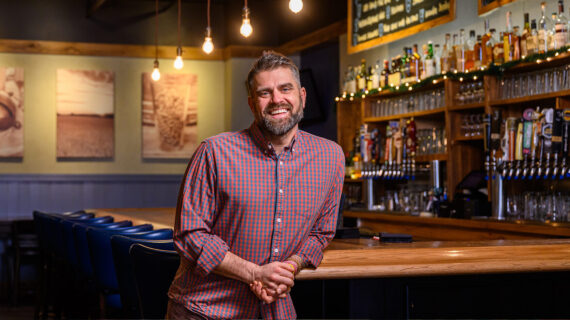
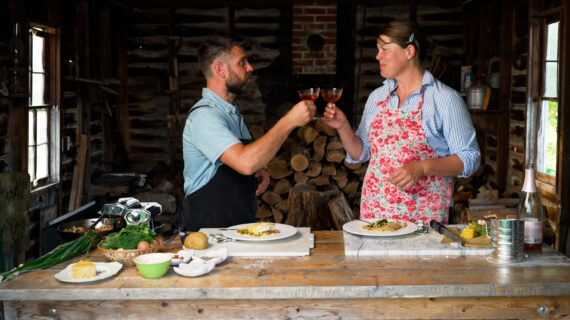
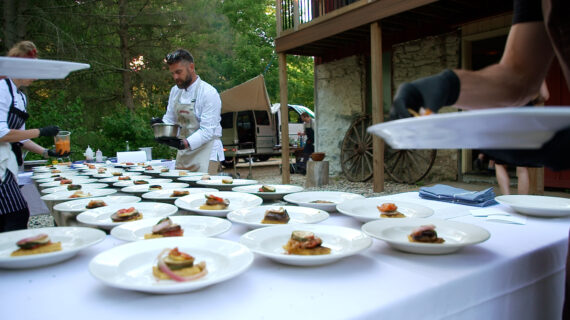
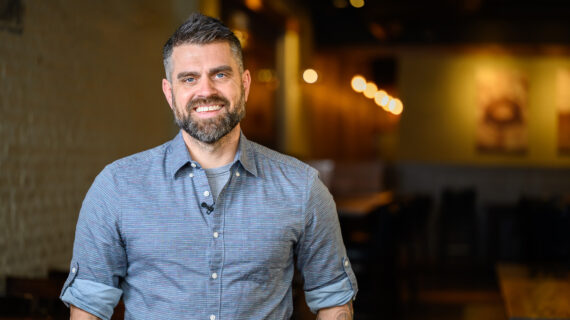
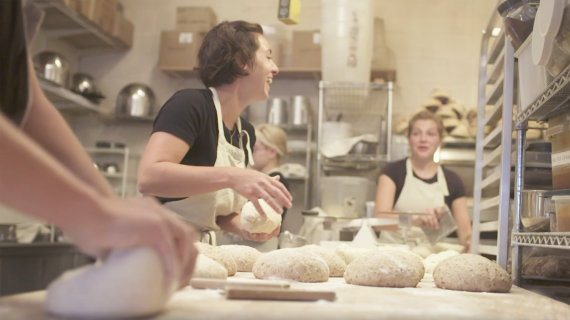
In this episode of Wisconsin Foodie we profile Breadmaker Shawn Rediske of Water House Foods and Miller Gilbert Williams of Lonesome Stone Milling. We follow native Wisconsin heritage wheat from the field through the milling process at Lonesome Stone Milling and then baked into a delicious loaf of local love at Water House Bistro!


Copy and Paste the Following Code to Embed this Video:
Water House Bistro & Lonesome Stone Milling
>> This week on Wisconsin Foodie... >> Good morning. >> Hi, are you Rae? >> I am. >> I'm Kyle. >> How nice to meet you. >> Good to meet you. >> Thanks for coming out. >> Yeah! >> Shawn's in back baking. >> It's experiencing the way the way that bread was prepared, not so with these, but prepared a little bit more deliberately, I guess, and with things that were nearby, for centuries. >> We have a healthy product. We have a flavorful product. We have a local product. And a very significant amount of money goes right back to the farmer. You're not supporting corporate farms with us. You're supporting family farms. >> Did you know that when you signed up for all this? >> No, he was an engineer. It turns out, it transfers pretty easy. >> You said, "I do," and he was like, "How do you feel about bread?" >> Which is great, because I love it. >> Cool. >> I wouldn't trade this for anything. So, what we like to say, is we make bread. >> That's very Zen of you.
both laugh
>> Wisconsin Foodie would like to thank the following underwriters for their support. Outpost Natural Foods Co-Op, and Superior Equipment and Supply. The Wisconsin Milk Marketing Board and the dairy farm families of Wisconsin are proud to support Wisconsin Foodie, helping viewers celebrate our state's vibrant food culture. With nearly 11,000 family dairy farms, the Wisconsin dairy industry generates more than $26 billion annually for the Wisconsin economy, and brings recognition to the state for producing award-winning cheeses. >> In the quiet calm of the American morning, there's a legion of people that wake up long before the rest of us to do some very important work. The dairy farmers know it, of course, the third shift folks, and the bakers. Here at Water House Bakery, this couple reaches out and grabs the great grains at Lonesome Stone Mills, and makes some of the best artisanal bread in the entire state. >> Good morning. >> Hi, are you Rae? >> I am. >> I'm Kyle. >> How nice to meet you. >> Good to meet you. >> Thanks for coming out. >> Yeah! >> Welcome. >> Thanks. >> We have a bistro here. Shawn's in back baking. But we have kind of a coffee shop, a bistro. The baked goods are all out here. Obviously, we have a community meeting spot, a great view of the park. >> What I'm really here for is your breads. >> Okay. >> And Shawn's magic. >> Yes, that's how we started. >> You guys, how long have you been a baker couple? >> Shawn's been baking actually since we got married. He got a book from his uncle. He self-taught himself how to bake bread. >> Or how to burn it first? >> Hopefully not too much, but yes. He worked in Michigan for a year and right when we were about to get married, he had nothing else to do, so he self-taught himself how to bake. >> Because it's Michigan and not Wisconsin, so there's nothing to do! >> Nothing to do! >> So, from then on, he's just sort of been getting better and better on this fantastic stuff. >> He literally caught the bug. >> Exactly. >> Did you know that when you signed up for all this? >> No, he was an engineer. It turns out, it transfers pretty easy. >> You said, "I do," and he was like, "How do you feel about bread?" >> Which is great, because I love it. >> I mean, this is what everybody's morning ought to smell like. >> Shawn, I brought you some visitors! Shawn, this is Kyle. >> We'll do the baker shake. How ya doin', man? How many breads are you gonna bake today? >> Well, I've got the list over here. I try not to memorize anything, because I'm not that clever. >> So this is a high-tech bakery, man. >> This is the way that we do the tracking. I come out of an engineering background, so this is kind of a process engineering tool. Each of the different colors show the different steps along the way. Then each of the different breads is listed down the side. It tells me the batch size, and it tells me how many of each shape that I'm going to be making. Right now,
we're at 8
45, that one that I was just doing was the punch down on the garlic salt. >> That dough-covered mouse tells you that you're the lead baker.
laughter
we're at 8
I think you're a recovering engineer who got into baking, and that Rae had no idea of the life you guys would be leading when you guys got hitched. >> Well, when we started, you know, I didn't know how to cook. So, when I went off for my co-op out of school, I got that book. >> Which one? >> "Vegetarian Cooking for Everyone," because she's a vegetarian. >> This is a book that I know so many home cooks have on their shelf, and is highly dog-eared. >> Yeah, I love that book. So, that's what got me started. There's a bread recipe in there, and Deborah, I'm sorry, but it's just not one that I enjoy very much. I was whining about that and whining about that for years at Christmas, and my uncle finally called, and said to my mom, you've got to get him that book. That's "Bread Alone," by Dan Leader. A UW-Madison graduate in philosophy. >> Wisconsin!
laughter
we're at 8
He went out and started his own bakery in the Catskills. >> There is something philosophical. I mean, I've watched Peter Reinhart's Ted Talk about bread. There is something deeply philosophical, and I dare say even spiritual, about the process. It's alchemy. >> It's alchemy. It's also, you're dealing with a living organism. I mean, as soon as you mix flour and water, the wild yeast and the air come into it and start to become a living thing. >> Yeah. >> And taking care of that, and getting it to do what you want it to do, and go where you want it to go, so that you can feed people. It's pretty cool. >> It's very cool. You take the grain, which Lonesome Stone does, and then you cut it down, so you kill it. You mill it, you refine it into something amazing and then you give it to a baker, and with the yeast, they bring it back to life. It's-- If that's not poetry, you know, Robert Frost has got nothin'. That's pretty gorgeous! >> Hi, my name is Gilbert Williams. I own and manage Lonesome Stone Milling. We take wheat from the driftless area and we make it into quality organic products for bread and baking. I've always thought of this as my favorite bridge. I do like these old steel bridges. What you're looking at is a 10,000-year-old landscape. No, ten million-year-old landscape, excuse me! This was the section of the Wisconsin area that was not glaciated. So, we have a lot more hills here. We'll be driving up out of the Wisconsin River Valley up to Pleasant Ridge, which is a high piece of ground just north of Dodgeville. It's on these ridges we found that it's a good place to grow wheat, because wheat needs to dry out before harvest. You have a lot more wind up on the ridges than you down here in the valley. The driftless area give us some topography, but it's not only the topography. It's the soil and how the soil's taken care of. We are working with certified organic farmers, and we are certified organic. It's not just being organic, but it's doing a good job of being organic. That is mainly taking care of your soil, having a healthy well-balanced soil. When I say healthy well-balanced, what I mean is, you've been maintaining the micro-nutrients in the soil, and maintaining your crop rotation. That combination gives you a very healthy soil and a microflora that will release the right ratio of nutrients to the plants. That correct ratio of nutrients to the plant produces a healthy plant. The healthy plant will then fend off the diseases that are so much in time and trouble. It will also produce a very flavorful grain when it comes time to harvest. >> Hey, Shawn! Good to see you. >> How are you doing? >> Well, it's the harvest season. >> Yeah. >> I'm working my tail off. Just about out of last year's grain, but we've got a lot of good looking new wheat. >> Excellent. >> So, you get 50 pounds of whole wheat bread flour, eight of sifted pastry flour, two of rye. Four bags for whole wheat, four bags for sifted, and four bags-- >> Yeah. >> Okay. >> There's something magical about your pastry flour. I have not been able to do-- >> Well, that's Tom Martin's. You know, he's about 45 minutes west of here. It's again, wood grown wheat that is soft red spring wheat. It's real nice. I've got about five tons of it left! So you don't have to switch out.
laughter
we're at 8
>> Well, that's good. Its workability is so much better than anything else that I've used. >> Remember, this is stone ground flour. >> Okay, now we've got that all loaded up. Would you be able to show me around a little bit? I'd love to see. >> Yeah, well the real piece is right here. This is the main flour grinder. We can grind, in about a ten-hour day, we can grind about 2,000 pounds. This is our grain cleaner. She's a little dusty today, because we've been working pretty hard for the last two weeks. This season, we've done about 2,000 bushels of rye, and we just started the wheat. This is a hard red wheat. >> What is the cleaning process doing? >> We are sifting and winnowing. We're shaking through screens. We have four screens that are tucked away inside the machine. We've got a top pair, that is a scalper, which is a large screen where the grain falls through, and a sifter, where smaller fragments or weed seeds fall out. We go up our second leg here and we go to our finished product bin. From there, we can go into a 50-pound bag, or we usually go into a one-ton tote bag. Stone milling is what has been grinding bread for a millennia. It used to be just a mortar and pestle type of set up. Then every cruncher has some form of stones grinding grain. >> When we started working with Lonesome Stone, we were kind of half and half on our cookies with white flour and wheat flour. That quality of the flour that we were getting from you allowed us to switch over to 100% whole wheat. Now we've done the additional move of doing a split between the bread flour and the pastry flour. We're just so happy with the quality of the cookies. It's been a really interesting kind of adventure in working through this stuff. We have no formal training and no official schooling, or anything like that. And just kind of banging heads against the wall, and learning from you, and the kind of things that we can try. >> I kind of feel proud of the fact that we have a scientific background that produces a quality product that people really enjoy. Then the fact that we're a stone mill and make a whole grain product is what most people in their later half of life need as a regular source of fiber. So, we have a healthy product. We have a flavorful product. We have a local product. And a very significant amount of money goes right back to the farmer. You're not supporting corporate farms with us. You're supporting family farms. You're supporting family investors. You're supporting the small town when you buy our product. >> So, Lonesome Stone, Gilbert, there's a lot of industrial baking out there, but there's a lot of really great, for lack of a better term, artisanal or lovingly conscious baking going on out there. But there isn't that many great micro granaries, micro millers, that are doing local grains from local farmers that have the results that you're talking about. What Gilbert is doing is fantastic. There's the Wisconsin terroir. There's the three farmers that grow the grain. He's so thoughtful about it. But it isn't, it's not a one-off. You can do it in other parts of the country. >> Right. >> And mill it there. >> Yep. >> And bakers like you could access it and make great bread. Why isn't there more? >> I don't know. I mean, doing this is a lot of hard work, and doing milling is a lot of hard work. You need a lot of equipment to be able to do it. As Gilbert will tell you, and I'm sure he did, about how much is involved with getting the right equipment, getting it in the right place, getting the right supply. Gilbert's in a constant battle of trying to get the right grain from the right places from the right time to the right quality level. It takes a level of expertise that, you know, I don't know that there are a lot of people that are interested in doing that. Gilbert, we're lucky, is a wonderful biology science geek. He does fantastic work and he thinks of things that I wouldn't even think of, and I consider myself a science geek. >> So, does Lonesome Stone, as a baker, just blow your mind with imagination sometimes, because of what Gilbert does? >> Yeah, one of the things that we like to talk about is the metrics that we use to decide on who we want to work with. We focus on responsibility, whether they're organic or not, whether they're local or not, or how local they are, and then there's taste. Because there are lots of people who can produce lots of stuff responsibly, organically, and locally. >> It's gotta be good. >> But it tastes like not so good. So, with Gilbert, we've kind of hit a perfect kind of set. We were using, we still use Great River Organic Milling, and we love their products, but there's something that Gilbert is doing. I don't know if it's the freshness or the fact that he's sourcing the grain locally. >> His general whackiness? >> Yeah, but we're really excited to be looking at his Spelt, the Einkorn that he's playing with, the Turkey Red that he's playing with, all the heritage stuff that he's doing, the oats. I mean, where Gilbert is headed is taking what's normally done on a massive scale and really shrinking it down. One of the other things that helped us make the decision with Gilbert, at one point with Great River, about two years ago, I wanted to bring the distance between the field and the finished bread a little bit closer. And I wanted to be able to tell the story a little bit better, so I called up Great River, and I said, where do you get your grains from? They said, the Great Plains. Cool. Can you give me the names of the farmers? >> The general Great Plains. >> And I got no response on my email. At that time, I was thinking, oh, I guess I asked a dumb question. Then I bumped into Gilbert. On the label is where it comes from, who grows it, the county, and who is all being helped by this flour. I saw that and it was like finding the Holy Grail. It was everything that I was looking for. You were saying before, why can't we replicate this. I don't know, it'd be great. It's unique. I know that this is part of the ethos that Dan Leader points at, and it's the approach that "Bread Alone" uses, sourcing locally grown organic grain. He goes and he visits the grain in the field. He knows what he's going to get from year to year. >> So here it is! Sifted pastry flour, Lonesome Stone Milling. We've got soft red winter wheat. We've got the farmer, Tom Martin. He grows a lot for Lonesome Stone. Crawford County. "This flour best for..." I mean, everything but the guy's social security number is on this product. >> And it makes phenomenal pie crust and it makes phenomenal cookies. That's why we use it. >> These are these clean, white, beautiful sacks. >> Mm-hmm. >> Of great milled flour, is what you get in. >> That have to be carried upstairs.
laughter
we're at 8
>> Again, I ask, why is the heavy stuff always in the basement? >> The concrete floors. >> Oh, okay. All right, that makes sense. Pretty girls going out with ugly guys, we still don't get that one, but it's, you know. How many loaves did you burn back in the day, when you were just doing it as a hobby? >> Actually, it was really hard for me to burn loaves when I was doing it as a hobby, just because my oven never got hot enough. I was so anal retentive that I couldn't leave them in there long enough to get them to burn. >> You were watching the pot so it couldn't possibly boil. >> Yeah, I had more under-done loaves than burned loaves. >> Okay. >> And a lot. I wasn't really, you know, serious about it. This was never part of the plan. You made the comment before that we didn't know that this is what we were getting into. This was never intentional. >> But your story is so similar to so many chefs that I've talked to, restaurateurs, artisanal makers, farmers, especially the younger ones, where they just got out of the way of who they were, and their lives took a completely different course than they ever imagined, but they're happier than they ever thought they would be. >> Yeah, and that's an experience that we've had, as well. I'm glad you bring that up. At this point, I don't think I could go back and work for somebody. I think I tried, but before I left my last job, I was there part-time. >> As an engineer. >> Yeah, my head was not there. I don't think that I'd be able to take direction from anybody. I have a hard enough time taking direction from my wife. >> It's probably good that she's front of the house and you're back here by the oven! >> We tried to divide it, but we find, you know, there's really a lot of interaction. As much as we try to divide it and say you get that. This is the basil ricotta honey. This is with ricotta cheese from Organic Valley. The basil comes from Springdale Farm up in Plymouth. We do a bread share with them during the summer. That's been a really great experience. The honey in there comes from Jenks, who will be out at the market today in Lake Mills, because they're from Lake Mills. >> It's experiencing the way that bread was prepared not so with these, but prepared a little bit more deliberately, I guess, and with things that were nearby, for centuries. I mean, we've got, essentially we have proteins. We have bread. We have beer. For as long as we have things written down, and people are doing recipes and eating. >> Yeah. >> But they were sourcing from what was in season, and gristing it themselves. >> Exactly. >> Get out of the way of the history.
laughter
we're at 8
And step back into it. >> I wouldn't trade this for anything. A lot of the love comes from how you choose the ingredients, what ingredients you choose to put in. So I treat the ingredients with respect, because it means a lot to me. Being able to do that and put these things in, and then run to market and say, "I've got this! I made this over the weekend! Here, try this!" It's just a lot of fun. I think that's where the passion comes from. You used the word "artisanal," and I kind of... >> You and I both... >> I back away from that term, because there are certain people who are using that. There are large machine-driven operations that are using "artisanal." >> It's being bandied about way too much. >> What we like to say is we make bread. Yeah, we make bread. And a lot of other things. >> That's very Zen of you.
laughter
we're at 8
What am I going to bite into? This is? >> This is our cheesy mushroom ciabatta. That's got mushrooms from River Valley Ranch. That's got cheese, a medley of Swiss cheeses from Decatur Dairy. A smoked Swiss, a baby Swiss, and their Stettler Swiss. Organic thyme, and onions from Jen Ehr Family Farm, and garlic from Springdale Family Farm. >> This thing that just happened to me, with a great piece of bread, is the gateway moment for so many people when they have something of this caliber, or that first vine-ripened heirloom tomato, or those eggs where the yolk is actually yellow-orange. It's like, you know, Dorothy's world just went from black and white to color. This is what good food tastes like. I mean, we can go on for hours with you know, more delicate words, but this is what good food tastes like. I'm going to pause from munching on your delicious bread and not do what my mom always corrected before, which was talking with my mouth full, and say thank you. Thank you for leaving the life of engineering and being drafted into this actual artisanal great world. >> Thank you. Thank you for coming out. >> Thanks for rocking the flour.
laughter
we're at 8
That's really good bread! >> Wisconsin Foodie would like to thank the following underwriters for their support. Outpost Natural Foods Co-op; Superior Equipment and Supply; the restaurants of Potawatomi Bingo Casino; Wisconsin Department of Natural Resources; Something Special from Wisconsin; and Colectivo Coffee Roasters. The Wisconsin Milk Marketing Board and the dairy farm families of Wisconsin are proud to support Wisconsin Foodie, helping viewers celebrate our state's vibrant food culture. With nearly 11,000 family dairy farms, the Wisconsin dairy industry generates more than $26 billion annually for the Wisconsin economy, and brings recognition to the state for producing award-winning cheeses. >> This episode of Wisconsin Foodie is now available on DVD at WisconsinFoodie.com. You can also Like us on Facebook, follow us on Twitter, and watch past episodes through YouTube and Vimeo.
beep sound
we're at 8
>> Whenever you guys are ready. >> Extra cheesy. >> Thank you so much for showing me around. >> Well, Shawn... Okay. >> Start again, sorry.
beep sound
we're at 8
>> All right, Gilbert, thank you so much. I really appreciate you showing me around. This was really cool. It kind of puts things in perspective for me. >> Well, I want back to the market, and I really do miss that. But you know, this harvest season is taking all my energy. >> We need you! We need you out in the fields! Thanks, Gilbert! >> Yeah.
beep sound
we're at 8
>> All right, Gilbert, thank you so much for taking me around. I really appreciate it. It puts things in perspective. I've got to get back. >> I do like showing my customers the place, and I do look forward to being back in the farmers market. >> Yeah, we miss you. We need your flour! Stay out in the fields and make it for us!
Search Episodes
Related Stories from PBS Wisconsin's Blog




Donate to sign up. Activate and sign in to Passport. It's that easy to help PBS Wisconsin serve your community through media that educates, inspires, and entertains.
Make your membership gift today
Only for new users: Activate Passport using your code or email address
Already a member?
Look up my account
Need some help? Go to FAQ or visit PBS Passport Help
Need help accessing PBS Wisconsin anywhere?

Online Access | Platform & Device Access | Cable or Satellite Access | Over-The-Air Access
Visit Access Guide
Need help accessing PBS Wisconsin anywhere?
Visit Our
Live TV Access Guide
Online AccessPlatform & Device Access
Cable or Satellite Access
Over-The-Air Access
Visit Access Guide




Follow Us