

 Passport






Strauss Veal
01/06/11 | 26m s | Rating: TV-G
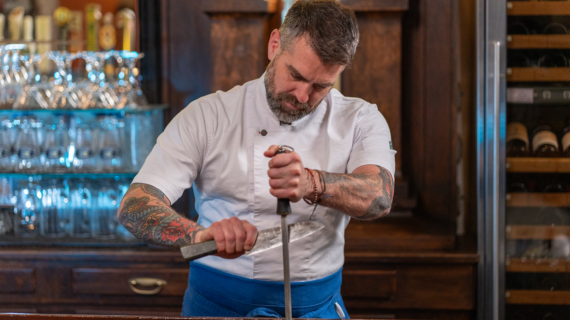
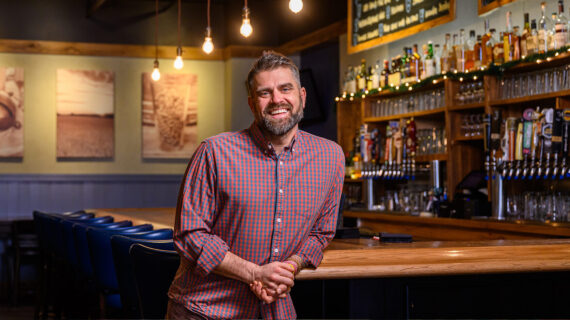
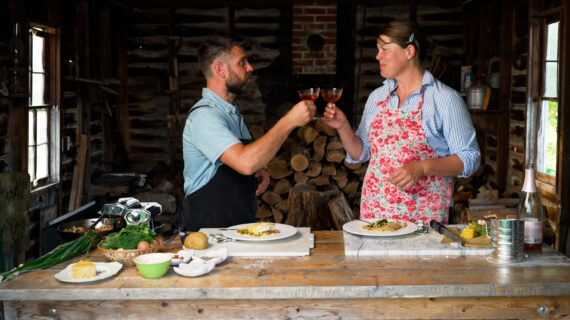
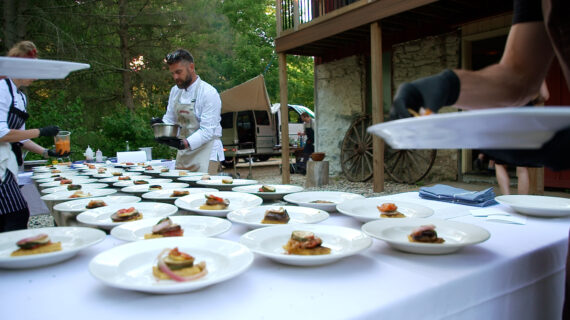
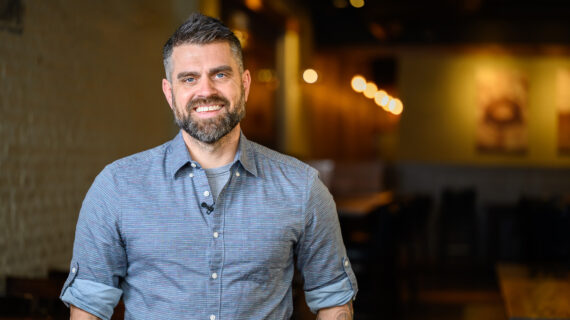
Travel to Platteville and tour BJB Cattle Company with Farmer Barry Brodbeck. Barry has partnered with the Strauss Veal Company to "free-raise" veal calves. We also meet the family behind Strauss veal and hear their philosophy behind "free-raised" veal. Later, we visit Bacchus restaurant in Milwaukee where Chef Adam Siegel is putting together an 8 course dinner that features "free-raised" veal.


Copy and Paste the Following Code to Embed this Video:
Strauss Veal
cc >> Welcome to Wisconsin Foodie. For this week's episode we've come to see first-hand what it's like to change the paradigm of an industry. >> This is a shark that we caught earlier today. >> Now we're cooking... >> The Strausses have been in the veal business for over three generations. For anyone that has ever had one of their cuts, it's a good one. We join the Strauss family on one of their partner farms to see first-hand how their philosophy is implemented, from field to plate. Later, we'll visit Bacchus, one of our state's finest restaurants with some of our most acclaimed chefs to enjoy the finished product. Chef Adam Siegel and Diane Strauss join us in Milwaukee Public Market kitchen as Chef Siegel prepares one of his classic veal dishes, veal rib chops au Poivre. Finally, Jessica Bell stops in to Larry's Market to discuss cheese and wine pairings with owner, Steve Ehlers. I'm not going to leave the table. Don't leave the television. We'll be right back. The Strausses have decided to depart from the typical and re-engage tradition. We've come to this farm in southwestern Wisconsin to see how that tradition plays forward. >> I met the Strauss family about three years ago. It's been a great relationship. I like their high standards, and how they want their cattle treated. We also want to raise a quality product that we can be proud of. Both what we're trying to accomplish and what they want to accomplish seems to be a good fit for both of us. We're very interested in conservation practices so we can stop erosion, and we want to make sure that we have ample grass for the animals so that they're being well taken care of. >> Barry, this is gorgeous! >> Thank you, Kyle. >> Absolutely gorgeous. I'm guessing that a lot of the cattle that are raised in the US aren't raised on gorgeous chunks of land like this. Hey, guys and girls! >> We have nine different pastures that we rotate the cattle through. We try to be really good to the land and not overstress it. As a rule of thumb, we like to have two acres per mother and calf. >> So it's a generous amount though. These mothers and their calves can live their lives. They can roam around. They can get the exercise they need. >> Oh, yeah, absolutely. They've got a great life here. They've got all the water and mother's milk and grass. We've got plenty of grass. From a prospective of being all-natural, we haven't had to give a shot to any animal in two years. >> Really? So as long as we're standing on the -- that these guys get their vitamin's from, give me the lay of the land. What am I looking at, my friend? >> We're here, this is what I call pasture four. Again, we have nine pastures. This is about 44 acres of grass here. Some pastures are bigger, some are smaller. But as you can see, they're not crimped for anything to eat. It's lush, and-- Do you want to walk up and look at the cattle a little more closely? >> That's why I came. >> All right, let's go. >> All right. >> The cows and calves have a great life here, as they should. It's beautiful land out here and I think they're getting along real well. >> I mean, for a city guy like me, surveying the land, it's clear that you, as a partner farm with Strauss, you guys are stewards of this industry, of this livestock, of the way that things make it from this to a great plate in a restaurant or something at home. >> Right. Well, any good farmer, and there's a lot of them, should be a steward of the land. We borrow it, so we're just here trying to make it better. >> Right. That's just decent. That's historic. It's almost a little romantic. But it's practical too. >> Thank you. We enjoy it. >> It's a real honor to meet with guys like you. >> Thank you. >> You bet. >> Hey, guys. >> Hey, hey, Strausses! >> Kyle, how're you doing, man? >> Nice to see you. Hi, Lady Di. >> Hi Kyle. How are you? >> I'm good. Hey Tim, how are you? Good to see you. >> Kyle, you're in good hands, so I'm going to go do some chores, and I'll catch up with you later. >> Fair enough. Thank you, my friend. >> We'll see you, Barry. >> So you guys are changing an industry. How did that get started? >> Well, about 15 years ago I started becoming more naturally orientated, started buying local produce, wanted to be healthier. I kind of adopted that organic lifestyle. Then, like a lot of moms, when you have kids you really want to do the right thing for your kids. >> Right. >> So pretty soon you care very much about what your kids eat. Our lifestyle at home, you know, it became very healthy and we really wanted to extend that to our business. >> You wanted to do the same thing in your business that you were doing for yourselves. >> Yeah, you know, I said, we really have to raise our calves a better way. We want to raise our calves so they're healthier, and they live in a healthier environment. Because when you raise animals in a healthier environment, you get a healthier product. Also, you know, we were starting come to the age where we're starting to care more about the environment and everything. And as you can see, this isn't a factory. >> All right, so third generation farmer brothers, first of all, I think you broke the template. Most families don't stay in farming that long. >> That's true. >> So what is healthy veal for you guys? >> The products that we're producing are just good for the animals, they're good for the planet and they're good for the people. That's what we're about. It's just that simple. We're out here in nature, and we just have this product that just is authentic, the way it was supposed to be. And the way it was for centuries. >> Not to put too fine a point of it, but you're kind of risking your business in a way on this. Are you not? >> We didn't look at it as a risk. We looked at it as something that pretty much had to be done. Diane taught us that there could be a better way. We did put everything on the line to come up with a better way. We've been successful. This right here shows it. The animals are outside, and the only confinement is the stars above. Everything about this is right. >> We wanted to know that at the end of our careers, if you will, that we made a positive impact on animal agriculture. No one really thought animals had rights. We believe they do. We just set out to create a system that was purely Mother Nature- real milk-fed veal. >> It's nice to be able to bring back the way they used to do it. >> Authentic veal. >> Yeah, it's re-introducing the art of pasture raising. >> And we're finding chefs around the country and embracing them. >> I guess there's an event that your guys are doing at Bacchus where I can get my veal quota back up a little bit, or all of us can. >> Yeah, Adam Siegel, one of your favorites and one of our's, is doing a free raised dinner. It's like, seven courses that he's sharing free raised in a lot of different applications. I'm excited about it. >> Yeah, it sounds really good. >> It's really going showcase the versatility of the whole product line. >> Yeah, they're all different-- >> From cheeseburgers all the way down to the chops and cutlets. >> All free raised. >> It sounds like a triple whammy. >> Strauss is a local company here in Wisconsin. And of course, Randy and Tim, the owners, have been frequenting our restaurants for years, supplying us with veal for many years. One day we were having a conversation, and hey, why not showcase the new product. You know, after talking about it, coming up with ways that we'll get this out there, and wondering if we would get enough people, to even have 40 or 50 people. We have a packed dining room of over a hundred guests out there. They're all here to eat some veal. >> Truly, the strength of any great restaurant lies in the strength of its ingredients. If you start with poor material, you'll end up with a poor product. We're fortunate to have the Strausses located in Wisconsin. They produce a superior product. In our restaurants, across the board, we pride ourselves on using the best and the finest ingredients available. When you take great culinary talent and you blend it with amazing raw materials, you can't help but end up with something that is absolutely special. >> Six courses of veal, three veal appetizers, and a chocolate dessert. There's going to be a little bit of eating going on tonight. >> Tonight we were asked by the Bartolotta Group, who have been dear friends for many, many years, and Chef Adam Siegel who is absolutely an incredible local talent. He's won award after award. They approached us and said, hey, what if we did a veal dinner in Milwaukee? And just showcase Strauss free raised. That's really what this event is all about. It was about him taking our product and showcasing how versatile the program can really be. >> He's a huge talent. I think the Bartolottas and Bacchus Group are really fortunate, as well as all of Milwaukee, to have such a chef in this city. >> These are the veal medallions, or the filet form the tender. Again, the Strauss free raised veal. We marinade them for a few days, rosemary, black pepper, garlic and olive oil. Then we just coated them in a good amount cracked black pepper today, because it's going to be served au Poivre. >> It's nice when you have a product like the free raised veal that is such an incredible product, but it's also nice when it's from incredible people. I think the difference is the flavor. The quality of the texture of the meat and the flavor are what differentiates it from the other veal that we've used in the past. >> Right here we have the veal osso buco, with a little twist to it. What we did was we braised the veal, then we picked it off the bone and we made saffron risotto. We cooled it down and formed cakes, and then sauteed them. They'll be nice and creamy on the inside, and nice and crispy on the outside. The Strausses are a local family. They're great people and they are frequent customers of our restaurant. Tim and Randy and their wives, Diane and Danielle, they come here often with their families. One of the great things is that we have their product on the menu. Because they get to see the many different ways that we do them, and they get to give suggestions, they get to give feedback. I also get to give them feedback on the use of their product. In just thinking of something to do locally, Randy had the new free raised products, and we were saying-- I shot the idea about it and he wasn't sure at first. Then next thing you know we had a hundred people signed up. Here we are having the dinner. It's quite a success so far. Okay, so here we have the classic filet mignon au Poivre, except instead of beef tenderloin we're using veal tenderloin. It's potato mousseline which is basically a potato puree with extra cream and butter added into it. We season the veal with a good amount of black pepper. Then it's seared lightly in some butter. Then we have the classic cognac green peppercorn sauce that we're serving with it, with cream and veal stock. >> We just finished seven courses. I'm exhausted. But it was a meal to remember, and it was a great partnership between Strauss Veal and the Bartolotta restaurants. Our chef, Adam Siegel, rose above the occasion and created something that, I think, was memorable for everybody. Hats off to Strauss Veal and Adam Siegel. Cheers. >> How many of you guys love Oreos and Chips Ahoy? I love them too. I grew up on them. But we need a better alternative. Now we're going to make oatmeal raisin cookies. The fresh oats are going to help us lower our cholesterol and give us great dietary fiber. First we're going to take this softened butter and mix it together with the brown sugar. Then we're going to add the egg and the vanilla, and mix all the wet ingredients together. Now we're going to dry ingredients. We're talkin' whole wheat flour, baking soda, cinnamon, oats and flax seed. Finally, we add in the raisins, mix everything together, pop in the oven at 350 degrees for 10 to 12 minutes. Boom! Out comes fresh, delicious, golden brown, healthy oatmeal raisin cookies. I'm Garrett Weber-Gale, and this is my Athletic Foodie tip of the week. >> Hi, I'm Adam Siegel, chef with the Bartolotta Restaurants. Today I'm here in the kitchen with Diane Strauss from Strauss Free Raised Veal. How are you doing, Diane? >> I'm great Adam. Thanks for hanging out with me. >> Good to have you here. >> What are we going to do today in the kitchen? >> Today we have some veal rib chops. We're going to them in the classic au Poivre preparation which is with a cognac peppercorn sauce. >> You know what, that is one of my favorites. Is it the same recipe that you have at Lake Park Bistro? >> Same one on the menu today. >> Oh, my gosh! And we're going to learn how to make it? >> It's very easy, you'll find out. >> What's the first step in the recipe? >> To get started we've just got to take our chop and put it on a plate, and season it. We'll get our pan nice and hot. Au Poivre means that you're going to be using lots of pepper. So we're going to pepper this up really well on all sides. Some people like to just coat it with thick chucks or course pepper. I like to avoid that and just go heavy with the pepper mill on it. >> Adam, I can see that it looks like it already has been marinated a little bit. Can you tell me a little bit about what you did before this? >> I like to sometimes, when I cut them, to put it in with a little bit of olive oil and some rosemary and garlic. It just adds in a little bit more flavor. To get started, we're going to pour a little olive oil into the pan. You want to make sure that the pan is nice and hot. >> From my experience, that makes every pan work more like non-stick pan anyway. Things don't stick when it's hot first, right? >> Correct. In the mean time we have to take a shallot, because we're going to be using shallots in this. >> It smells wonderful. >> So you can see that we're starting to get some good color on this. About now is when you can turn it over. You don't want to over-sear it, or over-cook it. What you'll do is you'll take out all the moisture out of the meat. It'll dry up and it won't give it as juicy a flavor. Now you can see that we have some great caramelization, and we're ready to go into the oven with it. I like to have the oven set at about anywhere from 350 to 450 as far as temperature. It depends on how fast you want to cook it. Also, if you're going to be cooking it to where you want it rare, go with a higher temperature. It will cook that much quicker on the outside. If you want to cook it where it's going to slowly cook and be a little bit more well done, you want to go with a lower temperature so you don't over-cook the outside of the meat. Now I'm ready to put this in the oven. It will go in there for about four or five minutes. While that's in the oven why don't you tell us a little bit about the free raised veal? >> Well, you know, what makes the free raised veal so special is the way that the calves are raised. What's different about free raised veal is that the calves are raised outside on open pastures along side its mother and herd. By raising it in a natural environment you create an authentic, traditional veal taste that we may have not been really getting for a long time. >> Our veal chop should be done now in the oven. We'll take it out and we'll give it check, see if we got some great color on both sides. It's about medium rare once we let it rest. What we're going to do it take it and put it onto our cutting board right now. We'll get started with the sauce. Starting the sauce is really easy. We just put our pan back on the flame. You want to go a little bit high heat. In French cooking we're not shy with our butter. We start off with a good amount right there. Right now we're just sauteing our shallots that we minced up before. We're going to let those cook for just a few seconds. We have some frond in the pan, which is the carmelization from the meat cooking. That's going to give the sauce a lot of great flavor. It's going to give it a meatier flavor. We have some brine green peppercorns. We're going to take just a little bit of them, put them in the pan. Now here's the part that gives it a lot of flavor, it's the brandy that goes into the sauce. When you're doing this you always what to put in the alcohol away from the heat, because you don't want it to cause a big flame. And there you go. Once it stops flaming, the alcohol is pretty much cooked out. You can see that it's pretty much all reduced down almost. >> If you were to guess would you day you put in about a quarter cup? >> I put in about a quarter cup. Now we're going to take some of our demi-glace and put it pour it right in there. Demi-glace is basically a reduced veal stock that's really rich. You don't really need to use too much of it, because it's so far reduced that it just has a great, strong flavor. We're going to take some of our heavy cream. Put that right in there. Once this boils and comes together, it just takes a minute or so for this to finish up. While that's happening, we're going to take our veal chop and cut the string off of it, and start with the plating. What I like to serve with this, as I mentioned, is the potato puree. Take a little bit of our potato puree. You can see our sauce is reducing here. I'm going to shut off our heat, because it's got a really nice consistency right now. And because it's French cuisine, you can't do any sauce without finishing it with a little bit more butter. Finishing your sauces with butter give it a little bit of a smoother-- You know, rounds it off. We're going to give it a little taste. We're just going to layer our veal chop right there, and we just take some of the sauce, and there you go, Veal chops au Poivre. >> Very good. This smells so great. I cannot wait to taste this. And I hear we have a special guest. >> We do! Today we have my daughter, Georgia, and she's going to sample the veal for us. Let's give her a little bit. >> Have you ever had veal before, Georgia? >> How is that, sweetie? >> It's good. >> It's good? Excellent. >> It looks good. I can't wait to try it. Do I get a bite too? Okay. Thank you, Adam. It is phenomenal! >> It was great cooking with you today, Diane. >> It was great being with you. I had a lot of fun. >> Thanks for being here. And it you want to find out more about this recipe, just go to wisconsinfoodie.com. >> I'm Willi of Bleu Mont Dairy in Blue Mounds, Wisconsin. At Bleu Mont Dairy here we make quite a few different kinds of cheese. Cave aged cheeses include bandaged cheddars, gouda, I do a Havarti style. I'm looking to encourage molds to grow on my cheese. The molds that do grow on the cheese give the cheese an enormous amount of flavor. After about nine to ten months the molds have pretty much done their work. Bandaged cheddar is the way cheddar was made before plastic and refrigeration. These cheeses are live, they can breath, they have access to oxygen. That looks really good. The first I ever entered a competition was for my bandaged cheddar in 2006 at the American Cheese Society. I got a blue ribbon for it. That was pretty awesome. There's only one or two other cheese makers in Wisconsin that are still doing bandaged cheddars like this. But the end result is so superior, and I'm very proud of that. >> Is pairing wine with cheese an art or a science? Well, cheese is one of the most complex foods on Earth. Science would have us believe there are right and wrong answers. Meaning there's only certain cheeses that can go with certain wines? I think pairing wine with cheese is more of an art, but with guidelines. We're here at Larry's Market to meet Steve Ehlers, and get to the bottom of this debate. >> Hi, Jessica, how are you? >> Good, how are you doing? >> Good to see you. >> Good to be in Larry's Market. >> Thank you. >> Can you tell me a little bit about the history of this place? >> Sure, Larry's Market has been a food store for over a hundred years, and over the last 30 years we've kind of converted it into a specialty gourmet deli. We highlight a lot of cheeses, especially Wisconsin artisan cheeses. >> Great. Well, I came to try some great artisanal Wisconsin cheeses. You've picked out three for me. >> Right. We've got a Sartori bellavitano with Merlot. We've got an eight-year cheddar from Widmer's in Theresa, Wisconsin. And we also have -- Reserve, which is a cheese from Seymour Dairy up near Green Bay, Wisconsin. >> This first one from Sartori is-- How would you describe it? >> This one is kind of unique where it's aged in Merlot wine. It's got a wonderful flavor. >> That's exactly what I was looking for. With the Merlot rind, it would seem that Merlot would be a good pairing. Well, I'm going against the grain here. I have chosen a sparkling wine. >> Okay. >> The reason I chose it is I want to show how you can contrast texture in your cheese and wine pairing. This sparkling wine was the textural components, the bubbles, that will really contrast with that smooth cheese. >> That sounds like a great idea. >> Do you want to give it a try and tell me what you think? >> Sure. >> Okay. >> What I like to do is try a little wine first, a little cheese, and a little more wine. >> Okay. I'm with you. I like to drink as much wine as possible. >> You know, I wouldn't have thought of the sparkling with the bellavitano, but that's a really nice idea. >> Well, I tend to find that a lot of people thank that you have to have a big, red wine with your cheese. I know you don't think that. But I think it's a misunderstanding about pairing wine and cheese. We shouldn't be shy about experimenting with other wines. >> That's right. >> All right, we'll go on to the next one. See if I can get two for two. >> Okay. >> This is the aged cheddar. >> Aged cheddar, right. >> And often people want to put their big, red wine with it. I completely agree. The reason for that is intensity of flavor. >> Right. >> This is an intensely-flavored cheese. This is called Paraduxx and it's from California. It's mainly Zinfandel with a little Cabernet. >> That's an outstanding combination. >> Wow. And they both have enough intensity of flavor that they're not-- One is not dominating at the end. >> Correct, and that's what you want. Too many times people get too big, big wine, big cheese. They're competing with each other and you're not getting a good pairing together. >> All right, we'll, go on to the third one. >> Okay. >> This is the blue cheese. Blue cheeses do tend to be a little on the saltier side. >> That's correct. >> Being a salty cheese, I love the salty-sweet combination. With a salty cheese I've chosen a sweet wine. This is the quintessential sweet wine, Sautern, which comes from Bordeaux. It's about as sweet as you can get. See what you think. >> Okay. >> Oh, that's nice. >> Yeah. >> The sweet and salty is just a wonderful pairing, and it's also a great way to finish off a meal. >> I thought the same thing. There's nothing better than a salty cheese with a sweet wine. You don't even have to have a big chocolate dessert. This is enough to satiate that sweet tooth. >> That's right. >> Well, thanks so much for showing us some great Wisconsin cheeses, and for being my guinea pig for today. I appreciate it. I look forward to coming back and trying some more wine and cheese with you. >> Great. Good to see you Jessica. Thank you. >> Thanks Steve. >> Okay.
Search Episodes
Related Stories from PBS Wisconsin's Blog




Donate to sign up. Activate and sign in to Passport. It's that easy to help PBS Wisconsin serve your community through media that educates, inspires, and entertains.
Make your membership gift today
Only for new users: Activate Passport using your code or email address
Already a member?
Look up my account
Need some help? Go to FAQ or visit PBS Passport Help
Need help accessing PBS Wisconsin anywhere?

Online Access | Platform & Device Access | Cable or Satellite Access | Over-The-Air Access
Visit Access Guide
Need help accessing PBS Wisconsin anywhere?
Visit Our
Live TV Access Guide
Online AccessPlatform & Device Access
Cable or Satellite Access
Over-The-Air Access
Visit Access Guide




Follow Us