

 Passport






Roelli Cheese | Driftless Cafe
04/02/15 | 26m 45s | Rating: TV-G
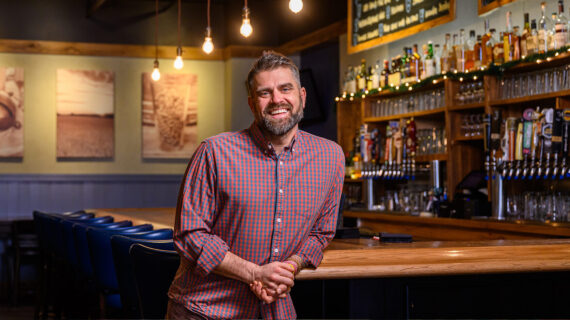
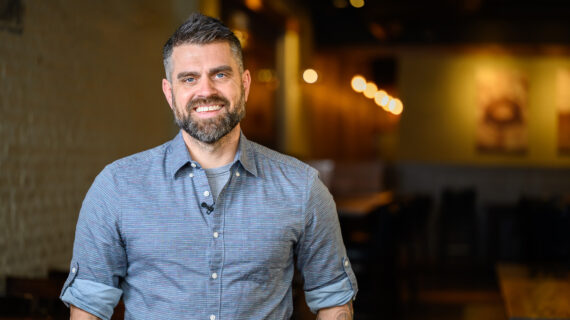
Travel to Shullsburg and meet with Chris Roelli of Roelli Cheese Haus. Get a behind the scenes look at how to make one of Wisconsin’s most unique and innovative cheeses, Dunbarton Blue. Then, travel to Viroqua where Luke Zahm, owner and chef at the Driftless Café, prepares two incredible dishes that incorporate Roelli Cheese.


Copy and Paste the Following Code to Embed this Video:
Roelli Cheese | Driftless Cafe
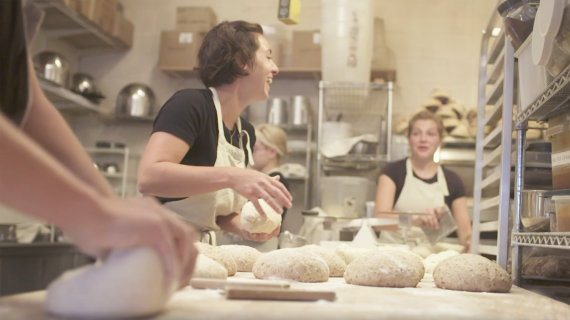
>> This week on Wisconsin Foodie. >> Hi, I'm Chris Roelli. I'm a fourth generation cheesemaker here at Roelli Cheese Company. I make two cheddared blue cheeses, one called Dunbarton and I make a cheese called Red Rock. >> This is something that we would sell in our store right now. >> So these curds are going to become Dunbarton Blue? >> Correct. These are the cheese caves of Roelli Cheese Company. >> If you look up "caves" in the dictionary, they don't look like this. There is some solid mold funkaliciousness going on here. >> Hey, Kyle. >> Hello, my friend. How are you? >> Great. How are you? >> It's good to be in the Driftless Kitchen. >> So, today we're going to use some of Chris Roelli's cheese, and we're going to put together some great dishes. >> That is an enormous duck breast. >> Right. >> These are like dinosaur ducks. Oh, that's just perfect. >> That's where we want it. You ready to eat? >> Am I ready to eat? It's like stupid good... It's so good! >> Wisconsin Foodie would like to thank the following underwriters for their support; Wisconsin Milk Marketing Board and the dairy farm families of Wisconsin; Society Insurance, small details, big difference; Outpost Natural Foods Co-Op; Potawatomi Hotel and Casino; Illing Company, creating packaging solutions for you; Fab Wisconsin, the regional food and beverage industry cluster; The Wisconsin Milk Marketing Board and the dairy farm families of Wisconsin are proud to support Wisconsin Foodie, helping viewers celebrate our state's vibrant food culture. With nearly 11,000 family dairy farms, the Wisconsin dairy industry generates more than $26 billion annually for the Wisconsin economy, and brings recognition to the state for producing award-winning cheeses. >> I've had Society Insurance for my restaurant from the beginning, because I know they understand my business and how it's evolving, and how the industry is evolving. You're going to have the coverage and support you need for your unique operation. >> One of the new breed of celebrated artisanal cheesemakers is here in Wisconsin, and he's Chris Roelli of Shullsburg. He's fourth in a generation of cheesemakers, but what he started doing in 2006 was so unique, so imaginative, and so engaging that it put his name on a national standard. >> My great-grandfather immigrated from Switzerland in early 1900s. Great-grandpa's cheesemaker license from 1924, and Grandpa Walter's cheesemaker license from 1936. Wisconsin is one of the only states in the nation that requires a license to make cheese. My father had, basically, rode out the business of commodity cheddar making as far as he could, and in 1991 the family decided to close down the factory. And after a number of years of milk hauling, doing some other things on my own, I had really never given up wanting to make cheese. And I knew that we couldn't go and compete against the large-scale commodity cheesemakers, so what we decided to do is take the smaller route, and we built a small-scale artisan cheese plant and we hand produce the milk of one farmer into small batch artisan cheese. >> Chris Roelli. >> Hey, Kyle. >> How you doing? >> Good. Welcome to Roelli Cheese. >> Thanks. It's a pleasure to be here. >> Happy to have you. We're making a couple vats of Dunbarton today and could use the help. >> That's my favorite. >> Here. I'll give you your ticket to enter. >> I love it. Everywhere I go. >> So, what we got going on here, Kyle, is roughly 3,000 pounds of gelling milk at this point. One of the very most important parts of the whole cheesemaking is how you cut it. >> So even though Mike and Mark look like bruisers, they're actually delicate little flowers that know how to manipulate this milk just right. >> That's probably the last words I would use to describe this crew, but in a sense "Yes."
LAUGHTER
>> So you have cut the curds, it's separating from the whey, now you're kind of paddling it around like you got a canoe and you're on the inside and this is the outside. >> Exactly. And what's going on here, these curds are very, very delicate. And what we do is we hand stir as well as mechanically stir these curds up to help break them up. >> So these curds are going to become Dunbarton Blue? >> Correct. >> Here's where I go with the cheese. So you've got a cheddar and you inoculate it with a blue mold. Okay, that's been done. But then you press it. That's the crazy part. >> But the key to it is that nobody else makes a blue cheese with the size of curd that I do. The size of curd that I work with because it's a cheddared blue cheese. >> Did you just tell your secret on camera, and now it's out? >> Yep, I guess. One of them. Once we get to the right spot in the process, we'll drain all the whey off and start cheddaring. Over the next hour, we'll cheddar. >> We think of cheddar as cheddar cheese. >> Yeah. >> But to you guys, it means something completely different. >> Well, to us, it's a process. We turn the slabs. Every time we turn a slab, we pile it one higher and over a period of time to let whey press out of the cheese and develop acidity, and that lactic acid is what gives you a lot of the flavor of the product. >> So you're just hand scooping them up, you and the gentlemen, and filling them into forms. >> Yep. >> And that whey is coming out as it comes out. >> The whey will come out over a period of about an hour, slowly, very slowly. >> So this is the cut up and salted curds now. >> Yep. And this is something that we would sell in our store right now. >> Yeah, it's a super squeaky, amazingly fresh, clearly milking in the summer right now off the grass cheese curd. >> It's very important to get these curds from the vat to the press quickly because that preserves the freshness of the product. The longer they sit here, the more the curds change, the more moisture it kicks out. We've got a narrow window there. >> That's just fresh whey dripping out now that you're pressing. Yeah. >> All right, so, Kyle, we've got the cheese pretty established and made. How about we go over and take a look at the caves? >> Can I lose the hairnet? >> You can lose the hairnet for now. >> Lead on. >> These are the cheese caves of Roelli Cheese Company. >> If you looked up "caves" in the dictionary, they don't look like this. >> No. Well, maybe "cellars" is a better term, but these rooms, there's three rooms in this building and they each mimic a certain environment almost to the exact of what a traditional cave would be. >> Oh, yeah. >> Welcome to my world. >> So this is a library of various stages of maturing Dunbarton Blue, correct? >> Yes, that's exactly correct. >> So this is a new one. >> It's new. >> We've got some marbling going on here. >> About three weeks, four weeks. >> Okay. >> This is about a week. You can just see the blue mold starting to come through. >> Yeah, blossom forward. And why on the wood planks? Are there certain types of wood planks? >> We age all of our artisan cheese on wood boards. We use white pine, and we use red cedar. The wood does things for the cheese that we cannot duplicate on another material. We've flipped these cheeses two to three times a week, and that does a number of things. It keeps the cheese from sticking to the board, it turns a new side up so the whey goes a different direction because, remember, I said that there's moisture in that piece of cheese. >> Gravity moving around. >> Gravity moves it around. And also turns a new face for the microflora to land on. >> So, is it fair to say that my microflora is actually adding to your cheese? >> Yeah. >> You don't sound too excited about that. >> Well, you know, we like to let nature do its thing. So, Kyle, this is my Red Rock cheese. >> There is some solid mold funkaliciousness going on here. And for me, this is your "mad scientist" cheese because it's the block of cheddar and then you push these little puncture holes in and that lets the air come in to the inoculated blue and you get these crazy veins that should not taste delicious, yet together... >> It works. >> They're more than the sum of their parts and then some. >> It adds up to something so much more than a mild American style cheddar. And that's essentially what this cheese starts out as. And as we move it around on the boards and flip it, the whole piece of cheese will eventually mold. And in about two months time, I can turn this cheese from a very basic young mild cheddar to something special. This is our little mountain. This is me going back to my family's roots. >> Can I pick this up? >> You can pick that one up. That one is one of my competition wheels. >> Look at that gorgeous label. >> This is a Swiss Alpine style, made in the tradition of an Appenzeller. If I was going to describe it, it's a halfway cross between a Gruyere and an Emmenthal. >> This looks like a good one. >> Doesn't look like all the rest. >> No. >> This is a special cheese that I made for special guests and family. I do not sell it. And it's, basically, a variation of this cheese. It was just the curds were pulled off at a little bit different time than what these would have done. So it's similar but it's slightly different. We'll go cut this open and we'll... >> Maybe have a little Red Rock and Dunbarton. >> We'll try some Red Rock and some Dunbarton. >> Oh, man. This was so worth the drive. >> Let's go. >> So you're in charge, but I'm going to angle this way. >> Well, I think that's the perfect place to start. We'll start with probably what will be considered the most mild of the cheeses that we do. It's our Red Rock. Here you go. It's all for you. >> I'm going in on the big one. So this is my favorite part because when I cut a piece of this Red Rock, I get a couple of veins in there. >> Yeah. >> Yeah. There's just so many great flavors happening. >> It's right at the right temperature too. >> Oh, yeah. It is alchemy. You take a solid, very typical piece of cheddar, I mean that in the best way... >> Yeah. >> But then those blue veins. >> It just does something. >> Wow. A lot more than something. >> So, Kyle, this is our flagship. This is what put us on the map. >> This is... >> The Dunbarton Blue. Dunbarton is a township, literally, about a mile south of us. >> There's a sharp and brightness in here that, if it weren't as creamy, would be a little harsh. >> Yeah. >> But they're perfectly balanced. Nothing's fighting the other one. It just works. >> This is the house special. This is not for sale. I don't even have a name for it. >> Oh, wow. That's sweet. >> If it's terrible, let me know. >> Odds are, it won't be. >> Lightly fruity. >> Yeah but barely. >> Very slightly. >> Mm-hmm. It's milky. It's soft. It's great, great cheese. >> Thank you. >> Is it wrong that after all that cheese I want an ice cream cone? >> People want to know all the time how far in advance can we know what the menu is. We write it every day
at about 2
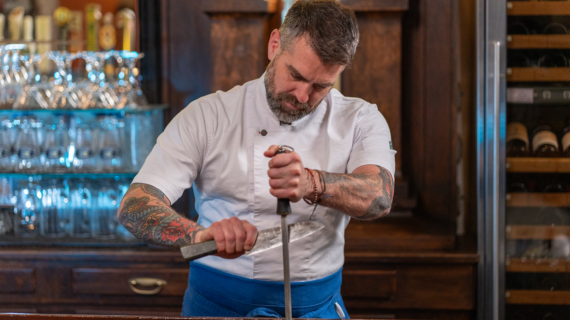
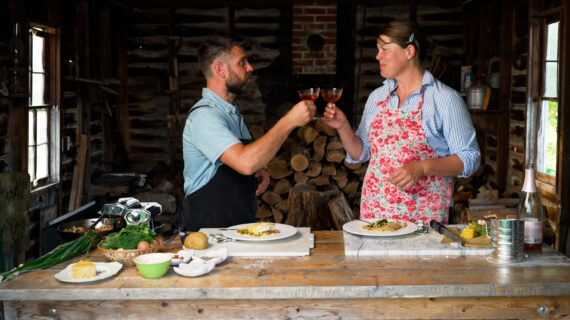
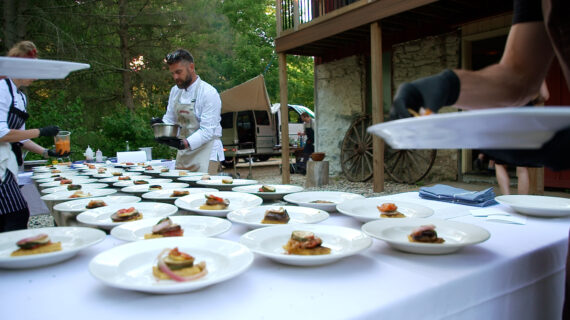
30. We know we want to paint a beautiful painting, but we don't necessarily know what that finished painting is going to look like. What we want to do is we want to get the best paints we can and put them on the canvas, and that ends up being the end masterpiece, hopefully. >> Hey, Kyle. >> Hello, my friend. How are you? >> Great. How are you? Welcome. >> Thank you. >> Welcome. >> It's good to be in the Driftless Kitchen. I always feel like we have an unhealthy advantage with cheese here. The way that folks in the Adriatic know how to cook with fish and barnacles and it's just natural, we understand that protein source in great cuisine from the time we start walking. >> Right. Right. This is something that if you've grown up cooking or eating in Wisconsin, you are steeped in this culture. So today we're going to use some of Chris Roelli's cheese from Shullsburg, Wisconsin, the Dunbarton Blue and the Red Rock, and we're going to put together some great dishes. We've got some lamb from my good friends at Pine Knob Organics that we're braising down with some -- chilies. >> You know I love lamb, right? >> I didn't know that. >> Yeah, I've got a personal agenda to get lamb on more dinner plates in America in the last couple years just because, and especially in the Midwest, talk about terre noire coming through the protein. It's delicious. >> It is. It's beautiful. >> Delicious Wisconsin lamb. >> And we're starting to see in the same style as the cheeses, we're seeing some of our producers grow these heritage varieties that are really, really Old World. It really changes the way you think about a lot of these ingredients. It makes them more accessible because they work in harmony with the land as opposed to really trying to coax different animals that maybe aren't at home in the Midwestern winters here. And it creates a really unique, beautiful flavor. Yeah. So, we're going to dice these onions up. And what we're going to do is... >> While you dice, I'm just going to, I mean, we don't need every ounce. >> You don't need every ounce. Yeah, exactly. >> Yeah. >> My name is Luke Zahm, and right now we're in the Driftless Cafe in Viroqua, Wisconsin. This is my home. This is where I grew up in Vernon County. Actually, outside of La Farge, Wisconsin. I had been cooking for a really, really long time in Madison, about 13 years. And I was traveling and I was on the East Coast and I opened up a menu one day, after trying to recruit chefs to back to the Midwest, and I saw that four of the ingredients listed on the menu were from my hometown. They were from right here. And a light bulb went off for me. It was a very important day in my life because it told me that what I wanted to pursue and what I wanted to do with food was happening in my home, in my backyard. So here we are. >> What we just put in here, Kyle, is we put in some duck stock that we made, actually. We take, obviously, the whole approach. We're eating these whole animals. >> Right. >> So we take the carcases, we roast them down, we get a lot of lovely, lovely flavor out of that. >> Yeah. >> We add it to the onions. We're going to use this as a base for our polenta. It's what we have here. We have our Organic Valley whole milk. We're going to add this to the duck stock. >> So you've got, I mean, first of all, duck stock. >> Yeah. >> Duck fat, and then you make stock from it. >> Yeah. >> And then you add amazing Organic Valley whole milk. Like, I just want to drink this. We could be done with the dish. I'm good with these two. >> Exactly >> Duck stock and whole milk from Organic Valley. I'm done. >> It's over. >> Yeah. Yeah. >> All right, great. Well, I won't let you do that. I'm going to add a little bit of butter here. >> Obviously, to balance it out. >> Yeah, right. >> I mean, we've already got whole milk, you need butter. >> Going to throw in our Westby Co-Op Creamery butter. Another wonderful Cooperative right up the road. One of the reasons why the Driftless is so unique, this place is so special is because we have a lot of hills and valleys here, which isn't suitable for large-scale farming. So back in the '40s, '50s, '60s, '70s, '80s, tobacco farming on one- or two-acre plots was something that most of the families in this area did. What ended up happening over time, in '88 this group of seven families came together in the area, and they were really forward-minded about growing organic food. What they kind of put together was this loose, it was called the Coulee Region Organic Produce Pool, and they wanted to be able to market each other's food for each other. What actually happened then is they grew it over time, and that was the founding of Organic Valley, which is in my hometown. And so, for me, growing up around food and really beautiful food, it's a part of the way of life here. Nobody in the entire United States has the network of farms that we pull from right here. What we're going to do is I'm going to take and I'm going to add some of the delicious Dunbarton Blue from Chris Roelli, and we're going to set it in there and then we're going to cool this down. We're going to add some eggs. The hallmark of a good gnocchi is always that pillowy, fluffy, cloudy... >> Yep. >> You know, center. >> Yep. Yeah. >> So that's what we're going to do here. That's the beauty of a gnocchi and the payoff, essentially. >> Exactly. >> I'm just going to, you're not going to need all that. >> No, not all that one. I think that that's fair game. >> I want to make sure you're knife was sharp. >> You know, working cheese into dishes, specifically the Dunbarton Blue and the Red Rock, I think that's a gift. It's almost a gimme. You take a really, really world-class ingredient like that and you can find ways to incorporate that into the food, that food is going to get exponentially better, and it's one of those things where they've done all the hard work making that product as beautiful as possible. All we have to do is, basically, not mess it up. Showcase it. Let it shine. Let those beautiful elements that they work so hard and give their lives to and cultivate, we just have to build around them, and that ends up being a really fun way to compose dishes and create food. >> I love this because it's like in Rock 'n' Roll where they put the stickers on all the places that they played on the speakers >> Right. >> This is like the equivalent. >> The "Board of Beauty." >> Look at all these cheese stickers. This is Wisconsin pride via chefs, right here. >> Tight. We love it. >> What we really look for here is the story in the producers and the families that do it and the land itself. We have one greens producer and he's an Amish gentleman and we kind of call it the Amish Mafia because every Monday I get three phone calls from this same cell phone and it's plugged into a light pole on a ridge outside of Mount Hope, Wisconsin. And it's three Amish families that will call me and they want to be able to move their greens for the week. They want to know what it's like. They have a sawmill on the property, and so they use the sawdust to fire their greenhouses. And they're pushing upwards of a hundred pounds a week of spring mix, arugula, spinach. It's pretty nuts. You get that all year round. >> Mm-mm. That is an enormous duck breast. >> Right. >> Are these like dinosaur ducks? >> No, these are not dinosaur ducks. There are actually, the breed is specific to Central and South America. But they've found that they work really, really well here in the Upper Midwest. It's part of the Amish community that raises these for us. >> We've got our Lonesome Stone polenta. We're going to get that in there. You know, the Cafe, it's beautiful. It's one of those things, we change the menu every night. So, we are in a town of 4,300 people. We have to play to a couple different demographics. We're going to take and generously season the outside. >> Oh, that's just perfect. >> That where we want it. We're going to take all the proteins that we do here at the Cafe, and we're going to make sure they get a nice bath in that herb and butter from Westby Co-Op Creamery, salt, black pepper, and make sure that they really get a chance to bask in that. >> It's a duck breast spa. >> It is. It is. That's how we roll. >> So we need to make sure that the food is accessible, number one, but we try and jam pack the menu with just the different flavors that we have going on. This place has a palpable funk when it comes to the food that's being produced here. >> I just want to get a straw of the lamb juice. >> And we love it. We love it when our farmers walk in and sit down with their families and have dinner with us. They come in to be able to point to the menu and say this is us, this is what we do. So we're talking today about all these flavors that we add. >> Right. >> That really accentuate the Midwestern winter. And this is a shallot confiture. Let's just put a little bit right there. >> And we're going to take and just put a couple of these sunflower chutes from David Miles on this plate. We've got some Dunbarton Blue here that we've grated up. I'm going to hit that on the plate. Again, you know with Blue we don't want to obviously overwhelm it. >> Right. >> But we want it to be there. We really feel like we get the best pick of the lot when it comes to the food that we get to cook with. >> And this is every night? >> This is every night. >> This is really not a big deal for us. This is... >> This is the Driftless Cafe. >> Yeah. >> This is the Driftless Cafe. You ready to eat? >> Am I ready to eat? >> I hope so. Here we go. All right, Kyle. >> Dude. Super legit. >> Super legit? >> Yeah. >> I'm going to hit you with a duck breast. >> Yes you are. >> That's how you roll. >> Because it might be ugly if you didn't. All right, here goes a lot because I love duck. >> All right. >> A little bit of that polenta. >> Yeah. >> It's a perfect pair. You know, it's like stupid good. It's so good. I'm talking with my mouth full on television. >> How's the cheese? Can you taste it in there? >> Mm. >> Yeah? Sweet. >> Here's to the Western side of the state. >> Here we go. >> Driftless, baby. >> Wisconsin Foodie would like to thank the following underwriters for their support; Wisconsin Milk Marketing Board and the dairy farm families of Wisconsin; Society Insurance, small details, big difference; Outpost Natural Foods Co-Op; Potawatomi Hotel and Casino; Illing Company, creating packaging solutions for you; Fab Wisconsin, the regional food and beverage industry cluster; the Wisconsin Department of Natural Resources. WMSE 91.7 FM, Frontier Radio. The Wisconsin Milk Marketing Board and the dairy farm families of Wisconsin are proud to support Wisconsin Foodie, helping viewers celebrate our state's vibrant food culture. With nearly 11,000 family dairy farms, the Wisconsin dairy industry generates more than $26 billion annually for the Wisconsin economy, and brings recognition to the state for producing award-winning cheeses. I've had Society Insurance for my restaurant from the beginning because I know that they understand my business and how it's evolving, and how the industry is evolving. You're going to have the coverage and support you need for your unique operation. >> The Milwaukee region has the highest concentration of jobs in food, beverage and ingredients manufacturing in the nation. From production to processing, right down to our plates our regional food industry offers career opportunities to fulfill your dreams and feed the world. >> You know, this wood, we talked about it earlier. It's a big deal right now. You know, there are going to be people out there that's going to argue and say, well, you really can do this with plastic or you could do it with stainless. >> No, you can't. >> But it'd be like taking Eddie Van Halen's favorite guitar and replacing it with something that's just about the same thing. >> Sears and Roebuck catalog guitar. >> It's not the same thing. >> Yeah. >> Yeah, Eddie Van Halen could do a lot with a guitar, but his favorite guitar is going to play better. >> Right.
Search Episodes
Related Stories from PBS Wisconsin's Blog



Donate to sign up. Activate and sign in to Passport. It's that easy to help PBS Wisconsin serve your community through media that educates, inspires, and entertains.
Make your membership gift today
Only for new users: Activate Passport using your code or email address
Already a member?
Look up my account
Need some help? Go to FAQ or visit PBS Passport Help
Need help accessing PBS Wisconsin anywhere?

Online Access | Platform & Device Access | Cable or Satellite Access | Over-The-Air Access
Visit Access Guide
Need help accessing PBS Wisconsin anywhere?
Visit Our
Live TV Access Guide
Online AccessPlatform & Device Access
Cable or Satellite Access
Over-The-Air Access
Visit Access Guide




Follow Us