

 Passport








Kohler Food & Wine Festival
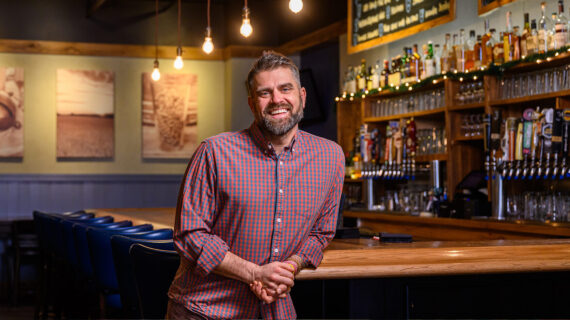
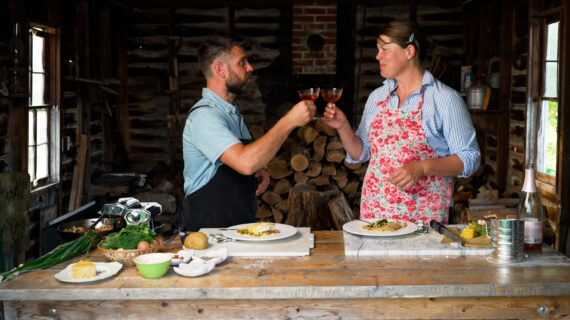
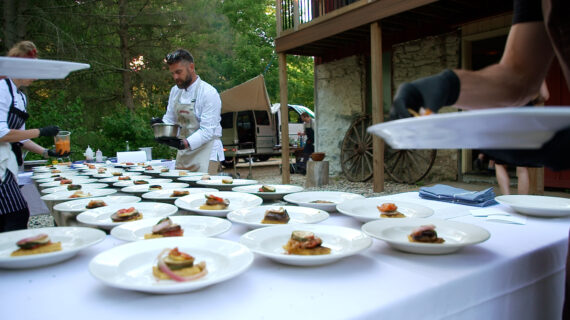
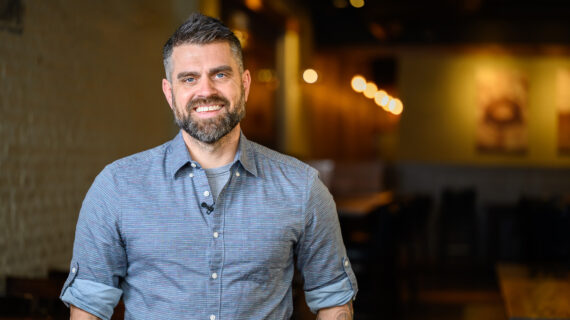
>> Welcome to Wisconsin Foodie. I'm your host, Kyle Cerek. And I'm coming to you from the fte of the fte. The first evening celebration of the Kohler Food &Wine Experience. >> Here's a shark that we caught earlier today. >> Now we're cooking... >> I'm diving into the scrum. Just over my shoulder are examples of something that Kohler has been doing better than almost anyone else in history. Utilitarian design expressed elegantly and with great acclaim. I mean, look at that. That's sculpture. This festival is essentially a culmination of international chefs and some of our state's finest artisanal resources, whether it be cheese, chocolate, or incredible wine resources. So it is our honor, for this week's episode of Wisconsin Foodie, to come to you from the Kohler Food &Wine Experience. >> Welcome to the 8th annual Kohler Food &Wine Experience. >> A bunch of years ago, our partners at Kohler came to us and said we want to do a world class food and wine event at our location. We said, okay, tell us a little bit more about it. They said it's a beautiful location. We want to have great talent, and it's a spectacular place with really great service. And we said, okay, that's the criteria for a great event. We'd be happy to be part of it. Well, I've been to the event many times. I'm always happy to come to Kohler, Wisconsin. People that have been here all say they can't wait to come back. And those who haven't been here are missing out. >> We know her from Food and Wine Magazine and from Bravo's Top Chef, please welcome Gail Simmons. >> This is my third time at the Kohler Food &Wine Experience. Actually, my first project was to come to Kohler and work on this festival with everyone here. So, it's very close to my heart. And I actually really love Wisconsin. I love coming here in the fall, because not only is the food really rich and it's harvest time, but it's just such a beautiful time of year to be here. And coming from New York, to a place where the leaves are changing and the brooks are babbling, I feel like I'm a million miles away. Food &Wine's biggest philosophy is finding the best young talent, whether it's our Food &Wine's Best New Chef program, or our Wine Awards, or our Tastemaker. Food &Wine is really committed to finding great young people who are the next thing. We're not talking about, you know, what chefs have been doing for 20 years, we're talking about what chefs will be doing 20 years from now. >> I loved to scare my mom when I was a kid. I was like 9 years old, and I was like, "Hey, mom, look at this." ( chopping quickly ) Oh! That would just freak her out. ( laughter ) >> So I'm here at the market in Kohler, with Chef Hung Huynh You were an alum of --. You were the third season Top Chef winner on Bravo. Now, you've got your own seafood restaurant and line in Manhattan. Tell me what's important to you, cooking-wise. >> Cooking, for me, now, is definitely simplicity. As I cook more, I mean, I'm still pretty young, but as more I cook, my food becomes more simple. Meaning, three to four components to a dish. >> Okay. >> No more than that. >> Interesting. >> And using a lot more local products that supports the farms. The farmers are working their butt off. Just buy from them, instead of buying from a huge brand supermarket. Get fish from the fisherman a couple miles down the road. The food is fresh that way. The corn, eat it right when it's off the branch. It's sweeter. >> Did you grow up with that? I mean, as you came up in the cooking ranks, was that something that you, you know, or is that something that you've come into? >> No, I mean, when I was a kid in Vietnam, we would go shopping two times a day, every day. >> Yeah. >> You'd bring home fresh, live animals. Live fish, live chicken, and you would do it at home. Fresh vegetables from, you know, local market. So that's always been in me. >> Yeah. >> My philosophy behind cooking, I like keeping things really bold. I want you to be able to taste every ingredient that's in there. That means don't overload things. Not necessarily a purist, but you know, I like experimenting with stuff. I like keeping cooking methods true, you know, a roast is a roast, a braise is a braise. I don't really deconstruct. Even though I appreciate it, I'm not really into experimenting with molecular gastronomy, or anything like that. But I do respect it and appreciate it, because any sort of different approach to cooking, I think is great. >> The ingredients from Wisconsin, it's definitely the cheese, the pheasant, and the Nueske's bacon, which is the best I've had. I love it. >> Nueske's bacon is insanely good. It's the first time I've ever had it. So, it really blew me away. I think Wisconsin is beautiful. It has great food products. It's a beautiful state, nice people. They speak funny, though. But other than that, they're great. >> What's awesome about it is the fierce passion that the people of Wisconsin have with their food. They're really well-educated, and they take really great pride in food products here, which is so important. You know, the cheeses, the meats, the wines that are coming out of Wisconsin are actually really exciting. And that's something new that a lot of people don't know about. >> I'm Tony Mantuano. I'm the Chef/Partner of Spiaggia Restaurant in Chicago, and the owner of Mangia Trattoria in Kenosha, Wisconsin. >> Okay, so you see it from an international and a national perspective. You're in Chicago, but you're Wisconsin born and bred. How do you see the culinary scene in Wisconsin developing? >> Just like anywhere else in America, Wisconsinites travel. I mean, 25 years ago, or 20 years ago, when we opened the Mangia in Kenosha, how many people-- if I went into the dining room and said, "How many people here have been to Italy?" you know, there'd be a smattering of hands. Today, I can walk into any dining room, in Mangia in Kenosha, and restaurants in Milwaukee, and say, "How many of you have been to Italy?" and so many people have been. >> They're international. >> They understand what you're trying to do. So, that's, I think, really the advantage today, is that people travel. They know. Even in Wisconsin. Everybody knows. >> So, what was it like on Top Chef? >> On Top Chef, it was tough. You know, it's tougher than it looks. It's harder. >> It's supposed to be, right? >> It's supposed to be hard. It's not that easy. It looks easy on TV sometimes, I mean easier. But everything you do, the pressure, you've got to deal with the people around you. >> Being on Top Chef was pretty crazy. It was like a ludicrous summer camp. You know, you're with people, they're all completely strangers, but you have the same passion. You have no rights and you're hauled around in trucks, and told to do things that most of the time, you don't want to do. Well, being on the show definitely raises your profile. It's given me the opportunity to travel for the past two years, all over the world. I've just been cooking and eating. That's been my life. Now it's time to settle down and open a restaurant. >> I've always watched Top Chef. The first season. And I remember saying to myself, yelling at the screen also, like, hey, that's easy, I can do that. I can win that. My friend was on the second season. And when the third season came around, it was almost like an accident. They came to my restaurant looking for a place to do auditions, I walked out saying, "I want to be on the show." They interviewed me, and the rest is history. >> Well, this has been tremendous. It's actually amazing, how someone so young, with so many accolades, and to be on Wisconsin Foodie. I hope you're visit to Wisconsin has been good. >> It's been great. Thank you. >> Cool. Well, maybe we can catch up with you again some time. >> Thank you very much. >> Best of luck to you. >> Thank you. >> Now I'm here with Chef Ulrich Koberstein, the Director of Culinary Arts for both the Kohler Company and the American Club. So, Chef, I can't think of a better tour guide for the property. Before I say, "lead on," where are we going? >> Thank you. We're going to start off right in here where we are. This is the main stage for our Food &Wine festival that we have running. It's every year, the last week of October. From here, we'll go into Cucina, it's our Italian restaurant. A quick stop off in our chocolate manufacturing business. It's call The Craverie. >> No problems there. Kohler Original Recipe Chocolates are the most fabulous product I think you've ever seen. From there, we'll head back to the American Club. That's the hub. That's where I'm based. And we'll stop off in The Immigrant Restaurant. It's a phenomenal restaurant. The American Club, of course, the only five diamond resort in the Midwest. And then, we'll be stopping off at our cheese lobby in the winery, with 45 different Wisconsin cheeses. A great place to sit down and get comfortable with a glass of wine. >> I am in your hands, sir. >> Perfect. >> Let's go. >> So, this is where the action happens. >> I feel a little underdressed. Usually-- I have the wrong coat on. >> This is definitely the place where the white coats hang out. This is where the celebrity chefs come and work their magic. We've had some incredible talent over the years. And this year is no different. What makes this a little different from some of the other larger food and wine events around the country is the size. We try and keep this down to a minimum, 200 people capacity in here. >> Very intimate in here. >> Right, you can raise your hand, you can shout out questions. Put the chef on the spot, if you like. Try and quiz them, stump them. You hear about their history, why they've chosen the career path that they have in life. >> I don't want to stand on hallowed ground too long. So, where else are we going? >> We're going to head off to Cucina. >> Cool. >> Here we are at Cucina. >> Mm-hmm. >> What is different about Cucina, or unique about Cucina, is the fact that our menu, as well as our wine list, is divided up into different subsections of the regions of Italy. So, you can have a dish from Venice, if you want, or from Milan, whichever your fancy is, or just order across the range. But you can pair the wine from that region with the food from that region. >> That's pretty unique. >> It makes it a little bit different. We like the approach, and our guests love it. >> Yeah. >> You can dine inside Cucina or come outside and enjoy the beautiful lake and the great view that we have here. >> Chef, tell me that this is part of your daily commute. >> This is my backyard. >> Yeah, I want to be you when I grow up. >> I have a great job. Don't tell Mr. Kohler that. >> Where are we going next? >> We're going to go to The Craverie. That is our chocolate shop. You're going to love that. >> Chocolate. Let's go, all right. >> It's treat time. >> This is the best lunch I think I'm probably ever going to have. >> This is what we eat every day. The Kohler Original Recipe Chocolate Terrapin is still the number one selling chocolate. With everything that's happened with our business, it's still number one. >> Nice. Well, do I get a chance? >> Please, try. These are all for you. A little bit of salt on the nuts, the rich caramel, the chocolate. The chocolate, by the way, is unique, too. We actually blend our own chocolate. Mr. Kohler tried a number of chocolates and decided he didn't like the way they tasted, so we mix and blend chocolates together. So, even if somebody comes along and tries to reproduce this, they wouldn't be able to do it, because they won't have the chocolate. >> All right, well, let's finish this plate, and then head on to the next spot. >> Wonderful. Thank you. >> So, not to be flippant, Chef, but it doesn't take a rocket scientist to know we're in the test kitchen. >> Right, this is our demonstration kitchen. There's a demo going on behind us right now. This is a program that we have that starts in January, and goes all the way through the end of April, where the chefs from the restaurants come and do demonstrations, classroom style, so the audience gets to see what the chefs are doing. We tell stories. We try to make it funny. It's educational. It's fun. It's interactive. >> So if you're a budding foodie yourself, we can come and it's accessible. >> Absolutely. It seats 40 people, so again, nice and close and intimate. Currently, with the Food &Wine experience that we're having, the Midwest Chef's Stage, as this is now known, is a showcase for Wisconsin and more regional chefs. >> Nice. >> We have some unusual and interesting things, too. Actually, we had a Pakistani dish last night, an event. And we're closing off with an Indian one on Sunday. And then, the good folks from Johnsonville are here, as well. They'll be showing different things to do with brats, because there's a lot of versatility to them. >> Yeah, absolutely. Well, let's get out of these guys' way and go to the artisanal cheeses you've been talking about. >> Wonderful. Can't wait to show you. >> All right, good. >> The restaurant is called The Immigrant, because it's a nod or an homage to the factory workers that came over from Europe and started to work in Mr. Kohler's factory. We'll see the French Room, the Normandy Room, the German Room, the English Room, and the Dutch. We're here in the French Room. From this point, let's hop across the border into Germany. >> Hey, perfect. Now, occupying Deutschland, and now entering? >> The English Room. This is my favorite. To my left here, the Danish Room. >> Oh, yeah, I see Ibsen in the corner. Clearly, yeah. >> And straight ahead into Holland, our Dutch Room. >> Nice, let's get the wooden shoes. All right, Ulrich, you've promised me Wisconsin artisanal cheeses. >> Let me something that I know is going to impress you. Follow me. At the winery, we have over 47 Wisconsin artisan hand-crafted cheeses. As I said, over 47 Wisconsin cheeses. We focus on Wisconsin cheeses, because that's where we are. But also, Wisconsin cheesemakers make some of the best cheeses in the world. >> Yeah. >> They win more awards than any other state. In fact, more than most countries. >> Isn't that fantastic. >> Great. Carr Valley, we use a lot of their products. >> These are the big guys. >> He makes about 70 different cheeses. We're carrying about 13 of them at the moment. But we recently went on a cheese trip. There's about eight or ten new ones that we want to bring on the list. So next time you visit us, there'll be a few more. >> So you've been stalling my palette all day. >> You're hungry? >> Yeah. >> Let's go take a look at what the chefs are preparing. >> All right, good. >> So, what the chefs are preparing here is what we call the evolution of cheddar. We're starting all the way here with a juvenile. This is fresh cheese curds, 90-day cheese, one-year, three-year, five-year, seven-year, ten-year, and unbelievably, a 12-year-old aged cheddar. >> This is the vertical of cheese. >> This is it, exactly. My favorite is probably the seven-year-old. I think there's a nice balance there between the complexity of the cheese and the natural salt crystals that form in the cheddar as it matures. >> May I start there? >> Absolutely. Please, give that a try. Phenomenal cheese. I'm going to try some of the ten-year here. Try that, too. You'll be amazed by the difference in cheeses, as you go through the aging process. >> Mm-hmm. This is so good. >> It's great stuff. >> All right, so, you've given me the tour. You've been gracious and wonderful. >> Thank you. >> Would you come back to the Wisconsin Foodie kitchen at some point and cook with us? >> I'd love to. It'd be my pleasure. Absolutely. >> I'm going to have some more cheese. I'm going to get out of your hair and let you do what you do best. And I'm going to head back to the festival. >> Yeah, we've got a festival to run today, don't we? >> I know, there's a lot of other things happening. >> Have some more cheese. >> All right, I'm going to go for the really, really old guy. >> Thank you. >> Hi, I'm Brian Moran, resident chef for Wisconsin Foodie. Today, we're here at Destination Kohler, in Kohler, Wisconsin. We're going to be preparing a dish with pan seared scallops, a vodka cream sauce, and American caviar. Chef, thanks for having us. >> Thank you, Brian. >> Tell me a little bit about the dish we're going to be preparing today. >> It's a great dish. We have a wonderful seafood program here at the American Club. We get fresh fish in four days a week from Boston. >> It's really what you guys are known for here at the American Club. >> Correct. Two days a week from Hawaii. So we have the best of the east coast, the west coast, all the way down to New Zealand. You name it, we've got the freshest fish. >> We're going to be concentrating on east coast seafood today, right? >> Correct, some scallops. We just came back from Boston. We were watching the new Cape Cod, Nantucket-based scallop season. So, these are the bigger ones. We don't have the short season that the regular scallops do. >> Maybe we should get started. >> Great. We've got some great scallops here that we've just taken out of the ocean. As I said, literally, yesterday. As with everything, season before you start. A little salt. >> You use a little sea salt, Chef? >> I love kosher salt. That's a great, great product to use. And as with everything, season before you start. Don't season afterwards. The salt and the pepper is going to bring out more of the natural flavor you find in the seafood. If you season at the end of it, you're going to taste salt. >> Right. >> A little bit of olive oil, straight into the pan. There we go. Take the scallops, and as you put them in there, you can hear, there's a little bit of a sizzle, but not a whole lot. So, this means that these aren't loaded up with water inside there. >> Searing is key. >> Right. >> Carmelization is key. >> What we're going to do, is we're going to chop some shallots. I'm going to take some of this garlic. Crush the garlic. We're going to take our pan here, and we're going to put our garlic in shallots right into that pan. And we've already got a little bit of color coming onto the bottom of the pan, as you can see here. And we don't want this becoming too dark, because our butter and cream sauce, we want to try and keep it kind of a blond color. >> Okay. >> A little bit of a tan color. So, we're going to turn that down. >> A higher heat would reduce too quickly and probably burn. >> And we'll have too much colorization on there, as well, which we're not really looking for. These are ready to go. I will take them out at this point. They will sit here. There will be a little bit of residual cooking going on here anyway. >> Sure, they're going to finish. They're going to continue. The heat's still in there. >> Correct. I have a little bit of vodka here. Put a little bit of that vodka into the pan. We de-glaze with that. Vodka is a great product to use with the scallops. And we're tying that in with the caviar. So the traditional link up of caviar and vodka works so well. At this point, when we've reduced about half to two-thirds of the liquor. Most of the alcohol has burned off at this point. >> You really get the smell of the shallots. All that aroma is starting to come out. >> A little bit of heavy cream that we're going to put into that. We're going to, at this point, take a little bit of the lemon juice. We need some acid in here. And once the butter goes in, you really don't want to bring this up to a boil again, so let's turn this down completely. >> Many times, depending on how hot the pan is, you can usually turn the heat off, and that butter is just going to finish right into the sauce. But you've got to keep it moving. >> That's right. That's what I'm doing right now. You can either use a whisk to do that, or do what I'm doing right now, just give that pan a little bit of a shake. That butter is slowly, but surely all going into the cream sauce. >> If you let that butter sit still, it'll break and separate from the sauce. It's got to become part of the sauce. >> Keep moving it. And as I said, reducing that cream the way we did, that's going to ensure-- >> It tightens it up. >> Exactly, that's the best way to describe it. I'm going to take some of our caviar. Add a nice good dollop with it. Be generous. All we're going to do is make sure that it spreads into the sauce. At this point, like I said, we can actually take this off the heat completely. Make sure that it doesn't split. You can really use any vegetables you like with this dish. It's really up to you. We have a number of different vegetables here. We do have a pan on here. I'm going to take some mushrooms. We've got some nice chanterelles. These are actually the last of the season chanterelle mushrooms you're going to find this time of the year. >> We've got them here. We've got snow on the ground, you can't get any more mushrooms after that. >> So, we've got some chanterelles here, into a nice hot pan. With chanterelle mushrooms, all you really want to do is take them and peel the stem here, get rid of any debris that you might have on the stem. And throw them into your pan. These will cook, literally in seconds. And then we have some other vegetables over here that we've gotten ready in the meantime. We're going to use some celery root puree. >> Celery root really will hold up, and bind up like a potato will. This is a fun technique. We're making panelles. He's making these oval shapes, a panelle, with the spoons, where you incorporate one spoon into the other. It's a beautiful dish. Originally, I believe, in Germany, or in Europe, they would make panelles with fish. >> These are little purple Peruvian potatoes. We've got some carrots. We've got some celery in there. We've got some summer squash and zucchini. We just blanched these, put them back in the pan again with a little bit of butter. >> Cut in rounds. >> Yep, with a melon baller. Take a little bit of that. This is a good way to get children to eat vegetables when they're not fond of vegetables. Unfortunately, my son is not the biggest vegetable fan in the world, but he will eat them when they're in this form. >> Beautiful. >> And who doesn't like baby carrots? >> End of the year. >> We're going to take our scallops over here, three nice scallops. And we're just going to put them, resting half on the puree, half on the vegetables. >> Chef, this dish would be an entree, correct? >> Yes, three scallops is a good size for somebody. We've got a little bit here of the sauce. We'll put the sauce on, and then we'll finish it with a little bit of the mushrooms. You don't need a whole lot of the sauce. It's very, very rich. >> Very thick and very rich. >> So just a little bit, just slightly off. This way, you can taste the vegetables either with the sauce or without the sauce. >> Chef, in which restaurant would we find this dish? >> In The Immigrant Restaurant, but it does change menus frequently. >> Seasonally, twice a year? >> Three to four times a year. We feature seasonal ingredients on the menu, as well. There's a separate section for that. So currently, those lovely Nantucket scallops that we're talking about are on the menu. So a little bit of the micro greens that we have here. I've got some micro-arugula. And I've got a little bit of micro-cress here, as well. We put this together in actually no time at all. >> It's beautiful. When we come to Kohler, where can we get this dish? >> Come see us at The Immigrant Restaurant. Food of this caliber is served up there every single night. Come enjoy yourself with us. >> Oh, I'd love to. Chef, it was a pleasure. Thank you so much for preparing this dish. >> You're very welcome. Thank you, Brian. >> If you want to get this recipe,
you can go to
WisconsinFoodie.com >> Hi, I'm Jessica Bell. We're at the Kohler Food &Wine Experience, at the Lawrence A. Appley Theater. We're here to see Andrea Robinson, who just came out with her new book, The Wine Buying Guide For Everyone. And she's going to give us some recommendations on some affordable wines that can age. So let's go see what she has for us. Hi, Andrea. >> Hey, Jessica! How are you? >> Good. Good to see you. >> Great to see you. It's great to be here at the Kohler Food &Wine Experience. It's such a great event. >> And this is your third time here, right? >> My third time here. I hope they invite me again. >> I'm sure they will. So, what are we doing this year? >> This year, we're focusing on all my top picks for my 2009 Wine Buying Guide For Everyone. It just came out. >> Great! >> And I'm excited about it, because these are all wines that are affordable and outstanding with great track records, fantastic scores, and they're fun. >> And I assume you have some for us today. >> Absolutely. >> What are we going to try today? >> Well, this is kind of fun. One of the sections of the Wine Buying Guide focuses on affordable agers. >> Which is hard to find. >> It's so hard to find wines that you can put in the cellar that will get better with age. >> Sure. >> I've got two toddlers. And we started looking ourselves, and saying we want to put wine down for the kids, while we're here, but we can't afford to spend an arm and a leg on something that actually will get better with time. So, we've got a whole section. One of those is this fantastic Napa Valley Cabernet called Mount Veeder. >> Oh, yeah, I've heard of it. Sure, great selection. >> Yeah, it's a great selection. It's, you know, in most markets, a $40 wine. And it's a 20-year wine. >> Wow, that's great. >> Even though it tastes great now, it's going to get better in the cellar. >> Take us through this wine here. >> It's a Napa Valley Cabernet Sauvignon, so it's going to have that beautiful, dark, almost purplish-red color. >> Definitely. It's almost opaque. >> Yeah, very dense. That tells you you're dealing with a big, full-bodied wine, because the color intensity is a sign of body. >> Is that something you need for aging wine? >> You need that intensity to age wine, because you're going to get lots of color and tannin from the bigger style grapes. And they're both going to act as long-term preservatives for the wine. >> Sure, definitely. >> Then you swirl it, not to be a snob, but to aerate it. >> Right. >> So it'll smell better. >> You do look cool when you do it though, Andrea. >> You do look cool when you do it. It just takes a little practice. >> I sometimes use the table a little. >> That's right, because you don't want to end up wearing it. >> I tend not to wear white. >> Exactly, yeah. I've got to be careful today. So you swirl it to aerate it. That's why you give yourself plenty of room in the glass, to do the swirling. Then you give it a smell. And when you're talking about cabernet, you're going to be talking about dark, black fruits. >> Sure, we're definitely getting it on here. >> Dark berries, blackberry. And for Napa Valley Cabernet, oftentimes, a scent of a little bit of cedar. >> Wow, sure. Definitely. >> It's a really nice little spicy element. And then when you give it a taste, professionals always swirl the wine around in their mouth, because that aerates it in your mouth. And that lets you taste the flavors even more intensely. So let's do it. >> All right. >> Mmm, and what you expected from the color and the scent, you get in the palette. Lots of intensity, rich concentrated dark blackberry fruit. And then now, the inside of your mouth has just been upholstered with velvet, right? >> Oh, yeah. I can feel it, that velvet couch. Wow. >> You've got velvet all over your tongue. And that's the tannins. That's what's going to stretch the wine into a beautiful, graceful age-ability, just like all the females you know in your life, right? >> Right, right! >> We only get better as we get older. >> I agree. Cheers to that. And it definitely has that tannin, like you said. And then, the length on it. I mean, it just continues. I'm still tasting it a couple minutes after, you know, we've actually swallowed the wine. >> That's right. >> It's definitely got all the characteristics of aging. And you said under $40. >> Under $40 in most markets. And I'm glad that you mentioned the length, because when you've got a finish, or a long taste, long aftertaste, that's really a sign of quality, whether it's chocolate, or coffee, or great Wisconsin cheese. The finish tells you that you've got a quality product. >> If people wanted to know a little bit more about these big six, where can they go? >>
They can go to my Web site
AndreaWine.com There's a whole online video wine course that teaches you about them. It shows you how to do a tasting, just like we're doing today. And there's also the new buying guide is available on the website, so that people can find out what all the great picks are that you can afford. >> Great. Well, we'll definitely check it out. And in the meantime, we'll share some wine. >> Fabulous, thanks. >>
Both
Cheers. >> Delicious.
Search Episodes
Related Stories from PBS Wisconsin's Blog




Donate to sign up. Activate and sign in to Passport. It's that easy to help PBS Wisconsin serve your community through media that educates, inspires, and entertains.
Make your membership gift today
Only for new users: Activate Passport using your code or email address
Already a member?
Look up my account
Need some help? Go to FAQ or visit PBS Passport Help
Need help accessing PBS Wisconsin anywhere?

Online Access | Platform & Device Access | Cable or Satellite Access | Over-The-Air Access
Visit Access Guide
Need help accessing PBS Wisconsin anywhere?
Visit Our
Live TV Access Guide
Online AccessPlatform & Device Access
Cable or Satellite Access
Over-The-Air Access
Visit Access Guide




Follow Us