

 Passport






Door County Creamery | Door County Brewery
01/29/15 | 26m 45s | Rating: TV-G
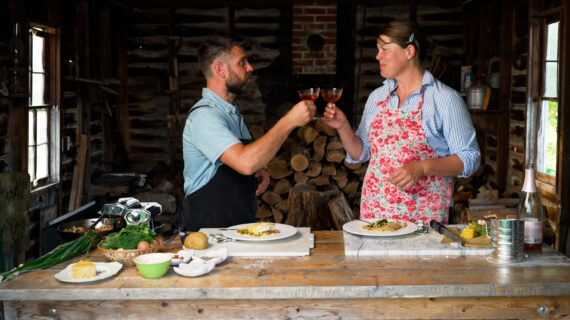
In Sister Bay, meet with Jesse and Rachael Johnson, owners of Door County Creamery. Get a tour of the farm, meet their goats and then make your way back to the creamery to make fresh chevre. After a day of goat wrestling and cheesemaking, pay a visit to Door County Brewing Company co-founder John McMahon and discuss why he decided to open a brewery and what we can expect from their brews.


Copy and Paste the Following Code to Embed this Video:
Door County Creamery | Door County Brewery
>> This week on Wisconsin Foodie... >> We once heard from a friend that said, if you're life's not complicated enough, get some goats. >> I mean, we probably do things differently because we weren't, you know, raised on a farm and taught how to do things, probably, correctly.
laughter
So it's really just improvising and using, you know, your imagination. All right, thanks for the massage, girls. You don't realize sometimes, you know, what you're doing sometimes is so different from what's actually going on in the world. >> I'm excited to break rind with you. >> Should we try it? >> Yeah. It's like desert. Everybody knows the gift shops and the beautiful summer, but it's like, it really disappears in the winter then, for your kids to have a reason to stay and really reinvest. >> Right, we actually brought 'em home. They had already left. >> Just write a note. >> Yeah, please come home. We're going to start a brewery, please come back. >> This is great beer. >> Thank you. >> This is one of the beers that I can drink more than maybe I normally would. >> I agree with you. And there's more to come. >> Wisconsin Foodie would like to thank the following underwriters for their support; Wisconsin Milk Marketing Board and the dairy farm families of Wisconsin; Fab Wisconsin, the regional food and beverage industry cluster; Society Insurance, small details, big difference; Outpost Natural Foods Co-Op; Potawatomi Hotel and Casino; Illing Company, creating packaging solutions for you. The Wisconsin Milk Marketing Board and the dairy farm families of Wisconsin are proud to support Wisconsin Foodie, helping viewers celebrate our state's vibrant food culture. With nearly 11,000 family dairy farms, the Wisconsin dairy industry generates more than $26 billion annually for the Wisconsin economy, and brings recognition to the state for producing award-winning cheeses. >> The Milwaukee region has the highest concentration of jobs in food, beverage and ingredients manufacturing in the nation. From production to processing, right down to our plates our regional food industry offers career opportunities to fulfill your dreams and feed the world. Start and advance your career right here, with more than 500 employers making products and distributing, preparing and serving our food. Are you hungry for more? >> Less than a mile from the Door County farm where Jesse and Rachael Johnson rise their goats is the Door County Creamery, where they also make exquisite cheese. They're part of a new wave here in Door County, residents that grew up here, went away and came back. It's artisanal, it's craftspeople, it's a new way of thinking about this special place in the state. Hello! >> How are you? >> Good, how are you? >> Good. >> Nice to see you. >> Nice to see you.
exaggerated kiss noise
>> Kyle, welcome to the creamery. >> Hey, thanks. You look good in white. >> Thank you, thank you. >> Yeah. This is fantastic. I remember when it was just a dream. >> Yup, studs and wall. >> Congrats to both of you. >> Thank you. >> And you were just a dream, too. >> Yes, not even yet.
murmuring to goat
>> This is Stella. This is the queen. She's the queen of the barn, one of our original ten. She's also the only goat that's ever gotten loose, and we have no idea how. Shape-shifter, maybe. >> Yes, we started with ten three years ago. >> And everybody we met along the way, they're like, "You're learning curve's gonna grow really fast." These are all the girls, the baby girls from this year's kidding season. Yeah, not too big. They grow about, mmm, ten pounds a month. You can breed them at about 70 pounds or seven months, so all these girls will actually be breed late fall, early winter. And then they'll be havin' babies with the moms next year. Which always seems crazy because they're so much smaller. They really grow for about three, three to four years, to get to their full capacity. But man, sometimes you think they have one baby in there and next thing you know they've got three coming out.
laughter
We once heard from a friend that said, if you're life's not complicated enough, get some goats.
laughter
Then you get a lot of chaos. >> And then some.
laughter
Definitely. >> I think one of the best times on the farm is the spring when the kids come, and we, you know, we come out here and we live in the farmhouse. And there's no TV, there's no internet. You've got NPR on all the time and you're makin' fires and hand-milking goats and delivering babies. And it's just this very grounded, back to nature experience. They'll nibble on anything. They'll nibble on your hair, your shirt. But they don't eat it. Everybody has this fallacy that goats eat anything, but they don't. They put a lot of things in their mouth, but they're actually really picky eaters. They don't like hay that's not good, and yeah. Oh, boy, here we go. >> What something to eat? They key is you've gotta lure 'em over there so you can feed over here.
laughter
And then you've got to go over here.
laughter
>> Oh, they still make me laugh everyday. >> All right, girls, come one. Come on All the way up. All the way down. All the way down. Come on, Blackie, you know better.
hoof steps on wood
Good girl, Monkey, good girl. They're born that way.
laughter
No, it takes about two month of chaos, of training the new herd every year to come up and do that. This is an udder wash. We spray 'em up real good. On Saturday's they get spot treatment, which is kind of like a mint udder cream. Sometimes you get some that are a little jumpy, but they usually grow through it. The third year milkers give about a gallon a day, first year milkers only about 3/4. >> We have two types of goats. So we have Nubians, those are the one's with the long ears, and they have a really high butterfat content. And then we have La Manchas that typically give a little bit more milk. And so then we cross breed them as well. >> So the theory in breeding is a higher butterfat goat and then a little higher producer, and then mix those to get a little higher production but you still retain the butterfat for cheesemaking. Ready, girls? Ready to go eat some hay?
door squeals
hoof steps
Good girl. Good girl, Blackie. Come on, Minie Let's go outside. Come on, come on. >> This is how you ride a goat. >> Ride, ride, ride that goat. >> Ride a goat. Ride, ride, ride the goat. Ride the goat. Ride, ride, ride the goat. >> She's bigger than you are now. >> She's so much bigger than me now though. Oh, you big girl, you.
bleating
>> We pre-chill our can in here. So I set up the milk filter, so anything that may have gotten though the line the filter will catch. It's kind of an initial screen. The morning after the second day then we'll take this right to the creamery, and it'll go right in cheese production right after this. We got our ice wands. A quick dip in the sanitizer and then directly in the milk.
laughter
It's like old world meets new world. It's good, it's really good. >> Come on! >> Exercise.
laughter
Yeah, we play with 'em. I mean, who doesn't like playin' with a goat? >> It's important, 'cause then they get used to people being around. >> Come on, girls. Back massage for Jesse. Ah, a little higher. Ahhh, there. All right, thanks for the massage, girls. >> It's what it's all about. >> Yeah, we were dumpin' milk in the vat yesterday, Rachael and I, and it's like we get, you know, a lot out of these animals. You know, cheese and Rach makes soap, and then we make the gelato, and we do a lot of things from this creature. I think, I mean we probably do things differently because we weren't, you know, raised on a farm and taught how to do things, probably, correctly.
laughter
So it's really just improvising and using, you know, your imagination just to put fences together, to get the flow of the barn together and just using practical, or not practical but-- >> Well, the amazing thing about Jesse is he can do anything and he won't-- He'll only say, I can figure it out. I can figure it out. So if there's a problem he'll engineer some solution or figure out how to do it, you know. So I always kind of a little bit more of the, like, oh, my God! What are we going to do? And then we figure it out. >> And you know the Wisconsin program for becoming, you know, a cheesemaker is, you know, pretty rigorous in that, you know, they're requiring that, you know, a lot of time be spent with other cheesemakers before you become a licensed cheesemaker. So the culture of Wisconsin cheese is passed down from one cheesemaker to the next. And you know, you take pride in it. Everyone's interested, I mean, it's just so different I guess. You don't realize sometimes, you know, what you're doing sometimes is so different from what's actually going on in the world. Well, we just brought the milk in from this morning, and then we started some Chevre from yesterday's milk. >> Okay. >> And so I have that ready to go. >> And your Chevre is unique 'cause you go all European on it, right? >> European on it, yeah. >> Yeah, yeah. >> Yeah, so if you wanna white-up, we've got some boots, hairnet. Come on in. You can look like me. >> To the goat's milk! >> All right. >> It smells great in here. >> Smell that Chevre? >> Yeah. >> That's when you know it's ready.
cover clanks
>> Look at how it clings to that stainless. That is pure, silken goodness right there. So it's really just time, that's all you were using here, Jesse, right? >> Just time. >> And a good stainless steel receptacle. So is it true, you're sort of trail and error self-taught? Did you have a lot of, you know, burnt frozen pizzas before you got the good one? Or to a batch of cheese that you loved? >> The milk's too valuable to throw out. I mean, you always come up with something. You know, it may not be the exact thing that you wanted, but you always have cheese and it's always been good. But it make not be exactly what you wanted. >> You were hopin' to do a chocolate bar and you ended up with brownies. >> Yeah, and that's okay. Everyone likes brownies, too. This is the whey, so this is that moisture that's being released from the cheese. And you know, there's still some nutrients, you know, proteins and some, You know, we're feedin' back to our baby goats. >> Right, right. I was gonna say-- >> --supplements for the boys. >> This completes a cycle for you're animals. >> Yeah. So I'm just checkin' the pH here in the whey and of the curd. pH is important for draining when it's hanging in the bags. If you have the wrong pH you don't get quite the proper drainage, and you're gonna have a dryer curd or a wetter curd after so much time. >> It's really key in how it ages, isn't it? >> Yeah. >> Yeah. >> Yeah. >> Do you think the way you and Rachael feed them, raise them on healthy stuff, that that changes the milk and the pH that you get? They're just less stressed and-- >> Definitely the milk. I mean, we only feed 'em second crop, you know, alfalfa/hay mix. And you can taste it in the milk. It's the best of the best. Here we got our cheese cloth draining bag, and so we're gonna take just nice chucks skimmed off the top. >> Let me see if I can get this right. I got basically nothin'. >> That's all right. >> Why is it so important to just do this? >> It's kind of like when you're cuttin' the curd for other types of cheeses, but when you have nice, thin-- >> Oh! Sure! >> Thin scoops. >> You don't want to bust all those fats apart and things like that. >> You're gonna be able to drain it, right. >> There's no way to hurry this, is there, my friend? >> No, there is not. Then it wouldn't be what it is. >> Yeah. I think I'm gettin' the hang of this. Now I can see on the curds, that top level that we're trying to break off. >> Yeah. >> Yeah. >> So now our bag's full. Now we're going to hang it, and these will hang for about 18 hours or so. >> Really, it's just like great milk and all time and process. >> Right. It's a quite simple process when you think about it. There we go. So it's essentially just a belt buckle. >> Yup. >> We used to tie knots in 'em, and I finally came across someone who was doin' it this way. It's like, huh, that's genius.
laughter
refrigerator hums
So this is our raw milk goat cheese. They're all the same, except different ages. >> So where are the adults? >> The adult? There's one adult, two adults, left really. >> With the most-- Yeah. >> So this one was made October 11th of 2013. So it's not that old, but these cheeses aren't made to be aged ten years down the road. >> Right. >> They're made to be enjoyed-- I've tried it every month, you know, for the last eight months, nine months. And they all have different characteristics at every time of their life. >> You can see the difference. This is a young'un'? >> Yeah, so this was about two months after this one was, right there. And then these right here, you can see, I just made about three weeks ago. >> These are the super-babies. >> Right. >> Tadpoles. >> You'll see the natural, young rind. It hasn't even developed a rind yet. >> Can I giv'em a good whiff? >> Yeah. >> Yeah, there's a major somethin' happenin' there. It's subtle, sweet, and then there's that little kind of bite at the end. >> Yeah. >> What type of cheese is this? >> We call it --. It's made in a -- style, which is just kind of a wash curd. It's a Door County Creamery original. >> Do you make the cheese that you love, and then people, hopefully, will buy it? Or the cheese that people might buy, and hopefully you love making it? >> I love eating it, and therefore I make it. I mean, we make cheese curds. You know, not necessarily the most exciting cheese, but they're good. When they're good, they're good. >> There's no in between. >> So if you're going to make it, you've got to make it good. >> All right, let's eat! Let's taste! >> What to try some cheese? >> Yeah. Oh, yeah. I'm excited to break rind with you. So what do we got here? >> So here, this is the inside of the cheese you saw in the cave, our --. And that's this right here if you want to just rip off a little and give it a try. >> Dude, I thought you'd never ask. >> You can taste that fall pasture a little bit in it. That's kind of where the name came from, eventually, 'cause we were making it in the fall. And the goats were on a last season pasture which is normally kind of a flowery, sweeter pasture at the time. >> So you're a bit of an anomaly here in Door County because the chef training that you have. Every winter you went to Europe and cooked in Michelin star restaurants, right? >> Right. >> But a lot of people your age and younger, once they're done with high school, they leave and they don't come back. Door County's an amazing place, but it doesn't hold a lot if you want to go out and spread your wings a little bit, make your way in the world, right? >> You've got to go, you know, and experience it. And I've been a lot of places, and there's a lot better places to be but it's not a better place to live. >> I'm going to have a bite of this, head out over to the brewery. And, dude, thanks for makin' such great cheese. >> Thank you. >> I'm going to take some with me, by the way. >> Okay.
conversations
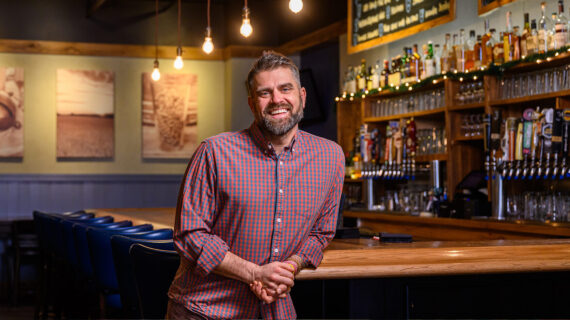
>> When John McMahon moved up to Door County with his family 21 years ago he had no idea he'd become this kind of part of the community. He brought his sons back and founded the Door County Brewery. And it was a way to be part of the new wave of what Door County is. His sons moved away, and they came back to have jobs, they've employed a whole bunch of other people, and they're brewing great beer. It's part of the new wave, this story, and how it's re-inventing itself. >> Kyle Cherek, how are you? >> I'm good, buddy. How are you? >> I'm really good. Good to see you. >> Look at, look at-- You're a grow-up brewery! >> Yeah, a little bit of change since last time, huh? >> Yeah, yeah. This is super legit. >> Yeah, we finally got here. We're excited about it. >> This is where the magic-- >> This is where the magic is, this is the brewing room. Everything you see here is from Wisconsin, so it's all local products. This is our three-vessel system. It's a tin barrel system. It's made from a company in Oconomowoc which manufactured in Marshfield. So this is where we're gonna make our specialty one-off beers. Our sours program takes place down here as well. We've got five fermentation tanks. And we have two bright tanks and we have this one special tank here which is actually a topless tank used to make sours and lambics. So that's where the secrets are really going to be taking place, right there. >> And you've got some secret plans for this, which we will not speak of. >> That's right, we do. >> And this making my heart warm just to know that gallons of Polka King have been brewed in this room. >> That's exactly right. Polka King lives here. Let me take you upstairs and show you what we've done. So this is the back bar. >> You're sure you trust me back here? >> I will trust you only for a little while. These are our taps. Notice there's no tap handles, so our serves have to memorize where everything is. So this is Polka King, Goat Parade, Little Sister, Biere de Seigle, Coconut Milk Stout. >> It's a good quiz for you. >> It is a great quiz for us. So they all memorize it, it's really good for our guests who come in and they order something, the see a bartender turn around, just grab a tap handle and off they go. Pretty unique. And all these are our beers, our own beers, are made here. Most of them are made down in the basement where we just came up from. All right, this is the moment we've been waiting for.
laughter
>> And they all have a Door County story behind them. >> The all have a Door County story, they're all a little bit subtle. But if you're local, you get the story right away. >> And the whole story of your brewing, I mean you basically started a brewery so your son would move back and have something to do. >> We did. It's family business now. Both of my sons work here. My oldest son, Danny, is the head brewer. My youngest son is the assistant brewer and manages the bar. And my wife manages the retail. So it's really allowed us to bring the family back together. And it's also given more people full-time jobs in Door County that they wouldn't have before. >> Right, 'cause that-- >> That was our motivation. >> Everybody knows the gifts shops and the beautiful summer, but it's like, if it really disappears in the winter then for your kids to really have a reason to stay and really reinvest. >> Right, well and not just to stay. We actually brought them home. They had already left.
laughter
>> Just write a note. >> Just write a note, please come home. We're gonna start a brewery, please come back. >> And brew great beer. That's just-- I mean, I knew I'd love it >> If you blindfolded yourself and you drank that beer, you'd know right away that's a porter. >> Yeah. >> And this is the Little Sister. This is a Belgian wit, a traditional-style wit beer made with coriander and orange peel, rose hips, and then we have a little special spice that we put in that you'll taste on the back of your pallet. >> And named after Sister Bay? >> Named after one of the islands in Sister Bay, the Sister Islands. This is the Little Sister. And we'll some day come out, obviously, with a Big Sister beer. >> True to form. >> You can taste that traditional up front, that traditional Belgian wit, but on the back end you get more of a floral taste. >> The floral, the herb, the botanical. It's that great corn in there. And there's a rose hip up in my nose, but then the orange on my pallet. >> Right. >> This is a sophisticated beer. >> Yes, it is very sophisticated, it's a delicious summer refreshing beer. This is the Pastoral. This is a traditional saison farmhouse ale. >> This is a great beer. This is one of the beers that I can drink more than maybe I normally would. >> I agree with you. >> Yeah, just so drinkable. >> I agree. This, though, is my favorite. This is the farmhouse rye. And people asked us, why did we release two farmhouse ales at the same time? And what you'll find is that they're two distinct flavors, but the same style. This just adds a little more robustness to it, a little more fullness to it. I like to drink that beer with a really good grilled cheese tomato sandwich. So we use a traditional rye grain, and we also use rye flakes in that beer. >> Oh, dude, I'm sorry. You're knocked off the pallet right there. That's my new farmhouse. >> Isn't that fantastic? >> John, that is fantastic! >> Yeah, we're really proud of what our son's been able to accomplish. And there's more to come. >> Wisconsin Foodie would like to thank the following underwriters for their support; Wisconsin Milk Marketing Board and the dairy farm families of Wisconsin; Fab Wisconsin, the regional food and beverage industry cluster; Society Insurance, small details, big difference; Outpost Natural Foods Co-Op; Potawatomi Hotel and Casino; Illing Company, creating packaging solutions for you; the Wisconsin Department of Natural Resources; WMSE 91.7 FM, Frontier Radio. The Wisconsin Milk Marketing Board and the dairy farm families of Wisconsin are proud to support Wisconsin Foodie, helping viewers celebrate our state's vibrant food culture. With nearly 11,000 family dairy farms, the Wisconsin dairy industry generates more than $26 billion annually for the Wisconsin economy, and brings recognition to the state for producing award-winning cheeses. >> The Milwaukee region has the highest concentration of jobs in food, beverage and ingredients manufacturing in the nation. From production to processing, right down to our plates our regional food industry offers career opportunities to fulfill your dreams and feed the world. Start and advance your career right here, with more than 500 employers making products and distributing, preparing and serving our food. Are you hungry for more? >> Go quick or you're gonna loose 'em all. Come on! >> Milk the goats, take 'em out to pasture in the day. Walk 'em back, milk. Whoa! >> Umm--
laughter
>> The old butt rub. >> King of the Mountain. >> It's King of the Mountain. I guess we should call it Queen of the Mountain. Uh-oh, uh-oh! >> You gotta show'em who's boss sometimes.
laughter
>> Challenge!
triumphant yell
laughter
>> Queen!
Search Episodes
Related Stories from PBS Wisconsin's Blog



Donate to sign up. Activate and sign in to Passport. It's that easy to help PBS Wisconsin serve your community through media that educates, inspires, and entertains.
Make your membership gift today
Only for new users: Activate Passport using your code or email address
Already a member?
Look up my account
Need some help? Go to FAQ or visit PBS Passport Help
Need help accessing PBS Wisconsin anywhere?

Online Access | Platform & Device Access | Cable or Satellite Access | Over-The-Air Access
Visit Access Guide
Need help accessing PBS Wisconsin anywhere?
Visit Our
Live TV Access Guide
Online AccessPlatform & Device Access
Cable or Satellite Access
Over-The-Air Access
Visit Access Guide




Follow Us