>> In this episode of Wisconsin Foodie, we travel to Cress Spring Farm and Bakery in Blue Mounds, Wisconsin, for a picnic on the farm, hosted by Edible Madison. We meet up with Chef Dan Fox to get a tour of the farm and meet some pretty unique heritage hogs, raised by him and farmer Micah Nicholes. Traveling only a couple yards from where the pigs are raised is a traditional wood fire oven used by bakery Jeff Ford to make incredible artisanal breads, as well as the pigs for this evening's feast. All of that and more on this episode of Wisconsin Foodie. Wisconsin Foodie would like to thank the following major underwriters for their support. Wisconsin Milk Marketing Board, representing the dairy farm families of Wisconsin, who fostered a proud history, with generations of family-owned dairy farms, working to sustain the state's economy through job growth and providing acclaimed cheeses and other dairy products. For more information on Wisconsin dairy,
visit
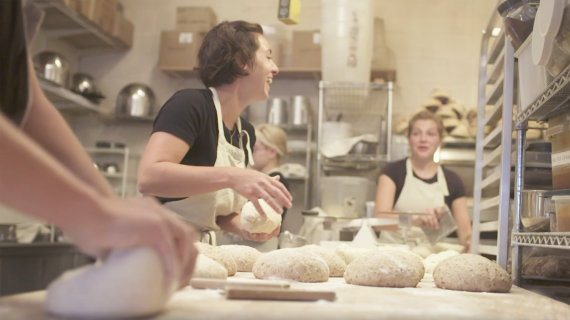
eatwisconsincheese.com >> It's the perfect triumvirate. Cress Spring Farm, behind me, Cress Spring Bakery, off to my left the pastures where the pigs are raised. And just in the distance, the picnic where we'll be having dinner. I'm going to go in and see what the baker is doing. It's the smell of fresh-baked, hand sliced bread. I'm standing across from one of the best bread ovens I've ever seen. I think I'm in the right place. So if I understand what you guys do correctly, you use these technologies to go back about 6,000 years, as far as baking. >> Pretty much. >> Yeah, fermentation, all that jazz. >> We do. We use a sourdough starter, no commercial yeast at all, and bake in a wood-fired oven. We have a big oven that's just in front of us there. >> It's a behemoth. >> Yes, and we build a big fire in it every Tuesday and Thursday, so we can bake on Wednesdays and Fridays. >> So the concept is that the bricks or the stone get completely warm, hot. >> Exactly. >> And then you extinguish the fire and you've got that constant residual heat. >> Right, we burn all of the wood down into ashes, and then take the ashes out. That's where we put the pastries and the bread that we bake. >> This is how people have been doing it since before, I don't know, the Pyramids of Giza. >> Right, you see all different kinds of ovens based on this principle, all over the world throughout history. >> Yeah. So we're about 45 minutes before the dinner. But I came in here to talk to you and maybe get a snack, and I see a little bit on that table. >> That's right, we've got a bunch of loaves of bread over here that are just getting ready to be sliced and served. >> You've got to do the bread course, like any good Wisconsin dinner. >> Exactly. So what we have here, we have our Country Loaf, which is our staple bread, bread for the hungry masses, I guess I would say. >> Kind of the loaves of fishes bread. >> Exactly, yeah, right. And the other one that you see here is the Kamut Loaf. The kamut is something a little bit unique that we do. Everything we do is a little unique, I like to think. But it is made with kamut flour, which is an ancestor of wheat, so it's a little bit easier to digest for a lot of people who have wheat sensitivities. >> Can I have a little piece? >> Yeah, certainly. Tear yourself off a little slice. >> It has a different, less, I don't know, it's kind of got a little bit gummier kind of texture.
laughter
visit
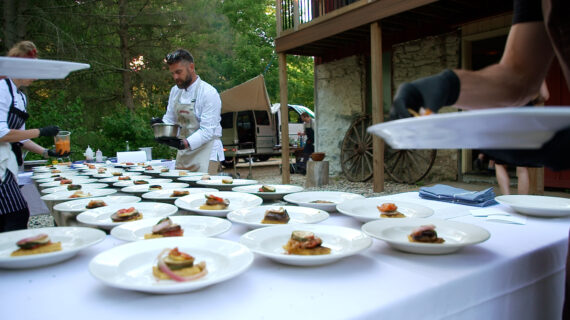
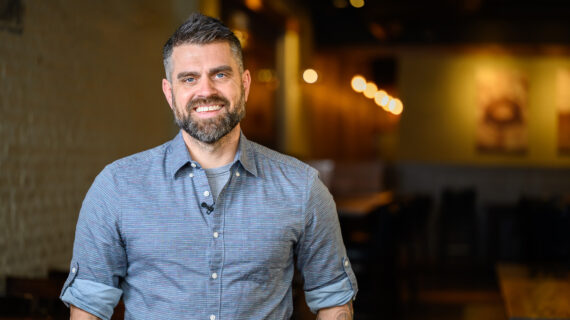
Well, no... >> Yeah, that's true. It's a very moist bread. >> Yeah. >> It kind of has a more golden color, and a nice flavor. It's a different flavor. >> I think of the really clean, white flour, heavy Italian to French. This is nothing like that. It's got this kind of bendability to it. >> Right. All of our crusts should have that kind of hearty flavor and feel to it. >> You could live on this and orange juice for a month. This is really good. >> So this is our oven. Would you like to see inside? >> Yeah, for sure! >> We have potatoes and things roasting, but we can give you an idea of the scale. >> Not what you usually have-- Whoa! There's still residual heat coming out. >> Oh, yeah. >> On a hot summer day. >> Right, so it's pretty hot. >> So the wood for something like this, which-- Wow, that is really hot, that I'm putting my hand on. >> Yeah, don't touch that. Would you like a glove? >> Sure. This thing was fired up on Thursday. >> Right. >> Today is Sunday, and I still can't rest my hand on there for very long. >> That's right. The next time we will fire the oven in here is Tuesday, and it will still be at about 300 degrees. >> So, do you use a special wood? >> We use a lot of elm. I think that's our wood of choice. It burns really nicely and evenly. >> Cool. See you at the picnic. >> My name is Dan Fox. We're at Cress Springs Farm out in Blue Mounds, Wisconsin. Southwestern Wisconsin. We're sitting right in the valley here. It's absolutely gorgeous. We have a beautiful sunny day. So this is where we keep all the pigs at Cress Springs. Micah Nicholes, this is his land. He's in a co-op of land. We were just in the kitchen of Cress Springs Bakery. He has a wood-fired oven. I'm super psyched to using his oven today. So, Micah and I raise these animals. We have many different heritage breeds. They're all raised for very specific genetics, a very specific meat quality, fat quality. Now, over the past few years, Micah and I have found different breeds which we like for different things. We have a couple up here feeding. This guy is about ready to go in to the processor. Those are both Tamworths. They're huge pigs. Those are at least 350 pounds right now, probably more on the hook. So when they butcher out, that'll probably give me 320 pounds hanging weight pig. You can see the hams have rounded out fantastically. The shoulders have rounded out very well. That big muscle that rides right from the front shoulder all the way up to the ear, that's the coppa, it's going to be nice and large. A lot of chefs in town now, Madison, Milwaukee, Chicago, other parts of Wisconsin, are curing these meats out. Charcuterie-- Mainly, that's what these pigs are being raised for. As a chef, that's my relationship to the animals. Primarily, we work on pasture. In the next week, we're going to be going out to these three fields in the back. So we're going to rotate these fields so this field can come back, after the spring, and they'll be on fresh pasture. We also have pressure cracked wheats. Micah pressure cracks the wheat every single morning when he comes out to feed the pigs. It's very high in protein. It promotes a higher monounsaturated fat within the animal, which pretty much gives it a different melting point. For aging the meats, you have a very nice quality of meat that's not going to go rancid, isn't going to spoil. It's really the fat, it's unlike most pigs that I work with here in the states. We have our little feeder pen. We do do some farrowing. We breed pigs out here on the farm. It's very, very new. Micah and I have just been playing around with different breeds to see what we like. So, in this pen-- Oh, here they come. We have Ossabaw-Meishan crosses. We have the little guys, or the Guinea Hogs, Mulefoots, Tamworths, Herefords. Those are the breeds we have in there right now. These guys will take-- So, versus your traditional confinement pig, these little guys have been already alive for about three months, and they'll be on the farm for at least another year. So, a commercial pig that's pumped out within four to six months, fed on corn and soy, that's what most pork that's around the United States, versus these guys, who are going to be on the hoof, for like I mentioned, a year or a year-and-a-quarter. It's much more expensive. It's much more of a process. But the quality that you get out of the meat is hands down, bar none, absolutely fantastic. That's why we do this. That's why I've been doing this for multiple years now and continuing on. The quality of meat, you can't-- Well, you'll taste it today. So it's great stuff. All right. We've got some pigs in the wallow. A very hot day today out at Cress Springs Farm. They're coating themselves in this mud. It's very relaxing for a pig to get that coating of mud. They aren't able to sweat, so they release the heat through their snout, through their mouth. That's why they coat themselves with the mud, so they can cool down. Again, for large-sized pigs, it's very, very important. Otherwise, they can overheat and you can actually lose animals. Or, they'll sit in the shade. A lot of heritage pig farmers are getting more involved in crossing different breeds. I'm using the term "heritage" very loosely. It's more of the way the animals are raised, and the characteristics that we're getting from the different breeds. It's promoting different types of marbling, different color within the meat, different fat quality. This guy-- These two pigs right here, the fat structure is going to be a lot more put together than the larger-- the big black ones you see out there in the distance. For us, we're a very relaxed environment. You know, we're not interested in pushing 500, 1000, or 2000 animals off this farm. That's not our intention. We're really just trying to focus on the animals, focus on the breeds, the diets, their environment, to raise the best possible pigs that we can, the most pure, beautiful pork flavor, natural pork flavor that we can. So yeah, they have the run of the land. We try not to stress the animals out at any point in their life. When it's their time, Micah and I very gently lead the animals. We put some feed down, let them walk up in the trailer. If it takes a half an hour, or if it takes an hour, well that's our loading day. To some folks, that's not necessarily the most conventional way to do things, but for us, it's just the way we like to do it. We do not like to conduct ourselves that way. We have a lot of respect for these animals, a lot of respect for the type of meat that we get out of them. But the type of work that I do as a chef, so we buy the animal, it's alive for a year, a year-and-a-half, certain occasions. Then I make a prosciutto that takes another year or year-and-a-half, so that's a two- to three-year process when I first purchase the animal. To me, that's a pretty significant change to just calling up and ordering, you know, pork from the old purveyor. Of course, you know, these beautiful farms all across southern Wisconsin where we get these products. To me, that's where the passion really comes in. It's knowing exactly what happened the entire time of its life. If we bought in an animal that has, you know, a slight limp, or something that didn't exactly go right, you know, I know exactly what happened. It's a very holistic process. >> We're having a great picnic tonight, sponsored by Edible Madison magazine. Edible Madison is a great magazine that talks all about local foods in the southern Wisconsin area, and I am really into southern Wisconsin foods, because I'm also on the REAP Food Group board of directors. REAP is a non-profit organization that connects local growers and local producers with local eaters. So our job is to bring local foods into schools, into restaurants, into wonderful picnics, like this one. >> So this is a super treat, to be walking down a farm road with one of my heroes of the edible world, Jamie LaMonde, Edible Madison girl. >> Thanks, Kyle. >> Well, you're a big deal. I mean, 2011 James Beard Award for Publication of the Year, and all the gorgeous stories you guys tell, and the pictures, and I mean. >> Well, you know, we're really just out to tell the stories of the people who are doing food in Wisconsin. So it's really just a real honor to get to tell those stories, which you can relate to. >> Tell me about some of the other groups that are here, and how you pull them together and tell their stories. >> Sure, well, you know Dan Fox is on the board REAP Food Group, so he was really game to have this event with us. You know, we just started talking to our friends who, you know, make amazing Wisconsin foods, and we all decided we'd pull together to raise some money for REAP. >> Something I've always dug about you guys and REAP is that you don't hit people over the head with this, "You've got to change your life," or "You've got to support farmers..." How do you do that? >> Well, we're just really trying to tell the stories and get people excited, for them to want to learn more about the story behind their food. You know, if we can inspire people to want to ask questions, get to know their farmer, then they're going to find their own path. You know, they're going to discover these wonderful foods. They're going to start to care about the way their food is produced. So, we don't need to really, you know, map that out or tell people what to do, but we can just highlight what's already happening. They can get on board if they choose. >> I'm a devotee of Edible Madison, actually all edibles. Anything edible! But no, if they flipped open the magazine, what would people find? >> Well, the thing that's so interesting about Edible is we're a network of publications across North America. What we're all trying to do is really, just tell the stories of what's happening in our local communities. We're this fabric of this network, where we're all telling the stories. If you were to lay them out on a table and look at them, you'd see all these patterns of what's happening, this whole movement across the country. So if you've never opened an Edible before, and you are going to get into it, you would really meet the people of the local food movement. >> Within your community. Within your area. >> Right. >> It's not something that's coming from Seattle and you live in the Midwest. You just can't do that. >> Right, it's all about our own local flavor, that we are a distinct culinary region. >> Yeah, heirloom tomatoes hit in the Midwest, and you're going to be looking at them. >> Right. >> I get goose bumps, actually. Thanks for keeping this state in such good shape. >> Thank you. >> All right, so we're here at Cress Springs Bakery. A wood-fired oven. It's such a treat today to be able to use this. A first time for me roasting. pork in a wood-fired oven. It's kind of loaded up in there. We have a few porkettas that I rolled last night. See those guys? So here, this is actually the sirloin and the back end of the ham off of two different breeds. This is a Tamworth. It's got fantastic marbling. This guys is an Ossabaw-Meishan, a very fatty little pig. We can see all the fat built up in the bottom of the pan. The fat really renders down within the meat, so it's extremely succulent and tasty meat. Really, the worry of it drying out, I'm not worried about it in this situation. After roasting these up, I'm going to crisp the skin on the porketta by opening up the flue here. It draws in the air, and it dries out the oven. I can set that beautiful caramelization and the crackling that everyone loves out of a nice crispy pork skin. I'll slice them up and serve them with some roasted potatoes. I have some ribs behind me that I'm putting in a fish sauce and a chile glaze on. I've got a pan nice and hot for the fish sauce here and glaze up those ribs. We have some potatoes roasting in the back there with some Speck on them. Speck that I actually made a year ago. It's a smoked, cured product I made from pigs right from Cress Springs Farm. >> My name is Micah Nicholes. This is my son, Elijah. I've been raising pigs for about a year-and-a-half. I work directly with Dan Fox. We try and bring the best pork to market that anyone can. I think we're doing just that. Hopefully, the smiling faces around here will tell you so at the Picnic on the Farm event here at Cress Spring Farm. A nice Guinea Hog... They're called Guinea Hogs... >> So, we roasted this little Guinea Hog. It's a porketta. We boned off the entire pig, stuffed in pieces of belly from another pig that we cured. The legs of a suckling, we cured and put inside, also the kidneys, some other offal meats. I seasoned it with-- Actually, one of my buddies brought back a Korean chile, straight from South Korea. He just got back in town. So that's inside. A bunch of fresh herbs and fresh garlic. >> Tonight, for the picnic, we're going to have some slow roasted pork. It's being roasted in the Cress Springs Bakery oven, which is a huge brick oven. I got a little look earlier on at these beautiful pigs that are being roasted in there. With that, is going to be some of Cress Springs sourdough breads, and some, of course, wonderful vegetables and salads from the farmer's market. I'm getting really hungry and it smells really good! >> I don't want to overstate the richness of this plate, but the beets were raised on this farm. The bread was baked in the ovens right over there. The pigs raised in the pastures over my shoulder, and then baked by a chef in those same bread ovens. The greens were pulled from the ground not far from where I'm standing. Of course, it's going to be better because it was raised and pulled from the ground nearby. But more importantly, I've been breaking bread through conversations with the people that did that raising and prepared this food all afternoon and on into the early evening, on a perfect Wisconsin night. That's a really good beet. >> I'm just going to turn the mic over to Chef Dan Fox and Micah Nicholes. They'll talk a little bit about the food and the farm. So give it up for Dan Fox and Micah Nicholes.
cheers and applause
visit
>> Hello, everyone. Thank you so much for joining us out here at Cress Springs. This is definitely a fantastic event for-- It's definitely a fantastic event for me, it has to be a great event for you and the family. >> Can't complain. >> So Micah and I have been working on this project for a couple years now. It's been quite an honor to work out here, and it's been a tremendous learning experience. The animals that are coming off the land now, I'm absolutely proud of. I'm working to expand right now, into more of the value-added products. It's definitely a route that I want to continue in. Micah and I continue to talk about how to improve, and how to make the best possible pork around. >> Thank you. Thank you, thank you for coming here to support local food, local businesses that keep this small little economy, this little piece of Heaven we have alive.
applause
visit
I guess, mostly just I'm happy you guys got to taste a piece of this. Thank you so much for coming.
applause
visit
>> Should anyone ever want to know the history of Wisconsin food ways, it's an evening exactly like this. It's farmers like Micah Nicholes. It's chef-farmers like Dan Fox. It's bakers like Cress Spring. It's, uh, REAP. It's gorgeous publications like Edible Madison. It's the splendor of our fields. It's the heritage of our animals It's the talents of our chefs. In a word, it's what perseveres. It's our history. It's what we have. It's what we continue to have here in Wisconsin. >> Wisconsin Foodie is made possible by underwriting support from the following companies. The Wisconsin Milk Marketing Board; Travel Wisconsin; Outpost Natural Foods Co-op; Wollersheim Winery; Alterra Coffee Roasters; and Something Special from Wisconsin. This episode of Wisconsin Foodie is now available on DVD through WisconsinFoodie.com You can also like us on Facebook, follow us on Twitter, and watch other content through YouTube and Vimeo. Wisconsin Foodie would like to thank the following major underwriters for their support. Wisconsin Milk Marketing Board, representing the dairy farm families of Wisconsin, who fostered a proud history, with generations of family-owned dairy farms, working to sustain the state's economy through job growth and providing acclaimed cheeses and other dairy products. For more information on Wisconsin dairy, eatwisconsincheese.com


 Passport















Follow Us