

 Passport






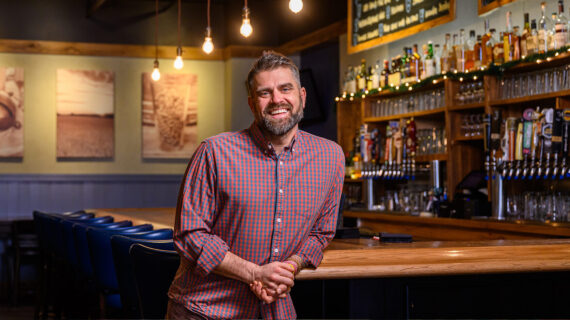
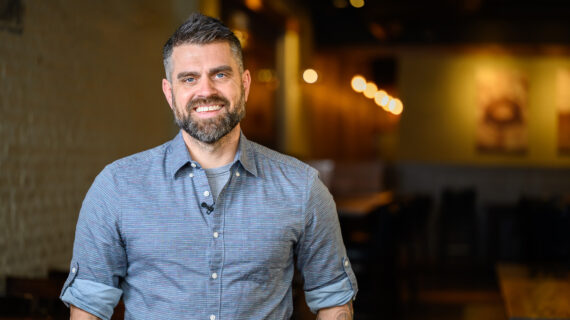
Chef Stefano Viglietti
11/03/11 | 26m 46s | Rating: TV-G
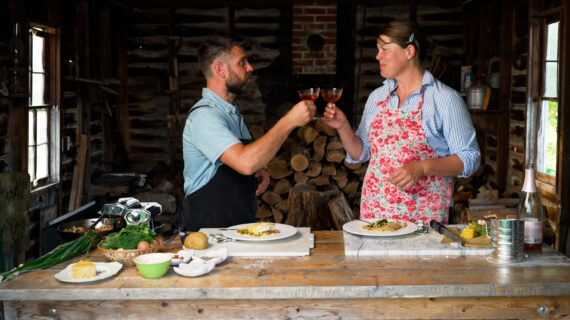
Travel to Sheboygan to visit with Chef Stefano Viglietti and tour three of his restaurants. After traveling to Italy, he and his wife Whitney returned to their roots and opened Trattoria Stefano 19 years ago. Visit his newest restaurants Field to Fork, Il Ritrovo and also the original Trattoria Stefano where Chef Stefano prepares us a southern Italian dish using mostly local ingredients.


Copy and Paste the Following Code to Embed this Video:
Chef Stefano Viglietti
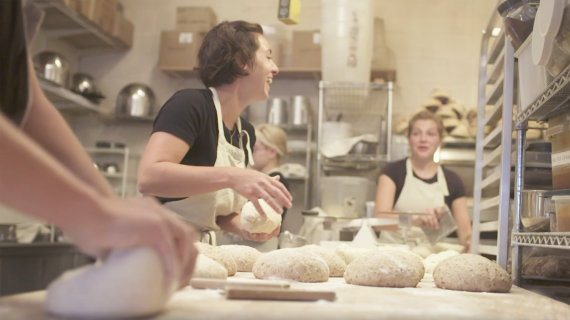
>> I'm here in Sheboygan, Wisconsin, which for me is the most unlikely of locations to find a crisp, balanced, Italian meal. Yet, with Stefano Viglietti, hometown boy, and the chef of Trattoria Stefano, I can get just that. In this episode, we travel to Sheboygan, Wisconsin, and visit Chef Stefano Viglietti and a trio of his restaurants. They vary from a cafe that doubles as a grocery and a bakery, to a true Neapolitan pizza joint, and the fine dining namesake, Trattoria Stefano. We step into the kitchen as Chef Stefano prepares an authentic Southern Italian dish, utilizing some of his favorite local Wisconsin ingredients. It's the deep and true flavors of Italy, by a self-taught Sheboygan chef, on this episode of Wisconsin Foodie. He left his hometown, and went off to school, and met a nice girl. But instead of getting a regular job in what he got his degree in, he went to Italy. And there, they learned how to cook from the master chefs of that country. He learned to cook in a manner that here, we kind of in a clichd way, call farm to table. But for those great Italian chefs, that's just how you do it, the fresh and local ingredients from very close by the restaurant. They came back then and employed that same European sentiment. They lived upstairs. They cooked all day. They were madly in love. And the restaurants grew. Now, on the same street, they've got three of them. Trattoria Stefano; Il Ritrovo, this great Neapolitan pizza restaurant; and then Field to Fork. They also sell all the greens and the fresh things that they get from the nearby farms, basically the ingredients that they use to cook with everyday, the way they've always done it for 19 years. Four restaurants, two children, I cannot wait to meet this family and to meet this chef, all working in this town, Sheboygan, on one street, in the heart of their community. >> Hi, Kyle. >> Hey, Chef Stefano. How are you, man? >> I'm doing well, thank you. >> Thanks for having me up. >> Welcome to Field to Fork. Absolutely. Glad you're here, excellent. >> Yeah. So this is Field to Fork, which are two of my favorite things. >> Absolutely. >> Tell me about which of the four restaurants I'm standing in now. >> Well, I like to call it the stage for the farmers. It really is a place where we take what's grown locally, we bring it in. We present it simply. It's our sort of casual breakfast and lunch caf. We get people familiar with things made with local products. >> Give me a couple of the local guys. >> Willow Creek Farm is probably one of my favorites. If you want to have a great piece of bacon, a beautiful piece of sausage, some ham on a biscuit sandwich with a Yuppie Hill egg, that's the way to go. Cleanest, best pork I've ever had in my life. >> I know one thing, and I know what fresh bread smells like, and I know that I'm smelling it like 20 feet from me. >> You are indeed. We bake everything right here. >> Can I see it? >> You sure can, let's do it. >> I love this smell. I could live in here. You do! >> She does live in here, that's right! This is our baguette, and it's a sourdough baguette, lightly soured. It's just come out of the oven. It's really, really fresh. >> I'm not even gonna ask. >> Just eat. And some Italian bread is about to go in the oven. We're going to do a little of that. Everything we serve here is baked in house. If you have a sandwich of any sort, you're going to have it on our bread. The only thing we do buy is a City Bakery hard roll, baked in a 100-some-year-old oven over on Michigan Avenue. Bread requires a special kind of a person. I really believe that. I used to love baking bread. I enjoy it. >> But you weren't any good at it? >> I was horrible. >> I immediately made my wife start doing it. Way back in the day, there were just two of us, my wife and myself. We came down every morning from our apartment above the restaurant and we did everything over there. >> Your story is so cool. Because you guys, you weren't trained as a chef. >> No. >> You met in college. History? She was philosophy? >> So what do you do in this economy? You open a restaurant, right? >> This is what happens when two people who couldn't get jobs in advertising. >> Precisely! >> Should we get out of Sarah's hair, and I can see the rest of the joint? >> Let's do it. Let's go on a tour. >> Let's. >> Excellent. Field to Fork, being one of our more recent openings, only about five or six years ago, was sort of the most-- And its name, Field to Fork, kind of says a lot. It tells you that we're trying to get things from as close to home as we can, from their fields to your forks as quickly as possible, and giving a stage to the wonderful, wonderful farmers and artisans that do business here in the state. What we found was that people, when eating here, would often say, "Gosh, why is this so good," you know, "I wish I could get this." And we don't have a full-service store menu. You're not going to buy your cleaning materials and paper towels here, but you're going to buy your grass fed lamb, your grass fed beef, your pastured pork, some of the best pastas and olive oil from Italy, different products from around the world. I would call it a specialty store, focusing on the perishable items from around here, be it produce, be it pork, lamb, beef, things like that. It's really just a small smattering of things that I realize it's things that I wanted, and I thought others might want as well. Come on in, Kyle. >> Stefano! I feel Italian already! >> Your accent's changing in just that little bit of time. >> It's incredible. I'm going to start doing this. >> We like-a da-pizza, huh? >> But not to you. >> All right, all right. Well, here we are in Italy now, more specifically we're south of Rome, we're in Naples. So what we're doing here, and something that always really turned me on Neapolitan pizza. I love all pizzas, but I wanted to do this particular type. So we're doing a wood fired oven only. I bring Caputo flour all the way from Naples, which the dollar the way that it is, and gas, it's not a cheap input ingredient. But it's absolutely worth it. When something has only three or four ingredients, they better be the best. >> You guys have a designation that only five places on the globe have, as far as this style of pizza, right? >> We were actually fifth in the U.S. Now there upwards of 15 in the U.S. There are a couple hundred now worldwide. We were 194, worldwide. >> Tell me the name of the designation? >> Vera Pizza Napoletana. VPN. Exactly, and all they do, is they want you to do it the way it's done there, and they want to sort of protect that method, so you can't just call anything you want "Neapolitan Pizza" and sort of dilute the product. >> So this oven, and this kitchen, is a world heritage site for Neapolitan pizza? >> Precisely. >> I don't want to talk about it anymore! >> You want to check it out. >> I'm just saying. >> Let's light a fire. >> Right on. >> The neat thing about this, too, is this oven, for 11 years, has really never been below about 500 degrees. >> I don't even need to ask you this. I know the response. More than the community, people were driving up from Chicago to have your pizza. >> Yes. >> They were coming from like two or three states. >> Right, it's true. I think that's because it has, and I hate to use the word concept, but as a concept, it had started to get known. More and more in big cities, but we were doing it here. In fact, I helped a guy open in Chicago, who came to me first and wanted to kind of learn. So I had a Chicago person come to Sheboygan to learn about this esoteric product. >> I'm just saying, 51,000 people in Sheboygan, Wisconsin, and a Chicago guy came here to learn. >> That's right. >> I'm just saying. >> Exactly, exactly. Well, we're gonna back up and Mike's gonna fire these guys. We're going to stand back, Kyle. He's gonna-- We've injured some people here. >> I believe it.
both talking at once
>> That is so great. >> That's right. And one of those is a margherita that's got the water buffalo mozz on it. That's an incredible, incredible product. >> Oh, look at this. Look at this! >> We cook enormous amounts. In the morning, we do sheet pans of vegetables, roasted eggplant, roasted zucchini, squash. We'll put a whole pig in there. >> So you use this lots. >> Yeah. >> Well, the latent heat is there. I save money. I literally don't have to turn an oven on. I can come out here, take the door off, put whole chickens in, put anything in, and bake for three hours before the pizza guys come in. >> I'd love to see a whole pig shoved through that little opening. >> It's happened. We've had a suckling pig in there. >> Yeah. >> Yeah, absolutely. >> So this is the perfect edict of classic Italian cooking, three to five ingredients and then you're done. >> You're done. >> If you can't accomplish, basically the exquisite with that, you're trying too hard. >> No, precisely. >> Then the ingredients aren't good enough, and you're just reaching. >> That really is the essence of Italian cooking. And what I like to tell people is if you've got a pizza with four things, you've got dough, tomato, basil and mozz, if one of the those is bad, you're at 75%, and that's a "C". That's not very good. So, I don't want a "C". Here's the prosciutto and arugula. And what they'll do in Italy-- >> All So this will be good. >> That's yours. >> They don't even cut these in Italy. They serve them whole, completely unsliced. So being a purist, the first night we opened, I'm not cutting the pizzas. >> Right. >> Every pizza that went out was immediately sent back, and they said, "Would you please cut my pizza?" I made one small adjustment. I said, okay, we'll cut them in four, but that's all we're doing. The way you do it, is you simply take it and you simply fold. You'll see, if you're in Naples, you'll see people out front in sort of the Philly cheese steak stance. >> Uh-huh. >> Where they'll go back like that. But you'll see people out in front of the pizzerias just enjoying. >> A killer, change your life, if you're in a bad mood, it'll put you in a good mood pizza, like these two, your restaurant, how much is one of these guys? >> Oh, a margherita is I think under ten bucks. I think this one is in the low teens. Yeah, it's incredible. It's worth it. >> That's too little. >> I believe it's value. >> It's crazy. >> Shall we raise the prices? >> You should. >> We won't though. Il Ritrovo, we did in the year 2000, and it was what I wanted to do in the pizza realm. I love deep dish. I love thin crust. I love different types, but I wanted to have a place where a little more casual, a little more approachable, screaming kids, no problem, that kind of thing, just a very, very comfortable place. So Il Ritrovo gave us that place. And studying economics, I know there can be downturns in a business cycle, so we wanted to have a place that was maybe a little lower price point as well, and it does all those things for us. >> That, I think was one of your children. And that was Il Ritrovo, which is your Neapolitan pizza place. >> She stole my pizza crust, by the way. >> So that's just one. Okay, so we have seen Field to Fork and Il Ritrovo. Now we go to the mother ship. >> We head to the mother ship, across the street, Trattoria Stefano, which was our original restaurant, in 1994. It's more multi-regional. Trattoria Stefano, that's the original place. We're coming into our 18th year. That's where it all began. I was a true novice when I opened, and I've learned a lot over the years. I have an incredible staff here that works with us. It's just been a really great pleasure. Trattoria Stefano was, many, many people thought it would be an odd thing to try here in a small town. But it has certainly worked extremely well. We've been very blessed. You know, the success of that allowed us to do these other things. So it's really been a great journey. This is the building which we bought a couple years after opening the Trattoria, because people were sort of waiting for their tables and standing over tables. So we knocked a hole in the wall. >> Chef, this is gorgeous. >> The word "trattoria," it really denotes a classification of restaurant, if you will. It is sort of supposed to be family owned, family run, a little more casual than a ristorante would be. But there should be a family behind it, at least in Italy. So that's how we feel here, that it really is a trattoria. >> The French have their bistro, and you have a trattoria. >> Precisely, precisely. That's a good analogy, absolutely. >> Yeah. >> So that's what we have here. >> It's a pleasure to be. It's a pleasure to be. >> Are you hungry? >> Yeah. >> Yeah? Let's go cook something. >> Okay. So this is where you actually cook? >> Precisely. >> This is where the Stefano magic happens. >> Right. Today, I'm going to use some beautiful Willow Creek Farm pork. I'm going to do a stuffed pork chop with some of their smoked jowl. What we've got here is the Willow Creek Farm pork rib rack. What we're going to do is we're going to cut one more chop for you. We brine these racks for a few days in a little bit of salt and a little bit of sugar. It really gives them a lot of moisture. It just locks in that beautiful flavor. Again, this is one of those things where the farmer has done the work. You know, this is, yes, we're still cooking it, but this is really more about what has been done before it comes to me. I truly mean that. I'm not just saying that. It is a bit of a-- when you sort of hear, is that a clich in this day and age, of saying that you know, it's the farmer, but it's really important. Again, it gets back to the most basic part about Italian cooking, and that's letting the person in the field do the work for you. What I'm going to do here, Kyle, I'm just going to cut a little pocket in this, okay? I'm just going to come through like this. >> That's where the stuffing will go? >> Create a little opening, exactly. What we're going to do, is we're going to have a little pig trio here. We're going to have a pork rib chop. >> Three little pigs, is that what you're saying? >> That's what we're doing here. >> All right, so this guy's straw. >> That's right, exactly. This is brick. And this is some of their smoked jowl. What I'm going to do, is I'm going to take a little bit of their beautiful jowl meat. It has a wonderful sort of percentage of fat to meat. I'm going to put some of that in our food processor. I'm going to take some of our beautiful local garlic, even our garlic comes from a local guy, as well. A little locally grown parsley, just a little pinch. I've just got some garlic, some parsley, some pig jowl and a little bit of pancietta. >> Okay. >> I'm just going to pulse it up a little bit. I'm going to make sort of a paste, of sorts. >> This will be the stuffing inside? >> Exactly. It's a wonderful, wonderful flavor of the south. You can see I just created a kind of a paste of sorts in there. This is water buffalo. >> It is? >> Caciacavallo, from Italy. It comes in a big white ball. It's just buffalo milk, as well. This is not mozzarella though. It's in the same family, but it's in the Fior di latte family of cheeses, the sort of stretchable cheeses. This one is harder, aged. This is also buffalo. So, I take a little bit of the cheese and I put it down. >> Like a little surprise. >> Exactly. And again, it's not a lot. I don't want so much in there that I'm going to throw this thing wildly out of balance. Then I just take a little of the stuffing. Then I kind of close it like that. Put one more piece in there, kind of tuck it. >> It is kind of a secret. You would never know it's in there. >> Oh, it's so wonderful. Again, not too big. >> You're going to have that great paste with that jowl cheek melting inside with the heat, around the cheese. >> Yeah. >> A little touch of parsley. >> Like that. >> What I'm going to do here, is I'm going to just flatten these a little bit. Flatten the bone part as well. It gives it a wonderful, sort of a big beautiful plate presentation. So now, by flattening that down, we're going to sort of make our cooking time a little more even. We're going to move over here now and put these in the pan and start it off. >> All right. >> Let's do it. We're going to take this pork, we're going to lightly season it. It's got some seasoning already, so I'm going to be pretty judicious with this. A little freshly ground black pepper. Just a little bit of salt, because again, we've got some salt going on in the inside there, as well as a little in our brine. >> This is olive oil. >> Extra virgin. >> Okay, but for the smoke and the heat level, this is going to be a quick dish. >> It is relatively fast, that's exactly true. The handles actually fell off this pan. This pan, at one time, had handles. Times are tough, you know? >> So I know what that is, chef. >> Indeed. >> I think I know what that is. >> You do. >> Because I'm from Wisconsin, but help me out. >> People say, "Why don't you make your own sausage?" I say because I can't do it any better than Willow does it. It's just that simple. But again, I know this is on-camera, but don't tell everybody, because I can almost never get enough sausage. We go through so much of this stuff. But again, you can see it's a beautiful coarse grind. the flavor is just incredible. You'll notice, we didn't really move or touch anything there. We're just kind of letting it do it's thing. And oftentimes, people will tend to turn things too quickly. We're just going to take a little peak there and see what we're looking like. I think we're looking pretty good. It looks pretty good to me. >> Yeah. >> A nice bit of color there. What we're going to do, is we're going to transfer this to the oven. Then I'm going to show you how I make Southern Italy mashed potatoes. I have to show you these. This is just gorgeous. These are called Cipollini onions, "ini" meaning diminutive. This is a small disk shaped onion grown by Peter Seely at Springdale Farms. We do what's called Agrodolce, a sweet and sour treatment. It's simply sugar, salt, vinegar and water. And that's it. These are served often with entres. It's a beautiful, beautiful-- I guess, think of it as a pickled onion, if you will. >> Okay. So you're telling me, this is your Italian mashed potatoes. >> In the south, they love their dried fava beans. They do it with chickory. They do it with rapini. And it's a wonderful start. There's a little bit of potato in here, as well. A touch of carrot, a touch of celery, just for a little base flavor. Then about 80% dried fava beans, which are called "havas bean." What I like to do to finish this, as well, is I'm going to whisk in some olive oil, okay. And that's something that they do right toward the end. We're just going to put a couple spoonfuls in here. Again, olive oil is one of those things that just is so good for you. Monounsaturated fat, full of flavor. Again, in the south, butter is only in your pantry for baking. It's never really in the kitchen. So that's about ready. That's our version of mashed potatoes. Then I'm going to do a little bit of sauted kale. This was grown by Peter Seely, as well, out in Plymouth. What I'm going to do is sort of a quick little saut using a little anchovy, a little garlic, a little chili flake. The anchovy, I like to call anchovy the MSG of Italy. It is in places where you wouldn't expect it to be, often. My favorite pasta on the menu is Orecchiette con Le Rape, which is a rapini pasta, with anchovies, garlic and chili flake. It's just incredible. It gives sort of a saline quality to the dish without sort of knowing that you're eating anchovy. >> So aside from the anchovies, and possibly the fava beans, everything else came from local farms. >> Absolutely, right down to our carrots, our onions, all of that stuff. Everything. So what are you putting in now? >> A little bit of thinly sliced garlic. >> Oh, I can smell that with the anchovies. >> Both. >> Wow. >> A little bit of chili flake. Then I'm going to go over to one of my secret ingredients, which is a chili paste. This is a mixture of a pepper that I'm pretty sure I'm the only guy in the country has, called a Cruschi pepper from Basilicata, and a bit of what they call bomba, Calabrian chili paste. You've got all of that great flavor going on there right now. As you can see, it's just incredible. >> The smells are killer. They're amazing. >> Great colors. Vibrant colors. >> That's a beautiful saturation of green. >> Isn't that something? >> That's amazing. >> It's incredible. >> Does this dish change seasonally with what you can get? >> Absolutely. If you can't get greens like this, we might do rapini in the wintertime, as well. But when you've got all these local greens like this, you just really want to let them shine. And just, for a little brightness of flavor, I'll add a touch of lemon. >> Oh, wow. >> Those have caramelized beautifully. >> Those things have sort of puffed up, too. >> They have. Now you can see we're getting what we call creep. They're beautiful, beautiful, starting to open up. You can see the inside. Just gorgeous. It's starting to give it to the pan now. Give us some of those flavors. Gorgeous color. What I'm going to do now is kind of fun. I'm going to take this sausage and chop it up. I'm going to put it into our kale, which I love to do. So we're even going to put pork on our vegetables. >> You're crazy. >> This is just all about pork today, right? >> You're just crazy. >> That's right. That's right. I'm just going to add a little bit of olive oil right at the end here. I'm going to take what I call tomato conserva, and what this is, is we take local organic San Marzano tomatoes. We cook them down briefly with basil, a little onion, a little thyme, just barely cook them. And then, we oven dry it. We put a little of this across the top. Again, I don't want to put too much on. I don't want to get too much in the way of the flavors here. I'm just going to put just a little bit of this water buffalo caciacavallo across the top, just a little hint, just like that. Then, a scant, scant amount of wine. >> I'm pretty thrilled. I skipped breakfast. I drove up to Sheboygan. I've already had extraordinary pizza. Now I'm going to have one of the entres, a classic Southern Italian dish, which is exciting for me, because my palette knows mostly Northern Italian dishes, as I think probably most people. And this is something that basically a chef in a small restaurant in Southern Italy taught Stefano. See, that's a salad. >> You see I've got just a little bit of stuff in the pan there. That's going to be our finish. Some of that stuffing has come out. >> This is gorgeous. The super sharp greens, which the kale still held onto its color, despite all of that heat and reduction. The sausage, that sort of earth brown, the crazy purples of these onions. The colors are gorgeous. >> Again, we're all about small portions! Again, I'm not adding butter to the sauce. I'm not making it heavy. I'm just taking what the protein has given us. >> I have one thought right now. >> Time to eat? >> I don't want to stand here and look at these. >> I'm with you. >> Yeah. I'll play waiter. I did this for years. Hey, hey. >> Have a seat. >> A seat with a view. >> Excellent. >> Nice. >> After you, sir. >> Oh, well, all right. Don't mind if I do. >> All right. >> Hello, wife of Stefano. >> Hello. >> This is a beautiful wine from Compania called Taurasi, made with the Ellenico grape, an ancient grape. >> Buon appetito. >> Grazie. >> Salud. >> Salud, thank you. A little date, a little tobacco, a nice legs. That's an Italian wine. >> All right. >> So, I always get nervous when I eat with chefs that have just cooked for me, because I don't know which of the three or four things I should-- He goes for the potatoes. I'm going for the pork. And you may have noticed that I went for the fatty edge. All right, here goes. Here goes something. The first thing I get when I bite in, is how crazy tender it is. >> Right, absolutely. Very succulent, very juicy, very moist. I get that little beautiful little hint of smoke from the jowl, the smoked jowl. >> Mm-hmm. >> Which I love, but it's not too much. Nothing's getting in the way of the flavors. What shines here again is what the farmer has done, which is the product, the ingredient, and how good it is on its own, with just a few little what we'll call chef touches, if you will. >> What I didn't think I would enjoy so much, pairing this kale with a bite of the pork. >> Right. The way I see the local food movement, really it's, you can call it a trend. It's maybe somewhat recent in this country. But it's a way of life. It isn't just something that should be a trend. It's a way you sort of, we should really be living. I came to it through my taste buds. I came to it through going to Italy, trying things, coming home, trying to re-create, not being successful, and realizing that it was the ingredients, that I had to do more to find things. I had to work a little harder. I had to make a few more phone calls. I had to make a few more trips. I had to really search, as the Italians do. They will drive, you know, 40-50 miles for the best pork jowl, or the best lardo, which is a backfat product. So they're very obsessed with the ingredients. So we decided that we had to do more of that. So for me, it's really first and foremost about taste. I'm not doing it as a political thing or as a statement. I'm doing it because it tastes better. It makes more sense. It keeps money in our local economy. Farmers come in and dine at my restaurant, and things just flat out taste better. >> These onions are amazing. I'm going to pair them with the pork. >> I love those. >> Well, it's a pleasure to watch you cook, but it's even more of a pleasure to eat with you. >> It's been a wonderful morning. I really appreciate it. >> Lovely. Thank you, Chef. >> Thank you, I appreciate it. >> Thanks a lot. >> Major underwriting support for Wisconsin Foodie  isprovided by the Dairy Farm Families of Wisconsin and the Wisconsin Milk Marketing Board. For more information or recipes, visit eatwisconsincheese.com >> This is going to be some yummy prosciutto. Look at that! I just want to take a big bite out of it. You might need to block with your left arm!
both laugh
>> It's the best. >> This type of arugula is called Sylvetta. You cannot buy this anywhere. >> I dated her! >> She's beautiful. She was. Now she's on our pizza. >> Grazie. >> Ciao.
Be sure to follow Wisconsin Foodie online at
WisconsinFoodie.com. There, you'll find articles and recipes, and specific segments of the show, and anything else you might want to know about Wisconsin Foodie. You can also, for more up-to-date, live content, check us out on Facebook, or follow us on Twitter.
Search Episodes
Related Stories from PBS Wisconsin's Blog




Donate to sign up. Activate and sign in to Passport. It's that easy to help PBS Wisconsin serve your community through media that educates, inspires, and entertains.
Make your membership gift today
Only for new users: Activate Passport using your code or email address
Already a member?
Look up my account
Need some help? Go to FAQ or visit PBS Passport Help
Need help accessing PBS Wisconsin anywhere?

Online Access | Platform & Device Access | Cable or Satellite Access | Over-The-Air Access
Visit Access Guide
Need help accessing PBS Wisconsin anywhere?
Visit Our
Live TV Access Guide
Online AccessPlatform & Device Access
Cable or Satellite Access
Over-The-Air Access
Visit Access Guide




Follow Us