

 Passport





Marieke Gouda, Noble Rind Cheese Company
03/19/26 | 26m 56s | Rating: TV-G
At Noble Rind Cheese Company, cheesemonger Sarah Clemens breaks down the craft of cut-to-order artisan cheese. The journey continues in Thorpe with Marieke Penterman, where raw milk travels from cow to vat, and a vertical tasting reveals the range of her celebrated Gouda — from young wheels to the famed “green card” cheese.


Copy and Paste the Following Code to Embed this Video:
Marieke Gouda, Noble Rind Cheese Company
– Luke Zahm: This week on Wisconsin Foodie: Once upon a time, Gouda could only be found in the Netherlands, but today, Gouda takes front and center in the Wisconsin cheesemaking conversation.
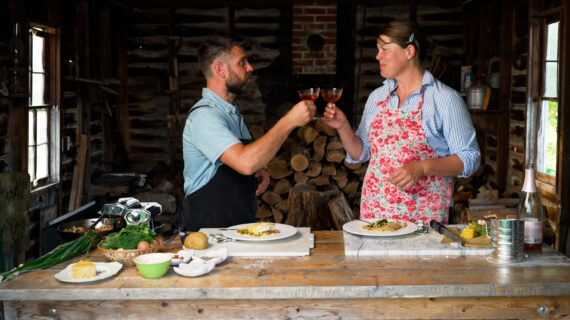
We're in Thorp, Wisconsin, to meet with master cheesemaker Marieke Penterman of Marieke Gouda.
– Marieke Penterman: We are at the creamery where we have our dairy farm, and we also have, we take the milk from our dairy farm and we make it in delicious Gouda.
I fell in love with milk, and then I fell in love with making Gouda.
And I always have loved the people that love Gouda.
I never have enough Gouda.
That's the reason why I came to this country and started this, like, cheese Gouda dream.
So, I was missing my cheese.
I did not have enough cheese, so... - Well, look at you.
You're filthy in Gouda now.
I'd say you've made it.
Great, let's go taste some cheese.
All of these are absolutely incredible.
All of these are absolutely distinct and unique and different.
I would say the same thing about you, friend.
– Marieke: I'm so happy to have you, so thank you.
– Luke: Wisconsin Foodie would like to thank the following underwriters.
[upbeat music] - Did you know Organic Valley protects over 400,000 acres of organic farmland?
So, are we an organic food cooperative that protects land, or land conservationists who make delicious food?
Yes; yes, we are.
Organic Valley.
- Wisconsin is known for some pretty great things, like football, food, and family.
At Jones Dairy Farm, we're proud to be a Wisconsin company, one that's been family owned and operated in Fort Atkinson.
Jones: Making mealtime better since 1889.
- The Wisconsin potato and vegetable growers are proud underwriters of Wisconsin Foodie.
It takes love of the land and generations of farming know-how to nurture a quality potato crop.
Ask any potato farmer and they'll tell you, there's a lot of satisfaction in healthy-grown crops.
- Employee-owned New Glarus Brewing Company has been brewing and bottling beer for their friends, only in Wisconsin, since 1993.
Just a short drive from Madison, come visit Swissconsin and see where your beer's made.
- With additional support coming from The Conscious Carnivore.
From local animal sourcing to on-site, high-quality butchering and packaging, The Conscious Carnivore can ensure organically raised, grass-fed, and healthy meats through its small group of local farmers.
The Conscious Carnivore: Know your farmer, love your butcher.
Also with the support of the Friends of PBS Wisconsin.
[upbeat music] - Luke: We are a collection of the finest farmers, food producers, and chefs on the planet.
We are a merging of cultures and ideas, shaped by this land.
[brats sizzle] We are a gathering of the waters, and together, we shape a new identity to carry us into the future.
[glasses clink] We are storytellers.
We are Wisconsin Foodie.
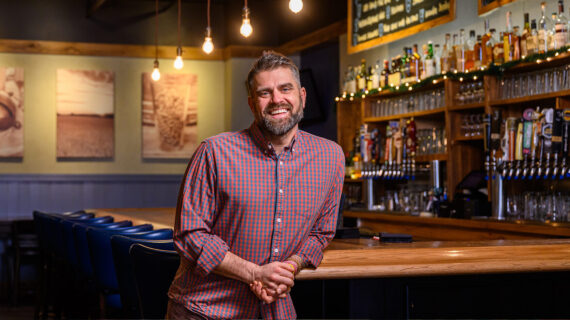
– Sarah Clemens: I'm Sarah, from Noble Rind Cheese Company.
We started Noble Rind about three years ago, and it is a fantastic cut-to-order cheese shop.
So, we get in big whole wheels of cheese and cut everything to order for our customers.
You can buy a little or a lot.
We also sell soups and salads and sandwiches and all sorts of homemade desserts and goodies.
What drew me to cheese was really learning about our local food system.
So, when I started working with cheese, I didn't really recognize... I mean, it should've been obvious, but I didn't really recognize that this was coming from local farms.
Most of the cheese that I knew at that point was just coming from the grocery store in big one-pound blocks, more commodity-style cheese.
So, when I started to learn about that direct relationship between farmers, their animals, the land, and then making this really exceptional specialty product, that's where I was really hooked.
[groovy music] So, for a board, I'm a big fan of the simpler the better.
I really want the cheese to be the highlight.
I really want the cheese to shine.
Maybe a few accompaniments to go with it, but it's really, it's really about the cheese.
[groovy music] So, we've got bandage-wrapped cheddar, one of my top, top favorite Wisconsin cheeses.
So, this cheese I love because of that mossy, earthy flavor profile.
It's got a little bit of crystals.
It's firmer yet than the SarVecchio Parmesan.
It's got a great, great crumble to it.
This is an ultimate cocktail hour nibbling cheese.
I love this one.
Fantastic.
Yeah, it's really different from a traditional Wisconsin cheddar in that it's not as sweet and definitely that earthy profile, you're not gonna find in, like, our regular cheddars.
So, really, Wisconsin's known for its one-year, five-year, ten-year, and even up cheddars, and they're gonna get sharper as they go.
This one's got some sharpness to it.
But really, it's that strong element of that cave aging, giving it that really earthy flavor profile that's totally unique and different from the Wisconsin-- our typical Wisconsin cheddars, which will be much more sweeter and higher moisture than this one.
Our second cheese is by a female cheesemaker in Wisconsin.
Her name is Pam.
This is Sartori SarVecchio Parmesan.
It's classic, it is beloved.
It's sweet, it's salty, it's crumbly.
Anytime I put this on the cheese board, everyone comes back to the counter and says, "What was that?
Can I have some?"
Okay, so, the SarVecchio Parmesan, you can see this beautiful color change within the wheel.
And I love seeing that in aged cheeses.
To me, it's very, this, like, sunset effect.
But you can also see little tiny spots of crystal growth here.
A lot of people think it's salt.
It's tyrosine.
It's a protein that is part of the cheesemaking process.
But it gives a little bit of crunch, a little bit of texture in these cheeses.
And that seems to be very popular with consumers.
The parm is drier and it's fruity and nutty, a little bit salty, but really nicely balanced between the different flavors.
So, I really, I really do like this one.
It's got a great texture.
So, we've got Marieke Gouda.
She's from Thorp, Wisconsin.
So, she makes one Gouda.
Some are aged longer, some have added flavors, but her traditional recipe for her Dutch Gouda is just beautiful.
This is so flavorful.
I mean, it's a plain young Gouda, but it's incredibly flavorful.
And part of that is because of the raw milk and because of Marieke's technique in making these Goudas.
So, it's very, very creamy.
A little is gonna go a long way.
I should also mention, too, that Marieke just won her Master Cheesemaking Award, so she is one of four women to ever get this award in Wisconsin, and that is a big, big, big deal.
So, that's very, very excellent for her.
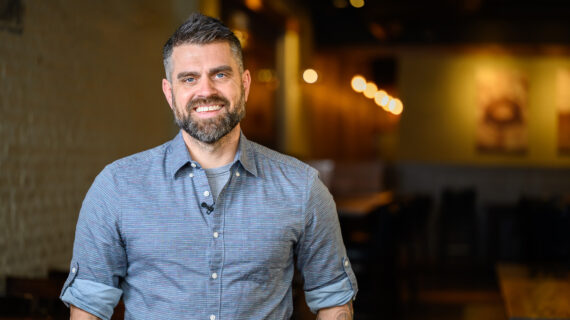
– John Umheofer: I'm John Umhoefer.
I'm executive director of the Wisconsin Cheese Makers Association.
You are at the big night where we are celebrating the winners of the United States Championship Cheese Contest, which we've been holding since 1981, but, honestly, before that, this event actually started in 1893, before we changed its name to this United States Championship.
Well, honestly, it's grown immensely.
Since when we began 44 years ago, it's grown from a couple hundred entries to now over 2,000 entries, and we're going for 3,000.
So, we're very proud of it.
All right, nine awards to Marieke Gouda.
[cheers and applause] Marieke Gouda, in Thorp, Wisconsin, the gold.
I have known Marieke since she made her first piece of cheese, I'm proud to say.
She has won this competition numerous times.
Countless times with gold medals.
And then, she's been the top cheese more than once, so we're very proud of what she represents in Wisconsin, and that is this renaissance of specialty cheesemaking in the state, and she's one of the greats.
Tonight, we bring CheeseCon to a close with a celebration of the best and brightest dairy processors in the world.
And alongside that, we'll acknowledge the accomplishments of new Wisconsin master cheesemakers.
So, for over 30 years, the industry has been issuing masters to people who go the extra mile.
These are great cheesemakers who have been making cheese for more than 10 years in a certain style.
Then they take three years of coursework and then take a rigorous 40-hour written test that makes them a master in a certain cheese style.
And there's just a handful of those in Wisconsin, and nowhere else in the United States.
- Thank you.
I am a master cheesemaker of Gouda!
Don't forget it.
Whoo-hoo!
[cheers and applause] About 18 years ago, we had this crazy idea to start making Gouda.
And I can call myself a master cheesemaker.
I just became a master cheesemaker.
– Luke: Once upon a time, Gouda could only be found in the Netherlands.
But today, Gouda takes front and center in the Wisconsin cheesemaking conversation.
We're in Thorp, Wisconsin, to meet with master cheesemaker Marieke Penterman of Marieke Gouda.
Now, Marieke has an amazing background story, but she also has very different generations and iterations of the cheese in which she's considered a master.
I'm really excited to come in today to taste some of these different generations, see some of the creative nuances, and find some ingredients to take back to the Driftless Caf to utilize on my summertime cheese boards.
So, today, we're in Thorp, meeting with Marieke.
It's gonna be a "Gouda" time.
– Marieke: My name is Marieke Penterman, and I'm a cheesemaker here in Thorp, Wisconsin.
I grew up in the Netherlands, a tiny country in Europe.
My parents were very hardworking dairy farmers.
We are at the creamery where we have our dairy farm.
And we also have, we take the milk from our dairy farm and we make it in delicious Gouda.
This is our milking parlor right here on Penterman Farm.
This is where we source our milk from.
So, we are a farmstead creamery, and that means we have the cows and the milk right here.
So, when these cows are getting milked, the milk goes straight through a pipeline under the ground.
And there's only 137 feet between here and when it comes into our cheese vat.
So, growing up, my parents started a dairy farm.
They took over my grandparents' dairy farm, and then my mom was always, she was always milking the cows where my dad would feed the cows.
My mom would be in the milking parlor, and as mom and having two kids, of course, what do you do?
You bring your kids with you in the milking parlor.
So, we basically were born in the milking parlor.
So, our whole life has been cows, and cows has brought us to Wisconsin.
People ask me, like, "Why Wisconsin?"
Like, well, it could have been anywhere.
If you love cows, you do end up in Wisconsin, so there's no escaping, I think, so... There is a certain peace, there's a certain magic, I think, in this barn.
Everything is designed with making sure that the cow is comfortable.
For us, when we started thinking about making cheese for us, it was very important that the distance between the cows and the creamery was so small that we didn't have to transport the milk.
Milk would go straight through the pipeline into our cheese vat.
And when people try our Gouda, I want them to feel, I want them to taste the farm-fresh quality.
And I want them to taste that the milk was from happy cows.
So, I love the cows, I love the cows.
So that's my first passion is cows.
Then I kind of fell in love with making cheese, even though I didn't start it because, because it was running in our family, or... I started making Gouda because I couldn't find Gouda here at all, and I'm here in Thorp, with 1,600 people, so the selection for Gouda is a little bit limited than I would be in a bigger city.
And today, we're making cranberry Gouda.
I fell in love with milk, and then I fell in love with making Gouda.
And I always have loved the people that love Gouda.
So, yeah.
[chuckles] What is Gouda?
So, Gouda is a water-washed curd.
One of the, there are a couple very important, critical things that is important for Gouda to be called Gouda.
It's a water-washed curd, so you drain some of the whey and you add water to it.
But between Gouda cheesemakers and Gouda cheesemakers, it could be you wash the curd twice the volume of the whey that you drain off, the volume of water that you add to it, the temperature as well what you play with, and the length of washing the curds.
So, those are different from Gouda maker to Gouda maker.
That's part of their own recipe.
The shape of the Gouda is very identifiable for Gouda.
Another thing is the brining.
So, how, the way you add salt to it.
So, like, brining is crucial to Gouda.
Then the aging part is very important too.
So, aging it on one shelf is very important.
And on top of that, we add a kind of a breathable coating to the cheeses.
So, it's like a plastic that dries up around the cheese but still let the cheese breathe because Gouda does lose about 15% of its weight during the aging process in the first half year, roughly.
The youngest you can get is our young Gouda, and that's about 60 days.
Then our six- to nine-month is a really delicious Gouda.
And that's the one that also won the U.S.
Cheese Championship in 2013.
So, I call it my green card Gouda because, in 2013, when we were nominated, not just the best Gouda, we were also nominated the Best Cheese of the-- We were the Grand Champion that year.
My immigration lawyer qualified me for the Extraordinary Ability route, and I'm the first cheesemaker that got a green card that way.
But I do remember my neighbor saying, "Marieke, you're front-page news in the Thorp Courier.
I never have been on the front page," you know?
We do get about 150,000 people every year coming to visit us here in Thorp, Wisconsin.
[gentle music] - Marieke?
- Oh, hey, Luke!
How are you doing?
- Great, how are you?
- Ah, fantastic.
Living the Gouda dream.
- Ah, the Gouda dream.
So, what are you up to today?
- Well, actually, I was gonna go in the aging room and see how everything is going.
We actually are coating some wheels today.
Are you-- Have you ever coated a wheel?
- I've never coated a wheel of cheese in my life.
- Well, we have to change that, don't we?
- Today is the day.
- Today is the day.
Yes, let's do it, let's coat some wheels.
– Luke: Okay, that sounds great.
Thanks, I'll follow you.
This is great.
– Marieke: Come along.
Right now, we are coating Holy Trinity.
So, it's a newer flavor of ours that has celery, onions, and green peppers.
And it's looking like to be coated.
- Yeah.
- Are we ready?
- Sure.
- So, this is the old-fashioned way.
In the Netherlands, they would also use a sponge.
You could do that too.
So, we use a brush, and you dip it... and you use this on it.
And then, you use the lazy Susan to help.
So, and you wanna make sure that you don't go all around on the bottom because you wanna be able to lift it up... - Sure.
- ...and keep a non-coated side.
- Okay.
I wonder what Susan ever did to deserve the moniker of being lazy.
Why are we, you know, painting this coating on?
I've seen cheesemakers use bandages.
I've seen cheesemakers, you know, obviously you want an aged rind on some of those cheeses.
Why is this essential to making Gouda?
- Well, there are different ways of doing it, of course.
For us, we chose this way because this is, this still let the cheese breathe, like, let it develop to its maximum potential.
If you would do a wax, like we all know, the red wax Goudas from the Netherlands, that's very airtight.
And I think they use it for exporting cheeses, so it would protect them during transportation.
And it also holds it in that age of what they ordered.
If they ordered the young Gouda, they don't wanna have an aged Gouda by the time it's on the destination.
So, this actually will let it age, breathe, and come to its full potential.
- This has been so fun getting to paint on the outside of these cheese wheels and, like, see the inner workings of Marieke and what's going on here.
But I'm really curious, because you have different ages of Gouda that you sell and you retail.
One of the things I love to do at the caf is take one cheese, but in different generational ages, and walk diners through that tasting process to see what are the nuances that the sweet, sweet essence of time really imparts on a cheese like this.
Would that be a possibility today?
- Yes, we'd love to.
So... - You still like tasting cheese?
- I never have enough Gouda.
– Luke: Great.
- That's the reason why I came to this country and started this, like, cheese Gouda dream.
So, I was missing my cheese.
I did not have enough cheese, so... - Well, look at you.
You're filthy in Gouda now.
I'd say you've made it.
Great, let's go taste some cheese.
- So, I thought it would be nice to have a variety of different ages of the cheeses.
We have four different age categories.
The first one would be our young Gouda and then our mature, and then we have our premium and then our reserved.
I do feel like the young is more like that playful child versus the wise, old soul towards the end.
Both are, all of them are very charming in their own ways.
But I'm very curious what you think of it.
So, we'll try.
Shall we start with the young one?
– Lke: Here we go.
What do you smell?
- I smell, like, the clean milk that came from our own cows.
- It's simple, it's soft.
Initially, you get a little bit of the salinity, creaminess, for sure.
It's this intense nuttiness that kind of comes out.
- And it has earthy.
– Luke: Mm-hmm.
- I find that earthy tone to it, too, so... So, our mature is about 6 to 9 months.
– Luke: Okay.
- Has a little bit more of a bite to it, but it's still leaning more towards the younger version, I think.
- Mm-hmm.
- Very pleasing too.
And I think we should try this next.
– Luke: Okay, here we go.
Mmm.
- Mmm.
And it kicks in quickly.
- Dear Lord.
You got a little bit of that sharpness.
– Marieke: Mm.
- You know, the age.
I definitely get more, like, umami.
You know, that earthiness.
- And this is then the one that won in 2013, the U.S.
Championships.
So, this is my green card cheese.
- Did you just say this was your green card cheese?
What is-- What are you talking about?
- Yeah, so, in 2013, we were nominated the Grand Champion at the U.S.
Cheese Championship.
So, that means we did not only win the Gouda category, we actually won Best Cheese out of those thousands of entries.
And my immigration lawyer at that point said, "Hey, let's see that we can qualify you for the Extraordinary Ability route," which normally only professors and athletes qualify for.
But I got approved, got my green card, don't have to hide in basements anymore, and I'm good to go.
- I think it's, like, the most low-key Wisconsin flex that you got your green card because your cheese was so darn good, the United States couldn't deny you citizenship any longer.
They're like, "Well, we're gonna make this one of us now."
- Yeah, "You proved yourself."
- Yeah!
[laughs] And I can see why.
That's beautiful.
- Well, thank you, so.
Well, the next one is our premium.
It's about 12 to 18 months old.
And this one is becoming more intense.
So... Mmm, and I bit on some tyrosine.
- Mmm, I love that.
Explain to the folks what tyrosine is.
- It's, like, a little crystallization of the proteins.
So, and they come into these kind of... They look like little white spots through the cheese.
- One of the really enjoyable things that I didn't expect with this bite, you know, the first two cheeses, you can, you can crush them in your mouth with your tongue.
They're soft.
- Mm-hmm.
- There's, like, a plasticity to it that's very nice, almost like eating a really good piece of chocolate.
Man, I get some of the nuttiness in that.
You get, obviously, a little bit, again, of that, that side of your palate.
Sparkling.
- Yeah, different again.
– Luke: Mm-hmm.
- Yeah.
- The sweet, the salty.
It's truly, like, a total palate experience, which is really delicious.
– Marieke: Mm.
- And fun.
This is almost intimidating, this last one.
- That last one, I'm very excited about.
Like all of you, I'm very excited about.
This is already art by itself.
So, this is actually one of my favorite cheeses.
- Holy... - Doesn't it tickle?
Ah, and just the caramel notes in it.
– Luke: Yeah!
- And yet it, has that hint of creaminess.
– Luke: Mm-hmm, mm-hmm.
It's not, you know, sometimes, like, if you eat a really dry cheese, it's been really aged, it takes all that moisture out of your mouth, almost like a really tannic wine or a beverage.
This doesn't have that.
It still has, like, the creaminess, all that luxurious Gouda flavor just hanging on.
But it's got complexity in there.
And that complexity comes in a couple different forms.
- Yep, it has soul to it, like, character.
And when we talk about Gouda, look, this is all one kind of Gouda.
It starts out this, and then it goes, and it becomes more mature and becomes this wise, old soul towards the end, from a playful, young child.
- Baby.
- Yeah, the baby, it grows up.
You have four different kinds of cheeses right here, yet it started out like this, and it started out as liquid gold, I always call the milk.
– Luke: Mm-hmm.
- And it can bring you this.
- Now that you're a master cheesemaker, if you had to compare, like, your perspective in life to where you are to one of these four cheeses, do you feel like you're over here in the limited edition area?
- No, I'm still the young, playful child.
What are you talking about?
[both laugh] - All of these are absolutely incredible.
All of these are absolutely distinct and unique and different.
And, you know, I would say the same thing about you, friend.
Like, you're an incredible human.
What you do is distinct and unique and different.
I think you bring a lot of energy and perspective and passion into the Wisconsin cheesemaking scene.
You got a big shadow, sister, and people will rise up behind it, and you're gonna influence a lot of cheesemakers for generations to come.
- Thank you.
- Yeah, thanks for taking the time to hang out with me today and walk me through this vertical flight.
- I'm so happy to have you.
So, thank you.
- Thank you.
Was that a Gouda ending?
What do you smell?
- "Eat me."
– Luke: Excuse me?
[both laugh] Now, do you ever race these things down a hill like they do in England?
- Yes, no.
- [laughs] No.
- We should, though, so.
We just have to work on your, like, average time of coating.
- You want me to just blast this out?
Give me a spray paint can?
- No, I-- - And her Gouda-making style-- And it's a Gouda day just to see what's going on here in Thorp.
[laughs] Wisconsin Foodie would like to thank the following underwriters.
[upbeat music] - Did you know Organic Valley protects over 400,000 acres of organic farmland?
So, are we an organic food cooperative that protects land, or land conservationists who make delicious food?
Yes; yes, we are.
Organic Valley.
- Wisconsin is known for some pretty great things, like football, food, and family.
At Jones Dairy Farm, we're proud to be a Wisconsin company, one that's been family owned and operated in Fort Atkinson.
Jones: Making mealtime better since 1889.
- The Wisconsin potato and vegetable growers are proud underwriters of Wisconsin Foodie.
It takes love of the land and generations of farming know-how to nurture a quality potato crop.
Ask any potato farmer and they'll tell you, there's a lot of satisfaction in healthy-grown crops.
- Employee-owned New Glarus Brewing Company has been brewing and bottling beer for their friends, only in Wisconsin, since 1993.
Just a short drive from Madison, come visit Swissconsin and see where your beer's made.
- With additional support coming from The Conscious Carnivore.
From local animal sourcing to on-site, high-quality butchering and packaging, The Conscious Carnivore can ensure organically raised, grass-fed, and healthy meats through its small group of local farmers.
The Conscious Carnivore: Know your farmer, Love your butcher.
Also with the support of the Friends of PBS Wisconsin.
Search Episodes
Related Stories from PBS Wisconsin's Blog




Donate to sign up. Activate and sign in to Passport. It's that easy to help PBS Wisconsin serve your community through media that educates, inspires, and entertains.
Make your membership gift today
Only for new users: Activate Passport using your code or email address
Already a member?
Look up my account
Need some help? Go to FAQ or visit PBS Passport Help
Need help accessing PBS Wisconsin anywhere?

Online Access | Platform & Device Access | Cable or Satellite Access | Over-The-Air Access
Visit Access Guide
Need help accessing PBS Wisconsin anywhere?
Visit Our
Live TV Access Guide
Online AccessPlatform & Device Access
Cable or Satellite Access
Over-The-Air Access
Visit Access Guide




Follow Us