

 Passport






Lincoln Warehouse
02/21/19 | 26m 47s | Rating: NR
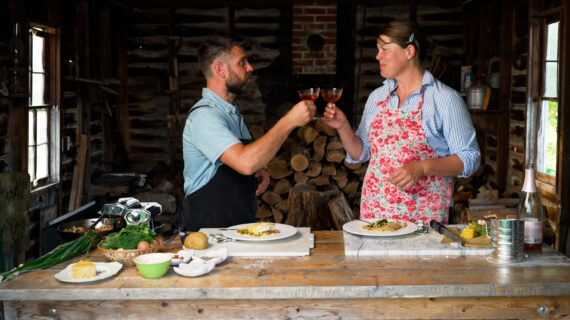
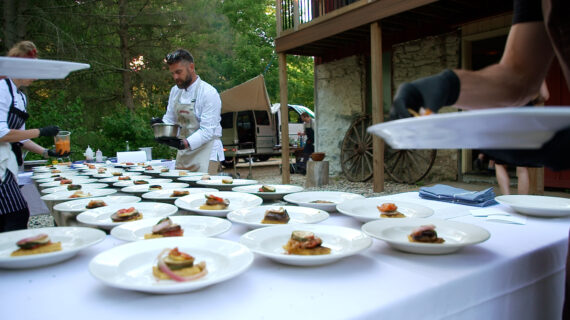
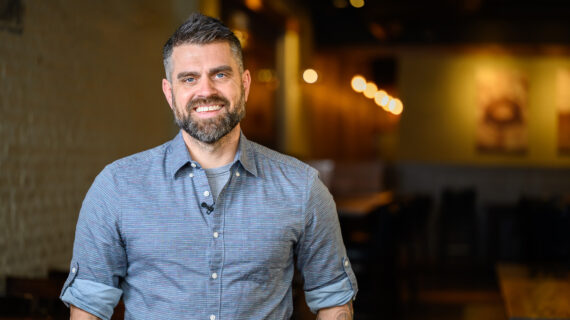
Visit a Milwaukee warehouse that’s a creative hub for food and drink innovators. Johnny Stallion of PhiloÇoffia takes coffee to new highs; MOR Bakery and Café’s Traci Morgan-Hoernke cooks up gluten-free goodies; and Mary and Noah of Top Note Tonic boil a new batch of ginger beer. Finally, visit Twisted Path Distillery and meet owner Brian Sammons.


Copy and Paste the Following Code to Embed this Video:
Lincoln Warehouse
Narrator
This week on Wisconsin Foodie. We're in Bay View in Milwaukee. We are in the Lincoln Warehouse. We love this place because there were a lot of other small entrepreneurs here that were doing similar or synergistic products. So this fresh ginger is really potent and especially now we're boiling it. Everybody in the warehouse knows when we're making ginger. The Twisted Path concept is really about sort of rejecting convention and following your own path. I like that idea of really taking advantage of the fact that we are your local distillery.
Man
Cannabidiol, which is known as CBD, into the coffee, the combination is, this is going to revolutionize coffee itself. So I'm not professionally trained, so coming in and just playing around and having things be different, it's the jam to life. Why do you want to be same old, same old? We're all small business, we're all trying to just follow something that we feel completely passionate about. It's very cool.
Narrator
Wisconsin Foodie would like to thank the following underwriters for their support. The Dairy Farmers of Wisconsin are proud to underwrite Wisconsin Foodie. And remind you that in Wisconsin, we dream in cheese.
people cheering
Narrator
Just look for our badge. It's on everything we make. Employee-owned New Glarus Brewing Company has been brewing and bottling beer for their friends, only in Wisconsin, since 1993. Just a short drive from Madison, come visit Swissconsin and see where your beer's made. Milwaukee's landmark art deco hotel offers luxury accommodations, legendary hospitality, and world-class dining, paired with the hotel's roaring 20's vibe makes the Ambassador a must experience destination. From production to processing, right down to our plates, there are over 15,000 employers in Wisconsin with career opportunities to fulfill your dreams and feed the world. Hungry for more? Shape your career with these companies and others at FabWisconsin.com. Society Insurance. Small details. Big difference. Edible Milwaukee Magazine. Also, with support of the Friends of Wisconsin Public Television.
exciting jazz drumbeat
car passes
chickens cackling
drink filling
chopping vegetables
fruit popping
meat sizzling
light jazz music
Narrator
We're in Bay View in Milwaukee, we are in the Lincoln Warehouse, which is an old A&P warehouse. We love this place because there were a lot of other small entrepreneurs here that were doing similar or synergistic products. It's actually quite a community. Everyone kind of supports one another and we love it because of that. You feel like you're at home with some family and friends when you come here. I actually was in beer before I started this business, playing around in the kitchen with different herbs and spices and found that I really liked the syrup just in soda water versus mixing it with beer. It tasted good in beer too, but I thought we might be onto something a little bit more versatile if we just made the syrup. So we went from thinking of making an herbal beer and a small brewery to making high-quality cocktail syrups and we make all of our Top Note Sparkly products from that. We're going to make some ginger beer today. Ginger beer is an old beverage, really just made from a lot of ginger, some sugar, and some acid. In cocktails, a little bit of sugar goes a long way and if you have better liquor you're going to not want as much sugar in the cocktail, so our syrups are actually usually about half of what a simple sugar is, which allows the bartender a lot more flexibility in what they do. All right, I'm going to cut up some dried ginger. So we like to build it with the different layers, dried ginger, candied ginger offers a different dimension. It also has just a little bit different character to it, and then we also use ginger juice which has a really nice fresh ginger character. If you do it right, it just comes off as a really good pleasant experience the whole time you're drinking it, versus one or two notes of heat. Ginger is a funny thing in that way. So this is the ginger root, fresh ginger root that I ground up yesterday. I wash it, scrub it, break it apart, cut off all the bad spots, I try to retain as much of the skin as possible 'cause there's quite a bit of flavor in that. If you get too much of this on your hands your hands will burn, they will, it's really spicy. You got to be careful and wear rubber gloves quite a bit, even while it's cold. And we're going to put this in our tea kettle. So this fresh ginger is really potent and especially now that we're boiling it. It's going to get really intense in here. It can kind of catch your throat and even possibly make you sneeze. I've gotten a little bit used to it, but everybody here in the warehouse knows when we're making ginger. Our fresh ginger is rolling boil now, so I'm going to add our dry ingredients into the tea kettle. We have a bunch of lemon peel, some cut up candied ginger. And there's also dried ginger in there as well. We don't hold back on the ginger on our ginger beer. And then the second bowl we actually have some galangal root. It doesn't have ginger flavor but it has a heat to it. And of course being a root, it has a kind of a nice earthy flavor as well. I've always liked doing the flavor development. That's the fun part for me. Just having an ability to kind of taste and tweak, make things better. It's a labor of love. I'm going to start this slightly tedious process of scooping off the solids from the tea kettle. They still have a lot of flavor in them. A lot of liquid in them, so... It's kind of a slow way to do it, but it's how we like to do it, it's hands-on. I pressed out all the tea kettle solids, all the roots and herbs and peels. And pulled out as much liquid as we could out of there and as much flavor as we could. And now we have it combined with our sugars in these kettles and we're back up to boiling, we like everything super-hot. And now we're going to strain it one last time into our 20-gallon kettle and keep that as hot as long as we can while we fill our bottles. So there's about 25 drinks in each one of these bottles, 'cause you would take one ounce of the concentrate and about six ounces of seltzer. That would be actually a pretty tall pour. So in reality, if you're doing shorter pour cocktails there's more than 25 drinks in here.
Mary
But yeah, this is the effort that it takes to really create a craft beverage from scratch. You really got to think it through and understand the ingredients. And, I think we make better products because of it. We really have thought through how these flavors create a better cocktail for the customer, versus just trying to put a fancy label on a tonic. It pays off in the long run, 'cause we're really all about flavor and quality. It's what we do. One of the great things about being in the Lincoln Warehouse is the community of beverage makers and we're lucky to have Twisted Path Distillery downstairs who also does a lot of innovating with distilled spirits and even the cocktails that they make. So I'm going to bring a couple of these bottles down to them to play around with. Cheers. I'd want to put gin in that, but I want to put gin in pretty much everything that's liquid. It's just this included. This'll be particularly delicious with gin and tonic.
funky jazz beat
Mary
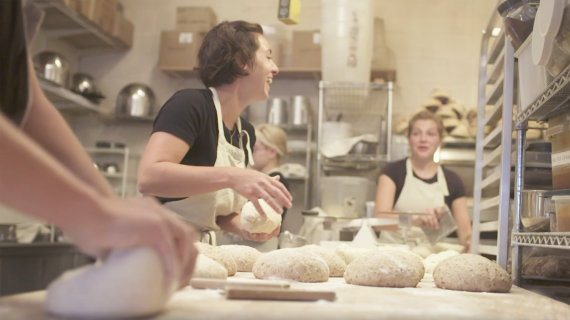
We opened officially about three and a half years ago. So opened originally just the small tasting room and a small production area. A year and a half in, we expanded the production area. About a year after that we expanded the tasting room. So we've just been sort of growing within the building. This is my third career, my first career was at the Central Intelligence Agency. My second career was as a lawyer here in town. And that's when I gained an interest in distilling. Home distilling is illegal though. So... I was just interested in it. I was thinking a lot about it. And my thoughts were really tasting good. And eventually we just got to a point where we realized, my wife and I, that we just wanted to chase the dream. The Twisted Path concept is really about sort of rejecting convention and following your own path, follow your own twisted path, right? Our vodka is different than most. It's got a residual character from the wheat we fermented for it. The white rum is a very full-flavored white rum, it's not at all like a more neutral white rum that people are mostly used to. The dark rum is almost whiskey-like. The gin is very unusual. The first step in making spirits is actually very similar to the first step in making beer, it's called mashing. So I'm going to be mashing a batch of blue corn vodka, so I mash batches that are about 300 gallons. So it's 250 gallons of hot water that we just poured here into the mash tank. And then I've got 600 pounds of blue corn. Mix it up, basically make like a corn mash, corn mush. So all of my grain, for all my grain-based products is the wheat for the vodka, which is then the base for the gin. For all the whiskeys I've been making, I get all of my grain from Dave Dolan's farm in Dodgeville, Wisconsin. So Dave explained to me that as a small organic farmer, his dream is to have a buyer for his grain when he plants it. And I told him that my dream as a distiller is to know that I have a steady, reliable supply of a good grain that's going to make the product I want. He'll grow what I want, and, what I'm looking for the next year, we'll just forecast it out, and he's my grain guy. He's my farmer. And then I'm adding enzymes over the course of the day as it cools down. And the enzymes convert the starches in the corn into sugars. Point being that then at the end of the day I can pump it over to fermenter and add yeast and yeast will eat the sugar and put out alcohol. None of this is automated, it's all just me dumping things and stirring things. Pretty soon I'll have to start using the other mixer as well. What happens is the grain flour hits the hot water, it'll gelatinize when it hits the water and form a goo, gelatinized layer around the flour, so it'll form dough balls. You just kind of have to break 'em up. The mixers do a pretty good job, but I can do it faster if I use a hand mixer a little bit. I don't distill my vodka to completely tasteless. I distill my vodka just short, where it's still vodka, but there's something different about it that you can't quite put your finger on. That to me is interesting vodka. And that you have to do at a craft level like this where you're adjusting by taste, you're doing things by taste. But if you're leaving a little something in the vodka, then all of a sudden, your ingredients matter. How you mash, how you ferment, and the quality of the whole process all matters if you can taste something. It leaves this sort of soft, round, sweet body to it. But not exactly a flavor, just a bit of a feel. So yeah, it's different... a different end result. I think that's it. All right. Voil! This will sit like this for a few hours. Checking the temperature and the pH and things like that now and then, adjusting things. And then when it's cooled down enough, starches are converted to sugars, it goes into a fomenter, add yeast. Yeast eats sugar, puts off alcohol. So this is basically done as far as adding ingredients and now it just needs a couple hours to do its magic. Boiling blue corn mash over here, just like what we mashed in the other room, this is one from last week. It fermented to say a ballpark 10 percent alcohol. That's boiling over here. When you boil that thing with alcoholic content, the alcohol evaporates a little bit faster and easier than the water. So the vapor coming off is higher proof alcohol. So this directs that alcohol vapor up and over, goes through this four-plate column and then because I'm making vodka it also then goes through this 12-plate, my vodka column in the back. It's literally a physical plate that stops vapor from falling down. It builds up on a plate. Then it can flow down to the plate below it. What it's doing, the point of the whole thing is this, it's forcing physical interaction, bubbling, between vapor going up, and condensate coming down, liquid coming down. The more they interact, the more they bubble, heat will transfer between some of what's going up and some of what's coming down, and on average the lower boiling point will go up and the higher boiling point stuff will go down. Because what's coming off the still is not just ethynyl and water. There's a lot of other trace elements and trace things created in fermentation that are coming over too and you're separating them the more you distill them. That's why for vodka, to get it neutral tasting at 190 proof, you're separating it very, very precisely. That's why you need to distill it more. Honestly the experimentation is the fun part. And I think it's the part where I diverge the most from what other people are doing. But it's got 300 or so jars of different spices or herbs or botanicals infused in booze separately and so we can from that, we can make liqueurs, we can make amaro, we can make bitters, we can make modified cocktails, all kinds of things. I've had lots of people in here that have been to many distilleries and they're all surprised by this. I don't know that this is something anybody does. We don't want to be just manufacturers, we want to be innovators. That means we want to keep doing that. We want to keep coming up with new things. We're actually just about to release an experimental series of things that are just for sale in the tasting room. We're not going to go through all the rigmarole yet to release any of them to a distributor and get them out into stores. Plus a lot of them are very niche. There might be a handful of people that really like it. But all these experiments we're doing, we're going to start selling them out of the tasting room. We're going to print it up on cheap little paper labels. Stick 'em on bottles. Get 'em on the shelf. So pretty soon, I think in short order, we're going to have a dozen different bottles of weird things for sale. And just see what people are into, and I like that idea of really taking advantage of the fact that we really are your local distillery in that you can come in here and we'll engage you in the creation process and you have opinions on something and you have an idea about something to make. Let's try it, we'll make it. You know, drink some. What's going on at Lincoln Warehouse is cool to watch in this sort of post-industrial area of Milwaukee. So we end up having is a lot of these places like us are popping up in otherwise somewhat dead zones like sort of the rust belt, washed up factory area, washed up warehouse areas, and we're taking those and we're turning those into, or revitalizing those into centers of commerce and then other things pop up around us. The name of my company is PhiloCoffia Coffee Company. And PhiloCoffia is Greek word which means philosophy, the love of wisdom and knowledge. And the way it's spelled is philo-coffia, so love of wisdom, but also love of coffee, is the way it looks, so if you say Philakoffia instead of Philacoffia, that's fine. I was trying to preserve coffee beans with coconut oil and after experimenting for a couple days I had to use up the coffee instead of throwing it away. And the moment it started to brew and I smelled it, it was this, just very light savoriness to it, and then I got into barrel aging, which I take the coffee beans and age them for up to four months. Here we have some spiced rum barrel aged coffee. You can see it's much lighter, it has this wonderful spiced rum aroma to it and a little bit of chocolate as well because we infuse chocolate into it prior to roasting. What I'm going to do now is I'm going to have my coffee here which has coconut oil actually mixed in the grounds, and that coconut oil is meant to basically make the coffee taste smoother and to enhance the extraction process. Take a little bit of cinnamon. Cinnamon is nice because if you use it in the right amount it doesn't have to taste much like cinnamon but it gives this almost sweet kind of flavor. So one little trick you can do to make good-tasting coffee at home without having to buy really expensive coffee is, take whatever coffee you use, and use that same amount, and then only use about half to two-thirds of the water. And when it's done, you take it off the burner so you don't burn it, and then just add water into the coffee to make it less strong. You'll notice it's smoother, less bitter, and the best cup of coffee you've ever brewed at home. So we have the coffee right now, we make sure the bottles are clean, and we have caps ready to go. Put it right above the ridge there. Put the cap on. And this is good to go. Most recently got involved in putting cannabidiol, which is known as CBD, into the coffee. It's the non-psychoactive compound in hemp that makes you feel relaxed, which helps to reduce some of the jitters and just gives you this underlying feeling of wellness. The combination is, this is going to revolutionize coffee itself. I found out about it five weeks ago, and have since started putting it into coffee and it's just now mostly what I do. Right now you can find Philooffia's CDB cold brew at a lot of local places around Milwaukee, Outpost, Natural Foods, Beans and Barley, Good Harvest, Mor Bakery Cafe. And she is now feeding me most mornings. I buy about a dozen of her little breakfast muffins that she has that are just amazing. I would love to have one of the peanut butter delights and a baby plum torte, the purple one on top. Purple one, excellent. The space we're standing in, for the past two decades was the corner of an engineering firm and we're currently on the furthest north end of Lincoln Warehouse. We get to face the phenomenal KK River and 60 feet of windows. Mor means mother in Swedish. My middle son was 13 pounds at a year. It was failure to thrive, he fell off the growth chart. And putting him on a gluten-free diet actually, even though he wasn't celiac, we figured out over more testing that he was malabsorbing fat. So on a gluten-free diet his body healed after a year. And then I happened to be fortunate, I was the first employee outside of family at the Gluten-Free Trading Company, which was the first dedicated brick and mortar gluten-free grocery store in the United States. So I knew about intolerances, I knew about food allergies, I had no idea about celiac disease and I like to say neither did the United States, 'cause they thought it was one in 5,000. They figured out that no, it's like one in 133. But honestly, I wouldn't have done it if it wasn't for my son, and just trying to be a mom and make his life feel easier. So I have crumbles, I have quick breads, I have cookies. My brownie recipe is completely vegan, and one of the cleanest things that I make. Those are things that I usually always have and then I'll play with things like a blackberry cheesecake mousse. It makes my day fun, I have 20-hour workdays so coming in and just playing around and having things be different, I don't know, it's the jam to life. Why do you want to be same old, same old? So one of the things that I am different about is I am a fresh bakery. I have decided that in the gluten-free world, a lot of things are either shelf stable or frozen. I don't freeze anything here, I make small batches. I make 120 cookies at a time. I have a cookie flower blend that I use and will substitute one for one when I'll say, get a new recipe and I try it with that first, 'cause it just works well together. It has sorghum, brown rice flour, a teff flour, arrowroot and tapioca starch. So, I'm not professionally trained. I do believe though, that that gave me the ability to not have any fence posts and any parameters, so I mix all my own flour blends here. I don't want to be beholden to anybody else's recipe. But the neat thing about that is it's a chemistry project, 'cause I'm in back thinking about what are the flavor profiles, what do I want to put in here, how much protein do we need, what's the airiness. A lot of times, the way my recipes look for the people that have worked for me, it's an odd way of adding ingredients, or just turn the beater on, walk away, let it beat the life out of it and they'll get to the point where you need it to be, which is not traditional in anywhere else. In a traditional kitchen you're worried about over-mixing and over-producing the gluten, I don't have to worry about that. If you over-work the gluten on a pie crust, you're going to make your pie crust tough, I don't have that worry. When I make bread dough, there's no kneading it, it's like putting together a recipe of brownies. It's a much simpler process. And it doesn't have to be complicated. For true celiacs, it's a big deal. It's a big deal to be able to go someplace and let down your guard and just know it's okay here. I don't have to think about the 1,600 other things I have to do if I go eat out at a restaurant, or if I go do something else. To know that I can make somebody's day a little easier, that's why I ge t up in the morning and work 18- to 20-hour days. The best piece of it all is just the collaboration and the support, 'cause we're all small business, we're all trying to just follow something that we feel completely passionate about and that is sort of cool. It's probably the closest thing that I have experienced to being in college again where you're sitting there and you're trying to, like, all plan something and then you're like, "Oh, what do you think about this," and you go and you talk to the person who's the best person to have that conversation with, and everybody's just happy for each other and supportive of each other and it's a really cool scenario. It's very cool.
fast jazz beat
Mary
He,y guys, how ya doing? This isn't going to have any audio, so I'm just going to say stuff. And then you're going to like crack these open. And then he's going to film us while we get drunk. It'll be a lot of cut scenes. It's funny 'cause when we first started this business, our kids were a little younger. And one of my sons just loves dried ginger, so we had to keep this away from him.
laughing
Mary
Otherwise, it would disappear. I think he could eat a whole bag in one sitting. I can't scoop with you right next to me. How am I supposed to go, I'm like, I'm like you're just a little close there.
Narrator
Wisconsin Foodie would like to thank the following underwriters for their support. The Dairy Farmers of Wisconsin are proud to underwrite Wisconsin Foodie and remind you that in Wisconsin, we dream in cheese.
people cheering
Narrator
Just look for our badge. It's on everything we make. Employee-owned New Glarus Brewing Company has been brewing and bottling beer for their friends, only in Wisconsin, since 1993. Just a short drive from Madison, come visit Swissconsin and see where your beer is made. Milwaukee's landmark art deco hotel offers luxury accommodations, legendary hospitality, and world-class dining, paired with the hotel's roaring 20's vibe makes The Ambassador a must experience destination. From production to processing, right down to our plates, there are over 15,000 employers in Wisconsin with career opportunities to fulfill your dreams and feed the world. Hungry for more? Shape your career with these companies and others at FabWisconsin.com. Society Insurance. Small details. Big difference. The Wisconsin Department of Natural Resources. The Central Wisconsin Craft Collective. Something Special from Wisconsin. Illing Company. Edible Milwaukee Magazine. Also with support of the Friends of Wisconsin Public Television. For more information about upcoming Wisconsin Foodie special events, dinners and tours, please go to WisconsinFoodie.com. There you can sign up for our mailing list to be the first to know about our events and offerings. Also, get connected with use through Facebook, Instagram, and Twitter.
funky jazz beat
Search Episodes
Related Stories from PBS Wisconsin's Blog




Donate to sign up. Activate and sign in to Passport. It's that easy to help PBS Wisconsin serve your community through media that educates, inspires, and entertains.
Make your membership gift today
Only for new users: Activate Passport using your code or email address
Already a member?
Look up my account
Need some help? Go to FAQ or visit PBS Passport Help
Need help accessing PBS Wisconsin anywhere?

Online Access | Platform & Device Access | Cable or Satellite Access | Over-The-Air Access
Visit Access Guide
Need help accessing PBS Wisconsin anywhere?
Visit Our
Live TV Access Guide
Online AccessPlatform & Device Access
Cable or Satellite Access
Over-The-Air Access
Visit Access Guide




Follow Us