

 Passport





Giant Jones Brewing | Lilliana’s Restaurant
01/21/21 | 26m 48s | Rating: NR
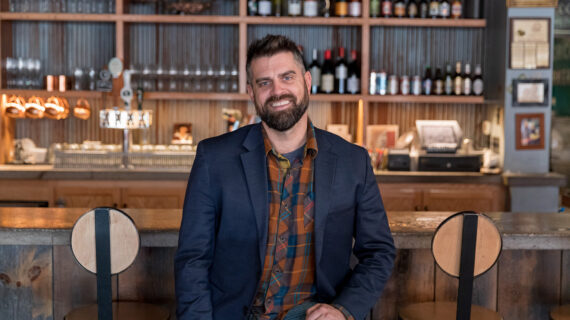
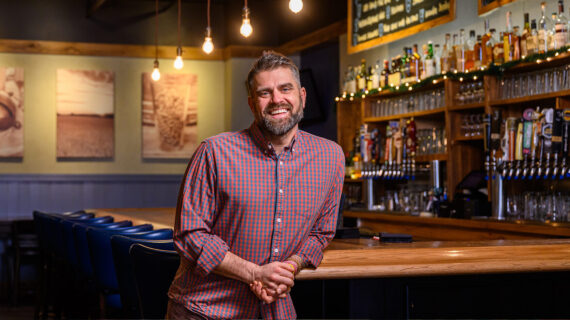
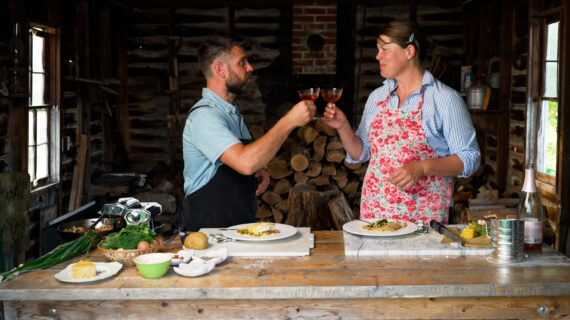
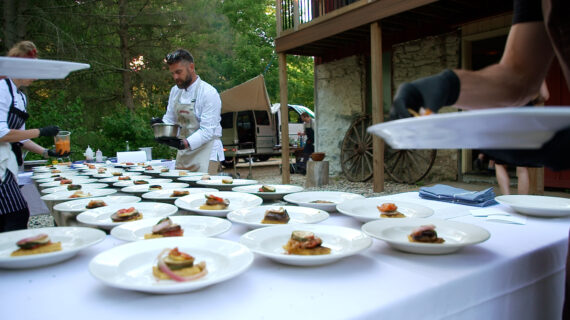
Meet Jessica and Erika Jones of Giant Jones Brewery in Madison. This independent woman-owned brewery uses 100% organic methods to create “big” beers. Next, catch up with Chef Dave Heide, owner of Liliana’s Restaurant. During the pandemic, he repurposed his shuttered Madison space to create weekly Nom Nom Nom Boxes — meal kits utilizing ingredients from local farmers.


Copy and Paste the Following Code to Embed this Video:
Giant Jones Brewing | Lilliana’s Restaurant
– Announcer: This week on Wisconsin Foodie : - Luke Zahm: Walking into a brewery like this, you get all the aromatics.
– Jessica: So, we just make classic styles.
I find it really fascinating to tease out the depth of one simple thing, than to layer a bunch of stuff on it.
At the same time, I'm probably gonna eat Curry later this week.
[Luke Zahm laughs] - Dave Heide: They're called "Nom, Nom, Nom Kits."
– Luke: So you buy them right from Liliana's website?
- It's kind of like a mix between a meal kit and a CSA.
So, instead of a single CSA, that supports just one farm, we, as restaurateurs, wanted to support as many of our farms that, really, we depend on, and they depend on us.
– Announcer: Wisconsin Foodie would like to thank the following underwriters.
[energetic music, cash register rings] [pouring a beverage] [mystical swirling] [heart beats "lub-dub"] [bell on door chimes as door opens] - The dairy farmers of Wisconsin are proud to underwrite Wisconsin Foodie , and remind you that in Wisconsin we dream in cheese.
[crowd cheering] Just look for our badge.
It's on everything we make.
- At Organic Valley, our cows make milk with just a few simple ingredients.
Sun, soil, rain, and grass.
And grass, and grass.
- Yee-haw!
- Organic Valley Grassmilk, organic milk from 100% grass-fed cows.
- Employee-owned New Glarus Brewing Company has been brewing and bottling beer for their friends only in Wisconsin since 1993.
Just a short drive from Madison, come visit Swissconsin, and see where your beer's made.
- Wisconsin's great outdoors has something for everyone.
Come for the adventure, stay for the memories.
Go wild in Wisconsin.
To build your adventure, visit dnr dot wi dot g-o-v. - From production to processing, right down to our plates, there are over 15,000 employers in Wisconsin with career opportunities to fulfill your dreams and feed the world.
Hungry for more?
Shape your career with these companies and others at fabwisconsin.com.
- With additional support coming from The Conscious Carnivore.
From local animals sourcing, to on-site high-quality butchering and packaging.
The Conscious Carnivore can ensure organically raised, grass-fed and healthy meats through its small group of local farmers.
The Conscious Carnivore, know your farmer, love your butcher.
- Additional support coming from the Viroqua Food Co-op, Central Wisconsin Craft Collective, Something Special from Wisconsin, Crossroads Collective, La Crosse Distilling Company, as well as the Friends of PBS Wisconsin.
– Announcer: We are a collection of the finest farmers, food producers, and chefs on the planet.
We're a merging of cultures and ideas shaped by this land.
We are a gathering of the waters and together, we shape a new identity to carry us into the future.
We are storytellers.
We are Wisconsin Foodie .
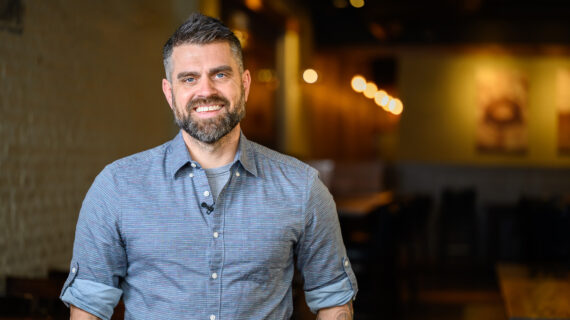
– Luke Zahm: We are here today on Madison's East side at Giant Jones Brewing, Wisconsin's only USDA- certified organic microbrewery.
We're gonna meet with Jessica Jones and her wife, Erica, to discuss the process of going from a small, tiny microbrewing project, to a full functioning and dynamic microbrewery in the Midwest.
– Jessica Jones: We're making a doppelsticke alt, which is a German response to the American craft beer market and is essentially a German-style barley wine.
My goodness, these smell incredible.
[laughs] All right, so I have German Pilsner, organic German Pilsner malt and organic German Munich malt.
The Pilsner malt's grassy, crackery, hay-like and the Munich malt is profoundly malty, and the German stuff is mostly-- It's bread, like fresh-baked bread, with a little bit of cake, like a hot milk cake.
I have never made a doppelsticke alt before.
[Jessica laughs] I really enjoy altbiers.
They have this profound depth of flavor, yet are entirely dry, making them delightfully refreshing, and really, that's the way I make all my barley wines.
All of our beers are drier than typical spec.
I've never had a beer that's dry enough.
[soft acoustic guitar] We're laying foundation water in the mash tun so that when the grain starts going in, it will float instead of just compacting, and turning into paste on the bottom.
I'm just gonna go run and grab a flashlight.
It's not that exciting.
[laughing] It's maybe my most important tool and the one that I always lose.
All right, so, grains flowing in, with water.
So, at this point, I'm just checking to make sure that it's coming in hydrated, but also getting an eye on how, how the crack is.
So, I want to see grits, but I also wanna see whole husk material because that serves as the filter throughout the whole volume of the mash.
And at this point, I turn on just to get it to stir.
– Luke Zahm: Jessica!
– Jessica Jones: Hello.
- Thanks for having me in today.
- Absolutely, it's a delight.
- It's wonderful to be here.
Walking into a brewery like this, you get all the aromatics.
You get the malt; you get the barley.
It has that bread smell to it.
Talk to me about your journey through beer.
– Jessica: When I was in college, I had zero interest in beer.
I saw the way my contemporaries were drinking and just wanted no part of it.
And like, I would smell the beers they were drinking.
It was like, hard pass.
So, I actually had my first beer a month after I was 21 even though I was a student at UW-Madison.
Was grocery shopping, was like, you know, I'm gonna try out some beer.
And I looked at the shelf and one jumped out to me 'cause there was a little character on it.
Three Floyds Alpha King.
I was like, "Well, that guy's cute.
Great, I'll try that."
And I had been brew-- My dad had been brewing his whole life.
So, I tried this beer and I'm like, "Oh, my gosh!
This is what beer can taste like?!"
And so, I called my dad up and said, "Hey, I'm coming home next weekend or the weekend after, and we're gonna make beer."
- So, your main emphasis, like, this kind of started as a barley wine deal or model, correct?
- At the end of that school year, I met Erica.
We were working at a summer camp together and we fell in love very quickly.
– Erica: Aw!
[laughs warmly] - And we started exploring beer more together, beyond that.
And then, after I finished college here-- 'cause a year older than me, she was already out of college-- we went out to Berkeley for me to do grad school.
And we started going to the Toronado Barley Wine Festival, which is the only time in my adult life that I've had that, like, little kid on Christmas morning sort of feeling, where you're just, like, overwhelmed.
Like, "Oh, my gosh!"
Your eyes are so wide.
And like, "All of this is for me and I get to try it!"
So, we would sit down with 56 barley wines in front of us.
Three-ounce pours, with a group of friends, and just, like, pass them around the table.
So, we just became absolutely fascinated with barley wine and that's really led to this.
Right, so right now, we're at 285 gallons total.
– Erica Jones: Okay.
We're going to have 425 gallons total.
– Erica Jones: Okay, got it.
That's what that is.
- Right.
[Erica laughs] - Erica: I'm learning - Yeah, time for a kiss.
[Erica laughs] - We kiss a lot at work, which is my day's work.
I think our business works because we like kissing so much.
[Erica laughs] - Erica: That must be it.
We kind of balance each other out.
When one person's in a panic or stressed, the other one is generally keeping it together.
We're not allowed to have like freak outs at the same time.
- And even though, like, every moment of the day is together like every time, like, you go out and do deliveries and then come back, like, I'm just like so delighted to see you walk in.
– Erica: Oh, that's nice.
Thanks.
[laughing] It's fun to get to share back, like, all of the excitement that I get to see when I'm out delivering beer.
'Cause people are all excited and wondering about what's new and asking about the beer.
So, it's fun to get to, like, share that feedback.
And sometimes I feel bad 'cause as the brewer, I think you wanna get that feedback, but it's great to see, like, people get really excited about the crazy ideas that you have and the crazy beers you brew so.
– Jessica: Mm-hmm.
They're not crazy!
They're classic.
– Erica: I know, I know.
[laughing] - They just happen not to be in the marketplace.
– Luke Zahm: Giant Jones, from my, you know, drinking of your beers, they are big beers.
– Jessica: Yep.
– Luke: Right?
Like, "bombastic" is a word that I use to describe them quite frequently.
- Sure.
– Luke: And why is that?
How do you cultivate that, and coax that out of the ingredients?
- We end up, we ended up making big beers as the choice of our business model, because there was two things we were committed to.
We were gonna open a brewery, and it was gonna be certified organic.
Everything else was negotiable.
But in order to make organic work, we figured we needed to be making a higher premium product.
We wanna make world-class beer that happens to be organic.
– Luke: Why is that so important to you?
– Jessica: We've got one planet.
- Okay.
– Jessica: And we're really messing it up.
- What else does Giant Jones mean for the community?
- Sure, I mean, so a big part of what we do, like, yes, we wanna make these big, exciting beers, that are a flavor proposition.
Like first and foremost in what we're producing, but it's also that we're helping make our community better.
I've never met an idea for the way our world can be better that I'm not willing to just like plunge into and try and make it happen.
So, we just go for it.
- Talk to me a little bit about some of the other styles that you produce.
– Jessica: So, we just make classic style.
Though the ones at the higher end of the ABV range.
And so, we make double IPA.
We make grand stout and grand porter.
We make an English barley wine, a British barley wine, but we've also started pulling some like really old styles.
Like, we made a Burton ale, and we thought it was just going to be a one-off and Burton ales were the precursors to both IPAs-- they got weaker and hoppier-- and barley wines-- when they got maltier and stronger.
I find it really fascinating to tease out the depth of one simple thing, than to layer a bunch of stuff on it.
– Luke: Yeah, I agree.
- At the same time, I'm probably gonna eat curry later this week.
[Luke laughs] So, we're lautering, which is separating the liquid, the sweet worts from the grains.
And I'm first wort hopping this with 11 pounds of Hallertau, Spalter Select.
First, wort hopping is an old German technique of adding the hops of before you boil.
And this bag just smells like the fresh hops.
[Erica laughs] There's apricot, and pear and peach, and... savory and winter thyme.
[soft music] All right - Luke: Yes.
- This is our 2nd-anniversary wheat wine, that we did in collaboration with Brasserie V and Longtable Beer Cafe.
It's built just like American barley wine, but I use 56 or so percent of American malted wheat.
– Luke: It's beautiful.
– Jessica: Thanks.
- I get a citrus.
- Yep, lots of citrus.
- What kind of citrus?
- What kind?
– Luke: Yeah.
– Jessica: You know, citrus is one thing, but like.
- Yeah, no, this is oranges.
Definitely orange.
- Oranges right, I tend to get, like, Naval orange flesh, like, with the pulp.
Like, not juice, just like flesh of a sweet navel orange, but then I get some like blood orange zest.
Cause there's this like deeper side to it that start-- 'cause like, I find blood oranges, like, they tend to hue towards this like bitter herbal thing.
– Luke: Yeah.
Mmm, that's-- it smells delicious.
- Yeah, and then there's this like nuttiness backing it up.
- I thought that was just me.
- Nope!
- That's both the wheat malt and the U.S. Munich malt.
U.S. Munich malt tends to be more nutty, whereas the Munich malt I'm brewing with today from Germany tends to be more bready and cakey.
- Okay.
- Whereas the Belgian Munich malt that I use in our British beers and our Scotch Ale, and our British barley wine brings a whole bunch of fruit to the table.
- Okay.
This is delicious.
Big beers, big personalities, Giant Jones.
– Jessica Jones: Yeah.
[laughing] [upbeat music] [upbeat music] - Dave Heide: So, Lily, are you guys looking for something to do?
We've got to bag the spinach.
If you just wanna grab some of the white bags from over there.
You can just bring the spinach out here and start bagging.
We opened Liliana's on Lily's first birthday, and Lily is now 13.
Everything made out of wood, I built, you know, with my own hands.
And I did it with Lily in a baby carrier on my back.
It's really hard to see something that you've put your whole life and all of your energy and everything into, completely empty.
The first day of the shutdown.
And I was just in my dining room, just seeing it empty, man, I was just in the corner and just cried.
I mean, especially when it first shut down, we didn't know if that was gonna for be a week, or a month or a year, or we didn't know if it would ever open up again.
You know, so that was really tough trying to picture what life was gonna look like in the future.
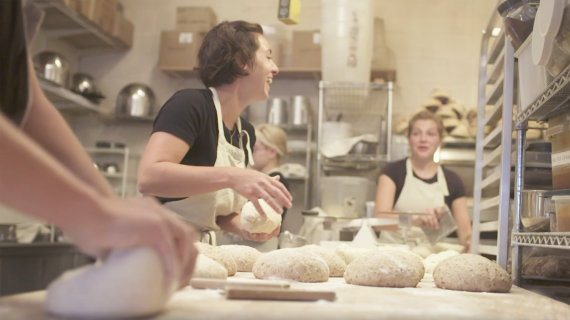
It's been pretty nuts having our dining room turning into basically a packing facility.
You know, I never thought, like, a room with like chandeliers and floor to ceiling lights and all that would turn into packing for produce.
But, you know, we do what we can.
So, they're called "Nom, Nom, Nom Kits."
It's kind of like a mix between a meal kit and a CSA.
So, instead of a single CSA that supports just one farm, we, as restaurateurs, wanted to support as many of our farms that, really, we depend on and they depend on us.
To try and get together a whole box every single week, each with whatever's coming up in season to not only showcase beautiful Wisconsin agriculture, but also to showcase how amazing our small farms are and kind of how in jeopardy they are.
And we're just gonna take a nice little... one small bunch of asparagus.
That's about as big as my hand will hold.
So, I guess, like, two Lily hands, [laughs] and we're just gonna put it through the wrap and pull it tight, and then, just wrap it up.
We had farmers reaching out to us asking, "Can you buy anything?
Is there anything you can do?"
We've only been doing it a month.
And then, just since we started doing this program, we've been able to put out $60,000, into our local farming community, which, to me, is incredible.
That's an entire, like, six months of our normal spend that we've been able to inject into our local farming community in a very short time.
And now we've got 160 boxes we're doing today.
So, for this box, we have Farmer John's aged Cheddar.
We have Meadowlark Organics for our polenta.
Most gorgeous corn meal, and it leaves the most, like, beautiful mouth texture ever!
So, it's absolutely gorgeous.
I'll make sure they don't repackage this one.
[laughing] We have these beautiful trumpet mushrooms, and oyster mushrooms from Mushroom Mike.
We have a Dreamy 280, which is a beautiful little beef farm.
Wonderful, beautiful asparagus, from a guy named Bruce.
This is, like, some of the best asparagus.
It's gorgeous.
It just got picked yesterday.
And even down at the end that's normally woody, [asparagus snaps crisply] it's like perfectly tender and amazing.
And then, out front, here, check these out!
[soft music] Dave Heide: Gorgeous heirloom tomatoes, you know.
I mean, obviously, tomatoes aren't even in season yet, but he's able to grow them all in a hoophouse.
And then, these were all picked yesterday.
We started up this box kind of on the fly.
I mean, we've put it all together within about a week and a half, which, you know, normally, if I we're to be doing a program like this.
This would be like, "Let's do it in three months, plan out the seasonality."
And then this was much more just a, there's a need and we have to fill it.
Okay, cheese: two, four.
Mushrooms, pea shoots, asparagus, polenta.
Oh, look at that.
Let me take a little picture of that.
Small restaurants are so good at going with the flow and kind of like thinking on our feet.
At Liliana's, we've had a lot of great support.
As long as people keep supporting us in take out, that's what we're gonna keep on doing.
You know, most meal kits are basically 'reheat'.
So, we try to make them a little more challenging but still accessible.
We've had so many people who are like, "I've never cooked duck before."
So, it's a way to kind of make it more challenging than an average meal kit.
First, I start with what ingredients are out there, and then, I kind of take those ingredients and I put the dish together.
So, my box, I kind of want to do a play on, like, a Cajun version of Swedish meatballs.
So we've got Farmer John's aged Cheddar in with polenta and Sassy Cow cream.
And then, we're taking some of these mushroom, Mike's mushrooms.
Don's Produce tomatoes and some spinach from Roots Down.
So, it's grits, that vegetable mix, and then, the meatballs with the sauce.
We decided we wanted to do two dishes this week.
So we're also doing an asparagus bisque with little chili oil.
This is not a 30-ingredients soup.
It's literally just cream and milk and asparagus, and a little butter, salt, and pepper.
And this one, we're gonna do half the milk.
We're gonna put the other half of milk in this one over here.
So, this is gonna be our asparagus bisque and this is gonna be our polenta.
And then, we're gonna take our cream, and we're gonna divide that equally among both.
Cream makes everything better.
We're just gonna whip that up a little bit.
So, that was our jalapeo honey butter.
And then, I'm also, into this one that's gonna have our polenta in it.
I'm gonna put in some of our Cajun seasoning we make from scratch.
Sound like the KFC guy, but we've got 11 different herbs and spices that go into ours.
It's mostly salt and paprika, and cayenne.
And now, all I'm going to do is with that milk and cream we're just gonna put in the asparagus, and we're just gonna let that kind of steep in there, like tea.
Okay, and then, this has come up to a simmer, and then once this starts to steam a little bit, then we're gonna start putting in our polenta.
And then, we're gonna make our delicious grits.
Once it starts to thicken up, let me just, I'm going to kill our heat.
You just keep on stirring and that'll keep it, again, from kind of clumping.
And it's gonna start to kind of firm up on you.
So, this is the Farmer John cheddar.
So you got the Cajun seasoning coming in.
You got the oregano and the thyme, onion powder, garlic powder, paprika.
I mean, all those flavors come up and hit you.
You can smell the butter.
You can smell that little bit of jalapeo.
And take the remainder of that butter, and we're just gonna put it right here in that pan.
You want the butter to just kind of like heat through those jalapenos, I just gonna take some of these mushrooms.
And then, we wanna add just a little bit more of that Cajun seasoning.
And you wanna put it in when the pan is at its hottest, which is going to be right about now.
And that'll bring out more of the flavor from the oil.
You just wanna kind of like soften them up a little bit, get a tiny little bit of caramelization on, but mostly it's just to kind of wake up those spices that are in there.
We gonna take our tomatoes, use little beautiful heirloom tomatoes from outside, and we're gonna take our spinach, cover up our mushrooms and tomatoes.
We're gonna let that just kind of steam up a little bit.
So now we're still letting this asparagus steep in that cream and milk.
Look how bright green that is, though, you know.
Let's actually go back, we'll stick blend this up.
[soft electronic music] I'm gonna grab my spoon.
Hmm.
So, here is all we're gonna do for plating.
Have a little chili oil.
There we go.
The whole point for me for this soup, is like, you just want that asparagus, like, that's the flavor you want.
We're not trying to hide this with a bunch of different stuff.
So, you can taste just like how wonderful that is.
And I think that's a key.
For me, it's about taking that one ingredient and just making it shine, you know.
When you're working with local farms, it's all about what's available?
How can I use it?
Mmm, yep, yep, yep, yep, yep!
That's what we wanted.
Trick to making good meatballs is having the right amount of binder is really key.
So, we did ground beef with Cajun seasoning and panko bread crumbs.
And we're just gonna use up the rest of that chili oil.
So, some people think the more binder you put in, the drier it's gonna be.
but the binder actually helps to hold all of that wonderful fat in and then, kind of soaks it up like a sponge.
And then consistency is super important.
So, we use the portion scooper to make sure that they're the same.
Otherwise, if you have some this big and some half that big, you're gonna end up with like some that are, like, overcooked and some that are raw.
In our packs, each chef made a sauce that was one of their signature sauces or something they were really proud of.
Instead of doing kind of the traditional, like, mushroom creamy sauce, we did a Creole meunire.
Just adding a little white wine to it to kind of thin it out a little bit.
But it's a pan sauce traditionally done in Creole cooking, usually with, like, a fish.
We're kind of doing our version of that.
And it's got Worcestershire, cream, shallots, leeks.
The sauce is what ties it all together.
That's what, like, makes you remember a dish forever.
We're gonna take these meatballs right out of the oven.
Oh, yeah, baby!
And we're just gonna add 'em on in.
You got to get some of that good oil in there, too.
We're going to take all this glorious spinach.
We just wilted it.
So, we're just going to kind of fold that in.
And then, we're putting it on top of Farmer John Cheddar grits.
And just a pinch of the mushroom tomato.
And then, some of that spinach.
And clean a little bit.
[smooth jazz] You know, anything that you do, if you don't do it with love and passion, then you shouldn't be doing it.
If you don't love it, get out, man.
Get out fast!
Life is short!
[soft music] [Dave Heide chuckles] - Are you guys ready for me to taste this thing?
– Man: Oh, Yeah.
– Luke: Yeah, all right.
I didn't know if you wanted to get in, like, real close and like, slow-mo.
All right, here we go.
- I don't think we can touch glasses.
- Oh, yeah, probably.
[laughter] - Cameraman: Do it again but do it with "near cheers" or something like that.
[laughing jovially] - Announcer: Wisconsin Foodie would like to thank the following underwriters: [energetic music, cash register rings] [pouring a beverage] [mystical swirling] [heart beats "lub-dub"] [bell on door chimes as door opens] - The dairy farmers of Wisconsin are proud to underwrite Wisconsin Foodie , and remind you that, in Wisconsin we dream in cheese.
[crowd cheering] Just look for our badge.
It's on everything we make.
- At Organic Valley, our cows make milk with just a few simple ingredients.
Sun, soil, rain, and grass.
And grass, and grass.
- Yee-haw!
- Organic Valley Grassmilk, organic milk from 100% grass-fed cows.
- Employee-owned New Glarus Brewing Company has been brewing and bottling beer for their friends only in Wisconsin since 1993.
Just a short drive from Madison, come visit Swissconsin, and see where your beer's made.
- Wisconsin's great outdoors has something for everyone.
Come for the adventure, stay for the memories.
Go wild in Wisconsin.
To build your adventure, visit dnr dot wi dot g-o-v. - From production to processing, right down to our plates, there are over 15,000 employers in Wisconsin with career opportunities to fulfill your dreams and feed the world.
Hungry for more?
Shape your career with these companies and others at fabwisconsin.com.
- With additional support coming from The Conscious Carnivore.
From local animals sourcing, to on-site high-quality butchering and packaging.
The Conscious Carnivore can ensure organically raised, grass-fed and healthy meats through its small group of local farmers.
The Conscious Carnivore, know your farmer, love your butcher.
- Additional support coming from the Viroqua Food Co-op, Central Wisconsin Craft Collective, Something Special from Wisconsin, Crossroads Collective, La Crosse Distilling Company, as well as the Friends of PBS Wisconsin.
Are you hungry for more?
Check us out on YouTube.
Make sure to hit that subscribe button so you can be the first to see new and unique videos, as well as browse past episodes.
Search Episodes
Related Stories from PBS Wisconsin's Blog




Donate to sign up. Activate and sign in to Passport. It's that easy to help PBS Wisconsin serve your community through media that educates, inspires, and entertains.
Make your membership gift today
Only for new users: Activate Passport using your code or email address
Already a member?
Look up my account
Need some help? Go to FAQ or visit PBS Passport Help
Need help accessing PBS Wisconsin anywhere?

Online Access | Platform & Device Access | Cable or Satellite Access | Over-The-Air Access
Visit Access Guide
Need help accessing PBS Wisconsin anywhere?
Visit Our
Live TV Access Guide
Online AccessPlatform & Device Access
Cable or Satellite Access
Over-The-Air Access
Visit Access Guide




Follow Us