

 Passport





Your Lawn: Organic, Conventional, or In-Between
02/09/13 | 1h 0m 55s | Rating: TV-G
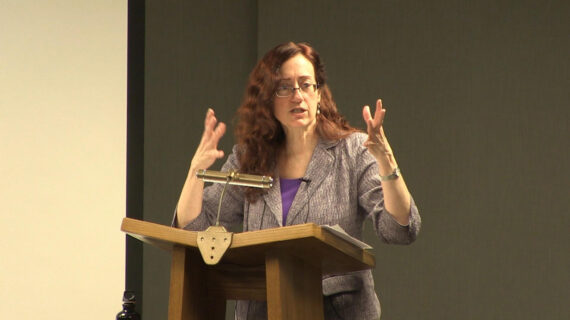
Sharon Morrisey, Horticulture Agent, UW-Extension, Milwaukee County, discusses a wide spectrum of choices for lawn maintenance. Morrisey introduces options--whether you prefer low maintenance, high maintenance, organic or synthetic.


Copy and Paste the Following Code to Embed this Video:
Your Lawn: Organic, Conventional, or In-Between
cc So, my presentation tonight is on Your Lawn, Your Choice. And the choices you have are conventional care, organic care, or somewhere in between. There are a lot of options. Lawn care is an extremely controversial issue.
It's a very philosophical issue for people. It's very emotional for many people. Many people are very attached to their lawns, and there are many different ways to manage your lawn. Therefore, the continuum with something in between where you choose a little of each.
So, what we're going to cover in this presentation is the information that's contained in these four publications from the University of Wisconsin Extension. Our specialists have recently published these, and they are available on The Learning Store website, and I'll give you that information at the end of the presentation. I think you'll find they're really helpful because it does help you kind of sort through what criteria you use for making decisions about caring for your lawn. And that's what the presentation's all about this evening.
This probably is your dream, to have that lawn that is perfectly monocultured, beautiful green grass, and, by the way, you got there without any effort whatsoever. No inputs. Hardly any mowing even. No watering.
Nothing. That's your dream. But this is probably what your lawn looks like a little bit more, if you're anything like me. Interestingly, back in the '50s when they started to develop grass seed mixtures, up until then we really didn't have grass seed mixtures for home lawn.
They included clover in the mix. And now many of us fight clover in our lawns. The reason they included the clover is because it actually traps nitrogen. And so that nitrogen then is stored and used for the rest of the plants in the mix, which are the grass plants.
But, is this your idea of a natural lawn? Well, unfortunately sometimes if you do just let your lawn grow, mow it occasionally, Creeping Charlie is a lot of what you'll have along with a lot of other weeds. So what we're going to talk about this evening is how to kind of reach a balance between that dream lawn that does require a lot of input and that reality of the natural lawn someplace in between. All of those lawns, all of the types of lawn care that you do, start with the basics.
And those basics are
mowing, watering, and fertilizing. And if you do those three things right, you will have a much more healthy, vigorous lawn. A healthy, vigorous lawn is the best solution to all of those other lawn problems that then require additional inputs in the form of pesticides, usually, and fertilizers. So these are the kinds of problems that we end up having and having to fight if our lawns are not growing vigorous.
But a very healthy, vigorous lawn can kind of out-compete a lot of these problems. So we're going to start by talking about those three basic cultural practices, starting with mowing. You think mowing, okay, I get the lawnmower out, I start it up, I put on my headset, and I go. Well, there are a few kind of rules-of-thumb for mowing that will make your lawn healthier.
First of all, set the mower as high as possible. Three to four inches is what's recommended. Unfortunately, a lot of mowers can't be set that high. But the highest you can set it, the better.
Because a taller lawn shades the soil better. A shaded soil area underneath is much less conducive to weed growth. So it keeps the soil cooler for the grass plants, and it shades out some of the weed seeds that are trying to germinate beneath that grass. So starting out by just raising your lawnmower, you can fight some of the weed problems you have.
Leave the clippings on your lawn, which is kind of a standard practice for most of us these days. Most landfills will not accept grass clippings. Some people still collect their own and use them for other purposes in their yards, but those grass clippings actually put back into your lawn the equivalent of one fertilizer application of nitrogen each year. So it's important to leave those clippings on the lawn.
And don't let your lawn get real tall and then mow it, and then let it get real tall and then mow it. So we talk about mowing once a week, and I think that's kind of the standard of what most of us do. But think about the spring and the fall when the weather is extremely good. There's some moisture.
It's cool. The grass loves it. It's growing well. Often, if the lawn has grown very fast, you can't wait for an entire week to mow it or you will be cutting off more than a third of the total height of the grass at any one time.
If you do cut off more than a third at a time, it stresses the plants, the grasses. So, those plants then react by having less vigorous root systems, and the root system is really what we're trying to encourage with a good lawn. That nice, deep, lush root system is what's going to get us through the droughts. Maybe not the kind of drought we had last year, but it will help to improve the root system if we don't cut off more than a third at a time.
And then the other thing is simple too. Just sharpen your mower blade. Mower blades that have not been sharpened well will cause fraying on the edges, ends of the grass, and if you have a very dull mower blade, you can see it across the entire lawn. Sort of a tan-ish cast over the lawn.
What difference does that make? Appearance-wise, doesn't really matter, but it does matter to the grass plants. It's sort of like if you pruned a tree or a shrub and you left a jagged edge. Those wounds don't heal quickly.
They lose more water through those jagged edges than they would otherwise. And it's also a site for disease to enter. So, those few simple things can make a bit of a difference. Some people are concerned about leaving the grass clippings on their lawns because they contribute to thatch.
At least that's what they think. But that's not true. Thatch, as it shows in this picture, is actually made up of those... I bet the little...
It's actually made up of the dead stems, roots, and the sheaths of the grass plants that die and form that layer. You think about the clippings, those are made up almost entirely of moisture and nitrogen. The nitrogen gets recycled back into the lawn. The moisture evaporates.
So, grass clippings themselves disintegrate very, very quickly. Think about when you do leave them on your lawn, and you see them in little piles in your lawn, how quickly those degrade. So that's not what makes up thatch. Thatch actually is aggravated by mowing your lawn too short, mowing your lawn too drastically, more than a third at a time, and anything else that will stress out the roots of the grass will lead to thatch.
So those are the kinds of things you need to avoid. And also over-fertilizing. We're going to talk quite a bit about fertilizing as we go along. So, clippings are about 95% of the moisture, and so they do disintegrate very quickly.
So, mowing your lawn, changing a couple of your practices can help to improve the quality of your lawn and help your lawn better compete with weeds. Watering. Watering is kind of a contentious issue too. The important thing is that by watering you're keeping your lawn dense, and by keeping your lawn dense you are able to out-compete the weeds.
You also have less exposed soil. And exposed soil is what holds phosphorus and leads to phosphorus pollution in area lakes and streams. So, by reducing erosion, you can reduce the phosphorus problem even though you're not using phosphorus in your fertilizers because of phosphorus bans. Just natural phosphorus from the breakdown or organic matter is held on soil particles.
So it's equally important to keep the soil particles from eroding away. So, keeping you lawn dense can make a big difference with that. So it's kind of a toss up. The controversy is whether you should water your lawn and use up all that moisture for something that's just your lawn, there for appearances.
But if you don't water your lawn, it's going to get thin, and that thin lawn will then contribute to water pollution. So, our specialists are now recommending keeping your lawn watered, especially when we get into drought situations. And when you do water, I recommend an inch of water a week, all at one time, unless you have a very sandy soil. In a very sandy soil you would water twice a week, and you'd water three-quarters of an inch each time.
Because it drains through so quickly, you actually need to apply a little bit more. But in this area I don't think you have a lot of really sandy soils. But when you do, that's an important consideration. And then, how do you know when you've put an inch of water down on your lawn?
Any straight-sided container or one of those cheap little rain gauges put out underneath the overhead sprinkler. Once you've collected an inch in there, you know you've put an inch of water on your lawn. And using your rain gauge in your yard to collect rain throughout the season can help you to kind of add up what's accumulated over a period of a week. I have a rain gauge that I empty just once a week so I know that over that week I accumulated a certain amount of moisture just from rain.
If there isn't an inch of water a week, then you should water your lawn. And then, it's important not to water as much in the shade. A lot of times people have a hard time growing grass in the shade, and there are certain grasses that do better in the shade, the fescues in particular. And if you have fescues in the shade already, you still may have a hard time growing grass in the shade.
But the environmental conditions are so different that you do need to care for it differently. And one of the differences is not watering as much. It kind of makes sense. The water doesn't evaporate as quickly in the shade.
Another one of the differences is to not fertilize as much. So, when you fertilize your lawn, if you fertilize the entire lawn the same amount, you may be over-fertilizing those shady areas. And to water early in the day so that that water evaporates off the leaves before it becomes dark. The dark, cooler temperatures are the perfect conditions for fungi to grow and those grass plants to become infested by diseases.
So you can cut down on diseases by watering properly. Now, fertilizing. Fertilizing your lawn, there have been some real changes in our recommendations for fertilizing lawns. It is important because it keeps your lawn dense.
Again, like watering, that's important to prevent erosion of soil. The whole goal is to keep your lawn growing dense and vigorously. The recommendation for our lawns in Wisconsin now is to choose fertilizers that have at least 25% to 50% slow-released nitrogen. And all of this is in the brochure that you were given when you came into the presentation.
That brochure actually summarizes everything that's in the presentation, and that brochure will be available online as well. So, looking for fertilizers that have 25% to 50% slow-released nitrogen is kind of a new recommendation. Generally our fertilizers contain much more fast-released nitrogen. They're starting to formulate fertilizers to have more slow-released nitrogen.
And organic fertilizers will often have much more slow-release nitrogen. And those have proven to actually be better for the lawn, and we'll talk about that in a little bit when we talk about fertilizers in specific. Then apply that fertilizer at the proper time for the age of your lawn, and this is kind of new too, we haven't talked about, in the past with our recommendations, we haven't talked about age of the lawn and how the fertilizer requirements are different for a younger lawn and an older lawn. And I'm talking 10-15-year-old lawn.
I'm not just talking newly established versus established. And also, for the light levels, as I mentioned, in the shade less fertilizer is required. And apply that fertilizer just before it rains or plan to water it in. If you're using a weed and feed product that contains both a fertilizer and the herbicide together, that herbicide needs to stay on the leaves, so the grass needs to be moist when you apply it, but the fertilizer portion of the weed and feed product can burn the leaves of the grass.
So then it needs to be washed off. And that's just one more reason why weed and feed products are not ideal. They're convenient, but they have a lot of drawbacks, and that's one of them. It's hard to apply them properly.
So if you're just applying fertilizer, apply it before it rains. And weed and feed separately so that you're timing it properly. So, those are the three basic
things
mowing, watering, and fertilizing. And maybe there's some changes in there that you can make with just what we've talked about so far. And those may make some difference, but the biggest difference probably will come from your choice of fertilizer and the timing of those fertilizer applications, which we have changed our recommendations for. So that's what I want to go through now.
Just as sort of a refresher for some of you, you probably already know that there are three numbers on every fertilizer product, and those three numbers stand for nitrogen, phosphorus, and potassium. And going for through each of those individually, nitrogen is what lawns need the most of because they're all green, leafy tissue that uses a lot of nitrogen. The phosphorus is the second number, and in Wisconsin that number should be zero, especially in the Madison area and Dane County and now in the Milwaukee area too. We have a zero phosphorus tolerance, and phosphorus is not allowed in fertilizers unless you are putting in a new lawn, then you do need to have phosphorus in your fertilizer, or if you've had a soil test that shows that your soil is deficient in phosphorus, then you can use phosphorus fertilizers.
But as far as I know, in this area, we don't have deficiencies of phosphorus. So, really, the only time you would use a fertilizer with phosphorus in it on your lawn would be if you were establishing a new lawn. And my understanding, too, is that I believe that this is kind of statewide is that these fertilizers that have phosphorus in them aren't even displayed on the shelves and you do need to ask for those fertilizers at the garden center. They're not allowed to even display them.
So all of the fertilizers you find should have zero phosphorus. Oh, I'm sorry. Then the third element is potassium, and the potassium should also be zero because it's really only needed if your soil test shows that there's a deficiency. Lawns don't need a lot of potassium, and there's a lot of potassium in the soil already.
If potassium is recommended when you have a soil test done, then you use what's called a winterizer fertilizer. You've probably heard of those. That's one of the differences with a winterizer is that it has more potassium than fertilizers you apply at different times of the year. It's kind of a misnomer because winterizers aren't necessarily used just before winter.
They're really used any time you have a soil test report that shows you need extra potassium. Hopefully you'll be able to find them if you've gotten that recommendation early in the season. And I think more and more garden centers are carrying winterizer type fertilizers because from the UW we have been making recommendations for winterizers for a long time for the growing season when it's needed. So let's start out with looking at nitrogen a little bit more depth because remember I said that 25% to 50% of the nitrogen in your fertilizer should be slow-release type nitrogen?
So there are two basic forms
slow-release, quick-release. Sometimes they're called insoluble or soluble. And water insoluble, or slow-release, fertilizer is what we're looking for. The reason that this recommendation has been added to our lawn recommendations just last year is that they have found through research done at the UW Turf Grass Facility here in Madison that the green-up on the lawn is going to be slower with fertilizers that have more insoluble nitrogen, but that effect of the nitrogen and its helping the lawn, its benefits to the lawn, last for a lot longer.
Up to two months. Whereas, if you use water soluble nitrogen, that is only effective for maybe two to four weeks. So, you don't get that immediate green-up but it lasts for an awful lot longer. And, as I mentioned, the organic fertilizers do already have a lot of slow-released nitrogen in them.
So if you choose an organic fertilizer, you'll get more slow-released nitrogen. Sometimes, though, an organic fertilizer, strictly an organic fertilizer, because the molecules that contain the nutrients are in larger more complex molecules, they take longer to break down and to release the plant-available nutrients. So, there has to be some weathering, there has to be water, there has to be sunlight, there has to be microorganisms working on that fertilizer before it breaks down and it's available to the plants. So it can take up to two years for that nitrogen to really become available to the plants.
And the lawn will be less green than it would be with conventional fertilizers, especially for the first couple of years, but if you continue with an organic fertilizer, it will catch up because that first year's application will still be becoming available for the first two years, and you've been applying it each year, so eventually you will catch up. Or if you need that green-up, if you need to invigorate the lawn because it is so thin, it is so weak, then you may want to apply twice the amount of fertilizer for the first three to five years in order to get enough of the nitrogen released for the lawn to use it right away. And would you mind holding your question until the end. I'm sorry, but keep that in mind, please.
We will have a question/answer session at the end. So, when you look at a fertilizer label, it will describe the types of nitrogen that are in there. And there are lots of different kinds of nitrogen. Some of them are fast-release, some of them are slow-release, and sometimes they don't say whether they're fast or slow-release.
So, the quick-release type nitrogens are the ammonium types. So the ammonium nitrate, ammonium sulfate. Urea is a very quickly available nitrogen form. And sometimes there's what's called a stabilized urea in there.
And even that is a very fast-release. So, I'm not sure you can read this from back there, but the first, they take the nitrogen, which is 24% in this product, and they break it down into what percent of that 24% is of which type of nitrogen. And there's a mixture in here. So the first one is 1.5% of ammoniacal nitrogen.
So that's ammonium nitrate. So, it's fast-release. The next one is urea nitrogen. So, it's fast-release.
And that's 7.5%. Then there's 10% other water soluble nitrogen, and then 5% water insoluble nitrogen. But you notice there's little asterisks up there, and the single asterisk tells you, at the bottom of that label, that that nitrogen actually contains 1.37% slowly available nitrogen. So that entire chunk of that whole 10% can be counted as slow-release nitrogen.
We'll go through an example in a minute here. The slow-release nitrogens, the coated ureas, coated urea is a stabilized type of urea, and that means that it's been coated with sulfur or a polymer that slows down its release. The biosolid type fertilizers that are made from sewage waste, those are slow-release nitrogen. Milorganite is probably the best example.
But that is not approved for organic lawn care. It's not accepted as an organic product for lawn care because of its production. Manures are a great source of insoluble nitrogen and great organic fertilizers. And then there are many natural forms of organic fertilizers that are used that have a lot of slow-released nitrogen in them.
So you have to kind of study that nitrogen portion of the label. Now, this is a change too, the timing. Selecting the fertilizer with more slowly released nitrogen and when you fertilize has changed as well. The areas in green are the new recommendations.
The areas in black are the same as our former recommendations. But you'll notice that they make a distinction in the age of the lawn between the younger lawn and an older lawn. Lawns that are less than 10 to 15 years old and those that are older than that. If it is a younger lawn, you should fertilize three times a season.
And these dates, we go by the holiday schedule because it makes it much easier for people to remember these dates than if we were to just say the end of June or the beginning of July. Independence Day was not normally, was not typically one of the times that we would recommend fertilizing. The grass isn't growing as fast then, and that was the logic. But, the research that has been done has shown that that is a very important fertilizer application for our lawns, younger lawns particularly.
And if you apply fertilizer at Memorial Day as your first application, that will allow you, remember there's about two months worth of fertilizer in that nitrogen application, you fertilize again a month later. You still have excess nitrogen there, and then you fertilize again Labor Day, that's two months later, and you have nitrogen throughout the season. The next recommendation is for the older lawn. That is a lawn that's been regularly fertilized for 10 to 15 years.
If you have not done any fertilizing for 10 to 15 years and that's how old your lawn is, then it would still be considered a younger lawn. It's that 10 or 15 years of regular fertilization that builds up a supply of nitrogen that's attached to the organic matter in the soil so there's a bank of nitrogen in the soil already. Once you've fertilized for a long time and built up that bank, then you can cut back on your fertilizing and you can go down to a two times a year fertilizer schedule, eliminating that Independence Day fertilizer. This is also the fertilizer schedule you should use on any lawn, any age in the shade.
You only need to fertilize twice rather than three times. If you're removing grass clippings, which we don't really recommend, but if you're removing those clippings, you're really removing an entire fertilizer application each year. So you need to do one more fertilizer application each year. And that additional fertilizer application should be in early October.
It completely goes against what we had been recommending for years, and they found that there was a good reason for that, and the research on that recommendation of doing our last fertilizer application late in the season, Halloween or later, that research was not done in Wisconsin. We didn't have a turf grass lab, and so recommendations were taken from other areas, and that recommendation was used in Wisconsin for many, many years. But now that we have the research, we know that any nitrogen supplied to your lawn after early October, very little of it actually is used by your lawn. If you applied nitrogen in early October, about 80% of that nitrogen will be used.
If you applied the same amount of nitrogen instead on the 15th of October, only 20% of that nitrogen will be used. It's a huge difference. And you get to the end of October, virtually none of that nitrogen will be used. So it will be a totally wasted application.
So those timings are different, and that's what's listed in your handout. So, kind of a summary here. We've already talked about these basics. Conventional, organic, or somewhere in between.
With the basics done right, mowing, watering, and fertilizing. In addition to selecting the proper type of grass if you're starting your lawn or if you're just patching bare spots, which I bet a lot of you may have to do a little bit of this year because of the drought, there is a nice publication on the drought, its effects on our lawn, and the information on these grasses at the UW Extension booth in the show. So if you're interested, you can stop and pick one of those up. We've all known that shady areas like fescues.
Fescues do really well in shady areas. So that's the grass to choose for shady areas. Sunny areas, you can use bluegrass or fescue. Bluegrass has a different appearance.
That appearance is that perfect, ideal lawn, so that's what a lot of people choose. But fescue actually tolerates those hot, dry conditions in the hot part of the season better than bluegrass does. So, fescue in the sun is a good idea too. Drought tolerance, that's what fescues are all about.
But if you have a lot of foot traffic on your lawn, if you entertain a lot, have big parties, play badminton or volleyball and you have a lot of people on your lawn, your kids are out there all the time, bluegrass is best for foot traffic, high foot traffic. If you want a low maintenance lawn, though, your first choice should be fescue. Tall fescue or fine fescue. The fine-leafed fescues are what we have used in our grass seed mixtures for decades now.
They have a narrower blade. They look a little bit more like a bluegrass than tall fescue. Tall fescue looks a lot more like quackgrass. It's got that really broad blade, grows pretty fast.
It's very coarse. It's not very soft to walk on. And so it's been very undesirable and seen as a weed in our lawns. But, tall fescue will tolerate drought for much longer and much better than bluegrass or the fine-leafed fescues.
Our turf specialist who's made these new recommendations has torn out his entire front lawn and planted his whole front lawn in tall fescue. And this year in the drought, he was not watering, his lawn was green while everybody else in his neighborhood was brown, and it really drove it home to him that really is true. The one drawback is that the fine-leafed fescues and bluegrass, as they start to suffer from drought and they start to dry out, they turn brown because they go dormant. They're dormant, not dead.
That dormancy can last for 60 days with no water whatsoever. And you can water the lawn and it will come back to life. Tall fescue, once it turns brown, it stays brown. It's dead forever.
So, it doesn't tolerate extended droughts as long, but it is much more drought tolerant during the drought. It stays greener during the drought without watering. There are a couple of drawbacks to the fescue. In low-lying areas where you have ice that kind of forms in the winter, where water settles, it doesn't do well, the tall fescues don't do well.
And wherever you have wet or very compacted soil, the fine fescues don't do well. But, otherwise, the fescues are very, very drought tolerant. And then when you put down this new grass, it has to be established properly, whether you're establishing a new lawn or just reseeding bare spots. I think a lot of times people have trouble reseeding bare spots, and they start to think that there's something wrong with the soil because that grass won't grow and they just keep reseeding it and it doesn't grow.
I think part of it is that they're not working the soil up and preparing that seed bed as well as you would to start a whole new lawn. Just because it's just a little patch doesn't mean the grass is going to grow better there by just kind of scratching the surface. So work it up some so you have good seed to soil contact. Add some fertilizer when you do it.
Tamp it down so you have good seed to soil contact, and then put a light layer of straw or other plant material. Anything light and fluffy that will allow light to penetrate but help hold in humidity, put that on to hold in the moisture, and keep it watered the entire time it's germinating. Fescues take about 15 days to germinate, and if you have a mixture that contains annual ryegrass or, I guess that's it, annual ryegrass, it germinates in about five days. So people water for the first five days, they're really religious about it, and they see these new little sprouts coming up and they water for a couple more days and they see a lot of these little sprouts so they think they don't have to water as much now, it's kind of getting established.
But it's just the annual grass that has actually germinated. The fescues haven't germinated yet, neither have the bluegrass. Bluegrass takes about 20 days to germinate. So you really have to keep watering it.
So that's one of the secrets with patching those droughty areas that have died for this year is work those up very well. So now let's get to those choices. Now that we know the basics of taking care of our lawn the best we can with those three basic cultural practices, there are a lot of other decisions to make about your lawn, and it is totally up to you. And we'll start with the conventional choice.
The conventional choice is defined as the methods that rely on a full range of synthetic products for fertilizing, controlling weeds, controlling insects and diseases. We don't have a lot of insects or diseases that we need to control on our lawns with chemicals. Fungicides, particularly fungal diseases, very few of those do we recommend using a fungicide anyway. But fertilizing and weed control are the two that people tend to do the most of.
These products that are available to you, the conventional products are certified safe by the EPA if they're used as directed. And there's only a low level of risk when you use them as directed. They are highly effective and those products are much less expensive than trying to maintain an organic lawn. Because they've been produced and marketed for so long, they really are much less expensive.
But they're very, very effective. It's much less labor intensive, or you can hire a lawn care service to care for your lawn in a conventional manner, and the highest quality lawn is really only possible by using those products, by taking the conventional approach. So your expectations kind of have to change as you move to the other choices. The organic choice uses only natural products for fertilizing and controlling weeds, insects, and diseases.
And the thing with all organic gardening is the soil. It starts with good soil care. And so, the foundation of organic lawn care needs to be good soil care too. So the recommendation is to top dress your lawn and core aerate your lawn one to two times a year.
Top dressing wasn't really highly recommended for home lawns previously, but this is a great way to get that organic matter to the soil to encourage those macro and microorganisms in the soil that are going to help build the soil and make it a healthier soil which then makes a healthier crop of grass. I recently wanted to follow this recommendation and contacted a local garden center that does landscape care. They've come and core aerated my lawn before, and it was quite reasonable. So this time I asked them to give me an estimate for having it top dressed at the same time with about a half inch of cow manure.
That being a good fertilizer at the same time as adding organic matter to the soil. So that would be one of the best ways to improve my soil. I found that it was going, I have a very small lot. It's about 120 by 80, and it was going to cost me over $600 to have it done.
Needless to say, I didn't do it. I'm thinking about doing it myself. It is hard to do though. Labor intensive.
So, with the organic choice, that's the other part about it is that it is difficult to get that really high quality lawn and it is much more labor intensive. Some of the challenges of making these recommendations for organic lawn care are the fact that there really are no recommended organic products. There are no proven approved organic products to use on lawns. And so, there are no real official standards that exist.
Like with food production, we have the National Organic Program that stipulates exactly what can be used and what can't be used, but we don't have anything like that for lawns. So when our specialists decided that it's high time we have a publication on organic lawn care because it is something that so many people want to do, they started to look around at what other states were recommending and what other research had shown would constitute an organic lawn care management system. And they found that there really aren't any recommendations out there. In the Midwestern states, none of the other extensions have made organic lawn care recommendations, official organic lawn care recommendations, and it's because of some of these challenges.
So I think we're very, very lucky to have this here in Wisconsin that our specialists decided that they were going to come up with what they felt were the best recommendations. These organic products that are available are often called organic lawn care products, but they have not been scientifically proven to be effective because there has not been the research done on them that there has been done on the conventional products. And in Wisconsin, in order for a vendor to claim that something is-- in Wisconsin, products must meet the vendor claims in order to be sold legally. So if they claim that this is an effective product and has not been scientifically proven, it's illegal for them to sell that product as an organic product that's effective because there isn't any research on it.
So, that makes it difficult to find products to use for organic lawn care. Not all natural products are organic, as many of you already know. And these are kind of the things you would look to for those organic standards for products. First, the National Organic Product, but that is largely for food production, not for lawn care.
The Organic Materials Review Institute, or the OMRI ratings that are put on a lot of products, they approve a couple of lawn care products but not very many. Mostly theirs are related also to food production. The EPA exempts some natural or organic products from registration and testing because they are natural products, and we'll look at those in a minute, but they haven't been proven effective either because they're exempt from having to be tested by the EPA. So, in general, the products that are out there as organic lawn care products are expensive.
They're usually quite expensive. I have had a lot of people ask me about corn gluten meal. That's the main weed killer or weed control product that people think of for organic lawn care. It is a pre-emergent product.
It is a byproduct of corn processing. It's been used as cattle feed for many, many, many years. You could eat the stuff. It wouldn't hurt you.
It contains 9% nitrogen. So there's a little bonus. You get some nitrogen at the same time. And it prevents seed germination.
Not just crabgrass, not just dandelions, but a lot of the other weed seeds that come into your lawn. A couple of problems with it however. One is that it is only about 25% effective the first year you put it down. The second year you put it down, it may be 50% effective.
The third year, 75% effective. The fourth year, 75% effective. The fifth year, 75% effective. It never is completely 100% or even 90% or even 80% effective.
So you always have those weeds that are there producing more seeds. Plus, it is hugely expensive for you to treat an entire yard with corn gluten mean unless you have a very small yard. I've had many people who have asked that recommendation to find out about it and they're going to do it this year becomes they want to do an organic lawn, and they give up because you still have the weeds and you've spent all this money. And it is much more labor intensive, particularly if you're doing the top dressing and core aerating thing.
And that's what this slide is about. Doing it twice a year. You would do top dressing and core aerating in the spring or the fall when the lawn is growing very vigorously. Use up to an inch of compost is what's recommended.
Spread it as evenly as you can. And you can use the fling method where you just take the shovel full and fling it. You can also, if you get processed compost or ground compost, you can put it into a spreader, a drop spreader, and apply it that way. You may need to rake it out some to spread it evenly, and it is kind of hard to spread it evenly.
High quality compost is what's recommended. And in the publications there is a table that tells you different kinds of composts and which are more high quality. Composted manure is a very high quality product and has a lot of nutrients. And if you use composted manure, you may not need to do any other fertilizer applications a year.
Just the two that you do when you top dress and core aerate. Composted yard waste is not high enough in nutrients to count as a fertilizer application, but it does build the soil so that you've got that foundation of the organic lawn care. Core aeration itself should be done twice a year. Once to twice a year for the organic program.
The cores need to go deep, and if you have heavy clay soil, it's hard to get those cores to go deep. The machine that you see here is the drum type where the corers are pushed into the soil as the drum goes around, and then they're flung out the back as they spin around on the machine. But if you have heavy clay soil, you'll find that they don't go deeply enough. They should go as deep as your little finger because you think about the depth of having a little bit of thatch layer there.
You've got the grass, a little bit of thatch layer, and then you get down into the soil. It has to penetrate down into the soil and go through the root zone which is about four inches deep. You have to go into that root zone with those cores. So in heavy clay soil we recommend the vertical impact type units, and you can rent these from area rental places.
The corers are mounted on a plate that's hydraulically driven down into the soil with a lot more force. Therefore, you do get the corers much deeper. And you want to do it when the soil is moist. Leave the cores on the soil because those cores contain microorganisms that help to work on the soil and the thatch layer from the top.
So you don't want to remove those. In very compacted areas you might want to do it more often. That is a great core. That's a very nice core.
You may not have to go quite that deep, but you can see you've gotten through most of the root zone with that one. And as for fertility in an organic lawn care program, using manure as a top dressing, there are many brands of organic fertilizers available. Nitrogen is what they need most, the 25% to 50% insoluble nitrogen, but in an organic product it may be available for up to two years and not really helping your lawn much for the first couple of years. And, as mentioned, your lawn won't be as green for the first couple years, but the soil builds up this bank of nitrogen over time.
So, large quantities are often needed of these organic lawn fertilizers because the nitrogen percentage in the product, the amount of nitrogen per pound of product, is much lower. A typical conventional lawn fertilizer could be anywhere from 20% to 35% nitrogen. In organic products, something like Milorganite is 6% nitrogen. In order to get enough nitrogen down, you need to apply five times more, four times more of the Milorganite than you would of the conventional fertilizer.
So it can become quite expensive that way. And Milorganite is not considered by most people to be an organic product to be used if you really are using a strict organic fertilizer application. Now, weed control. Proper mowing and proper watering and fertilizing are the key to weed control in any lawn.
Hand pull or dig weeds. My husband really likes to go out and spud dandelions. It's a nice, relaxing thing to do at the end of the day. Gets a whole bucket of them.
It makes him feel great. And I love it. Or you can use herbicides and just spot treat with the herbicides, but actual herbicides that can be used on existing weeds are very few and far between. Really, the only one that's out there that can be used pretty successfully are the ones that are called chelated iron, and we'll look at some of these here, including the chelated iron.
The problem is that most of the organic fertilizers actually kill the leaves but not the roots. So the roots continue to grow, the plant comes back. There's the corn gluten meal, but it's a per-emergent. You can't use it on existing weeds.
It's only used to stop weeds' seeds from germinating. You'll see organic herbicides that contain vinegar or soap, the plant oils. Those things all tend to burn the weeds and the lawn, but they don't kill the roots of either one. So you end up with these big, dead brown spots wherever you've treated with them.
And the vinegar can't be just straight white vinegar or apple cider vinegar. That's only 5% acetic acid. It needs to be about 30% to 35% acetic acid, and that's a food grade acetic acid that we can't buy anyway. So just plain vinegar definitely doesn't do anything.
These are some of the products that aren't tested by the EPA. They have not been proven effective or ineffective. They might work. They might not.
You really don't know. And there is a nice table of those in these publications too. This chelated iron is something that's come out in the last couple of years, and it is readily available. You have to read the active ingredients on the label, and this is what it will say.
FE for iron, and I'm not sure what the HEDTA stands for, chelated I guess. But that burns the leaves of the weeds, but it does not burn the grass, and it does not kill the roots. So, again, you've got that problem of regrowth, but at least in this case it will kill back the weed, and then it regrows, use it again, it kills back the weed, it regrows. But if you do that often enough, you can starve out the root system by killing off the tops often enough that it can't feed the roots.
And that is a very acceptable strategy for weed control that's used in a lot of cases. So, our specialist says that of all the weed control products out there, this one has the most hope. It is labor intensive and it is going to be kind of expensive, but it can work. And it's about the only thing you've got.
Now, the minimum risk products that can be used in the low risk, the reduced risk kind of lawn care, to mention these products that the EPA exempts from federal testing, things like vinegars, oils, and soaps, they don't feel they need to test these because most of these have very little processing that's been done to them. So they're their pure ingredient. They're their pure product. So they retain their natural state of the compounds that are in them, and they know that those compounds are safe.
Some of them are classified as organic by the USDA for food production and some of them aren't. But none of them are scientifically verified to be beneficial for turf in Wisconsin, and therefore, they really shouldn't be sold because it's illegal to sell anything that doesn't meet the claims of the vendor. So, those are kind of iffy too. So that's weed control.
Insect control, there are very few insecticide products available. The effectiveness of those organic insecticides is variable, and the cost can be shocking. I have that in quotes because that's what the specialists say in the publication. The cost can be shocking.
And here's just some of them that are available and out there, but none of them are as efficient or as effective as conventional products would be. But the ones that are naturally derived, synthetically produced products, they mimic the natural product or their living organisms. So, neem oil, you've heard of probably for insect control. Pyrethrum you've definitely heard of.
Spinosad is a good insect control. But spinosad is mostly used for beetles and such on other crops. We don't have a lot of beetles on the lawn that we have to control. Milky spore disease, it can control Japanese beetle, but it's not highly effective either.
It takes a while to build up and eventually it can be frozen out. There are nematodes you can add to the soil, and then there are endophytes which are non-pathogenic fungi that live in the soil, and they help to suppress some insects. But none of these are highly effective, and they are very expensive. So, for diseases, mowing, watering, and fertilizing, few diseases cause significant damage in lawns in Wisconsin, and we very infrequently recommend fungicides.
So, water properly to keep the leaves from being wet for too long. These are some of the fungicides that might be available for an organic program. But, again, the effectiveness is not as high as you would want it to be. Then the third option is sort of the in between, the reduced risk alternative.
And there is one of these publications that's strictly about this reduced risk. It's where you use an organic-based less strict method using occasional synthetic products that are approved by the EPA and are on the EPA's reduced risk program. They actually have a list of products that are allowed under reduced risk plant management. A lot of them are natural organisms.
They're products that can be used at very low rates and products that have been proven to be less toxic to birds and fish, less likely to contaminate groundwater, less likely to endanger human health, but the downside is they're mostly only available to the commercial applicators. These aren't things that you can necessarily buy at the garden center. But they do have their list of them, and in that publication it does list these products. So if you have a lawn care company, they can use these products and they are pretty effective.
This method, this approach can produce a moderately high quality lawn. Higher quality than an organic program, but not as high as the conventional. And your alternative lawn care method, one of our publications is on the do-it-yourself alternative lawn care with six key requirements. Most of them we've already talked about.
Preparing the soil properly and managing the soil well. Selecting the right grass seed. Mowing the lawn as high as possible. Providing sufficient nutrients.
We've talked about that. Controlling pests, whatever method you choose. And irrigating sufficiently. That is what they're calling the do-it-yourself lawn care.
And then there's all those other lawn care issues that keep coming up. What do you do about moss in the lawn? What do you do about those ant mounds in your lawn? Creeping Charlie, how do you control Creeping Charlie?
And then some of the other ones. Do you use lime? Do you need to use iron? How about those lumps in the lawn from the earthworm castings?
People complain about lumping lawn. Don't use a roller to smooth those out, especially on a clay soil. You'll just further compact it. The best way to deal with those is through core aeration.
So if you're core aerating already to improve your soil, you're probably not going to have as much problem with that. Creeping bentgrass is a grassy weed that gets into your lawn and forms those circles of really fine textured grass that just get bigger and bigger and bigger. There's really only one chemical that controls them, and it is one of the reduced risk ones, but it is only available to commercial applicators. Fairy rings, that's the ring of mushrooms that sometimes forms.
So, there are all kinds of issues that go along with lawns, but that basic lawn care, mowing, fertilizing, and watering properly, and now with our new recommendations, you can do an organic lawn, but understand that it's more labor intensive, more expensive, and you won't have as high a quality of lawn as you would otherwise. That just can't be achieved. But you will be following an organic system to care for your lawn. So these four publications up here are the new ones.
And they are on The Learning Store at uwex.edu, and this is on the back of the brochure that you have. These ones in blue are all former publications that are still available and still very good and reliable information. And then we have quite an assortment of pest publications. Other pest publications are available at hort.uwex.edu.
This is a series we call our Wisconsin Garden Facts Series. And there are lots of fact sheets there that will give you information on controlling pests, both organically and low risk as well as conventional methods for controlling them. So, I want to thank you for sticking with me this evening, and I hope that brochure proves helpful to you and you can give some more thought to ways to manage your lawn that fit with your lifestyle, with your philosophical approach, and with what your expectations are for your lawn. So, I will take some questions now.
Thank you.
APPLAUSE
Search University Place Episodes
Related Stories from PBS Wisconsin's Blog





Donate to sign up. Activate and sign in to Passport. It's that easy to help PBS Wisconsin serve your community through media that educates, inspires, and entertains.
Make your membership gift today
Only for new users: Activate Passport using your code or email address
Already a member?
Look up my account
Need some help? Go to FAQ or visit PBS Passport Help
Need help accessing PBS Wisconsin anywhere?

Online Access | Platform & Device Access | Cable or Satellite Access | Over-The-Air Access
Visit Access Guide
Need help accessing PBS Wisconsin anywhere?
Visit Our
Live TV Access Guide
Online AccessPlatform & Device Access
Cable or Satellite Access
Over-The-Air Access
Visit Access Guide




Follow Us