

 Passport






Wisconsin's First Mound Builders
05/20/08 | 40m 20s | Rating: TV-G
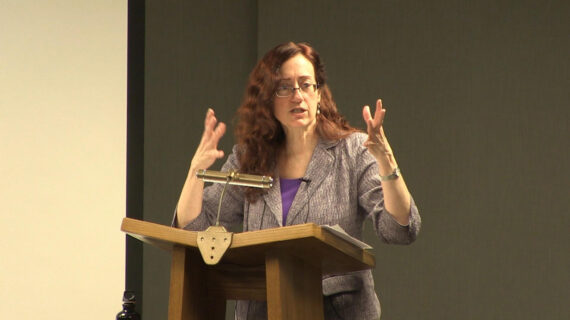
John Broihahn, State Archeologist and Keith Jasin, Masters Student in Cultural Anthropology, UW-Milwaukee, State Archeologist Wisconsin celebrates Historic Preservation and Archaeology Month each May. John H. Broihahn as he shares interesting details about the mounds and burial-mound building development in Wisconsin.


Copy and Paste the Following Code to Embed this Video:
Wisconsin's First Mound Builders
cc >> Welcome, everybody, to the Wisconsin Historical Museum, to our "History Sandwiched In" Lecture Series. Today, we have John Broihahn, State Archaeologist, in honor of Archaeology and Historic Preservation Month. He's going to give a talk on "Wisconsin's First Mound Builders." Take it away, John. >> Thank you all for coming in on this beautiful spring day. If you were living in Wisconsin 1,500 years ago, or 2,000 years ago, about this time of year, you would be thinking about what was going on in the woods and prairies around you, and looking to see what crops and what vegetation was blooming, what crops were coming online, and what type of greens you might collect. You would be looking at some of the smaller streams and backwaters on the lakes to look for fish that were pooling up. You might be collecting fresh water mussels. You would hopefully have a bit of food left that you stored from the winter to mix with these new fresh products. You would probably be thinking about the rest of your season around in finding both social and economic events. And one of those events you might be thinking about, depending on if an important ancestor had died over the winter, or if someone had died during the coming season, you might think about building a burial mound or a conical mound. I'm going to talk about these conical mounds. They're low, dome shaped mounds, often circular, but sometimes oblong in shape. I know many of you have been to other talks. And we've talked a lot in Wisconsin about Wisconsin's effigy mounds. These are the mounds that are built in the shape of animals, birds, human beings and spirits. We talk a lot about those. They're very unusual. People began building those about 1400 years ago and stopped about 800 years ago. So the mounds we're going to talk about today were being built about 500 years before that. We know people have been in Wisconsin for the last 13,000 years. In fact, some of the earliest dates for human occupation in North America come from southeast Wisconsin. In addition to living here, and working, and making a living, we also know that people were dying over that period of time. There's an extremely long period of time here, several thousand years. We really don't know a lot about burial techniques during that period. We do know that people were respectfully buried. We do know that people often turned to the same spot. About 3,000 years ago, some interesting events occurred in Wisconsin, but also in the Great Lakes area in general. And during this period, a period that the archaeologists called the Late Archaic Tradition. And basically that term simply refers to people living in the upper Great Lakes from about 3,000 years ago to maybe 2,000 years ago. So we use the term much as we would use Midwesterners today, or Americans today. It refers to a group of people who shared enough things in common that they could interact in a beneficial way. And what we see are what we recognize as the first cemetery areas. In other words, we see areas that were used repeatedly for burial, of more than one individual. There is evidence that there is a good deal of ceremonialism that went along with these burials. Frequently, they're covered with ground red pigment, or orange, or silver pigment. Usually, there were grave goods associated with these individuals. More than one individual in the same location. And what's interesting here is that these burials consistently occurred on low, natural sand and gravel ridges or dome-shaped land forms. So they're not building these low, dome-shaped land forms. But they are taking advantage of them and using them. About 2,500 years ago, we see some significant changes, not only in Wisconsin, but across the eastern Woodlands, from the Mississippi to the Atlantic Ocean. Something archaeologists refer to as the Woodland Tradition. We see the evidence of the first farming in this part of the new world. There are some new inventions. Pottery appears on the scene in a variety of different forms and shapes. The bow and arrow appears, replacing the atlattle and spear as the primary weapon of choice. And communities seem to start settling into specific locations and seem to be identifying with those specific locations more and more tightly. So while in a few minutes, I'm going to talk about an important trade network that went on. That doesn't necessarily mean that all of these people were moving around. These folks really did recognize some places as important. They returned to those places on a regular basis. And they recognized those, we suspect, as their territory. Then the last thing there, the Woodland Tradition are folks are known for are monumental architecture, and in this case, the construction of these huge earthen burial mounds, ceremonial mounds, and also spiritual centers. The idea of erecting burial mounds, or erecting these large earthen structures to contain burials, originates in southern Ohio about 3,000 years ago. And we first see it in a ceremonial complex that archaeologists call Adena. We used to refer to this as a "cult." I'm not comfortable with that term anymore. It's got a lot of negative connotations these days. But also the idea that a ceremonial complex seems to fit a little better. Many groups of people that we identify as Adena practice this ceremonial complex. It doesn't mean that they all behaved alike. It doesn't mean that they all looked alike. It doesn't mean that they all spoke the same language. But they spoke this language, which is the Adena ceremonial complex. And what distinguishes them from their immediate neighbors for this early period is that they begin to have what appears to be a much closer relationship with their ancestors. They develop an elaborate burial complex and practices. And those complexes and practices are most easily recognized in the construction of these very, very large earthen mounds. This mound was built in eastern Ohio. It's 75 to 80 feet tall. You can see by the scale on these buildings, I think a couple hundred feet across on the bottom. So these are huge, huge earthen constructions. Lots of time and energy went into these. And they really tell us how important the people in these mounds are, but also how important building the mounds and continuing their relationship with the individuals who died was. And this mound building continues into the Hopewell period. The mounds become more elaborate. There are frequently more than one tomb in the mounds. And these tombs are constructed in a variety of ways. They might have log walls with a log roof. In other cases, they were excavated into the ground and a roof is put across them. They are frequently set on fire after they are full. In many cases, there are more than one of these tombs in an individual mound. Adena and Hopewell are noted for burying what we refer to as exotic good with these folks. Exotic means non-local. And I'll talk about where these goods are coming from, but they're quite dramatic. They're beautiful pieces of art done on material that did not come from southern Ohio. And usually, there are lots of these items associated with the individuals in these mounds. Different types of burial patterns. Something that's fairly consistent, but certainly is represented in the mounds. Full, extended in the flesh burials are very common. What archaeologists call bundle burials, or burials in the fetal position, these folks are often lying on their side. However, there are many, many reports of them being buried sitting up. Some re-burials, evidence of re-burials. These were individuals who apparently died before the mound was under construction. Their remains were exposed to the elements. The flesh and clothing disappeared, the bones were gathered up and placed in the mound. And also, cremation. So a variety of different ways to handle these folks who went into the mounds. Who's getting buried in these mounds with all these goods? Elites or what archaeologists and anthropologists refer to as "Big Men," these individuals didn't inherit their status. They acquired it or earned it. And they probably did that in a variety of ways. We suspect to get into this position that you had to be a diplomat and a politician. You had to be an excellent trader. You probably also had to be good at warfare. You had to be a good person in your community. These items were clearly status symbols. They were religious symbols. But they were also symbols of how benevolent you were, because as the Big Men acquired these goods, some of them were buried with them, but we also suspect that lots of these goods were redistributed back to the community. So these guys, and I think they were mostly all guys, these guys were collecting lots of materials. They were keeping some for religious reasons, for social reasons to define their status. But they would also, we think on a regular basis, give lots of this material away. And as you might guess, part of this conspicuous consumption, this display of goods went on. But at one point, whatever items you had buried with you disappeared from this distribution network because they were buried in the ground. Which meant, that if you were going to be one of these Big Men and you wanted to keep your status, or if you were a young guy stepping into this role, you need to acquire more. So this is sort of a self-perpetuating system. This trading network was operating on two levels. It was centered in southern Ohio. And this is where the Adena and Hopewell, this is where the bulk of their communities are. If you go to Ohio today, you can see these huge, huge earthen burial mounds. But you can also see lots of other types of earthen structures, circles, squares, rectangles, rows. And the goods came in from all over eastern America and the plains areas. -- from up in Canada; Obsidian from Wyoming; silver from Canada; copper from northern Wisconsin and the Great Lakes; shells from both the Gulf Coast and the Atlantic; mica from the southeast. All of these goods were coming in. They were all being used to establish the position of these elites. Also operating in this area was another level of exchange that probably dealt with more mundane items. You might trade five projectile points to someone. They might give you five back. You might trade a container of seeds that you collected last year and you have left over from the winter for someone who has some fish. So what you're really doing, is you're setting up a series of social networks on a variety of different levels. And it's important to do that because if at some point during the year you have problems in your community and you run out of food, or you have difficulties with a neighbor, what you've done is you've set up this whole social network. And you can go to another neighbor who you're a trading partner with and you can say, "Hey, we need some help over here." The Big Men were operating, probably, big man to big man, between these communities and over much longer distances. Their focus was on these exotic non-local goods. There was also this underlying trade network going on. And we need to keep in mind that it's not trading as you might think of it in a market economy. Your not just trying to get more goods than the guy who's sitting across from you. Yes, you want some of those exotic goods, but it's got to be sort of a fair trade. There's lots of gift giving going on. There's lots of other types of trades of similar items. And really what you're doing is you're establishing these social relationships. So it's part economic, part political. It's part of the power structure. But it's also very important to establish these social relationships. Guess what? You have all these exotic goods coming in. Some of them are being handed back out to other communities in the area. But what's also happening here? Well, this idea, or these ideas on how you should treat the dead and what you should do to achieve status move out of the area and they spread across eastern North America. And part of this spread contains food crops that the Adena and the Hopewell started growing about this time. And at least I think that this complex of plants sort of helped fuel this distribution network and fueled the construction of these mounds. So not only are these folks trading out these exotic goods, trading out these ideas about burial and what artifacts, what pottery should look like, but they're also trading out the knowledge that you can domesticate and plant these crops next to your villages and harvest them. So those ideas, the ideas about burial, the ideas about what goods should look like, the ideas about establishing these relationships and developing trading partners spread to Wisconsin. And this map shows you a series of Middle Woodland sites that have been identified across the state. Not all of them are burial mounds. In fact, most of them are community sites, villages, special extraction areas. We're going to talk about one mound over in Trempealeau, because it sort of is somewhat typical of Middle Woodland mounds in Wisconsin, and the expression of this idea about how you treat your ancestors, how you achieve status, and how you shape the landscape you live in. I'm going to speak specifically about the Nicholls Mound. As you can see, it was built with a series of other conical mounds. There's a little separation here. And then there's another group down along closer to the river. In 1928, when these excavations occurred, the mounds overlooked some oxbow lakes or backwater lakes on the Mississippi River. I don't know if the river was flowing at this location when the mounds were built 1,500 years ago. But it might have been. These mounds were up on a big level, sandy terrace, well away from any flood danger. And this particular mound, the largest in the complex, was sort of on the highest point of ground in the vicinity.
If you come out tonight at 6
30 for our tour of the mounds in Monona, the same situation there. These large conical mounds seem to be the center of these mound complexes. In this case, you see just all conical mounds. But even later, once these mounds were built, you'll see effigy mound builders come in later and put their effigy mounds around these large conical mounds. So these spiritual places remained that way through time. So once these mounds were built, that area became a spiritual landscape for many, many hundreds of years. Here's what the Nicholls Mound looked like in 1928 when McKern and the folks from the Milwaukee Public Museum first saw it. It's ten to 12 feet high. So, tall --, and 90 feet across. This was a good-sized earthen construction. Not typical in Wisconsin, but still not unusual either. It was on the edge of a cultivated field at that time. There had been three other mounds close to it, as you saw on that map. All of those other three mounds had been damaged by cultivation. And there was a fear on the part of the local residents and the folks from the Milwaukee Public Museum that this mound would be destroyed next. That's one reason they chose to excavate it. W.C. McKern was the first professionally trained archaeologist to come to Wisconsin. He was the first one to have a PhD in anthropology and archaeology. And one of the goals he had when he came here was, there was lots of information out there, but it wasn't well organized. What he set out to do in his mound excavation was to find artifacts and to set up some sort of sequence where he could order these different archaeological cultures. And excavating the mounds was the common practice of that time. These were fascinating features to people. They had been fascinating since Europeans have come to North America. It was also a typical tradition in Europe to look at these burial areas. As you might imagine, the stories coming out of Egypt at this time were fascinating. So at that point in time, archaeologists were really focused on the mounds. Lots of interesting information came about. But there are, obviously, lots of legacies that are associated with the focus on these mounds. And one of those legacies is we really don't know much about what happened between the mounds. So if you come out tonight to the mound out in Monona, we can talk about the fact that while people really focused on those mounds out there, there were other burials in between them. So, Mr. McKern and his staff started excavating. He actually, of course, didn't do the excavation. He hired some local people to do that. But he and his staff were always on hand. They were the ones that were making the observations. Here's a cross section of the mound. Here's what it looked like when they cut it in half. Here's the burial chamber, which was 9 by 12 feet, about 2-1/2 feet deep. The soil, from digging that chamber, was piled next to it to form these little ridges. It appears that the original soil horizon, the sod line, was removed before that chamber was dug. And then the top of the mound was built with soil from the immediate vicinity. As some of you know, on occasion, some of these mounds were built with soils that were exotic, that weren't available right next to the mound. In this particular case, all of the soil seems to have come from the immediate vicinity of the mound. Here's a picture from the 1928 excavations. Here's the original ground surface, this little thin line right here. The reason I think the sod was removed is because if the sod had been left in place, this line should've been much, much thicker. So this horizon should've been much, much thicker. So it looks like they went in, removed the sod in the shape of the mound they wanted, piled it aside, excavated the burial chamber after that. The burial chamber was roofed with logs. Those were covered with several different varieties of tree bark. And that, in turn, then finally was covered with a layer of ferns that were probably collected from the wetlands by the old oxbows. The mound itself was built with individual basket-loads of soil. And you can see these in this cross section. Here's a drawing that McKern did trying to show these individual basket-loads of earth. In addition to being a solemn occasion, building these mounds was very much a community-building event. And so, you got everybody together that was part of this community. It might have been one village. It might have been several villages. They used sharpened digging sticks and stones, shells, to loosen the dirt. It was pushed up into a basket. And those baskets were then walked over and dumped on the mound. Here's that covering of logs, bark and then ferns. We're not clear about it at this mound, but when I talk about the number of people in this burial pit, this burial chamber may have been excavated and may have been open for several years before the mound was built on top of it. They may have been adding individuals to this particular location over time. Here's a shot down on top of the burial. Here's that burial chamber again, 9 by 12, I believe, about 2-1/2 feet deep. These are all piles of back dirt that were removed to dig that pit. The were piled immediately adjacent to it. And they were used to support some of those logs that were laid across there. Here's another picture from 1928. And here are those piles of earth around it. And inside is the burial chamber. There were four adults buried here, full extension, just like we do today, probably in the flesh. There was one young child that was buried in this chamber, same fully extended, in the flesh. There were two bundle burials. Those were the burials where someone had died, perhaps somewhere else, or at some other time. The bones had been exposed so the flesh disappeared. Those bones were gathered up and placed back in this pit. Six individuals. The bundle burials are here and here. The four individuals are here. And the child is here. And again, we suspect-- Now, it could be that all of these folks were related, that the lineage that they belonged to remained important in the community, maintained their position and held onto that position over several generations. It also is possible that these individuals are not related. In other words, that they are Big Men that acquired their status one after the other. We don't know. We don't know much about the specifics of their relationship. Not quite as impressive as some of the mounds you see in Ohio, Adena Hopewell. But these folks did indeed have lots of grave goods with them. They had these copper items, or small axes, buried with them. The copper came from Lake Superior. These are obviously very deliberately shaped. They all look alike. And that was obviously something that the community had an idea in mind about what they should look like. And they made them to look that way. Copper from Lake Superior. There was also a copper breastplate. This we think is something that would've been worn on the chest. You can see there are two small holes here. Again, probably something that was used as a sign of status. Small silver buttons, or earrings, covered with silver that came from Canada, thin sheets that were wrapped around wooden cores. Interestingly, because of the copper and the environment, it created to help preserve things, they also recovered several fresh water pearls. You can still find these along the Mississippi River. In fact, there used to be several businesses that sold them. Not specifically associated with these burials, but a smoking pipe. Same size, same shape, same look as you see in Ohio. Pottery. Again, not specifically associated with these burials. But pottery in these mounds very distinctly looks like what Hopewell pottery should look like, with a little local variation. So they're not exact replicas, but they look like it. And if someone saw this pot, we suspect from Ohio, they'd say, oh, I know what that pot means; I know what those symbols on it mean; I understand how these people are using it. Also, lots of stone tools with them. This item came with the burials, obsidian from Wyoming. And this item and this point were also associated with those burials. Again, all of these, non-local material. So at some point, that burial chamber was covered, finally. The mound was built and these folks, then, went on with their lives. Middle Woodland communities are found pretty much throughout Wisconsin. They probably lived in structures like this during the warmer weather. In fact, if the Middle Woodland communities were moving back to the Madison area today, they'd be moving to spots along the lakeshore and setting up these frame structures. They probably had moved further west in the winter. It's a little hillier. There was a little more protection, and where a variety of animals and other plant food might be more plentiful during the winter. They were in these communities during the spring. They probably left frequently. We would probably make these day trips, but for them, some of the fishing expeditions, say to different places along the Yahara River or the Rock River, or if they were collecting fresh water mussels, they might be gone two or three weeks. So they would set up a base camp, but they would be gone frequently. When they came back, they began to plant some crops. They were not heavy agriculturists, not extensive farmers. But they were beginning to embrace this idea that you could grow food products that you could grow each year. You could use those products and save the seeds during the winter and grow them again next year. And as these folks began to settle into their environment, there was probably less ability for them to move great distances. So it became increasingly important for them to be able to produce some of their own food in their own territory. We don't know when these mounds were constructed. It could've been during the summer. We also have a suspicion that it might have been the late summer, early fall. That wouldn't have been a bad time, because that would've been before your crops in the garden became ready to harvest. It would've been after the summer berry crop was done. It would've been before the fall nut crop was coming online and you had to move to one of these upland areas to collect walnuts, hickory nuts and acorns. So probably that sort of sequence. Once the mound was built, then these folks probably moved into an area that was more sheltered for the winter, maybe west of here or north of here into the ridges area where they could establish a winter camp and have access to other, primarily access to deer and other animals like that, that would also be seeking shelter in the same way. All right. So that's sort of the Middle Woodland in Wisconsin and the Middle Woodland like we looked at the Nicholls Mound. If you want to join us tonight, we're doing a public tour of the Outlet Mound in Monona, at 6:30pm. The Outlet Mound, again, is one of these large conical mounds built very high on the landscape. And it, and a couple other large mounds out there were the center of a mound group that stretched well back down toward the lake area. Lots of mounds in that complex, 19 or 20. So, we're going to have some images of the work that was done out there in the 1940s. We'll talk about the significance of that mound and that area in Madison's development. And if you're interested in learning more about Wisconsin's Native American communities, we recommend any of these books that happen to be on sale in the shop right outside the door. If you have any questions, I'll be glad to try to answer them. ( inaudible ) The mound we're going to talk about has never been excavated, as far as we know. ( inaudible ) It's on a small park out there. ( inaudible ) It's on the corner of Midwood Avenue and Ridgewood Avenue. There's a flyer right outside with a map on the back that can show you how to get there. 6:30, rain or shine. ( inaudible ) There's one, I think there's part of this bird that's still left there. >> In your flyer... ( inaudible ) In the Monona area... ( inaudible )...well into the 20th century. Perhaps even some members of the tribe still have some businesses in that area. Did they have anything specific to say about these mounds that's helpful? >> Yes. ( inaudible ) Yes and no. It just depends on what topic, what you're addressing about the mounds. They're obviously not pleased that so many were excavated and destroyed over the years. I think they're very supportive of preservation efforts. And the Ho-Chunk's visits to the Four Lakes area were not unusual. That sort of activity was something that was fairly common in many parts of the state. It wasn't until the 1920s and later when people's attitudes hardened. And a variety of other things happened, but people's attitudes changed. Those folks were not as welcomed in many areas at that point in time. Before that, there was much more interaction. And it was fairly common to see Ho-Chunk in the area. Mm-hmm? >> You say that effigy mounds weren't used for burials. Were they ceremonial? >> We think that the bulk of them were used for burials. It might not have been true for 100% of the cases. But I think they were primarily used for burial. One challenge of this is a lot of the excavations were done very early on. And they weren't particularly well controlled. And so, people would go out sometimes and dig a mound and say they didn't find anything. But the didn't screen the back dirt. They weren't careful about what they were looking for. So it's difficult to know if simply there was nothing there or if they simply missed it. And depending on how the burials were treated and whether the soil is particularly acidic, the burials may have, over time, the human remains may simply have disappeared, as well. The effigy mound folks were a little different, too. There aren't a lot of grave goods buried with most of the burials in those mounds. There may be a pot or a point or two, but not many grave goods were buried in those mounds. It just seemed that there was a change in that. These people were still important, but accumulating large amounts of wealth to take with you when you died, to have on hand so you could sort of start building your relationship in the afterworld, had obviously changed. One thing about these Middle Woodland folks. We think about it as all these goods went into the burial mound and stayed there. But I suspect what those folks saw was that they needed all of these goods with them as they moved into the other world, because they would have to do the same things in the other world as they were doing in this world. They would need these goods as gifts to give away. They would need these goods as items to exchange so they could set up those same types of relationships in the next world, as they had in this world. The same type of social relationships, the same types of obligation. So the goods weren't going to stay in the mound. They were just temporarily deposited there until this individual moved into the next life and the next world and needed those goods to keep that balance and to build up those relationships. Mm-hmm? >> Are there ways to look in the mounds, like the Outlet Mound, without excavating them, to see what's in there? Like is there any ground radar? >> Actually there are a variety of remote sensing techniques that you can use to look under ground without actually doing the excavations. A variety of factors make them useful in some cases and not so useful in other cases. And lots of that technology is new, so unless you go back and do the excavations, in many cases, you don't know what you're seeing. So it's a new area. And people are still experimenting with it and figuring out how to understand what readings they see in their computer screen, and that sort of thing. Mm-hmm, yes? >> You said that it was people of status, that were buried in the mounds. Where were the other people buried? >> That's a good question. That gets back to this. That gets back to this idea of we don't know a lot about what happened in between the mounds. Now, it's also possible that our interpretations about everyone who's buried in the mound is incorrect. Perhaps not all of them had achieved this high status. They may simply have been related to an individual who did. So that's one thing. Archaeologists are good on talking about technology. They're very good on talking about economy, how people made a living, what they ate, that sort of thing. But when you start talking about interpreting social structure and religious, spiritual or world views, from material culture, that's very, very different. Those are very, very different things, and much more difficult to do. I think if you guys go through your daily lives, I think you'll see that, too. It's difficult to sort of ferret out the social structure just based upon what kind of car someone drives, or determine what their religious view might be based upon what kind of car they're driving. Although, back home, if you were driving a Buick, you had probably become Episcopalian. ( laughter ) Any other questions? So, there are some bookmarks, posters and fliers out on the table outside the door. There's a tour tonight of the Monona mound. And if you're interested, next Thursday, there's a tour at Pope Farm Park. I'm going to talk about a Native American garden, and what one would look like 1,000 years ago. We're going to plant a World War I victory garden out there and talk about that. Then we'll give you a tour of the park, as well. So, keep those dates in mind. Don't forget to pick up those bookmarks. ( applause )
Search University Place Episodes
Related Stories from PBS Wisconsin's Blog




Donate to sign up. Activate and sign in to Passport. It's that easy to help PBS Wisconsin serve your community through media that educates, inspires, and entertains.
Make your membership gift today
Only for new users: Activate Passport using your code or email address
Already a member?
Look up my account
Need some help? Go to FAQ or visit PBS Passport Help
Need help accessing PBS Wisconsin anywhere?

Online Access | Platform & Device Access | Cable or Satellite Access | Over-The-Air Access
Visit Access Guide
Need help accessing PBS Wisconsin anywhere?
Visit Our
Live TV Access Guide
Online AccessPlatform & Device Access
Cable or Satellite Access
Over-The-Air Access
Visit Access Guide




Follow Us