

 Passport





Wisconsin's Arthur MacArthur
11/20/13 | 57m 42s | Rating: TV-G
Kevin Hampton, Curator at the Wisconsin Veterans Museum, shares the history of Civil War Colonel Arthur MacArthur, the Boy Colonel. Mac Arthur was Douglas MacArthur’s father. MacArthur went on to serve as Governor-General in the Philippines.


Copy and Paste the Following Code to Embed this Video:
Wisconsin's Arthur MacArthur
cc Welcome, everyone, to Wednesday Nite at the Lab. I'm Tom Zinnen. I work here at the UW-Madison Biotechnology Center. I also work for UW-Extension Cooperative Extension.
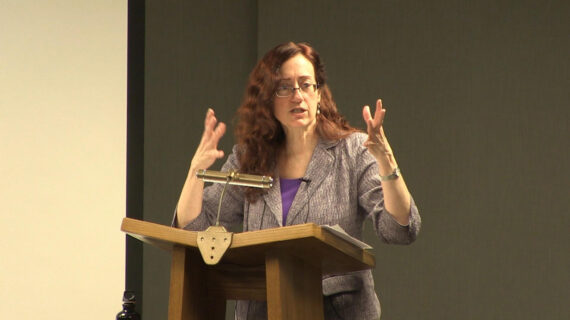
On behalf of those folks and our other co-organizers, Wisconsin Public Television, the Wisconsin Alumni Association, and the UW-Madison Science Alliance, thanks again for coming to Wednesday Nite at the Lab. We do this ever Wednesday night, 50 times a year. Tonight it's my pleasure to introduce to you Kevin Hampton. He's curator of research and public programs at the Wisconsin Veterans Museum.
He grew up in Madison. Kevin's passion for Wisconsin's military history comes from his third grade field trip to the Wisconsin Veterans Museum back in 1923.
laughter
Oh, no... 1994. Kevin got started and inspired by the research of his own ancestors from Wisconsin who served in the military. He now devotes his research to military history from all eras, his special focus on the topics from the Civil War, World War I and World War II.
He earned a degree in history from the University of St. Thomas in St. Paul, Minnesota. He's been involved with living history programs across the Midwest and the East Coast since the year 2000.
It's been Kevin's pleasure to work at the Wisconsin Veterans Museum, the very place that sparked his passion as a child, and to continue to share that inspiration with others. Tonight, the topic is the MacArthurs of Wisconsin. Usually, this is a public science series. Tonight is a special night because there's really not much about science here.
One of the reasons we're doing this is to welcome people who otherwise might not come to the central part of their public land grant research university. Hopefully, you'll come back for some more on another night. Another reason is, when I was growing up, I learned that there were only two people that my dad could not stand. One was Douglas MacArthur.
laughter
The other was Douglas MacArthur.
laughter
About 20 years ago, I read this book called "American Caesar." It's by William Manchester. It's a biography of Douglas MacArthur. But what amazed me was the stories about Douglas MacArthur's father, Arthur MacArthur, and in particular, how as an 18-year-old lieutenant, he led the charge up Missionary Ridge on November 25, 1863, with the shout of "On Wisconsin!" Or so it says in here. The parallels between Arthur MacArthur, father, and Douglas MacArthur, son, are rather remarkable.
We get to hear about that today from Kevin Hampton. Please join me in welcoming Kevin to Wednesday Nite at the Lab.
applause
Good evening, everyone. How are you all doing?
indistinct responses
Excellent. Tom has quite the following here at the Wednesday Nite at the Lab program, and it's a pleasure to be a part of it. How many of you have been to the Wisconsin Veterans Museum before? Oh, excellent.
Wonderful. As you've seen, you've seen, hopefully, the Civil War exhibit that we have on display in the galleries, and have had the chance to view some of the wonderful artifacts. If you haven't had a chance to, I highly encourage you to get down to the galleries again. Last week, we just opened our Medal of Honor exhibit.
It's a permanent display, displaying four medals of honor that were earned by four individuals from Korea and World War II. They'll be on display for the rest of our existence in that facility, as well as our temporary exhibit for the Last Full Measure. It covers the last two years of the Civil War, including Arthur MacArthur and the Atlantic Campaign, which Arthur partakes in extensively. Now, when I was asked to do this-- Oh, I will also say that the Wisconsin Veterans Museum is the educational outreach activity of the Wisconsin Department of Veterans Affairs.
When I was asked to do the presentation tonight, originally the idea was to tie in the beloved phrase "On Wisconsin!" with the 150th anniversary of the Battle of Missionary Ridge, which we will commemorate this coming Monday, Monday the 25th. Now, the anniversary of Missionary Ridge pales in comparison to the other anniversaries that we'll commemorate in these days here this weekend. That's especially yesterday being the 150th anniversary of Abraham Lincoln's famous Gettysburg Address. And coming this Friday would be the anniversary of the assassination of President Kennedy.
However, I think the story of the MacArthurs of Wisconsin are one that are worth of note. For that matter, the story of "On Wisconsin!" is one worthy of note, as well. We know the story of "On Wisconsin!" the song really originates out of a music competition at the beginning of the 1900s. In fact, many of you may even know the history of the song itself.
It was originally written by William T Purdy and Paul Beck, who were roommates in Chicago at the time. Purdy had intended to enter the song in a contest which offered $100 prize for a new University of Minnesota song. Upon hearing the melody, Beck, who had attended UW from 1908-1908, immediately began to write lyrics for the University of Wisconsin, and convinced Purdy to abandon his plan. The fact that the song was originally intended for Minnesota is ironic considering the Badgers and Gophers have met consecutively since 1890, making it the most played rivalry in all of college football.
In fact, the original song, as it was adopted by the University of Wisconsin was originally "On Wisconsin! On Wisconsin! Plunge right through the line. Run the ball around Minnesota, a touchdown sure this time."
laughter
The song debuted in November of 1909, again, marking another anniversary here in these weeks of November. It was widely popular ever since. In fact, even John Philip Sousa proclaimed it as one of the best school songs that he has ever encountered. The official date of the song is unclear, the debut of the song.
Many see the song as being debuted on November 10, 1909, when Purdy himself performed the song at a pep rally the next day. Most cite the anniversary, however, as November 13, when "On Wisconsin!" was performed at the football game against Minnesota. Now, you can also cite the background of "On Wisconsin!" to a very wonderful story from the Battle of Missionary Ridge, which as you'll see, sometimes stories start to mix with folklore and legend, and perhaps we'll shed some light on that tonight. When anyone mentions the name of MacArthur, who's the individual you think of first?
The individual on the screen, General of the Army, Douglas MacArthur, a five-star general. General Douglas MacArthur, however, would be the first to tell you that he paled in comparison to his own father. Though many either found him heroic or they found him a controversy, it doesn't matter. Douglas MacArthur was revered and was honored at different points in his life, including yet today for many circles.
However, General MacArthur even mentioned in 1942 that whenever I perform a mission and I think I've done it well, I feel that I can stand up squarely to my dad and say, "Governor, how about it?" So the fact that the man that we knew as the indomitable Douglas MacArthur always felt that he had to compare to his father speaks loads about the quality of his father. Now, his father Arthur MacArthur was Arthur MacArthur, II, or Arthur MacArthur, Jr. In fact, when I was doing research for this presentation, I found that some of the more interesting stories, or most interesting stories come in fact from Arthur MacArthur, Sr. I truly do hope that all Wisconsinites will learn this lesson, because it is probably one of the most fantastic political history stories I have ever heard of, especially in state history.
During the gubernatorial race of 1855, Arthur MacArthur, Sr., was the candidate on the democratic ticket for the state of Wisconsin, along with the incumbent, William A Barstow, who was running for governor again. Opposed was a state senator by the name of Coles Bashford, and an individual by the name of CC Sholes, running against MacArthur as Lt. Governor. Before the election, it seemed clear that the republicans would win.
In fact, it seemed pretty obvious that they had the win, because in the previous tenure of Governor Barstow, rampant examples of unscrupulous acts and scandals had rocked his administration. In fact, it led several newspapers to refer to his administration as "Barstow and the 40 Thieves." If you think politics is ugly now, it was ugly back then as well. In fact, it was almost downright violent. The election results of the race for the Wisconsin governorship in 1855 was a clear cut victory for MacArthur as lieutenant governor, but was close in the governor's race.
MacArthur had received a majority of votes of over 3,000 against his opponent. But in the governor's race, Barstow had only won by a mere margin of 157 votes. When the canvasses who had democratic leanings had declared the winning to Barstow, the republicans protested and demanded a recount under "supervision." Bashford's lawyers claimed they had overwhelming evidence that fraud had been committed, so the Wisconsin Supreme Court agreed to hear the case. As inauguration day approached in January, 1856, rumors had circulated in the papers that the republicans planned to occupy the state capitol to prevent Barstow's inauguration.
For his part, Barstow had anticipated this and had recruited over 250 armed supporters to escort him to the state capitol, as well as used his authority as yet the state governor to activate and mobilize the state militia to turn out to the state the capitol in order to guarantee there'd be no interference. Fortunately, on January 7, 1856, cooler heads prevailed and violence did not erupt on the square. MacArthur and Barstow, and other newly elected state officials were sworn in without disturbance. However, over the next two months, Bashford's attorneys presented evidence to the State Supreme Court that revealed a devastating case of fraudulent election manipulation and other unscrupulous acts by Barstow's supporters.
The democratic-controlled election board had accepted forged supplementary returns and counted voters who did not exist in a number of precincts. One set of ballots, for example, was from a place called Spring Creek, a non-existent precinct, reportedly somewhere in Polk County. Moreover, all the supplementary returns, regardless of where the votes were supposedly cast, were written on the same sort of watermarked paper, had the same peculiar phrasing, and were in the same handwriting.
laughter
In one case, the supplementary returns from Waupaca added up to more voters than there were in the entire district, raising Barstow's count in that area from 288 eligible voters to 547 actual votes, enough votes to actually change the election results. Even the democratic controlled newspapers admitted that the evidence of the election fraud was overwhelming, and expected the Supreme Court to overturn the election and proclaim Cole Bashford the winner. But before the courts could rule, in a move widely interpreted as an attempt to derail the case, Barstow resigned on March 21, 1856, after only serving six weeks of his second term as governor. There had been no hint in the scandal surrounding MacArthur's election as Lt.
Governor, so he took on the reigns as governor of the state of Wisconsin. Now this, for all you true Wisconsinites out here, would be the trivia that you'll always want to know at the bar.
laughter
Governor MacArthur is the shortest-serving governor in Wisconsin history, serving a total of four days.
laughter
MacArthur announced that he had no intention of holding the governor's seat by force, and that he hoped the opposition would not resort to force to obtain it. Nonetheless, on the afternoon of Monday, March 24, the Wisconsin Supreme Court issued a unanimous decision. Fraud had been committed and Cole Bashford had actually been elected governor on November 6, 1855. Consequently, the very next day,
around 11
00 in the morning, Bashford gathered his supporters, including his lawyers, the county sheriff and 20 other armed guards, and appeared at MacArthur's office with the court decision. MacArthur, being the good nature that he was, teased Bashford that he had clearly brought far too many men to remove him from the post, as he picked up his briefcase and walked out. Two days later, he returned to his duties as Lt. Governor.
Now, Wisconsin's second-shortest serving governor in history, or his first, depending on whether you consider Arthur MacArthur's was actually governor or not, was a man by the name of Governor Harvey. Governor Harvey was an individual that hopefully everyone has heard of as well. He was elected in November of 1861, to replace Governor Randall. Governor Harvey only served for the course of three months as the governor.
He was inaugurated in January of 1862, and he traveled down in April to inspect the Wisconsin troops after the Battle of Shiloh, and he slipped off the gangplank in the middle of the night and drowned in the river. Now, for the longest time, he had been considered the shortest-serving governor in Wisconsin history, until recently when the full story of the corruption has come out, and now MacArthur holds that title. Young Arthur MacArthur, Jr. grew up knowing his father's story and his well mannerisms to command a crowd.
In fact, he grew up with others with the nature and position and stature in society, including the likes of Charles King, and others, who was the son of Rufus King. He was a very prominent and wealthy newspaper owner in the Milwaukee area. The family originally had come from Massachusetts in 1849, moving here when young Arthur MacArthur, Jr. was only four years old.
So Arthur MacArthur considered Milwaukee his home. In fact, when he retired, he insisted to the war department that he be allowed to transfer the last two years of his service to Milwaukee, as he had always considered it his home. How, having been born in 1845, he was a fairly young individual when the war broke out. In fact, he was so young that he was not eligible to serve.
He was only 16 at the time, and had to wait until his 17th birthday when his father could sign for him to serve. Arthur goes down in legend for us as being the one to exclaim "On Wisconsin!" But as we had mentioned before, Douglas considered him his hero, and rightfully so. Arthur MacArthur has been overlooked by numerous historians and biographers, until recently in the last 20 years or so, and unjustly so. Arthur has a fantastic story.
He was a career military man, beginning at the age of 17. Having come from a prominent family in the Milwaukee area, in August of 1862, he was given a commission as a 1st Lieutenant, an adjutant of the 24th Wisconsin Infantry. The 24th Wisconsin was raised entirely out of the Milwaukee area. So it was a very prominent name to see MacArthur on the roster.
However being only 17 years old and rather short for his age, he was constantly jibbed at by the soldiers, calling him the "baby adjutant." It didn't help things that their very first dress parade, the formation that the adjutant is supposed to lead and command, young Arthur MacArthur unfortunately was too short for his sword, and he had to hike it up to his shoulder so that he didn't trip on it, which didn't help the fact that he actually could not fit into his pants, either.
laughter
around 11
Unfortunately, when he was ordered to do the about face to bring the parade to attention, he tripped on his sword, he claims later that it was his sword. There is an account that they thought they saw his pants fall underneath his foot. Though his age and short stature provoked initial teasing, Arthur would later go on to earn the respect of the men, and in fact, earn the respect of many of the Wisconsinites, as he was awarded the Medal of Honor for his actions during the war. Arthur really comes onto the scene at the Battle of Missionary Ridge, November 25, 1863.
By 1863, the war has been raging for two years, a war that was only supposed to last for about three months. The initial volunteers from Wisconsin joined with the initial understanding that they were only signing up for 90 days, because that's how soon they thought the war would end. Arthur wanted to be part of that 90 days, but his father would not give him permission, and told him to wait a year, and the war would be over. As you saw in 1862, it obviously was not.
Wisconsin itself was only a very young state. It was only 13 years old at the time. It had 775,000 people in the entire state, which you can now find today pretty much in Milwaukee. In fact, the population though was by the end of the war, one in every nine man, woman, and child, would have been a veteran in the Civil War.
That many people had served. When the war broke out, Lincoln called for volunteers, and each state was required to raise a certain quota. This is going to be a fun sentence to say over and over again. Required to raise one quota.
Wisconsin's quota was one regiment. One regiment consisted of 1,000 individuals. Within the first week, 1,000 volunteers had shown up, with 2,000 more already waiting at the gates of Camp Randall, and turning out at City Hall in Milwaukee. By fall, over 8,000 volunteers had shown up, when still Wisconsin's quota was only 1,000.
Initially, when they were equipping these 8,000 volunteers, they were not entirely prepared for the conflict that they would have. The state equipped its soldiers, not with the blue uniforms of the regular army, but with gray uniforms of the militia system of New York. The first 8,000 troops to leave Wisconsin wore gray. The 2nd Wisconsin left in June of 1861, and wore their gray uniforms at the first battle of Bull Run, under the command of a general, William Tecumseh Sherman, the brigade commander.
They charged into battle, the first battle of Bull Run up over Henry House Hill, and engaged what would be come General Thomas Jackson's forces. As they retreat back down the hill, the 79th New York behind them, part of their brigade confused them for Confederates and fired at them from both sides. So it wasn't until six months after the war began that the leaders began to realize, perhaps we should all wear the same color. Arthur followed the news of the events of that first year of war avidly.
He cut out scraps of newspapers and followed his friends when enlisted. Charles King had already gone off to join his father, Rufus King, as an aid on his staff. Again, Arthur longed for glory and longed for the attention. In a sense, it was poignant that, or it was very apropos, I guess we'll say, that Arthur, still being just a lieutenant in the 24th Wisconsin by November of 1863, would really come out onto the spotlight in the last two years of the war, and really grow into his uniform.
In September of 1863, the Army of the Cumberland, with General Rosencrans, had been defeated at the Battle of Chickamauga, including the 24th Wisconsin, and had been rallied back to the city of Chattanooga. Chattanooga was very defensible, with the forts. They were laid under siege by General Braggs' Confederate troops. The siege lasted for two months, with no way in and no way out for supplies.
In fact, the meager supplies that they had by November of 1863 was a day's rations every four days. Now, a Civil War day's rations is ten hardtack crackers, which if you've heard of hardtack before, you know what it's like. If you haven't heard of hardtack before, all it is, is flour and water. That's it.
It's been compacted into a cracker about a saltine-looking cracker. It's about yay big and only about 3/4" tall. However, the only way to eat said cracker that had been manufactured five years before, according to the letters, is to dunk or soak the cracker for an hour and let the maggots float to the top, at which point, you can reach in and grab the cracker and gnaw on it on the march. That comes from the diary of one of the soldiers in the 24th Wisconsin.
So even though, as the diary says, they were given only one day's rations every four days, the soldiers didn't feel like they were missing that much.
laughter
around 11
MacArthur had been out with Typhoid fever after a battle in January of 1863. So he was not with the regiment at Chickamauga, and therefore was not with them during the Siege of Chattanooga. It wasn't until General Grant was made commander of all the western armies in October of 1863, and took direct command over the Army of the Cumberland that he opened a supply line, known as the cracker line, across the Tennessee River into Chattanooga, to relieve the sieged troops. General Grant was the overall commander, commander of the Department of the Mississippi, and he commanded not only the Army of the Cumberland under General Thomas, but also commanded the Army of the Tennessee under General Sherman.
He also requested a corps from the Army of the Potomac in Virginia to come to the aid and support of the troops in Chattanooga. So originally, the troops under General Thomas that had been outnumbered two to one, by the time November 25, 1863, comes around, they now outnumber the Confederates. General Grant had absolutely no respect for the troops under General Thomas. He himself, General Grant, had been the direct commander of the Army of the Tennessee, with General Sherman as his second in command.
His contempt would lead him to what would become the Battle of Missionary Ridge. Grant obviously had no respect for General Hooker, who had been replaced as the commander of the Army of the Potomac and given a corps command. So Grant wanted to establish himself as a strategic leader. In order to do so, he would rely on General Sherman to break the siege at Chattanooga.
Sherman had an army of 30,000 men, compared to General Thomas' army of 26,000 men, and Hooker's corps of only 15,000 men. General Sherman was to attack the defenses of Missionary Ridge, which were the siege lines of General Bragg, and turn the entire Confederate line. General Grant knew that Sherman and the Army of the Tennessee could do it, if not for his for his own ego, for training the troops of General Sherman. He insisted on teaching General Thomas a lesson and informed General Thomas that his entire army would be kept as reserve in the center of the line.
Unfortunately for General Sherman, the terrain that he was asked to cross on November 23 was a little bit more rugged than he had initially expected. They made some progress, but the troops would get caught up and bunched up in the ravines, and the Confederate lines at the top of each crest would be able to fire in a murderous fire. Sherman's army stalled in their assault on the 23rd. So, on the 23rd, Grant ordered Thomas' troops to take a position known as Orchard Knob in the center, which was the first line of pickets for the Confederate troops.
Thomas did so, with one of the regiments being the 24th. Shortly before the assault on Orchard Knob, MacArthur was able to make his way through the supply lines from the hospital he had been staying at to join his regiment again. So, he was there for the assault on Orchard Knob. On the 24th, General Hooker was supposed to assault, as a diversion, Lookout Mountain, while Sherman again tried to turn the flank on the northern edge of the line.
Fortunately for General Hooker, General Bragg had removed much of his defensive force in the south to resist Sherman's assault in the north. So what was supposed to be just a diversion ended up being a complete capture of Lookout Mountain. Sherman, however, unfortunately on the 24th, still had difficulties and stalled. On the morning of the 25th, Sherman again assaulted from the north and stalled yet again.
This time, however, Bragg had moved troops from his center to reinforce his northern post and was well prepared for Sherman's assault through the woods, on top of some of the ridges, as you see in this contemporary drawing. Sherman had called to Grant requesting reinforcements. Grant ordered Hooker again to move across Lookout Mountain into southern positions of the defensive line, again leaving General Thomas' 25,000 troops in reserve in the center, watching as the events unfolded in front of them. Grant insisted on being ten yards away from General Thomas at all times, to make sure that he "learned the lesson." As Sherman's assault stalled in the north, Hooker moved across Lookout Mountain.
Unfortunately in the Rossville Gap, there was a swollen river and the ravine was too steep, so his troops had to build a bridge. The assault that was supposed to
begin at 10
00am, did not begin
until 1
00pm. Sherman, by that point, had already begun his assault at
10
00am, and was starting to take heavy casualties. Hooker's 15,000 men, being delayed on the southern portion of the battleground, unfortunately, Grant had to look to the center again, to General Thomas. This image is an image of Lookout Mountain on the right, and another rise on the left. Hooker's troops had occupied the crest of Lookout Mountain.
So you can tell the difficult terrain it would be to make it across one mountain, up another, cross that, make a bridge, and get across the battle field in time, much less doing that with 15,000 people. With Grant's options running low, General Thomas in the center of the line was his only hope. General Thomas had, at his disposal, 23,000 troops waiting in a small wood line. He was ready to make an assault across the entire front.
Grant, however, still had faith in Sherman and was still confident that Sherman would win the day by turning the flank, so he only ordered General Thomas' Army of the Cumberland to take the first line of rifle pits as a diversion at the base of the main line. Looking at the terrain that they were supposed to assault, you can see why he first anticipated that that position would be almost impossible to carry. Imagine walking across that open field, almost a mile long to the base of the ridge, and then making your way up the 600 foot elevation to the crest of the ridge. In between the crest of the ridge and where you stand in this photograph would be three Confederate lines of trenches, and over 50 pieces of siege artillery.
The position was considered to be impregnable. Grant knew this, and knew that it would be a slaughter if they tried to assault a center line. Again, putting his faith in Sherman, giving to Thomas only the first row of rifle pits. Here's another image of the battle field.
In about the center is a little depression, a second depression that I'll show you with the mouse here. Right here is the area that General Grant had occupied as headquarters. It's also the area directly in front of the 24th Wisconsin in the line of battle. This is another image of the terrain in which they would have to cross in order to reach the defensive positions.
The trees had been cut down in front of the ridge, as well as on the ridge itself in order to afford the Confederates a better field of fire. Grant, sitting on Orchard Knob, watches as the assault begins. Thomas' 23,000 troops began their formations in orderly lines as if in a dress parade. Thomas had been training his troops for the last several months while they were in siege in Chattanooga in order to be able to impress the army and Grant.
As the troops formed up, they began to move out in an orderly line. And finally, with three-quarters of a mile left before the rifle pits, broke out into an outright charge. As the charge commenced, no one realized that there were only 6,500 Confederates in the rifle pits, compared to the 23,000 Union soldiers that were running across the open field toward them. The initial rifle pits were taken with ease.
So, the Army of the Cumberland had completed their orders. Unfortunately, sitting in that ravine and in those trenches exposed them to both trench lines further up the ridge, and it became at that point that they had their worst casualties. As the battle continued, and Sherman was unable to make further progress in the north, it looked closer to close that this would be another defeat. It them became an issue of how do you remove the Army of the Cumberland from their exposed positions at the base of the ridge.
Realizing the danger that they were in, the troops themselves figured out what they had to do. It was either to retreat or to put forward. The men who had been put in reserve for two days prior were eager for a fight, but more so as one recounts, "We were eager not to die." Their only choice was forward. Back on Orchard Knob, Grant was furious.
He turned to General Thomas, which you see here in the dark blue, and demanded to know "Who ordered those men up that ridge, Thomas?" Shaking his head, General Thomas replied, "I don't know. I did not." Turning to the corps commander Granger, who was also on Orchard Knob with his staff, Thomas asked, "Did you order them up?" "No," Granger replied. "They started up without orders. When those fellas get started, all hell can't stop 'em." Granger turned to the division commander who had been ordered forward to report the condition of his division, General Sheridan.
"I didn't order them up," Sheridan said, "But we're going to take the ridge." He then galloped off, personally to lead his division. General Sheridan was the division commander that the 24th Wisconsin belonged to. Sheridan would indeed ride his horse all the way up the ridge, and would come on later in the day. As the troops started up the ridge, Douglas MacArthur himself was the one that reiterates the best story of the 24th Wisconsin.
In his own autobiography, mind you. "On the day of the battle, November 25, 1863, the Confederate Army, under General Braxton Bragg organized a defensive line of rifle pits, beginning at the foot of the ridge, with successive lines up it's rugged face. It was a broken, ragged slope difficult of ascent, even under the peaceful conditions. Jagged boulders jutted out, deep gullies scarred its surface, and twisted underbrush barred the way." Douglas' description of the battlefield was very accurate.
Everything after that, you can imagine the young Douglas sitting on Arthur's knee hearing the story his father would reiterate. "Sheridan was ordered to take the rifle pits at the foot of the ridge. Under a storm of shot and shell, the troops pressed forward through the timber and carried the line at the point of bayonet. But their position was desperate, exposed as it was to the concentrated fire from the slopes and crest.
Should they go forward or back? No one seems to know just what orders may have been given, but suddenly the flag of the 24th Wisconsin started forward. With it was the color sergeant, the color guard of two corporals, and the adjutant," Arthur MacArthur. "Up they went, step by step.
The enemy's fire was intense. Down went the color bearer. One of the corporals seized the colors as they fell, but was bayoneted before he could move. A shell took off the head of the other corporal, but the adjutant grasped the flag and kept on.
He seemed to be surrounded by nothing but gray coats. A Confederate colonel thrust viciously at his throat, but even as he lunged a bullet struck and the deflected blade just ripped a should strap. No movement yet from the Union lines. And then, above the roar of battle, sounded the adjutant's voice, 'On, Wisconsin!' They come then; they come with a rush and a roar, a blue tide of courage, a whole division of them.
Shouting, cursing, struggling foot by foot, heads bent as in a gale! Gasping breath from tortured lungs! Those last few feet before the log breastworks seem interminable! Men tumble over life tenpins!
The charge is losing momentum! They falter! Officers are down! Sergeants now lead!
And then, suddenly, on the crest, the flag! Once again that cry, 'On, Wisconsin!' Silhouetted against the sky, the adjutant stands on the parapet waving the colors where the whole regiment can see him! Through the ragged blue line from one end of the division to the other, comes an ugly roar, like the growl of a wounded bear! They race those last few steps, eyes blazing, lips snarling, bayonets plunging!
And Missionary Ridge is won. The adjutant suddenly falls to the ground exhausted, his body retching, racked with pain. He is a terrible sight, covered with blood and mud, hatless, his smoke-blackened face barely recognizable, his clothes torn to tatters. Sheridan, the division commander, utters not a word, he just stares at him, and then takes him in his arms.
And his deep voice seems to break a little as he says, 'Take care of him. He has just won the Medal of Honor.'" Now, not to be, I don't know, a Debbie Downer...
laughter
10
But the story reiterated in Douglas' first chapter of his autobiography is not necessarily one that is shared by many of the historical records.
laughter
10
Though no doubt many words were uttered, there is no historical record that I can find in my research that actually has Arthur MacArthur saying "On, Wisconsin!" There is an account of him yelling "Up, 24th Wisconsin, Up!" There's also an account of him yelling, "Onward! Onward!" Now, Douglas' book comes out in 1964, well after the song "On Wisconsin!" is established. Which came first? Who knows.
Perhaps Arthur is the one who actually did say "On Wisconsin!" Or perhaps, this came from the song and the notoriety. That does not, though, detract from the feat that MacArthur did that day on November 25, 1863. MacArthur's own record of the account reads as such. "The men took advantage of all obstacles as they advanced steadily and surely toward the top.
Halfway up the ridge, John Booth, the 24th Wisconsin color sergeant, stumbled and dropped to his knees in exhaustion. Being next to him, the adjutant grabbed the flag as he fell. He dropped the flag and waved it high and shouted "24th Wisconsin!" Later on, in other accounts, in other letters and newspaper articles, they'll describe the canisters that exploded around MacArthur. In fact, one shell burst so near to him that it blew his hat off his head, knocked him to the ground, and his hat flew 20 feet away.
As one letter will also state, perhaps that 20 feet was down, as the slope was so steep, it was almost impossible to climb. The only thing that we do know is that the 24th Wisconsin's flag was indeed hit by shrapnel as it tore the silk flags, which you can see in the battle damage. The damage to the flag was so extensive that you can even see they changed the location of the battle honors, to only the part of the flag that remained, putting the battle honors of Chickamauga and Missionary Ridge on the bottom left corner, when they should be in the center, along with the others. What's also known is an account by Sergeant Thomas Ford, Company H, who, as he reached the top of the ridge, standing next to MacArthur, yelled, "What a splendid sight, Chickamauga, Chickamauga!" The charge had only lasted one hour and 26 minutes.
As historian James McPherson observed, the Union soldiers could hardly believe their stunning success. When a student of the battle later commented to Grant that the southern journalists have considered the position impregnable, Grant replied with a wry smile, "Well it was impregnable." Grant himself wrote that no satisfactory excuse could possibly be given for the shameful conduct of our troops. The position was one that ought to have been held by the line of skirmishes. General Bragg's army would be in retreat until he would occupy Atlanta.
Chattanooga was considered the gateway to the Deep South and would be the base of operations for General Sherman's Atlanta campaign and further march to the sea. The victory at Missionary Ridge was one that will go down in history as the one that opened that gateway. Many units would take credit for opening that gateway. Indeed, the 2nd Minnesota claimed that they crested the ridge first, and not Arthur MacArthur.
However there is an account from Grant's own staff that even though they did see the line be penetrated at six different points at the exact same time, it was the flag of the 24th Wisconsin that they saw through the clouds of smoke first. Sheridan would ride up to the top of the ridge, and indeed ask for the color bearer of the 24th. As Arthur presented the flag to him, he cheered and complimented the regiment. Sheridan unfortunately in his account, does not remember that this man has earned the Medal of Honor.
But either way, Sheridan had known that his boys had done something remarkable. In fact, the first thing that they asked for when they had taken the ridge was, "How about some food, General?"
laughter
10
"Boys," he said, "in less than two hours time, you'll have all the hardtack, all the sow belly, and all the beef you want." Sergeant Ford later reported that indeed the general had kept his promise, and there were 1600 head of cattle driven up to that ridge, and in an hour's time, they were in the frying pan. You could see men as far as the eye could reach, several lines of them, with boxes of crackers on their shoulders. But everyone stood in line for the beef. The boys all felt happy.
In the charge, it had cost General Thomas 20% of his entire force. The 24th Wisconsin was lucky with only four dead and 31 wounded. However they had started the attack with only 150 men. Writing after the battle, Captain Parson, Commander of Company K wrote to Judge MacArthur, MacArthur's father, "Arthur was magnificent.
He seemed to be afraid of nothing. He'd fight a pack of tigers in a jungle." Major Bombach, the regiment's commander at the battle, wrote in his official report, "Among the many acts of personal and intrepidity of memorial occasion, none are worthier of higher commendation than that of young MacArthur, who seizing the colors of his regiment at a pinnacle moment contributed materially to the general result. He was the most distinguished in action on the field were many in a regiment despite conspicuous gallantry worthy of the highest praise." MacArthur would later go on to serve the rest of the war, as well as be commended four other times in battle reports, earning praise from corps commanders and generals of the army alike. In fact, at the Battle of Nashville, it was his command, the 24th Wisconsin, that saved the day.
They plugged the line when all hope had seemed lost. MacArthur had been wounded several times, but he refused to leave the field, and so led the regiment on into the rest of the war, or rest of the battle. After the war, MacArthur, who had obtained the rank of Lt. Colonel, and also given a commission by the state of Wisconsin as a full colonel, was reduced to the rank of captain.
There's a reason for that. MacArthur had decided to stay in the Federal Army after the war had ended. But for the Federal Army after the war, there was no need for that many officers. In an army that began in 1865, with over one million men, there was no need for that many, so they reduced to only 2,000 officers and 2500 enlisted men by 1870.
MacArthur being the rank of captain, was a company commander on the frontier during the Indian wars, though he never fired his gun. As he was a post commander, he is credited with establishing the first canteen in the United States Army history, which would later become the modern Army Post Exchange System, or the PXs exchange system. For 20 years, he remained a captain and it wasn't until the outbreak of the war with Spain that he finally was given back his original rank of Lt. Colonel.
The war with Spain in 1898, there are similarities between what he did as well as his son, Douglas, are remarkable. MacArthur would be promoted to the rank of Brigadier General, and command a brigade of troops during the Spanish-American War, and the occupation after it. However, during the occupation, he would be promoted once again to Major General and command an entire division. It was MacArthur's division that did most of the fighting during the Filipino Insurrection, as they called it.
So, he established the tactics or the counter tactics for guerilla warfare that the insurrectionists were famous for. Many of those tactics would be used by his son Douglas. In fact, Douglas so revered his father's military mind that he actually took his father's papers with him to the Philippines when he was in command of the forces there. But unfortunately with the surrender of the Philippines early on in the war, he lost of his father's papers as well.
The majority of the record that we have left from Arthur MacArthur unfortunately are not his personal records or his letters, but come from newspaper articles or records from letters he had sent to other individuals. We may never know exactly what was in the mind of Arthur MacArthur, but we certainly know Douglas MacArthur's take on it. Arthur had the same problems that Douglas did as a governor of the Philippines. Initially given an entire command as Governor General of the Philippines, Arthur was dealing with the insurrection as best he could when a civil government was established.
A civil governor by the name of William Howard Taft was the man who would become Arthur's equivalent to President Truman for Douglas. William Howard Taft, in fact, made life very difficult for General MacArthur, as his tactics did not agree with the civilian government. Requesting a transfer, MacArthur, unlike his son Douglas, after the debacles in the Philippines, was not demoted or removed from command, but was promoted to Lt. General.
He was in command of the entire Department of the Pacific, one of the highest ranks that could be obtained or given by the War Department. Arthur asked for a transfer, however, by 1907. He realized that he would not be able to succeed in what he had always wanted, or at least what his son tells us he always wanted, which was command of the entire army. His transfer request is granted, and that is when he returns to Milwaukee, the home that he has always loved.
In fact, in a newspaper article that survives today, "So says the general, 'Glad to be back home. I shall stay in Milwaukee for the rest of my days and renew old friendships just as fast as I can. In all the experiences that a long life spent moving about the world, no city has appealed to me as much as does Milwaukee.'" His time in Milwaukee was spent giving speeches. Unfortunately, he also encountered the same problem his son did, and perhaps saying words and speeches that he shouldn't have necessarily said.
In fact, this summons for information from the Office of the President from December of 1903, alludes to General MacArthur's speech that perhaps even though he was only discussing the condition of Europe and the imperialist nature of the powers, that he implied that there could possibly be war between the United States and Germany, he made enemies at both the White House and the War Department. It also didn't help that his old nemesis William Howard Taft was made Secretary of War. Either way, General MacArthur lived out his days in Milwaukee. His public appearances were minimal at the end.
And again, no speech remains where he mentions saying "On Wisconsin!" But that doesn't mean though that he didn't pay homage to his old troops at the 24th Wisconsin. In fact, on the 50th anniversary of the leaving of the regiment from Wisconsin, on September 5, 1912, at that 50th anniversary dinner, Arthur MacArthur left to go present to his old comrades once again. MacArthur was to be the keynote speaker. Unfortunately, he rose to address the crowd, he spoke for about ten minutes, until he got to a point where he was discussing the marching through Georgia, at which point he announced to the crowd, as it says here in this newspaper article, "Comrades, I am too weak to proceed." He sat down in his chair and moments later, his head fell forward.
The general was pronounced dead only minutes later. Stories come out of this incident will lead to the legend as well. Many say that the flag of the 24th Wisconsin was draped around his shoulders, and the general died wrapped in the flag that he carried up that hill at Missionary Ridge. Unfortunately, again, not to be a Debbie Downer, they did stop allowing regimental flags to be taken to reunions in 1888.
There is no record of one ever going to the reunion in 1912. But that does not at all diminish the story of MacArthur. In fact, as his son said, that day my father died, the world changed. When Douglas MacArthur took his seat as Chairman of the Joint Chiefs, his mother leaned over to him and said, "Oh, if only your father could see you now.
You have everything he always wanted." Again, we're going off of Douglas' autobiography for this one, and you can take his own initiatives to your own thought. Either way, the story of Missionary Ridge and "On Wisconsin!" as well as Arthur MacArthur and the stories of the MacArthur families still live with us today, whether it's in a song that we sing at football games, or it's in lessons that we learn from the history books. It doesn't matter. Missionary Ridge today is now part of, as you can see, the greater part of Chattanooga.
The dark line down the middle of the image, the satellite image, is the ridge. The expanse of the city has engulfed the ridge completely. In fact, Bragg's headquarters where the flag of the 24th Wisconsin charged forward is now a condominium.
laughter
10
However, it's also kind of ironic, that the stories still live with us today. As you look where the note is from Google Maps, on the "A," that is McCallie School. McCallie School is a private school in the Chattanooga area, and you'll never guess what their fight song has the tune of.
laughter
10
With that, I hope I gave you some snippets into the life of Arthur MacArthur. I also hope that you learned a little bit about the history of "On Wisconsin!" I hope that you will stick around and ask any questions that I might be able to answer. Thank you.
applause
Search University Place Episodes
Related Stories from PBS Wisconsin's Blog







Donate to sign up. Activate and sign in to Passport. It's that easy to help PBS Wisconsin serve your community through media that educates, inspires, and entertains.
Make your membership gift today
Only for new users: Activate Passport using your code or email address
Already a member?
Look up my account
Need some help? Go to FAQ or visit PBS Passport Help
Need help accessing PBS Wisconsin anywhere?

Online Access | Platform & Device Access | Cable or Satellite Access | Over-The-Air Access
Visit Access Guide
Need help accessing PBS Wisconsin anywhere?
Visit Our
Live TV Access Guide
Online AccessPlatform & Device Access
Cable or Satellite Access
Over-The-Air Access
Visit Access Guide




Follow Us