

 Passport






What is Science?
06/16/15 | 55m 4s | Rating: TV-G
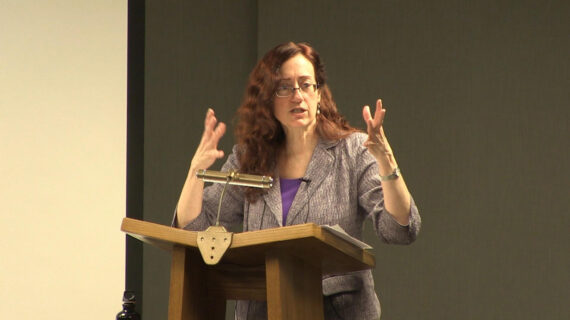
Bassam Shakhashiri, Professor, Department of Chemistry, UW-Madison, and Rod Schreiner, Senior Scientist, Department of Chemistry, UW-Madison, present an overview of scientific methods and how they are used to prove theories.


Copy and Paste the Following Code to Embed this Video:
What is Science?
He's my longtime colleague and friend, Dr. Rodney Schreiner. Rodney came to Madison as a graduate student in 1971. He got his PhD here. First he got a master's degree here, then he got a PhD here, and he hasn't found his way out from Madison. (audience laughs) Rodney is a close friend and a colleague and a confidant, and he and I have participated in so many activities, not only Once Upon a Christmas Cheery in the Lab of Shakhashiri, but publishing books and doing all kinds of different activities, and so I would like to now ask Rodney to come and tell us about his topic for this evening. And Rodney, you have as much time as you'd like. -
Rodney
So I am going to endeavor to, this evening, to address this question of what is Science? It is a topic, the identity of science, which is current. There are controversies involving what can be taught, what should be taught in schools as science. We have politicians talking to us about science, but I feel I need to apologize even before I begin because I am not actually going to give you a definite answer to that question, and I think by the time I'm done, you'll know why I am not giving you a definite answer to that question. What I'm going to do instead is to describe various ways that various people have looked at science, people who have spent a lot more time at examining what science is than I have. I have read some of their ideas, and I will tell you about them. And we also have a sheet prepared for you. Some of you may have picked it up on the way in. If you didn't, you can pick it up on the way out. On the front side of this sheet is a list of the primary sources of the ideas I'm going to tell you about tonight, but they are, I will warn you, rather dense reading. And if you would like to learn more about the topic, the books on the back are a lot more approachable. So if you want to do reading on your own, I would say start at the back and then go to the front. But I'm going to tell you about what's in some of those things in the front. So, here are samples of some textbooks, Chemistry, Geology, Biology, Physics, Meteorology. I think we all would recognize those as science books, yes? Do they say "science" in the cover? No. Those sciences have something in common. We'll discover what that is a little bit later. Here are some more textbooks, Library Science, Mortuary Science, Political Science, Actuarial Science, Military Science. Are those sciences? -
Audience
No. (audience laughs) -
Rodney
Apparently, the authors think they are because they put the word "science" on the cover. But they're expecting that you don't think that because that's why they put the word "science" on the cover. They claim that this is science. Why would they do that? Well, there must be something special about science which would make people in academia want to claim that what they are doing is science. So here is another phrase dealing with science that we hear a lot, especially in the last few months we've heard this sentence. Who has been telling us this? -
Audience
Politicians. -
Rodney
Politicians, yes. They are proud that they are not scientists. (audience laughs) And what do you expect to hear after they've said that? (audience murmurs) -
Audience
Some claims about science. -
Rodney
"But," yes. "But I know all about science." (audience laughs) What is it they know about? Well let's see. What is science? I like this description, "I shall not today attempt further to define "the kinds of material I understand to be embraced "within that shorthand description; "and perhaps I could never succeed "in intelligibly doing so." That's exactly the way I feel right now about science. "But", and I feel this way too, "I know it when I see it." This is a quote from United States Supreme Court Justice Potter Stewart, in the case of Jacobellis versus Ohio from 1964. Now he was not talking about science. (audience laughs) He was talking about hard core pornography. (audience laughs) I bet you didn't realize that science and hard core pornography have something in common. (audience laughs) "I know it when I see it," that's what... (audience laughs) Okay, what is this thing that people call science? It's a question that's been of interest to scientists and others for a long time. In the 17th century, Francis Bacon described what he called "a scientific method." And this scientific method gets lip service in virtually every introductory science textbook, all those books that I showed you on the first slide, Chemistry, Physics and so. In the first chapters, they will have a cursory description of this scientific method. They feel they need to explain to you what makes it a science, but they also know that the readers already know it's a science, and so they don't have to go very far into it, so I'll not go very far into this either. Here's a cursory description of the scientific method. Step one is to make systemic, controlled, objective observations or experiments. So you make these observations that are objective, and you make a log of them, and you, from that, try to formulate a hypothesis, which summarizes your observations, and then you go back and you do more observations to either confirm or to invalidate your hypothesis. And you do that over and over and over again, and you build up a collection of facts that are reliable. You get reliable knowledge, and this is the important word here, this is what makes science the envy of all other intellectual pursuits, the fact that the knowledge that science produces is reliable. A chemist takes a chunk of metallic potassium and drops it into water. Every time, it will explode. Every time. And when it's done, the water will be alkaline. Every time, no exceptions. It is absolutely reliable that that's going to happen. It's a scientific fact. Now, why, how is it that science is able to generate such reliable knowledge? Well, this is a question which became very interesting to philosophers of science at the beginning of the 20th century, mainly because of the immense body of reliable knowledge that was produced in the 19th century. From the beginning to the end are tremendous advances in the knowledge of the physical world, the chemical world, the biological world. And philosophers were awestruck by this. How is it possible that this can happen? What is it about science that makes its, the knowledge it produces so reliable? Well, at about the same time as that question arose, among mathematicians, who are probably the source of the most reliable knowledge of all, were looking at the same question of how is, what's the structure of mathematics and how does it produce its own reliable knowledge? One of the attempts at doing that was this monumental work called Principia Mathematica by Alfred North Whitehead and Bertrand Russell. I'm going to show you what they tried to do is lay a logical foundation for all of mathematics. I'll show you one page. (audience laughs) One page. There are nearly 2,000 of these pages. There is not a lot of readable English in there, but every now and then, there is. I'll show you one, which I think is rather charming. Here on page 379 out of nearly 2,000 is this bunch of symbols, and then down here is a sentence in English, "From this proposition it will follow, "when arithmetical addition has been defined, "that one plus one equals two." (audience laughs) And then it takes another 80 pages to define arithmetical addition, in which case, this result is shown, and they have another charming comment about one plus one equals two. It says, "This is a useful result." (audience laughs) So what makes mathematical thinking so reliable? Well, it's the process of deduction. Here is Russell and Whitehead's symbols for a deduction. Here is it with some English words added to it. "If A, then B," that's one statement. The next statement is "A, therefore B." In other words, if you have an A, here's an example in which A is, "This bird is a duck," and B, "It can swim." "If this bird is a duck, then it can swim, that's "If A, then B." A, "This bird is a duck, therefore it can swim," B. So, if the first part, "If this bird is a duck, then it can swim" is true, and you have a duck, then you know it can swim. There's no way around it. If you're more comfortable with Aristotelian syllogisms than with mathematical symbols, this is the way it would be represented in ancient logic from Aristotle. First statement, "All ducks can swim. "This bird is a duck. "This bird can swim." Sort of like, "All men are mortal. "Socrates is a man. "Therefore, Socrates is mortal." How does this work in science? Science uses deduction a lot, how does this work in science? The first statement there, "All ducks can swim" corresponds to in science what would be a theory. "This bird is a duck", that's your observation, and your deduction, "This bird can swim." So if the first two statements are true, the last statement has to be true by deduction. And, since all of the reasoning used in mathematics is deduction, everything in mathematics is certain. But not everything in science is certain, because we have this statement right here, "All ducks can swim," which is a theory. Where do theories come from? They are not deduced. They are not first principles. Where do they come from? They come through a process called induction. Now this is an idea which was proposed by Rudolf Carnap in I think around 1930 or so, in that this induction is the method by which scientific theories are established, and scientific knowledge through induction is based on observations. So here's an example. "Bird A is a duck and it can swim. "Bird B is a duck and it can swim. "Bird C is a duck and it can swim. "Bird D is a duck and it can swim. "Bird E is a duck and it can swim." Getting the idea? Over and over and over again, you make these connections, and from those connections, you induce all ducks can swim. Now, there is a problem with that. First problem is that induction does not lead to certain knowledge. Because there may be a duck somewhere in the world that you haven't seen that cannot swim. Which would mean the statement that all ducks can swim is false. So, the more ducks you observe, the more likely it is that they all can swim, if that's the connection you make, but it's not certain. And in fact this is... All scientists know this, and in fact, when an expert witness, as a scientist is called, as an expert witness in a court and an attorney, a lawyer asks the scientist, "Is it absolutely impossible for something to happen?", well, the scientist will think, "Well, no, "because nobody has studied absolutely everything." So it is still conceivable. It may be extraordinarily unlikely, but it is conceivable. Unlike it is not conceivable that one plus one is three. It is conceivable that someday, I could drop that potassium into water and it wouldn't explode. It's conceivable but not likely. There is another problem for this idea too, and I said observations need to be objective. The problem with that is that there is no such thing as an objective observation. And I want to show you a picture, and I want you to immediately tell me what it's a picture of. What is it? -
Audience
A duck. -
Rodney
Duck, duck, duck, duck, duck. Many people are saying duck. Why? Because I have been talking about ducks. (audience laughs) You got ducks on the brain. (audience laughs) And of course it's a duck. You see there is the beak, there is its eye, this is its head. But on the other hand, those could be ears, that could be an eye, over there could be a mouth, and it could be a rabbit. It could be a rabbit. Now if you are a person who has never ever seen a rabbit, doesn't know that they exist, you would not see a rabbit in that picture. All you would see is a duck. On the other hand, if you are a person who has never seen a duck, doesn't know what a duck looks like, don't know that they exist, but you're familiar with rabbits, you have a pet, you will see a rabbit in that picture, and you will not see a duck. Of course, most of us know about both ducks and rabbits, and so we can see either one. Well, so, what you know can influence what you observe. Your past experience can influence what you observe. Other things can influence what you observe. What do you see? What is that? -
Audience
A, B, C. -
Rodney
A, B, C, right? Thank you. Let me show you it again. What is that? 12, 13, 14. Okay, what is that thing in the middle? (audience laughs) Is that a B or is that a 13? What you see depends upon its context. It's not... You can't tell what that is unless it's in context. You can't make an unbiased observation of that symbol without context. So context is important too. A lot of times, you can see things in it. Various people will see different things, Let me show you another picture. If I had shown this picture, if I can possibly do this, to somebody who was alive in the 16th century, what would they see? Well, they would see a bunch of gray and black and white swirls and probably nothing else. But you know about X-rays. You recognize this is an X-ray. You can probably recognize that beyond that, you can probably see that these curves in here are the images of ribs, and that's a clavicle, and you can see the vertebrae in the neck. And if you've got more experience at looking at X-rays, you may know that these dark areas are the lungs and that this white area here is a heart. Can you see anything else in this picture? Well, if you were... an oncological radiologist, you would see... those little fibers, those lines. That's lung cancer. You would not see lung cancer in that picture unless you had prior knowledge. But is seeing lung cancer in this a totally unbiased and objective observation? I don't' think so. I think you need background. So there is really no such thing as the unbiased or objective observation. And in fact, some famous scientists have expressed the idea here. "It is also a good rule not to put overmuch confidence "in the observational results that are put forward "until they have been confirmed by theory." In other words, observation and theory go together. They influence each other. They're intertwined and you can't separate one from the other. This is by Arthur Eddington, who is the astronomer who, in 1919, confirmed Einstein's prediction that light would be affected by gravity. So, the scientific method isn't doing so well. What can we do to replace or to add on to it? What else does science need besides the impossible objective observation? Well, Karl Popper introduced the idea that "For a statement to be scientific, "it must be falsifiable." In other words, there must be something you can conceivably observe that would prove it to be false. Here, I'll give you some examples. Falsifiable statements, okay, the first statement, "It never rains on Monday." Can you conceive of a situation in which you could observe that to be false? Yes, you probably observed it yesterday. (audience laughs) The next one, "Heavy objects fall faster than light objects". Or the one following, "All objects fall at the same rate." Those two statements cannot both be true. But they are both falsifiable. You can do something, you can do an experiment, you can make observations that could prove either one of them false. In other words, they're both falsifiable. Now do you know which one's falsifiable and which one is false? What did Galileo do? He dropped a small ball and a big iron ball off the Leaning Tower of Pisa, and they landed when? -
Audience
Simultaneously. Simultaneously. So, which one's true? All objects fall at the same rate, of course, ignoring the effects of the air, which is why he had to use iron balls and not feathers. Okay, statements that are not falsifiable, the first one, "Either it's raining or it's not." Well, that's not falsifiable because there is no possibility other than it is raining or it's not. This covers all cases. There is no case which is not covered by this statement. Therefore, it is not falsifiable. The next one, "All bachelors are unmarried." Well, that's unfalsifiable also because you aren't going to find a married bachelor, because the definition of a bachelor is unmarried. You can't falsify that statement. And the last one, "You may find a $5 bill today." Yeah, you may or you may not. No matter what happens, that statement is true, because either you did or you didn't. No matter what happens, it's true, so it's not falsifiable. Now why is falsifiability important? Because it fixes the problem with the logic of induction. Induction doesn't prove a statement to be false... I mean true. You can't prove no matter how many times you have observed something, you cannot, no number, no many times you observe an X that is Y, does that prove that all Xs are Ys. If every X you have ever seen is a Y, that still doesn't prove that statement that all Xs are Ys. But if you find one Y that is not an X, you have definitively proved that statement is false. Logically false, absolutely positively false, so- -
Audience
X and Y reversed-- Do I? If, oops, wrong way. If there is one instance of a Y that is not an X, you're right, I should have if there is an X that is not a Y. Thank you. So if there is an X that's not a Y, that statement, "All Xs are Ys" is false, absolutely, by logic, false. So falsifiability gives a logical foundation, which is why Karl Popper produced the idea that all scientific statements need to be falsifiable in order to give a logical foundation. And from this idea of falsification, you introduce the ideas that scientific statements should be as clear as they possibly can in order to make it easy to falsify them. And I can think of quite a few pseudo-scientists who use exactly the opposite of this to seem scientific, and that is you make very vague statements so nobody is sure what they mean, and then they can't possibly prove you to be wrong. So, if you want to be really scientific, your statements need to be clear. And this is Popper's sort of off-the-wall idea, I think, that in order for, because falsifiability is the way that science advances, in order to advance quickly, scientists should make highly speculative statements because those are the easiest to prove false. If you make the off-the-wall out-of-the-blue pronouncement, and then go and study it, it's likely that you're going to find that it's wrong, but... that seems weird to me. But anyway, strengths and weaknesses of the falsification idea. I have one strength for you. It repairs the logic problem of induction. There are several problems though. One is it does not deal with the problem that observations are not objective. It doesn't address that issue at all, and it also doesn't tell you in its own terms if you have just falsified a theory, what do you do now and why was it falsified? Is there something wrong with the theory? If there is, what part of it is wrong? It doesn't tell you. Or is it possible that the observation was wrong? Well, since it doesn't address the lack of objectivity in observations, it probably never even thought that the observation could possibly be wrong. And then the real biggie is this one. Is this really what scientists do? Do scientists come up with wacky ideas and go into the lab on purpose to prove them wrong? I don't know one scientist who does that. They try very hard to come up with concise, precise, true ideas and go into the lab to confirm them, not to prove them wrong. And this idea also led to... a completely different view of science. Rather than addressing the problem of logic, the next view addresses what do scientists really do? What is happening when science is going on? And this comes from one of the most influential books in all of philosophy, probably most influen-- I would think, the top 100 most influential books in English in the 20th century, The Structure of Scientific Revolutions by Thomas Kuhn. And he describes science as a process that goes through stages. The first stage is what he calls "Pre-Science." This is where there are a bunch of people working on problems. They share their information, but they cannot agree with each other what are the fundamental ideas? What should I really be observing? What's the most important thing? And all sciences start out in pre-science. In my science, pre-science period was the 17th and 18th centuries, when people were measuring gas pressures and masses and making things burn, but they had no idea what of these things were masses important? Were the volumes of gases important? They measured them, but they couldn't agree is gas volume more important than its mass? Is its pressure significant? Nobody could agree on that, until the end of the 18th century, when Lavoisier came up with his ideas of combustion and identifying elements, and from there, that put order to all of these chaotic ideas, that mass is important, there are elements, each element is made up of atoms, the atoms are unchangeable, they are characterized by their mass, all atoms have the same mass, and that those ideas then churned through the 19th century, all the way for a 100 years. Chemistry grew and grew and grew and produced more and more and more tremendously valuable knowledge, reliable knowledge. But toward the end of the 19th century, some observations occurred which didn't quite fit the model of normal science, normal chemistry, and that led to a crisis. The discovery that led to the crisis in chemistry was radioactivity. And what happens in radioactivity is an atom of one element changes into an atom of another element, which is completely contrary to the ideas of chemistry all the way through the 19th century. And then it gets resolved by some geniuses coming up with new ideas that will explain the new observations that created the crisis, and then we go back to normal science and we chug along with these new ideas. And to demonstrate why I think this book is one of the most influential of the 20th century is this term that we hear frequently bandied about, "paradigm shift." This is where it comes from. Thomas Kuhn used the term paradigm shift to refer to what happens during a scientific revolution. Okay, I need to take advantage of this slide right now. Pre-science. Remember those books I showed you, Military Science, Actuary Science, blah, blah, blah, blah, blah? And there are a few others who don't... I didn't show you, like economics, sociology, things which think of themselves as science. I believe they are all still up here in the pre-science because if you look at any of their publications, their books, their journals, you will find they are arguing over the fundamental principles, which means that they are not yet in normal science. When they will get there, I don't know, but I hope, for economics' sake, soon. (audience laughs) Okay. So, some features of Kuhn's model, one of them, which is new to us now, is that he's recognizing science as a social phenomenon, that, in the past, these ideas, anybody could do science all by them self, and Kuhn says that's not how science works. Science takes a bunch of people working on things. And he also made this statement that scientists come up with their theories, but there is no standard for what makes a theory acceptable, so the scientists can decide among themselves what is a good theory. In other words, anything goes. Well, scientists didn't like this idea very much because we don't feel that what we are doing is arbitrary. We didn't invent this idea out of nothing. However, and in the second edition of the book, in the appendix, Thomas Kuhn tried to take it back, but it was too late. The cat was out of the bag, and other philosophers ran with the idea, most notably Feyerabend, who's rather radical... in his ideas. And I wanna give you some quotes from him. From his book called Against Method, "method" being the scientific method, he's opposed, these are all statements which demonstrate, the whole book demonstrates that scientific method is bogus. So, "A mature citizen is a person "who has decided in favor "of what he thinks suits him best. "To prepare himself for his choice, he will study science, "together with other fairy tales, such as myths of primitive societies." Does that remind you of anybody these days? (audience laughs) I see people like that on television, on the news every evening. They're called politicians. (audience laughs) They have decided. And this is an even more inflammatory statement to scientists, "Let us free society "from the strangle hold of "an ideologically petrified science "just as our ancestors freed us "from the strangled hold of the one true religion." In other words, what science says is on equal footing with what religion says... and furthermore, what science tells is just as oppressive as what religion tells. Scientists really didn't like to read that. (audience laughs) But I think he is very antagonistic through most of the book and then suddenly, in the last chapter, it's as though the storm cloud's gone and it gets all clear and smooth, and he explains really what he means, and this is the first sentence of the last chapter. "The idea that science can, and should, be run "according to fixed universal truths "is both unrealistic and pernicious." And I think every scientist would agree with that. There is no one way to do science. You cannot prescribe how it is done. So, here are some other ways of looking at science. Michael Polanyi gave this rather nice analogy of scientists as working on a jigsaw puzzle. You take this box of jigsaw puzzle pieces and you give a pile of them to one person, a pile to another person, and a pile to another person, and they start working on their little piles, and they try to get the pieces to fit together. And then after a while, they start showing each other what they've discovered, and then they find out that, "Oh, your piece over there will fit in mine over here," and then they start seeing how the parts that they put together will fit with each other, and they try working together, solving this puzzle. They come up with a picture of some part of the natural world. I think that's a pretty cool picture. Here's another one in which Philip Kitcher describes science and its product. Science is map making, and its product is a map. And this is an analogy of that. This is a map of the subway system of Washington D.C. And he says that scientific theories function the way a map functions. They give you particular kinds of information about the world, information that is useful but doesn't necessarily correspond in all details to the natural world, the same way that this doesn't correspond in all details to the subway system in Washington. There are no orange and blue and red tunnels in the subway system. You might notice that these stations seem all uniformly spaced along that line, but in fact, they're not, but that is, for the person who is using this map, immaterial that they are not uniformly spaced along the line. The only thing that the person wants to know is what order they're in, and so you can know where, how many stops it is before you need to get off. And there are other places in the map which are also quite off. This is the Potomac River. And if you've ever flown into Reagan Airport in Washington, the planes fly down the river, and you will be quite certain it is not a straight river. The planes go banking and banking and banking, and if you suffer from motion sickness, you can get quite sick. So I think this is a rather nice description of how science works. But now there's a part of science which has, in the last 30 to 40 years, gotten a lot of attention, not how science works but what is the nature of a scientific explanation. How does science explain things? And there are different kinds of explanations. Here's a group of them, deductive, statistical, mathematical, analogical, causal, functional, mechanistic. Different sciences use different types of explanations. Some use one type more than another type, and I'm gonna give you some examples. Some of these are kind of gauche examples, but anyway, a deductive explanation. "Why are snakes cold-blooded? "Because they are reptiles." That's deductive. The deduction is kind of hidden. To make it explicit, here's the deduction, "All reptiles are cold-blooded. "Snakes are reptiles. "Therefore, snakes are cold blooded." That's why snakes are cold-blooded, because they are reptiles. That's a deductive explanation for why snakes are cold-blooded. Here's a statistical explanation. "How did John get lung cancer? "John smoked cigarettes." Again, the logic in that can be broken up into these statements, "Most people who smoke develop lung cancer. "John smoked. "Therefore, John developed lung cancer." Now, that is not a deduction. Why is it not a deduction? There's one word up there that makes it not a deduction. It's this word, right there, "most." That's the word that makes it statistical. If that word were "all", then this would be a deduction, but it's "most." But statistical explanations are useful because we do have a gut feeling of what the word "most" means. If 20% of people who smoke got lung cancer, would that statement be true? We'd all say no. If 70% of people who smoked would we say that statement is true? We would say yes. We have an idea, a statistical idea of what makes that, when that statement is true. Now statistical explanations are very frequently displayed graphically, and I want to show you an example of one. This is a graph which plots years, 1957 through 1962. The black line is the number of occurrences, in Europe this is, of phocomelia birth defects. And phocomelia is the birth defect in which the limbs are shortened, in other words, the hand is attached directly to the shoulder, there is no arm. Now that is an extremely rare birth defect, as you can see, oops. Let's get rid of that for the moment. It's an extremely rare birth defect. I keep pushing the wrong button. There are almost no cases until early in 1959, and then we get more and more of these cases. And there is something else that was going on in Europe, you know what it is now, that followed approximately the same shape. And this is what statisticians would see and say, "Oh, those things must be related "because they have a very similar shape." And you know what that red one is, it's the sale of the pharmaceutical thalidomide. But there is one little number in this graph which makes it, takes it sort of beyond statistical... and that is the time distance from that... to that, nine months. Which is why there was no argument whatsoever over pulling this drug from the market. Statistics was convincing in this case. Statistics isn't always convincing. We know the cigarette industry, tobacco industry fought the idea that smoking causes lung cancer. Yes? -
Audience
Show me again or say again what the difference is between the red and the black? -
Rodney
The black is the number of birth defects, instances of birth defects. These have been normalized so that they can show on the same scale, and the time distance between the red and the black is nine months, is offset by nine months. But to show you that just because curves look alike, here's another pair of curves, which they sort of parallel each other. There is a statistical way of churning out numbers which tell you how well two curves fit together. It's called a correlation, and the correlation on these two is.93, which, in a social science setting, which would be really, really good. You wanna know what the red and the blue lines represent though. The red line is the number of pedestrians killed in collisions with a railway train in the United States, and the blue line is the precipitation in Howard County, Missouri. (audience laughs) Statistics would tell us, "Oh, they're related," but do you think they are? I can't imagine the mechanism how that would be, how one could influence the other. So with statistics, you gotta be careful, but it is useful. Then there are mathematical explanations. You hear this one a lot from freshmen chemistry students. "Why does a gas expand when heated?" And the answer is "Because PV equals nRT." That's a mathematical explanation. If in that equation n, R, and P are constant, and you increase T, the temperature, then V must increase also. And this is the way scientists talk all the time. We know that that's not... "because" is in the wrong place, that the volume doesn't increase because of that equation; that equation is because (laughs) the volume goes up, but that's the theory. This is the observation. So in this sense, the theory explains the observation, but the theory itself was derived from the observations. Then analogical explanations. "How does a plant cell function? Well, it functions like a factory. It takes in carbon dioxide as a raw material and converts it into products, such as sugar. And of course, when you have an analogical explanation, you try to get one which explains or has an analogy to as many features as possible, so there may be some other features of a cell, how a cell functions that is like a factory. I'll let you think of them if you can. Then there are causal explanations, that something happened because of something else. "What makes the rooster crow? "The rising of the sun causes the rooster to crow." Yeah, that's true, the sunrise does cause the rooster to crow, but there are a lot of steps in between there, we are all quite sure of that, but there's a cause and its effect. And then there is the functional explanation. "What is the function of the external ear?" What's the function of this thing? "The external ear directs sound waves into the ear canal." That's what it does. Which is not the same thing as that's its purpose. Purpose and function are two different things which often get confused among politicians. (audience laughs) And then there's the mechanistic explanation. This is probably the gold standard of scientific explanations, that you go through a series of steps. This causes that causes that causes that. So if you can explain something as though it were a machine, so the mechanistic is this caused that directly. What caused the vase to fall off the shelf? Well, the cat pushed it off. A direct action results in something else. So a mechanism, the gold standard here, which is what physics goes for all the time, and they got a lot of them, chemistry not so much, biology even fewer, a system of interrelated parts that interact to produce functions. And mechanistic explanations use analogies as part of their function. In the ancient world, things were explained, as Aristotle did with the heavens, as wheels and levers, in other words, with the technology that he knew about. In the 18th century, the current technology was steam engines and foundries, and so you find a lot of analogies of these things in chemical literature. In the 19th century, trains and electric motors, so there are a lot of those used, electric motors are used in, in analogies of cell functions. And in the 20th century, our technology, automobiles, airplanes, televisions, computers, of course we've all heard the brain is a computer. That is an analogy. Now, there's one point I want to make which I think is very important in the idea of an explanation. All the explanations I have told you before could apply to anything. Those could be explanations in art history, for that matter. They don't need to be exclusive. They're not exclusively scientific. But there is, just as Popper claimed that a scientific statement must be falsifiable... I claim and some others do too that a scientific explanation must not include intention, purpose, or will. It must be mechanistic. That's my idea, that this has a function, but it doesn't have a purpose. Because if it had a purpose, it would mean that somebody designed it to do that. That's what purpose is. That's what intention is. That is what will is. And science doesn't have those in any of its explanations. Or as I like to explain to teachers, "Why?", the question "Why?" is not a scientific question because it presumes there is a purpose. "How?" is the scientific question. "How does this happen?" not "Why does this happen?" because you're assuming something when you ask why that a scientist should not assume. And Steven Weinberg, Nobel Prize-winning physicist, puts it this way, "No purpose is revealed in the laws of nature." And so I can understand why teachers of chemistry in the elementary school or in early years use the terminology they do. "Why does chlorine react with sodium? "Because chlorine wants sodium's electron." No, it doesn't. (audience laughs) Chlorine doesn't want anything. Chlorine doesn't want. It's the nature of chlorine to take electrons. It doesn't do it because it wants to. (audience laughs) It does it because it's chlorine. And the corollary to this idea is a scientific explanation does not permit supernatural features. When you're coming up with a scientific explanation, fairies and gnomes and spirits and gods and intelligent designers have no role. Or to put it this way, I don't want to offend anybody, science is atheistic. In the literal meaning of the word atheistic, "a-" means "without," "without God". It is not anti-theistic. When it comes to God, it's neutral. And some people have put this far more cleverly than I have. (audience laughs) Here, a Sidney Harris cartoon. (audience laughs) Yeah, we do not have miracles in science. But that doesn't mean miracles don't happen. That doesn't mean religion is irrelevant. Here's another cartoon. There probably is, but it is not a scientific explanation. Now, that's my question for you. Okay I'll make it easier. You can get rid of the word "exactly." So why am I not answering the question, "what is science"? Because science is so big that there is not one answer to that question. It takes books and books and books to answer that question, not the short amount of time we have tonight. But there are some features of science which scientists themselves have picked up from philosophers of science and generally agree on. Falsifiability, that's a useful idea to scientists. If a statement is not falsifiable, we don't think it's a scientific statement. We work together. It's a collaborative effort. We all agree on that too. We all go to conferences and present and talk about our work. That is also a valuable idea. Of course we are not alone in that. People in the humanities do that too. They share their work and they work together on problems. And we also use mathematics a lot, as much as we can. We use deduction whenever we can because it is the most powerful logical tool in reasoning. But anyway, I have come to the end. I am going to give you an assignment. Answer that question. What is science? You don't need to write a book, just a paragraph or two. Pick out some ideas that you think are particularly meaningful to you about science. And then keep those ideas in mind as you listen to the rest of the speakers in the next seven classes. Sam? (audience applauds)
Search University Place Episodes
Related Stories from PBS Wisconsin's Blog









Donate to sign up. Activate and sign in to Passport. It's that easy to help PBS Wisconsin serve your community through media that educates, inspires, and entertains.
Make your membership gift today
Only for new users: Activate Passport using your code or email address
Already a member?
Look up my account
Need some help? Go to FAQ or visit PBS Passport Help
Need help accessing PBS Wisconsin anywhere?

Online Access | Platform & Device Access | Cable or Satellite Access | Over-The-Air Access
Visit Access Guide
Need help accessing PBS Wisconsin anywhere?
Visit Our
Live TV Access Guide
Online AccessPlatform & Device Access
Cable or Satellite Access
Over-The-Air Access
Visit Access Guide




Follow Us