

 Passport






What Parents Need to Know about the HPV Vaccine
09/28/15 | 51m 44s | Rating: TV-G
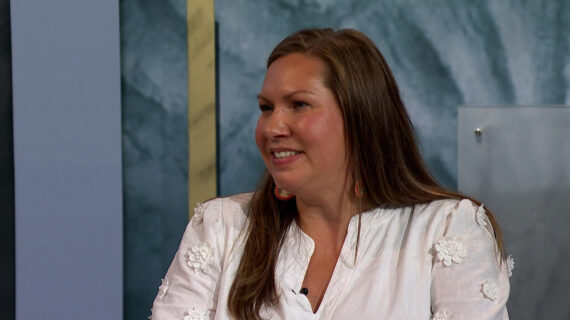
Sarah L. Bradley, Clinical Assistant Professor of Obstetrics and Gynecology, Lindsay M. Geier, Clinical Assistant Professor of Pediatric and Adolescent Medicine, and Aaron M. Wieland, Clinical Assistant Professor of Head and Neck Surgical Oncology, from the UW School of Medicine, explain the causes and effects of the Human Papillomavirus (HPV) and provide information about the vaccination.


Copy and Paste the Following Code to Embed this Video:
What Parents Need to Know about the HPV Vaccine
So, my name is Laurel Rice, and I'm chair of the Department of Obstetrics and Gynecology, and I've been here for about eight years. I love my department. We do all kinds of amazing things, and this has been a major drive for us in the last three years, increasing HPV vaccination rates in our county. And you're going to hear a lot more about that from our three speakers who I'm about to introduce, but a word about what I do for a living.
I'm a GYN oncologist, so I take care of women with cancer. I am not about vaccines in my daily practice. I treat cancers. And when I was a resident in Boston, I remember taking care of a woman whose name was Faith Maroney.
This was in 1985. I was a resident. I was not a fellow yet. And I was on the GYN oncology service.
She had cervical cancer. She was about 32 years old. And the details of caring for her, I will not share with you now, but it made a tremendous impression on me, and it makes me want to make sure that nobody gets that cancer. So we're going to talk about HPV vaccinations tonight, but from a cancer GYN oncology perspective, I keep thinking about cervical cancer and Faith Maroney.
So a word about our three speakers. Sarah Bradley-- I'm doing this in alphabetical order. I'm not showing favoritism.
laughter
Works in the Department of Obstetrics and Gynecology. She went to college and medical school at Iowa and then trained at Duke, a small school on the east coast. We don't like their basketball team. And we wooed her to Madison.
How many years ago, Sarah? - Four. Four. And what an addition to the department.
She's given a lot of lectures regionally regarding HPV vaccination. She has served on the UW Immunization Task Force Committee. She was co-chair of that committee when they had their big summit in June of 2014 and serves on the Wisconsin Council on Immunization Practices. Now, Lindsay Geier-- Is that how you say it?
Is a pediatrician here at UW, and she is a true Wisconsin kind of gal. College, medical school, pediatric residency. I love that. And she's talked on WPR regarding HPV vaccinations.
She's served as the same panel for the summit as Sarah has, as a panel member of the Wisconsin Cancer Control Summit in Madison. Now, Aaron Wieland-- Is that how you say your name? Wieland. Wieland.
All right. That's great. Aaron is an assistant professor in the Department of Otolaryngology. I love to say that word.
Head and neck surgery. And he's chief at the VA Hospital. Now, Aaron went to college at-- I'm sorry, went to college at Loyola University in Chicago and medical school at Harvard Medical School. He did his internship at Brigham and Women's Hospital, and then his residency in all the Harvard hospitals for head and neck cancer and surgery.
He's published extensively. He gave a talk at a GIN conference recently, HPV head and neck cancer. Gave grand rounds in La Crosse on a similar topic. And we're very fortunate to have these three individuals talking to us today.
They're all very knowledgeable, and I'm looking forward to their talks. Who's starting? Okay, Sarah, come on up here. Well, thanks for coming, everyone.
I really appreciate all of you guys taking the time out of your evening to come and hear this. So, I think all of you have heard about HPV by now and HPV vaccination. It's been all over the media for the last couple of years. These are just a couple of the headlines that I have pulled out recently.
I guess I'll start out just by saying that
from this Cosmopolitan headline up here on the left
lube does not prevent HPV transmission. So please don't rely on your Astroglide or KY or whatever at home. And then, next, we'll just look at an outline of what we'll talk about tonight. We'll talk just first about HPV itself, how it causes cancer, then we'll talk about rates of infection and how it's transmitted, and then we'll move on to talking about the vaccination and how effective it is, how safe it is, and we'll look at how are we doing at vaccination rates, both here locally, and then across the state and nation, as well.
So, I'll talk first about HPV. So this is the HPV virus. It's blown up very large for you here so you can see it. It's actually only 55 nanometers big.
But this is a species specific virus. That means it only infects humans. So it can't, for example, infect, you know, rabbits or swine or any other kind of animal. And there have been over 130 different types identified in humans.
So quite a few types out there. It infects both skin and mucosal surfaces. So we think first about just the skin warts that people get. The plantar warts on your hands and feet, those are some of the first issues related to HPV that we discovered.
So types, for example, 1, 2, 3, 4 were some of the first types discovered. We then discovered that HPV also causes genital warts.
So type 6 and 11
most commonly caused warts. We know now that HPV also causes both genital cancers and oral cancers, head and neck cancers. And type 16 and 18 are really the big players there in causing those cancers. We first discovered this about cervical cancer from the work of a really brilliant German virologist, who won the Nobel Prize for medicine back in 2008.
And this slide is just kind of showing a picture of how that process happens. So, again, here's the HPV virus, and it's just showing how that virus infects or comes in contact with the cervical tissue. Those viral particles then, they kind of invade the actual cells of your tissue here, and over the next couple of weeks, the actual HPV DNA, that's shown by this pink circle here, will incorporate into your own cells. The HPV DNA gets into your cells, it takes over your cells' machinery, and then it starts to replicate.
So that's showing that here. It means it's making copies or duplicates of itself. Those viral particles then shed off and then can infect other people, potentially. Or other parts of your own body, actually, as well.
Most people, most people who are healthy, who are young, who have a good working immune system, will get rid of the virus. So within two years, as we're seeing here, something like 85% to 90% of people will heal and get rid of the virus. It will go away. But for some people, that doesn't happen.
The HPV virus will hang around, and over the next 10 to 30 years that DNA is not just inside the cell, but actually inside your own DNA within the cell and then will start making cancer cells. So that's how that process happens. Again, it's not just cervical cancer; it's other cancers as well. And this next slide is just kind of showing how that happens just in tissue in general.
We have HPV infection over here first, infecting normal tissue. So then you have HPV-infected tissue. Most people have no idea that they've been infected. You have no signs or symptoms, no idea that you have this.
Again, a lot of people, they will clear the virus, they will go back to having normal tissue. That's just a temporary infection. But then some people, again, will progress to precancerous tissue. We think about this a lot in cervical precancer screenings by Pap smears to find these issues.
And, again, here with people who have precancerous tissue, depending how progressed or how far along that process is, you can again still resolve and that tissue can regress back to normal. But once you hit this spot here and you develop cancer, obviously that doesn't go away. In terms of why-- You know, why do some people progress to precancer and then cancer? A couple of big risk factors.
And those are having high risk types. So type 16 and 18 are high risk types. They cause most of the cancers related to HPV. If you have a weak immune system.
So, for example, if you have HIV or some kind of immune deficiency and your body can't clear the virus as well, or if you're a smoker. All of those things will make HPV hang around and progress in your cellular tissue. So, as I mentioned though, it's not just cervical cancer. We know now that HPV causes several different types of cancers.
This is showing all the cancers caused by HPV in the US. Cervical cancer is definitely the big player here. So about 12,000 cases per year in the US, and almost all of those are HPV related. And then for each of these other cancers, the red bar here, that's the percent that's caused by HPV versus the blue being non-HPV related.
So, also in women, vulvar and vaginal cancers are about 50% caused by HPV. In men, cancer of the penis is a rare cancer, but about 50% of those are HPV related. In both men and women, about 90% are HPV related. And then oropharyngeal cancer, also kind of a big player here.
So almost 12,000 cases annually, and the majority are caused by HPV. So, overall, HPV causes about 5% of all cancers in the US. Over 33,000 new cases per year. Two-thirds of these are in women and one-third are in men.
Here in Wisconsin, the last year I have data for is 2012. And so this is looking at all the cases and deaths in Wisconsin that are caused by HPV related cancers. If you add up all of these numbers here, we have over 1,000 HPV related cancer cases in Wisconsin. And then if you add these numbers up here, somewhere close to 250 deaths annually from HPV related cancers.
Again, cervical cancer and, again, oropharyngeal cancer here. Those are the main two. The burden of precancerous disease. So this is really where I come in as an OB/GYN.
So, how many of you have either had an abnormal Pap smear or know somebody who's had an abnormal Pap? Anybody? Yeah, it's pretty common, right? So there's over three million abnormal Paps every year in the US.
All those Paps have to be followed up. And depending on what the actual abnormality is, we either repeat your Pap smear later on or do a colposcopy and try and figure out, well, if you have precancerous tissue there, which is also called cervical dysplasia, how severe is it? Is it low grade or high grade? We know if it's low grade, it will probably still go away on its own.
We just observe and kind of watch and wait. But if it's high grade, then we have to treat that because there's a high risk it will progress to cancer. And one of the ways that we'll treat that is by doing something called a LEEP procedure, which is shown here. So this is a procedure I do in my office, not uncommonly, where I'm cutting out a chunk of the cervix to remove all of the cervical precancer.
It's great that I can do that. It's awesome that I can prevent these women from developing cancer years down the road. You know, gosh, those procedures aren't fun. They're uncomfortable.
They're anxiety provoking. People are really worried about, gosh, are we going to get it all? Is it going to come back? And then, potentially, this kind of procedure will make your cervix weaker and potentially increase your risk for preterm labor in the next pregnancy.
So it has other adverse effects as well. So this is really where vaccination, I think, is important is that, hey, we can prevent all of this, potentially. And then I think I will give it over to Dr. Wieland to talk about head and neck cancer.
Thank you. Usually when we're talking about head and neck cancer, we're talking about it with the same set of risk factors that we think about for lung cancer. So alcohol and tobacco consumption. And we've made great strides in the United States in terms of the percentage of people who use tobacco.
And so for many of those cancers, the rates are going down. Interestingly, we saw one area of the head and neck where we're seeing a distinct difference in the rates. They're going up quite dramatically, and it seems to be related to HPV. So, the first evidence for this was in about 1995.
A group at Johns Hopkins looked at all of the cancers they had archived, and they looked by doing some special staining tests in the Department of Pathology for cancers that had the HPV virus. And they found that a quarter of all of the head and neck cancers did. When they looked at the specific areas of the head and neck, so specifically the oropharynx, which is the tonsils and the back of the tongue where you can't really see, it was 90%. And most of these were positive with type 16.
These were patients who had not had long history of smoking, had not had a long history of heavy alcohol use. They were younger and, again, primarily located in the tonsil and what we call the base of the tongue. Again, we see rather distinct differences in the rates. If you look at HPV related cancers in men, the trend is going up.
HPV unrelated, so cancers traditionally associated with alcohol and tobacco, are going down as people are realizing that tobacco is very harmful for their health. HPV related cancers in women in the head and neck are reasonably flat. They're going up a little bit, but not much. And HPV unrelated in women also are going down as both men and women are decreasing their rates of smoking.
It's not clear why this is a disease that's effecting young men because these would be people who are infected before vaccines were ever introduced. So there's some kind of a biological difference between what this virus does in men and women in the oropharynx. So, again, just another graphic showing the projected trajectory of this, and if you look at oropharyngeal cancer, so tonsil, base of tongue, you can see this sharp, sharp rise here. And cervical cancer, the rates are going down with screening and vaccination practices.
This is oropharynx in women going up just a little bit. And so all the other areas of the head and neck, the tongue, the voice box, going down. Those are associated with smoking. And then you see this sharp curve up here, which is the oropharynx.
So, a very specific area of the head and neck and often an area that's kind of difficult to see. So, just another graphic. This was a paper that was looking at different ways of detecting it. And it doesn't matter how you look for it.
The percentage of cancers of this area that are positive for the papillomavirus is now as high 80%-90% in many studies. Whereas, even just 20 years ago it was much less at 50% or so. So, unfortunately there isn't a screening test. We don't have the Pap equivalent in the head and neck.
You can certainly do a swab of the throat, but it's never been shown to be of any value. So we don't have a screening practice to look for these things before they turn into cancers. And for that reason, there isn't really an equivalent of a precancerous lesion in the head and neck. It's kind of an all or nothing phenomena.
Unfortunately, these patients usually then present with a neck mass. A lymph node where it's metastasized to a lymph node because the symptoms in the throat are so vague-- We all have a cold and we get that kind of weird sensation of sore throat or something stuck in your throat. That could be the same thing. Fortunately, the vast majority of the time it's not, but that could be the same thing that one would have with the head and neck cancer.
And so they go on with vague-like symptoms for quite some time, and I think the example of Michael Douglas is a good one. I mean, he certainly had other risk factors. He had a long tobacco history, but he presented to many, many doctors before he was ultimately diagnosed. Well-intentioned people looking to find this, but couldn't really see anything.
And I think ultimately he developed a neck mass that was discovered. Again, the throat symptoms are usually pretty vague. It's not that you're in severe pain or you suddenly can't swallow your orange juice. It's just a vague sort of discomfort or a slight change or nothing.
And the treatment for this is usually some combination of surgery and radiation, and it's a hard treatment. This might be what you could see looking in the mouth. This would be a tumor on the tonsil. This would be one that would be pretty easy to notice.
If it's on the back of the tongue though, it's very, very difficult to see. You'd need a mirror or a scope to look around the corner of the tongue to get any sense of what's there. And I've got Ebert here, who actually had thyroid cancer, but just to give a sense of how significant the treatments can be for these things. They can be quite disfiguring.
And so prevention-- An ounce of prevention is worth many, many surgeries of cure. So, where does this occur? I mentioned it's in the tonsils and the base of the tongue. It's not in really the mouth.
So often it's in the media it's an oral cavity cancer. The oral cavity is the mouth. It's really not in the mouth. It's beyond the mouth in the back of the throat.
So, this is just some normal appearing tonsils that are different sizes. But this would be one location, the tonsils, and the other location is the back of the tongue. So this is the way we often look at these areas using a little camera through the nose. So this is somebody's vocal chords here.
This is the epiglottis, that little flap of tissue that moves down to protect our airway when we swallow. And it's just in front of that epiglottis where the base of the tongue is. So it's a tricky area to see without, you know, without some extra equipment. And this is often the lymph node right here that gets big.
It's the same lymph node that you feel in your neck when you get a cold that gets big. That's usually the lymph node that becomes involved with these cancers. In most patients, that's how they present. They've got a neck mass that doesn't hurt.
It just hasn't gone away. They're not sick, and they say, "What is this?" And ultimately, it leads down the path to finding the HPV-related cancer. So, again, this is disproportionately effecting males by a significant degree. Males clear the virus more slowly.
We don't know why. 90% of people are going to have the virus cleared by two years, two-thirds by a year, and men just do not clear it as well. The estimation was that oropharyngeal cancer would pass cervical cancer in 2020. You saw the numbers that Sarah showed.
In Wisconsin, that has probably already happened. And we don't see a break in this curve because it's going to take aggressive vaccination now to cause a break in this curve 20 to 30 years from now. So we really have to be kind of forward thinking. And the majority of these again are caused by type 16, and the virus type 16 is included in all of the approved vaccines for males and females.
So, how common is the virus? Obviously if it's causing a cancer in the head and neck, there's an infection in the head and neck. Well, there was an interesting study that was done where swabs were sent out to a large swath of the population. Thousands of people.
And what they found was that 7% of the population tested ages 14 to 69 were infected with some strain of HPV. And it was higher in men than women. Again, speaking to this difference in the way men and women clear the virus. There were a couple of peaks in men in the 30s and again in the 60s.
And when you look at the virus that causes the cancer, the overall rate of infection was about 1%. That's a lot of people. Fortunately the vast majority of those people, again, are going to clear the infection. But when you're talking about a population of 300 million, 1% of 300 million is not a trivial number.
The question often comes up about oral to oral transmission. Is this something that one could pass on by sharing a glass of water? By sharing a toothbrush? The answer is probably not.
It seems to be different sexual behaviors, but not kissing and things like that that transmit this virus. I'm going to pass it on to-- Oh, back to you, Sarah. Just a little bit from me here. We'll talk next just about infection rates and some more about transmission.
So, as we've kind of been mentioning all along, HPV infection is really very common. There are about 14 million new infections a year in the US. At any given time in the US population there have been a couple different studies done looking at this, but as Aaron was talking about taking swabs to check for oral HPV, there have also been numerous studies then looking at genital HPV. So taking swabs inside the vagina, from the cervix, and men along the shaft of the penis or the scrotum.
And depending on what study you're looking at and what age group and what demographic, at any given point in time there are higher numbers of people who will have a genital infection. So anywhere from a fourth to 42% of the population you can do a swab and find genital HPV. And again, the vast majority of these people have absolutely no symptoms. They have no idea they have this and they never will.
Most people will clear it and have, you know, no idea unless they have an abnormal Pap or something else. So about 80 million with current infections. And lifetime risk we know is at least 80% that you'll get an infection. It's probably closer to 90% I would say.
It's extremely easy to transmit HPV. It's transmitted just by skin to skin contact alone. So when we think about the plantar warts that happen on people's hands or feet, it's just skin contact. If you touch someone with a wart, you can also get a wart on your hand or foot.
Genital contact is really the same thing. It's shed from all of those places that I mentioned in the genital areas, and so because condoms don't cover all of those areas, for example the scrotum or the labia, they only provide about 60% protection against HPV. I'm an OB/ GYN so I'm still going to tell you, "Hey, use condoms." You don't want to get chlamydia or, you know, other things. But, you know, good to know that it still can be transmitted despite condom use.
I think Aaron kind of briefly mentioned oral to genital transmission. And this is Michael Douglas here who was in the media a couple of years ago. He was talking about how he got his oropharyngeal cancer from performing oral sex on his wife. And, you know, I don't know that he can blame Katherine Zeta Jones necessarily.
I might have been a previous partner, but we do know that oral to genital transmission does happen. So now I'll talk about vaccination next because, hey, this is great. We can prevent cancers by giving a vaccine. I just want to say that again because I think it's so important.
We can prevent cancer with a vaccine. I think that's really awesome. So I wanted to back up and first just talk about how vaccines work because every year around this time I'm trying to give my pregnant ladies flu shots, and once or twice a week I'll have somebody who says, "Well, Dr. Bradley, I don't want the flu shot because that's going to give me the flu, or I get the flu from the flu shot." So I just included these couple of slides to talk about how vaccines work.
So when we think about natural immunity, when you get infected with a virus, what happens is that your body makes these antibodies, which are the body's defense system. I kind of think of these as almost like Pac-Man cells. I have this idea in my mind of them sort of eating up and chewing up and spitting out the virus and getting rid of it for you. That's kind of how those antibody cells work.
So, when we give you a vaccine, what we do is we're having synthetic or man-made particles that are injected into your system. So if you look at these little triangle particles here, I intended for those to look like these little spikes here on this virus. So, basically, you're being injected with this particle that looks like part of the virus but is not actually the virus. And then what happens is that stimulates your body to make these antibody cells to recognize that foreign particle.
And then once your body has had that exposure, the next time it's exposed to something like this, it will remember that virus or that type of particle, and then it will respond much more quickly and have a much greater response. So, again, if you're infected with the same three viral particles, your body's immune system, it's making all these antibodies much faster rate and a much greater amount or number of antibodies. So that's how a vaccine works. Hopefully that makes sense to everybody.
So next I'll talk about effectiveness. So this is some of the original data, and I'll just kind of go through and talk about how some of these studies were done. This is looking specifically at vaccine effectiveness in women at four years. So, meaning they got either the vaccine or placebo, and then they had testing over the next four years to look at effectiveness.
These studies were done in a college aged cohort of women. So women who were around 18 to 23 or so. And these women were randomized to either getting the vaccine or getting a placebo. So if they didn't get the vaccine, they still got an injection, but it was saline and basically some kind of placebo medicine.
And this was what was called a double blind study. That means that neither the patient in the study or the physicians or providers who were doing the actual medical care had any idea as to whether they had gotten the vaccine or the placebo because that way no one was biased about reporting of side effects or anything. And so after people got the initial study drug, so either a vaccine or placebo, then every six months for four years they had a pelvic exam along with a Pap smear and then blood work to look at their antibody response. So looking at the actual data here, this vaccine was given to almost 8,000 women and an additional 8,000 or so were in the control group.
So we're talking about somewhere around 15,000 or 16,000 women total. And looking at cervical precancer, only two cases in the vaccine group as compared to 110 in the folks who got the placebo. And so that's an effectiveness rate of 98.2%. And we see similar things with vulva or vaginal precancer.
So, again, around 8,000 women in each group. No cases in the vaccine group for 100% effectiveness rate. And then genital warts was used frequently in these early trials because it's an early marker. So whereas precancer might take months or even years to develop, genital warts will start to develop within a few months after you get the infection, if you're unlucky enough to get it.
So that was used frequently as an early marker for how effective the vaccine is. So, again, 99% effective. So, gosh, that's pretty awesome data. Looking in men then.
So, these numbers in men are a little bit smaller, but we also looked at vaccine effectiveness in men at four years. Again, this is some of the very initial data that came out. And in men we looked at precancers of the penis and anus as well as genital warts. And, again, we're seeing good effectiveness.
So 100% effective against precancers of the penis, and then around 80% to 90% effective at preventing anal precancers and genital warts. One of the common questions I'll get is, well, why the heck do we give the vaccine so early? People will say, "Well, my kid is not going to be sexually active until college, you know, so why do I need to give it to my 11- or 12-year-old?" You know, one main reason is we want to make sure we give it before they have any sexual contact. We know that average age that people start having intercourse in the US is around 16, so we do want to make sure we're giving it prior to that time.
But also we know from the initial studies that the actual vaccine is more effective the earlier you give it because people have a higher antibody response. So I have to back up a little bit and talk about how those studies were done in order to explain that. But they did something called antibody bridging studies. So if you remember me talking about that college aged cohort and the women getting every sixth month Pap smears, once we determined that was effective, we then wanted to study younger teenagers.
So, you know, teen girls 14 to 15 and as early as 11 to 12. But you can't really do every sixth month Pap smears on a 12-year-old. At least there's not any medical, you know, ethics review board who's going to let you do that study for, you know, good reasons. So what they did instead was they skipped the Pap smear part and did just the antibody study.
So drew blood from those patients every six months to check and see, well, hey, did they have the same antibody response as that initial college aged cohort? And what they found was really impressive. So, looking at this data, this is the age at which the vaccine was given. So everywhere from age nine was the earliest all the way up to age 23.
This was the group in what's called the efficacy program. So they had both the Pap smears plus the antibody levels. And then this is the younger group who didn't get the Paps. They just got the antibody levels checked.
And these are the actual antibody levels. So the higher your number here, the higher your antibody response or the better your immune response against the virus. And so, if you look at this, gosh, they have a good response here in this initial group, but then the earlier you give this vaccine, the higher your antibody response. So that's actually pretty amazing.
And we think that has something to do with how well the immune system is working when kids are 10, 11, 12. And we do know that that protection lasts at least eight to 10 years. You know, when this vaccine first came out, there were some concerns about, well, it hasn't been studied that long. How long does that protection last?
We know for sure that those high-antibody titers are lasting at least eight to 10 years. So you can be assured that if you're giving your child the vaccine at 10, 11, 12, it's going to last them until they're at least college aged. And the actual antibody levels seem to be staying the same. They're not drifting downward.
So we anticipate it to last for quite a while. And there are multiple studies still ongoing to look at even longer term than that. I think this is the last slide that I have here. It's just looking at just a little piece of data from the US as to how has the vaccine worked here.
How effective is it in the general population of the US? So, this is from something called the NHANES study. It's the National Health and Nutrition Examination Survey. And that's a nationwide study that's sponsored by the US government that does both surveys and physical exams and tests to kind of assess the overall health of the nation.
So they're looking at things like not just HPV, but also nutrition and dental health and obesity. But one of the things that they've done for a number of years now is that they've checked for the rates of HPV, these types of HPV in women in cervical, vaginal swabs. And so what this is looking at is these are the four years before the vaccine was approved, and then these are the four years after the vaccine was approved. We don't see much difference here in these older age groups because they probably didn't-- There's probably not many women in there who got the vaccine at all.
But this age group, this is where we really started to push the vaccine. And you can see from prior to the vaccine being approved to the four years after a 56% decline in the prevalence of HPV. So that's pretty impressive given that we're actually not doing a great job at vaccinating people. Lindsay will talk about that in a minute.
But even though we're only vaccinating, gosh, less than half of the people who need to be vaccinated, we're still seeing a huge decrease. So to think about what a decline we would see if everybody actually got vaccinated is pretty impressive to think about. And, with that, I will hand it over to Dr. Geier.
So we've gone through a bunch already. We know a lot of really cool stuff about HPV vaccine and the HPV virus itself. We know that it's super common. We know that it causes cancer.
It's not just a female virus or a female cancer. And we know it's effective. It's great when we have something that prevents cancer, it works, but we want to of course know is it safe. Is this okay to be giving our children?
So I'm going to be talking a little bit about the safety aspect of this. Kind of small on here, but there's a headline here that says, "Wisconsin
Mom
Did HPV Kill My 12-Year-Old Daughter?" This was about a year ago. Can any-- Just by show of hands, who saw this headline or heard about this? Yeah. So definitely more than half of you.
I know people heard it because they called our clinic. We talked about it a lot. Now, by show of hands again, who saw the follow-up to this? So this was at least three weeks later, and it was pretty hard to find.
Did anybody see the follow-up to this? So maybe two of you. So this is an example of part of the problem we're seeing here. Media has done a great job of sensationalizing stories.
People want to hear stories. People don't want to, you know, look at all these graphs we're showing you and talk about the science. They want to hear stories. They pull at the heart strings.
They're awful tragedies, but what gets lost then is the medical piece. So we do a lot of cleanup in our medical office. And it's time consuming, but we want to make sure that people are hearing the right information from us. Media is not the place to do that.
As we talk about vaccines, they are actually the most highly regulated thing in medicine. More highly regulated than any prescription medication you take, any over-the-counter medication you take. Far more than any supplement that you take. Those aren't regulated at all.
So we have tons of data on this. When people say, "Oh, I don't think it's been around long enough," I like to tell them this, "It's amazing, "the vaccine approval process is actually quite intense." This is just a diagram here that talks about the steps that take place before a vaccine has gone to market. So this first step here, the vaccine is developed, it has to be approved and manufactured. This whole process takes, generally, more than 10 to 15 years.
So the very first piece here is everything that happens behind the scenes in a lab, doesn't involve people. Several years the vaccines are-- Before it's ever even given to people, extensive lab testing is done. The next step are what we call clinical trials where it actually involves people. Now, we don't bring kids right into this.
Usually they're adult volunteers. We start with this phase one trial. It involves a small amount of people, but the goal looks at is this safe. Should we even bother testing this?
What happens if things pass through this phase? It goes through phase two, phase three, and gradually we involve more and more people. By phase three, we're talking about thousands and thousands of people that are part of the study. So this is before your pediatrician even recommends the vaccine to you.
So, in the case of HPV vaccine, thousands and thousands of girls and then boys take part in these studies. The whole goal of all this, because, as you can imagine, this is an enormous process, it's a very expensive process, it involves a lot of people, girls coming in for every sixth month Pap smears, the whole point is, is it safe and is it effective? And that's really what the FDA is looking at. So the FDA will actually license the vaccine only if it's safe and effective and do the benefits of giving it outweigh the risks.
So that's that first step. And this, again, takes another five to 10 years. It's a very intense process. This is just an example of some of the things that we were looking at in the HPV vaccine clinical trials.
This table shows adverse events that women reported within two weeks of receiving the vaccine. And, as you see here, people reported a whole bunch of stuff. Fever, nausea, common cold, dizziness, diarrhea, vomiting, body aches, headaches, toothaches got on there, nasal congestion, difficulty sleeping. So all the symptoms here that people reported are on the left.
The middle column, those are the people who actually got the vaccine. And, again, over 5,000 people in this initial study. And then placebo. Those are the people that did not receive the vaccine, but they got a saline injection.
They don't know which one they got. They reported symptoms. And it's fascinating. The numbers are exactly the same.
The next thing, whenever we're giving an immunization, that-- You're looking for an antibody response, involves the immune system. So it's common practice to actually look at autoimmune disorders as part of a vaccine clinical trial. By giving a vaccine, are we inducing autoimmune disease into our population? The conditions, all autoimmune related, are listed on the left.
And, again, in the middle column, those are people who got the vaccine. On the right, those are people who got the placebo. And, again, granted these numbers are very small. We're not seeing a ton of autoimmune disease.
But, again, there was no difference between the placebo group and the autoimmune group. So, as you see, people who got the vaccine, guess what? 1% of them developed an autoimmune arthritis. They could say, "Oh, gosh, was that due to my vaccine?" Interestingly, though, the same exact number of kids who did not get the vaccine got arthritis as well.
So that's just an example of the importance of having a control group or a placebo group. Events happen. So after that whole process takes place, many, many years go by. Then what happens is before it comes into your doctor's office, we have to approve it.
What happens is a big group of people get together on a national level. Medical care providers, public health folks, and basically they look over everything again. That whole process is reviewed in detail. If this big group called the ACIP recommends it, it goes back to the CDC.
They have to reapprove it. So, new vaccine, if everybody approves, this is a good thing, then it becomes part of our US immunization schedule. And that's when it comes to your doctor's office as a recommendation, usually by me or other pediatricians. So that's not all, though.
So now we have this. We have this vaccine. It's been very well studied. By the time it's licensed, it's really not new anymore.
It's new to you as a parent or a provider, but it's not new in the research world. So this last step here is ongoing. So since 2006, for the HPV vaccine, we are constantly, constantly, constantly watching for any adverse outcomes. And there are many, many, many groups that do this.
There's actually three in the United States. So there's not just one group looking at adverse events. There are three distinct groups all made up of different people, both academics, private healthcare plans, and the CDC and the FDA, that are looking for any adverse events. Now, if they see any pattern whatsoever, there's huge red flags and things get studied in more depth.
I'm going to talk just a little bit more about this top one here called VAERS, the Vaccine Adverse Event Reporting System. That's the one people are most familiar with because if you ever-- You know, you always have to take a handout about the vaccine after we give it. A lot of those go right to the trash, but on the back of every single one of those, it has this contact information for VAERS because we want people to report any adverse symptoms that they may be having, whether it's related to the vaccine or not. That's how we know, "Is this causing problems?" So VAERS, basically, again, it's a vaccine safety program.
The CDC and the FDA actually run this. It's their job to make sure the products they're providing are safe. About 10 million vaccines are given every year, and of those 10 million vaccines there are about 10,000 to 20,000 reports per year. So, some limitations to this.
It's a good system. It's identified lots of problems. For instance, a good example is the rotavirus vaccine, which we used many years back. It was causing an intestinal problem in infants.
As soon as there was a pattern there, they pulled it immediately. And that was actually done pretty quickly. They redid this. We have a brand new vaccine now.
I shouldn't say brand new. Brand new to the public. And with a really great safety profile. So they actually look at this.
They're trying to prevent harm. It's a real thing. Limitations of this, though, is guess what? Anybody can report it.
You can report it. Your kid's grandma can report it. Their teacher can report it. We as providers can report it.
So reports do not equal people affected. If there's a kid affected, we could submit five reports, all from different people. So, that's just kind of an interesting limitation to this study. The other limitation is there's no placebo group.
So we're saying, oh, gosh, you know, this many people who got this vaccine had this side effect, but in this particular study there's no placebo group. So we don't know how many people in the normal population would have gotten that problem. So that's interesting. They have to kind of sort through all that information.
So I'm going to give you that VAERS data on the HPV vaccine. So since it was licensed in June 2006, we stepped back and looked at data over almost a nine-year period. So, from last March. At that point in time, there were 67 million doses of HPV given in the United States.
Now we're much higher than that because that was already a year and a half ago. But 25,000 reports were made to VAERS. Now, I know that sounds like a lot. When you consider 67 million doses, that's 0.003% of the people who received the vaccine had an adverse event.
So, a very small number. What do we mean by event? We basically break it down into three groups. Was it non-serious?
Did it cause some very short-lived symptoms that self-resolved? Was it serious? Did it cause any long-term disability? Cause hospitalization?
Cause repeated medical visits? Or did it cause death? Those are three areas that we look at. Now, we talked about that being an pretty small number.
For those of you who can do some mental math, 92% of that number was reported as non-serious. So non-serious kids had some dizziness in the office. They were a little nauseous afterward. They had headache.
Maybe they got a fever. Some of them had fainting. All things that we saw in the clinical trial. So there was no surprise here that 92% of this small group of people did report some adverse events.
Interestingly, when we look at serious events, people that either got admitted to the hospital or have had kind of long-term problems, 8% of those events, again out of this small number, 8% were considered serious. And, interestingly, the serious events are not death. They're not autoimmune disease. They're not big medical problems.
It's some nausea and vomiting that maybe landed them in the hospital for some IV fluids. It's maybe some prolonged fever. Headaches. So that's 8% of the reports were these serious events.
The death one always comes up. Of course, we don't want to be giving anything that could, of course, cause anything like that. 96 deaths were reported around the timing that those patients got their HPV vaccine. Interestingly, they were only able to locate death information on 47 of those patients, meaning there was no documentation anywhere about anybody else.
So it makes you question the validity of those reports. But of the 47 they found, medical records, health reports, coroner records, none of them were linked to the vaccine. So this is actually really great. This is actually one of the most safe vaccines we have.
There are a couple other vaccines where if you have an underlying seizure disorder, you could get a bad seizure and potentially die. So, if we think about this, HPV is the safest one we've got. And this is where people are falling short here. So, one other thing in terms of safety that I just want to bring up because it comes up a lot, especially in our community.
A lot of people ask about premature ovarian failure. Will this vaccine affect my fertility level? I heard about-- I've heard these stories about people who have gotten premature ovarian failure after getting the HPV vaccine. So this is an interesting question.
And it's, of course, been very widely looked at because guess what? Of these 67 million doses given, nine people have reported premature ovarian failure. So nine of the 67 million. But that was enough to really look into this.
And there has been no pattern, no exposure, nothing that links HPV vaccination to this, which is interesting because if you were to read the media, it paints a very different picture. So that's just something I want people to know that this vaccine has nothing to do with that. It's a complex medical disorder that's usually a combination of genetic and environmental and related to autoimmunity, potentially triggered by certain severe viral infections. HPV vaccine does not cause fertility problems.
So, that brings us to-- We know that it's safe. We know that it's effective. Why on Earth aren't people getting it? We should be shouting from the rooftops that we have a vaccine that prevents cancer.
And not just a small number of cancers. 5% of cancer we see in the United States. We put a ton of money into cancer treatment. We're not doing as much with cancer prevention.
And this is a huge and easy one. So, how many kids really aren't getting it? Is it really all that bad? We're going to check that out.
So this is US rates. So these are female adolescents. 35% of US female adolescents are getting all three doses. Not bad.
We've actually already seen some decline in HPV related disease. So it's doing something. This is one vaccine where we see the opposite of what we usually do. You're more likely to get vaccinated if you're a minority.
Hispanic population is most likely to get vaccinated. And if you're below the poverty level, you're more likely to get the vaccine. So, food for thought. This is the Wisconsin data.
I just want to share with you here that between 2010 and 2013, the Wisconsin data, we're not doing really any better. We're still at about 35%, just like the rest of the United States. We've done a little bit better with men. So we were essentially going from zero to about 10% of boys have received all three doses.
Interesting thing is it's not that we're missing these kids. It's not that they're not coming into clinic. We're seeing them. They're getting their other vaccines.
They're getting Tdap, tetanus, pertussis, which is whooping cough. 90% of kids are getting that. 80% of kids are getting their meningitis vaccine. So it's not that we're not seeing them.
That means they're coming into our office, they're getting vaccines, and leaving without the HPV vaccine. We have done a huge disservice to our patients. So we thought we'd look into this at UW Health. We are an academic institution.
We practice evidence based medicine. We're progressive. We have to be doing a little bit better, right? Not what we found.
We're at about 40% among the UW Health clinics. So there are some that were actually doing okay when we first started looking at this last spring. But some down in the 13%-16%. So we recognized that we had a lot of work to do.
So that's where Sarah and Aaron and myself come in. We've got this big immunization task force, and our goal is to provide education. And we'll talk about a couple barriers just briefly. But clearly we've got work to do here.
This is my favorite slide of all because it shows where do we rank. How are we doing compared to other places? So there's a country here that's close to 100% immunization rates. Rwanda.
A country this big in the middle of Africa. They are about 100%, very close to 100% for immunizing all of their females against HPV virus. Now, the message there is simple. It prevents cancer.
They're not focused on the things we're worried about here. They're focused on the cancer message because guess what? Cervical cancer is the leading cancer in females in Rwanda. So their message-- They're doing it right.
That was fascinating when I saw that. Now,
a country that maybe we're a little bit more similar to
Australia. Let's look at them. They're at about 80%. So about 80% of Australian females, teenagers, are immunized against them.
And, actually, they're doing pretty great with their guys too. Their boys, about 70% of them are immunized. They have seen tremendous decreases in HPV related disease already. It's a little bit early yet because, remember the cancer takes about 10 to 20 years to form, but we're seeing a tremendous decrease in HPV related disease.
So, as we look here, and these are only a few of the countries, as we look here, our poor vaccination rates, this is a United States problem. We're the only ones who are saying no. So, over two million doses given worldwide. 67 million doses here.
We're just no immunizing our kids. So our task force kind of started to look at this. We were trying to decide what is the problem here. Now, there have been lots of studies on why this is the case.
It really comes down to education. People are not hearing the right things. People think it's-- People think that the message should be surrounding sexual activity. People are really worried about the moral aspect of it.
Potentially getting a sexually transmitted disease vaccine, is it going to induce sexual activity at an earlier age? Why are we giving it to these young children? So it really comes down to education. We found that when we went out to our groups, a lot of the providers didn't know this information.
Now, medical information changes rapidly. If you look at where we started in 2006 to where we are today, we know so much more. It's a problem among girls and guys, different types of cancer. We found that when we went out to educate our providers, that this was new information to them.
We had eyes looking at us like this. They couldn't wait to go tell their patients. And I can't tell you how many parents have been so appreciative of a conversation. "No one's told me this before." "I had no idea." "I always thought we gave it to boys to protect the girls." So on and so forth.
So, it really comes down to lack of parent/provider education, parent hesitation, and then, of course, that media role that I talked about. Sensationalism. So, basically, current recommendations. We recommend right now that we vaccinate between ages 11 and 12.
Now, this may be changing. You saw those immune studies that Sarah pointed out. The highest antibody rate is nine and 10. Since the vaccine is approved, a lot of us are giving it at nine.
But that big, huge US Immunization Task Force is still recommending 11 to 12 in both boys and girls. So I always tell people I've got children. My son's going to be nine in March. He's a boy.
He's going to get his HPV vaccine. He's going to get it at nine. Sex won't even be on the table. This is a cancer prevention.
Thank you for coming tonight.
applause
Search University Place Episodes
Related Stories from PBS Wisconsin's Blog












Donate to sign up. Activate and sign in to Passport. It's that easy to help PBS Wisconsin serve your community through media that educates, inspires, and entertains.
Make your membership gift today
Only for new users: Activate Passport using your code or email address
Already a member?
Look up my account
Need some help? Go to FAQ or visit PBS Passport Help
Need help accessing PBS Wisconsin anywhere?

Online Access | Platform & Device Access | Cable or Satellite Access | Over-The-Air Access
Visit Access Guide
Need help accessing PBS Wisconsin anywhere?
Visit Our
Live TV Access Guide
Online AccessPlatform & Device Access
Cable or Satellite Access
Over-The-Air Access
Visit Access Guide




Follow Us