cc Thank you, Howard. Hello. It's my pleasure to introduce the keynote speaker. Tammy Kernodle is the associate professor of musicology at Miami University in Ohio and received her PhD in music history at Ohio State and wrote her dissertation on Mary Lou Williams.
And from that this has led to the publication of a biography, "Soul on Soul." And I just took this out of the New York Public Library, and they had many copies but I could find only one last Saturday. Published by Northeastern University. The Capital City News here in Madison interviewed Tammy, and she talked about how she grew up in a religious home in which jazz was sometimes referred to as "honky tonk music." And like so many of us, when she first heard of a recording of Mary Lou Williams she thought, wow, who is this woman? And in finding out, Tammy discovered a self-taught musician, a genius, complex person, paradoxical African American woman in 20th century America who became, through her long life in jazz, unafraid of the spiritualism of the music.
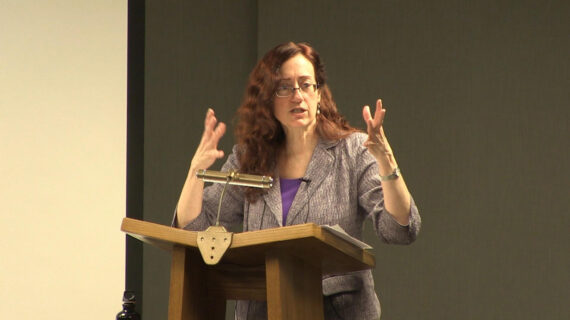
And Tammy has continued beyond this biography to teach and speak about Mary Lou Williams and study, and I'm sure there will be more writing to come. And she is going to now tell you the latest of your research findings. ( applause ) First of all, I want to say I'm vertically challenged. ( laughter ) So you may not see me...
( laughter ) Behind this podium as I progress, but I just want to thank you for this wonderful invitation. When I got the call to be the keynote speaker, I was like me? Especially with this wonderful array of scholars that are here today, and I'm pleased to be here and I'm just pleased that you all have decided to honor such a woman. And I think it's such a time as this for us to reach back and look at those aspects of our history that have not been written in texts and have yet to fully be understood.
I'm not going to talk to you long. I'm going to try to keep my Baptist sensibilities to a minimum. ( laughter ) Which means that that Baptist preacher that's in me will not try to be long-winded today. Over the course of this past year, the life and music of pianist, composer and I'm going to add to that activist, Mary Lou Williams has been celebrated domestically and internationally.
As we sit here today, discussing the future of jazz through a retrospective of Williams' contributions to this music, I think we can safely say that we will only skim the surface of this woman's six decade career. At the time of her death in 1981, Mary Lou Williams was one of the only jazz musicians to have played through every era of jazz from the 1920s until 1980. In those years, especially those that preceded her rise to mainstream celebrity during her tenure with Andy Kirk's 12 Clouds of Joy. I'm sorry, my paper just went somewhere.
This is why technology is not your friend sometimes. Excuse me for one moment, you all. Okay, I'm ready, I'm sorry. In those years, especially those that preceded her rise to mainstream celebrity during her tenure with Andy Kirk's Clouds of Joy, Williams unapologetically sought to develop her own individual voice and dispel mythology surrounding the abilities of women instrumentalists.
During her lifetime she would not engage in any drawn out intellectual debates with critics and detractors, but every moment that she sat at her piano and wrote or worked the bandstands in Kansas City, New York, Copenhagen, London and even Paris, she allowed her compositions and playing to make undeniable and historical statements. In the 20 years that have transpired since I heard my first recording of Mary Lou Williams playing, I'm still amazed at how I am able to learn and uncover something new about her musical sensibilities, professional and personal ambitions, each time I revisit performances like "Zoning," "The Zodiac Suite" or "Walkin' and Swingin'." Or hear new performances like the Dutch Jazz Orchestra's renditions of Lonely Moments or What's Your Story, Morning Glory? All of which solidify in my mind that Williams personifies what I call genius without borders. You may ask why genius without borders, and I chose this particular title for my talk because rarely within our public and written culture have we equated genius with the creative activity of women.
Within the spectrum of jazz scholarship and the writing of jazz histories, the same "great man" theory used to construct the western music canon has been adapted to reflect the great black man theory. Thus, genius is defined in a masculine aesthetic fueled by the agent of race which becomes the undercurrent for his musical expressions. And so for the black male jazz musician it is in his ability to transcend his experiences through his creative and intellectual property that becomes the measure of genius. These notions reflect the overtly masculine constructs that emerged in the performance history of jazz through which men had access to public means of expression through jam sessions, concerts and the night club culture.
Documentation of their creative work through the production of records and publications of arrangements and the support of social systems such as critics, promoters and patrons that advance their creative efforts. So when one looks at the full perspective of Williams' six decade career and considers the diversity of her musical output, her activities within historical musical moments, as well as efforts to educate the masses about the historical and cultural roots of jazz and her efforts to save jazz musicians from the destructive and deadly proliferation of drugs during the post-World War II years, Williams indeed personifies this phrase genius without borders. Webster's dictionary defines genius as "an exceptional natural capacity of intellect as shown in creative and original works in science, art and music." It is also defined as "a person who strongly influences, for good or ill, the character, conduct or destiny of a person, place or thing." So if we consider for a moment the first definition "an exceptional natural capacity of intellect as shown in creative and original work in science, art and music" and add to this an aesthetical view that refuses to conform to conventional ideas or myopic expectations, then I believe that this represents genius without borders. So in the next few minutes I would like to explore why I think at this time in this place that the phrase genius without borders best represents the life and musical contributions of Mary Lou.
While there are many instances that could easily be used to justify my assertions, I have limited myself for the sake of time to only three points. So you don't have to go to sleep. ( laughter ) My first point involves mastering the master's language. In this case I'm using master as a reference to the notion that jazz is the black male domain.
And so it is Williams' mastery of the musical language of the big band genre and her role in defining and articulating the musical language that dominated public culture and popular culture for over a decade. That is the first manifestation of this genius. From 1929 until 1942 Mary Lou Williams operated in the orbit of Andy Kirk's 12 Clouds of Joy and the electric music scene of the southwest jazz territory, most notably, Kansas City, Missouri. And although not an official member of the band, for two years, from 1929 to 1931, Williams arranged some of Kirk Band's first biggest hits, Froggy Bottom and Messa Stomp, and occasionally played when the interest of audiences were waning.
In 1931 she not only became the band's primary pianist but its primary arranger and over the next five years would help transform the band into a swinging well-oiled machine. And by the time the band returned to the recording studio in 1936, Mary's arrangements and piano playing had transitioned the band from the typical territorial band playing a shared and recycled repertoire of songs to one of the premiere bands associated with the southwestern jazz scene. Arrangements such as Mary's Idea, Walkin' and Swingin' and Little Joe from Chicago revealed Williams' innovative arranging style which drew on other forms of black vernacular music like boogie woogie, a blues piano style that had developed in the turpentine and lumber camps of the deep south and migrated northward to Kansas City and Chicago. And of course, the blues.
Both of which transformed through the medium of the big band became the undercurrent of each of Mary Lou's arrangements. It is the innovative nature of Williams' arranging style that attracted the attention of other band leaders who readily purchased popular arrangements or commissioned new pieces to fit the individuality of their respective bands. For Benny Goodman she would produce Camel Hop, the theme song to his radio show sponsored by Camel cigarettes. And Roll 'Em, a swinging blues based on the signature ostinato and blues ethos that defined the boogie woogie style.
Tommy Dorsey, Earl Hines, Jimmy Lunsford, Louis Armstrong and even the Casa Loma Orchestra, which did not have an official director or leader, all would include Mary Lou Williams' arrangements in their library. And by the mid-1940s even the Ellington band would be added to the list when she arranged Irving Berlin's Blue Skies into a showcase for the band's famed trumpet section called Trumpets No End. By the times Williams left the Kirk band officially in 1942, her name was synonymous with big band jazz. And she was added to the list of other arrangers like Don Redman and Fletcher Henderson who were signified as architects of the big band jazz style.
My second point speaks to her ability to see stylistic changes and acknowledge their importance to the advancement and viability of jazz. In the years following her departure from the Kirk band, Mary Lou Williams continued to develop not only as a pianist and arranger but she also became an advocate for bebop and other modern jazz styles. She not only immersed herself in the night club culture of post-World War II New York, but she also became a mentor to the musicians who helped to define these new trends. Dizzy Gillespie, Thelonious Monk, Sarah Vaughan, Tadd Dameron and others would nightly gather at Williams' Hamilton Terrace apartment in the heart of Harlem's famed Sugar Hill neighborhood to listen to records, play their newest compositions or listen to the sage wisdom Mary had to offer.
In time, her role in the bebop movement would go beyond that of mentor and advocate to include participant, as Williams, throughout the late 1940s and '50s, developed her own individual style of bebop piano playing. As witnessed in recordings such as 'Round Midnight or Kool Bongo, which were taken from recording sessions during the '50s while she was in London. But her progressive vision of jazz development during this period extended beyond her experimentations with bebop and cool jazz, and she and Ellington began to provide the musical foundation for what would later be termed third string jazz. Although the term third string, which was not coined until the late 1950s by Gunther Schuller, was quite limited at that time, both Ellington and Williams had provided Schuller with some of the first significant examples of how to fuse classical music with jazz.
He, through Black, Brown and Beige, first in 1943, and she, through The Zodiac Suite, in 1945. Williams' fusion of classical idioms and jazz developed out of her interest in modern concert music. She studied the scores of --, she studied the scores of Schoenberg and she studied the scores of Stravinsky. And she sought ways to move beyond the conventions of jazz composition that had failed to keep up with her progressive musical ear.
All of this activity would intersect in her composition The Zodiac Suite, a set of 12 symphonic poems representing jazz musicians born under the respective signs of the zodiac. The work premiered in the late 1945 at the town hall concert featuring the chamber orchestra of Edmond Hall, augmented with a jazz band that included Ben Webster in its saxophone section. A year later, selected movements of the work were rescored for a 70-piece orchestra which was performed during a concert of Williams' music at Carnegie Hall. Although I have not seen evidence of where Williams experimented any further with composing in this vein, she would in later years begin exploring new definitions of sacred music.
During the 1960s and '70s Williams produced a series of religious compositions that drew on developing religious identities following her conversion to Catholicism. These works included hymns like a Hymn in Honor of St. Martin de Porres, The Devil and a swing gospelized prayer called --. As well as four masses which, unlike Ellington's sacred concerts, were conceived of as liturgy and not concert pieces.
The performance of these works at jazz festivals and churches throughout the country would place Williams at the nexus of two emerging compositional movements. One within the '60s jazz scene where some composers and artists sought to address the social chaos of the time through spiritual themes. The most well known example of this is John Coltrane's albums including A Love Supreme and after A Love Supreme. The other, within the Catholic church which in the years following the convening of the second Vatican Council sought to revolutionize the music and the liturgy of the church.
My last point draws us back to the second definition that I
gave you
"a person who strongly influences for good or ill the character, conduct or destiny of a person, place or thing." This is a little known or little explored part of Williams' life and career and encompasses both her entrepreneurship and her activism. This aspect of her career can be defined in three major activities which she engaged in during the last decades of her life. The first is her Bel Canto Foundation through which Mary Lou Williams tried to provide support to addicted musicians. She operated two thrift stores in the 1960s in hopes of one day building a rehab facility that would combine medical care with music therapy.
She never achieved that, but her efforts did help a number of musicians recover from their addictions and find employment, one of which is a woman that even today still speaks very highly of Mary Lou, a woman by the name of Jay Albright who now resides in Cincinnati, Ohio, who I spent a great deal of time with. And she talks about her battle with alcoholism and meeting Mary Lou as a young woman, as a young jazz musician, and how Mary Lou helped clean her up and found her a job immediately in Iceland and sent her to Iceland and told her to pray and play every day. ( laughter ) And that changed her life and today she operates in the legacy of Mary Lou and even created a program in a Cincinnati hospital that targeted not just addicted musicians but addicts from all walks of life. And she used music and creative activity as a means of healing the soul and offering people an alternative to these vices that plagued them.
The second way in which we see this activism and this entrepreneurship is through the establishment of her imprint Mary Records and her publishing company Cecilia Music. In the late 1960s, Williams, who was immersed in the writings of sacred jazz music which she incidentally called music for the soul, formed both a publishing company and a recording imprint that functioned as the main disseminators of her religious works. Determined to make this music accessible to the masses and not simply to be high art, Mary sought the assistance of Moe Asch, who by that time had become the head of Smithsonian Folkways, and she convinced Asch to become the distributor of her imprint Mary Records which subsequently distributed both the Black Christ of the Andes and Mary Lou's Mass, which you will hear many of the movements of tomorrow night. Cecilia Music was responsible for the creation of piano vocal scores of Mary Lou's Mass that was then distributed both when Mary Lou would go into communities and teach this piece but it was also available by mail order.
And I think this is exceptional because we oftentimes, we don't factor in the entrepreneurship of women, and Mary Lou had enough insight that understand that what she was doing would not easily be recognized as being marketable by mainstream record companies. And so she sought her own way of making sure that this music reached people beyond simply those who came to see her live. And she led in this revolutionary movement, because I want you to understand that this is one of only two early artist-owned imprints that I know of, Debut being the other, Charles Mingus and Max Roach. So what she was doing was very revolutionary.
We had this talk about technology and the dissemination of music, but Mary Lou was doing something unprecedented in the 1960s. I'm almost done. ( laughter ) The third way in which Mary Lou shows us this activism... and advocacy is through an innovative African-centered jazz curriculum that was implemented through lectures, performances and recordings, specifically a recording that she made in the late 1950s called The History of Jazz where she talks about the progression of jazz from the spirituals up through bop and plays respective examples of this.
All of this, as Sherrie Tucker said this morning, was centered around Williams' common assertion that jazz was spiritual music that was based out of the suffering of black slaves. And we have to understand this was quite unique and unusual for that time to invoke this legacy of slavery when much of jazz histories have been constructed around recorded material and kind of focused on creating this canon. And so one of the things that Mary Lou did was that she eventually developed a format of lectures and performances where Father O'Brien, who's not here right now, would do the lecture part and she would play specific examples. But she also mass produced this tree of jazz one of the most famous illustrations.
And if you don't mind for a moment, I'd like to point out some things because she starts this by saying that the roots are from suffering. And then she progressed with the bark of the tree, the stem of the tree with spirituals, ragtime, swing and bop. And you may not see it very well but all the leaves are the names of musicians that Mary Lou signifies as being the essence of jazz at that time. And there's a couple of dead branches over here.
Rock 'n roll. ( laughter ) Where she says, it's not very fruitful on those. But, as far as I know, this is the first full manifestation of an African center. And what I mean by African, I don't mean African on the continent but a disaporic African connection between jazz and these other forms of black vernacular music.
And she took this, she took this to masses of people around the country lecturing at recreational centers go into the public school, but most importantly in the Catholic school system in Pittsburgh she was the first person to implement a jazz curriculum in the '60s. And at Duke University in 1977 she implemented this curriculum further when she became artist in residence. And if you know anything about the history of Billy Taylor's Jazzmobile, this is an image that he often used with the presentations that were associated with the Jazzmobile. I'm almost done.
Take your time. You're okay. My Baptist sensibilities have not gotten the best of me this morning. ( laughter ) In summation I'd like
to say this
in the one hundred years since her birth, the 71 years that she lived, performed and wrote and the 24 years since her death, or 20 years since her death, almost 20 years, Mary Lou Williams has been called many things. The Kirk Band immortalized her as The Lady who Swings the Band. Critics called her The Queen of the Ivories and The First Lady of Jazz. And Ellington, in his memoir Music is my Mistress, referred to her as being perpetually contemporary and the now famous phrase she's soul on soul.
But today in this moment I would like to extend this list of appellations to include the name Genius Without Borders. Thank you. ( applause )


 Passport
















Follow Us