

 Passport






Tales of Star Clusters
04/11/16 | 59m 32s | Rating: TV-G
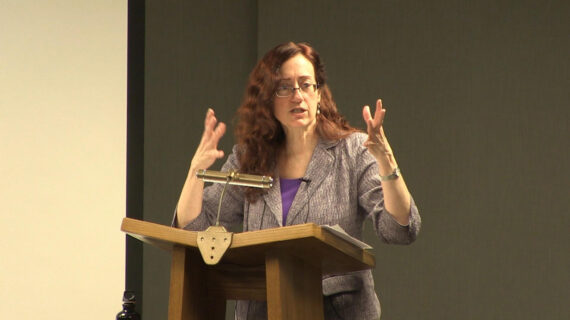
Kyle Cudworth, Professor Emeritus of Astronomy and Astrophysics at the University of Chicago, explains the difference between open star clusters and globulars, which contain hundreds of thousands of stars and are more centrally concentrated than the open clusters.


Copy and Paste the Following Code to Embed this Video:
Tales of Star Clusters
Thank you, welcome to one of our guest speaker nights at UW Space Place. Tonight I am pleased to introduce professor Kyle Cudworth who is the former director of Yerkes Observatory and was there for many years and spent a good bit of his career working on star clusters so he's agreed to give us a talk tonight entitled Tales of Star Clusters and you see some real nice examples of them right here and he's gonna tell us why they're important and what sort of research he's done on star clusters so Kyle. Okay, thank you Jim. Well, as Jim said, I spent many years at Yerkes Observatory about 40 years there and this is not a picture taken at Yerkes Observatory, but I just threw that in as something to have on the screen before we got started. So Tales of Star Clusters and for one cluster, the tails of that cluster. We'll get to that eventually. Just curious, how many of you have been down to visit Yerkes Observatory at some point? Well, maybe half roughly. If you haven't, I encourage you to get down and visit it. We have at Yerkes, the largest refracting telescope in the world, the 40 inch refractor in the big dome here and I will be showing you some pictures that were taken with it. I will also show you some pictures taken with reflector. Forty one inch reflector it was installed in the 1960s. The refractor goes back to 1897 but the reflectors 41 inch in the mirror dome there and the 24 inch in the dome that's almost hidden. Those were installed in the 1960s. I won't show anything from the 24 inch. But 40 inch just for those of you who have not been down there to see it this is what it looks with an astronomer there to show the scale. Astronomer who might look amazingly like me and then, since, if you go for a tour you probably won't get to see the 41 inch reflector but I should throw in a picture of that as well. Okay, now to the star clusters. We usually divide star clusters into a couple of groups. The open clusters and we got the classic example up here of the Pleiades and the globular clusters, much denser clusters in general but as we'll see as we go along, not always. Okay. Few things about open clusters. Nearby examples, few hundred light years away. You can see 'em with the naked eye. Pleiades, you can see, well I can see Pleiades and see individual stars in the the Pleiades from my backyard here in Madison and of course it was darker down in Williams Bay around Yerkes, there was easier but Pleiades, near Peligades in the sky, even closer. Coma, Praesepe, all of those are ones that can be seen with the naked eye. Praesepe, I never convinced myself I saw individual stars with the naked eye but certainly can see the blur of the cluster. Typically, open clusters are not strongly centrally concentrated hence the name "open", also typically we're talking anywhere from a few dozen stars to maybe a few thousand stars but definitely not millions of stars. Ages of open clusters range from extremely young, where stars are still forming, these would be a few million years, example the cluster that's associated with the Orion nebula and we know from infrared observations that there are stars still forming within that nebula. Going up to extremely old for open clusters of eight or nine giga years, a giga year is a million years or ten to the nine years. One giga year, ten to the nine years, a billion years, the oldest open clusters eight or nine giga years. And for those of you who don't carry these things around in your head all the time, the sun's age is around four and a half billion years so oldest open clusters about twice the suns age but having said that most open clusters are much, much younger than the sun. There are not all that many that are more than one billion years old. Typically a hundred million, a few hundred million is about as old as you find them. The reason for this is that they're open. They're not very dense and... They just don't have enough gravitational pull from the group of stars together is just not strong enough gravity to hold the group together against the pull of everything else in the galaxy so they slowly migrate outwards and the cluster just kinda dissolves into the rest of the galaxy. Chemical compositions. Well... Astronomers are not chemist. Astronomers, well, when I was a undergraduate my first astronomy professor said in Astronomy we have hydrogen, we have helium, and everything else is a heavy metal. Well I was taking a chemistry course at the same time. It doesn't quite work that way. We now as astronomers do distinguish among the various heavier things but we do tend to, in many cases, lump together everything heavier than helium and rather than discuss in detail differences among the different heavier elements tonight I'm just going to do the typical thing of lumping together all of the heavies and for open clusters, we're typically talking the number of heavies is similar to the number in the sun. It's only about 1% of all the atoms in the sun but the numbers in some other stars can vary considerably from that compared to the sun. Open clusters might have twice as much of these heavy elements or might have half as much but they don't change too much from that within a single cluster the stars are usually very nearly all the same but, cluster to cluster, there can be these variations and the open clusters are almost all in the disc of the Milky Way. We think of our galaxy as a thin disk. Most of the stars in the galaxy are in this thin disk. Open clusters are primarily in that disk and examples here of couple of close ones in the constellation of Taurus, the Hyades here and the Pleiades over here and this was just taken with a very low end Nikon Digital SLR on a tripod. Nothing fancy about the equipment to take this. It goes a little bit fainter than what you would see with the naked eye but from a dark sight, a good deal fainter than what you'd see with the naked eye from here in Madison. In the city, you don't see quite as faint, of course. Okay, move on to globulars. In contrast to the open clusters where we were talking the nearest being a few hundred light years, the nearest globulars are several thousand light years away and at best we're talking about things that are just very faint blurs to the naked eye from good dark locations and that's the very brightest of them. The classic one in the northern hemisphere is M13, the cluster in Hercules, and in southern hemisphere there are couple that are brighter that actually have names as if they were stars, 47 Tucanae and Omega Centauri. Classical globulars, the things we usually think of when we talk globular clusters, we're talking hundreds of thousands of stars even millions of stars in some cases. They also are in general quite centrally concentrated, much more so than the typical open cluster but that varies a lot from cluster to cluster. Even among the very well known globulars there are variations. Something I didn't fully realize until I started taking plates of them back in the mid 70s and realized, oh, they really are different, one from another. Now you pull the plate out of the wash in the dark room and... Okay, they don't look alike. That kind of thing. Ages. Globluars are all very old. Greater than 10 billion years. These are the oldest stars associated with the Milky Way galaxy. The age of the universe, but from current data, is about 13 and a half billion years so we're talking things that are extremely old, the oldest globulars, 12 or 13 billion years. Very close to the age of the universe. Chemical compositions, here we get to things that vary greatly relative to the sun. They are very metal poor, very lacking in the heavy elements. Ranging from at the metal rich end of metal poor, maybe a factor for deficient compared to the sun, in other words you look at the star in... a metal rich globular so to speak. It might have one fourth as much iron as the sun has but more typical globulars, you'll find they have maybe about one fortieth as much, taking iron as an example, and they get down to things that are so lacking in heavy elements about one two hundredth as much as the sun has. So these things are very different chemical composition in terms of elements heavier than helium. And the globulars in many cases are out of the plane of the Milky Way in what we often refer to as the halo of the Milky Way. Yes, some of them are in the disk but many of them are well out of the disk. For the ones that are in the disk, you can raise the question, are they just passing through or are they ones that stay in the disk the whole time? We'll come back to that as we go along. How do we make the distinction? Well, you've already got kinda of an idea in your head. Sorry to tell ya but your idea isn't necessarily right. If you go read the text books or more less any introductory astronomy book you find the difference is the structure. Open clusters are more open, globulars are more concentrated. Yes, but in research work the distinction nowadays, really since the 1960s has been that it's an age issue. In the 1950s, when it became possible to actually put some ages on stars, or on star clusters, it was realized that all the classical globulars were extremely old and so just kinda in the way people worked in astronomy they started using globular to refer to any really old cluster regardless of what it looked like and open to refer to anything that was not that old and so we have this bit of a problem that it's not quite what you think and just to confuse matters more, some astronomers who work on clusters in other galaxies will refer to young clusters that are strongly concentrated in another galaxy as globulars, or young globulars. Well, that doesn't work right with the working definitions that we use in this galaxy. Age issues are really the defining characteristic but now let's go on to some pretty pictures. This, you look at it, I probably won't have any trouble convincing you that's an open cluster. Happens to be M36, a lot of the clusters that I'm going to show pictures of have M numbers, that's a catalog put together by a guy named Messier somewhat over 200 years ago. His primary interest was said to be looking for comets and he made a list of things that weren't comets but looked kinda fuzzy in his little tiny telescope. So at any rate it's a list of things that are pretty to look at in many cases. Now this is a color picture and they'll be a number of color pictures here that'll I be showing as we go along. Most of them will be referenced as from the Yerkes 41 inch reflector or Skynet. Skynet is a world wide network of telescopes and Yerkes 41 inch is on that network. The color pictures are done by taking images with CCD camera on the telescope through blue, yellow, and red filters and then combining them appropriately to get the color picture. I didn't do this. I didn't colorize this. I didn't make a color picture out of it. That was done by an eighth grade student who at the time was the youngest student in the Yerkes High School program and that will be true for all of the things that I reference as Yerkes 41-inch that are color pictures or Skynet pictures. She did those as an eight grader. This is not color. This is from just a single plate. This is an open cluster, M11, taken with Yerkes 40-inch refractor in 1900. FRy-4 is the plate number up here, indicates it's the fourth plate recorded as having been taken with a 40-inch refractor. As open clusters go, it's fairly dense but it's still definitely an open cluster. It's one of my favorites to look at in the summer sky with a, well, small telescope but even with something the size of the Yerkes 40-inch. It's very much a favorite. And you want a color picture, this is one from the CFHT, Canada, France, Hawaii telescope, about a three and half meter telescope on Mauna Kea. M10, a globular cluster now, the Skynet picture, the original image is from the Yerkes 41-inch. Okay, I promised you that I would try to convince you that globulars do not all look alike. Here are two that are not very far apart in the sky, not very different in distance. Distance differences are between 10 and 20 percent, perhaps. Basically they're at the same distance from us that shows the same area of sky, it happens to be from very old plates taken with the 40-inch in 1901. M13, the last dense one, M92, the more densely concentrated one. There's no cheating involved in making these look different. They really are different like that. It's not a matter of ones a lot further away so it looks more compact or that I zoomed in on M13 more. Nope, they really are different. In the disk of the Milky Way, in our summer sky, M71 is... one of the more metal rich globulars. It's heavy element chemical composition is down from solar... amount of iron in the stars of M71 is one fourth, one fifth of what it is in the sun. That's toward the rich end of globulars but obviously the cluster is somewhat sparse but it is a globular by age and this is a scan of a single plate taken with Yerkes 41-inch in blue light. It's one I took in 1979 I think. We had just gotten the mirrors reilluminized and the plate ended up going a lot fainter than I had expected it to because the fresh aluminum on the mirrors. Okay, this is a different picture of it but it's the same cluster as was up here on the screen before the talk started. NGC 2419. It is an extremely distant globular cluster. Something like 300 thousand light years away and this is an image from the Sloan Digital Sky Survey. Survey that covers somewhat more than a quarter of the entire sky at this point. Everything taken in a very consistent manner and here we got an image that the Sloan people put together as one of their showcase images from the survey. So, you know, it looks like a globular. Good healthy globular, just a whole lot further away than most that we talk about. At exactly, well, within 10% at the same distance from us is this little guy in the center here we got Pal 3. Not much of a cluster and... That was discovered in the 1950s. NGC 2419 was discovered back in the 1800s. You can see why it took a little longer to discover this one but it's about the same distance as the previous one but it's also a very old cluster so it gets referred to as a globular. Here's another one that's kinda sparse. It's not as far away as these last two. Only something like 70,000 light years but that's still 10 times further away than things like M4. Pal 5, again, you can probably convince yourself that there's a concentration of stars in this area. This is another one that was nominally discovered on the Palomar Sky Survey in the 1950s. In reality, it apparently was discovered on plates taken before the Palomar Sky Survey because the Palomar Sky Survey plate of this field was taken in 1954 but yet observers in Mount Wilson in Palomar took plates directly on it not wide field plates starting in 1949. It was discovered a little bit earlier than the actual survey plates but at any rate it's a moderately distant sparse cluster. We'll return to talking about that one later. Again, it's a globular in spite of how it looks. By age, it's a globular. Okay. An earlier version of this talk was put together for a group of teachers that I've been working with for several years and so I had to throw in something that said quiz time for the teachers but it be quiz time for you too. We got two clusters here. We got... M35 and we got NGC 2158. Okay, I think you'll probably all say, okay, M35... probably an open cluster. But what about NGC 2158? How many want to call it a globular? Okay, how many want to call it an open cluster? How many aren't sure? Okay. Aren't sure you would find lots of professional astronomers agree with you back in the 1950s. Once some age work was done on it, it became clear that actually it's an open cluster by age. It's only two or three billion years old so it doesn't qualify as a globular despite what it looks like. Now, part of it, looking more concentrated here is that it is a good deal more distant, maybe four times further away than M35 but it also really is denser but it's not a globular. Here's M35. This was just attaching my old Nikon visual single lens reflex on the back end of Meade 8-inch telescope and maybe a 30 second or one minute exposure, I don't remember exactly. 2158 couldn't really do it that way. This is, again, Yerkes 41-inch colorized by Christi. So why do we study star clusters? We looked at a lot of pretty pictures. We've said a lot of basics about them, but why study them? One... is comparison with theoretical calculations. Star clusters provide us an excellent test of the calculations of stellar evolution. As those calculations were done first in proper detail in the 1950s and 60s, you got into an era where in the 60s and 70s there was a lot of star clutter observing done in trying to test a lot of details of stellar evolution calculations. One of the things that comes out of stellar evolution calculations is a determination of the age of the cluster and so clusters also give us things that, by comparison with theory, we can get pretty direct determinations of ages so not only do we start stellar evolution with clusters but because we can look at clusters throughout the galaxy that are a variety of ages we can start looking at things about galactic evolution because we can look at things of different ages and we know what those ages are. It also helps that there tend to be a whole lot brighter than individual stars because your getting the joint light of a whole lot of stars, so you can pick 'em up at great distances. If you want to look at... some star in the galactic halo that is say... 20,000 light years away, it's really hard to pick out an individual star that is but you can find a cluster that is just because you got the conglomeration of a whole lot of stars. So a lot more useful for mapping and again... you can talk about evolution of the galaxy coupled with that mapping. Further more, you get good distances for them so that helps out in the mapping. It also means that if you know the distance the thing you can figure out how luminous the individual stars in the cluster are and relatively rare stars like the cepheid variables or super giants stars that we don't have other good ways of getting their distances. Using the clusters, we can calibrate the distances calibrate the luminosities and thereby get the distances for these sorts of stars and then we can go look for these stars in other galaxies. The clusters thereby form an early run on the ladder of getting distances throughout the universe. When we talk about getting distances to other galaxies the first good work of that sort was done with cepheid variables and they still were very important in the work with the Hubble Space Telescope that calibrated the hubble constant on the expansion of the universe. Cepheid variables critical, good calibrations of what their luminosities are in order to get distances to other galaxies. Lot of those calibrations tie back to star clusters. And then finally comment on here, I know at least a few of you are amateur astronomers. These things are beautiful to look at whether looking with binoculars at things like the Pleiades or Praesepe or small telescope at Pleiades or Praesepe or M35 or 40-inch refractor at M11 or the 200 inch reflector looking at M13 or NGC 2419. These things are beautiful. I have been accused of picking the things I study in my research. Picking things that are pretty to look at and that's not why I pick them but it does fit an awful lot of facts about them. Okay, some assumptions. Any one cluster that you pick, these stars formed from one dense interstellar cloud originally. If they did all form from the same cloud, you'd expect them to have all formed at pretty much the same time. So all the stars within a cluster should be the same age unless your looking at an extremely young cluster. If the cluster if five million years old and it took two or three million years from when the first star formed to when the last star formed, okay, they're definitely not all the same age. If the cluster is a hundred thousand years old and it took two or three million years from when the first formed till the last formed, that's two or three percent. That's lost in uncertanties and everything. Age differences star to star should not show up according to this kind of assumption. Well, you get age differences cluster to cluster but not within a particular cluster in general. Further more, we think that all stars within a particular cluster should at least start with the same chemical composition. They're all formed out of the same cloud. They may have somewhat different chemical composition by now but they have the elements; shouldn't have change. Even in very old clusters like globulars, those stars do not make the heavy elements and so you'd expect pretty much the same chemical composition star to star in any one cluster. Differences cluster to cluster but not differences within a cluster. For some globulars though it has become clear that these two statements are not quite true. In many globulars there are small star to star variations in chemical composition, in a few there are very large star to star differences, and in some there are maybe some range in ages among the stars within the cluster. The most notable example is the one called Omega Centauri but there's also quite a few astronomers who would say, yes Omega Centauri has been traditionally called a globular cluster but maybe it shouldn't be. Maybe it is the remaining nucleus of a dwarf galaxy that has mostly merged with the Milky Way but the nucleus of that galaxy is still there and you see it as this thing that looks a bit like a globular cluster named Omega Cen. Well how do we get distances? How do we get ages? We can from very near by stars get good distances and we got two different plots here lets concentrate first on the left hand one. The vertical axis here is absolute magnitude or the luminosity of the star. It's how bright the star would be if it were 10 parsecs. 32.6 light years if you like from us. So this left graph shows a main sequence in red. Shows were about 90% of stars would fall in this luminosity, or absolute magnitude, versus the horizontal axis is color. It's quantitative way of measuring color. Don't worry. Details about how it's done, which just... color of the star, which is related to temperature of the star. Over here on the right hand side, we got actual data from the Praesepe cluster and we see the main sequence here but the upper part is missing. Instead things turn off and go over and some stars are over here as red giants. These are actual observed magnitudes here. If we take something, take the color of around... B minus B of point 5, we see that it's about 10th magnitued in the Praesepe cluster. We come over here, a 10th magnitude star, and absolute magnitude is about should be about 4th magnitude. Praesepe is far enough away that things appear about 6 magnitudes fainter than as they would at the standard distance as used for plotting this. The other thing here is at this the upper end within the cluster, stars are turning off the main sequence. Stellar evolution calculations can tell us what kind of an age that represents. As stars age, they leave the main sequence and stars at the upper main sequence age faster than the stars lower down and so we can pin ages on the clusters using the turn off points. And Globular clusters, here is the typical color magnitude diagram, this happens to be one of my favorite clusters, M5. We got a main sequence down here, we got a lot of stars that are off the main sequence here, up in the red giant branch. Basically on the main sequence stars are converting hydrogen to helium in their cores. But eventually they run out of helium and so they got to change. They've lost... They don't have enough fuel. They've lost their main fuel source. So they shift over to having a different structure. They have a helium core and they a shell around that core that is converting hydrogen into helium. Those are the red giants. Eventually, that shell gets far enough out in the star and the helium in the core gets compressed enough that things have to change again and it goes to the core of the star is doing very different nuclear reactions that convert helium into carbon. When that's going on, the stars sit over here on what we call the horizontal branch. Now in some clusters, the so called horizontal branch droops way down like this but still those are helium burning if you like in the core. So we can interpret this in terms of stellar evolution and I use M5 here but its a good schematic of a lot of globular cluster color magnitude diagrams and I just thrown in a color picture of M5 from the copyrighted by the Anglo Australian Telescope. Well, what is my research been? I've been deriving proper motions. I've been measuring how stars move by comparing old and new photographs of the clusters and I've mostly worked on globular clusters. Partly because when I started on this, a number of people were working on most of the well known open clusters. As a grad student, I did an open cluster project. Happen to be M35 that I showed you earlier. But that... mostly I've worked on a few open clusters, especially older ones, but mostly globulars and these are tiny motions of how the stars have move over even many decades. The amount of motion over several decades is much, much smaller then the diameter of the image on photographs. So you get only by measuring with high precision positions on the photographs. Originally the purpose was cluster membership. All the members of a cluster should move pretty much the same otherwise they wouldn't hold together as a cluster. Were as the field stars that just happen to lie in the same direction that are foreground or background there's no reason that they're going to move the same as cluster stars so you can weed out a lot of the non-members by measuring the proper motions with sufficient precision. I got into doing that in the mid 70s on the globulars because there were friends of mine that needed that membership information for other work that they were doing and it was something I could do, we had old photographs of some of the bright globulars at Yerkes and so we were in a good position to try to do this. It turned out that we had sufficient precision to look at the internal motions. Every star within that cluster feels the gravitational pull of every other star. So they're moving around inside the cluster. Very, very small motions but we had enough precision mostly I would say because of the excellence of old photographs and the measuring methods that came along in the 70s and especially the 80s and 90s. We were able to get these internal motions and we've also done quite a bit of looking at how the clusters move in their orbits around the Milky Way. And just an example of comparison of old and new photos. On the left, these are both M5, both the same area of sky, I mean you can probably identify up here in the upper left corner that same little parallelogram of stars on both of them. Well, this is 1900. Plate FRy-1. First plate recorded as having been taken with a 40-inch refractor. We did use it on our paper on M5. It was fun to put in that little sentence saying, we note in passing that plate Fry-1 is the first recorded image photographed with a 40-inch refractor. A grad student of mine has improved upon... round 1990 improved upon what I had done back in the 70s. This is the 1988 plate. The main difference is a sharpness of the image. That's simply because the atmospheric conditions were extremely good for months in 1988. If you were to overlay these, you would probably not notice a difference in position for anything but when measured with high precision we can find the motions. There's always an issue of trying to find the appropriate old plates. Gotta dig around in old plate files and I sometimes call that astronomical archaeology although that's... a term appropriated for other things now. In 1970s when I started on this, the lore was the plates all had to be from refracting telescope. They'd all better be from the same telescope or a very similar scope. No way you were going to be able to use plates taken in the blue and plates taken in the yellow in the same study. They were just too many complications from plates taken in different colors. Well, in the 1980s, I realized that we didn't necessarily have to stick to tradition on some of this. Yes, there was a reason for these old traditions but we now had enough computing power that we could make corrections for the differences telescope to telescope, color to color, and so forth, and so since the 1980s, I have been pretty much freely mixing plates from different telescopes, plates taken in blue and plates taken in yellow and sometimes in the red. Mix them all together in the same measurement of motions. The wonderful benefit of this is that anything that has some old plates taken with any telescope is now... ripe for a proper motion study. It doesn't depend on there being old plates from one of the traditional big ol' refractors and that meant that... we were greatly freed up in studying clusters that had some astrophysical importance, not just ones that happen to have old plates from the appropriate telescope that we can still use. It's not unusual now for me to have 15... 20, 30, even 40 plates in a solution spanning decades, typically at least 30 years but we've gotten up to 100 years in one case at least. But for some of the fainter clusters, we got to go to plates from big telescopes and I did indeed get to the 200 inch. Our group were the last users taking prime focus plates at the Palomar 200-inch back in the 90s. So yes, that's me in the prime focus cage on a cold, as a actually snowy night. A reason there's opportunity to take a picture snowing hard out doors. No way we were going to open the dome that night. Okay, let's get to some results. M4. Those of you who are amateur astronomers may know M4 as the cluster that is about a degree east from the bright star Antares in constellation of Scorpio. If you're an amateur astronomer and you didn't know that, here's a globular that's easy to find. It's only about a degree from a first magnitude star. I have had one observing run with another professional astronomer that had no idea where M4 actually was in the sky except by the coordinate numbers and wondered how I could just step out and come back in after 10 seconds and tell her whether there were clouds near our cluster. I finally let on that, well, it's right next to something we can see even through broken clouds. Anyway, it's a messy field. There's a lot of dust here. M4 is one of the closest clusters here, closes to us. This is Antares here but all this dust is much closer. The dust, all this dark stuff in here, is foreground dust. Much closer to us than the cluster is. All this diffuse stuff is starlight reflected off of the dust. This is a messy neighborhood. What did we get for our results on membership? Well, here is a color magnitude diagram, apparent magnitude and color for everything we measured in the area of M4 and here for the stars that we derived had more than a 90% probability of being members to the cluster. It cleaned things up reasonably I would contend. M71. This is that one I showed you of 41-inch plate of. It's very much in the disk of the Milky Way in a constant, fairly dense area south of Cygnus if you know the summer Milky Way well. Clean things up considerably here as well. This is not final. Back in the 80s, I did the brighter part down to about 16th magnitude. We did that back in the 1980s. The fainter extension still may improve matters somewhat on that. As far as I'm aware the first time that anybody's been able to do membership, reaching all the way down to the main sequence in a globular. But again I'll raise the question, what do we do with a disk globular? Is it something that stays in the disk or something that just happens to be passing through? In this case, we were able to get velocity of it and show that it actually stays in the disk. It has almost no velocity perpendicular to the disk. So it is one stays in the disk of the Milky Way. Bill Morgan, an astronomer at Yerkes for many, many decades, one of the great distinguished astronomers of the 20th century had back in 1957, or there about, suggested that M71 and a few others might actually be things that stayed in the disk rather than plunging through. Very few people believed him at the time. When I got the result on the velocity of the cluster it was fun to walk down the hallway and show him the results in about 1983 or 84. It vindicated what he had suggested that nobody believed back in 1957. That was one of the fun things of showing somebody, yeah, you were right. NGC 6397, this is a southern cluster. Much too far south to observe from Wisconsin or, really, from any northern hemisphere observatory. This is a color picture from an amateur astronomer down in Chile. Here are our measurements. Now what we go here are just measurements of proper motions and we got a concentration in the center of this diagram that a whole lot of stars moving together. Those are the cluster members and then a big scattering of stars, mostly motions quite different from the cluster. Those are the non-members that just happen to lie in that direction in the sky. But the most interesting stuff that came out of 6397, we went after it because it was one of the closest globulars. But most interesting thing that came out of it, not just the cleaning up the color magnitude diagram which went pretty well here. Again, on the left is everything we measured, on the right of the probable members. From the proper motions is that this is a cluster that we found the velocity. It is plunging through the disk of the Milky Way at the moment. It is a little bit out of the disk, it passed through the center plane of the disk about five million years ago. This is work that I did with Rick Reese, who by that time was a former grad student. He'd been a grad student of mine in the early 90s, this was late in the 90s or early 2000s that we did this. This is kind of an oblique view of the Milky Way. If we do a top down view, we're then going to blow up the area in that square to something like this. The yellow dot is where the sun is. The red dot is basically where the cluster NGC 6397, this globular is. Now the red rectangle shows the uncertainties of where the cluster plunged through the disk of the Milky Way about five million years ago. But what about the rest of this? Well, we were thinking, okay, we got something with a mass of half a million times the mass of the sun plunging through the disk. Are we going to find anything in the disk that's a remnant of it having passed through? And we very quickly, Rick I should give the credit to, Rick found very quickly, There's this young open cluster sitting here, NGC 6231, and five million years ago it formed. It is only 4 or 5 million years old and given the uncertainties of its motion it was someplace within that green rectangle at the time it formed. It formed at the same time as a globular went plunging through the disk in very nearly the same place. After we found this, we discovered that there was a theoretical prediction done some years earlier that a globular plunging through the disk could kick a... basically kick a dense cloud of interstellar gas into starting to form stars. So there was a theoretical prediction that this kind of thing could happen, that a globular could cause stars to form and as it goes through the disk. So Rick likes to say, well, we can't prove that 6397 indeed did cause the formation of 6231. We can show that they were in the same place at the same time. There was opportunity. There's this theoretical paper that shows there was a means and will let you speculate on motive. So, anyway. It's quite possible that we found a case of a globular actually kicking off the formation of a young open cluster. Okay, go to Pal 5. I showed you a Sloan Digital Sky Survey image of Pal 5 before. This is negative instead of the positives I've been generally showing you so this is what the plates actually look like from Kitt Peak 4 meter and there were plates taken with a variety of telescopes in the northern hemisphere in, well, 1949 up into the 70s on this thing. The speculation was, okay, it's not much of a cluster. It's pretty far from us. Well, in fact, we can... reading the notes on the plate envelopes, we can even see some of the speculations. People wrote it down on the plate envelope in some cases when you see their speculating on things. But the thought was, it's really sparse. It's currently not all that far from the Milky Way. From the central mass concentration of the Milky Way. If it came much closer in, it would probably get pulled apart by the Milky Way. So it must be something that's in... an electrical orbit, and elongated orbit, that it spends most of it's time much further out in the galaxy. We're happening to catch it when it's closest in. Well, okay, first of all we cleaned up the membership, same kind of thing as I've shown you several of these left hand diagram is everything we measured, right diagram is the probable members and then we look at the velocity of it. People thought it was probably as close in as it gets. What we found from it's orbit though is that it currently is at the outer end of it's elongated orbit. It comes a lot closer in, it comes in to about half as far from the center as we are from the center of the galaxy and that immediately presents a problem of how does something this sparse survive? So I talked to one of the... Solar Dynamics theorists in my department in Chicago and he suggested that, well, it sure would be nice to know what that cluster looked like before the last time it came around its orbit through the closest part but of course we have no way of knowing that but he could calculate given the orbit and current star density and so forth It's not at all clear that it will survive the next time coming through close to the center of the galaxy. It would probably get pulled apart as it comes through the plane of the Milky Way next time around and it probably got a lot of stars pulled out last time around. Aha! If it had a lot of stars pulled out last time around maybe there's a chance at finding those stars and I was starting to think about how am I going to do that and grad student at Chicago, Connie Rockosi, had helped build the camera for the Sloan Digital Sky Survey and was trying to find a thesis topic, something to do for a PHD thesis that would use some of the early data from it. It so happened that Pal 5 was within the region, rather small region that they had scanned for the test data with the Sloan camera and I said, okay, you've got by far the best data, even though it was test data, it's by far the best for looking for these stars pulled out. Here's a figure from her PHD thesis. What we got here are contours on the sky of stars that fit the color magnitude diagram of Pal 5. Strong concentration of stars where the cluster is here and tails ahead of it in its orbit and behind it in its orbit exactly where the theorist doing the star dynamics would have predicted that they should be. This kind of prediction had been done many times on other globulars and people had searched for the tails and not found them. Here was a case where we knew it had to be being pulled apart and Sloan data, Connie having built the camera and thus having access to the test data found it. Now, somebody else within the Sloan concertion actually started putting a paper out on it and within the consortium, papers had to be agreed to by everybody in the consortium and... Connie's thesis advisory said, Whoa! You tried to do this, even though it had been announced that it was reserved for Connie's thesis. At any rate, Connie had a wonderful piece of work from this. Now quickly as we're winding up here, NGC 6791 this is again a Sloan Digital Sky Survey image. It's one of the oldest open clusters. Probably around eight giga years and it actually is metal rich relative to the sun. It has two or three times as much iron, for example, as the sun does. A cluster that old should not be metal rich it should be metal poor at least a little bit. This ones metal rich, so that's already a puzzle about this cluster but we thought, well, we will at least clean up the color magnitude diagram again, see the success of the membership determination that we got a pretty clean color magnitude diagram. We do have-- If I can get the cursor to work. We got stars here right above the turn off are what are called Blue Stragglers and if you never had Bob Matthew from your department here at UW talk about Blue Stragglers you really should 'cause he and his group of grad students have solved the long time mystery of why these clusters have Blue Stragglers. But then here complicated mass but these are simply color magnitude diagrams and just look at the one in the upper left here. You've got stars plotted in red and stars plotted in green and there certainly seems to be an offset in the sense that the ones plotted in red would be considered to be probably older. The ones plotted in red are not plotted in red because their thought to be older. Their plotted in red because they were in the central part of the cluster. So we may have an age difference within this peculiar old open cluster. There are some other possible explanations for that but we may have a complication here of something that isn't suppose to happen in an open cluster but sometimes they don't do what they're suppose to do. I guess you could say NGC 2158. This is that dense cluster near M35. I did M35 as a first project as a grad student back in 1970. I saw this thing down in the corner of my plates, I've looked up some things about it and thought, you know, sooner or later I really need to do a membership study of that cluster. It needs it, but the plates that showed it were not old enough yet at that point to think about. Well, sooner or later came around in the 1980s, I wasn't very happy with my results so I got some more plates in the 1990s and did the analyses in the 2000s and I still am not very happy with it; I still don't quite know what's going on. Yes, we cleaned things up a bit but it's still a lot more confusing and I don't... my guess is that some of it is that there are a whole lot of double stars in there but I don't know what all is going on in there. It's still a confusing mess. Okay. I've been working on these things, said for, over 40 years now. What are some conclusions? Well, from the membership work, some of the things that got me started is that there were stars with some peculiar characteristics that were being identified in some of the globular clusters. Some of them turned out to be members, some turned out to be field stars with nothing peculiar about them, they only look peculiar if you thought they were cluster stars. They didn't follow the same chemical composition as the rest of the cluster but if they weren't members no problem, it's okay. Rick Reese's PHD thesis confirmed that the distant scale that we use for globular clusters is basically correct but there were a couple, M4 and M22 that the traditional distances for them were wrong, people were making corrections, you have to make these corrections for the foreground dust. It dims the stars, it reddens the stars but the corrections have been done incorrectly. We got distances independently, we found that. M71 velocity, I already mentioned that it's a disk cluster. It was fun t tell Bill Morgan that, confirm what he suggested. NGC 6397 I showed you as it plunged through the disk of the Milky Way, it may have triggered the formation of an open cluster. Our measurement of the velocity of Pal 5 showed it sparse because its on an orbit that causes it being pulled apart. Connie Rockosi followed up on that, found stars that have actually been pulled out from it. This has long been predicted show up but first time it was really found. And then these last couple. GC 6791 keeps getting more and more interesting and we're not sure what's going on and NGC 2158, and I say here, still a confusing mess. It's more than 40 years since I first thought it needed some work and it still needs work and I'm still scratching my head at what it needs to be done next on that one. There are still things even though that I'm retired, so to speak, at this point. I'm at Madison more than I am at Yerkes. Still more things that I want to do. Some final thoughts. I didn't think I was gonna work on star clusters from essentially my whole career. I thought I would do what I could easily do with the Yerkes plates in the 1970s, maybe into the early 80s and move on to doing some other things but there kept being more interesting things to work on so I kept working on them. I also never expected that doing really traditional kind of astronomy of measuring proper motions would get me on a telescope, like the Palomar 200-inch that was used primarily for looking at other galaxies and so forth but here I was writing in the prime-focus cage at the 200-inch. And finally, star cluster research is interesting, its often fun, and I'm still doing a little bit, but I'm retired. As my dean told me just before retirement, it's time to do whatever I want whether it's astronomy or something else. So, sometimes its something else. So with that, we'll leave it. (audience applauses)
Search University Place Episodes
Related Stories from PBS Wisconsin's Blog












Donate to sign up. Activate and sign in to Passport. It's that easy to help PBS Wisconsin serve your community through media that educates, inspires, and entertains.
Make your membership gift today
Only for new users: Activate Passport using your code or email address
Already a member?
Look up my account
Need some help? Go to FAQ or visit PBS Passport Help
Need help accessing PBS Wisconsin anywhere?

Online Access | Platform & Device Access | Cable or Satellite Access | Over-The-Air Access
Visit Access Guide
Need help accessing PBS Wisconsin anywhere?
Visit Our
Live TV Access Guide
Online AccessPlatform & Device Access
Cable or Satellite Access
Over-The-Air Access
Visit Access Guide




Follow Us