

 Passport






Simple Steps to Eating Local
02/14/15 | 55m 30s | Rating: TV-G
Jasia Steinmetz, Professor, Food and Nutrition, UW-Stevens Point, explores ways to support and maintain family food traditions, energize youth and create jobs focusing on local foods.


Copy and Paste the Following Code to Embed this Video:
Simple Steps to Eating Local
Thank you and welcome to the expo and welcome to the session where we're going to talk about local food. I'm Dr. Jasia Steinmetz. I'm a registered dietician, and I'm also a professor at the University of Wisconsin in Stevens Point.
And I'm also born and raised in Wisconsin. So my grounding is in our state and kind of the habitat of our state. And it's always good to know where you come from and where you feel at home, and we'll talk a little bit more about that. And I teach in food and nutrition at the campus.
And so I like thinking about food, and I like thinking about food in all kinds of different ways. We'll talk about that too. So I'm happy that you're here. So we'll talk about simple steps of eating locally, and we'll start with some reasons why people are choosing to eat locally, maybe some compelling reasons why, if you haven't thought about that, you should think about eating locally, and then we'll talk about some really great things that are happening within communities that have to do with eating locally so that you can be inspired and maybe as you're walking around the rest of the expo you can think about those things and kind of get the tools that you need to be able to practice some of those.
So this is a farm in Wausau. It's Stoney Acres farm, and it's beautiful land, as you can see. And most of the time when we think about food and where our food is coming from, we really have this iconic farm vision in our head. So no matter where our food actually comes from, oftentimes we think about this, and you can tell that this is a very compelling image because you see it on so many packages when we're talking about farm food.
We have these beautiful rolling hills of green. Something to notice about their farm is that they have solar energy across one of those buildings. And that building, the angular building on the side that you see, they built that based on the proceeds that they had for having Friday night pizzas at their place. So they built a stone oven, and they put out a bunch of picnic tables in the middle of this rural area and said we'll just serve pizzas because we want to build this building.
So they're really innovative, and you can see that they accomplished that. So it's one of our younger farm families, and you'll meet them a little bit later and we'll talk more about that. But what I would like you to think about is food and how you do think about food, how do you consider food and all of the aspects that you are including when you think about food. And reason why we want to think about food, and yes this is my granddaughter, my latest granddaughter, one reason why we want to think about food is for the next generation.
We have an idea of what food means within our society. And so I would like you to take 30 seconds to think about what advice or what knowledge or what skills or what meaning you would like to have the next generation know about food. So what is it that you want the next generation to learn about food or know about food? What's valuable to pass on?
And knowing that, then what are they going to pass on to their children? Okay? So, as Mr. Rogers says, we'll take 30 seconds so that you can think about it, and I'll count that out for you.
Okay, go. Thank you. I hope you have some great images in your head. And I hope those images include family.
So this is part of my family, and when I think about food, I think about all of the celebrations that we've had around food, all of the meals that we've had around food, the types of food that come from my heritage, the types of food that comes from now our blended family where we have a lot of Indian influence from India, and you'll hear more about that. All of the cultural and social values about food. And so when I ask people this question in workshops, one of the values that people have around food is we want children to know that food has social value. Food is a social glue.
Food is what joins people together. Food is what we do when we're celebrating good things. Food reflects our history. Food reflects places where our families have been in the past.
And so there's this very rich history with food that we bring into our table and we bring into our communities And you can see that, especially in this very vibrant place, like Madison, where you have a lot of different food cultures coming together and people that are starting restaurants based on their family's home recipes and all kinds of fabulous things around food that reflect just generations and generations of food. So one reason why we want to think about food and passing that on is really a celebration of our cultural and social history. We talk a lot about that when we talk about people dining together and what's happening at the family table and do people eat together as a family and all kinds of other variables that get passed on, like how to pass your plate, how to say please and thank you, how to use the right utensils, all kinds of things that happen at the family table, which is part of our social custom as well. So people do think about that.
They do think about their heritage as connected to food production. So this is a wild rice gathering. So there's a lot of cultural and spiritual traditions that we have around food. So another compelling reason for people to think about food and that value is spirituality and what do we have embedded with food and spirit and the value that we have with food and religion.
And that's another compelling reason. There's a reason that we want to think about food as part of our environmental heritage and the ability to source food, and that's another trait that we want kids to know. We want them to know who grows their food and how they grow that food and that food production takes hard work and skill. So if you've ever hunted, you know that there's a lot of skill in just gathering your own food.
Anybody who's tried to grow a plant, especially with kind of the crazy seasons we've been having, you know that's a challenge. This whole expo is about how to grow more food productively. So, thinking about that. But what's important when we want to think about where food comes from and us is there's another compelling reason for that.
And I was at a conference where there was a young adult, young woman. She was in her 20's, and we were talking about seed and seed saving and some of the changes that are happening with seed technology. And she stood up and she said, "My family carries seed from everywhere that we've lived, and we've carried seeds for a really long time, through generations, and so because I've eaten that seed, you can't separate my DNA from the DNA of the seeds." She said, "I am that seed, so much of what I am, all of my parts, because I've eaten that seed is that DNA." And so when I'm thinking about food, I'm thinking about all the places that I've been that I've been able to eat food, and then the things that I've left behind, my skin, my hair, other things...
LAUGHTER
And I'm thinking, I'm leaving that DNA, I'm getting DNA, so I'm really connected to that place. When I'm breathing out carbon dioxide, those plants are taking that in, and they're using it to build themselves and then I eat that food and then I'm getting their oxygen and they got that from somewhere far away with the wind patterns and so, really, we're so connected, we're so connected and our food connects us in a really visceral way. Like genetically we're connected all across the world. And that's going to be important as we talk about a few reasons why you should think about your food.
So most of the time when dieticians and nutritionists talk about food, we talk about the food groups, and when you're envisioning food, you might be envisioning food like this. Right? We have a beautiful bounty of vegetables. We can't wait until those spring greens come out in the springtime.
We're looking forward to fresh tomato season again. There's all kinds of wonderful things that we are taking advantage of. I've been really lucky to try some new cheeses this winter. So I'm really happy for the local cheeses that we have in our state and how exciting it is to try something new.
This is what we envision. But this is what we eat. No. So we have this idea of what food is and what it means and what we want to teach our children, but this is what our children are seeing.
This is what our children are eating. This is what we, as adults, are mentoring for our children. This is what we're surrounding our children with. So I think one of the critical compelling reasons that we want to think about food and what
we're eating is this
are the values that you thought about for children, are those being passed down? Who's doing that? How are they doing that? What's your part in that?
So that when you're thinking about the next generation of children everywhere in your community and in the world, who's teaching them those things? So first it's the home. Absolutely. But sometimes homes don't have the resources, and they can't teach some of those things.
Then it's community. So it's the schools, and we'll talk more about the schools. But then it's us. We do that.
Every time that we offer something to a child, every time that we support our school, every time that we decide what restaurant's going to be in our community, every time that we support a community garden, every time that we go to the farmers' market and say we want our children to have you here, we're doing that. So we wanted to think about what it is that we're creating in our world and then what we're passing on to our children. So, obviously, we have climate change happening, and there's a lot about climate change and climate change is impacting our food supply and will continue to impact foods. And my husband and my mother-in-law are really happy right now that we're not having a lot of snow, and because I teach of food I'm thinking, no, that snow cover, that's water.
I don't know why it's important but it's so important and it's not normal and I want to have snow and it should be these temperatures because I don't know how the insects are going to be and all of these crazy ideas of what I'm thinking in the ecologies happening and he's just happy not to plow. And so we are seeing changes. And I'll have a story about Kenya in just a few minutes that really illustrate what's happening with climate change. But we do have to think about what's happening to the environment and where that's coming from.
And you can see from this slide that we have a lot of carbon that's been stored, and because of all kinds of changes that we have and our history, we've actually released those carbon stores. And so the coal and the gas and fossil fuels that we're burning absolutely are contributing to that. But I would like you to notice that right at the top of that slide it says "land use, land sink, ocean sink." Right? So if we're going to be releasing carbon into the air, and absolutely we can control, start to control more of that carbon being released, but when we release that, what we would like to have is a capacity of that land and water sink.
So that's really important. So we'll talk about the land sink for just a second. This is the international year of soils. I don't know if you knew that, but every year the food and ag organization of the United Nations designates an international year and it has to do with something with food and agriculture.
And this is the year of the soils. And if you talk to any soil scientist or gardener, they are jazzed about soil. It's just like there's so many wonderful things you can say about soil. It needs its own year because we should just be spending a year talking about soil.
So it's pretty exciting for people who know about soil. So one tablespoon of soil has enough microorganisms, more than the whole population of the Earth... of the Earth in one tablespoon of soil. So if nothing else, I've left you with an incredibly crazy notion.
Right? Every time that you're moving soil would be like what am I moving in this tablespoon of soil? Where is this going? What am I doing with that?
So you can see that soil health is really important and very exciting, and there's a lot of research that's going on with soil. And what I hear from scientists and from farmers is that all that bio diversity that you see above ground, that's all mimicked below ground. So that's a pretty exciting concept and wonderful about soil. The sad part is we're losing soil, and there's a lot of news about losing soil.
About 33% of the land has degraded soil, and we can't use it. And we're losing soil for a number of reasons. We're losing soil because of wind. We're losing soil because of erosion with water as well.
We're losing it because we're losing the water carrying capacity of it, and then the salt levels rise. So there's a number of reasons why we're losing soil, but the year of soil is to really bring attention to the fact that we need to start protecting our soil. Increased population means increased demands for productivity, which means increased soil pressure. And at the same time that our cities are expanding, we're losing soil.
So we want to be able to pay attention to soil. We also want to pay attention to water. So this is the Little Plover River where I live in central Wisconsin. It's a class A trout stream Although, you can see at this point right now, it's not a very healthy trout stream.
Actually, it's been drying up for a few years in the summer, and we're starting to really investigate why that is. So we want to think about water use and what's happening with our planet with water use. This is in the Wind River Range, and, although thinking about climate change and water use and seeing icebergs drop and melt into the ocean is really dramatic and compelling, for me, I don't live near an iceberg so although it's compelling for when I see that vision, it doesn't help me. But going to the Wind River Range in Wyoming was really startling to me because when we went back the last time, we noticed the glaciers were melting.
We don't have to carry water in the mountains because we can hike around, and we have local water wherever we go. But with those glaciers melting, it won't be there, and then I'm thinking about what's happening downstream. So it's like the Little Plover River, something is happening to our water, and what's happening is that there's a lot of water being taken out so we're losing water quantity but we're also compromising water quality, and the food choices that you make do contribute to water quality. We have this increasing dead zone of water quality, so as we have water that comes from the Mississippi and flows into the Gulf of Mexico, that's the downstream part of it.
We're increasingly compromising that water because of what's flowing into the Mississippi, and part of that is the nitrogen level that we have from all of those agricultural places that end up flowing into the Mississippi River. And so this is a dead zone. So the red part is a dead zone. It doesn't have oxygen so fish can't survive there.
And so we're creating these dead zones. We want to think about soil, we want to think about water. Another way we can think about water is how much water it takes to produce a certain commodity, and we call this the water footprint. And you can go, just Google water footprint, and you can see different metrics for the food that you eat.
So we have wine that takes 120 liters of water for a glass of wine. 180 for a tomato. 2,400 for a sandwich, and that high water footprint has to do with the amount of grain that cattle feed. It's the way that we produce that beef that accounts for that much water.
So if you have grain-fed versus grass-fed, grain-fed takes a lot of water because you have to account for the water in the grain itself. So, again, with meat, it has a really high water footprint for that same reason because it's grain-fed. So we want to think about the water. And then we want to think about bio diversity, and there's a lot about the monarch butterfly as being kind of the poster for bio diversity.
And, in fact, we are right in the middle of the decade of bio diversity. And that decade of bio diversity is to help us increase our awareness of what we need with bio diversity and all the functions that it has. So all of those wonderful seeds that you're buying today, that's bio diversity so buy a lot, please. Buy a lot of seeds.
And it would be great if they would be heritage seeds so that we would keep that particular trait going in our garden. And we don't understand everything that the species do together, but we do know that it's important and we definitely want to be thinking about bio diversity and understanding that before it disappears. Understanding it before it would disappear. So I live out in an old farmhouse.
And I actually am inhabiting a house that is surrounded by a megacity of Asian beetles in my siding. And in the winter, we have at least 20 Asian beetles that have decided to wake up and come inside. And though I appreciate bio diversity, I also understand the term invasive species because that's my house. It's the house of an invasive species.
And so, while I really will take every spider, every fly, all kinds of creatures outside because I don't want to be the person to destroy the last variety of spider that is only in my area and I don't know enough about spiders to know that it could be the last of a species so I'll carry them out, but I'm sending all invasive Asian beetles to their next life. So I draw the line for bio diversity, but we really want to be conscious of what's happening with that. And just because we see a lot of insects doesn't mean that they are living, we could be one of the last habitats for that, and the monarch butterfly is a really good example of that. So one of the things that you can do while you're planning your garden is think about pollinator gardens, and especially monarch butterflies.
Monarch butterflies are disappearing because milkweed is disappearing, and milkweed is their only food. Milkweed is disappearing because we don't have milkweed in the farm areas. We don't have it in those barriers in between farms because those fields have gotten wider and wider. We don't have them in the ditches anymore.
A lot of that has to do with the herbicides that we're using. So we've destroyed their food, and so think about having milkweed in your garden and bringing that milkweed back so that we can kind of reverse that trend for this pollinator and some other ones. We are so blessed to be in Wisconsin and have the diversity that we have. And the farmers' market really increases and supports bio diversity.
The one beautiful thing about the local market is that may be the only place that you can find some of these really special ingredients. I was traveling with a friend down in the southern region of the states and it happened to be peach season. And you know up here we say peach, I'm going to get a peach, like there's only one kind of peach. It might be a big peach or a small peach, but we say peach.
And there, they've got all these funky names for peaches for all the varieties. I'm like, who knew the world of peaches were so big. And so we have that up here. We have that with apples.
We have a really strong apple culture up here. And there is instructions for grafting apples and really supporting that. We have a lot of greens here. So we have a lot of ability to support bio diversity.
The potatoes that you see in the upper left-hand corner, that's from Peru, and Peru is the national repository of potatoes. And Peruvians say that Wisconsinites don't know the taste of a good potato because we haven't tasted theirs yet. So we wanted to celebrate and keep Peruvian potatoes in production as well. And what Peruvians are discovering is with climate change and the warming, the potatoes that need a cooler environment have to be planted higher and higher and higher in the altitudes.
So farmers are seeing the effects of climate change, and they're starting trying to make adjustments for that. And so, as consumers and as gardeners, we should also think about that and think about, first, do no harm and, second, repair what we're starting to lose. And part of that repairing means really being conscious about food waste. 40% of the food gets wasted in the United States, and it gets wasted at this end.
Right? So we want to think about of all that energy, the soil, the water, the labor, everything that went into our food, how can we really celebrate it and use it wisely so that we don't have that creating methane in the garbage at the end? I do want to say something about farmers as part of our bio diversity and one of our lasting resources. So this is Dave Peterson.
Dave is in his 70's, and the average farmer is 58. So the average farmer within the United States if 58. And so you can just guess how many years of farming that they'll have left in their lifetime. And you can see what a critical need it is to see farmers as a critical resource in our food system.
So if you know a farmer, congratulate them, ask what you can do to support them, keep them in business so that they can pass that knowledge on to someone else, and then do support some young farmers coming into the business. And we'll talk more about that and meet some of those in just a few minutes. So Dave Peterson is known as Dr. Garlic because he has a big variety of garlic that he produces, but he's one of our oldest organic farmers that we have in our area.
So if any farmer has a question about organics, they're going to go to Dave. And when Dave is on our farmers' market in central Wisconsin in Stevens Point, you can ask him so many questions about gardening, and he is just the encyclopedia of knowledge, so that's knowledge that we would lose if Dave wasn't in business, and other young people would lose if Dave wasn't in business. So another reason for you to eat locally is to support Dave and people like Dave who are really capturing all of that knowledge and really eager to pass that on to someone else. And the reality of farming is for every dollar that we spend on food, the farmer's making 17 cents.
So you can see the challenge that it is for farmers to really want to stay in business and young farmers to go into business. And it's because the marketing and everybody after the farm gate is accounting for the rest of that price. And so when the price of something goes up in the store, chances are it's not because the farmer's doing it. It's because somebody after that is doing that.
So one way that you can really support farmers and keeping farmers in production and being the guardians of your soil and water and your local community is to be able to buy directly from the farmer. Right? So we'll talk about a few ways that you can do that. One is farmers' markets, absolutely.
And you'll see a rise in farmers' market in just a second so that we can celebrate that rise. But the other is you can ask about farming practices. So in January, I was lucky enough to go to Kenya. So this is just outside of Nairobi, a couple of hours outside of Nairobi, and this is actually a farm and it's called a food forest.
A food forest. And what they're trying to develop is this storied approach to agriculture so that you have some trees, some bushes, some larger plants, some smaller plants, some ground cover. And they're doing that so that the ground is always covered so that they don't lose soil. So it's important for them to keep the health of their soil and not destroy it.
Soil is actually now considered a nonrenewable resource because it would take a thousand years to develop one centimeter of soil. So in your lifetime, if you're destroying soil, you're not going to get it back in your lifetime. So it's really important that we maintain the health of our soil. And so this their attempt to maintain health of their soil and their experiment.
And there are food forests that are happening in the United States, and, actually, there's food forests in the local school that's there. We have food forest examples here. So we have some pretty vibrant examples of what's happening with farming. So supporting your local farmer to be able to do this kind of experimentation is really important.
So celebrating farmers in your family is one simple step that you can do to support local food. And by supporting your farming, definitely that direct purchase is important, but zoning is really important. Looking at the way that they can pass land down to another young farmer is really important. So there's a number of ways that you can support farmers, and if you ask a farmer, they have a lot of really good ideas of how you can keep them in business.
So we went ahead towards something like this. Ground is always covered and the ground is complex. Soil is complex so that it actually keeps a lot of the water in the ground, and also it acts as a carbon sink and takes some of that carbon out of the atmosphere. So pretty innovative things that are happening that we can do to support farmers.
Another innovative activity is community celebration of food. So just a week ago we had our local food celebration. And we started this maybe about eight years ago in the central Wisconsin area. This is in Stevens Point.
It's at the high school. We had a great turnout from the beginning because it was a free potato bar. So in central Wisconsin when you have German and Polish heritage and you say potato, we come. We come.
We know potato. We know the good things. And then when you put free in front of that...
LAUGHTER
we're eating is this
Couldn't get any better than that, right? And so what we do is we ask local restaurants to develop a topping. And so we feature local restaurants, and we ask them to use local ingredients as much as possible. And so we're featuring local restaurants.
So you have the kind of mom and pop restaurants and then you have the high end restaurants and then you have restaurants like our dining services from our campus and small end restaurants. And so we get to try a variety of toppings. And you get a free topping, and that includes cheese, of course, and that's Organic Valley Cheese and we're really happy to be having great cheese. And then you pay just a dollar or two if you want an extra topping besides the one topping that you get.
And it's really successful, and you'll see how successful when I talk more about our local community. We have one of the oldest farmers' markets in Wisconsin, and so one reason to celebrate local food is to celebrate community. So it's not just about nutrients and food, but it's about community. So one simple step that you can do to support farmers' markets is definitely attend farmers' markets, but when you go, buy something.
Please buy something. I know that they're fun places to be and Dane County, your farmers' market here is just stellar. It's part of the tourist promotion that we have, but if it's all tourist and all looking and no buying, it's not going to support our farmers, right? And so we really want to support our farmers by buying.
Bring children. Bring children. Talk to farmers. Support programs like EBT within the farmers' market so that you can use a swipe card and people who are on SNAP benefits can actually shop at the farmers' market, and that includes buying plants.
So you can think about how much food production you can get from one tomato plant. It's a really good investment. We have WIC, which is Women, Infant, and Children program, and you can get coupons at the farmers' market. So children can be exposed at the young age as part of the WIC coupon program.
And then there's another program, senior citizens program. So senior citizens can get dollars to shop at the farmers' market. A lot of wonderful ways that we're celebrating farmers' markets already through all of our community. But people may not know about these great programs, and so one thing that you can do to support local in your community is tell them about all of these different programs that are at the farmers' market.
And you'll see that from the sign. It'll say WIC coupons taken here or get your SNAP tokens here or older adults coupons taken here. And thank the farmers for being part of that program, and then support and get other people involved. If you have a talent, you sing, you play an instrument, go to the farmers' market.
Bring your instruments. Have some nice community entertainment. Bring people together. Make it a gathering spot.
So make it the social hub so that people want to be there. We recently redid our market. We put the fountain in the middle, and at the top of the hour it goes on. It's great for visitors who don't know what's going on.
It's a nice surprise. But the kids are waiting. Right? The kids are waiting for it to go on.
So it's been a great focal point. And it was a little worrisome to farmers because they didn't know how the new market was going to turn out, and they had awnings and then the awnings were removed and they had to bring their own awnings and they were worried about the quality of their food in the sun and they were worried if people would actually come. And it's turned out to be just a stronger hub within our community. It's on the bus line It's within walking distance, and so it's really accessible.
So another way that you can support local farmers and farmers' markets is create that space for them so that they can sell. Encourage farm stands in your community so that you have farm access in different parts of your community. If I'm driving from Stevens Point to my family in Eau Claire, I'm seeing all these farm stands, and the great thing about farm stands in the north is here's the coffee can, here's the price, pay, take your goods, and leave. Right?
It's on the honor system. It's just please just buy this and leave your money. So it's a great community way to support farmers. Pretty exciting.
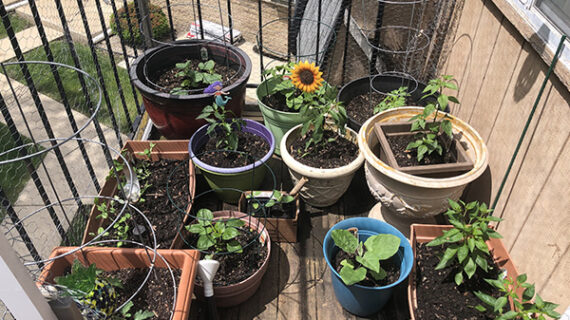
We have a lot of urban gardening going on. And so one that you can support local food is to make sure that there's space for urban gardening. So those community gardens and supporting community gardens and make sure zoning protects those community gardens. Be involved in a community garden.
If you know how to garden, there is somebody waiting to learn from you. So, really, supporting gardening is important. Buy from local processors. So this is my son.
He lives in India, and he and his family have started a local coffee roasting business. They grow coffee in India, and the majority of beans were being exported out and coming back as Nescafe dried frozen coffee, the instant coffee. And they've got these wonderful beans there, and so they're trying to have their community start buying local. So he's a local roaster.
They roast in small batches, as you can see. That's the coffee roasting. And it's a young family starting out. And so you can support the food processors that are also using local food.
You can support learning how to do food processing. So I went there last year to meet by beautiful granddaughter that you saw earlier, and to be the worker bee within the roasting business. My job was to put labels on the bags. A job that, I might add, I didn't not do successfully for three days.
So it does take a certain skill set and a lot of practice to be involved in these small steps in local business. And so support a local processor. Ask questions. Are you buying from local farmers?
Where are you getting your packaging from? What about the design on your packages, is that a local artist? There's all kinds of ways we can support the local economy with the things that we do. So Dave Peterson, the farmer that you saw earlier with the long beard, this is what you get in one box of Dave's CSA.
That's one week's worth. This is what we envision when we envision food, right? This is what we envision when we want our children to know about food. This isn't the way we're eating now for the majority of Americans, but this is what we're moving towards.
So when you support a CSA farmer, not only do you get this great birthday package every week, like what's in the package, and I remember years ago when we started CSA we didn't know seasonality of food. And so we were kind of waiting for the tomatoes and then waiting for the tomatoes and then waiting for the tomatoes. And in spring, it's greens, greens, greens. So all of the sudden, people are picking up their box going, do you want my greens?
I don't want them. Do you want them? I'll take your carrots if you give me your greens. You know, we're kind of doing the whole bartering going on because we got so tired of greens.
In the Fall, there's this crazy looking vegetable called celeriac. I think it came from outer space because it looks that way. It's knobby, round, very distorted. It's just this odd looking, crunchy kind of vegetable.
It has a little hint of celery. We really didn't know what to do with it, so we kept it in the crisper for a long time. And it just never spoils. So when you're done with the squash and you're done with all the other things that you love, the celeriac is still waiting for you.
So we decided we'll peel it. We'll put it in coleslaw. It tasted delicious. We're putting it in all these raw salads.
We're having a really good time. And then I met somebody at a conference, and we were talking about eating locally and what's in produce and we were talking about celeriac. And she said, "You know, I just want to find something to do with it besides cooking it." And I said, "You can cook it?"
LAUGHTER
we're eating is this
I said, "We've only been eating it raw." She said, "You can eat it raw?"
LAUGHTER
we're eating is this
Here's this amazing exchange of information about celeriac. And now, because we've been exposed to it so many times, and it takes between 15 and 20 exposures even as an adult before you can decide whether you really like or reject a new food, we love celeriac now. It's taken a lot of exposure of celeriac, but we love it now. So that's a celebration.
This is a farmers' market, farm stand. This is in India, and where my son was living before in the city. In fact, where he still lives now. In the morning you hear vendors calling out what they're selling.
And so there's a bicycle on the front of this, this very nice cart. You have a little shelf underneath the wheels. You can see where they have extra storage. And they just bike through the neighborhoods, and they sell.
Okay? So it's accessible, right? So it's accessible. So you can have zoning laws that have food carts that can actually go around into the city and get to places where people can't drive.
They might be homebound or neighbor bound for a whole host of reasons. You have small kids. You're not going to be taking them on the bus, it's too hard, and the vegetables come there. And can you imagine instead of the ice cream truck, when this person comes and the kids are running out for their favorite vegetable?
You know how great that would be? So we're really fortunate in that farmers' markets have become more popular and they are more accessible and we can support them. And we want to do a celebration dance. Farmers' markets are increasing, and absolutely that's a great trend, right?
That's a great trend. So we want to keep this going. You see between 2000 and 2014, it didn't rise by much. We can change that.
We can change that this year, right? This is the Wausau market. Very vibrant. And one of the great functions of the Wausau market is helping us understand cultures.
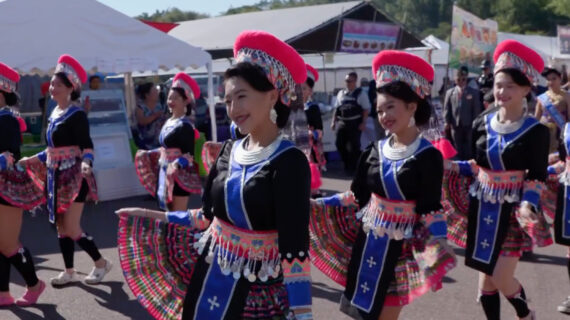
Wausau has a big influx of the Hmong population who came as refugees. And the Hmong come from an agrarian culture. They were farmers back in their land. And so they are always looking for some garden space so that they can grow their food.
And yes, all of those beautiful flowers do come from their land, and all of those vegetables do come from their land. They're just such repositories of agricultural knowledge. It's amazing. But we didn't understand Hmong farmers.
And so food became the vehicle for us to learn about each other. So now we have Hmong grocery stores, now we have Hmong restaurants, and now we're eating all of the varieties of vegetables that they grow that have been adapted to our soil. So we're switching our DNA, right? We're becoming altogether a new kind of modified community because we have this together.
It's the same in most farmers' markets. It serves the local community, serves, strengthens the community. We have celebrations with food. When you cook that food and get the recipes, that's bleeding into and being celebrated into our schools.
So a place of very vibrant local food efforts is Farm to School. Farm to School started grassroots trying to connect kids back into where their food comes from, bringing farmers into the classroom, bringing more local food into the schools. That institutional buying, buying food on that capacity can really keep farmers in business. But for me, the most important is the taste for our children.
I'm guessing that if I gave you something that you ate in your childhood, you'd be closing your eyes and you'd be transported back into that place, and you'd be thinking of that food memory, right? What we want to do is give children food memories. We want to have them have a sophisticated palate so that they can appreciate the vegetables without ranch dressing, fruit without whipped dip, right? We want them to know the varieties, that bio diversity of carrots, potatoes, celeriac.
Right? That's what we want. We want the palate, and we need repeated exposures. We need that 20 exposures for children.
So at home, at the farmers' market, in the restaurants, in the schools, we want to surround them with a type of food environment and food culture that will fulfill those things that you want them to know. And so school is a great place for that. So this is in Oregon, actually, and they grow a lot of kale there. And you can see that it's used in the schools.
In fact, when I was in Portland for a conference and I was just relating the story, there was a farmer at a farm stand who only sold kale. Only sold kale. And in Wisconsin, that's pretty wild because kale is kind of new for us as the new cool food. Kale chips transforms a lot of people's ideas about kale, right?
Who knew that you could actually cook kale and bake it like a chip? It's very tasty. Even my dad eats it, which is surprising, if you can get my dad to eat kale. And so they're incorporating kale into the schools.
This is what we want school lunch to be like. This is actually a school lunch tray in Vermont, and it's including local food. And another part of Farm to School is having school gardens and bringing classes into the garden for their science lesson, their math lessons, and agricultural lessons. And so it's a big vibrant part, and we can support that in our schools.
And one way that I would encourage you to support Farm to School is to make sure that in the schools the farmers are actually coming there. That they're actually using your local food. Okay? It's a big distribution challenge, and so if we don't work on that as a community to get those farmers in that distribution chain, we'll have Farm to School, but it won't be your farmers.
It will be farmers far away. So a simple step that you can do is visit your school and see if they have Farm to School, one, see if farmers are actually involved with that, and if not, if you can help bridge that, and then see what kind of local foods that they do incorporate in your school. And those are some easy questions to ask. Very innovative that we learned from the Madison School District and that's now been very successful in our schools is a local food fund raiser within the school.
So you know how they have magazine sales and pizza sales and candy sales and everything else? We have a sale like that that's in our schools and the children promote local food. Right? So you can get honey.
You can get a gift certificate. You can get a bag of carrots. You can get all kinds of local foods. The children learn about local foods.
They get to meet the farmers that are involved with that. Families eat well. People are happy to get those as a gift. It's really a winning situation, and it started in your Dane County schools.
Very innovative and it's been spreading and every year another school wants to do this, so it's been a really successful way to introduce local. Another innovative step that's been happening is mobile produce markets. So taking the Indian version but enclosing it in a vehicle within Wisconsin. And we have a mobile mart, and that's going into neighborhoods that wouldn't necessarily have a farmers' market.
So it might be that the growing season is shorter. It might be transportation might be an issue. They could be living in a neighborhood that doesn't have a very good grocery store. And so the mobile mart goes there.
And you can support the mobile mart. And if you know that that's in your area, find out how stable their funding is, see if there's some community resources, make sure that you know people can access that and support that. So I'm going to talk just a few minutes now at the end about our local community group called Farmshed because I think one of the most important parts about local food is that you start somewhere. Okay?
Start somewhere. So myself and two other colleagues started Farmshed. It was a conversation that we had about noticing that there was a lot of conversation and activity about local foods, but there wasn't a way to connect people to the local food. And so we started meeting every Friday morning at seven o'clock in some restaurant, just gathering people to talk about local food.
So it was a one-hour meeting so people could get to work. Kids were on the school bus. So people could gather, could talk about whatever you wanted to, and when somebody had a great idea, we used the puppy principle and said go for it. It's your puppy.
Take care of your puppy. We support you. They found volunteers, and they started doing activities. Right?
And it grew. So we had, somebody had a puppy called a farmer tribute dinner where every fall we started a dinner where we would celebrate local farmers, we would have local food, and it was a gathering place. We had somebody who decided that they were going to go around the farmers' market at the end of the day and see if farmers would donate the produce they didn't sell and take that over to the local food pantry. We had the Fresh Farm Atlas, similar to what you have here.
Every region does their own, and so we decided to start ours. And that was a local puppy that we had. So we had local puppies and it grew and it grew and it grew. And everybody could take an activity that they were interested in, one-time volunteer, few weeks volunteer, few months volunteer, come and celebrate, come and do some work, come and meet new people, and it just grew organically, like all really good grassroots movements.
Right? So we have Farmshed. And so you can see around the wheel that we're really concerned about a lot of different aspects within our food supply. This is our new atlas that just got unveiled last week, and we're so excited.
The first atlas was like a newspaper. You folded it out, and it had 24 farmers. And it was so hard to find the farmers because farmers don't go around advertising themselves. They're busy growing food, and so it took a little bit of work to find who these farmers are.
So when you see a Farm Fresh Atlas, and we have atlases now that cover every region within Wisconsin, when you see that, that's your direction to go find a local farmer to find a business that also supports local food and to know what's being grown in your area, including seasonality. So there's usually a seasonality chart so you can introduce people to seasonal eating and you won't be as surprised as I was and my family with the CSA. We have local food that we can serve in a number of celebrations. So I mentioned the farmer tribute dinner.
This is the baked potato bar. So you can say next time, in January, you want to be up in central Wisconsin coming over to our area for the potato bar. And this is another organic movement. At this free potato bar, we started inviting farmers to come and talk about their farms.
So they could do a little bit of selling, if they had produce that was leftover. You can see a rabbit, we have a new rabbit farm in our area. So they're selling rabbit and lamb. And one thing that I learned in this conversation is this family is from central Wisconsin, moved to the west coast, he was involved in the music industry, and so he was spending a lot of time, full days and then into the evening because he had to go to concerts, and then they started this family.
It's like I don't want to do this anymore. I want to move back home. So, what to do when you move back home? You become an entrepreneur.
So now we have a new rabbit farm. And a new young farmer. And another generation of a farmer. Right?
There's a lot of rabbit jokes in their family, by the way.
LAUGHTER
we're eating is this
This is Tony Schultz. He owns Stoney Acre Farms, that first beautiful farm. Tony Schultz is involved in a lot of activity at the economic level and the state level to really support farmers and legislation and policy that supports farmers. He's also good at mentoring new farmers.
He's really innovative. He takes advantage of the different types of programs that he has. They're a grass farmer. Primarily, they have grass-fed beef and pigs.
And then they also have vegetables. So they're CSA farmers, and they also take interns. So they're really good with training young people in the summertime and getting them acquainted. You hate to start a farm from scratch without experience.
So most young farmers need a place to get some experience, and so their family is welcoming those interns, which is really innovative. This is Joel Kuehnhold. Joel also owns a farm, but Joel teaches ag in the Wisconsin Rapids school system. Okay?
So one way you can support local is to make sure that ag is taught in your schools and family consumer science is taught in your schools, and keep that farm knowledge passed on. Joel is really supportive of young people getting into farming. More community across generations that are involved. Students.
We have a student organization that was also here talking about how they want to support the environment and food. And they're getting really active. Another farmer that is a vet. A new farmer who's a vet.
And we've grown so much that we needed a place. We couldn't meet at the restaurants forever. And so we bought an abandoned greenhouse, and we're fixing it up. And it's right downtown in Stevens Point.
So if you're in Stevens Point, please stop by. We just replaced the glass and the roof on the greenhouse, so we're pretty excited about it. But it's really scary. We're a bunch of volunteers, we're nonprofit, we're take a puppy and run with it, and now we have to have a board and we have to have somebody that's at least managing that and they need one support staff.
And so now we have to think about how we're going to support this food movement and food education so that we can do more things. And so now we're growing into that next step. It just grew by itself. And every step of it is a little bit scary.
But the great thing is we're all doing it together, and we're doing it for such good reasons. Right? We're doing it for the future. We're doing it for ourselves.
We're celebrating the history. This is the rest of my younger grandchildren, and every year we get together and we do cookie baking. The mixer that you see on the side is from my mother when she had a catering business. So we're celebrating that heritage.
The best thing is when somebody spills the sprinkles all over the floor because that's kind of wild and the animals are really happy with it and there's all kinds of things. And my grandchildren know how that mixer runs. And all the aunts and uncles get together and we all do cookies together. And it's just this great family celebration, and it's your favorite cookie that you have from the past and we'll try some new ones.
Every once in a while we get a little bit more sophisticated with the decorating. Decrease the number of things on a cookie or how high can you stack the cookie, all of these things. We use a gingerbread recipe that my mom had when we were young. So we've kept that same recipe going with a little bit of adaptation for a new taste and love of ginger.
So there's just a lot of celebration going on, and that's why we're moving forward with local food. I do have a book. It's called Eat Local. And the book was created because people would ask me how to get started with eating local.
And my daughter, who's sitting in the front row, gave me some really good advice. She's saying people get really confused because they feel like you have to do it all at once. I have to be in the school, go to the farmers' market, belong to a CSA. I have to do gardening at home, and then I have to make sure that I tour all the farmers in the farmers atlas to make sure that they're all supported.
Do all of these crazy things. And so it was just really good advice because people are confused about where to start. So where to start is to start anywhere. Right?
Start anywhere. And by being here, you have a really good start, and I'm just so happy that you're here and that you're able to support local food. I support you and your efforts. I'll give you my email address so if you would like a handout that says 50 Steps With Local Food, it's some suggestions about local food, please email me and I'd be happy to send that to you.
You can have it electronically so we can save some paper. And also if you have any questions, I'd be happy to chat with you online, and we can talk about those questions. And thank you. Thank you for being here and supporting local food.
APPLAUSE
Search University Place Episodes
Related Stories from PBS Wisconsin's Blog




Donate to sign up. Activate and sign in to Passport. It's that easy to help PBS Wisconsin serve your community through media that educates, inspires, and entertains.
Make your membership gift today
Only for new users: Activate Passport using your code or email address
Already a member?
Look up my account
Need some help? Go to FAQ or visit PBS Passport Help
Need help accessing PBS Wisconsin anywhere?

Online Access | Platform & Device Access | Cable or Satellite Access | Over-The-Air Access
Visit Access Guide
Need help accessing PBS Wisconsin anywhere?
Visit Our
Live TV Access Guide
Online AccessPlatform & Device Access
Cable or Satellite Access
Over-The-Air Access
Visit Access Guide




Follow Us