

 Passport




School Security and Crisis Preparedness
05/21/13 | 1h 18m 49s | Rating: TV-G
David Perrodin, Director, Student Services, DeForest Area School District, discusses the history of school violence, the three pillars of school security, and effective approaches to school crisis preparedness. Perrodin shares findings from his research into active shooting situations and recommends ways to lessen the chances of a violent attack on a school.


Copy and Paste the Following Code to Embed this Video:
School Security and Crisis Preparedness
cc Welcome, everyone, to Wednesday Nite at the Lab. I'm Tom Zinnen. I work here at the UW Madison Biotechnology Center. I also work for UW Extension Cooperative Extension, and on behalf of those folks and our other organizers, Wisconsin Public Television, the Wisconsin Alumni Association, and the UW Madison Science Alliance, thanks for coming to Wednesday Nite at the Lab.
We do this every Wednesday night, 50 times a year. Tonight it's my pleasure to introduce to you David Perrodin. He is the Director of Student Services for the DeForest Area School District in DeForest, Wisconsin, where he oversees special education, counseling, nursing, social work services, and crisis preparedness and response for the district's 3,500 students. David is also a faculty member with Viterbo University's Educational Leadership, Special Education and Reading programs.
In addition, David has guest lectured to graduate students here at the UW Madison on the topic of school crisis preparedness exercises. David is completing his PhD degree in Educational Leadership and Policy Analysis here at UW Madison, and his research embarks upon the study of geographic information systems and social vulnerability indexes relative to external crisis preparedness in the school setting. David has received state and national recognitions, including the national Sprigeo Award for Excellence in Social Change and the Sauk County Student Services Director of the Year Award. He has been interviewed for his expertise in bullying, school connectedness and crisis preparation and has been sought after to serve as an expert witness in legal cases involving student behavior, harassment, and bullying.
David co-founded the Great Lakes School-Based Behavior Solutions Summit, which quickly established itself as one of the most prominent behavior, mental health, and sensory professional development events here in the Midwest. In addition, David authored many published articles relative to the management of student services in schools. Plus, he publishes a weekly school safety blog and regularly consults and presents to schools across Wisconsin. Every now and then, we get to hear how social sciences interact with public policy.
It's one of the great things, for me at least, about Wednesday Nite at the Lab is the range of topics we get to cover. It's a delight for me to be able to welcome David Perrodin to Wednesday Nite at the Lab.
APPLAUSE
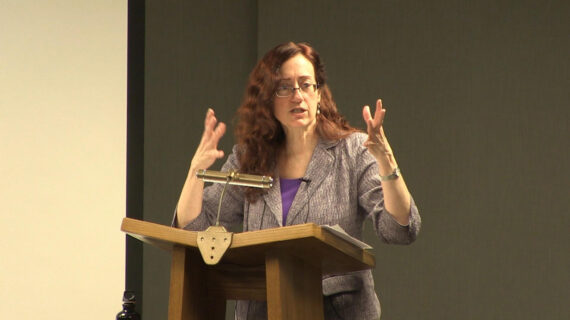
I appreciate the introduction, Tom. I want to thank Wednesday Nite at the Lab for providing me with this incredible opportunity to present about school safety, and I also want to thank the outstanding faculty of the Educational Leadership and Policy Analysis program here at the University of Wisconsin Madison. Completely extraordinary individuals who have enriched my life significantly. So, thank you to the UW ELPA program.
So, tonight's presentation is going to address school security crisis preparedness and known information about active shooter situations. This is work that I've done for a number of years, mostly in the school setting but also in medical settings. So, tonight I'm going to discuss the history of attacks on K-12 schools, school statistics, crisis preparedness and response, the three perspectives of school safety, school connectedness and what is known about active shooter situations, and then some recommendations for school safety. So I think it's important when we talk about attacks on schools to not get lost in the fact that there have been significant events that have caused fatalities in schools that have not been related to weapons.
For example, in 1908 the Collinwood School fire right outside of Cleveland, Ohio, where 172 students died. In 1925, the tri-state tornado in the Midwest resulted in 69 students deaths. Particularly relevant with what has happened just recently in Oklahoma. 1937 in New London, Texas, there was a natural gas explosion in a school.
Three hundred students died, and that's estimated because it was a very transient population and they never had a final count on the student fatalities. This is kind of the most significant, I guess, hallmark event when it comes to school fires, and that was the Our Lady of the Angels School fire in Chicago back in 1958, right at the end of the day, and 92 students perished. We have not had a school fatality related to a fire since. Google Ngram, so Google Ngram is an interesting way to look at what is showing up in contemporary literature as far as words and certain phrases.
So you can go in and access a Google Ngram. Just type it in Google, and I'm sure you'll find it. I looked from 1890 to 2008 and did a search for the following
terms
fire drill, tornado drill, lockdown drill, and then school shooting. So we'll see that the blue line represents fire drill. And we do have a spike right around 1920 to 1940, generally, where the term fire drill was showing up in published works higher than other previous times, times post that. So we asked, why would that be?
Well, it would be because we still had wood structures at that point, and we still had school fires and we know that our last fatality was in 1958. But we still had school fires. A lot of schools made of wood, and modern schools after 1970, virtually fire-proof since that time. So we can see how that kind of spiked.
And then I'm going to take us down here to the word tornado drill. So it's right toward the bottom on the right-hand side. So the word tornado drill was really pretty insignificant as far as a Google Ngram for a number of years, and then it just got a little bit above the baseline here in the last 20 years but still not much. We had some pretty significant tornadoes during that span, including Joplin, Missouri.
It will be interesting to see what happens with the recent tornado and tornado deaths in Oklahoma, if that creates a little bit of a jump. But you really don't get much as far as publication exposure for tornado drills. And one of the things I think relates to that is you can believe that you have some control possibly over an active shooter/intruder situation. You really have no control over the external forces of weather, so it just doesn't make it.
We look at, in orange, and we have lockdown. From about 1965 up until 2008, we can see that lockdown suddenly takes this huge swing up. Now, we know lockdown is related to terms that are used in the prison and incarceration system, but also schools using the term much more. So we know that in the last, really about the last 20 years, the term lockdown is being used much more prevalently in published works.
That kind of tells us where things are going as a society a little bit. Let's look at school shooting. The green line merges right here with the X axis all the way across until about 1990. Not a lot of school shooting publications, the term school shooting in publications.
Then all the sudden, about 1990, we kind of look at the spike that started here, and then some of the school shootings, for example Columbine went down a little here, but we also see this trend line going up. So lockdown and school shooting are more of the contemporary things of the day. We do see an evolution kind of in school disaster or what involves attacks on schools, school deaths. History of attacks on schools, so this was a big one.
It made Facebook and Twitter back in 1764.
LAUGHTER
terms
But Franklin County, British North America, current day Pennsylvania, four Lenape Indians entered a schoolhouse near present-day Greencastle, Pennsylvania, shot and killed the schoolmaster, Enoch Brown, killed nine or 10 children, reports vary. It's important to look at this and recognize that school violence, attacks on schools, is nothing new as far as the phenomenon. It comes right back to the roots of the founding of this country. There are approximately about a hundred school shootings.
Now, there are different ways to define school shooting. What I'm looking at, I'm defining where there was an attempt to inflict mass casualty. I'm not specifically looking at if a student specifically targeted one individual, another student or staff member, and killed that person. I'm looking more an attempt at mass casualty.
So we've had about a hundred mass casualty attempts in the United States, and today I will cover just a handful of those, maybe about six or seven, just to give you a kind of flavor of the range of what that looked like. In Bath, Michigan, May 18, 1927, Andrew Kehoe was the school treasurer, and he detonated a bomb in the building that you see right here, destroyed a significant portion of it. Thirty-eight elementary school children and six adults were killed, 58 other people injured. He had enough explosives to completely destroy the entire building, not all of them detonated so the fatalities would have been much higher, then actually detonated his own vehicle, which was a truck, and killed himself.
The pictures of the aftermath of this are pretty gruesome, so I'm only showing the picture prior. So we look at a bombing of a school, which is very rare, a bombing of a school doesn't occur a lot. Although, there were, for example, attempts at Columbine to detonate some bombs. Jonesboro, Arkansas, this one's important because this is a different type of school shooting.
So March 24, 1998, two students from West Side Middle School, they pulled the fire alarm, waited outside with rifles, and as students exited, they were firing upon students. They killed four students and an adult and injured 10 people. So it's important when we look at this, there's a reaction to fortify a school environment and make everything completely locked down and safe, but in the instance of a plan like this where a student pulls a fire drill, if anyone pulled a fire drill in this building right now, we would exit. So it is one of those things that, how staff and how students are trained, this was actually used against them in this scenario.
Columbine, Colorado, April 20, 1999, really recognized, I think, as one of the hallmark school shooting events. Eric Harris and Dylan Klebold killed 12 students and a teacher, wounded 21 others before committing suicide at Columbine. I'm going to talk a little bit about Eric and Dylan. Both very bright students.
Had aspirations to participate in a post-secondary and possibly engineering degrees, maybe computer science. Eric and Dylan held part-time jobs, Blackjack Pizza. They were very reliable. Their boss would put them into positions where they could close the pizza place.
They would show up at school events. Their written works were pretty extraordinary. So, very bright, intelligent young men who then assembled this plan for this attack over several months. To show just how dark and calculated that was, they went and they met with their boss at Blackjack Pizza just a few days prior to the shooting, asked for an advance on their paycheck, and they used that advance to buy another shotgun that Dylan brought with him to Columbine.
After Columbine, many school safety companies throughout the country began to flood Columbine High School with free items, and one of the items that was sent there was a full set of metal detectors. What the district did is they took the metal detectors and they immediately stored them. They never took them out of the box. They have not been used yet today.
The reason for that is that they believe they would have done nothing to prevent this attack and also that that wasn't their school culture to have metal detectors. So, we do see, again, this reaction immediately after a school shooting that goes to fortifying the environment. I'll talk a little bit about how that's one of three legs in school safety, fortifying the environment, but there are two other important legs to that stool. This is the most deadly attack on a school.
Beslan, North Ossetia in the Russian Federation, September 1, 2004. Pro-Chechen rebels took more than 1100 schoolchildren hostage. At least 386 people killed, many children. The count isn't final on that, but again, the deadliest school attack in the world.
So school attacks happen across the world. We do have a higher prevalence in the United States, but as far as school attacks, we do see them happen across the world. Marinette, Wisconsin, November 29, 2010. This is one that I assume a lot of people in the room do remember.
Samuel Hengel, 15, took 23 students and a teacher hostage. He burst into the room, it was early afternoon, fired some shots, there was a movie that was playing, and then he basically held the classroom hostage. This broke the mold a little bit in regard to a few things. One is most school shootings are in the morning.
So this was an afternoon school shooting, and when I talk about this, the only fatality in this actually was Samuel, but the potential was that he could have killed many people in that room. One-third of school shootings, or one-third of school attackers are either subdued physically or verbally by school staff or students. In this case, Valerie Burd, who was the teacher in the classroom, did an exceptional job of verbally keeping Samuel engaged and calm, along with his classmates, which I believe had a substantial role in that he eventually did release the hostages. Unfortunately, he did then turn the weapon on himself.
But, again, this was Marinette, Wisconsin. Let's look a little bit at Samuel. So, Samuel Hengel, when you look at him and I look at him, I don't see someone who I think was going to bring a duffel bag of weapons to school and take a classroom hostage. Valerie Burd, his teacher, stated that he was an excellent student and had many friends in class.
"Hengel was a hardworking, trustworthy Boy Scout who volunteered for community service projects and had plenty of friends, a strong family, and respect for adults who knew him." And that was from his assistant Scout master. So, when we look at, and we'll talk later, when we look at trying to understand and profile a student who might attack a school, it's not really a feat that can bee accomplished. Newtown, Connecticut. Newtown, Connecticut, was different in one regard.
We had not seen an attack on students that young before. There's something a little more, or I should say a little less gut turning when a shooting happens in a middle school or high school versus and elementary for the one fact that middle school or high school students have some capacity to defend themselves. In this case, there was no capacity for first grade students in this situation to defend themselves. We also have not seen a pattern of school attacks where school shooters are shooting through locked entrances.
So, Newtown did everything right by the book. They had their drills, their facility was locked, but when you show up with mass ammunition and unload on glass, you'll be able to get through and into a building. So, this is, again, a significant tragedy and one that really made the country raw because of the young age of the victims. It was interesting because after this there was an anticipation that we would see a flurry of activity regarding funding for school security measures, and there's a little bit of a standoff between the US Department of Ed on that and also Homeland Security of who's going to step up and kind of promote that.
So right now we are five months plus kind of past this event, and we still haven't seen any type of real movement on legislative action for support for schools in that regard. Same day as the shooting at Sandy Hook there was a stabbing in Chenpeng, China. So the assailant is up here. They do have video of him coming through the entrance, and he has a knife.
He stabbed 24 people, including 23 children. No fatalities. So I don't want to make this discussion about weapons, guns versus knives, but obviously the more access to lethal force that you have plus rounds plus close proximity will result in higher fatality. So, we can look at an incident that happened with a gun and an incident that happened with a knife.
So, if that wasn't kind of depressing enough, I'm going to get us back on track here and just say things aren't as bad as what they seem. Not at all. Fifty-three million students attend public or private school each and every day in the United States. The likelihood of a school shooting in any one school is once every 13,870 years.
So it's very rare that any single school would experience a school shooting. The likelihood of a homicide or a suicide of a student in a school is one in a million. So you have better odds of being hit by lightning, which is one in 700,000. So, again, schools are a safe place.
Let's look at this slide. When we have significant events, they capture, particularly now, a large amount of media attention. So trends in school associated violent deaths from 1992 to 2010. This is from the Centers of Disease Control.
Over here in the red, this is the 1990s, and in the 1990s we were averaging roughly in the 30s, right here, for school homicides. So, in the 30s. We get over here in the 2000s and what happens? Everyone thinks it's getting worse.
Every year's worse, every year's worse. Well, not really. Absolutely not at all. In the 2000s we saw the trend line drop.
So now the trend line is more in the 20s for fatalities, or homicides I should say, in school. So, statistically the numbers were improving, and Sandy Hook will change that for one year, but things were much more violent in schools as far as resulting in homicides in the '90s than in the 2000s, which people wouldn't think. That's kind of counterintuitive. So let's talk a little bit about school safety drills.
So, we've had fire drills for over a hundred years, since about 1900. We haven't had a fire related death in 50 years. Although, most states require between six and eight fire drills a year. And that's more than they require, for example, intruder/active shooter drills, tornado drills.
So we have an evolution in our facilities where we don't experience fires anymore but yet we're still having the same frequency and level of drills that we had a hundred years ago when we had wood structures. So we're kind of slow to evolve in that regard. Tornado drills, earthquake drills, tsunami drills, and intruder and lockdown drills are actually relatively new. There were schools across the United States that didn't do any until after Sandy Hook.
That's when they did their first intruder and lockdown drills. So that's a new phenomena for school districts is to take that on. Part of that would be political. It's hard to get a community and parents to buy into that until you have a significant media kind of thunder behind you on that.
Homeland Security offers a course, it's called IS907. You could Google it. It'll come up. You could take it for free.
Actually, it's a very good course. It will take you about an hour. Get a certificate at the end, which is a good thing, but it's
Active Shooter
What You Can Do. It's very well developed. There's really three parts of what you can do in an active shooter situation. And again, I'm taking this from a school perspective.
You can evacuate, you can hide out, which kind of has the term lockdown in a school, or you can take action. Now, the bottom one brings a lot of controversy across the United States because are you going to tell a kindergarten teacher that if an intruder ever comes into your room and you don't have a way to exit and your life is at risk, you and the kids should fight back? I can't imagine that conversation really happening, but that's where we're at right now. It's called really kind of a code black or kind of an all-out response of either evacuate, hide out, or take action.
And it's very controversial. I'm going to tell you a little bit about one of the shootings that kind of sparked the need to take action. In 2007, Seung-Hui Cho attacked Virginia Tech. You're aware of the Virginia Tech shooting.
So, Cho, there was a father and son who witnessed Cho prior to the shooting practicing with his weapons. So he had many weapons, but he had two Glock pistols which are pretty easy weapons to use. He was watching this father and his son on how they were discharging and using their weapons. He was kind of learning from them.
So, if this was a shooting range, you would have your target down range and you would be aiming at it down range. But what Cho did and what the father and son had observed is he brought targets, but he didn't put his targets down range. What he did is he put his targets on the ground because he knew that in the first breached classroom, the likelihood that everybody would just freeze or hide was very high, which is almost what always happens in an active shooter situation, the first breached area. So instead of down range, he was practicing shooting just like this, which is exactly how he killed almost everybody in the first room at Norris Hall.
I did have an opportunity to work with the Virginia Tech police, and I can tell you that was an incredibly, incredibly chilling event. One of the points that I'll never forget from that discussion with them was after the event had concluded and then they were coming back into that room and all there were bodies, the one sound that they said they will never forget is the sound of cell phones ringing nonstop. People trying to call. And they just said they'll never get over that.
Never get over that. So, I surveyed 32 principals from four districts in Wisconsin. I did it last month. And these 32 principals responded.
The question I asked them was
my school feels that it is acceptable for staff or students to decide to fight back if an individual with a weapon attempts to harm them. So let's look at how those principals responded. Six said yes. We've told staff and students they can fight back.
Nine said no. Seventeen said I don't know. I don't know what we're telling people in this case. This is important and nobody really has this figured out.
It's extremely hard. I struggle with this too even in our district because this is a very sensitive topic if you're ever going to bring this up, not only with students and staff but parents. But, again, we know that if you're in a situation, per the research that's been done on active shooter situations, that first breached environment, people typically freeze and become victims. It's after that that everyone is barricading doors and holding doors shut and doing everything that they can.
School safety legislation. School safety has a lot of unfunded mandates. There really has been not much money shifted toward this at all. Some legislative pieces, which had very little in regard to teeth, Safe and Drug Free Schools Act, Gun Free Schools Act, No Child Left Behind, and then things changed in 2009.
So, in 2009, in Wisconsin, Act 309 came about. It affects public and private schools. It mandates that schools have practices to prohibit bullying, that's part one, but the second part was that schools have to update or implement school safety plans by spring of 2013, right now. And they have to do those and they have to document they've involved police, fire, EMS, and actually also mental health, some type of mental health provider.
This has really brought, I think, everybody kind of onto the same level, at least in Wisconsin, to have to comply with Act 309. Was there funding to go with this? No. There wasn't a dollar that went behind this, but what is also driving this, I think, is a real risk of litigation.
And I say that because Wisconsin Act 309 that has the first part to prohibit bullying has already sparked litigation around the state against schools and staff with plaintiffs saying that you didn't do enough, for example, to protect my son or daughter from bullying. So the thought is that this other part of Act 309 could also have some type of liability as far as schools possibly being sued. Not that that should drive things, but sometimes that is the force when dollars aren't behind it. So the question comes up of, you know what, we should get a lot of people together and we should find out what's happening in schools and we should get input from the professionals, from administrators, and take this input, get all this input from around the country and then get together and talk about it.
The fact is that's already happened, but no one really hears about it. This is buried pretty well. Even on the Internet to find this and to find the corresponding documents to go with it was quite a feat. Between 2000 and 2007, the National Threat Assessment Center, in combination with the Secret Service, held 339 listening sessions regarding school safety.
Not only listening but then also presentation combination listening sessions. Ten were held in Wisconsin. But you can tell every state and then they also held some international ones. 77,000 people participated, including educators, school administrators, school resource officers, other law enforcement, community representatives.
77,000 people were engaged in giving their expertise and thoughts and input regarding school safety. So we had in every state multiple instances where this was happening. 2007 there was a congressional hearing. There was an 89-page testimonial document that came out of that, which is fascinating to read.
If you ever read it, it reads more like a story than a black and white report in numbers. So, it does, I think, give a much more complete context of school safety when you read it in that format. Some of the most incredible experts on school safety did present to congress in 2007, including Kenneth Trump. Kenneth Trump is the all-star person when it really comes to school safety.
He's incredible. A very brilliant man. He was able to look at what was coming out of all of these sessions and kind of do a synopsis of it and really boil it down into saying here's what everybody is saying and here's what we could do about it. But, again, that never really went anywhere.
So, how many people heard about this after Sandy Hook? Nobody. This never made the news anywhere. We also have an issue of data reporting inconsistencies in schools.
So, if I'm a principal and a student is violent with another student, I might decide to handle that on my own, or I might decide to involve the police and that student gets a disorderly conduct. The difference is the disorderly conduct can be tracked. If I'm handling it on my own, that doesn't go into any type of database. So we really have a data reporting of what happens in schools regarding school safety and aggression, violence, things like that, it's not standard.
It's very interpretative by building to building, principal to principal. The data needs to be straightened out into some format that makes sense across schools. Again, that report you can find if you spend a lot of time.
I have it on my website
CrisisPrepConsulting.com. You can download it from there. It's worth a read because it's really an eye-opener that we had all this information six years ago. It's kind of uneasy to be showing this slide in a university setting, but after Hurricane Katrina, some University of Colorado researchers surveyed faculty.
There was a fairly large N number, a fairly large sample they were looking at here. And the question they were
asking
were faculty aware of the disaster preparedness plans at their university? Not one said they were. Not one. How does that happen?
Someone's got to say yes just because they want to be the one person that says yes, I guess. I can say in my work also with post-secondary institutions, post-secondary institutions do not have this down nearly to the level K-12 do as far as drills and flip charts and table activities. Absolutely not. There's a false sense of security, but at the same time, how in the world are you going to get a high level security across a campus of 42,000 like Madison or 50,000 like Minnesota?
But what you should have is, I think definitely, more awareness across the universities in the country. And this was a startling research project to come out because it was a mess for the universities in the south during Hurricane Katrina. The evacuations were very haphazard at best. It was really a frenetic kind of display.
I think the question we could ask ourselves right now is if something happened right now, whether it be there was a tornado warning, what would we do right here, right now? I don't think any of us would have the answer readily available to us on that. Fire exits are marked, but we wouldn't have the answer for those other things. So, schools cannot be uni-dimensional.
What do we hear right now? Well, we hear about school shootings and intruders. But schools have to prepare for everything, which is hard.
Examples
fire, weather, toxic spills, civil unrest not as likely, bombs, terrorism is growing, the threat of terrorism. Not too long ago one of the Secret Service had uncovered a plot to purchase school buses and then use them against a school in a terrorism attack. Intruders and armed attackers also becoming more prevalent. Probably my favorite slide of this whole presentation.
This would be an awesome name
for a country western song
Tornadoes, Binge Drinking, and Nuclear Power Plants.
LAUGHTER
for a country western song
Could you throw in a dog? I could throw in a dog. I could definitely do that. What I want to show here is this kind of gets at the heart of a lot of my work at the University of Wisconsin Madison, and that involves, we have big data systems out there.
They've always kind of been out there, but we have big data systems that we can now start to access and make sense of in a way that we never could before simply because of computers and databases. For example, 1970, if you're going to look at crime data or tornado strikes or number of ozone days in a certain location, you're doing that through sifting hundreds of thousands of pages of paper. It's impractical. So, geographic information system and social vulnerability is both represented on here.
The circles indicated social vulnerability index data. Those are areas that have higher prevalence of binge drinking. So that's social vulnerability index. You can see the nuclear power plant symbols.
Now I know Kewaunee has been deactivated, but we do have nuclear power plants right over here in Kewaunee. I wonder how often Green Bay, for example, is preparing for a nuclear disaster at Kewaunee. I'm guessing it wasn't very frequent. You can see all these little gray lines, and those are tornadoes.
I believe I set this for the last 20 years. You can overlay all these different data sets and timelines onto these maps. It's really amazing. So what I want to point out right here is you have all of these gray lines.
So you have them more in the southern part of the state. You get up here toward Marinette and Langlade County up in this area, you really don't have much for tornadoes. But you know in the bottom part of the state, you've had more tornadoes. Would it not make sense to look at data like this and say, Wisconsin's mandated to have two tornado drills a year, but if you're down here and you have this type of data, wouldn't you want to do it more than twice?
Wouldn't you want to have the data inform you and say it makes more sense down here because, not that it can't happen anywhere else, but we know it's happened more down here. We should drill more for this. So, again, you can overlay anything onto this. And the crime data stuff is amazing.
It's kind of complicated. I don't really have a full handle on that, but out in Pennsylvania they have some school districts where, more in the Pittsburgh region, where they do lockdown drills based upon what the data is for crime in that neighborhood. So if you have a more high crime neighborhood where they've had to go into situations where they've had standoffs and things like that, they drill more in those neighborhoods. So that's using social vulnerability index.
So schools will drill more for lockdown.
People forget about this
not everybody speaks English. I haven't spoke English for part of this presentation. I've stumbled around a little bit. So, the plans are developed in English, and almost exclusively.
The alerts have gotten pretty sophisticated where you can get a message on your cell phone and parents can get alerts, which is great, but, again, most of this is still designed so it communicates in English. If you look at this map of Wisconsin and you look at the tan areas, up to 20% of that population has English as a second language, if they have it at all. So you have to design systems that are going to communicate, so you're going to reach people who are also non-English speaking. We get into the four steps of crisis preparedness and response.
Anticipation, what are my threats in the internal and external environment? You plan for those. You implement your drills, your practices. And then the bottom part is reconnection and support.
What did we see after the tornado in Oklahoma when we looked on TV? We saw parents trying to get to schools that had been completely destroyed and debris all over, and you couldn't get in with roads and trying to find kids to reunify, which is the bottom part on the plan here for the four steps is to have a plan to reconnect. It is extremely hard to do that when you have such a wide perimeter as you do in Oklahoma, where you can't access, bring parents and vehicles in. The other part of that is support.
When something traumatic happens in a school regarding a crisis event, it could be a school death, because a student was hit in front of a school and killed by a vehicle, or if it was a shooter instance, or whatever it was, it doesn't take days, it takes weeks or months to work with the psychological counseling that both students and staff need. One of the things that created a lot of resentment after Columbine, if you read the book "Columbine" by Dave Cullen, which is a phenomenal insight into that tragedy. Dave Cullen was a reporter in Littleton at the time of the shooting, was one of the reporters initially covered it, and basically made that his life's work after that for the next 10 years and published this book. Had done all the research back into Eric and Dylan, and then also into the community and school culture.
But one of the things he found is that people, the students felt, and staff, that they were pushed along way to fast to try to get over the shooting. That there was an attempt to close the book on this and move on. They said we never had a chance to really heal. That was where the resentment really came from with a lot of people as saying we need time.
We need time to try to come back to whatever our new normal baseline is. So that's an important thing in planning because you can respond but there's a lot that happens after the response. Just an interesting slide. I won't say anything about it.
You can read the title. So, how many people have seen signs like this?
Notice
all visitors must get a pass at the office. That's not effective. You can go right by that. You look at physical environment.
So, whenever there's an attempt on school, school violence, school safety, people will mostly gravitate toward "fortify the environment." And we had that happen in DeForest where we had a number of emails come in, and most of the emails after Sandy Hook were about fortifying the environment. Steel doors, bulletproof glass, swipe cards, check-in areas, security guards, two-way radios, cameras. So, what's happening right now is this is becoming an area where people are trying to sell a lot of these products to schools. Here's one example.
A school district called me and they said, Dave, we have the unique opportunity to purchase almost $200,000 worth of updated cameras for our school district, and these cameras will allow police officers to log in and view the hallways in our own camera system as they're responding to an event. And they can actually have their phone, and they can look and be watching down the hallway as they're searching out if it's an intruder. And I paused and I said, really? Like, is that really going to happen?
It's not. That's so unrealistic to think that, first of all, shooter incidents, 25% are done in five minutes, almost all are done in 12 to 15 minutes. So you're talking very fast dynamic situations. And am I going to be driving, as a police officer, to the scene at 75-80 miles an hour and try to log in and watch my computer monitor and trying to get my tactical gear on, and am I going to be going down a hallway with a camera, one eye on the camera, one eye looking for an intruder.
It's ridiculous to think that in that capacity cameras will be used. Do cameras have benefit? They have benefit because they might be a deterrent for some student to student activity or bullying, violence, whatever. But cameras are largely forensic.
They're forensic tools and they're being sold as not forensic tools right now. In the Boston Marathon shooting... Bombing. Bombing, yeah.
Hopefully we don't want to have a shooting at the Boston Marathon. But in the bombing, correct, the forensic evidence came from cameras. The immediate response to the people who had been injured came from two-way radio systems, which are much more valuable in school systems and just in general in response, physical environment, than cameras. Cameras didn't prevent that from happening.
What cameras did, though, is they led to the eventual resolution of that event. Look at this. This is something that's actually sold. It's a bulletproof backpack.
Rocori School District, one month ago today this article came out, Rocori School District in Minnesota purchased several thousand dollars worth of bulletproof whiteboards. Now, a whiteboard, you have a dry-erase marker and they're in schools. They replaced chalk boards. So the thought is, he has a knife, and there's school administrator, and I'm assuming there's probably and audience that's somewhere on the other side there.
And he's going away at this thing and there was a video. This was a still that I took from it showing that you couldn't penetrate it. And this officer shared that he had shot this thing several times and it held its integrity, but that was off school grounds that he did that. So here's the plan in Rocori.
The plan is that if they do have an intruder situation that has a weapon, they're going to take these down and then use these as shields or to hide behind. Again, I think preying on fear right here for the fact that you have a dynamic situation that is going to be done in a number of minutes. Is this really going to work? But it's what happens.
It's what happens. Flagler Beach, Florida, a mother's paying an armed deputy to patrol her child's elementary school for 2012-2013 school year. The district agreed to it. What happens when that mother no longer wants to pay that deputy?
Is the school going to pick it up? So we talked about physical environment, the next leg of school safety is drills and exercises, which is equally as important. So, drill. Drill all times of the day.
This is what I tell people. I worked with a school district once and worked with drills, and they said okay, we're going to run our drill for you, but it has to be at 6th hour when everybody is in homeroom, because that's when we run our drills because we know where everybody is. That doesn't work. All times of day, all different days of the week.
Tabletop activities, I do a lot of those with districts. They're incredible to kind of do a simulation around a table of how you'd respond to different events. You can do full-scale simulations. There aren't a lot of those done.
I think you can accomplish pretty much everything with tabletops. This is our district, and we have this set up in kind of a horseshoe format. Really over here on the left-hand side a little off there would be a screen. This person is typing everything single decision that's made.
We have all of our flip charts out. Here is our police officer, police liaison, community, county police, bus company, there's other people from the community here, medical, and as we go around this whole kind of inner-horseshoe, outer-horseshoe. This tabletop activity, and I design these and I do these kind of my niche area, this one was a bomb threat. So we have a dynamic scenario that no one knows about until we come in because it doesn't pay to say we're going to have out bomb drill tabletop today because everyone will gear up and practice for it.
We come in, they don't know, we unveil it, and then every 5-10 minutes I throw something new into the mix. So one of the questions that came out of this that we learned, this went really, really well. This is a great way to kind of test your systems. Now granted, you're not going to have everybody together in a room when something happens, but once you do some of these, you can spread people out and do them that way too.
But one of the questions that came out of this is what do we do with high school students who say, hey, teacher, I'm taking my backpack with me. There's no way I'm leaving this behind. This is coming with me when we're going off-site, because of the bomb threat. Do you let it happen?
Or does it have to stay there? What do you do? That came up, so we had to work through that. Well, it had to stay behind because we don't know what's in the backpack.
In that situation, things have to stay behind. That's what you work out in these drills. You don't work them out in the moment. A couple guiding principals.
So, one is agencies need to train together. At Virginia Tech, which I talked about before, Virginia Tech had a response of police first and then EMS and fire after that. For the injured students at Norris Hall, the emergency medical services would not come up to the facility. So they staged quite a ways away again with fire, and police were the ones that were coming into the facility after the incident was done.
They were the ones coming in and they were transporting the victims out. They had a two-week-old SUV, two weeks old, and they were using this vehicle, police then were bringing out victims, people who had been injured at that point, putting them in this SUV, and then they would drive down toward where the ambulances were. So this whole thing of tactical EMS, more of a military approach of EMS being trained to come in kind of more right behind police is something that's starting to happen. It's really not there, though.
Coming back to that SUV, it was so contaminated with blood and bodily fluids, they had to destroy it as soon as it was done. There was no way to salvage it. So, two weeks old. But police really have the response on their shoulders.
There also isn't a significant level of cross-training that's happening yet. So, the first time police, fire, and EMS might see themselves all together might be when they're responding to an incident. Use plain language. Schools get into these intricate codes.
Let's do a code red. Let's do a code black. And this was the one I thought was interesting.
laughter
Notice
That's a tornado or severe weather warning in one of the schools. And they have different color codes they put in windows, and they slip different colors under doors. Keep it simple. Say what it is.
Don't get into these systems because in an emergency people aren't going to remember these. I had the opportunity to participate in inter-agency collaboration with our police department, and that's me down at the bottom. This was a training facility in Dane County. So the police department ran different simulations at this facility such as coming into the school if there was an active shooter situation and how they would confront that person.
One of the things that I learned from the police by participating in this was they have an incredible depth of training in what's called tactical communication. You can type in verbal judo in Amazon and find different books on verbal judo which is really tactical communication of the right things to say to someone who's in a highly agitated state, especially if they have a weapon too. And things that make a difference, here's an example. If you tell somebody that is attempting to maybe stab you, or has a weapon, and if you're saying calm down, calm down, what you're saying is there's something wrong with you, well there is something wrong with you at that moment, but you're putting on them.
If you say what can I do to help, now as crazy as that sounds, that changes that whole tone. We look back to Valerie Burd and the language she used, she used a lot of verbal judo approach. And again, one-third of school attackers will be either physically or verbally disarmed by school staff. Now, the thing that was most reassuring out of that training is you look down here and I still have all my hair.
LAUGHTER
Notice
It's the first shot from up above I've ever had. We looked at school safety, now we look at the importance of drills. On the top is Titanic, the bottom is Olympic, but for the same thing Britannic and Olympic have the same thing happen. So, 1912, Titanic hits an iceberg and sinks.
So they go back to the drawing board and say, here's the deal, we're going to put an inner skin on this and we're going to raise the bulkheads and stuff. But we have this blue skin so if we hit an iceberg, it won't sink. So, 1916, four years after Titanic, Britannic hits a mine and sinks. 1,514 people die on Titanic in two hours and 40 minutes.
Thirty people die on Britannic in 50 minutes. What's the difference? Procedural changes. The crew was trained in carrying out an evacuation, exits and pathways are very well marked unobstructed, they practice with the lifeboats, had a general alarm.
So your drills and procedures are just as important as your physical environment, because you'll always have something in that physical environment that will change. You can never predict what will happen tomorrow. Screenings and profiling. So, people will say just screen out the kids that are going to do this.
Get them the help they need. Screen them out. It doesn't work. It doesn't work.
Nothing out there does. Assassination attempt on President Ford, 1975, the Secret Service said that the person, the profile would be male, 20-40, slight build, overseas, suffered delusions of grandeur, loner. Who was it? Sara Jane Moore, a female in her mid-40s, stocky build, born in the US, had a son, full-time accountant, no history of delusions.
That's pretty much on the other side of the spectrum. And that's the Secret Service that came up with that, so you're saying school staff, some people are saying school staff should have this magical tool to identify the profile, just doesn't work. But you should have a threat assessment. Schools need to have threat assessments.
If someone says I'm going to kill everyone or I'm going to kill myself, you should have a process to go through. Interview the student, determine if the threat has substance, talk to the family, conduct a safety evaluation, do they have access, for example, to weapons in the home, do they have any plans, have they been writing anything, making any posts, and then implement a safety plan which might be getting them to the professionals that they need. That usually involves law enforcement or might be efforts to protect other students, too, by maybe changing some of the educational services so that child is no longer in that environment. So you have to have a threat reporting system.
Centers for Disease Control, we get into this third branch of school safety, and that's school connectedness. So we have physical environment, drills, and then schools connectedness. The CDC, in 2009, you can download this, they did a report on what's called school connectedness. And I call that strengthening the student.
Strengthen the student so they're more resistive to things such as acting in violence and gangs and drugs and alcohol. So what the CDC said is hey, we know that school connectedness practices, and we'll talk about those in a second, they can lower tobacco use, alcohol, drug use, violence and gang involvement, early sexual initiation, and statistically they can prove that. They have the different independent research studies that come in and back that in saying we work on school connectedness, we're going to have a big impact on kids and school safety. So it really is not very complicated.
It comes down to getting kids connected to kids. It gets kids connected to school. Feeling they are valued, feeling they can set goals. Goals is a big thing.
A lot of the new counseling curriculums have kids set goals, because kids cannot see beyond the moment. You start putting goals, it makes them forward-thinking. All of the new school counseling curriculums have goal-setting. They weren't there before.
There's a question, it's called Youth Risk Behavior Survey, where they asked students, is there somebody at school that you can go to if you are in need? Someone that you can confide in? About 80% of kids say yes, 20% say no. So, in a school of 1,000, 200 kids are saying I don't have anybody here I can confide in, or if I have a problem I can connect.
So that's a problem. That's where you have a pitfall in school connectedness. What we do in DeForest is we have a K-12 open sequence where we make sure we're doing school connectedness stuff at every single level. This is K-1-2 but it goes all the way through high school, and high school involves mental health professionals from the outside working with kids on coping strategies and so forth.
At the elementary level, it's things such as bucket fillers, I've done this good act so I'm going to fill the bucket. Hands, a pledge, my hands are not for hurting. Bullying intolerance units, and then also restorative discipline So if a student vandalizes a bathroom, for example, instead of saying, hey, you're outta here for five days, restorative discipline would work with that child and maybe have them interview the custodian, and say, how did this impact you when I vandalized. Well, I couldn't do my other things, and some of the kids would say we couldn't use that bathroom, we had to go to the other side of building.
So it's really this whole thing of trying to figure out what your act had as far as an impact and how you can make an attempt to right that. Very fascinating here. The teen brain. Boston's McLean University did a study, and they were looking at how kids perceive facial expressions.
And what they found is that kids saw sadness, or anger, or confusion instead of fear. People show fear and kids were reading that as anger and confusion, which is very interesting because we have a spike in bully reports right now, if I'm being bullied or kids being persecuted. And I'm wondering if some of that isn't because we are seeing an increase, actually, in kids not developing their facial perceptual skills as much as they did in the past. And I kind of point to that culprit up in the corner here, which is the cell phone and communication.
Now, this is just me, and I think this will open up some research areas, but if we developed over generations and generations of honing our skills by looking at each others' facial expressions, and now we're looking at devices and we're cutting out that, we're not developing those areas in the brain, the frontal lobe and temporal lobe as much and maybe then we're interpreting our environment incorrectly. So just kind of interesting stuff. Frontal lobe, impulse control, judgment, motion, decision making, doesn't mature until around 24. That's why kids are so crazy in some of the stuff they do.
I talked about the Youth Risk Behavior Survey, it's a national survey. It surveys kids six through 12. You would think it's a good survey. It's actually not a good survey.
It has a lot of very interpretative questions, which don't get to the heart of anything. So, have you ever not gone to school because you felt unsafe at school? Well, first, you should never say have you ever not gone. And then, what does unsafe at school mean?
The better question is, what made you feel unsafe at school? Let's ask that question. Here's another one. During the last 12 months, have you been bullied on school property?
I can't remember what I did back a month ago, and you're asking kids what they did 12 months ago and to try to cut it off at 12 months. And then, what is bullied? So the better question to ask is what time of day did this happen and where? If I know that, I can get staff there and we can supervise that area better.
So those are the questions, people kind of get led down the road of doing these surveys and thinking they can figure out their school culture when really it's deeper than that. We had a Google Ngram at the start. Here's the word bullying. Look at where that's gone since 1990.
It's going up. So we're just hearing more and more bullying in society. But not everything is bullying. This is kind of the filter or the funnel everything comes into, and then it has to come out.
We have things like friendly teasing. A student comments to another, hey, you should take your jersey and turn it inside out because your team lost. So it was probably the Brewers because they lost again today. Hurtful teasing is a student says, hey, you look fat in that outfit.
Peer conflicts. A couple kids on the playground playing kickball and they both want to pitch and they get in an argument and then that gets reported as bullying. That's not bullying. That's two kids wanting to pitch the ball in kickball.
That happens. So, bullying, an instance could be an older student repeatedly threatens a younger student who walks down the hallway, says hey, you keep walking down here, I'm going to deck you. That's bullying. Imbalance of power.
Happens more than once. So, again, what do we hear bullying. Any time there's an attack on a school, it's about, between one hour and two hour between the first report to come out and say the student was bullied. Every single time.
Hey, look at curb appeal. Look at this place. It's got nice grass. Everything is kept up well.
Schools have to worry about curb appeal. You don't know what's going on inside that house if everything is maintained, the stove is good, but you've got curb appeal. Schools have got the same thing. In Wisconsin, curb appeal is called the state report card for schools.
It's math and reading. This is what gets put out in the media. So while we have school connectedness is important, that's not where schools get their funding or their emphasis or any testing. There's not a school connectedness report card grade.
There should be. You could do that. You could figure that out. There should be a school connectedness report card grade.
There isn't. So, again, kind of where the priorities lie. We talked about recapping. Fortify the physical environment, drills and training, school connectedness, make the kids strong.
Three legs. They all work together. Active shooter situations. So, most conclude in 12 to 15 minutes, and this was from the, there was a 2002 study by Secret Service where they looked at shootings from 1974 to 2000, mass attack shootings.
25%, again, end in five minutes. These are really dynamic, fast events. Again, most were stopped by the school staff. Some of the attackers stopped on their own.
So, hey, who's this guy? This is your school shooter, right? Got the earring. Got the long hair.
Disconnected. Poor grades. Video gamer. Stoner.
Punk-rocker. That's your guy, right? You can pick him out. I could pick him out.
There he is. He is no more statistically likely to be your school shooter than this kid. No statistical significance regarding, you can't say it's him versus him. That's what happens though.
That's where people want to go right away. Secret Service said there's no profile of an active shooter, or I should say of a school shooter. There isn't a profile, but we do know some things. Nearly all were males.
Brenda Spencer, 1979, was one of the more famous females committing a school shooting. She was 16 and she's the one, if there was a song, I don't know if it was I hate Mondays, or I dislike Mondays, but she had been called by a reporter while she was holed up in her house after the shooting, and they asked why did you do this, and she said I don't like Mondays and I wanted to liven it up. She sat across-- So in 1978, the year before this, for Christmas she asked her dad for a radio. Her dad bought her a rifle with 500 rounds of ammunition.
She was set up to do this from the start. Brenda Spencer sat across the road in her house, and she had attended this elementary prior now. She was 16 and she shot and killed the principal, custodian, and she shot and injured eight students. Across the road.
So, interesting case with Brenda Spencer is they did a brain scan on her about 20 years later when she was in prison, and they found that her temporal lobe had been damaged when she was a child. The temporal lobe impacts your ability for identifying facial expressions and emotions. So there's a possibility that she just perceived everybody was angry and mad at her, and that was just her view of life from this injury. Most use guns, most target adults.
They'll target the SRO, the school relations officer, first. They were a student or former student. Most have two-parent families. Look at this.
About half were A and B students. Who would have thought that? Only 5% failing. Nearly half were in activities.
64% had clean discipline records. A number were described as loners. 98% had difficulty coping with losses. Almost everybody, coping, coping skills.
High percentage attempted suicide. 20% had drug use. Only a third of attackers ever had a mental health evaluation. Fewer than a fifth were diagnosed with a mental or behavioral disorder.
Madison, Wisconsin, 2009-2010, the school district staff identified, this was not through a survey, this was just asking staff to identify students that they felt might have mental health problems. So not a real scientific process. They said 16% of the student body. This is an article, July 5, 2011.
That would be 3,800 students. How in the world do you take care of 3,800 students with mental health needs in Dane County, who is fairly resource rich? So, capacity to meet those needs is far short of what the demand is. But some Wisconsin schools are doing things right now to address mental health.
What they're doing, let's look at Kimberly and Kaukauna who, for years now, have allowed mental health providers to have satellite clinics in their schools. So they serve kids right during the school day. So instead of that kid going to 7th hour, they might go down to where the therapist room is and work with the mental health therapist for the community who's worked now for several years in that district. Edgerton and Hudson are considering it next year.
Beloit school district hired two mental health therapists for their district just because of needs. We've never seen this stuff before, but here's the response coming from school because of the amount of mental illness prevalence. You know there's a shortage. There's a shortage.
I talked about that. I talked to a family in Bayfield, Wisconsin, and they said we drive 90 minutes one way for an appointment, and, Dave, it snows up here in May. We get snowstorms in May. We drive 90 minutes in a snowstorm one way.
So if you're rural, you're really at a disadvantage. Remember, medications aren't tested typically, mental health medications, on kids. They're tested on adults and then they're kind of worked in this formula down for kids. And then we have the black box label.
So, the black box label is saying oh, by the way, if you're an adolescent taking antidepressants, people watch in case you become suicidal. My god, really? So now we have that to deal with too? So, what happens is therapy and treatment should pair up together.
If medication is prescribed, there should be psychotherapy that goes with it. Most cases, that's not happening at all. What's happening is medication is given out and there isn't any type of psychotherapy. It's like painting a rusty porch chair with primer without getting the rust off.
Rust is going to come back through. So, we'll kind of wrap up here with the school shooters. 71% of the school shooters had felt persecuted, bullied, or threatened. Now, you know a lot of this is gathered after the fact from other people.
But again, I'm saying how do you really know that? How do you know that because remember we talked about peer conflict and other things and how to define that. I think this is a real wishy-washy area, not that there isn't value in this, but, again, I think this is very interpretative and people kind of latch onto that. This is powerful.
93% of the attackers planned it out in advance, and 75% told one or more people. It was really well known by a number of people that Eric and Dylan were planning something. My goodness, through the works that they had, Dylan had written a school report of a person who was going to shoot up a school and all that. The teacher confronted him, and he said no, it was nothing.
There should have been a threat assessment. It was extremely graphic and detailed. The girlfriends were buying weapons and things like that for the kids. Wow.
So, look at this. 1997, Bethel, Alaska. Typical school day and 24 kids show up on the mezzanine. Why?
Because they want to watch the school shooting that no one else knew about, that none of the staff knew about. 24 kids knew. One brought a camera and was going to record it. Kids don't talk about this stuff.
Green Bay, Wisconsin, 2006. Matt Atkinson should be a hero. He should be recognized as a hero. He reported to his principal that there were some students planning an attack.
They went to the homes and they found sawed off shotguns, several bombs, ammunition, and basically they felt that they were there days before this happened and it would have been a repeat Columbine. Green Bay, Wisconsin. Video games, I just have one slide on this. Lawrence Kutner's book "Grand Theft Childhood" is a meta-analysis that looks at many studies regarding video gaming and a link to violence.
What that book comes to conclusion, and I do put value in this and the research is behind it, saying there was not an empirical link between that. So we kind of default in saying video games caused this. Not really a lot behind that. Here in the homestretch.
So what do you do? Can you do anything? Well, yeah, you can. First is you incentivize students to share information.
I worked with the Los Angeles County schools on this, and basically if you have a system in place and you give an incentive to kids and maybe the thresholds seems to be probably about $200, which is weird that you'd have some threshold on what safety and reporting would be. That information, the kid's going to leak that information out saying, hey, know what? This kid's planning this. I've heard about this.
Give me my $200 or whatever. Apparently you can also get it in Russian currency down here at the bottom too, which I'm not sure how valuable that would be. Encourage and incentivize. But I also think this should come from the heart.
Kids should be told and just celebrated and this should be in counseling curriculum over and over again that, hey, if you're aware of this, you've got to break the code of silence. It's not cool. It's not cool to be quiet. But this weird social pressure on things, which we all went through when we were in school.
Have a 24-hour reporting system. A number of schools still don't have solid reporting systems so kids can anonymously get information out there. One that we use, which I like, is Sprigeo. It's out of California.
It's a very reliable system. It's 24 hours a day. Kids and families know how to use it. They can get on, get information, they can get fed right into our school system that we can look at.
But you need a reporting system, some way for that information to come forward into the system. And then once you have that, use a robust threat assessment system. There are a number out there. I like what's called a Salem-Keizer method.
It's out of Colorado. A number of districts came together and put this together. It has nothing to do with Columbine, but it's very reasonable. You can buy the book and materials for under $100 and kind of change it so it fits your school district.
It has all of the steps of here's the first thing to do, second, third, here's who to contact and forms and so forth. But very good. You can standardize that out. Embrace school connectedness.
We talked about making the students strong. Embrace it. Centers for Disease Control, a lot of research saying that's really one of your most powerful things. It's also powerful in getting kids to graduate.
So if we look at the benefit of keeping kids in school and out of violence and drugs and all of those things, this is really you biggest bang for your buck. Teach kids perceptions and feelings and coping strategies. Coping strategies sounds easy, but it's really pretty complicated once you get into curriculum that deal with coping strategies. Again, we know that the brain becomes, during adolescence, coping strategies kind of get stressed and unreliable during that time when we have emotional changes.
So you have to work with kids because even a kid you think can cope well, that A and B student, they can go through periods where they're not really able to cope that well. So teach coping skills. Visitor check in and check out. I just say that because you should know who's in your buildings.
And if you do have an active shooter situation, you should be able to identify who's there and who's not. Third party communications. Two-way digital radios, analog is a thing of the past. Digital you can communicate across buildings.
You can communicate with law enforcement if you have digital. It really works well. And then, also, locking classroom doors. This is big.
Lock classroom doors. Remember that shooter in that instance is going to end in 12 to 15 minutes, some in five minutes? Most times they will not try to break down a locked door. Sometimes they will, but most times what will they do?
They'll go to the next door. They'll go to the next door. They always think there's more time than what there is. They'll go door to door to door.
If you can get the doors locked, and our doors are all default locked so we don't even have to try to fumble around with that. You don't want to have to say, oh, something's happening, I've got to get up there and find my keys and lock that door. Lock classrooms doors. Saves lives.
We come back to that two-way digital radio system. The moment you can communicate out that something's going on or, with Oklahoma and the tornado, if you can save seconds, you save lives. That's what that two-way radio system will do for you that surveillance won't do. And you can use it with everything.
Surveillance, you're not going to aim a camera out at the sky to tell you when the tornado's coming.
LAUGHTER
Notice
Invite police to walk through schools. A number of districts do this right now. And do it at variable times of the day. That police presence is a strong deterrent, and it also allows police to see that building and know where those hallways are, know where those rooms are.
It has a multi-phase benefit to it. In my community of Portage, the police do this. And now police are also parking their vehicles outside of schools in the morning, which is when most school shootings happen, and they're doing reports. So that is a strong deterrent for school shootings.
So, closing thoughts here. There are some gaps in research when it comes to crisis preparedness in schools. One is, how do administrators become aware of potential crises in the environment? Remember we talked about that social vulnerability index and that map of Wisconsin with the binge drinking, all of that?
How do you get to know that? How do you get to know that nuclear waste goes on the train track four blocks from your school? How do you know that? How do you know that you've had more crime in this neighborhood and you should do more lockdown drills?
The tornadoes, things like that? I even studied ozone alert days in Wisconsin, Department of Natural Resources data, and I can get it down to the school of what the probability is that that school is going to have an ozone day. So if we have kids with asthma in Wisconsin, I can identify the 12 schools that should be having some kind of ozone drill that they're keeping kids off the playground. They're identifying that and changing their procedures.
Turning off their ventilation system, stuff like that. You can do these things, but how do you get the data? How are staff trained? Are you using tabletop exercises, which I talked about?
Are you just running one drill a year? Are you looking at the data and saying no, we need to run four tornado drills because we're more likely to have tornado drills here? These are things that are left off of national studies, Secret Service, national threat assessment, FBI. It's amazing but you look at the school shootings, what they do not look at is school connectedness practices that were in place at that school.
So if it's a student in the school, or a student that graduated from that school, look and see what the school connectedness practices were. It's worth a study to look at that because were there certain things in certain schools that worked and certain things in certain schools that didn't work. So if you can get some kind of uniform reporting out on that. But the other part is, how did schools report threats?
That's not looked at. There isn't anything that says we had these school shootings but here were the threat reporting systems in place at the time, and here's how kids became aware. So it's amazing. When you're teaching people about things, you have to teach them, you have to test them, and you have to allow them to ask questions.
The part that we don't do is we don't let people ask questions. When I was in high school, first day in the auditorium we were given a book. It was all the school rules. A book like this.
And the principal said, okay, I want you to sign your name on the front page, rip it out, put it in the basket on your way out. That means that you've received this and you understand it. That's garbage! That doesn't work anymore.
But you have to allow people to ask questions about the safety drills. And who do you let ask questions? The kids. Let the kids ask questions.
Say, we did this drill, how did it go? Did you understand what you're supposed to do? So, the second to last slide here. Challenges on the horizon.
How do we maintain school connectedness when we know that kids are going to be spending less and less time in a brick and mortar building? High schools being designed for tomorrow are smaller than they are today. They're designing more learning distance labs. But they're saying 20 years from now kids aren't going to be going to high school five days a week.
They might be there one or two days a week. They'll be telecommuting three days a week. High schools of the future are not being built large; they're being built small, which is very interesting. The other part, how do you do that?
How do you keep kids connected? How do you drill kids on different types of tornado drills, fire, active shooter, whatever if they're only there a limited amount of time. And how do you investigate threats? Because if the student's not there, how do you investigate that threat?
Now you're getting into that whole virtual environment. It's hard to investigate stuff on Facebook and Tumblr and all of that stuff, and who knows what's going to be down in the future on that. So, promoting safety of students across all these environments, and also the cyber environments of the future, is going to be a huge challenge. So, hey, that's me.
I appreciated the time that you gave me tonight. I do have a weekly blog. Every weekend I put a post up related to school safety. I put a lot of time into that, so if you have any interest in following that, and I do a little bit of consulting also.
I just want to say I appreciate the time that you've given me tonight. I think this is a very relevant topic. I hope I brought some new knowledge, maybe some different perspective to it for you. Thank you so much for giving me this opportunity.
APPLAUSE
Search University Place Episodes
Related Stories from PBS Wisconsin's Blog








Donate to sign up. Activate and sign in to Passport. It's that easy to help PBS Wisconsin serve your community through media that educates, inspires, and entertains.
Make your membership gift today
Only for new users: Activate Passport using your code or email address
Already a member?
Look up my account
Need some help? Go to FAQ or visit PBS Passport Help
Need help accessing PBS Wisconsin anywhere?

Online Access | Platform & Device Access | Cable or Satellite Access | Over-The-Air Access
Visit Access Guide
Need help accessing PBS Wisconsin anywhere?
Visit Our
Live TV Access Guide
Online AccessPlatform & Device Access
Cable or Satellite Access
Over-The-Air Access
Visit Access Guide




Follow Us