

 Passport






On the Run: Fugitive Life in an American City
01/23/15 | 57m s | Rating: TV-G
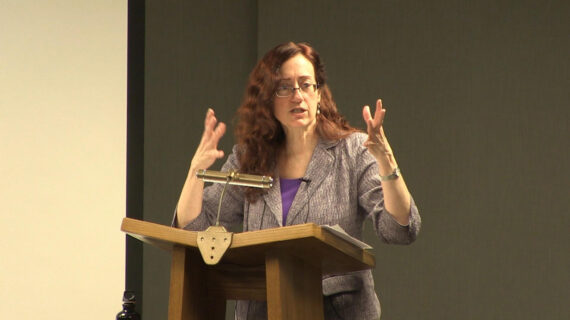
Alice Goffman, Assistant Professor, Department of Sociology, UW-Madison, documents police violence and the over-incarceration in a relatively poor African-American community in Philadelphia. Goffman focuses on the Taylor family and how they cope with the criminal justice system.


Copy and Paste the Following Code to Embed this Video:
On the Run: Fugitive Life in an American City
cc I'm Lonnie Berger. I'm director of the Institute for Research on Poverty, and on behalf of RP and the Institute for Legal Studies, the Department of Sociology, and the Department of Geography, we want to thank you for joining us for this event. We're really thrilled, though not at all surprised, to see such a crowded room and to see so many of you here. And I recognize that you're here to listen to Alice speak and not to listen to me, but I do want to make some introductory remarks.
I'll try to keep them as brief as possible. So just a little bit of background. So Alice got her PhD at Princeton in 2010. She then spent the next two years as a postdoctoral fellow at the University of Michigan in the prestigious Robert Wood Johnson Health Policy Scholars Program.
After that we were lucky enough to have her join our faculty in 2012, and she's currently an assistant professor in the Department of Sociology. So the research that she's going to talk about today is the basis of her dissertation and the subsequent book
On the Run
Fugitive Life in an American City. And in just a minute, she'll tell you what she learned during her six years in a disadvantaged Philadelphia neighborhood. So I recognize that many of you have either read the book or at least read about the book, and it's really become something of a phenomenon. So it's received press coverage from just about every major media outlet that we could think of.
It's commanded the attention of scholars, policymakers, policy practitioners and across a wide range of fields. And this can really even be seen in a diverse group of people, both the groups that sponsored this talk and the diverse group of people in the audience today. So faculty and students from across the university, many of our colleagues from the Wisconsin Department of Children and Families and some of the other government agencies, and then as well as I assume to be just curious community members. So I want to point out how both exceptional and exceptionally rare it is for scholarly work.
So Alice's dissertation won the 2001 award from the American Sociological Association. So this is a scholarly work that has become so widely known and has generated so much conversation among many different fields and disciplines as well as among the general public. And that's really exceptional and really rare. And it's especially exceptional considering that this is a first book based on dissertation work from a relatively early career scholar.
So I keep thinking how lucky we are to have this opportunity as a community to have Alice as a member of the UW faculty, as a member of the Madison community, and, for lack of a better word, I can't help but say, wow, this is really cool that we get to have this conversation with one of our own colleagues.
LAUGHTER
On the Run
and for many of us one of our friends. So, Alice, I just want to say that your work is fascinating and important, and not just in an academic way or in a scholarly way but in a way that matters to the real world, that we want to thank you for taking the time and being willing to share with us today and to have a conversation with us today. And we're looking forward not only to the talk that you're about to give but to your future endeavors and to many future conversations. So with that, please help me and join me to welcome Alice Goffman.
APPLAUSE
On the Run
Hi, everybody. Thank you for coming. Okay, am I miked? Am I miked?
Now I'm not. You are. Now I am. Can you all hear in the back?
Yay. Hi. How are you all doing? How many of you are grad students?
Oh, wow. Okay. From what departments? Just shout.
INAUDIBLE
On the Run
Cool. Okay, undergrads? Yay. How many of you took a class with me?
Thanks for coming.
LAUGHTER
On the Run
Okay, the other undergrads, what department are you from?
INAUDIBLE
On the Run
Great. Great. Thanks so much for coming. How many of you teach at the university?
This university? Okay. How many of you are Madison residents? Not necessarily affiliated with the university?
LAUGHTER
On the Run
Okay, all right, thanks to all of you for being here today. So, thank you to Lonnie Berger. Where are you? Thank you, Lonnie, for that totally embarrassing and over the top introduction.
Thank you to IRP, to the law school, to the geography department and the sociology department for sponsoring this talk. Thanks to all of you for coming out. So what I'm going to present today is an urban ethnography of mass imprisonment and its more hidden systems of policing and surveillance, and it draws on six years of fieldwork that I conducted beginning my first year of college and ending in my fourth year of graduate school. And this is fieldwork that I conducted in a mixed income but relatively poor African American neighborhood in Philadelphia that in the book is called Sixth Street.
So today I want to talk just about one family, the Taylor family, and through the story of this family try to illustrate the buildup of policing and imprisonment that has come about in this country in the past 40 years to show something about how the criminal justice system is currently operating in poor communities of color in this country, to show the different kinds of experiences and reactions and orientations that residents come to have to the police, the courts, the prisons, which have so deeply come to influence and organize everyday life, and how residents are coping with this, with a justice system that essentially sees black young men as the enemy to be rounded up. How are families coping with this? How are families resisting the police in their midst? And I want to close by saying a few words about the broader reform movement that is coming and the sort of reform moment that we seem to be in, and I want to just briefly talk about what it's been like to be on the road with this book for the past 10 months as we enter this sea change era in criminal justice policy where real change seems to possible and happening and how we can be part of that.
I also want to talk about the black young men that have been killed and have sparked public protests, the likes of which I think we have not seen since Civil Rights, and I want to talk about what change becomes possible when people come together to protest grave injustice. So this story, when people talk about mass incarceration, the buildup of incarceration, they often begin with the 1960s when the US embarked on a punitive term in crime policy that launched what would become the largest prison system known in the history of the world. But I want to start a bit earlier today. I want to start in the sharecropping south.
George Taylor came up to Philadelphia from Georgia when he was five. His mother and father worked the cotton fields south of Atlanta. Like many sharecroppers, they often came up short at the yearly settle. The cost of the basic necessities that they had bought on credit from the plantation store being more than what they could clear in the fields, at least according to the owners of the plantation who controlled the books.
Mr. George remembers his father cursing the owner of the small plantation for manipulating the numbers, which his father could not read, and the family leaving late in the night, time after time, for the next farm, hopeful that this one would be better. The Second World War brings opportunity up north, so with hundreds of thousands of fellow field hands, Mr. George's father boards a train to Philadelphia.
He sends for his wife and three children later that year once he finds work. This is 1943. For most of Mr. George's childhood the family lives in a two-room flat in a south Philadelphia apartment.
How many of you are from Philadelphia? Anybody? Okay. Mr.
George's father becomes a stevedore. He shovels coal down at the docks. He shows up for work every day not knowing if he'll get any, and when he does get it, he faces long, back-breaking hours of labor. Mr.
George's mother becomes a servant to two white families in downtown Philadelphia, which is the neighborhood in which I was raised. Neither job pays as much as the family had been promised when they made the move up north in the great migration to Philadelphia. And to his father's great shame, it's really his mother's job as a servant that provides the stable income that supports the household. Mr.
George's parents fight a lot in their cramped apartment, but the couple stays together and they have two more children. Mr. George graduates from high school with strong grades and enters the US Army in 1959. Anything to get out of the house, he said to me.
Mr. George did very well in the newly integrated unit he had been placed in and left the military with a bad knee and an honorable discharge become the Vietnam War broke out. It was a piece of luck, he says, that he never forgot. He applied for a job with the Postal Service and worked at a clerk at a branch in southwest Philadelphia from the age of 21 until he retired at 65.
A few years into taking this job, now he's in his early 20s, Mr. George bought a three-bedroom row home on a quiet tree-lined block in the neighborhood of 6th Street, right at the edge of the city limits. At this time, he was raising his young daughter Linda, his wife having taken off with another man. Mr.
George and his daughter were among the first black families to move to the neighborhood, and after them came physicians, bank tellers, shop owners, government workers. Like Mr. George, these middle class families hoped to escape the crowded and rundown slum areas by moving just past their outer edges. The move to 6th Street represented the culmination of years of hard work for Mr.
George and his family, but in many ways his military career, his job at the post office, this spacious house in a good neighborhood also exemplified the triumphs of the Civil Rights Movement. So gone are the days of separate drinking fountains and perpetual debt and police harassment. In one generation the Taylors moved from second class tenant farmers in the Jim Crow south to white collar respectability in the north. Not that their new neighbors exactly welcomed them with open arms.
One of the families that moved in shortly after the Taylors got a brick thrown through their living room window, and Mr. Taylor's daughter Linda refused to sleep in her own bedroom after that. Mr. George hoped that his daughter Linda would grow up in an integrated community, but by the 1980s every white family in the 6th Street neighborhood had packed up and moved.
Legal segregation had ended, but not a single white student attended Ms. Linda's school. Even so, 6th Street remained a middle class area. Not violent, clean sidewalks, better kept lawns than the poor African American neighborhood surrounding it.
So in the mid-1980s, this also begins to change. Developers start placing low income housing units in the neighborhood, initiatives that the older, middle class residents attempted to fight politically and lost. It was this second wave of less refined residents, Mr. George posits, that really helped to set his daughter Linda down the wrong path.
By her own account, Ms. Linda's father spoiled her as a child, especially after her mother left. She came of age at the height of the crack boom and dropped out of high school during her junior year. The men she dated worked at the bottom of the crack business, which at the time offered decent wages and even the promise of wealth to unemployed young men in the neighborhood who were trying and being denied jobs in the regular economy time and time again.
Like Ms. Linda, her boyfriends, some of them also struggled with addiction. During a decade of hard living, Ms. Linda gave birth to three sons, Chuck in 1984, Reggie in 1987, and Tim in 1991.
By this time, the ghetto that Mr. George had worked so hard to escape seemed to have grown up around them. It seemed to have taken over his own family. Beginning in the mid-1970s, federal and state-- Sorry, let me go back.
Okay, so you've got these problems coming to the neighborhood. Drugs. The violence that accompanies drugs. More and more poor families.
Alongside these problems, by the late 1980s 6th Street begins to face another problem, an expanding police presence. So beginning in the 1970s, federal and state governments enact a series of laws that increase the penalties for possessing, buying, and selling drugs, institute steeper sentences for violent crime, ramp up the number of police on the streets and the number of arrests these officers make. Street crime has risen dramatically in the 1960s and 1970s, and politicians on both sides of the aisle see a heavy crackdown on drugs and violence as both the political and practical solution to these problems. There could have been many solutions at that moment to a spike in crime.
An almost infinite number of solutions, but the tough on crime approach was the solution that this country chose. By the 1980s, crime is rising again, and crack cocaine is fueling a national moral panic. And this grows the punitive policies that had begun decades earlier. So as Ms.
Linda's sons, Chuck, Reggie, and Tim, are growing up in the 1990s, what's happening with crime in the 1990s? It's plummeting. Just dropping, dropping, dropping. Despite the drop in crime of the 1990s, which continues until today, tough crime policy continues.
In 1994, the Violent Crime Control and Law Enforcement Act pours billions of federal dollars into urban police departments, creates 50 new federal offenses, under the second Bush Administration the near unanimous endorsement of tough on crime policies by police and civic leaders accompany the mushrooming of federal and state police agencies, special units, bureaus. So think of all the TV shows you watch, like SVU, the proliferation of this. So these polices increase the sentences for violent crime but also for prostitution, for vagrancy, for drug possession. Okay, so with stronger drug laws, steeper sentencing guidelines, a lot of federal dollars pumping into urban police departments, neighborhood officers patrolling on foot and focused on keeping the peace and mediating disputes make this change towards officers in cars instead of on the street equipped with sophisticated new technologies to track and identify suspects and fugitives, to identify people who are arrestable.
A statistical program called CompStat gets implemented, sweeps the country from New York. And this program, the way it plays out in Philadelphia, the number of arrests an officer or a unit makes becomes indication of performance. So if you're a police officer, if you're doing well and you want to get promoted, you better make a lot of arrests. The people who don't are encouraged to catch up.
This shift from a laissez faire kind of keeping the peace style of policing into a tough on crime arrest based quota approach, it's not leveled at the entire population. It's not, for example, leveled at the college students on Penn's campus that I was commuting back and forth to as I was living in 6th Street. On that campus, like possibly this one, many young people are doing a lot of drugs. There's a lot of rape.
There's drunk driving. There are fights. But the police are not interested in these crimes. This tough on crime approach is directed at black neighborhoods, and at poor black neighborhoods in particular, and to a lesser extent Latino neighborhoods.
You with me? How you doing?
LAUGHTER
On the Run
At first Mr. George and his neighbors view all of this as a welcome sign of change. After all, the neighborhood had been neglected by law enforcement for far too long. But as more and more young men begin disappearing to jail and prison, Mr.
George and his neighbors start to question the motivation behind this ramped up policing. Some suspect that under the cloak of tough on crime rhetoric and the war on drugs is actually white discomfort about black civic and economic incorporation. To put it bluntly, they figured that whites were not going to accept black people as full citizens without a fight. In the last three decades of the 20th century, black Americans, like Mr.
George, achieve the full rights of citizenship that have alluded them for centuries. As they successfully defend the right to vote, the right to move freely, the right to attend college, the right to run for public office, to practice their chosen profession, the US simultaneously begins building up a penal system, a prison system that is, with no historic precedent or international comparison. Until the 1970s, we have this very stable incarceration rate for the whole 20th century. Then around 1970 it starts climbing and it rises steadily, up, up, up, until leveling off in the 1990s at this extremely high rate.
We now imprison five times more people per capita than we did 40 years ago. Another way to put this was between 1970 and 2005 the US imprisonment rate went up by 700%. These numbers are staggering. They are historically new.
We've never seen anything like this. But when you look at certain segments of the population, they're even stronger. Black people make up 13% of the US population, thereabouts, but account of 37% of the prison population. And these racial differences are reinforced by class differences.
So it's really poor African American young men who are being sent to prison at truly astounding rates. Approximately 60% who do not finish high school will go to prison by their mid-30s. Is this because poor African American young men are committing more crime than the rest of the population? That's a totally plausible logical explanation.
It turns out, no. It's because the black community, particularly poor black neighborhoods, are policed, arrested, and incarcerated under an entirely different system than the one that the rest of the US is living under. So today I want to try to show you what that looks like a bit. Mr.
George's grandson, Chuck, was the eldest of three brothers. He shared a small second floor bedroom with Tim, seven years his junior, and Reggie, born right between them. Reggie left for juvenile detention center right when he turned 11, so Tim, the youngest brother, didn't really get to know his middle brother very much. But he did get to know Chuck, and he looked up to him almost like a father.
When Tim was a baby, his dad had moved down south to South Carolina and married a woman there. He did not keep in touch. By contrast, Chuck's father came around a lot in his early years. A fact that Chuck sometimes brought up when trying to explain why he knew right from wrong and could teach it to his brothers.
The boys' mother, Ms. Linda, was five years into a struggle with addiction to crack cocaine when she became pregnant with Chuck, and she continued the struggle as the boys grew up. With welfare cuts the family had very little government assistance, and Ms. Linda couldn't hold a job for more than a few months at a time.
Her father's, Mr. George's post office pension paid the bills in the household, but he didn't pay for clothes or food or school supplies for the three boys. He said it was more than he could do and not his responsibility anyway. At 13, Chuck, the oldest brother, began working for a local dealer, which meant that he could buy food for himself and Tim instead of asking his mother for money that she didn't have.
His access to crack also mean that he could better regulate his mother's addiction. Now she came to him to get drugs and mostly stopped buying them from other guys in the neighborhood who would sometimes come in and wreck havoc all over the place. In high school, Chuck got arrested a number of times, but the cases didn't stick and he continued working for the local dealer. By his sophomore year, Chuck's legs were sticking out past the bunk bed that he shared with Tim, the youngest brother.
He cleared out the unfinished basement and declared that he was going to move his mattress and clothing down there. The basement flooded and smelled like mildew, but at least he would have his own place now. Tim was eight when Chuck moved down to the basement, and he tried to put a brave face on it. When he couldn't sleep, he would pad down there and crawl into bed with his brother.
In his senior year when we met, Chuck stood six feet tall and had a build shaped by basketball and boxing, his two favorite sports. That winter he got into a fight in the schoolyard with another kid who called Chuck's mom a crack whore. Chuck pushed the kid's face into the snow, didn't hurt the kid much, like he was fine the next day, but the school cops charged him with aggravated assault. And since he had just turned 18, this is his senior year of high school, the judge put him in adult county jail where he spent the whole rest of his senior year awaiting trial.
So this is how we got to know each other. I came to visit him at CFCF, this county jail in northeast Philadelphia. It didn't matter, Chuck said, that he was on the basketball team and making Cs and Bs. About a month after Chuck went to jail awaiting trial on this ag assault case, Tim stopped speaking.
He would nod his head yes or no, but he stopped saying any words. When Chuck would call home from jail, he would ask his mom to put Tim on the phone and then he would talk to his little brother about what he imagined was happening in the neighborhood. Tim never answered but he sometimes would smile, and Chuck would keep talking to him until the minutes ran out. In his letters and phone calls home, Chuck pleaded with his mother to take his little brother Tim to the jail to visit him.
He just needs to see me, he said, he doesn't have anybody out there. Ms. Linda didn't have the state ID required to visit inmates in county jail, only a social security card and an old voter registration card, and anyway, she hated seeing her sons locked up. Chuck's friends, Mike and Alex, and me too tried to take Tim along with us when we would go visit Chuck, but since Tim was a minor, his parent or guardian had to come too.
Eight months after Chuck was taken in custody for this fight in the schoolyard, the judge threw out most of the charges and Chuck came home with only a couple hundred dollars in court fees hanging over his head. When Tim saw his brother walking up the alleyway, he cried and clung to his leg. Then he tried to stay awake through the whole evening festivities, finally falling asleep with his head on Chuck's lap. Over the next few months, Chuck made it his mission to coax his brother Tim to start speaking again.
He stayed in most nights and played video games with Tim on the old TV in the living room. He even moved back to Tim's room upstairs for a while so Tim wouldn't be alone at night. He extended the bed with a folding chair, propping his legs up on it and cursing when they fell through. He'll get it back, Chuck said, he just needs some quality time with me.
Tim nodded hopefully. The following fall, Chuck tried to re-enroll as a senior, but the high school would not admit him. The secretary said that he was then 19 and too old to come back to school. Then the judge on his assault case from that fight in the schoolyard issued a warrant for his arrest because he hadn't paid the $225 in court fees that had come due a few months after the case was over.
He just didn't have the money, he said. He spent a few months on the run before going downtown to the warrant and surrender office of the criminal justice center in Philadelphia to see if he could work something out with the judge. And I don't know how many of you have been to these warrant and surrender units in courthouses, but it's very scary. You show up, you have a warrant for court fees or failing to appear, and you don't know if you're going to be taken and you don't know how long you're going to be in prison, in jail for.
And you can see the people in front of you in line. Some of them go home with a new date, and some of them are cuffed and taken. So we spent like seven hours there. And in the end, the court clerk worked out a monthly payment plan with Chuck, lifted the warrant and he came home jubilant that afternoon.
That fall Tim started speaking again. He remained very quiet though, preferring to communicate with a small smile or a shake of his head. Home now from jail and with his brother Tim making good progress in speaking, Chuck began to look for work really in earnest. Along with his friend Mike, a couple years older than him, he applied to jobs all over the city.
Jobs at Walmart, Kmart, PetSmart, Wendy's. He used my cell phone number as a contact because his cell phone was getting cut off too often to be a good conduit for job leads. So every day he would call me and ask me if anybody had called. This went on for months, and every day I had to say no.
He didn't give up. He kept looking into the next season. Not a single employer ever called back. Watching Chuck get up every day and apply for the lowest paying part-time service sector jobs and not get hired, it broke me.
It broke my belief that American society is a place of opportunity where anybody who works hard can make it. After about seven months, I believe, Chuck got too desperate and too hungry and got some crack to sell on credit from a local dealer. As he sat in my kitchen cutting the crack and putting it into little baggies he said, "I ### hate this ###. I've seen what it did to my mother, but I've got to eat." Tim, his first arrest came later that year after he'd turned 11.
Chuck was driving Tim to school in his girlfriend's car, and a cop pulled them over and ran the tags and found that the car was stolen in California. Chuck had no idea like which one of his girlfriend's relatives who bought the car from the auction, like at what point in the history of this car had it been stolen from California. He had never been out of the tri-state. Anyway, the officer took both brothers into custody, and down at the police station they charged Chuck with receiving stolen property and they charged Tim with accessory to receiving stolen property.
Later, a judge in the juvenile court placed Tim on three years of probation. So with this probation sentence hanging over Tim's head, any encounter with the police could mean a violation and a trip to juvenile detention, which Chuck was adamant to try to prevent. He was just determined. So then he began teaching his younger brother Tim how to run from the police in earnest.
How to spot undercover cars. How and where to hide. How to negotiate a police stop so that he wouldn't put himself and others around him at greater risk. So on quiet afternoons, Chuck would pass the time by teaching Tim, now age 12, how to run from the police.
They'd sit side by side on the iron back porch steps of their two-story home facing the shared concrete alley that connects their houses, the small fenced in yards of the houses next door. "What are you going to do when you hear the sirens?" Chuck asked. "I'm out," his little brother replied. "Where are you running to?" "Well, here," Tim said.
"You can't run here, they know you live here." "I'll hide in the back room in the basement," Tim said. "You think they're not tearing down that little door?" Tim shrugged. "You know Ms. Toya?" Chuck said.
"Yeah." "Well, you can go over there." "But I don't even know her like that." "Exactly," Chuck said. "Why can't I go to Uncle Gene's?" "Because they know that's your uncle. You can't go to anybody who's connected to you." Tim nodded his head, seeming happy to get his brother's attention no matter what his brother was saying. By the time I got to 6th Street in 2002 police curfews were established for those under age 18, and video cameras had been placed on major streets.
During the first year and a half I spent in the neighborhood, I watched police stop pedestrians or people in cars, search them, run their names to see if any warrants came up, ask people to come in for questioning, or make an arrest at least once a day with five exceptions. I watched the police break down doors, search houses, question, arrest, or chase people through houses 52 times in that first 18 months. Police helicopters circled overhead and beamed search lights onto local streets nine times in that year and a half. I watched the police punch, choke, kick, stomp on, beat men with nightsticks 14 times during the first 18 months of near daily observation.
And I should say, this is a neighborhood that when I later interviewed police officers was not even on their radar. It was a quiet, safe, calm neighborhood. Not a hotspot for the police. How you doing?
In 2007, Chuck and I went door to door and conducted a household survey of the 6th Street neighborhood. I was trying to figure out if what I saw happening with Chuck and his family and his friends was the same as what was happening with other young men in the neighborhood or if it was just really kind of just these few cases. On that day that we did the survey more than half of young men between 18 and 30 reported that they were presently entangled in the criminal justice system in one way or another, either with warrants, probation or parole, house arrests, a pending court case. All of these men reported that if they were stopped that they were very concerned that if they were stopped, they would be immediately taken into custody either for some violation that would come up, a violation of their parole.
Even young men with no pending legal action expressed a lot of concern that at any moment they could be taken. I'm not sure how many of you walk around or drive around every day thinking that at any moment the police are likely to stop you and then imprison you. For some people in the audience, maybe a few times in your life; some of you maybe never. For Chuck and Mike and his friends, this is a basic fact of everyday life.
So today there are five million people under probation or parole supervision, two and a half million people in prison, another couple million arrested every year. We don't know how many people have warrants because we don't yet collect decent national data on warrants. It's been very interesting to see the incredible number of warrants coming out of Ferguson, Missouri. Philly too has a large number of people with open warrants.
The numbers I've seen most recently are 47,000. Most of these are not for new crimes but for minor infractions of probation and parole, failure to pay court fees, to make curfew, getting stopped driving a car, not showing up for a court date. New Jersey just did a nice study. They have 1.6 million outstanding warrants in that state, mostly for technical violations, for unpaid court fees, for failure to appear.
In Philadelphia, there are a number of police divisions who are actively searching for wanted people in the city. From interviews with police, I learned that each detective division in the city has its own warrant unit. Then there's the US Marshals. There's the ATF.
There's the DEA, the FBI run out of the Philadelphia force who have their own warrant outfits as well. Then there's a whole separate warrant unit run out of the First Judicial District, which is another 60 guys who go out every day and try to round up people with warrants, try to discharge as many warrants as they can. So they go out every day with these files of photos and information on people and they go to a neighborhood and they say he's a grip, he's a grip, he's a grip, he's a grip and arrest people. And these special units, how do they do their work?
They're accessing social security records. How do they find the people? Court records, hospital admission records, electric and gas bills, employment records. They visit young men's usual haunts at the time they're most likely to be there.
Their friends' houses, their work, their mother's house. At the time I was writing, a local FBI officer had developed this sophisticated computer mapping software where he plotted people with legal entanglements, probation, parole, house arrests, pending court cases, in a neighborhood, and then he could see those people and then turn to them to provide information about the people with warrants that he was looking for in that neighborhood. And then if those people didn't provide the information, then he would violate them and take them into custody. And in an interview with a Philly paper, he sort of proudly said that he had come up with this software one day while watching a documentary on the Stasi, the East German secret police.
So, yeah, so what does this all mean when you're living in a neighborhood where this is going on? Well, children of this neighborhood of 6th Street learn at a very early age to watch out for the police and to prepare to run. The first week I spent on 6th Street, I saw two boys, five and seven years old, play this game of chase where one boy played the cop who was running after the other kid. Not many of you can remember that from your own childhoods.
But here when the cop caught up to the other child, the child playing the cop that is, caught up to the other child, he pushed him down, cuffed him with imaginary handcuffs, then he patted the other child down and felt in his pockets, taking a quarter out and laughing, "I'm seizing that." He asked the child if he was carrying a gun or any drugs. In the following months, I saw this game repeated many, many times. Children sometimes would just give up running and lie flat on the ground or stick their bodies up against the wall with their hands above their heads or put themselves up against a car. Children yelled, "I'm going to lock you up!
I'm going to lock you up, and you're never coming home!" I once saw a six-year-old child pull another child's pants down and try to do a cavity search. Here is Chuck's advice to his 12-year-old brother, Tim. "You hear the law coming, you run away from them. You don't have time to think, okay, what do I have on me?
What are they going to want from me? No, you hear them coming, that's it. You're gone, period, because whoever they're looking for, even if it's not you, nine times out of 10 they'll probably book you." As I began to write about how young men were navigating this sort of looming fear of capture, all these places that they learned to be scared of because the police might find them there, I also started to pay attention to the ways that all of this policing, what it meant for women, for the women in their lives. In particular, I started to notice that women were being put in this position to provide information about the men who the police were looking for.
Particularly men who they were very, very close to, who they had a lot of information about. So by the time a man has been arrested a number of times, the police have a huge amount of personal information about him. And part of it they can just get from their databases, but they also have this information because, at least in Philadelphia, when you get arrested, as part of your bail hearing, you're asked to provide all of this private information about you, and the more information you provide, the lower your bail will be. So people have a lot of incentive to give all this personal information to the police.
So by the time a man's been arrested and charged a number of times, police have all kinds of personal information about your life. They then use this once you have a warrant to locate you and, in particular, to put pressure on your nearest and dearest to tell them where you're hiding. So this is what one former warrant officer told me in an interview. He said, "We might be able to track people with their cell phones or see every guy with a warrant up on the computer screen, but when it comes down to it, you always go through the girlfriend, the grandmother because she knows where he is and she knows what he's done." In our household survey of the 6th Street neighborhood, we interviewed 146 women.
139 of the 146 women reported that they currently had a partner, neighbor, or close male relative who was either wanted by the police, on probation or parole, going through a trial, living in a halfway house, living on house arrest. 67% of women said that they had been pressured to provide information to the police about a spouse or close male relative or neighbor within the past three years. So this isn't something the police are doing for the most wanted guys in the city and just their families are under this pressure. This is something they're doing routinely to make their stats.
Ms. Linda's ability, Chuck's mom-- Do you remember her, Ms. Linda? Her ability to resist this kind of police pressure was widely recognized in 6th Street neighborhood.
She was like famous for it. As Chuck's friend once proclaimed to a small crowd assembled on her steps after a
raid
"Ms. Linda's house might be dirty, but she's not talking. She doesn't care if they bang her door in. She doesn't give a ###." This is what resistance looks like.
Ms. Linda would often say that she protected her sons so fiercely from the police because she had more heart than other women. But the truth of the matter is that she also, with three sons, had more practice. By my count, the police raided her house 23 times in the six years that I knew the family.
When her middle son Reggie was 17 and home for a bit from juvenile detention, the police stopped him for loitering on the corner, and he allowed them to search him. An officer discovered three small bags of crack, like five dollar bags of crack, in the lining of his jeans, and Reggie started running. I think in California now if this had happened, that's no longer a felony. But anyway, here we are in Philadelphia.
The cops lost him in the chase. An arrest warrant was issued for him for intent to distribute and for fleeing the police. That evening, Ms. Linda was sure a raid was coming, and she prepared her house for it.
She took her marijuana stash and hid it in her boyfriend's house. After a lot of effort, she secured accommodations for Chuck's close friend Anthony, who was homeless and who had been staying the basement, he had a bench warrant out, I think for failure to appear, so he had to leave for this raid. She let her neighbors know that the police were coming so that they could get their sons and nephews and brothers out of their houses because sometimes the police get the house wrong or they just raid the houses of the people nearby. I'd seen this happen recently to two other families.
She dug the $60 that Reggie had hidden in the wall out and stored it somewhere else because the police typically take whatever cash they find. And then her grandfather, Mr. George, she got him to sleep at his girlfriend's place that night. She was very worried that the law, she said, would give him a coronary.
Ms. Linda instructed Reggie to leave the house before midnight for this raid, but he fell asleep by accident and he was still there when a three-man SWAT team broke the door down
around 4
00 in the morning. The door remains broken and unlocked to this day. Ms. Linda had slept on the couch in preparation for the raid and, unsure if Reggie was still in the house, launched into a heated argument with the officers to delay their going upstairs.
This rouse proved successful. By the time they got upstairs, Reggie had left through a window in his bedroom and run through an alley and escaped. The next night, okay, so that's raid one. The next night, three officers returned and order Reggie's younger brother Tim and Mr.
George to lie face down on the floor with their hands on their heads while they search the house. According to Tim, an officer promised Ms. Linda that if she gave Reggie up they wouldn't tell him that it was his mother who had betrayed him. If she didn't give her son up, the officer said that they would call child protective services and have her younger son, Tim, taken away because the house was roach infested and unfit to live in.
On this night she again refused to tell the police where Reggie was hiding. Shaken but triumphant, Ms. Linda came out early the next morning to tell her friends and neighbors the story. We sat on her iron back porch steps that look out onto the shared alleyway, and she said, "I do my dirt.
I'm the first to admit it. Some people say I'm a bad mother. You can say what you want about me, but everybody knows I protect my sons, all three of them. They can come back every night." When her cousin came to sit with us, Ms.
Linda repeated the story adding that she had deliberately worn her sexiest lingerie for this raid.
LAUGHTER
around 4
And had proudly stuck her chest out when the officer was cuffing her to the wall. She acted this out to us to shrieks of laughter. She said she told a particularly good-looking officer, "Honey, you're so fine, you can search me any time."
LAUGHTER
around 4
I was there two nights later when the police raided the house for the third night. On this night, three officers put plastic cuffs behind our backs and lay us face down on the living room floor while they searched the house. And then they tore the house apart. I don't know how many of you have been in the house that has been raided like this, but it's like a hurricane comes through.
Everything that's on a counter is on the floor. They rip the couch open. They drop the ceiling down. Despite her previous boasts of telling the officers off and telling them you can search me, when they came that third night, she cried and she screamed in fear.
And when an officer mentioned that the family was lucky that Mr. George owned the house because if it was a Section 8 building, they could immediately evicted for harboring a fugitive and interfering with an arrest, we had seen this happen to two other families recently, she cried again. I had never seen her cry before or after this night. Upstairs the police found a gun that Ms.
Linda could not produce a permit for. They arrested her and took her into custody, and then she went down to the roundhouse in downtown Philadelphia. It turns out in Philly you actually totally can have a gun without a permit in your house. You just can't carry it, but we didn't know that and the police didn't tell us that so they held her for like 12 hours.
Okay, so Tim and I went to pick her up the next afternoon, and she told us that they told her she would be faced with gun charges unless she told the police where to find Reggie. She also said that they promised anonymity, although she said she didn't believe them for a second. By her own account and Tim's account of the first two raids, which I was not present for, Ms. Linda had been quite stalwart up until this point.
But the third raid and this lengthy interrogation, it weakened her resolve. When Reggie came around later that evening to pick up spaghetti that she had prepared for him, she begged him to turn himself in. Reggie refused. A week later, Ms.
Linda was coming home from her boyfriend's house and she was walking up the alleyway and she saw her TV and clothing and the rest of her possessions packed up and sitting on the steps. Mr. George told her that he would no longer allow her to live there with Tim if she continued to protect Reggie from the police. He just couldn't take it anymore.
He said, "This ain't no damn carnival. I don't care who he is. I'm not letting anybody run through this house with the cops chasing him, breaking ###, spilling ###, waking me up out of my sleep. I'm not with the late night screaming and running.
I open my eyes and I see somebody hopping over my bed trying to crawl out the window? Hell no. Like I told Reggie, if the law runs in here one more time, I'll have a stroke. Reggie's a grown ### man." He's 17 at the time.
"He's not hiding out in my damn house. We're going to wind up in jail with this." Mr. George, at this point, began calling the police whenever he saw Reggie in the house, and Ms. Linda then told her son that he could no longer stay there.
For two months, Reggie lived in an abandoned Buick LeSabre parked in a nearby alleyway. So here, under extreme duress, Ms. Linda nevertheless refused to tell the police where to find Reggie. And though she ultimately begged him to turn himself in and then kicked him out of the house when her father threatened to evict her, she never gave her son up to the police.
While Reggie was sleeping in this car, she kept in close touch with him often, supplying him with food, like almost every evening he would come and get it. Her neighbors, her family, even Reggie himself seemed to feel like she had done the most she could do, the most anybody could possibly do. The evening the cops took Reggie in, I sat with Ms. Linda and some of her neighbors as she poured Red Irish Rose wine into small plastic cups for us.
She said, "Well, at least he doesn't have to look over his shoulder anymore worried that the law was going to come to the house. He was getting real sick of sleeping in the car." After these raids, Chuck and Reggie were sitting in county jail and state prison, respectively. A month later, the youngest brother Tim got booked outside the Chinese store for resisting arrest and possession of a small amount of crack. In the absence of his three grandsons, the house become strangely quiet, and Mr.
George began sitting outside on the second floor porch. One evening the following fall after I'd come back from visiting Chuck from county jail, we sat down and had a beer and a cigarette. And I'll close with this quote. "I'll tell you," Mr.
George said, "I feel sorry for the man with sons. What's the use of raising a boy today. You feed him and cloth him and teach him how to ride a bike and you check his tests and then they're shipping him off to juvie. You don't know when you're going to see him again.
Maybe he makes it to 18 before they take him away, but once they grab him, that's it. Your son's locked in a cage just sitting. You can't see him. You can't watch him go to school, go to work, have kids of his own.
You can't do anything but just sit. You put money on his books, visitation, he comes home for a few months, goes back in. You worry about him, what's happening in there. Or you say I can't do it.
I'm not getting involved. I wash my hands. They say it's changed now with Obama. It's a new era.
But can't nobody protect our sons. Not even the president. I'm telling you, if I were 30 years younger, I'd be praying for girls. If I had a son, I'd lose my mind by now.
I'd start mourning and praying the day he was born." Okay. So what I've tried to sketch today is a system of governance. It's a system of governance currently operating in poor African American neighborhoods in US cities that is separate and distinct from that under which the rest of the population is living. At the level of lived experience, it involves, A, the denial of basic rights to many residents.
The right to move freely. The right to sleep in a bed of one's choosing, to associate freely with other people. It involves, B, the risk of extreme sanction. That is, prison.
A reality facing a great many residents. We see the emergence of an underground market to provide for people living with diminished rights or a limited legal status, like people selling clean urine and fake documents. We see near daily contact with the police or other criminal justice personnel, a reality for many if not most residents. We see the uselessness of the authorities for protection or mediation despite their omnipresence.
We see frequent and public acts of state violence in the streets. That is, young men getting chased, beaten, or strangled. We see the pitting of close friends, family members, and neighbors against each other as a technique to make stats to round up young men. That is, we see the authorities routinely asking people to choose between their own freedom and the security of those they hold dear.
We see the pernicious issue of informants, both through the police's efforts to cultivate them and through people turning each other in when they are up against the wall. And we see this fear of prison felt at the level of the community social fabric, at the level of the games that children play, what a brother teaches a younger brother. At the same time, we see people resisting the police, young men refusing to allow the police to take them into custody, mothers refusing to cave under immense pressure and protect their sons. So what do we make of this?
In some ways, the technologies, the policing approaches, the levels of imprisonment currently at work in segregated black neighborhoods in American cities, this represents a dramatic shift from anything we have seen before. But the case can also be made that the core features of the current system are not new, at least not in their essence, nor do they require the kinds of advanced technologies that I have sketched for you here. So Louis-- and, very persuasively, Michelle Alexander have argued strong parallels between current systems of targeted imprisonment and earlier systems of racial oppression, slavery, and Jim Crow, both of which granted black people a secondary citizenship status, denying basic rights like voting, running for office, free movement. And we can see, I think, in this system of surveillance, of warrants, of probation and parole that I have just sketched, we can see a continuation of the fugitive slave laws that haunted African Americans in the south and in the north until the Civil War, and we can also see this is a continuation of the vagrancy statutes that took up from the fugitive slave laws and served to restrict African Americans until the current era.
So from this history, we can conclude that many black people in the United States have been assigned not just a diminished form of citizenship but a fugitive status through slavery, through sharecropping, through the great migration, and now through the war on crime. But the experience of young men and their families on 6th Street can also tell us perhaps something about other people living in what had been termed repressive, authoritarian, totalitarian regimes. What's going on around 6th Street makes a lot more sense when you start to read accounts of those living under dictatorships of various sorts. During wartime, occupied territories.
Residents of East Germany before the fall of the wall, for example, describe quite similar experiences to young men on 6th Street, like the governments turning friends, family members into informants against each other. Pervasive fear of the authorities. People getting seized in the streets, taken away. What's distinct here and important is that this regime of intense policing and imprisonment is operating within our liberal democracy and unbeknownst to many people living only a few blocks away.
So in a nation that has officially rid itself of a racial cast system, that elected and then reelected a black president, we're simultaneously deploying, at great taxpayer cost, a fairly repressive, policing, surveillance, punishment regime on poor black men and women living in segregated neighborhoods of US cities. In these neighborhoods, the institutions charged with providing justice and safety are instead sources of fear and instability. How are we doing? How are you doing?
Wrap up? Okay. Wrap up. So for the past, like, 10 months, I've been going around the country talking about the two US criminal justice systems, the one for whites and the one for blacks, particularly for poor African Americans, trying to get people to accept the idea that the criminal justice system is acting as an occupying force in poor communities of color rather than a source of public safety accountable as any public institution should be to the people it serves.
So I've talked about this massive harm that the criminal justice system is currently inflicting and the pressing need for reform like at colleges and at public libraries and book stores and at Harvard and at community college and in the Rust Belt and on the coasts and at law schools and churches and criminal justice programs and to libertarian think tanks and to corrections officers. I've met formerly incarcerated people who are organizing to be leaders of the reform movement. I've met republicans who are making it their life's work to decrease the number of people behind bars. Through all of this, what I've mostly learned, I think, is hope.
I've gotten to know all of these people working at grassroots levels, at very high finance levels, everywhere in between on both sides of the political sort of spectrum, people working towards reform, working to turn this around, and I can tell you we're at this moment now that we haven't seen in 40 years. For the first time in 40 years of growth we've just seen modest declines in incarceration rates. They just went back up this year, but for the past four years, they've started to come down. And we've seen reform in sentencing, now in policing.
The killing of Michael Brown by Darren Wilson, a white police officer in Ferguson, Missouri, and many similar incidents across the country and the decision of a grand jury not to indict this police officer, the protests following these events, the almost entirely peaceful protests that are even now going on across the country, this calls a great number of American citizens to the reality that the US justice system is treating African Americans unfairly, as people without rights, as people without dignity, as the enemy, and that African Americans are sick of it. The very high level of warrants, the court fees, the violence of the police in Ferguson, it could be Boston, it could be San Diego, it could be Oakland, it could certainly be Philadelphia. Despite these facts and very visible public outcry, there seems to be little moral urgency on the part of policymakers. But let's be clear, the second class status of African Americans under the criminal justice system is a human rights scandal of historic proportions.
Can a problem this large be solved? Yeah. We've got to. We're in this little moment right now where criminal justice reform is actually happening after 40 years of tough on crime.
What we need, I think, we're seeing these flits of reform in policing, in the courts, in juvenile sentencing. What we need and what we don't have yet is a comprehensive set of reforms that require police, courts, prisons, sentencing prosecutors, probation and parole, all of these pieces and players in the criminal justice system to change what they're doing, to acknowledge that what they're doing must change, that how they're operating vis-a-vis African Americans, black people in this country, needs to stop, needs to be different. We need to commit to this project of ending mass incarceration, and this requires leadership at a very high level. Also, I think requires people speaking out, people taking to the streets, people protesting the current system, people coming together to say this must end.
So that's the challenge that we have to take up now. Thanks.
APPLAUSE
Search University Place Episodes
Related Stories from PBS Wisconsin's Blog










Donate to sign up. Activate and sign in to Passport. It's that easy to help PBS Wisconsin serve your community through media that educates, inspires, and entertains.
Make your membership gift today
Only for new users: Activate Passport using your code or email address
Already a member?
Look up my account
Need some help? Go to FAQ or visit PBS Passport Help
Need help accessing PBS Wisconsin anywhere?

Online Access | Platform & Device Access | Cable or Satellite Access | Over-The-Air Access
Visit Access Guide
Need help accessing PBS Wisconsin anywhere?
Visit Our
Live TV Access Guide
Online AccessPlatform & Device Access
Cable or Satellite Access
Over-The-Air Access
Visit Access Guide




Follow Us