

 Passport





Race, Gender and Carceral Feminism
04/15/15 | 1h 11m 37s | Rating: TV-G
Beth E. Richie, Professor, Department of Criminal Justice, University of Illinois-Chicago, and Fabu, Former Poet Laureate, Madison, WI. Richie talks about racial identity, sexuality, class, culture and incarceration focusing on the experiences of African American women. Fabu shares poetry that offers a glimpse into African American women’s experiences.


Copy and Paste the Following Code to Embed this Video:
Race, Gender and Carceral Feminism
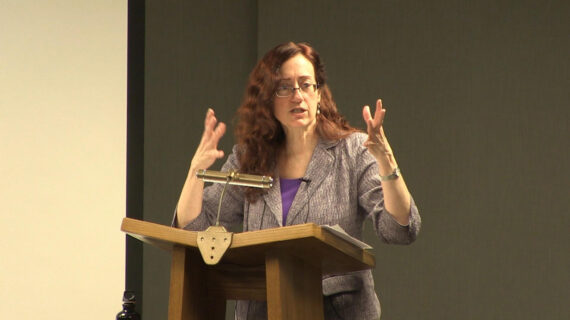
Well, thank you all for being here tonight. I'm really excited and honored to introduce both Fabu and Dr. Beth Richie tonight as part of the Comparative US Studies Lecture Series on Racial Justice and Incarceration. I'm gonna introduce Fabu first and then Dr.
Beth Richie. Fabu Phyllis Carter, professionally known as Fabu, is a poet laureate and storyteller and Fabu truly is fabulous. She is really a Madison treasure and if you don't know her or her work, you should and you need to. She was appointed Madison's poet laureate in 2002 and served in that position until 2011.
She was chosen for this honorary position in recognition of her years as a major figure in Madison's literary arts movement. Fabu began writing at age 11 and for more than 20 years she has provided inspiration through poetry reading and writing to schoolchildren, women, and the African-American communities. In Fabu's presentations to schoolchildren she encourages their creativity, supports their efforts to write, and has specifically designed innovative curriculum to strengthen their learning abilities. Fabu has also chosen the poems for this book because they are both relevant and inspirational to children.
Oh, I'm sorry, her book, her children's book is called "Poems, Dreams, and Roses", which is a compilation of poems chosen because they're both relevant and inspirational to children as they confront the challenges of growing up. Fabu also holds degrees from the University of Madison, two Master's degrees, both in the African-American Studies department and in the African Languages and Literature department.
She's also published several other collections of poetry
In
Our Own Tongues
Poetic Voices of Three Generations of
Journey to Wisconsin
African-American Life in Haiku. Fabu is also a founding member of the Hibiscus Collective, a group of Madison women writers from various cultures. And finally, she is a guest columnist for two of our local
papers that probably most of you are familiar with
the Capital Times and the Capital City Hues. Dr. Beth Richie is a-- the Director of the Institute for Research on Race and Public Policy and professor of African American studies in criminology, law and justice at the University of Illinois at Chicago. For decades, Dr.
Richie has combined path-breaking scholarship with a deep commitment to racial and gender justice, both inside and outside the academy. Indeed, I think she is an inspirational model of the scholar activist. Dr. Richie is a board member of several community organizations
including
the "Institute on Domestic Violence in the African Community" and the "Center for Fathers, Families, and Public Policy", and she's also a founding member of a group that you may know of called "INCITE! Women of Color Against Violence". She's received multiple grants and awards, including the "Audre Lorde Legacy Award" from the Union Institute, the "Advocacy Award" from the US Department of Health and Human Services, and the "Visionary Award" from the Violence Intervention Program. Her scholarship and activism focus on how race, as well as social class, affect women's experiences of violence and incarceration.
She is particularly concerned with African-American battered women and sexual assault survivors. Richie has offered numerous articles concerning black feminism and gender violence, race and criminal justice policy. Her work also addresses the social dynamics around issues of sexuality, prison abolition and grassroots organizations in African-American communities. Her first book, "
Compelled to Crime
The Gender Entrapment of Black Battered Women", has been adopted in scores of college courses and is often cited in the popular press for its original arguments concerning race, gender, and crime. Dr. Richie's most recent book, "
Arrested Justice
Black Women, Violence, and America's Prison Nation", published by NYU Press in 2012, chronicles the evolution of the contemporary anti-violence movement during the rise of mass incarceration in the United States. As most of you probably know, the United States has the historically unprecedented distinction of imprisoning more people per capita than any other country in the world. Currently, there are over seven million people under some form of criminal justice supervision, whether in prison, on parole, or on probation. And, of course, disproportionate numbers of those are black and brown bodies.
"Arrested Justice" is a brilliant and innovative study that uses the notion of prison nation, which Richie defines as the ideologies and public policies that increasingly criminalize and disenfranchise communities of color, as well as Richie's own black feminist lens, to explore the ways that multiple systems of oppression literally trap some of our most vulnerable and marginalized populations. Through captivating stories of vulnerable black women who have been stigmatized by race, poverty, gender identity, and/or age, Richie critiques public policies as well as the anti-violence movement and the wider black community for exacerbating, minimizing, and frequently ignoring black women who are most at risk from intimate violence, street violence, and state violence. And just to give you one example that may sound familiar because we had a recent film on this issue that was sponsored by the Haven Center, Richie examines the experiences of the "New Jersey Four", a group of black lesbian-identified youth who were convicted and imprisoned after defending themselves against blatant anti-gay street violence. And, again, some of you have seen the film that documents their ordeal.
"Arrested Justice" also explores strategies of resistance and healing, what Richie calls justice-oriented solutions devised by African-American women, black feminists in particular, to combat violence against black women and the buildup of America's prison nation. And I can personally attest to the successive value of this book. I recently taught it in a course last semester, and two of my best students found it their most favorite book on the syllabus. So, it's a really path-breaking and brilliant book.
And, finally, Dr. Richie is currently working on an ethnographic project documenting the conditions of confinement in women's prisons. Please join me in welcoming both Fabu and Dr. Beth Richie.
applause
Arrested Justice
Thank you. Well, what a generous introduction. Thank you. Good evening.
Good evening. What a beautiful night you provided for me. I appreciate you being here instead of somewhere near the water or out doing other things. Thank you for coming.
And thank you for this invitation, especially to the co-sponsors of this event. It's really exciting as I've learned more about how important it is to this group to connect activism and academic work. I feel particularly honored to be standing here before you. Thank you in particular to Karma and to Em Adams, who I spent some time with earlier.
It's nice to see old friends, David and Jackie, and friends of friends who were here. I so, know bits and pieces of different parts of you who are in the audience because of the connections that you have to each other and, again, I feel humbled and honored to be sharing a little bit of time with you. I know many of you are preoccupied with the events in this city and the news you'll hear tomorrow I expect, right, about Tony Robinson and how much that has moved so many of you to think deeply about what it means that black lives do or don't matter. I'm noting that many places I go now, traveling a lot these days, I land in a city and there's another black body that's been killed by the police.
And the good news is that there's activism around that, around the country, so I'm inspired by that and with you as you face the next few days and recount your activism the last few months around that tragedy.
So I've called my talk
"Arrested
Justice
Race, Gender, Violence, and the Problem with Carceral Feminism".
I could have called it something more like
"How black feminist anti-violence activism taught me to be a prison abolitionist" or "How
we won the mainstream but lost the movement
cautionary tales of carceral feminism". Each of these titles suggests that I'm really trying to pack a lot into this talk. I only have 40 minutes, so I should stop with the various titles.
laughter
we won the mainstream but lost the movement
What I'm really trying to do, and you'll hear from me and then you'll hear from Fabu which will be wonderful for me, what I'm really trying to do is provide a conceptual analysis that's in part critical theory but also share some personal reflections based on some of my qualitative research. I'm gonna try to talk about how racial identity, sexuality, class, culture, and gender become sources of vulnerability for some black women and queer people who experience particular-- particularly harmful forms of gender violence and how that vulnerability is targeted, vulnerability is targeted, by America's prison nation. It's targeted through a process that I call criminalization that's made possible, or exacerbated, by carceral feminism. And after that we'll talk about what we need to do as justice workers, feminist scholars, anti-violence, activists, human rights advocates to try to change the world and reverse all of those things.
So the big frames here are gender violence, rates of rape, battering, trafficking, sexual assault, harassment, gender violence. Second big frame is prison nation. Third big frame is criminalization which is the process that builds a prison nation. Next big frame is carceral feminism, which I'll define as we go through, and then the final big frame, which is the one that I hope we'll leave feeling somewhat inspired around, is prison abolition.
So I'm trained as a qualitative researcher. I'm a sociologist. I teach in lots of interdisciplinary programs but I know what I know mostly because I've worked for a number of years, almost 30 years, in jails and prisons and, more importantly in some ways, in communities from which incarcerated people are drawn or snatched. My work focuses both on the macro, or large structural issues, as well as the micro, or individual level, concerns that lead people to the vulnerability that allows them, or enables them, to be drawn into a prison nation.
I teach a great deal in prisons and learn a lot from the students that I teach at University of Illinois Chicago but more from the students this semester I'm teaching at Stateville, which is a male maximum security prison in Illinois. So it allows me to bring to the discussion of carceral feminism the perspectives that my students have taught me. In addition to my academic work, it's important to me to be out about being an activist. For over 30 years now I've worked with a number of local and national programs trying to link up some of those large frames that I talked about earlier.
Most particularly I've worked with "INCITE! Women of Color Against Violence" and "Critical Resistance", which is a national prison abolition project, and try to find the ways that those two national groups are in conversation with each other about the caging, particularly of black and brown bodies. My work actually began as a black feminist scholar and anti-violence activist. Over 30 years ago-- some of you who are students here will understand this is a story of developing intersectional feminist analysis or critical race theory.
For me, it's just how I grew up living in New York developing a consciousness as a black feminist activist. I was one of a number of women of color organizing around issues of gender violence in Harlem at the time. And those of you who have been to New York or studied black history know that Harlem is a community that, importantly, is renowned for its commitment and its activism struggles for racial justice, predominately black and Latino community where, perhaps naively, we expected that there would be welcome audience for our concerns about injustice that impacted women in particular. We found, however, early 30 years ago, it's not so different today.
We found, however, that the male-dominated, either male-identified or patriarchal systems of leadership, mostly all people of color at the time, resisted attempts to intervene on some of the problematic dimensions of what that organizing looked like. Particularly around issues of gender and sexuality. That same year, I came to a conference in Milwaukee, Wisconsin. I guess that's about an hour from here, right?
And met an exciting dynamic group of feminist activists who were working against issues of gender violence; building a grassroots movement. And for those of you who are younger than I am in the audience, which looks like it's many people, 30 years ago there really wasn't an active anti-violence program. There weren't rape crisis centers or domestic violence programs. There wasn't legislation.
No one had training on how to respond to these issues. It was exciting, for me, to meet a group of national activists who were taking on the issue of gender violence making what was a private problem a serious public event. It was moving from that micro individual level of analysis of what's harming me in my household to the structural issues of gender and equality leading to intimate partner violence. It was exciting to hear a feminist analysis of the things that we had been talking about in Harlem.
Not surprisingly, however, the leadership at that time, at least the recognized leadership at that time, were the mostly white women and had an important gender analysis but one that didn't include an analysis of race or class. So, on the one hand, I emerged from a community that had a radical racial justice analysis but no attention to questions of gender and was engaging with a group of very smart, oriented to grassroots work, women who had a gender analysis but not much analysis of race or class. Some of you may remember that very important book published by
Kitchen Table Press called
" This Bridge Called My Back." Well, indeed, it felt very much like I and the young-- other young at that time-- women of color activists were living out this "Bridge Called My Back" where, on the one hand, we were challenging in our communities patriarchal assumptions about women's position. We were focusing on women at that time and at the same time challenging the white-dominated, or recognized leadership, in the anti-violence movement about its implicit or in some ways very overt racism, structural racism, within its midst. It was discouraging at times but in other ways a very exciting time to be involved in a feminist anti-racist, anti-violence praxis. We were determined at that time, we still are, to have a praxis where these worlds would meet.
We were strategic, spontaneous, very nave. We thought the world was ready for us as anti-violence activists. But, in fact, what we assumed to be natural social justice allies, in fact, were not. We found ourselves in constant struggle and often felt undermined by a gender essentialized analysis and male-dominated organizations in community of color that rejected any attention to issues of gender inequality.
That awareness and the contradictions within that has sort of defined the 30 years that I've been an anti-violence activist. And later we can talk more about what it has meant to be sort of constantly in struggle, not only with the world, but within the social movements that I have so strongly identified with. What's important for this discussion, however, is that in the last 10-15 years that tension has been exacerbated by the buildup of the prison nation, which is the US dominated ways that we have decided to put people in cages for the social problems that they exist. So it was bad enough before we were engaged in the buildup of a prison nation.
The prison nation, as I define it, is both an ideological space as well as a physical space. It's a place where public policy means that we intentionally divest from communities of their much needed health and social services and we do that because we blame people for the problems that we have instead of taking responsibility for them as a state. Some people think of that as a neoliberal project, right? Where we, instead of thinking that we have an obligation to our citizens, we instead privatize services in such a way that citizens aren't entitled anymore to any resources from the state, or at least any helpful resources from the state.
We blame people for the suffering that they have and that blame then shifts into criminalizing them because of their disenfranchisement. And we turn problems into crimes. We do that with addiction. We do that with poverty.
We do that with unwanted pregnancy. We do that with failed education. We do that with mental health. We turn problems into crimes and then we amass a more aggressive law enforcement structure, new strategies for norm-violating behavior and we start to police things like gender and police parenting and police teaching.
And we see lots of examples of that. Ultimately, the buildup of a prison nation, these sort of ideological neoliberal shifts, the buildup of a prison nation means that we undermine a set of civil and human rights of those amongst us who are most marginalized. So I use the notion of a prison nation to describe a set of conditions that are externally imposed on marginalized communities, limiting opportunity, and increasing their state control of them. Essentially, a prison nation is a place where tactics like new laws and new codes of behavior, new law enforcement strategies become the norm and we start to depend on them as if we need them.
They're coupled with an ideology that says things like poor people are undeserving and individual rights can be disregarded if we have to serve some larger social good. So people like immigrants don't matter. Black lives don't matter. Women don't matter.
Trans people don't matter, etc. So we see lots of evidence of the ideological part of prison nation but it's also important to note that a prison nation is also a literal place, right? There are seven million people under control of the US criminal legal system. And it's not just the seven million people, but it's who the seven million people are.
This country houses 25% of the world's prisoners. That means we have the highest incarceration rate in the world. And we house more people further and further from their communities for longer periods of time in worse conditions for less serious offenses than almost any other country that we claim to want to be in peer relationships like. Some of you have probably followed the recent reports that talk about a decarceration rate and what's important about-- and that data suggests that it's, in particular, black women who are experiencing the fastest decarceration rate.
What's important to think about, although I was at first quite elated by that, is that this country is deeply invested in the ideology of a prison nation. So that means even if we stop putting people in cages we still control them by the mechanisms of the state. They're in secured facilities for treatment. They're wearing ankle bracelets.
They're under house arrest. They're in programs where they can't leave or are under kinds of curfews. So, one of the cautionary notes here is that when we think about a prison nation, this is why I use this term in thinking about the problem with carceral feminism, is we can't be fooled into thinking that just because we close a facility doesn't mean that people are free. In fact, we have lots of ways that we continue to control them and some ways providing more limited sanctions that limit their lives.
A prison nation is a place where we might have fewer people in cages but we have more people under state control. We have schools where we have holding cells where children, at least in Chicago, I hope it doesn't happen here yet but it might, where children who are facing disciplinary proceedings by their principal instead of being held like in the principal's office are in holding cells with bars. Where we have pregnant women arrested if they're using drugs and, at the same time, fewer reproductive health services. We have no place for a trans person in a jail or prison, and yet we continue to overly arrest and keep trans people under surveillance, denying hormone treatment, exposing them to rape and degradation, once they're in facilities.
We have people who might be released from a jail or a prison but have to pay for their ankle bracelet as part of their condition of their release and when they can't pay then they're rearrested for indeterminate sentences. We have privatization of things like parole services, again, where people are required to pay for their treatment if it's a condition of their probation or parole. We have loitering laws that arrest hundreds of kids every night in cities like Chicago just for standing somewhere if there's three or more of them. We have safer community acts passed by local and federal governments that contain people in certain communities and we would need to ask questions about safe communities for whom?
So our immigration law gets invoked in a prison nation. Our reproductive justice concerns gets invoked in a prison nation. Our schools so-called reform efforts get invoked in discussions of a prison nation, and the list goes on and on. The crisis of a prison nation is an economic crisis.
It's a human rights crisis because of the conditions. It's a moral crisis, I would argue. And, importantly for us here today, I wanna argue it's also a feminist crisis. It's a feminist crisis because of the problem of carceral feminism.
Now, in some ways, the work that we were doing early, and continues to be done around the country to end violence against women, has benefited from the ideological shifts associated with a prison nation. We have harsher punishments for so-called perpetrators of intimate partner violence. We have rape shield laws. We have mandatory arrest policies.
We have technologies that help us monitor batterer's behavior. We have lists that we can keep about who has been a sexual predator and who hasn't. And, perhaps most importantly, we have a fundamental shift in how we think about issues of gender violence. They are against the law.
It's illegal to now traffic a women. It always was illegal under some laws but there's specific legislation now that talks about the trafficking of women. Many of these advances have benefited from the public's commitment to a conservative law and order society. In fact, if we look closely, we would look at the 1996 crime bill and see that was the crime bill that encouraged us to take education programs out of prison, to develop harsher penalties for minor offenses, that reinstated the death penalty for many crimes that were committed, and it was also the legislation that passed the Violence Against Women Act.
These benefits have, some argue, made huge advances in our work to end violence against women. Again, 30 years ago we didn't have any protections for women who were experiencing violence. And so, in some ways, the growing prison nation has helped us respond to the problem of violence against women, or I guess I should say, violence against some women. Indeed, the political and strategic direction of the anti-violence movement during the buildup of a prison nation has followed the conservative nature of the law and order society, the ideological underpinning of the buildup of prison nation, and in some ways, it has protected some women.
The problem is, and this is where carceral feminism becomes important, the problem is it has left other women, not just not helped, but, in fact, in greater danger. The tension around anti-violence organizing now is, in a new way, divided by people who think about gender essential understandings of violence and those who are concerned about the way that the prison nation targets people who are from African-American, Latino, and other communities of color. To support this claim the way that the anti-violence movement has been co-opted by the buildup of a prison nation, in the book "Arrested Justice" I outline a series of stories of women who have experienced gender violence, who have been harmed by the buildup of a prison nation. I'm gonna share some of those very briefly, and then we can talk about other examples that, in fact, may be relevant to what's happening here in Madison.
The first story that I begin "Arrested Justice" with is the story of a young woman named Tanya and Tanya was important to me because I learned about her by driving on a beautiful day like today by the high school that she went to where the schoolyard was full of reporters instead of children, which is what I would expect a high school yard to be filled with, and it was full of reporters and police surrounding a trash dumpster. I stopped, in part, because I had started to stop when I saw-- when I used to see a bunch of police surrounding something, I wondered what was at the center of their attention and I was interested that the media was already there. As I listened more and talked to people, got out of my car and walked through the crowd that was gathered there, I learned that there was a women whose life was at the center of this huddle of police officers and news reporters. Fifteen-year-old African-American young woman who had found herself in the bathroom of her high school.
Pregnant, scared, desperate, worried, terrified, trying to figure out what to do. She delivered the baby herself and put the baby in her backpack, put the backpack in the dumpster, and went back into the school. And I remember when I first saw her that she looked very much like many of the students that I teach. She looked like my 15-year-old niece at the time.
I kept thinking had I known this young woman things would have turned out differently. And yet, as the story began to unfold I realized that in fact she was much more the norm of a young, desperate, pregnant, 15-year-old African-American woman that I could have intervened with. I was worried about how she could feel so desperate, who she was, what was the background to this story? As I was wondering, the news media started to report on the case.
The public discourse that surrounded her offered no plausible explanation for it. They just were describing what had happened. The tragic discovery in the dumpster. Her overwhelmed teachers, many of whom worked for a program that invites young, white teachers to teach in disadvantage schools for a few years before they go onto law school, her overwhelmed teachers, who were alienated from their community, said they didn't know anything about this.
Her parents, who were distracted by having to care for multiple people in their household. A large extended family who moved in and out of the environment said they didn't know that she was pregnant. Her friends claimed no responsibility for her as their peer or understanding of what had happened that led to this crisis. And then, in a bizarre and kind of outlandish move, the one that seemed to insult me at that moment the most, was the media spun the story as part of the ongoing labor strike that was crippling trash collection in the city.
Somehow the media had become the heroes. In a matter of hours the public image, of course, of this tragic discovery, the infant that died in the dumpster, was supported by the racial and gender stereotypes that you would just imagine. Ruthless, irresponsible, brutally uncaring young black woman whose behavior was heroically discovered by reporters covering the labor strike. By nightfall, and I began to track some of their reports, by nightfall most audiences accepted the infant's death as somehow inevitable when a young, black woman becomes pregnant.
Almost as if the infant hadn't died at birth, the infant would certainly die that slow death that we expect happens and then, quite literally, the death that happens to young, black bodies. This racialized formation of gender and class, again young, black, pregnant girl turned irresponsible black mother, flourished because none of her friends, none of her family, no one in her school presented a counter narrative. For me, the fact that no anti-violence program presented a counter narrative was most troubling. The fact that a dangerous series of abusive episodes had been ongoing in her life, she was being raped by her uncle and battered by her boyfriend, that was never revealed to the media.
No one acknowledged that she was very vulnerable because of the sexual harassment that she was experiencing on her way to school and in her school building. The multiple ways that she was hurt, harmed, scared, disaffected, not engaged in services was, in many ways, appalling to me. And, again, that the anti-violence programs in the city of Chicago that I was working with couldn't stand up to that experience was disheartening to me. And the more I learned about the case, the more disheartened I became.
It was quite clear to me that, because she was so marginalized, the evolution of the anti-violence programs had sort of moved beyond who she was and where she was. They couldn't account for this young woman who was so desperate. They were doing a better job with the young people that they were working with on college campuses and not a very good job at all developing trust in a young woman like Tanya. As a result, a highly sensationalized, very oversimplified version of her story prevailed.
Institutions that were responsible for protecting her, her family, the school, failing social services in her community, were not held accountable at all for their failure to intervene. The adults who were supposed to be just looking after her were absolved of any responsibility. And, again, the anti-violence programs were silent on that. She ended up being arrested and serving time for the murder of her child.
For me, Tanya's story, in both a real and metaphorical sense, is an example of what happens when we are engaged in carceral feminism, the buildup of a prison nation, and the ignoring of the ways that race and class and sexuality and gender get exercised on young black bodies. The second story that I talk about in the beginning of "Arrested Justice" is another story that happened not very far from where I live in Chicago. It happened within a month of the discovery of Tanya's baby in the trash dumpster. A woman who I call Ms.
B., that's what she calls herself, Ms. B., was living in public housing in a small apartment in what used to be called Stateway Gardens in Chicago. She had been harassed by the Chicago police officers for a number of months, and, finally, they came actually into her space. They had been harassing her on the streets.
They came to her apartment, banged on the door, forced it open, and proceeded to destroy her apartment, tear apart her furniture. She was living in public housing and in Chicago you should know that most of the public housing has been torn down. The city has been engaged in a public policy campaign called, paradoxically, "The Plan for Transformation". The "Plans for Transformation" is basically its plan to tear down public housing that includes not just destroying the buildings, this is how prison nation works, not just tearing down the buildings but removing all services from a community, waging a public relations campaign to the neighboring communities so that people feel good about public housing being torn down, and increasing police surveillance, in the process of tearing down public housing, so that more people are vulnerable to being targeted by prison nation.
So Ms. B was living in one of the few remaining open apartments in her building when 75% of them had been evacuated already, when the police came, banged on the door, and entered into the apartment. As they were destroying her belongings three of them went down the hall to where her son was with one of his friends and pushed them on the ground, handcuffed them, and proceeded to kick them in the head, roll them around on the floor, beat them up while she's watching. And their insults to her were demeaning and sexually aggressive.
Called her words I'm not gonna repeat because I think this is on television. But one begins with an N, you can imagine that. Another begins with a B. One begins with a C.
Words that made her feel, not only embarrassed, but they were aggressive words, made her feel at risk. The 19-year-old son and his friend ultimately were removed from the apartment at that time and, as she was pleading for their mercy, two of the remaining police officers led her into the bathroom of the apartment, made her lie down on the floor after she removed her clothing to spread her legs and to effectively do an internal cavity search on herself while they stood over her and watched with their guns drawn. During the vicious attack they made constant demands that she give them money, give them drugs. She had neither.
They left with the two young men and her naked on the floor of her bathroom. She was physically battered, emotionally traumatized, and terrified about where her son and his friend were. The police officers, who worked on a special unit of the Chicago Police Department, never identified themselves as such. They didn't produce a search warrant.
They never read her rights. They never even explained why they were there. They left as abruptly as they came but leaving this humiliation, degradation, and terror in their wake. For the next three months, that same group of police officers, all white, all men, all much younger than she was, continued to assault Ms.
B. They arrested her twice. Both times she was able to avoid being taken to the station by performing oral sex. They followed her and her family around.
Several members of her family were particularly vulnerable because they were on parole or probation. She threatened to arrest them. In many of these assaults they had their weapons drawn. In three of the instances they placed drugs on her person and called the regular police to come.
She called many of these incidents dry rapes. And she used that term quite intentionally. It was an easy analogy for her to make because Ms. B.
had been raped by some of the demolition crews that were also there authorized by the city to tear down the apartments. Now, she never really understood why she was a target for this assault except she was one of the few residents who still lived in the apartment. Most of the others had been sent to other parts of the city living in, again, substandard housing, but the community fabric had been destroyed. She was very active in her church and her church had been one of the institutions that had resisted the "Plan for Transformation", initially, as an activist group.
And so she wondered had she been targeted for that reason. She wasn't sure but she did know that she had a right to complain. On no less than three occasions she filed complaints with Chicago Housing Authority and with the Chicago Police Department's Office of Professional Standards. To no avail.
It's important to me that she also called Chicago Rape Crisis Centers four times for help. No one helped. The Chicago Housing Authority didn't help because they had a "Plan for Transformation". The Chicago Police Department Office of Professional Standards didn't help because some would argue they didn't have any professional standards.
laughter
Kitchen Table Press called
The rape crisis programs didn't help because it was too complicated. It was too complicated to help a black woman who was being assaulted by the police because, in part, the rape crisis centers in Chicago, just like they are in every other place, are aligned with the police now as part of our carceral feminist agenda. Ms. B's case was taken up by a progressive legal clinic at the University of Chicago and eventually she got a very small, very small out-of-court settlement from the Chicago Police Department.
She was put into protective custody because the five officers continued to work for the Chicago Police Department. Although, their undercover unit has been disbanded. She was put in protective custody which meant she's continued to live in isolation and fear constantly, pulled away from her community. As part of a prison nation, she might as well been behind bars.
She continues to try to put her life back together. She's no longer in protective custody. She's constantly afraid of police whenever she sees them. She's had a few tragic encounters with uniformed officers; a few with undercover officers.
She's sort of known to them now for turning them in, if you will. So Ms. B's case is quite different than Tanya's but in some ways they both resemble what happens when a prison nation collides with carceral feminism when women are experiencing violence. The third story that I begin the book with, that talks about carceral feminism, is the case of the "New Jersey Four", and I'm glad that some of you may have had the opportunity to see the film about their lives.
Just very briefly, these were four proud African-American lesbians who went from their home in Newark, New Jersey, to Greenwich Village in New York City. Greenwich Village being a place where they thought being out and gay and proudly expressing their gender and sexual identity would be welcomed. That's what they thought. But one summer evening, this was in 2006, as they were walking in front of a young man selling DVDs he began to sexually harass them, insulting them, following them down the street, spitting at them.
At one point grabbing his genitals, pushing them down on the sidewalk. All of this was caught on security camera. There's not much question about his aggression toward them. Finally, when it became physical, and he was the one who initiated the physical assault, a fight ensued.
There were eye witnesses. Two of the eye witnesses stepped in to try to help but by then he had pulled out patches of hair from the women-- one of the women, kicked another one, put a cigarette out on the leg of a third one and, finally, the police were called when the young man was stabbed with a kitchen knife. It was a clear act of self-defense. The anti-gay sexual attack was blatant and well documented.
The witnesses corroborate the young women's stories. And the two men who jumped in to try to help the women, both were white, were never even interviewed by the police. The aggressor was never charged with a crime. He was a young African-American man reported to be a part-time student at an elite university in Greenwich Village and they were four poor, black lesbians from New Jersey.
So the assault, in some ways, was bad enough but the trial is really the story that illustrates the buildup of a prison nation and the impact of carceral feminism. No mainstream gay rights organizations came to their defense despite gay rights attention to hate crimes. No African-American community organization came to their defense despite the attention to-- it wasn't called "Black Life Matters" then-- but there was attention to the harm caused to young, black people especially. And no anti-violence program that understands vicious sexual harassment and assault came to their defense.
So they were left without advocacy communities facing one of the most conservative judges in New York City.
The media descriptions of the account
lesbian wolf pack, the vile lesbians who were out trying to take over Greenwich Village, the growing anti-gay, anti-youth sentiment in New York supported by the city's attempt to kind of define itself post-9/11 as a safe city, a city that would welcome tourists, the gentrification of the neighborhood, the lobby of wealthy real estate owners, all of that colluded, all of those parts of a prison nation colluded to the four of them being charged and convicted of various crimes related to manslaughter and serving time. Three of them are out now but the lesson for carceral feminism is the way that racist and homophobic attacks, prosecution that uses language that degrades women, even if they're poor and even if they're black and even if they're lesbian, that's not challenged. The lack of advocacy, even though we feel like we argue against hate crime, that laws don't protect those who are most vulnerable. So it's obvious, in some ways, that the problem of carceral feminism is what links these stories.
And let me try to make that case for you. The six women represent-- I mean, these are just some of the cases. There are others in the book and there are others that are probably occurring right now as we're listening to these stories in this city. These stories represent thousands of other black women who are similarly situated.
They're in dangerous households and in dangerous relationships. They're in disadvantaged communities that are under siege. They're in neighborhoods in transition on contested streets, in places where the buildup of a prison nation is making people more vulnerable. The abuse they experience takes many forms and it happens in many contexts.
It's physical abuse, it's sexual abuse, it's harassment, it's emotional abuse, it's economic disenfranchisement. It's happening throughout their lifetimes, and it originates from different sources, both intimate partners, community members, policies, the state, the police, the prisons. The more stigmatized their social position is, like Tanya, like Ms. B, like the New Jersey Four, the more stigmatized their position is, the easier it is to victimize them.
We turned from thinking about their social problems to turning them into criminals. The further a woman's age, class, sexuality, criminal background, pregnancy status, race is from the hegemonic norm, the easier it is, the more likely it is, that she will be harmed both by the violence and then by the state designed to protect them. Black women, black queer people, and those whose stories are sort of similarly situated, immigrants, young people, etc., disabled people, are left by the conservative ideology of a prison nation and its understanding of crime and violence to cope without formal support. And the anti-violence movement doesn't help.
They're criminalized and punished instead of protected. Carceral feminism, then, is when we use an analysis of gender that doesn't include attention to race, class, sexuality, and other variables. It's when we use gender essentialism, that's the argument that all women are alike, we use gender essentialism to say that the primary problem that individuals face is that individual men use violence against women. We make it an individual problem.
And when that problem happens, we need to turn to the state to intervene. That the state will protect. So we need more police, better legislation, new laws or arrest policies, pro-prosecution agendas, imprisonment, that the primary solution to gender violence is to rely on the carceral state. That's carceral feminism.
When we do that, when we embrace that ideology, we win the mainstream but we lose the movement. By that I mean we might win mainstream support because we're part of the conservative law and order social agenda, but what we lose is a radical understanding of what injustice means and what happens to people not just because of their gender but because of the other ways that they're excluded from the protection of the conservative state. They're excluded because of their sexuality. They're excluded because their race and class are ignored, their gender identity is ignored, and we also lose sight of how women are harmed by that same state that is designed to protect them.
Some of you know that the master's tools, right, will not dismantle the master's house. So the result is that we have greater criminalization of marginalized groups, including women and queer people who experience gender violence, at the same time that we claim success of the mainstream anti-violence movement. Police and prisons become the primary solution to the problem and long-term organizing and systemic change fades away in service of policy reform and small scale strategies to try to deal with individual harm. Carceral feminism, when we advance it as a response to gender violence, fails to look at things like injustice, like deep injustice, or inequality or structural violence or harm caused by the state, multiple forms of abuse, or the lives of those who are most at risk.
That's what carceral feminism does, and it does us harm. So let me offer up some very basic ways just to begin our discussion about what we might do about that. And I say what we might do about that as activists, as scholars, as people who are concerned about large questions of human rights because without asking that question about what we can do about it, it means that we'll continue to rely on the carceral feminist apparatus to resolve the problem that, in many ways, it created.
First
I think we need to understand our intellectual and political work as radical work. Not as work that will ever be accepted by the mainstream. It's justice work. It's not service work.
We have to reclaim a sense of radical roots to what ending violence means. It's a radical proposition. It's not just sort of peacemaking light. It's really about radical social transformation and we understand that when we understand that within the carceral system is where we see the most violence.
That's why we can't turn to it to prevent it. We need to remember its radical work.
Two
we need to create alternatives to reliance on the carceral state to solve the problem of justice. We need to create alternatives to reliance on the carceral state to solve the problem of justice. Now, this is hard to do, especially, I'm expecting a community like yours right now, this evening, when tomorrow you're going to get some news and in many ways the instinct to rely on the carceral state to solve the problem of violence is gonna be almost instinctual, I would imagine. You don't have a lot of time but you really have to take a lot of time to figure out what you can do to respond to the problem of injustice without relying on the carceral state.
Now, I don't mean never. I mean almost never.
laughter
Two
I really mean almost never. And, to me, the answer to that is in what the aspiration of prison abolition might give us.
Three
we need to build stronger, more radical coalitions in our work to end gender violence; that we have relied too narrowly on the people who agree with us. When we have said for years any woman can be raped and we look next to us and some man says my sister can be raped? We say yes, she can, too. And he says well, let's pass a law to protect her, but that law to protect her, because he as the power to pass the legislation, doesn't protect me.
So we have to think much more broadly about who's gonna protect us, not just who's going to protect her. Broader coalitions.
And then third
the reason I spent so much time talking about stories is because I think our work has to be reconnected to the reality of people's lives. And instead I think we've relied too much on a academic, rhetorical analysis of what-- this is lived experience that has to brought consciously and constantly into our context. And those who are most affected need to be in leadership in discussing what the solutions will be. Yes.
I think if we did that, if we made our work radical, if we created alternatives that don't rely on the carceral state, if we built stronger coalitions and we listened to stories, we would've been in a position, despite what happened to Tanya, to catch her baby. To help her raise her child in a way that was safe, that made her feel good as a young, black woman mothering, that would've provided opportunities for her and her child, that would've maybe even created possibilities of some redemption for the people who had caused harm for her. We would've responded to Tanya quite differently. We would've taken leadership from Ms.
B. and her activism. We would say she stayed so that's her ground. How can we make sure that she can live in her space, the space she had raised her children, that she had fought for for years, how can we make sure that that's safe space for her, and how can we bring her people home from all of the places?
From the prisons they were in, from the neighborhoods that they had been sent to? How can we bring her people home? And, lastly, we would have taken the power and the pride of those women walking on the streets of Greenwich Village and said their dignity, their freedom, their love is something that we all should embrace, that we wanna have in our midst. We want them to be our leaders next.
And it's reinvesting in what the life possibilities of Ms. B. and Tanya and the New Jersey Four and many of us who have experienced violence, who are queer, who stand on the other side of carceral feminism can protect. Those are the voices that we listen to and those are the lives that we protect.
To me, that's what we promised to do when we said we were gonna commit to end gender violence. It's what I signed up for when I was working in Harlem 30 years ago and met the anti-violence movement in Milwaukee. I hope it's what you'll sign up for, too, but let's take a lesson from the experiences of women who have been failed by carceral feminism and do it better this time, next time around. Thank you.
applause, cheering
And then third
Can we please give her another hand clap?
applause
And then third
For we are God's poems,
Ephesians 2
10. I am Fabu, and my poetic response to Dr. Richie's presentation is to share just a few poems that give a personal glimpse into African-American women's experience. So, I wanna start off with the slave experience even though I acknowledge that Africans came to North America free, as explorers and traders, long before we came in chains and evidence of their presence is on the eastern seaboard of the United States and as far back as Mexico.
But for the purposes of tonight, I will start with a poem called "Dis 'Merica". "One day we be in village livin' and free, livin' and free. Nex' thin come buckra slavers carrying death in long shiny chains. Souls begin dying from first chains 'pon we necks, arms, feets.
We cry out for help in many, many tongues. Buckra starves and beats we. Walks we walks 'til feets be bleedin'. Walks, we walks, to where we not know.
On ship we rot and stink below, mens, wimens, chirens, mamas wid belly full of chile all hate every rockin' dat take them far from home. Selling block we no remember, small pain, again de trip cross de ocean, we people piled high in water graves. Massa starves and beats we. Works, we works, 'til hands be bleeding.
Works, we works, for why we not know. Already hearts is dying from first chained feets step 'pon dis land, dis 'Merica." So, for me, that poem talks about violence against a people. And the next poem, "Sudden Beauty", talks about violence from our own. "Sudden Beauty" for Vicki.
"Southern girls like planted crops grow succulent with sun and well water. Southern soil bursts open like young girls straining to become women quickly. Southern girls like harvested crops ravished for the tastes of men. And one woman's response to violence was her mouth called 'Lightning Girl'.
Struck with power standing wet under a solitary tree in a wide green pasture. Even electric bolts didn't scare her, slow her down none, just bothered her some. Flashing out of her mouth for the rest of her life were words that shocked and stunned." I don't think that I can be in Madison without reading poetry in tribute to "Black Lives Matter". "This is what it means.
This is what it means. My ma cried like it was me, her only son. I ask ma why you cry for a stranger? Ma screamed, 'They see us all the same.' 'That boy was you murdered, my son too'." Yes, yes, yes.
"This is what it means to birth a black son in America."
So when I think about the violence I also ask
"What healing comes through family members?" And I wrote this poem called "Family Visits". "It is through small rituals that grandma and mama visit me. Boiling grits in the morning picking and cleaning greens for evening supper. My hands follow their work, my knees bend to their faith.
The quilts created from their cotton dresses cover me. All that I do reminds me that grandma and mama come often to love me." I just came back from a conference and I listened to a brilliant poet there name Doug Kearney and he said, "I write out of my reality which is anger and pain." And I spent a lot of time thinking about that because that is part of my reality but that's not the whole of my reality. My reality also includes joy and peace and faith and love and, certainly, always working for better, always working for justice, always standing up for what is right. So I wrote this very short poem called "Variations on Black".
"Some think I live in shadows confusing exterior skin color with their perceptions of dark. Really I live in luminous, sparkling black that radiates visible joy." Thank you. Amen.
applause
Search University Place Episodes
Related Stories from PBS Wisconsin's Blog





Donate to sign up. Activate and sign in to Passport. It's that easy to help PBS Wisconsin serve your community through media that educates, inspires, and entertains.
Make your membership gift today
Only for new users: Activate Passport using your code or email address
Already a member?
Look up my account
Need some help? Go to FAQ or visit PBS Passport Help
Need help accessing PBS Wisconsin anywhere?

Online Access | Platform & Device Access | Cable or Satellite Access | Over-The-Air Access
Visit Access Guide
Need help accessing PBS Wisconsin anywhere?
Visit Our
Live TV Access Guide
Online AccessPlatform & Device Access
Cable or Satellite Access
Over-The-Air Access
Visit Access Guide




Follow Us