

 Passport





Policing Blackness after the Second World War
03/05/15 | 46m 38s | Rating: TV-PG
Simon Balto, Graduate Student, Department of History, UW-Madison, examines the relationships between race and the police responses as black people migrated to urban centers in the mid-twentieth century. Balto focuses on perceptions of danger and safety, how urban spaces were constructed in racial ways and how the criminal justice system has responded.


Copy and Paste the Following Code to Embed this Video:
Policing Blackness after the Second World War
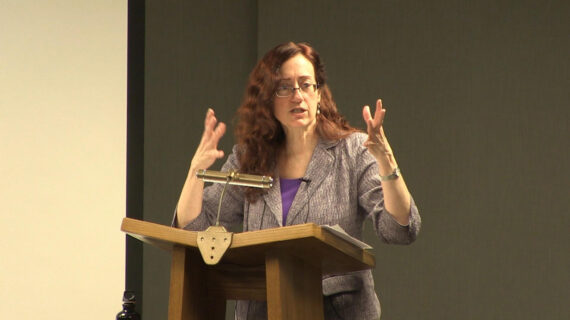
Thank you. Good evening. I'd like to say that I'm pleased to have been asked to introduce our guest speaker and artist for this evening. The first person on tap is Simon Balto.
I've worked with Simon in both the history department and the Department of Afro-American Studies. Some of you may already know him as a musician and a singer in various clubs around town. He actually wears two hats. He's also a talented historian.
His work on policing in Chicago couldn't be more timely. Especially after the recent allegations about the Chicago Police Department running a CIA style black ops detention center, and the nationwide crisis we face regarding policing in communities of color all over. Simon has made an extensive study of Chicago and spent a year as a fellow at the Black Metropolitan Research Consortium. He's published in the Journal of African American History among other sites.
Simon is finishing his PhD here at the university this spring and will be an assistant professor at Ball State University in the fall. I could go on talking about his considerable accomplishments, but there is one last thing that I'd like to say, one last point I'd like to make. And that is that we need the kind of research that he's doing. We need to know what the power structures are in the communities that we live in.
we need to know how they operate if we want to make changes. Simon's work is a model of how we can go about that. And I'd like to begin by presenting to you Simon Balto.
APPLAUSE
It's especially gratifying to hear your advisor say that you will finish your PhD in the spring rather than that you hope to.
LAUGHTER
So I just want to say thank you to the comparative US studies group, to Professor Plummer especially for seven years of guidance, to the various other mentors in the room, and a special shout-out to Young, Gifted, and Black for everything over... YGB! Absolutely. And thank you guys for coming out on what we hope is the last frigid night, I guess, of the year.
LAUGHTER
We hope. So this talk, if you guys saw posters around, this talk, the title has switched a little bit, and that's mostly because I had a very hard time writing this talk. This is probably the most difficult talk I've ever written, and, for those of you that are academics will understand and have written job talks. But for some reason it struck me as much more difficult.
And so I've rewritten it and rewritten it and rewritten it, and I basically broadened the title a little bit, and I kind of want to explain why. So how this reads now is it's a history of policing and blackness, and one of the things that writers and academics play around with, among many other things that we play around with, are articles like "the" and "a" and "and" thinking that we're being clever, which is how I settled on this particular title. And I used the indefinite article because there are so many things that I could talk about tonight, that we could talk about tonight, that are related to this history. My dissertation spanned 70 years of history in Chicago, or almost 60 years of history in Chicago, and there are so many different things that we could talk about.
We could have talked about tracing the history of differential arrests and incarceration. Looking at the evolution of things like stop-and-frisk, which, while many people conceive of it as a sort of new age phenomenon, was actually born in Chicago, at least during Prohibition, and hit the black community there like a tidal wave there beginning in the 1950s. Another way that we could have talked about this to talk about the experiences of black police officers inside of police departments, like the Chicago Police Department, which I'll abbreviate as the CPD, who faced constant crises of legitimacy from forces both within and outside the department. Black officers working on the CPD rolls were always, until very recently, dramatically underrepresented relative to their percentage of the population as a whole.
They had to deal with being Jim Crowed within station houses. They had to deal with being around and often the target of racist jokes and anecdotes from their colleagues. They had to deal with a white citizenry used to a certain supposedly natural racial order of things, who would, in the words of one Chicago man in 1952, "just die if a nigger cop arrested me." Or we could talk about the white officers who pushed back against those attitudes of their white colleagues. And there are those.
Many of them. Another path not taken here might have focused on the broader, systemic contexts at play. We might have looked at the ways that public policy and white supremacy together helped build the segregated patterns of our cities, making places like Chicago and Madison and Milwaukee among the most segregated places in the nation, and how those things, public policy, white supremacy, and the pillagings done by private capital, built the ghettos of inequality that became the prime sources of bodies feeding the criminal justice apparatus today. We might further have looked at the inordinately challenging position that police officers, regardless of race, were placed in as those ghettos were constructed, charged essentially with policing and containing plains of poverty and inequality that by the early 1960s in Chicago had birthed street gangs and violence that still haunt us today.
We might also have looked at the historic failure of police departments in cities like Chicago to provide adequate protection to people living in black neighborhoods. There is a tendency today to focus on egregious acts of police misconduct, pardon me, but both now and for more than half a century, a better shorthand for the broad experience of black communities relative to the police has been to be at once overpoliced and underprotected. That not only have many black folks had to reckon with abuse and harassment, whether walking down the street or driving a car or whatever else, but that whether from white violence or violent crime, as black folks have been pointing out for generations, when you actually need police protection, finding it has often been a challenging proposition. We might also have talked about black activism historically surrounding police reform, or any other myriad subjects.
And I'm going to try to weave all of these things as much as possible, and I'm happy to answer questions later about them afterward. But because of the resonance of the current moment of Black Lives Matter and everything else, I want to focus instead on what I suspect is the subject of greatest resonance to many of the people in this room, and that is to talk about a history of police violence and the use of fatal force. As I'm sure they have been for many of the people in this room, the last year or so has been interesting and heartbreaking and inspiring all at once. The seeming avalanche of anecdotes and statistics and evidence showing the derogation of black life, the videos of Eric Garner and Tamir Rice as their lives left them, and at the same time, the rise of organizations like YGB here in Madison, FLY in Chicago, I like that acronym too, FLY Fearless Leading the Youth in Chicago, the broader black lives movement.
As a person and an activist both, it has been overwhelming in ways both terrible and wonderful. And as a historian, it has been tremendously strange. Seemingly daily, I feel myself thrown back and forth between present and past, and looking at the gulf between. History, in its most basic and perhaps most boring dictionary definition, is the study of change over time.
But what has hit me again and again when it comes to these questions of race and police violence is how little things have changed in many ways over the last three or four generations. As a way of illustrating what I mean by this sort of being tossed back and forth between past and present, and some of you may have seen this, but last August, as the movement around the killing of young Michael Brown was blooming in Ferguson, Missouri, MSNBC host Melissa Harris-Perry delivered a monologue on her show in which she listed some of the names of unarmed black people killed by white police officers over the last 10 years. In closing, Harris-Perry referenced an old and very infamous Supreme Court case from 1857. That of Dred Scott in which the Supreme Court of the United States seemed to effectively negate the very idea of black citizenship and belonging in the United States with Chief Justice of the Supreme Court Roger Taney famously stating that black people "had no rights which the white man was bound to respect." When I saw Melissa Harris-Perry do this, I was pulled backward to when I was researching in Chicago, and I came across this 1958 editorial in the black-owned Crusader newspaper, which invoked identical language to talk about police brutality and its burden upon black folks.
This sentence, in case you can't read it, says, and this is in the context of police brutality, says, "This hostility" toward the police is what they're talking about, "is engendered by the plain fact that in the eyes of the police, no negro has any rights that a policeman is bound to respect." Another example of what I'm talking about is one of many affiliate groups in Chicago of the Black Lives Matter coalition is the We Charge Genocide grassroots group, which last year submitted a report to the United Nations Committee Against Torture in which they alleged that the Chicago Police Department is in violation of six different articles of the UN's Convention of Torture because of its cruel, inhuman, and degrading treatment of youth of color in Chicago. In so doing, they explicitly harkened back to the 1951 petition to the UN by an organization called the Civil Rights Congress, which similarly asked the United Nations to condemn the routine derogation and violation of black life by government forces in the United States, most notably, local police forces. As the Civil Rights Congress wrote, "Once the classic method of lynching was the rope. Now it is the policeman's bullet." I was in Chicago last month at a rally to force the city to pay reparations to victims of police torture, and as I heard the testimonials pounding down around me of cattle prods and beatings and so on, I harkened back not just to the 1970s and 1980s, which were the impetus behind those particular protests, but to the 1920s and 1950s and all the intervening moments between in which a black person in Chicago found him or herself being suffocated or chained or pummeled while in custody.
I read the news that the Guardian broke last week that Dr. Plummer alluded to about Homan Square on Chicago's West Side. A police facility that the Guardian compared to a CIA black ops site, where police would take suspects, chain them and hold them without contact with the outside world, often subjecting them to physical and certainly to psychological abuse. Meanwhile, I listen to NWA and Kendrick Lamar and Chance, the rapper, and Dead Prez rapping about the police, or I read Ta-Nehisi Coates or Hilton Als or Kiese Laymon or look at some of the art installments of women like Jay and people like Alex Jackson, who she's collaborated with, a former student of mine who couldn't be with us tonight brother's got a grad student interview, and I hear pounding through my head when I read and listen to these things.
Things like Mary McLeod Bethune writing in 1952 about "the swaggering bullies clothed with law enforcement powers" walking the black districts. I hear Amiri Baraka writing about Harlem that you "can walk along 125th Street any evening and meet about one hundred uniformed policemen, who are there, some will tell you, to protect the people from themselves." I hear black freedom activist Jack O'Dell saying that "the county courthouses, the city halls, sheriffs' offices and the police stations are symbols of racist tyranny to black people." I hear Jimmy Baldwin writing in The Nation in 1966 that "the law is meant to be my servant and not my master, still less my torturer and murderer." And so when I look at 2014 and 2015's landscape, I feel in some ways twice-broken, both for the obvious reasons as a human and activist, and also for the fact that as a historian, I am astounded by the multi-generational gulf from then to now, and the many apparently mirror images and experiences I see cascading all around us. So I want to talk a bit about these mirrors and about some of the historical context for today. About Eric Garner's context and Oscar Grant's context and Michael Brown's context and Tamir Rice's context and ultimately the context for Black Lives Matter as a whole.
And I want to do that specifically by sketching some of the history that I've been researching in Chicago, and I really want to focus on the period sort of prior to and after World War II and up until the War on Drugs because I think a lot of us tend to think of these things as really beginning with the War on Drugs. So I'm going to end there just to sort of get that out of the way in the beginning. In Chicago, this story begins in earnest a century ago. Like many other big northern cities, Chicago began absorbing a really large black population beginning during the 19-teens and '20s, with a second and larger wave happening during the 1940s and on into the 1960s.
In both, the people arriving were black southerners fleeing the bitter fruits of racist violence in the South, and headed North hoping for better lives and opportunities. History would write the results of their journeys as a mixed bag, better in some respects and profoundly disappointing in others. Many migrants spoke of their travels in idioms of biblical journeys, exodus and of deliverance. But prayers for their deliverance were also often met with ferocious anger from many of their new neighbors.
During the teens and '20s, black people moving to the city were funneled into narrow sections of the city, particularly on the south side. Those bold enough to try to live anywhere other than in those areas faced extraordinary backlash. Dozens of bombs went off every year underneath, into, and near homes bought by African Americans. White citizens wrote restrictive clauses into the deeds of their houses that prevented sale to black people, intending to keep white neighborhoods as white as possible.
Later, in a set of arrangements prior to, during, and after World War II, public policy would emerge as a crucial factor in further restricting black mobility around the city through site selections for public housing projects that reinforced the city's segregation, through loan policies by the federal government and the Chicago Housing Authority that made it difficult for people living in black or transitioning areas to secure mortgage loans, through the plunderings of private real estate interest and agents who used exploitative practices that one lawyer in 1968 estimated was robbing the black community in Chicago of a million dollars a day in lost equity. The cumulative effects of these processes included the construction of low-income black ghettos in places like the south side and the west side, and simultaneously, the construction of the white middle class through housing and educational policies that dramatically privileged white communities. So incredible were the divergences and opportunities in access to secure the perquisites of the American Dream within these contexts that the eminent scholar Ira Katznelson has referred to it as as a time "when affirmative action was white." The police in Chicago were deeply involved in the processes of ghetto construction, not just in policing them and the boundaries between them, but also in abetting their construction. During the 1900s and 19-teens and into '20s, the CPD famously redirected Red Light districts, including prostitution and gambling dens and illegal taverns, they famously redirected those out of white neighborhoods, away from the downtown loop, and sent them into black neighborhoods.
This is not urban legend or conspiracy theory, it is the stuff of readily admitted historical fact. In the words of one former police chief in Chicago, talking
about brothels and sex workers
"So long as this degenerate group of persons confined their residence to colored areas, they would not be apprehended." Meanwhile, story after story emerged of officers arresting interracial couples and protecting lines of segregation, whether by keeping white people out of black neighborhoods or black people out of white ones. While bombs exploded year after year directed toward black people trying to move into white neighborhoods, the police failed to once make an arrest of anyone associated with such racial terrorism. These new migrants to the city were also the targets of extraordinary racial suspicion. As the black Defender newspaper
put it in in 1921
"To the white officer, every black face is a potential criminal." Black Chicagoans were overrepresented by a factor of three in total arrests at the beginning of the 1920s, including for things like disorderly conduct and vagrancy, which were often used as catch-all charges for minor infractions or for nothing at all. In 1921, one in 10 black men between 17 and 44 years of age living on the near north side had spent time in the county jail that year. But few things scandalized community members more than emerging evidence of brutality and abuse. In 1925, the Defender's editorial board summarized the
issue thusly
"Complaint is frequently made of the brutality of the police, and there is no group of people who have suffered more, physically and mentally, than we have." Brutality had many contexts. It included being clubbed and beaten in the streets, but its shadow stretched to much darker places, with suspects routinely being abused in interrogation rooms as police tried to extract confessions, a practice often euphemized as "giving someone the third degree" but which would more accurately and honestly be called "torturing them," banging rubber hoses across a suspect's abdomen, placing a box over their head and filling it with tear gas, applying acid to genitals, sleep deprivation, hanging prisoners upside down by their ankles, beating them with poles sometimes to the point of eyeball dislocation and blindness, and so on. In 1929, a south side woman identifying herself simply as Mrs. Woods, who lived next door to the police station at 48th and Wabash, described being driven toward a "nervous breakdown from hearing those poor prisoners crying like children" as police officers split their lips and knocked out their teeth.
"It's a shame," she wrote, "a disgrace to humanity, and it should be stopped now." But it didn't stop. Such violent impulses found their logical culmination in the dramatically disproportionate police killings of black people even at this very early juncture. For the years during the 1920s for which statistical information is available, black people constituted more than 40% of people killed by the police in cases that the courts ruled justifiable or excusable, a rate more than 10 times the representation in the general population. The white-owned Chicago Tribune awarded $100 bravery awards each month to various CPD officers, more than half of which were given to killers of black men.
In 1930, a 16-year-old black kid accused of breaking a store window was killed in his home in a hail of 35 bullets when police officers broke into his house without a search warrant. In response, anti-lynching activist, the famous, fierce, anti-lynching activist, Ida B. Wells, who had made Chicago her home by this point, wrote a scathing editorial in the Chicago Daily News in which she
wrote
"Perhaps if the city had recognized the consistent killing of black men by police as a menace to her fair fame and public sentiment and then sternly demanded the removal of incompetent heads of the police department, the boy might not now be lying cold in death." Those patterns of people lined cold in death, however, mostly held during the 1930s before becoming dramatically worse during and after the Second World War, as new waves of black in-migration to the city reignited racial conflict. Hundreds of thousands of black folks moved to Chicago between 1940 and into the 1960s, and on an average of almost once a year during the late '40s and into the '50s, white neighborhoods erupted in mini-riots as white people tried to repel black people from moving into their areas. As had happened before, protection from the police for these black interlopers often proved tremendously difficult to secure. As the growing black population was then forced into select areas on the south and west sides, you can see in this slide on the right, that's sort of the pattern of segregation that we see now.
The heavily black areas are the heavily black areas. As the growing black population was forced into select areas on the south and west sides, the economic conditions within those communities spiraled due to job scarcity, an eroding tax base, resource flight, and a heroin epidemic. The character of black neighborhoods increasingly was framed in the white press and by city power brokers as one colored by pathology and dysfunction as something that needed to be dealt with and contained. While recognizing the significance of the patterns emerging during the teens and '20s and '30s, a range of community members in Chicago remember the postwar era as the beginning of a downward spiral.
I interviewed Timuel Black not that long ago, who is a very dear old man who is now 95 and has lived on the south side of Chicago since his parents brought him there from Alabama when he was a baby in 1919, and he described the postwar as a moment when police "became our attackers rather than our protectors." Black neighborhoods were increasingly saturated by police patrol units. During the 1950s, the CPD revised a practice called stop-and-seizure, what we now call stop-and-frisk, a tactic that had been first put into every day use during Prohibition, but that came back with a vengeance during mid century. By the mid-'50s, three decades before the War on Drugs I would emphasize, arrests for drug possession and holding illegal gambling receipts, both of which require the sorts of things that stop-and-frisk does, both of those were becoming an almost exclusively black phenomenon, black people constituting nearly 85% of those arrested on drug charges, without correlate evidence of such disparities in usage. Newspaper editors and black community leaders increasingly began using the language of terrorism to describe this treatment and those patterns.
Ministers, preachers, teachers, doctors and lawyers all increasingly found themselves susceptible to being stopped in the street randomly, searched, questioned, arrested without cause. Everywhere were conversations about suing the city to make the police department stop. Worse still were ubiquitous accusations of brutality and violence and death that pervaded postwar Chicago. They continued to often happen in the shadows.
During the 1950s, the Illinois state law requiring that prisoners be taken before a judge as soon as possible following arrest slacked into total disregard in the hands of the Chicago Police. Officers routinely detain people without charges for grueling long periods and under extraordinary duress while they tried to extract confessions. Many people arrested by the police in this fashion faced a multi-day ordeal of being held incommunicado, no charges, no contact with the outside world. In 1957 alone, the Illinois ACLU reported that more than 20,000 Chicagoans arrested annually were held in such circumstances for more than 17 hours.
The situation, most legal experts agreed, was worst for the poorest, blackest, and least politically connected members of society that had to deal with such practices constantly. In a case that was only settled a few years ago, in January 1952 Oscar Walden, Jr., a 21-year-old ironworker and minister, was accused of raping a white woman on the south side. When police arrested him, they brought him in for three days worth of illegal detention and interrogation, which included being threatened with rubber hoses and a hanging rope in the style of a lynching noose and having the fingers on his hand bent so far back that 60 years later, to this day, the scars on his hands still show. The police strategies worked, depending on your definition of worked.
There appears to not have been much care for whether or not the information gleaned from these strategies worked, but Oscar Walden was prosecuted on the basis of his own coerced confession. He appealed for a new trial on the basis of the physical and psychological terror that underpinned his confession, but the appeal was denied by the criminal court. Walden was sent downstate to the penitentiary and spent 14 years behind bars before being paroled. Sixty years after the fact, in 2012, he finally received restitution from the city for the hardships he endured to the tune of $950,000.
James Halsell, a young black man of 19, was stopped and searched by police officers one day in May of 1957 when he was walking to work. While Halsell himself held no contraband, he walked with two other young men, one of whom carried a handgun that police found during the search. Halsell and the others were taken to the police station in the Fillmore District on the west side. Police directed Halsell toward a windowless room, where they placed a jacket over his head like a hood, zipped it so he could not see, and beat him with fists and feet and unidentified objects to the point that he vomited from the pain.
Officers held him incommunicado and untreated for 48 hours before trying to charge him with disorderly conduct. A judge rejected the charge the next day. Halsell missed a month's worth of work while he convalesced. A 1960 expos by John Bartlow Martin in the Saturday Evening Post on police torture around the country explicitly pointed to Chicago as a place where the nexus of illegal detention and torture was particularly problematic.
Based upon information received from the Chicago ACLU, Martin wrote that "the police, while holding prisoners incommunicado, extracted confessions from them by touching their genitals with an electric prodder, a metal rod which emits an electric shock and was devised for herding cattle." In other words, a cattle prod. Beyond these moments of closed-door torture lay open-air violence. Samuel Wallace reported being stopped and searched by two white officers while on his way to work one December night in 1963. According to Wallace, what began as a routine stop escalated into the officers beating him with fists and nightsticks on the street where he was stopped, in the squad car on the way to a police station, and in the officers' locker room once they arrived.
Sixteen-year-old Regina Spikes threw herself between her father and a gun-wielding police officer, who proceeded to club her on the head and push her down a flight of stairs before arresting both her and her father. For protesting to a police officer over the towing of her car, Lillian Brown reported being manhandled by three white male police officers. At the police station, a white policewoman told the handcuffed Brown that she looked "like one of those Alabama bitches." For the high crime of making faces at a police officer, 15-year-old James Pitts was kicked and beaten about the head with nightsticks, punched in the stomach, and sprawled prone on the concrete in front of a crowd of neighbors. John Johnson, Jr.
claimed to have been handcuffed to the back end of his car by a CPD officer who proceeded to bash his face into the car's rear deck while Johnson's wife and young children watched. Stanley Reed reported watching police shoot his son, handcuffed after being stopped on a traffic violation, in the back in October 1966. Reed, the elder, could do nothing but watch as his son cried "Dad" twice with his last breaths. Ralph Bush, age 23, was taken into police custody in October of 1962 after being arrested for loitering and accused of stealing a bottle of whiskey.
He never made it out alive, suffering fatal head injuries from a beating delivered while in the custody of police. And on and on. Such violence was in part the product of increasing and ever widening senses from police officers that the black people around them were a foreign presence. In the 1960s especially, as black demands for equal rights and opposition to the Vietnam War escalated around the country, local officers in Chicago used the idiom of warfare to discuss their relationship to the black community that they were nominally serving.
As one put it
"Blacks used their plight to attack the country and we saw them same as any of those longhairs that were ruining the country."
Recalled another
"They were all against our society; blacks and the antiwar crowd, they were all the same. They declared war on us." Recalled another, talking specifically about the black
community
"We were told not to take any prisoners, that we were in a war, and that the taxpayers were not going to pay us to watch their city go down the ----." By 1967, studies showed that twice as many black Chicagoans as whites had seen the police use force or threat of force in handling civilians. Although anecdotally, those figures seem profoundly low. And they accelerated at the close of the decade. In the late '60s, a series of high-profile deaths at the hands of the police provoked outrage across black Chicago.
Linda Anderson, a 19-year-old army wife and mother of two, who in August of 1969 was killed when police responded to a report of a rape-in-progress at her apartment by blasting through her thin plywood door with a shotgun and peppering her with buckshot. The CPD ruled the case an accident and suspended the officer for one day. Six weeks later, 16-year-old John Soto was shot in the back of the head by a police officer on the near west side. Eyewitnesses from the community insisted that Soto had been shot without provocation.
Police claimed he had been abusive toward the officer and that the bullet had discharged in an ensuing scuffle. Five days later, Soto's older brother Michael, a decorated Army sergeant home on leave to attend his brother's funeral, was also shot dead by the police. Department officers claimed the elder brother had tried to rob a man and confronted police, this is a guy home on leave from the Army, the department officers claimed the elder Soto had tried to rob a man and confronted police with a gun when they tried to arrest him. Both killings were ruled justifiable homicides by internal departmental review and no one was punished.
A month later, 18-year-old Steven Dixon died with one of his hands in the air as the other was being pulled down behind his back as an officer's bullet pulverized his chest as the officer tried to secure handcuffs on him. Witnesses said he lay wounded in the street for an hour before being taken to the hospital, and he died on the way there. Justifiable homicide. Between 1969 and 1970, 56 black men and three black women were killed by the Chicago Police.
A civilian death rate that was by far the highest in the country and that was six times what it was for white Chicagoans. To those who rejoined that this was because black Chicagoans committed more crime, African Americans might have responded that even controlling for arrest differentials across race, black people were significantly more likely to have fatal force used against them. At the inquests that procedurally followed fatal force cases, officers routinely claimed self-defense as a rationale for having killed their suspects. In 58 of the total of 76 cases involving fatal force, 59 of the 76 involved black folks, in 58 of the total 76 cases involving fatal force, police alleged that the deceased had displayed a weapon.
Yet in only six of those, six of 58, was fingerprint or ballistic evidence actually offered into the record. Meanwhile, according to legal analyses, in 28 of these cases, there appeared to be a "substantial evidence of police violation of administrative standards of conduct." And in 10 of those 28, "the evidence also indicated a substantial likelihood of criminal misconduct by the police officers during the fatal incident." Internal reviews exonerated the officers of any wrongdoing in all but two of them. Further damaging the department's claims to have the matter under control were reports merging at exactly the same time from psychologists employed by the police department who reported extraordinarily high rates of emotional and behavioral disorders among those seeking police work, rates between two and three times higher than in the general population. And, as if to put an incredible stamp on the matter, at the end of the 1960s, a cell of Ku Klux Klansmen was revealed to be working within the police department, the ranks of which included the Grand Dragon of the Illinois Klan.
Black Chicago responded with vigor to this torrent. The need for civilian oversight of the department was a centerstone of Chicago's civil rights movement during the 1960s, capped most symbolically by Martin Luther King, pictured here, taping a list of demands to the front door of Chicago City Hall that included the need for a Civilian Review Board. In an even more expansive way, the issue stood at the center of the city's briefly thriving Black Power movement that was largely crippled by police repression and political assassinations, most famously of 21-year-old Black Panther leader and interracial grassroots organizer Fred Hampton, who was murdered in his bed by Chicago Police Department officers in the dead of night in coordination with the FBI. In less iconic ways, this activism blossomed outward into the community and even into the police department itself.
A cohort of black police officers, in 1968, established the Afro-American Patrolmen's League to try to bend the police department toward better protection of black communities and end police brutality. A core of citizen lawsuits against the department sought to challenge discriminatory and abusive practices. The Urban League opened a "Survival Line," that idiom of survival pervaded these efforts. The survival line, set up by the Urban League, was a telephone line through which people could report negligence and crime and police misconduct.
In 1972, south side Congressman Ralph Metcalfe held a string of public hearings that were titled "The Misuse of Police Authority in Chicago", at which citizens could come testify about their various experiences with the police. The hearings had to be delayed by a week because of the sheer volume of people showing up to testify. Those that came, told their individualized stories of abuse, but at a more systematic level, framed police violence as a part of the every day, and first-degree murder by police as what they called a common-place occurrence. As Lester Jackson, a contractor and community leader on the west side, testified, fearing for his
life
"When I leave my home in the morning, I don't know if I'll ever see it again." Notably absent from the hearings, despite having been asked to testify, were police officials, all of whom refused. A final surge of community activism to reshape the CPD emerged at almost precisely the same time as these hearings closed. In August of 1972, the Black Panther Party, a husk of what it had been when Fred Hampton was alive, but still ongoing in the community under the leadership of Bobby Rush, the Black Panther Party announced what would be perhaps the most fully conceptualized citizen-oriented police reform effort to have ever bloomed in Chicago. Known as the Chicago Campaign for Community Control of Police, people involved with the effort labored to map out a vision of principles for more humane, effective, and community-controlled police department.
The vision of what this would look like was as capacious as it was radical, essentially transferring control of and oversight of the police fully out of the hands of the city administration and into the hands of the people. Among the requirements fleshed out by this group of leaders
were the following
that all police officers live in the district where they work; the creation of local district boards, elected from the community, which would administer the police in their specific districts and have authority to hire and fire, so essentially district level civilian review boards with hiring and firing authority; and also the creation of a citywide board composed of representatives of each district which would set general citywide police policies and supervise the training of qualified police personnel. All told, over a hundred different organizations signed on to support the basic principles of this document, including the NAACP, no one's idea of a radical at this point, in Chicago at least, Operation PUSH, headed by Jesse Jackson, the American Indian Movement, the Midwest Latino Conference, and many, many, many more. But for a variety of political reasons, the planned course of action, getting the issue on a citywide ballot for the 1975 general election, never happened. And despite its failures to adjust the dynamic between police and community, I'm tempted to close with that story.
With a story of rising activism in the early 1970s following the late 1960s. The fact that more than a hundred different organizations in Chicago alone were devoting themselves to police reform efforts at the same time provides glimmers of inspiration, as much as I feel when I think about YGB and some other groups. But it strikes me as being intellectually dishonest, were I to end there simply because it makes me feel better. Because the truth of the matter is that at virtually the exact same time that black folks were rallying for community control of the police, perhaps the least controllable police officer to have ever been documented on the police force was beginning a reign of terror upon the south side.
In 1972, a young Vietnam veteran and Chicago policeman named Jon Burge was promoted to detective and placed in charge of a group of men working on the south side. A native of Merrionette Manor, a white housing development on the southeast side of the city, Burge had been a bright student in high school, active with ROTC and a variety of other activities. He had volunteered for the Army to go to Vietnam in 1968 before being honorably discharged in 1969 as part of a wave of troop withdrawals. When he returned, his native neighborhood, once all white, had been transformed into a virtually all black one.
This happened very quickly. His parents had been among the last of the white folks to leave. It appears that Jon Burge and the men at his command began torturing black men on the south side at roughly the same time that the Metcalfe hearings were ongoing and that the Campaign for Citizens' Control of Police was emerging. According to the chronology of events organized by the People's Law Office in Chicago, the first of these was Anthony Holmes, who reported that after he was arrested on the south side on a suspected murder charge in 1973, the arresting officers took him to an interrogation room where he met Jon Burge for the first time.
According to Holmes' testimony, detectives put a plastic bag over Holmes' head, and when he bit through it in order to breathe, Burge placed a second one over the top of it. Electrical wiring was harnessed to Holmes' genitals, and as he struggled, Burge told him "You're going to talk, nigger, you're going to talk." A crank turned, and Holmes felt what was perhaps the worst physical pain of his life. As he recalled later, "It feel like a thousand needles going through my body, and then after that, it just feel like, you know, it feel like something just burning me from inside. I shook, I gritted, I hollered, then I passed out.
They put the bag back on me, took me through the same thing again. They did that I don't know how many times. I said to myself, 'Man, they're trying to kill me.' I thought I was dead because all I could see was blackness, and I said, 'Man, this is it, I'm gone.'" Nobody knew quite what the hell Jon Burge was using when he elicited these sorts of responses. Chicago had certainly seen its share of torture devices, but it had not seen this.
What is suspected now is that it was something that he had imported from his time in Vietnam. A contraption, perhaps using the wiring of a field telephone, that he had seen used in the interrogation of POWs. The Chicago Reader published a long-form piece in 2005 about the Burge torture cases in which writer John Conroy sought out people who had served with Burge or in similar circumstances, and many of them readily identified the electrical shock treatment Burge was using as something that had been used in prison camps in Vietnam. Whether through these sorts of electrical shocks, beatings, suffocation, or others, lawyers estimate that Burge and his men tortured at least 118 different people between the early 1970s and the mid-1980s.
Still just 66-years-old, Jon Burge was recently released from prison on obstruction of justice charges. He served four years for obstruction of justice. The statute of limitations had run out on the torture charges. The city is still paying settlement claims for torture victims of both Burge's crew and other units across the city.
Just last year alone, Chicago spent more than $50 million in payouts in settling legal claims. And the city also still pays Jon Burge a $3,000 a month pension. From there, the story becomes more familiar. At the national level, in patterns mirrored in Chicago, the early 1970s saw an increased push for stiffer drug penalties, in tandem with rising federal coordination with state and local governments to give them funding for various projects.
By the early 1980s, the War on Drugs began hammering away at the United States and especially the fabric of poor black neighborhoods like Lawndale and Englewood in Chicago, like Bed-Stuy, like Compton, in recent years, about four or five miles south of here down Park Street. The point of all of this was not that all police are bad because that's not at all the case. It's that the system has been rotten for a very long time. That this is something that has been identified consistently by black folks since the 1920s, for the better part of century now, as being something that is rotten.
But as this sort of War on Drugs picked up, the combination of enhanced sentencing penalties and zero tolerance policies under the War on Drugs doubtlessly reshaped the landscape of community opportunities and engagement with the criminal justice system. But it's worth considering the extent to which much of that was more of a steroid injection than a dramatic and total remapping of the relationship between police and community. New innovations in post-arrest punishments have changed the rates at which people go to prison. But relatively to white people, black Chicagoans now are roughly as likely to be arrested on petty charges as they were half a century ago.
They are more likely than other demographic groups to live in neighborhoods that are unsafe, and just as they have been for generations, they are far more likely to experience violence at the hands of police officers than are their neighbors. And I emphasize again that those are not statistics that have necessarily changed very much over the last 50 years. And I would emphasize as well that this story has played out in similar ways in other other cities elsewhere. That I know a lot about Chicago but that when I look at other cities, I see very similar things happening elsewhere.
That this is the context for Chicago, but this is also the context for Eric Garner's New York. It is the context for 12-year-old Tamir Rice's Cleveland. It is the context for Michael Brown's Ferguson, Missouri. It is the context for Rekia Boyd, who was killed in Chicago in 2012.
It is the context for William Hope, Jr, who was killed in Chicago in 2010. It is the context for the 89 people killed by police in Chicago over the past five years, just as it was the context for the 59 black people killed by police in Chicago between 1969 and 1970. While not all of us see it, this is the context for much of America. It is part of the long context for black lives matter.
And I thank you for listening to me.
APPLAUSE
Search University Place Episodes
Related Stories from PBS Wisconsin's Blog






Donate to sign up. Activate and sign in to Passport. It's that easy to help PBS Wisconsin serve your community through media that educates, inspires, and entertains.
Make your membership gift today
Only for new users: Activate Passport using your code or email address
Already a member?
Look up my account
Need some help? Go to FAQ or visit PBS Passport Help
Need help accessing PBS Wisconsin anywhere?

Online Access | Platform & Device Access | Cable or Satellite Access | Over-The-Air Access
Visit Access Guide
Need help accessing PBS Wisconsin anywhere?
Visit Our
Live TV Access Guide
Online AccessPlatform & Device Access
Cable or Satellite Access
Over-The-Air Access
Visit Access Guide




Follow Us