

 Passport






Ole Evinrude and His Outboard Motor
03/14/16 | 31m 19s | Rating: TV-G
Bob Jacobson, Author of “Ole Evinrude and His Outboard Motor,” shares the success story of Ole Evinrude. Jacobson traces Evinrude's story from the time the family left Norway when Evinrude was three, to his invention of the outboard motor.


Copy and Paste the Following Code to Embed this Video:
Ole Evinrude and His Outboard Motor
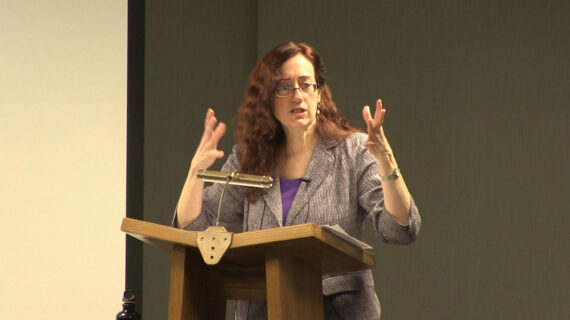
Today, I'm pleased to introduce Bob Jacobson as part of the Wisconsin Historical Museum's "History Sandwiched In" lecture series. The opinions expressed today are those of the presenter, and are not necessarily those of the Wisconsin Historical Society or the museum's employees. Bob Jacobson has been a professional writer and communicator for about 25 years. Sometimes as a full time freelancer, like he is now, and sometimes as the communications guide for one or another nonprofit organization, including 12 years at the Wisconsin Council on Children and Families.
But he would have rather been a rock star. After starting a family and abandoning his dream of rock immortality-- though he still bursts out his trumpet fairly regularly-- Bob discovered that writing was this slightly less degrading way to make a living than any of the other lousier jobs he was qualified for. His words, not mine. He has written two books in the Wisconsin's Historical Society's Badger Bio Series Ole Evinrude and His Outboard Motor
and Les Paul
Guitar Wizard. He's also written a reference book about sports. He's a regular contributor to Madison's weekly news and arts publication, the Isthmus, and has contributed to many of other local and national publications. He lives on the far east side of Madison, with his wife Cynthia and their 10-month old puppy Laika, who is named after the first dog in outer space, sent there by the Soviet Union aboard Sputnik II.
A nice little fact. Laika barks too much and keeps Bob from getting his work done sometimes. Here today to discuss the life of inventor Ole Evinrude, please join me in welcoming Bob Jacobson. (applause) -
Bob
and Les Paul
Thank you. Thanks for the introduction, Kate. I didn't know you were gonna read it verbatim, or I might have been a little less silly. As you've been told, I wrote this book about Ole Evinrude.
Here's what it looks like in person, and you can buy them out in the gift shop. These are little books, the Badger Bio series, intended for young readers so that means I'm not the world's most renowned expert, by any stretch of the imagination, on Ole Evinrude. But, fortunately, I have backup here today. My new friend, Lorraine, is in the crowd.
So, if you have questions that I can't answer, I can always palm them off on Lorraine so you won't have to go home unanswered. Why did I wanna write this book about Ole Evinrude? It is kind of a valid question because I don't have a boating background. My family was not boat people, but Ole Evinrude's story is a classic Wisconsin immigrant success story.
And he went on to become an important figure in the industrial history of Wisconsin and in Wisconsin's Norwegian American history. And it's also just a great story. Ole's story is a story of persistence and overcoming obstacles, stubbornness, following your heart, the classic "necessity being the mother of invention" thing. He played that card a lot.
Without further ado, let's launch into it. Ole Evinrude, that guy. He was one of 11 children, the oldest son of Andrew and Beatha Evinrude. Born in Christiania, Norway, which is now called Oslo.
He didn't look like that at the time. He only came to look like that later in his life. His father came from a seafaring family, but he himself was a farmer and in fact he had a number of family members who had died at sea, so his father was very anti-seafaring life. And he expected Ole to follow in his footsteps, and become a farmer.
And, as you'll see, that didn't really pan out the way Andrew expected it to. But the family immigrated to the United States in 1882 when Ole was five years old. According to the stories you hear and Ole's life story is full of the kinds of stories that might be true, might be embellished, might be completely fabricated. You just never know.
But they are such good stories that you want them to be true and you give them the benefit of the doubt of being true. But according to family law, five-year old Ole, on the ship coming over from Norway, kept sneaking off into the engine room because he was so fascinated by the big engines on this huge ocean crossing vessel. But that set the stage for his fascination with engines for the rest of his life. And as the story goes, his mother had to keep going down to the engine room and snatching him away from that dangerous environment.
The family made it over successfully. Ole did not get hurt or anything in the engine room. And they settled here in Wisconsin, right outside of Cambridge. About 20 miles away, near Lake Ripley.
I'm assuming a lot of you know where that is. There Andrew started farming and Ole went to school at first. But he stopped going to school in the third grade, which was not uncommon at that time among farming families. That, generally speaking, as soon as you were able to, you started helping out on the farm.
And so, Ole stopped going to school after third grade. However, by that time, he was already doing all of the math that was being taught up to eighth grade. So, he had a real head for numbers and math. And that obviously was going to play into his future success.
Using engineering skills, you require all of that advanced math. But by the time he was 10, he started helping his father on the farm, as the oldest son. And already his mechanical leanings were becoming apparent. He was able to help fix farm equipment when it broke.
Of course, farm equipment was less simpler then than it is now. And so he was able to help avoid having to take the equipment in for expensive repair at a professional shop. Very early on though, soon after that, he started becoming fascinated by boats. But he knew that his father didn't have a real warm spot in his heart for boats or the seafaring lifestyle.
And so, when he started building his own boat at age 15, he had to keep it very secret from his father. This is one of those stories that I really want to be true and I hope is true. At age 15 he built his first boat, and he had to keep it hidden from his father. He had it stashed away in a remote part of the farm but his father found it and in a fit of rage smashed it to pieces and threw the pieces into the wood stove.
However young Ole was not to be deterred and so he immediately started working on his next boat and this time he was sneakier about it he started building the different parts of it in different areas of the farm and stashing them separately figuring that even if his father found one part of it, he wouldn't necessarily be able to identify it as a part of a boat. Or, even if he did, and he smashed it up that was only one piece that he would have to build over again, instead of having to build the whole boat. Eventually, he finished the second boat. And it was, by all accounts, a beautiful 18-footer.
When his father saw what he had built, he finally realized, "Okay, I am not gonna be able "to stop this kid from building boats," and he just acknowledged, "Son, you have built a mighty fine boat there, "and I guess you are not cut out for this farming life. "You're meant for something better." And that turned out to be true. Ole has this beautiful 18-foot boat and there they are living right by Lake Ripley. That summer Ole started offering people rides on Lake Ripley, charging them 25 cents a ride.
It was a very popular little business he started. And he made a lot of money that summer. He made enough money, in fact, to leave home the following year. And this was 1893, when he was 16 years old, he left Cambridge.
And according to most of the stories I have read, walked the 20 miles to Madison in order-- I've been skipping the slides. Outboard motor. You've seen that before. Norway, where he is from.
You've seen that before. Lake Ripley. He got to Madison and started an internship with this company, Fuller Johnson, where he picked up a lot of his machining skills that he would use for most of his career. It was a good thing that he made so much money out on the boat rides back in Cambridge because the boarding house he stayed in cost more than what he was getting paid by Fuller and Johnson.
And whatever other money he had left over, he was using to buy magazines, which he was using to study everything he could get his hands on about mechanical engineering, machines, boats, engines. He was just a sponge, trying to learn everything he could. He worked at Fuller Johnson-- for Fuller and Johnson for a while and then his next move took him to Pittsburgh-- I'm ahead of myself cause I don't have a slide on that one-- moved to Pittsburgh, where he took a job in a variety of factories there, Pittsburgh being the center of the steel industry. He was learning everything he could about steel and metallurgy rolling, every aspect of the process it takes to turn steel into something you could build something out of.
He moved back to Wisconsin after that, and began to learn design and pattern-making, which is cutting and shaping metal into a usable form. In 1923 he ended up back in Milwaukee working as the head of the pattern-making shop at E.P. Allis company, a very historic Milwaukee company. And I'm sure many of you are familiar with a lot of things named Allis around Wisconsin.
While he was working at Allis, he started tinkering on his own to try to come up with his own version of an internal combustion engine, which was a newly happening thing at that time. And he could see that was the wave of the future. This new vehicle kind of engine that ran by creating little gas explosions inside cylinders, that naturally made a motor turn. This was-- you have to remember-- right around the turn of the century.
And this was the dawn of so many industries that were reliant on that technology, including the automobile industry. He rented a little shed, in which he put a workshop, and started tinkering. And, actually, I gotta back up. Before he rented the shed he was staying at a rooming house run by a Mrs.
Dowell and here is another one of those wonderful stories that maybe is true. Mrs. Dowell allowed him to use the basement of the boarding house as a workshop. It was there that he created his first internal combustion engine.
Now as the story goes, the day that he was ready to test it out he discovered that he didn't have any gasoline to power it. He grabbed the gas supply that fueled the lights in Mrs. Dowell's house, and used that to power his engine and, vroom, it started right up just like it was supposed to. But it used up all the gas, and threw the entire house into darkness right in the middle of a dinner party Mrs.
Dowell was having. But, apparently, she was impressed enough by his machine that she didn't kick him out or anything, so it was okay. Next, he got his own workshop, and as it happened, one of the neighbors of the little shed he rented was a young woman named Bess Cary, who was supporting her family after the death of her father. After a while, he started a business with a guy named Clemick.
They started a business called Clemick and Evinrude, making internal combustion engines and Bess was their bookkeeper. The company had some early success. Do I have the slide for that? There is Bess.
The company had some success. They sold a number of engines to some of the many automobile companies that were springing up at the time. But they weren't great businessmen. And he and Clemick fought over decisions about advertising and things like that.
And, eventually, the partnership fizzled. Ole had a few other near misses. He had partners that would come and go, and they would fight over something. And even though his ideas were sound, the business part just wasn't clicking.
That's where the whole theme of persistence, and getting up after you fail, and dusting yourself off, keeps coming up. Ole had that hard-nosed Norwegian immigrant "never give up" attitude. And no matter how many times his business ideas did not pan out, he always got back up and always started another one. The next one he started was a partnership with one of his associates called the Motor Car Power Equipment company.
That one failed, too, but not before Ole actually built a working car called the "Eclipse." There was nothing wrong with the Eclipse. It worked fine. Had he made some different decisions, had he been luckier, had he hooked up with the right partners, who had the right financial resources and the right advertising savvy, he could have been Henry Ford. He could have been the guy who pioneered the automobile industry in the United States.
But it didn't happen and his automobile company was a failure. At that point, he set aside his car manufacturing dreams and he started up his own pattern-making shop. And he hired Bess as the bookkeeper. By then, their relationship was beginning to become more than professional and he was courting her.
Now this is where the very best of the "maybe true" stories comes in. And there is a very famous story-- that maybe some of you have even heard before-- about where he got the inspiration for the outboard motor.
As the story goes
in 1906, Ole and Bess and two of their friends rowed out across Okauchee Lake over in Waukesha County for a picnic on a hot summer day in August. They got to the other side. They had their nice picnic lunch. and at that point Bess says, "Man, I sure wish I had some ice cream." And Ole says, "Oh, okay.
"I'll row back across the lake, in this 95-degree heat, "to the ice cream parlor on the other side "and get you some ice cream." And he does. And as he is rowing back, drenched with sweat, and the ice cream obviously melting all over the place, he thinks to himself, "Wow, if only I had a motor on this boat. I could get the darn ice cream back to Bess and impress my girlfriend and score some points instead of ending up over there with this big melted bucket of sludge, which is not gonna score me any points. And that was the inspiration, according to all the stories, for the outboard motor.
Now, it is important to note that Ole Evinrude was actually not the first person to think of the outboard motor. He often gets credited as being the inventor of the outboard motor, but really he was the inventor of the first successful outboard motor. There was another guy who was working on one right around the same time. Actually, they were a couple of years ahead of Ole.
A guy in Detroit named Cameron Waterman. And he had come up with an outboard motor of his own, a couple of years before Ole, called the Waterman Porto. And, he had actually-- Was selling them in decent numbers. He sold 3,000 of them in 1907, the year Ole actually built his first one.
He was a little ahead of him, but it just wasn't as good. But he did stay in business and continued selling his Porto outboard motors for another 10 years. He remained in business until 1917. But in 1907, three very important things in the Ole Evinrude story happened.
He designed his first outboard motor in 1907. And, really, the outboard motor that he built isn't that much different from the ones that are being made today. The principles really haven't changed from what he came up with over 100 years ago. The materials are better and lighter and they are much more powerful.
But the basic concept really is the same now, as it was when he first invented the outboard motor. Another thing that happened in 1907 is that-- Actually, the previous year, late in 1906, Ole and Bess got married. So, I guess the melted ice cream didn't ruin his chances completely. But in 1907, they had their only child, Ralph.
Later that year, Ole and his brother-in-law, Russ Cary, Bess' brother, they schlepped his very first outboard motor over to the Kinnickinnic River and tested it. And it worked. Lo and behold... It was loud as heck, and churned out a lot of smoke.
And Bess called it the coffee grinder. It was so loud, but it functioned. He went back to the workshop, tweaked it, put a muffler on it, cleaned it up and two years later they were ready to start selling them. In 1909 he made a batch of them and he arranged a demonstration on Pewaukee Lake.
And that very first demo got them 10 orders immediately. He charged $62 each. Where did he arrive at the $62 figure? It happened that these motors weighed 62 pounds so he figured out a dollar a pound is about right for an outboard motor.
They didn't have these sophisticated algorithms for figuring out how to price products back then. It was a little more by the gut in those days. At that point they decided, "Okay, "Let's start advertising these." They took out a series of ads in Milwaukee newspapers and those ads looked like that. "Don't Row," which I think is a brilliant slogan.
And Bess came up with that. A lot of people would say that she was the brains of the operation, outside of the technical parts. And that's why he started having business success instead of failure after failure was when she started having more of a voice in these things. They took up this ad.
And in 1910, they received 1,000 orders for these motors. Clearly they had struck a nerve with the public. They found something that people were clamoring for. They had to start hiring people left and right.
By that time, they had 100 people working in the shop. And they started advertising nationally. In fact, I like this advertising campaign where they tried to turn "Evinruding" into a verb. I don't think it quite caught on.
We do not today call going for a ride in your motorboat down the lake "Evinruding." But it was a good try... a good attempt. But the ads went national. And they started getting so many orders, that in order to fill them, Ole knew that he had to find some investors.
In 1911, he connected with a business associate-- the owner of a tugboat company-- named Chris Meyer. And Meyer bought half the company for $5,000. It sounds-- in hindsight-- like a pretty good investment. And they called their new company Evinrude Detachable Row Boat Motor company.
A bit of a mouthful again they didn't have clever consultants back then that would come up with pithy company names. They should have just let Bess name it. That was the first Evinrude outboard motor company. They had a number of obstacles to deal with.
For example, boating in a place like Wisconsin, where most of their customers are still located, is very seasonal. Not a whole lot of market for outboard motors in December and January. So they figured that they ought to start selling these things in Europe. They did that they figured they could sell them to, for example, Norwegian fishermen.
Over those next few years, they were working like maniacs and it began to show in both Ole's and Bess's health. And they both started having a lot of health problems. After a few years they decided they needed a break from the hectic pace that they had set with their new start up company, which was growing like gangbusters. In 1914, Ole sold his half of the company to his partner Chris Meyer for $137,500.
Again, not a bad return for Meyer's initial $5,000 investment. Now Chris Meyer owned the Evinrude Detachable Row Boat Motor company. And as part of the deal, Ole had to sign an agreement saying that he would not compete for the next five years. At the time, it seemed like a good idea.
Ole and Bess get themselves a cabin cruiser, and they go touring around. They'd spend some time sailing around Florida, around the Great Lakes, down the Mississippi River, hanging out in New Orleans for a while. While they were doing that, Ole got an idea for a better outboard motor. It would be made out of aluminum so it would be a lot lighter.
And that would be a dramatic improvement. After a few years of goofing around-- 'Cause I mean $137,500 was a lot of money back then. He didn't really ever have to go back to work, if he didn't want to. But he approached Meyer and said, "Hey, I have this great idea for a new outboarding motor." And much to his surprise, Meyer is like, "No, I don't think so." Once his five year ban on competing was up, he started a new company.
That's the boat that they were touring around in. I'm doing a really bad job at keeping up with the slides 'cause they are just kinda visual props. They don't add much. A new company called ELTO.
E-L-T-O which stood for Evinrude Light Twin Outboard. He launched that company in 1920, after his five year ban was up, and started making aluminum outboard motors. Meanwhile, a new company had sprung up-- that was proving to be fierce competition in the outboard motor world-- called "Johnson", which went out to become one of the other dominant brands in this industry for decades to come. And meanwhile, the original Evinrude company, which Ole Evinrude no longer owned or was associated with, was starting to stumble.
They weren't really keeping up. And they were kind of floundering. That company started bouncing around. Meyer sold it to another company.
It got sold again. It ended up in the hands of another very prominent Milwaukee engine company that you've heard of,I'm
sure
Briggs and Stratton. And so... The company was not making a lot of money. And Stephen Briggs started getting this idea that maybe what they needed to do was merge a few of the big outboard motor companies together, under a new ownership, with new investors.
He approaches Ole Evinrude, who had gone to thinking, "You know, wouldn't it be nice if I could sell my darn motors under my own name?" And so when Briggs approached him about a merger, Ole figured this would be a good way to get control of his own name back. In the year 1929, Evinrude, now owned by Briggs and Stratton, ELTO owned by Ole Evinrude, and another company called Lockwood-Ash-- which was based in Jackson, Michigan-- all merged to create a new company which would dominate, or at least be one of the dominant outboard motor companies, for the next many decades. There he is talking. There that's Ole Evinrude and Stephen Briggs hashing out the great big merger deal.
Outboard Marine Corporation, or OMC, as it was universally known. For many years then, OMC and Johnson went head-to-head for domination of the outboard motor industry. OMC also, over later years, became known for introducing a lot of other motor related products.
The one thing they introduced years later
the Lawn-Boy lawnmower, another iconic brand involving motors. The year they merged-- 1929-- wasn't a great year to be launching a business. 'Cause something happened to the stock market that year-- Suddenly, I don't remember that... something...
Anyway, stock market crashed that year, ushering in the Great Depression. Obviously, people were buying fewer luxury items like boats to play around at their lakefront cottages in. It was a struggle initially. Their timing was not great, but OMC eventually did thrive and grow.
However, Bess's health began to decline once again, and she passed away in 1933. And Ole passed away the very next year, in 1934. Fortunately, several years earlier, their son Ralph had gotten involved in the company, and had been rising through the ranks. And by the time his father died, he was prepared to step in as the head of OMC.
Ralph Evinrude went on to lead that company for nearly 50 years, from 1935 until 1982. Really, he ran that company for a lot longer than his father ever did. And it was Ralph Evinrude that was largely responsible for its astounding growth and success for much of the 20th century. That was him when he started working at the company.
And that's what years of working in the corporate world do to you. They age you. Then a lot of stuff started happening. Ralph passed away in 1986, a few years after he retired from running OMC.
Meanwhile, he'd had an okay life. He married a movie star, Frances Langford He became quite a philanthropist. There is an institute at Florida Tech, named after him, for the study of marine vessels. I forgot to mention a very important fact.
The very same year that Ralph took over OMC, 1935, they had basically won the battle against Johnson. And OMC bought Johnson out of receivership that same year. OMC controlled both of the biggest brands in the business, Evinrude and Johnson. Others have sprung up, obviously-- Mercury and et cetera over the years-- but OMC really dominated for quite a long time.
But all good things must come to an end. In 2000, OMC went bankrupt and both the Evinrude and Johnson brands were bought out by a Canadian company called Bombardier Recreational Products. And Bombardier continues to own the company today. That is basically the story of Ole Evinrude and his invention, his life, the company he started, and its rise and fall, and the afterlife of the brand that he started, which still lives on under different corporate ownership.
And I hope that you found it interesting, inspiring. I hope I didn't bore you too much I don't see anybody sleeping so that's a good sign. I don't hear anybody snoring so I thank you again for your kind attention. We do have plenty of time left for questions.
There's a very good chance you'll have a question that I don't know the answer to because some of you probably know more about these motors than I do. And you may be out of luck there but anything you ask me about the family, if I don't know it I've got my ace in the hole, Lorraine, here to back me up. (applause)
Search University Place Episodes
Related Stories from PBS Wisconsin's Blog






Donate to sign up. Activate and sign in to Passport. It's that easy to help PBS Wisconsin serve your community through media that educates, inspires, and entertains.
Make your membership gift today
Only for new users: Activate Passport using your code or email address
Already a member?
Look up my account
Need some help? Go to FAQ or visit PBS Passport Help
Need help accessing PBS Wisconsin anywhere?

Online Access | Platform & Device Access | Cable or Satellite Access | Over-The-Air Access
Visit Access Guide
Need help accessing PBS Wisconsin anywhere?
Visit Our
Live TV Access Guide
Online AccessPlatform & Device Access
Cable or Satellite Access
Over-The-Air Access
Visit Access Guide


Follow Us