

 Passport






Nutrition and Health
06/24/15 | 54m 31s | Rating: TV-G
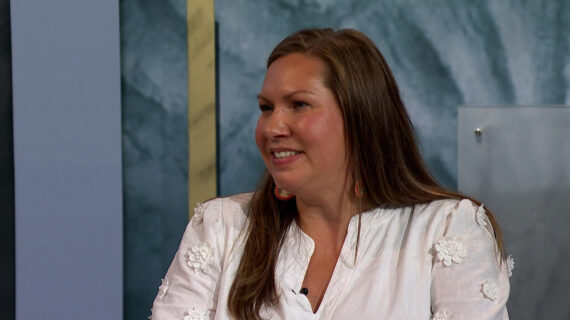
Susan Nitzke, Professor Emeritus, Nutritional Sciences, UW-Madison College of Agriculture and Life Sciences, joins Bassam Shakhashiri’s Chemistry and Society class to discuss health and dietary issues that have an impact on society. Nitzke focuses on the crossroads between food, nutrition and social concerns.


Copy and Paste the Following Code to Embed this Video:
Nutrition and Health
What I'd like to do now is introduce Professor Susan Nitzke, who is a professor emeritus from UW-Madison. And Susan we thank you for being with us this evening. And we shift gears and talk in more details on a topic related to what Professor Dr. McBride talked about last week. The question that relates to food, nutrition, and related aspects of it. So, Professor Nitzke. Thank you, Bassam. I'm very pleased to be here. So the points that I'm going to emphasize tonight are that nutrition issues are really at the crossroads for chemistry and where it meets social issues. One of the things that affects the advice that we give about nutrition is the serious public health concern in the United States over the last decade or so. Well, actually, a couple decades, about the expanding rates of obesity, and how that affects how we see the recommendations for how Americans should change their diets for better health. I chose the topic of sodium today because sodium chloride is a very simple chemical compound. There are many compounds that are essential for life and sodium chloride is one of them. You and I would not be alive if we did not take in some sodium chloride in our diets. But like so many things, too much is harmful, and sodium chloride is a great example of that. I'm going to also mention some other nutrients that are of concern.
In addition to sodium chloride
saturated fat. It is recommend that we reduce our intake of saturated fat for some reasons I'll share with you in a minute. And then there are some nutrients
that we should seek more of
vitamin A, vitamin D, vitamin E, vitamin C, folate, calcium, magnesium, fiber and potassium. Plus, if you're a woman of childbearing age, iron. I call this slide "Says Who?" and, as a scientist, as Bassam and I both try to present the most reliable information we can find, we are always concerned about where do these recommendations come from? Who's saying this, and what do they have to gain by getting us to believe what they're reporting? I have a link here. I'm using a lot of the information from a report that came out earlier this year from the Dietary Guidelines Advisory Committee. By law, every five years, the U.S. Department of Agriculture and the U.S. Department of Health and Human Services get together and review an official document called the Dietary Guidelines for Americans. And then that, that science-based document is used as the basis of a lot of policy decisions. Everything from what's available in the WIC program, if you know what WIC is. It's a supplemental nutrition program for women, infants and children. What's served in the school lunch program, and what kind of public health incentives there are to, for instance, reduce sodium in the diet. I just wanted to quickly show you that this scientific report put together by the advisory committee. The advisory committee has nothing, no close ties to the U.S. government. Congress can't tell them what to say. Food companies can't tell them what to say. They are people like Bassam and myself who work at universities, mainly. There are also some physicians and some public health experts. There are 14 of them. And they have gone through a 2-year process of reviewing the scientific evidence behind the dietary guidelines and writing a report to the secretaries of Agriculture and Health and Human Services. And then, as I mentioned, by law every five years, those two agencies get together and put together their report for Congress, for the public, for everyone, about how the American diet should change. So there will be some politics that get into the process as the Dietary Guidelines Advisory Committee's report goes into the policy documents. But the advisory committee's report was put together by a panel of scientists who have almost no political affiliations. I'm also going to share with you information from the U.S. Centers for Disease Control and Prevention. In fact, I recommended that you read a short report that they have on Q&A's about salt and sodium, and that comes from the Centers for Disease Control. I have a little bit of information from the U.S. Department of Agriculture's diet recommendation system called MyPlate. And when it comes to advocating for change and talking about how we can take these issues and talk about social ramifications, I thought Michael Pollan's piece was a good summary. Now, normally I don't quote Michael Pollan because he's a journalist, and journalists, when they write about science, sometimes they get it right, sometimes they get it a little confused. But Michael Pollan, when he talks about advocating for change, that's his territory, and I thought he did a very good job on that topic. So I mentioned obesity as an overarching condition that affects our nutrition recommendations. It raises the risk of heart disease and stroke, also other diseases like diabetes and cancer. In 2008, $140 billion of medical cost were attributed to obesity. For an individual who is obese, on average, that person's medical costs are $1,400 a year higher. So already you can see some social ramifications to obesity. Obesity is more prevalent in some subgroups of our population than others. Non-Hispanic blacks, a designation of African Americans, have the highest age-adjusted rates of obesity in the country, about half, and as a matter of fact, this was from a JAMA article in 2012, it's now over 50%. Compared with Mexican-Americans who also have a high rate, and Hispanics. This slide does not show the rates for Native Americans, or American Indians, but their rates are the highest of all. Now, how do you know if you're obese? The common measurement that's used is a quick calculation that can be done in any clinical setting, any, those of us sitting here, if we took a few minutes with our smartphones, we could do it. You just take your weight in pounds and you divide it by your height in inches squared, and you multiply that number by 703. The people who actually do these scientific calculations on a routine basis use the metric system, but I converted it here to pounds and inches. So for example, a person who weighs 150 pounds and is five-foot-five would get a number of 24.96, right on the edge. If that person had come out with a number of under 18.5, it would be considered underweight. There aren't too many people that are in that category, but there are people in that category. 18.5 to 24.9 is the range that's considered a healthy, normal weight. Now more than half of Americans, and as a matter of fact, two-thirds of Americans are in one of these last two categories. In the category of 25 to 29.9 is considered overweight. And then over 30, or 30 and over, is considered obese. Just because you need to know that it's not just the diseases I mentioned a few minutes ago, but also gallbladder disease, arthritis, apnea and breathing problems, inflammation disorders, several kinds of cancer, and there's actually a longer list but I stopped here because it's too depressing. (laughter) How many of you have seen maps like this, showing the prevalence of obesity? How many of you remember hearing that Wisconsin has the highest rates of obesity in the country? Yeah, I think everybody who raised their hand is maybe over 30, maybe even getting up into my age category. When the Centers for Disease Control started putting out these maps, they didn't have the data for every state. They had the data for over half of the states, and Wisconsin, being a progressive public health state in the '70s, had good data. And our data showed that we had one of the highest obesity rates in the country. Since then, all 50 states have joined the survey, and this is based on, actually, a telephone survey that's done every year, sanctioned by the CDC, in which they call households, now they call also on cell phones because so many people don't have a home line, and ask a bunch of questions about whether you smoke and whether you use seatbelts and all of that. And one of the things they ask is, for a selected adult in the household, how tall and much that person weighs. And the simple calculation of BMI that I showed you, Body Mass Index, leads to these figures. And if you can see on the bottom, the kind of yellow is for people, or states, that have less than a quarter of their population in the obesity category. Not overweight, but obese, the highest number, the over 30. And the light green, oh I'm sorry, that's the 20% to 25%. Then 25% to 30% is the category that Wisconsin is in. We have 25% to 30% of our population categorized as obese. Isn't that a relief, We're not the highest in the country anymore, for a number of reasons. If you remember one thing I said a few minutes ago about the ethnic representations? The number of blacks and Hispanics are quite a bit higher in some of the other states than they are in Wisconsin, and that's probably part of that reason. And before we feel too proud about being in the yellow, let me point out to you that the latest numbers are like 29.8. So all we need is a few more people to gain five pounds and we spill over into the orange category, which is 30% to 35%. And then a few unfortunate states, West Virginia and Mississippi, have more than 35%. More than 35% of their population, not adults, not just overweight, but obese. This is what, you have to be like 30 to 40 pounds overweight to get into that category. This is a serious public health issue. Personally, for the person who has obesity as a health condition, and for our nation, that has the health care costs associated with obesity. The rates have changed over time. This is from the Dietary Guidelines Advisory Committee report that I told you was put out earlier this year. And you'll see three shades of gray. The one on the bottom is for the percent of the population that's overweight. Over time, starting from 1988 to '94 is the first time period. And then ending up in the 2011, 2012 time period. You can see that for males on the left, the rates of overweight have actually gone down a little bit, yay. However, in that overall chart on the left, you can see that the number who are obese have gone up. So that totally the number who are overweight, obese, or extremely obese, extremely obese is a BMI of 40 or higher, make an overall trend to increase, with a little bit of dip right at the last couple of years. Let's cross our fingers and hope that little dip doesn't go back the other way. For females, the overweight has been pretty steady. The rates of obesity increased a lot around the turn of the century. And unfortunately, you can see, it's a really statistically significant trend that the rates of extreme obesity have gone up, especially for females. Extreme obesity, this, these are people who are like 80 pounds overweight. Now, over the years it's been really hard to try to detect this condition in children because of how we define overweight and obesity and how we want protect the sensitivity of children by not giving them labels. But the Centers for Disease Control decided that we actually need to use these terms "overweight" and "obese," and based on some historic data, based on the number of kids who were at the top 10% and the top 5% back in the 1968 time period, we now have those rates of that level of body fatness affecting 10% and 30% of our children, cumulatively. So what used to be the top 10% of body weight in children is now exhibited by 30% of the children in this country, and it's true for both boys and girls. That prompted the Economist magazine to put out this cover in 2003, over 10 years ago. And I think those of you who are fans of evolution might see either the humor or the tragedy in this particular depiction. Now, if you're not obese, good for you, but you still need to eat well. A lot of those disease conditions that I reported are still affected by how much you exercise and how well you eat. And we have good data that just being thin doesn't get you off the hook. A few of you are a little disappointed by that, but oh well. Which nutrients do we need more of in the American diet and which ones are overconsumed so that the official recommendations say to have less? Guess which ones are going to be on the list I'm going to show you next. These are the shortfall nutrients, and the nutrients with the stars are the ones that the Dietary Guidelines Advisory Committee said are public health concerns. They're not only significant less than recommended levels for the American population based on a lot of biological calculations but they're associated with a significant rate of chronic disease risk. So that low intakes of these nutrients have a measurable and definable and detectable public health consequence, and personal health consequence. So you can see vitamin A is number one on the list. I have a colleague in the Department of Nutritional Sciences who is one of the top experts in the world, and she would be happy to give you a lecture all about the chemistry of vitamin A. And how it's also easy, and in some parts of the world prevalent to get too much vitamin A. So just like carbon dioxide and all those wonderful things, we need enough but not too much. But in this country, especially unless you're taking huge supplements, you're likely under the recommended amount of vitamin A. Vitamin D has a star. And as many of you would have mentioned to each other, there's been a lot of publicity about vitamin D. When I was a kid I even knew about vitamin D because it's related to your, the health of your bones and it was one of the reasons you needed to drink your milk. But nowadays we have a number of health consequences that are associated with low intakes of vitamin D, and low levels of levels of vitamin D in the body stores. Vitamin E, vitamin C are quite familiar. How many of you mentioned folate to each other? Folate is one that people don't hear about a lot. It doesn't have a star, so we don't have for sure some disease conditions that are associated with low intakes within the range that are a problem in this country. But the typical intakes are much lower than recommended. Folate is one of the nutrients associated with cell growth. So it's pretty important, especially for young children or people who, pregnant women, people who are undergoing a lot of cell division like, that is prevalent when a baby is growing or when a young child is growing. Calcium has a star. I think you are all quite aware of the osteoporosis associations with both calcium and vitamin D. How many of you mentioned magnesium? Ah, there's a hand back there, okay. Magnesium doesn't have a star, but it's definitely on the list of nutrients that we don't take in anywhere near, on average, the recommended amounts. The next one has a star and it's really important and a lot of people don't think of it as a nutrient because it's chemically a little more complicated than, say, vitamin C. How many of you mentioned fiber? Okay, a few hands. Good for you, you get a star. And notice that there's a star next to fiber. It is a nutrient of public health concern and I'm going to talk a little bit more about that in a minute. And I'm willing to bet very few of you mentioned potassium. Two people, three, okay. It has a significant effect, along with sodium chloride, which is the nutrient that I am emphasizing today on blood pressure. And I'll get to that in a minute. And I already mentioned iron. It's got a special little category. It gets a star for women of child-bearing age. Over-consumed nutrients,
there's two of them
sodium and saturated fat, along with added sugars. Added sugars, that's a funny name for a nutrient. Of course there's no chemical difference between the sugar that's added to food, like the sugar in a Coca-Cola, or a Pepsi or a Squirt or Gatorade, than there is in the sugar that's in, let's say, pineapples. Chemically there's no difference but we do a really good job of consuming too much, not pineapples, but the other kind of sugar, the sugar that's been taken out of one food and added to another. The Dietary Guidelines Advisory Committee says we should have less than 2,300 milligrams of dietary sodium per day. That's about a teaspoon. The typical intake in this country is much higher, as I'll tell you in a minute. Less than 10% of our calories should come from saturated fat. The recent, the 2010 edition of the dietary guidelines made a big deal about solid fats, which included saturated fats and trans fats. Dr. McBride probably talked to you quite a bit about trans fats. You probably know that the Food and Drug Administration has issued an edict and told food companies, "Okay, you've got three years, "and in those three years you gotta get "your trans fats out of the food supply. "No more ifs, ands or buts. "The evidence is just too strong." So, I'm not going to talk about solid fats as a combination of saturated and trans fats like I have for the last five or ten years, I'm now going to focus in on saturated fats, with the caveat that over time trans fats will leave the food supply. And then the setting of a limit for added sugars has been incredibly difficult for scientists to agree on, but the latest recommendation is 10% or less of your calories should come from added sugars. That seems like that should be easy, but most of us aren't doing a very good job of meeting this recommendation. And if you know any teenage boys, I guarantee they're way, way above. Okay, so let's talk in terms of food. That's enough about nutrients. We don't eat vitamin A, we don't eat potassium. If we did eat potassium we'd probably be in trouble. We eat these nutrients in salts and in chemical combinations that put together to make our food. And the Dietary Guidelines Advisory Committee said there are several recommended dietary patterns that will help us meet those nutrient recommendations. One of them you're quite familiar with, I bet, is the Mediterranean diet. Another one is the diet pattern recommended in the U.S. Department of Agriculture's MyPlate food guidance system that I talked about a minute ago. Either way, we need to eat more fruits, more vegetables, more whole grains. We need to eat more low-fat or non-fat diary or the equivalent. More seafood, more legumes, which if you don't use that term a lot, is peas and beans, soybeans, and nuts. We should eat less red meat and processed meats, for a number of reasons. One has to do with that water chart that Bassam showed you a little while ago about how much of our water supply is threatened when Americans eat so much red meat. Some of these things go around and come around and I'll talk about that again in a minute. Less sugar-sweetened foods and drinks. Oh, darn, that's my downfall. And less refined grains, which is the source of a lot of added sugar in our diets. So I think many of you know sodium chloride is the chemical name for salt, which is abbreviated N-A-C-L. Food labels use both terms, sodium and salt, so some people get a little confused. Salt is 40% sodium and 60% chloride. A high sodium intake is related to high blood pressure and stroke and heart disease. And as I mentioned, we're recommended to have less than 2,300 milligrams, less than a teaspoon a day, of sodium, and we get 3,400 milligrams as an average and many people get a lot more. The sources of sodium in the American diet, according to the latest figures. See that big gray half of the circle almost, on the right? If you can't read the little words there in white, it says, "Mixed dishes," and then those are broken up in that bar on the left. Pizza 6%, burgers 21%. Meat, poultry and seafood dishes 6%. Rice, pasta and grain dishes 7%. And soups, 4%. So if you add those all up, "Mixed dishes" accounts for 44% of the sodium in our diet. Another big category there is grains. And another big category is protein foods. Protein foods being meat and poultry and eggs. And then, but really all of the food groupings contribute quite a bit of sodium. This is one where beverages kind of get off the hook. One thing that may surprise you is how much of it comes from grains. If you eat bread, those of you who make bread, know that most of the bread that we eat in this country has quite a bit of sodium added to it in the form of salt. It helps control the action of the yeast and it helps the bread taste better and it keeps it from getting stale faster. For a number of reasons there's quite a bit of sodium or salt in bread foods. Dairy might surprise you. In that case, it's one of the few foods that just is naturally occurring to be, not high in salt, but more salt than a lot of other foods would have if we didn't add any sodium. And if any of you have been put on a, like, you have to go on the strictest diet possible for your sodium intake for medical reasons, you might have actually been told that you have to be careful of your dairy intake. The rest of you that's not so much of an issue. I thought this was interesting from the Dietary Guidelines Advisory Committee's report. They looked at the amount of sodium we get if we get our food from stores. That's the dark diamond-shaped bar on the bottom. The stars represent schools and daycares. The little open triangles represent quick serve restaurants, the kind of drop-in or drive-through kind, or the other kind of restaurant is the open square. That's more like the sit-down restaurant, like going to Applebee's or something like that. So you can see that it's almost like the faster it is, the more trouble you're going to get into. But the sit-down restaurants are really good also at giving us a lot of sodium. So it's one of those cases where going to a sit-down restaurant isn't going to make your diet that much better than going to McDonald's or Burger King. The dark line is the middle is HEI limit. HEI stands for the Healthy Eating Index. It's an overall index that's used as a measure of diet quality in the U.S. So you can see that no matter where you get your food, the density of sodium per thousand calories is above the recommended levels. And you're going to need to be really careful if you want to obey the recommendations for sodium. I gave you on the top of the slide the link to the full recommendations of this tip sheet. If you're concerned for eating less sodium, the very first thing is to think fresh. That's because over three-quarters of the sodium in our food supply comes from salt that somebody put there. Not necessarily in the milk you drink but in just about everything else, somebody salted it before you ever got your hands on it. If you went out for pizza, you can be darn sure that's the truth. But even if you made your sandwich with a piece of bread and some ham, somebody put a lot of sodium in those components, the mayonnaise, the mustard, everything. While you're thinking fresh, Enjoy home-prepared foods because then you have control about how much sodium is added once the food gets home from the store. Fill up on veggies and fruits. Mother Nature gave us some very low-sodium food products. And if you have a garden like mine right now that is the easiest thing to do in the world. In fact, before I came here today, I picked raspberries and peas. Choose dairy and protein foods that are lower in sodium.
Protein foods
beef, pork, chicken, fish, eggs. Those foods many of them have a lot of sodium added before you buy them or before you eat them. Adjust your taste buds. Research has shown over and over again, we're not born with a preference for salt like we are for sugar. Little babies, they'll smile when you give them sugar-water. They even think they feel pain less when you give them sugar-water. That is reinforced over time. But the preference for how much sodium we like in our food, that is learned. We have come over the years to decide that food doesn't taste salty enough because it's not what we're used to. So the good news is we can unlearn that. If you try to do it right away, you're going to go, "Oh, this food, it doesn't taste right!" A year and a half ago I went to Tuscany. And those of you who have been to Florence and Italy and that area might know about the historic reason that they don't add salt to your bread, their bread and butter. It has to do with wars, like everything else. But anyway, they learned to have butter and bread without sodium and they never did start putting it back in. So the restaurants that serve traditional foods have low sodium bread and butter. And, of course, when my husband and I from Wisconsin were there we're going, "This is so bland!" because we're more accustomed to what bread and butter tastes like in our country. But you can adjust your taste buds. And the people in Florence tell me they think it tastes better the way they eat it. Skip the salt, take it away from the table. If somebody wants to add salt to their food, make them get up and go find a salt shaker. One of your big incentives to deciding, "Well, maybe it's salty enough." Read the labels. (sighing) I feel like I should wag my finger. You know I go to the store and I just find labels fascinating, but some people don't for some strange reason. But here's the good news. Most of us buy about 80% of the same things this trip to the store as you did to the last trip to the store as you did to the trip to the store before. So once you've read the labels on the hot dogs versus the bratwurst, you don't have to do that again, because you already figured that out and you can go for the one that you already figured out is low sodium. So spend a little time and then you'll know some very useful information. Pay attention to condiments. It's the things that we put on top of our foods. Just think of the last time you had a hot dog. As if a hot dog wasn't salty enough, right? If you're like me you like sauerkraut on your hot dog, ketchup, mustard, pickles. I mean, can you think of anything you put on a hot dog that isn't high in sodium? A good example of being careful of your condiments. And then, this tip for eating less sodium ends up with the recommendation, "Boost your potassium intake." Now boosting your potassium intake is not going to automatically make you eat less sodium. But, it's a very important nutrient because potassium helps to counterbalance some of the effects, the chemical effects on the body that makes sodium raise your blood pressure. That's true if you have high blood pressure or if you have normal blood pressure. I once asked my primary care provider, "Gee, my blood pressure is low, should I be worried?" My husband is so jealous, he gets mad at me every time I go because it's like 110 over 70 at its highest. And she said, "Listen, If you're conscious, it's good." So unless you're passing out from low sodium, don't worry about low, low blood pressure. So even if your blood pressure is in the normal range, lowering it a little bit by eating more potassium and less sodium isn't going to get you in trouble. The recommended amount,
for those of you who like numbers
4,700 milligrams of potassium a day. The best food sources are leafy greens. Examples are spinach and collards. Fruit, especially fruit that grows on vines. Root vegetables were mentioned earlier about how much water they take, but they are excellent sources of potassium. And citrus fruits. Now the next slide I'm showing you is a little bit hard to interpret so let me spend a minute on it with you. One of the recommendations that I bet everybody in this room needs to pay more attention to, is the recommendation to eat more whole grains. Not just for fiber, but importantly for dietary fiber, but for a number of those nutrients that we're recommended to have more of. Potassium, even. And whole grains in this country, no matter how much I've been telling people for 30 years, "Eat more whole grains," they're not doing it. This chart, if you see where the zero line is in the middle, the black line shows the percentage of the population that has intakes of whole grains below the recommendation that, which is roughly the equivalent of 3 ounces a day. The little white bars that you can hardly see are the ones who meet or exceed the recommendations of about 3 ounces of whole grains a day. Roughly a slice of whole wheat bread, 100% whole wheat bread. Some of you probably are eating whole wheat bread, whole wheat pasta, most of your grains in the form of whole wheat, most of you are not. When I go to a restaurant and I ask if they have any whole wheat to put in the little bread basket on the table, they look at me like, "Oh, nobody's ever asked that before." I'm like, "What is this about?" This is not a new recommendation, this has been around for 20 years. For some reason, people aren't doing it. I think it tastes better when it's whole grain bread, but maybe I'm just goofy. Now refined grains, on the other hand, we're all doing a splendid job, too splendid. Refined grains are the ones that are made out of enriched flour or non-enriched flour, processed flour, that has the bran and the germ taken out of it, and many times sugar and other things added. So notice how tiny the black lines are for refined grains, and how huge the white and gray bars are for meeting and exceeding the recommendations. Over time, we've done actually a little better. The black bars are for 2001 to 2004. The good news is, for many of these age groups, the ones with the little stars, the ones that are higher are the ones that are different are higher. So some people are actually eating more whole grains. Nobody's, no age group is anywhere near the 3 ounces a day, but at least they're creeping in that direction. I take hope on small, wonderful changes. I call this one "Whence Cometh Thy Grains?" So on the left side is whole grains and on the right side is refined. And the same little symbols that you saw before for going to the grocery store and going to a sit-down restaurant, going to a quick-serve restaurant or eating at a school or daycare. You can see that for whole grains, they're all low. But the people who get their food from the store do a little better. And for the refined grains, they're all high. But the quick-serve restaurants are the biggest source of the refined grains. Now, we are in Wisconsin and I love to talk about dairy. And I also get a lot of skeptical looks when I talk about dairy because a lot of my friends, my hobby, now that I'm retired is I'm a watercolor artist. And when I talk to my art friends, they all think they're supposed to eat less dairy. They're something inherently wrong with eating dairy. It's mostly fat or gives you some kind of awful disease. But I can assure you all those scientists that I mentioned a while ago that talked about the nutrients we need to eat more of and the food group we need to eat more of, they say consume more dairy. If you have lactose intolerance or for some reason, a personal reason, you're a strict vegetarian or whatever, you need to be very cognizant of getting a good intake of alternate sources. And alternate sources are not always good sources of the same nutrients. So read the labels, look at soy milk or almond milk or whatever it is that you're using as a dairy equivalent and make sure you're getting a fortified version that has as many nutrients added back as possible. For most adults, on a 2,000 calorie diet, the recommendation of dairy is three cups a day. That's not three cups of milk, but three cups of what would have been milk when it started out. So cheese and yogurt and all of that. Notice most of these black lines are way longer than the white and gray lines. And the older you get, the longer the black line is compared to the white and gray line, meaning the more people are not getting their recommended intake of dairy, which usually means they're not getting their recommended intakes of calcium, vitamin D, and one of the nutrients
that dairy's a good source of
potassium. Remember what we said about potassium a few minutes ago? And over time, it's not unlike whole grains. It's not gotten better; when there's changes, many of them are in the wrong direction.
Here's one of my favorite topics
the added sugars. If you eat pineapple or if you're like me and went out to the garden today and picked some raspberries, the sugar in there is not added sugar, that's the sugar that Mother Nature put in your food. If you had a Coke or a Pepsi or a sports drink or an energy drink or something that's marketed as being really good for you because it's high in electrolytes or something, if it's sweetened with sugar, that's still added sugar and it affects your body in the same way as if you had a Coke or Pepsi. By age group, remember when I said teenage boys? The black bars are for their calorie intake where their limit is for how many added sugars they're supposed to stay under. Notice for a 14- to 18-year-old male, way more than twice that much. They are champions at eating foods that are high in added sugars. When my kids were growing up, when they would go to the school bus, the middle-school age boys who lived next door had Mountain Dew for breakfast every day and went through life with a diet that wasn't much better. And I was like, "Don't look at him." But it's what's happening in our society. Now many people might be surprised. This list is out of the Dietary Guidelines Advisory Committee report combined with the 2010 version of the Dietary Guidelines for Americans. These are the words that you might find on food labels that are counted as added sugars. And some of them will surprise you. You all know white sugar's chemical name is sucrose, and that, of course, is sugar. Dextrose is a little more of a chemical name, you might see anhydrous dextrose. A lot of people tell you brown sugar is better than white sugar, I wish that were true. Confectioner's powdered sugar is just sugar. Corn syrup and corn syrup solids, sugar. Fructose, sorry, it's sugar. High-fructose corn syrup, sorry, it's sugar.
One thing that surprises people
from a chemical standpoint, the amount of sucrose and fructose, the chemical makeup of high-fructose corn syrup is very similar to that of sucrose. It's really hard to say that it has much of a difference in its effect on the body. Honey. To heart, I wish honey was off the hook, but it's not. Its effect on the body is very similar to sugar. Invert sugar, lactose, which is the sugar that's naturally occurring in milk, malt syrup, maltose, maple syrup, molasses even is a form of added sugar. You can't even get off the hook with that. One of the things you'll see on many of the products that's marketed as better for you than foods that are sweetened with sugar are sweetened with a concentrate that's extracted from a very sweet fruit like pears or pineapple. That's considered added sugar. And then pancake syrup.
And one of the banes to my existence
the food products that, if I had a good lawyer and unlimited resources, I would try to get them to stop calling sugar "cane juice," because all sugar starts out as cane juice. And finding the words "cane juice" on a food label, you can go right back up to the thing that's on the top of this list. It's equivalent, it's the same chemical.
The sources
look at that big white, almost half of the circle on the right. Remember those teenage boys I talked to you about? Beverages. Please read the labels. Don't be fooled by names like "energy boost." Many of them are sweetened with one of these. So, soft drinks, fruit drinks. Many people add sugar to their coffee. I add sugar to my tea sometimes. Alcoholic beverages not so much for most people. But sports and energy drinks, as I mentioned, are not off the hook. And then of course you're probably not surprised
by the gray semi-circle over there about 10 o'clock
snacks and sweets. I happen to be a chocoholic. I can attest to the fact that that's a big source of added sugars. Now another thing that we're recommended to eat less of is saturated fats. It has to do a lot with heart disease rates and the different types of cholesterol and how they're transported in your body. Notice the sources of the saturated fats in our diet. If it weren't for pizza and burgers, we'd actually not have to talk so much about saturated fats. Dairy, if you consume the cream portion of the milk, that's where you would get a lot of saturated fat. Protein foods, I think Bassam mentioned a steak earlier on, and if you have a barbeque, now you get to not only feel guilty about all the water that went into that beast but also all the saturated fat that's in a good, well-marbled piece of meat. So the easy rule for that one is to favor meats that require a lot of cooking to soften them up, because those are usually not that well-marbled and don't have so much fat in the muscle. Snacks and sweets are there again as a big source of saturated fat. If you look, a lot of them have coconut oil or might even have a vegetable oil of sorts, not just animal fats. But there are a few vegetable fats, like coconut oil and palm and, palm kernel oil, that are also high in saturated fats. Remember what I told you about where, what kind of store you go to or what kind of restaurant you go to? Again, if you buy your food more from the store than from a restaurant or sit-down restaurant, you're more likely to be buying foods that are a little lower on the saturated fat intake. Still, a little bit over the limit that's recommended, but a lot closer to that dividing line. Now I want to get to an issue that goes back to what Dr. Shakhashiri said. This is almost word-for-word out of the Dietary Guidelines Advisory Committee's report. And I want to show you something that was in the news today and has been in the news on and off the last few weeks. The Dietary Guidelines Advisory Committee, not government people, not people who work for the food industry, but people who work in public health, clinical settings, and university researchers. The major findings regarding sustainable diets was that a diet higher in plant-based foods, such as vegetables, fruits, whole grains, legumes, nuts and seeds, and lower in calories and animal-based foods is more health-promoting and is associated with less environmental intake than is the current U.S. diet. While they might've, this is like, buried on page 42 in a whole list of recommendations, but don't think that people who make that lower-ends food list didn't take notice, and immediately send their lobbyists to cCongress. And in fact, there have now been laws proposed to direct the Secretary of Agriculture and the Secretary of Health and Human Services, to tell the Dietary Guidelines Committee, the next one, to cut that out. They're not to consider sustainability in their recommendations. And to tell the secretaries that when their people work on the official guidance for the public and policy makers, et cetera, that they are only to consider, each recommendation has a category next to it about how strong the evidence is. There's weak evidence, there's moderate evidence, and there's the strongest evidence. Well, it happens that some of these recommendations about eating less meat for the health reasons are in the moderate evidence category, so they said, "Tell them they can only "consider the strongest category." That way, they can't tell the public to eat less meat. I'm not a vegetarian. I eat meat, I enjoy meat, I think if you're a vegetarian, that's also terrific. You can have a healthy eating pattern either way. But, come on. Most Americans, if they ate less red meat and less processed meat would overall have a healthier eating pattern, and sending your lobbyist to Congress, enough said. (laughter) Here's another hot button. The Dietary Guidelines Advisory Committee says that most of us aren't eating as much seafood as we should get to get our Omega 3 fatty acids and some other health benefits. It's a very highly nutritious protein source. However, there's been overfishing in the last couple of decades. So the sustainability of fish in the food supply is becoming an issue in many areas. You're probably noticing that there's more and more fish that you've never heard of at the fish counter at the grocery store and some of that is because they have to go to deeper waters and market fish that people considered inedible maybe a couple decades ago. Concerns have been raised about the safety, mercury, for pregnant women and nursing mothers, and the nutrient content of farm-raised versus wild-caught seafood. If you get wild-caught salmon, it's almost always a nice dark pink. That color comes from the carotenoids that are in the natural diet of the seafood-eating stuff that salmon eat up in the Alaskan waters. If the salmon is farm-raised, the fish eat what the fish farm feeds them. And it may or may not be high in these carotenoids. Carotenoids are a plant form of vitamin A. So how we can rely on fish as a source of vitamin A and even omega 3 fatty acids depends on how those fish were fed. If they're fed from the oceans up in Alaska, we kinda know, but if it's from a farm-raised fish, not so much. So the bottom line is to supply enough seafood to support meeting our dietary recommendations, both farm-raised and wild-caught seafood will be needed in our food supply. And that policymakers should take that into consideration. So the Dietary Guidelines Committee ended with some overall advice about how to take all of this stuff I've been talking about and a lot of stuff I haven't even gotten to and make that into a to-do list. They didn't call it a to-do list, I am. The first thing they're saying is to know and understand how to modify your diet and physical activity. A lot of people I talk to think they know. But when I quiz them, "Okay, why do you need to do that?" "I think I read it in the New York Times." They can't explain the biological reason that it's a good thing to do. And don't think that food manufacturers and supplement sales people and beverage manufacturers aren't taking advantage of that, because they are. And if I hear the word "antioxidant" one more time, I'm going to scream. "I need to eat this, it's high in antioxidants." Bassam can tell you, oxygen is good for you, too much oxygen is bad for you. Depends on how you get it, where you get, where it goes in your body, what's going on in your body. I have an inflammation processes happen. I could talk to you about arthritis and how sometimes too much oxidation, antioxidants are not a good thing, but we won't go there right now. Just, I'm just saying, try to understand the dietary recommendations, where they come from, and ask yourself that same question I had in my second or third slide, "Who says?" And do they have something financial or personal gain at stake if I believe what they're telling me? If they are, find a source to verify it. I used to say, when I was with UW-Extension, "Come to me!" Because nobody pays me for the advice I give out. I mean, I got a paycheck, but it was to give out non-biased advice as much as I could humanly do.
The second one
know your current dietary pattern, including your healthy choices that can be maintained. If you're already eating lots of fruits and vegetables, keep doing that. As well as areas that you could work on changing. And areas that you're willing to work on changing. You might not want to tackle all those things I mentioned at once.
And then the third bullet
act on it. Don't say, "Oh yeah, that's good to do. "I'll do that someday," do it now. Seek to make gradual and sustainable changes in your dietary behaviors. Make a plan. Figure out something you can do to make your diet better. And what each one of you can do will be different from the person sitting next to you. Both because of what your physical needs are and what your personal resources are.
So this is my challenge to you
the Dietary Guidelines, USDA's MyPlate food guidance system, they summarize what scientists tell you about what and how to eat. You are the one who has to decide how to put that into action. You have to find a way that fits your personal life situation. Do you have little kids at home that are watching how you eat as an example of how they should eat? Your values and belief systems. Do you, are you really, just like so much into animal welfare that you couldn't possibly think of eating honey because it comes from bees that should be wild and free? I know lots of vegetarians that won't eat honey, let alone wear leather shoes. And with that sermonette, I will stop and pause and ask for questions. Thank you very much. You're welcome.
applause
Search University Place Episodes
Related Stories from PBS Wisconsin's Blog












Donate to sign up. Activate and sign in to Passport. It's that easy to help PBS Wisconsin serve your community through media that educates, inspires, and entertains.
Make your membership gift today
Only for new users: Activate Passport using your code or email address
Already a member?
Look up my account
Need some help? Go to FAQ or visit PBS Passport Help
Need help accessing PBS Wisconsin anywhere?

Online Access | Platform & Device Access | Cable or Satellite Access | Over-The-Air Access
Visit Access Guide
Need help accessing PBS Wisconsin anywhere?
Visit Our
Live TV Access Guide
Online AccessPlatform & Device Access
Cable or Satellite Access
Over-The-Air Access
Visit Access Guide




Follow Us