

 Passport






Miracle on the Hudson
01/16/14 | 54m 16s | Rating: TV-G
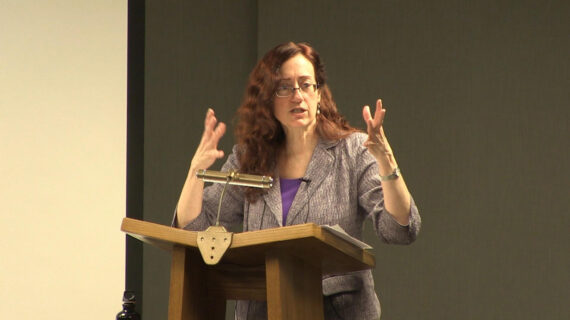
Jeff Skiles, Vice President, Experimental Aircraft Association, shares his story as the co-pilot of the US Airways plane that landed in the Hudson River on January 15, 2009. Skiles presents a moment by moment account of what has become known as the “Miracle on the Hudson.” This lecture was recorded at the EAA Museum in Oshkosh.


Copy and Paste the Following Code to Embed this Video:
Miracle on the Hudson
cc The co-pilot Jeff Skiles and Captain Sully Sullenberger, the cockpit crew of US Airways 1549 safely landed the airbus jetliner on the Hudson River in New York, saving more than 150 lives. While this event and its safe conclusion that vaulted Jeff and Sully into the media spotlight, Jeff has been involved with aviation nearly his entire life. Jeff's parents were both pilots and were participants in the annual EAA fly-in convention the 1960s, which has been held back at that time in Rockford, Illinois. That built his own flying enthusiasm as he built his own flying career and eventually joined US Airways in 1986.
He has now logged more than 20,000 hours flying in everything from vintage airplanes to some of the world's most sophisticated jetliners. Jeff joined EAA in 2012 and serves as the vice president of communities and member programs. In that role, he leads several of the organizations key programs, including Young Eagles, which has introduced more than 1.8 million youth to flying since 1992. He also is part of EAA's network of more than 900 local chapters and supports in aviation in EAA and local communities.
Jeff also heads up the leadership team here at EAA AirVenture Museum. Since its opening in 1983, the museum has welcomed more than 2.5 million visitors. Jeff has owned a number of aircraft, both vintage and contemporary, which he enjoys to fly to EAA events and other fly-ins throughout the Midwest. He is a regular contributor to the EAA Sport Aviation magazine and is involved in pilot and aviation safety issues for both aviation civilian and aviation airliners.
So, please welcome Jeff Skiles.
APPLAUSE
Thank you. Thank you. I must say, when we scheduled this about four months ago, I had no idea the level of free publicity that I was going to get to promote this this evening. Do you know that it was on CNN, CBS, ABC?
Of course, they might have been talking about the event behind me.
LAUGHTER
So I got quite a story to tell you this evening. And I'm going to do that tonight by putting you on the jump seat. And you're probably asking yourself, what's a jump seat? Well, airline pilots in the crowd will know that between the captain and the first officer in every cockpit there's a little seat that folds out from the wall.
And it's a very special place. And only very special people get to sit there. You have to be on a database with the Department of Homeland Security to be allowed access to any cockpit in this country. But tonight I'm going to put you on that jump seat, and I'm going to be doing that by taking you along with me and telling you my story.
Now, as you sit there, to your left you're looking at Captain Chesley Burnett Sullenberger III.
LAUGHTER
That's quite a name. In the course of our trip, before the incident, we're up at altitude flying out to San Francisco and I'm looking at my trip sheet, which is this little piece of paper we carry that says where we're going, when we have to be there, when we have to get up, and who the crew members are, and I'm looking at this name that takes the entire space that's allowed for a name on this trip sheet. And I said, hey, Sully, with a name like that, it must put a lot of pressure on a man to produce a Chesley Burnett Sullenberger IV.
LAUGHTER
And he said, Jeff, that is exactly why I adopted two girls.
LAUGHTER
Sully grew up in Denton, Texas. Kind of the northwest side of Dallas. He learned to fly as a teenager and got a private pilot license before he graduated high school. He went to the Air Force Academy, and when he graduated from there he went to fighter pilot school and flew F-4 Phantom fighters just after the end of the Vietnam War.
Sully got out of his shift there, or his hitch, and he joined Pacific Southwest Airlines, which is one of the airlines that makes up the current day US Airways. Now, for those of you who don't know, which is probably most of the crowd, he's very much as he appears on TV. He is the professional's professional. Even before our accident, I was noticing how precise he was about everything that he did in the cockpit.
He tries to be the best, and he knows that that's going to take work not necessarily talent. And he puts in the work to make it happen. So Sully is really, really quite an individual. To your right, you're looking at me, Jeff Skiles.
I also learned how to fly as a teenager right here in Madison, Wisconsin. Got my license when I was 17 years old. My first job was pumping gas at the airport. Became a flight instructor while I was going to college.
Worked at a couple smaller airlines, but I was hired at US Airways in 1986. And I've been both a captain and a first officer at US Airways at different times, and at the time, I was working as a first officer so I could get the best of schedules because I was very senior in that position. Now, I find that people like to tell me where they were when they first heard the news or saw those first pictures. Well, I don't know where you were...
LAUGHTER
But I'm going to tell you where I was.
LAUGHTER
We'd actually started that day in Pittsburgh, Pennsylvania, on a layover. We flew down to Charlotte, and we switched airplanes and we're going to go on up to LaGuardia. Now, LaGuardia had low clouds and snow that day, and if you know anything about the east coast, that means air traffic control delay. So we're at the end of the runway in what we call the holding pad with our engines shut down, down at the end of 1-8 left in Charlotte.
And I'm asking Sully what there is to do on the west coast because this is my very first trip in the airbus. I've just gotten out of training the week before. And the airplanes that I had flown, I'd come from a 737 in the Philadelphia base, and the airplanes I'd flown had not flown west of Kansas City in probably my last 20 years of my career. So layovers like San Diego, San Francisco, Los Angeles, these are exotic layover destinations to me.
LAUGHTER
Ironically, he starts telling me about the Seattle layover. And he says there's a great opportunity there. He says there's a place called Kenmore Air, and you can walk there from our layover hotel and they'll let you jump seat with them. They fly these little float planes out to the San Juan Islands and up to British Columbia.
I'm thinking this is pretty cool. I get out my trip sheet. I get out my pen. I'm writing down who you call, how you set this up because I have never landed on water before.
LAUGHTER
Did finally make it out there about a year ago.
LAUGHTER
But I kind of already had that box checked.
LAUGHTER
Now, up in LaGuardia, where you're going to join us on the jump seat, a cold front has moved through and it's pushed the clouds and the snow off to the east. It's clearing but it's really cold. I remember walking around the airplane, which we do every time we land, we do a walk-around and check out the exterior of the airplane, and I remember that cold just biting through my leather jacket. We got back, we boarded the passengers, and every seat was filled.
150 passengers joined us today on this flight. In the cockpit, you're seeing Sully and I conducting our pre-start checklist. We actually go through what we call flows where we go through the cockpit in a very ordered manner. We check every switch, load every computer, check every system, and then, over on top of that, we do a checklist in between us to make sure we've accomplished the most important items.
We close the door, push back, and start up our engines. On the taxi out, I'm setting the controls for takeoff, imputing our weights into the computers to get the proper takeoff speeds, and talking on the radio to the ground controller. Sully's taxiing the airplane. We get out to the end of Runway 4 in LaGuardia.
And we stop short and I give my takeoff briefing because this just happens to be my leg. As airline crews go through the day, we swap legs. One leg the captain flies, one leg the first officer flies, and we just kind of swap legs going through the day. It just happened to be my leg to fly.
Now, this is not only just my first trip on an airbus in regular scheduled transport, it's also my first trip with Sully. At the time, I'd worked there for 24 years, he'd worked there for 30, I don't every recall even seeing Sully before. A lot of people think that we're joined at the hip as crew members, but we're not at all. There's 5,000 pilots at US Airways alone, which is a smaller carrier.
We can't depend on knowing the person we're going to work with. We have to sit down next to somebody and perform as a crew from the very first takeoff. We do that by following our procedures and our training very strictly. I didn't really know Sully but I knew exactly what he was going to do in any situation, and he knew the same of me.
Our air traffic controller clears us for takeoff. Sully comes out, taxis it out, lines it up with the center line stripes, sets the parking break, and he says, your aircraft. And I said, my aircraft, which is how we verbalize transferring control of the airplane to make sure that somebody is flying it at all times.
LAUGHTER
You laugh, but that actually is a result of accidents that have happened because both pilots were trying to solve an emergency and nobody was actually paying heed to what the aircraft was doing. I reach over and I grab these large thrust levers and push them up into the takeoff and go-around D-10. The airbus is a fly-by-wire airplane, which means that nothing in the cockpit is actually attached to anything. These bit throttles that I just pushed forward operate these tiny little microswitches below the panel.
The control stick with which we fly it just sends electrical impulses to a computer that then pours hydraulic fluid out onto servos to operate the control surfaces on the wings and on the tail. We start accelerating down the runway. Sully makes our standard call outs of 80, V1, rotate. I pull back on the side stick.
We leave the runway. He says positive rate, and I say gear up. At 400 feet, we rolled to a heading of north, which was our assigned departure heading, and we start to accelerate and clean up the airplane. At 3,000 feet in the air, which isn't very high at all, I'm pitching the nose over to accelerate even further to our air speed.
We actually have, like you have a highway miles per hour speed, we actually have an air speed in the air. It's 250 knots below 10,000 feet. You can't go faster than that. But I'm only about 204 knots, and I'm pitching it forward to accelerate, and I remember something caught my eye.
And I look slightly above us and to the right and I see a line of birds too close to maneuver around. In fact, traveling at that speed, by the time you see a bird, it's really too late to do anything about it. And then I hear Sully next to me say, birds. And that fast we were on top of them.
Their bodies were impacting on the wings, on the fuselage, and at least two of them went through the core of each engine. And when I say the core, when you're looking at a jet engine from the terminal, you're actually seeing the big fan section. There's two big spools of fan blades, there are a bunch of little fan blades that come out around. But if you were right up next to the engine and looking into it, you'd see a much smaller turbine and compressor section.
And there's 17 spools of these little blades behind there. You can actually take a bird through the fan section and have maybe a little vibration, maybe nothing at all, and the engine produces power. But we took two of these big geese right through the turbine compressor section of both engines. And they just destroyed both engines.
I remember that we heard the birds impact the airplane, and I remember thinking we have to assess what the damage was. And then after about a second both engines immediately cut power. They make a high whining sound at climb power, and they just reduced to nothing. I remember the shock of it felt like when you have a bad cold and your head is kind of fuzzy because it feels like your head is going to explode.
We have our nose up in the air, we're at our minimum air speed for this particular clean wing situation with our flaps up, and we've just wiped all the power off the airplane. You could just feel the airplane sag in the air. The air speed tape is unwinding. I'm pushing the nose forward to try to keep the airplane flying, and Sully decides to take over the aircraft, actually flying the aircraft at this point, which is his prerogative as the captain, and he says, my aircraft.
And I said, hey...
LAUGHTER
Your aircraft. Don't let me stop you.
LAUGHTER
But this is actually a signal. We are very highly trained, and we can switch duties with even just a few words. Normally when we fly an airplane as airline pilots, we're constantly crosschecking each other. There's not any important modification that's made to our navigation systems, to changing altitude, to power settings without both pilots being involved and both pilots agreeing on it happening.
But when we have emergency situations, we know we have to split duties. One person flies the airplane; the other person handles the emergency. When Sully said, my aircraft, and I said, your aircraft, my role immediately changed to that of a troubleshooter. And I reached for what we call our quick reference handbook, which is a 177-page...
LAUGHTER
Book of emergency procedures and data. And I'm looking for the dual engine failure checklist.
LAUGHTER
When I find it, it's three pages long. It's designed to be done at 30,000 feet in the air, not at 3,000 feet in three minutes time. The scenario it imagines is a fuel starvation or ingesting volcanic ash which destroys your engines, not ingesting two geese per engine that simply destroy them. But still, I start into the checklist making sure we have electrics and hydraulic power so that we can actually fly the airplane and trying to restart the engine.
Now, back in the cabin, two of our flight attendants are sitting right behind the door of the cockpit facing backwards on a jump seat. They don't even have a window where they sit, and they know that something has gone horribly wrong with the airplane. They obviously have long experience in aviation. In fact, our three flight attendants averaged 30 years of experience a piece.
But they knew something horrible was going wrong but they had no idea what it was. We didn't have the time to talk to them. In the cabin, our passengers have heard and in some cases seen the birds impacting the engines. There's flames shooting about 50 feet out the back of the left engine, but most of them thought we had an engine fire on that side which is scary enough but certainly we'll be returning to land on the engine on the right.
The right side engine was even more heavily damaged. The right side engine, the first spool of the compressor section shattered, and all that metal went back and just threw the engine and just destroyed it. The left engine was actually running at kind of an idle power. But the birds had managed to knock the fuel nozzles out of the burner cans, and the gas was igniting in the slip stream behind the engine like a torch out the back.
But the important thing for us is it was running an alternator and a hydraulic pump because both of those things we need to fly. Up in the cockpit Sully's talking to the air traffic controller about going back to LaGuardia. Now, I can't see it because it's over on his side of the airplanes and is actually behind his shoulder at this point. I can't make any judgment as to whether we can actually make it back to LaGuardia or not.
Our only options for landing are to go back to the airport we left from, a little airport called Teterboro off on our right, or the Hudson River which is right ahead of us. Otherwise, all we're looking at are highways, skyscrapers, houses. There's absolutely no place that you could set this airplane down. It's New York City, one of the most congested places on Earth.
At one point, our air traffic controller, Patrick Harten, points out Teterboro, and I remember pausing in what I was doing to look out and see if I could spot it. I saw it on the horizon, and then I saw that it started to rise in the windshield, which any pilot knows means you can't make it. Really our only option was to land the airplane in the Hudson River. Now, what I remember most about that descent was all the noise in the cockpit.
We have all manner of oral alerts that warn us of various things. And a number of them are going off simultaneously. We went too close to a helicopter that was coming up the VFR Corridor up the Hudson River, and we're getting a "traffic, traffic" call out over our speakers. Because we had no power on and we're down low to the ground, we're getting an audible call out of "too low gear," "too low flap." Our alert bell is sounding continuously with this ding-ding-ding-ding-ding sound as these cascading failures are overwhelming the monitoring systems in the airplane.
Through all this noise, Sully had the presence of mind to reach back and grab the public address telephone, which sits between us at the back of the console and looks just like an old style telephone receiver. And he presses the button on the public address system and says, "This is the captain, brace for impact." Now, that's actually a sign. It tells the passengers obviously things aren't going well.
LAUGHTER
But it's a signal to the flight attendants to start into their emergency preparedness training, that they have trained for. They start chanting, "Brace, brace, heads down, stay down, brace, brace, heads down, stay down," over and over and over again to get the passengers into the proper position for a crash landing. Now with this, the passengers know that they're not going to be returning to an airport to land. And they handled it in a number of ways.
Some of them wrote notes to leave behind, to leave in their shirt pockets. A large number of them texted loved ones on the phones that were supposed to be shut down...
LAUGHTER
When they left the gate. One passenger showed me his text at the year anniversary of the event. It was still on his phone. It said, "The plane's going down.
I'll always love you, say goodbye to the kids." One passenger, who I just saw yesterday actually, had had two days of bad luck. Just the day before, his wife had been diagnosed with breast cancer. And he's a spiritual man so of course he made a pact with God. And he said, God, if you have to take someone, please take me.
So here it is, less than 24 hours later, and he's plummeting to the Earth in this engineless aircraft, he doesn't know what the next few moments of his life are going to hold, and he told me all he could think about was, God, I know we made this pact and all...
LAUGHTER
But did it really have to be so soon?
LAUGHTER
Up in the cockpit, we're coming down through about a thousand feet in the air. We're not going to be able to get the engines started. Even if they lit off, they wouldn't spool up in time for us to avert landing in the river. I started calling out air speeds and altitudes to Sully to give him situational awareness.
He has to land with the wings perfectly level to keep from dragging a wing tip and possibly cartwheeling the airplane. But one of the very fortunate things that day, and I'll tell people we had one moment of bad luck and a thousand moments of good luck, but one of the very fortunate things was that the river ahead of us was clear. For anybody who's ever been in New York, it's a very heavily trafficked waterway. And most New Yorkers are just surprised we found any place to set down an airplane in that river.
But it was clear. And there wasn't any wind that day so there were no swells. They can actually get swells, three-foot swells, in the Hudson River. I remember this odd feeling as we came down close, as the skyscrapers and buildings were rising off of both our left on Manhattan and off the right in New Jersey.
When you survive an airline accident, one thing it gives you the opportunity to do is listen to your own crash on the cockpit voice recorder, which is quite an emotional experience, let me tell ya. The only people who ever get to hear the cockpit voice recorder are the five people that are on the National Transportation Safety Board Cockpit Voice Recorder Committee who listen to it and, in our case, survivors, because the National Transportation Safety Board, who investigates accidents in this country, didn't understand how we communicated, because there are points at which we each took action and we communicated, but we didn't say anything. And they didn't understand how that happened, and they wanted us to listen to the tape and give them some answers. And I could tell you, I don't have any answers.
Neither does Sully. All I know is that I was doing my task, but I was completely aware of everything that was going on around me. I knew what Sully was thinking every step of the way, and he knew the same of me. Other than that, I have no explanation.
We really didn't speak as we were coming down to land on the Hudson River. There was no verbal communication. But as we listened to that cockpit voice recorder, we both heard something that neither of us remembered at all from the day. Right before we touched down in the water, Sully asked me, "You got any other ideas?"
LAUGHTER
I said, "Actually, no."
LAUGHTER
We hit hard on the tail, and then the water just seemed to flow over the windshield. It seemed like it was burying the nose of the airplane into the river. But then it popped up, and it was just bobbing in the waves. I turned to Sully and I said, "Well, that wasn't so bad."
LAUGHTER
But we've lost all our electrical power. And the flight attendants are waiting for two words from Sully. They're waiting for him to say, "Evacuate, evacuate," and our public address system doesn't work. So Sully went back to the cabin to give that command so that the flight attendants could independently start their evacuation procedure.
I stayed up in the cockpit, because we actually have a procedure for this, an emergency evacuation checklist. The first item on it is "parking break set."
LAUGHTER
The second item is "engines one and two off." Well..
LAUGHTER
The left one isn't even attached to the airplane anymore. It's going to the bottom of the river. Certainly the right one is shut down. So I kind of went through this.
None of these tasks were really applicable to the situation. And probably about 45 seconds went by, and I went back, and I'm standing in that little hallway between the cockpit and the cabin and we had the rafts open. About the first 10 rows or so of the airplane are already out on the rafts. They're empty of passengers.
And I'm stopped short because running up towards me up the aisle is a guy who looks like he's about 25 years old, and he's wearing nothing but boxer shorts and a pair of sweat socks.
LAUGHTER
Keep in mind, it's 20 degrees. It's January. I'm pretty sure he didn't get on the airplane that way.
LAUGHTER
I found out later that he planned to swim to shore. So he took off most of his clothes back there in the cabin somewhere. But he's already realized what a bad idea this is because he's freezing.
LAUGHTER
So he stops short before me and he's hugging himself, and he's shivering and he says, "What do I do?" And I said, go get in the raft.
LAUGHTER
I told the next three people, could you go sit on that guy to keep him warm?
LAUGHTER
Now, the airplane had hit pretty hard on the tail and actually did a lot of damage in the back. It pushed the rear baggage hold up into the rear galley and compromised the structure back there, which is why it was sitting so tail-low and we couldn't use the rafts that were in the rear of the airplane. So the passengers had no choice but to go out onto the wings. It was the only place open to them to get away from the airplane.
Our flight attendant, Doreen Welsh, was sitting in her jump seat in the back of the airplane when some of the structure from that baggage hold, specifically an I-beam, came shooting through the floor and went right into her calf. Her leg is spurting blood, but she doesn't realize it yet. She's in shock. The people ran to the back of the airplane where some of them reported that the water was up to their necks.
But she somehow got them headed back forward over the emergency exit hatches over the wings. The people got off the airplane relatively fast. They were enthusiastic about...
LAUGHTER
Getting off that airplane. And after they were off, Sully and I went back to about mid-cabin because the people on the wings had left without taking floatation devices. The aircraft had life vests. In fact, life vests hang in pouches below the seats of the airplanes, but you would have to read the boarding card pretty closely to see that.
And of course the seat cushions are also floatation devices. So we were getting floatation devices, seat cushions and life vests, and handing them out to the people on the wings. Now, where we were, the water was about up to our knees, and it was just freezing cold. It was literally ice water.
And your bones just ached being in that water. Both Sully and I started walking on the seats and on the armrests just to keep our legs out of the water, but you still had to reach down underneath the seats with your hands to get those life vests. We did that and we pretty much cleared out the area around the center of the airplane. It was settling down in the water while I was in there.
You could tell that. But I was never actually concerned at all for my own safety, because I thought if it actually started to sink I could probably run for it and get out one of those emergency exit hatches. I was never more than about 20 feet away from it. So I wasn't concerned at all.
But after a while, we cleared out the area of floatation devices and life vests and Sully says, "Let's get out of here." So we went back forward and went out the normal boarding door, the way you would get on the airplane. Now, I remember this odd feeling, because in the cabin it was calm. It was just Sully and I in there and we were working and we really didn't know what was going on outside the airplane. Because of where we happened to come to rest, which was right where the ferry boats crossed from Manhattan to New Jersey, the boats were on shore and all they had to do was castoff their lines and come out and they were already there.
The airplane was surrounded by boats. And there was a helicopter overhead that was dropping a police frogman into the water to help the passengers who had slipped off the wings into the water, help them back onto the wings. I remember the helicopter was just kicking up spray, and it was just drenching everybody. I became obsessed with the fact that this raft is tethered to the plane.
If the plane's going to sink, it's going to take our raft with it. So there's actually a safety knife in this raft specifically for this, to cut this tether, but we had about 70 people on a raft that was designed for 40. And there was no way I was going to be able to find this knife. We were packed into this raft like sardines.
Sully called up to one of the boats overhead and asked if anybody had a knife. And this guy throws down a knife and Sully hands it to me. I press the clasp, it was a clasp knife, and the blade comes shooting out. It's like a New Jersey switchblade.
LAUGHTER
I cut the rope, and then I'm holding the knife in an inflatable raft.
LAUGHTER
The significance hasn't escaped me, but of course it's a nice knife, you want to give the guy his knife back, right? Well, after a while I thought this is just too dangerous and I threw it in the river. We floated around the nose of the aircraft and one of the New York waterway ferries comes up next to us. The Athena was the boat.
And the captain reverses his engines and comes to a stop right next to our raft. And of course we're sitting down on the water, and the deck on this boat is up about six, seven feet in the air. Just another obstacle. How are we going to get up there?
Well, a crewman runs out from the cabin and he throws a boarding net over the side. And I remember looking at this boarding net and thinking, what is it, D-Day?
LAUGHTER
We're supposed to climb up this? My hands are frozen. I can't grip anything. And then he throws a rope over the side at me, and I'm supposed to keep hold the raft next to the boat.
I remember I held it in my elbow because I couldn't grip my hands. They were just frozen. I held it in my elbow and I'm just leaning up against the side of the boat, sitting on the edge of the raft while the passengers started to go up the boarding net with crew members helping them onto the deck. It seemed like I must have, I don't know, lost track of time or blacked out there, because it seemed like the passengers had just started going up and then the next moment that I recall I hear Sully behind me say, "Jeff, we better get out of here while we still can." I looked behind me, and the raft was empty except for Sully and I.
So we clamored up onto the boat as best we could, and I ended up on my hands and knees on the deck. I got up, walked into the heated cabin area, and there was a passenger there right in front of the door. He had one of those flip phones, and he just called somebody and he flipped it shut. He looks at it, and then he offers it to me.
And I thought, well, maybe I should call somebody.
LAUGHTER
But who should I call? I'll call my wife.
LAUGHTER
Guys, learn from me, that's a bad move.
LAUGHTER
So I dial the number, a do it with my knuckle. It takes me about three tries and I get it right. I've got the phone up to my ear, I'm staring out the window, the plane is still floating by at this point. She answers and I said, "I don't think I'm going to be home tonight."
LAUGHTER
And she says, "Why?" And I said, "Well, we took off in LaGuardia. We hit birds. We flamed out both engines. We had to ditch the airplane in the Hudson, and we think we got everybody out okay, I gotta go."
LAUGHTER
And I hung up.
LAUGHTER
So then Sully calls his house but he's got caller ID. And his wife's talking to a friend of hers on the phone and she says, "Oh," when it beeps, she says, "Oh, it's just Sully."
LAUGHTER
"He'll call back later when it's important."
LAUGHTER
Then he calls our dispatcher. We have dispatchers in the airline business, to tell them where we left their airplane.
LAUGHTER
And he answers and he says, "I don't have time to talk to you right now; we have an airplane down in the Hudson."
LAUGHTER
Now all this actually only took place maybe just a couple hundred yards from shore on the Manhattan side. And in fact, the ferry terminal was only a couple blocks south of the actual site of where we came to rest. So it really didn't take us long before we were at the ferry dock and filing off the boat. The entire flight took five and a half minutes, two minutes until we hit the geese, three and a half minutes until we landed in the Hudson River.
Just to tell you the story has taken me five times that long. Cactus 1549, 700 climbing 5,000. Cactus 1549, contact and maintain 1-5000. Maintain 1-5000, Cactus 1549.
Cactus 1549, turn left heading 2-7-0. Ah, this, uh, Cactus 1549. Hit birds, we lost thrust in both engines. We're turning back towards LaGuardia.
Okay, yeah, you need to return to LaGuardia. Turn left heading of 2-2-0. 2-2-0. Tower, stop your departures.
We got an emergency returning. Who is it? It's 1529, he ah, bird strike. He lost all engines.
He lost the thrust in the engines. He is returning immediately. Cactus 1529, which engines? He lost thrust in both engines, he said.
Got it. Cactus 1529, if we can get it to you, do you want to try to land runway 1-3? We're unable. We may end up in the Hudson.
All right cactus 1549. It's going to be a left. Traffic to runway 3-1. Unable.
Okay, what do you need to land? Do you want to try to go to Teterboro? Yes. Teterboro, uh, empire actually, LaGuardia departure got an emergency inbound.
Okay, go ahead. Cactus 1529, over the George Washington Bridge, wants to go your airport right now. He wants to go to our airport check. Does he need assistance?
Yes, he, it was a bird strike. Can I get him in for runway one? Runway one, that's good. Cactus 1529, turn right 2-8-0, you can land runway one at Teterboro.
We can't do it. Okay, which runway would you like at Teterboro? We're gonna be in the Hudson. I'm sorry, say again, Cactus.
Cactus 1549, radar contact is lost. You also got Newark airport off your two o'clock in about seven miles. Eagle flight 4718, turn left heading 2-1-0. 2-1-0, 4718.
I don't know, I think he said he was going in the Hudson. Cactus 1529, you still on? We weren't at the ferry dock long before the politicians arrived.
LAUGHTER
Mayor Bloomberg and Governor Paterson came down to hold a press conference on site. And of course Sully and I are thinking we're the only the ones that really knew what happened, how can anybody possible hold a press conference about such a circumstance? But this is where Governor Paterson coined the phrase "the miracle on the Hudson." But the question is, was it really a miracle? We're going to come back to that in a minute.
But I want to tell you a little bit more about what that evening entailed for us. At the ferry dock, most of the passengers were at the same location that we were on 39th Street. And initially they had thought that this was a terrorist incident. So the law enforcement had mobilized as if it was a terrorist incident.
There were more police officers than there were passengers and crew. There were Manhattan cops, Port Authority cops, DEA, FBI. Every acronym you could imagine was there, and nobody knew what to do because an airplane with 155 people on it just doesn't drop out of the sky every day. Most of the passengers were walking around with Red Cross blankets over their shoulders and were wondering what the next step was.
Eight of them actually took that in their own hands. They walked right through the ferry terminal, went out to the curb, hailed a cab, went out to LaGuardia, and they were on the next flight to Charlotte.
LAUGHTER
Now, we were just milling around for about, I don't know, an hour and a half or two hours there, and I'm thinking something's got to give here, something's got to break. Sully's telling the police either arrest us or let us go. And then the door opens, and in walks another US Airways pilot, because he's wearing his uniform. I didn't know him, but he walks over to us.
It turns out it was one our pilot reps, we happened to have a LaGuardia base at the time, and he put on his uniform and he lived in Manhattan and came down, found us, and I'm thinking thank God there's somebody here who will know what to do. And he introduces himself, and then he moves off no more than three feet, gets out his cell phone, dials somebody and he says, "I got 'em. I got 'em. What do I do?"
LAUGHTER
What he was doing, was he was calling our Accident Investigation chairman. One of the things we have as airline pilots is we have a large support network. We have an accident investigation committee that actually trains with the National Transportation Safety Board as accident investigators. They work alongside them in an air crash.
We have people that are trained in psychological issues to help us or to help our families, God forbid, get past some of the emotional crisis of an air crash. We have media people to help deal with the media. And all of these people are just waiting for that call. They don't want to ever hear that call, but when they do, they drop everything they have.
They get off trips. They go to wherever that location was.
Our accident was at 3
30 in the afternoon on Thursday, January 15th. By that evening, 40 to 45 of my fellow pilots had already gotten to New York City just to assume their roles and to support Sully and I. Our accident investigation chairman said take them to a hospital. And the guy said, well, they're not hurt, because we weren't.
We were wet, we were cold, but we were unhurt. They'd taken Doreen, our flight attendant that was injured, off to the hospital much earlier. And he said, it doesn't matter, take them to a hospital. It's a standard procedure.
When you're in the public eye, you don't have a door that you can close and get behind. A hospital emergency room is a place of sanctuary. Not anybody can go in there. It's very restricted who is allowed access to a hospital emergency room.
So if you don't have a house or something of even better shelter, you go to an emergency room. So we went to the emergency room in a large ambulance. And when you go there, they've got to take your blood pressure, check your pulse, your vitals, all that, and then a doctor comes in and asks if there's anything wrong with me. And I said, "No." "Okay, then I'm going to release you," she says.
I said, "Okay." And of course, to release you, they've got to check your blood pressure, take your pulse, check your vitals.
LAUGHTER
Our accident was at 3
And they released us and then the FBI actually drove us to a hotel. We actually had several hotels booked throughout the New York area in case the press would find out where we were. Fortunately they didn't, all night long, actually for a couple days we were there. And we got in the hotel and first thing, of course, with any kind of transportation accident is you have to take a drug test.
But then the next thing we do is we sit down with what we call our critical instrument response people. These are people trained to help us with psychological issues. And there's Sully and I sitting on one bed and these two guys sitting on the other bed, and one starts to tell us, he says you probably don't realize it but you're certainly suffering from post-traumatic shock and I just want to let you know what some of the symptoms are. You probably won't sleep tonight.
You probably won't sleep tomorrow night. Maybe on the third night you'll go to bed because you're so dead tired, but then after an hour you'll wake up and the whole thing will be going through your mind like a freight train. And we want you to know that this is normal and that it will go away, and if it doesn't, you need to seek professional help to make sure that it's not permanently debilitating. And then he says, okay, go back to your rooms and relax.
LAUGHTER
Our accident was at 3
Relax? We just crashed an airplane. You're not supposed to do that. My whole career, everything that I think of myself and everything that I am is going to be up for scrutiny in a very public way.
And we knew that then. We absolutely knew that. And I get to the room, I turn on the TV, it's about the accident. I turned it off.
I don't have anything but the clothes on my back, and they're still wet. And there's nothing to read, there's nothing to do. I put on my jacket and I just went and I walked around the LaGuardia area all night long. And I came back to the hotel
about 7
00 AM in the morning to find out that everybody was in an uproar because they thought they'd lost me. Somebody had gone to get me in my room and I wasn't there. We were there from Thursday until Saturday morning when we had to give our NTSB interview they call it, which is eight investigators around a conference table and you. I haven't slept in three days, and this went on for three hours.
Asking me questions. It was nice. It was polite, but still, it was three hours. And then it was over.
They bundled me in a cab. One of our US Air guys gave me $20 for a $40 cab ride to LaGuardia.
LAUGHTER
about 7
I didn't carry much cash on me when I went on trips, so by the time I emptied my wallet I actually had to stiff the guy a little on the tip but I didn't have anything. And then I took a United flight.
LAUGHTER
about 7
Home to Chicago and the bus up to Madison, Wisconsin, where I live. There's some other people who were involved in the accident. Doreen, our flight attendant, she was in the hospital, and they had to stitch up her leg, but fortunately she was going to be okay. She was in a wheel chair for a couple of weeks after that.
Our air traffic controller, Patrick Harten, the voice that you heard on that tape, he was so confident in his abilities to get an airplane back to the airport. He'd never had a circumstance where he didn't get an airplane back to the airport. And as we went down, he talks about how startled he was when he lost our signal as we went behind a skyscraper. And he lost our blip on his radar screen.
And then it came back as we went between skyscrapers, and then he lost it completely. They immediately relieved him on his scope. And they put him in a room with one of the other controllers, and he said it was like he was on suicide watch. He called up his wife, and he said something horrible has happened.
I can't even talk about it, but something horrible, horrible has happened. Well, apparently they have TVs the air traffic control center. I'm kind of suspicious about that, but they do.
LAUGHTER
about 7
Anyway, this was almost instantly on TV because if you're going to do something like this, it's just a cross-town cab ride from all the major media news networks. So they were down there on the shore with their cameras set up in no time. And it's already on TV and all the controllers are seeing everybody's out on the wings and everybody's getting rescued and everybody's surviving, and this goes on for about 45 minutes before somebody says, hey, did anybody tell Paddy that they lived? He was still in this room.
They'd forgotten to tell him. But these are the kind of the small stories. And every person on board that airplane has a story and it's unique and it's something that they will carry with them for the rest of time. But I mentioned earlier, was this a miracle?
And I'm not really going to debate that, but I do want to point out a few things, and I peppered them through my presentation and I hope you caught some of them. How Sully and I do flows, we do checklists, we have standard call-outs, we have pre-prepared emergency procedures that we instantly adopted at just the voicing of one or two words. How when Sully said, "Brace for impact," the flight attendants immediately go into a path of preparing the cabin for a crash landing without having to have any more direction. When he said, "Evacuate," they instantly opened the doors, get out the rafts.
And, in fact, they didn't even know that we had landed on water until they opened the door, saw the Hudson River, and they immediately changed their commands to don life vests, come this way. Our air traffic controller, Patrick Harten, one of the reason why ended up where we were was as soon as we declared an emergency he said turn left to 200 degrees because that's a standard procedure off of LaGuardia for emergencies off of runway four. Our ferry boat crews who trained monthly and right there in New York City and actually every year have to go to safety training down in Baltimore where they actually use simulators for emergencies like this. The fire boats that were instantly out there to help us.
The police helicopter with the frogman. I don't know where he came from.
LAUGHTER
about 7
Who sits around in a frogman outfit?
LAUGHTER
about 7
But he was there. And the emergency responders and the police officers on shore. Even the Manhattan medical community called in every off-duty doctor, nurse, because they were preparing for a massive emergency in Manhattan. And, of course, they got, I think,
three people
Doreen and two of our passengers. But this is the kind of emergency preparedness system that surrounds us every day. And we don't really, I don't think we really realize the impact of this and the importance of this in our daily lives until we're unfortunate enough to need some of these services. And I think that this illustrates what the miracle on the Hudson really was.
Sully and I had a role, but so did Donna, Doreen, and Sheila, our flight attendants. As did our 150 passengers who were perfect through this incident. There was no pushing. There was no shoving.
They helped each other every step of the way. The boat crews that instantly came to our aid and all of the first responders both out on the water and at the ferry dock. That is what made this incident successful. So maybe it was a miracle.
I don't know. Because so many people had to do their jobs flawlessly to reach this outcome. That's my story of the miracle on the Hudson today. Thank you for allowing me to share it with you.
APPLAUSE
Search University Place Episodes
Related Stories from PBS Wisconsin's Blog







Donate to sign up. Activate and sign in to Passport. It's that easy to help PBS Wisconsin serve your community through media that educates, inspires, and entertains.
Make your membership gift today
Only for new users: Activate Passport using your code or email address
Already a member?
Look up my account
Need some help? Go to FAQ or visit PBS Passport Help
Need help accessing PBS Wisconsin anywhere?

Online Access | Platform & Device Access | Cable or Satellite Access | Over-The-Air Access
Visit Access Guide
Need help accessing PBS Wisconsin anywhere?
Visit Our
Live TV Access Guide
Online AccessPlatform & Device Access
Cable or Satellite Access
Over-The-Air Access
Visit Access Guide




Follow Us