

 Passport





The Life of Carrie Chapman Catt
08/17/15 | 25m 56s | Rating: TV-G
Rebecca Rodriguez, Librarian, Grace Balloch Memorial Library, Spearfish, South Dakota, shares the story of Carrie Chapman Catt from Ripon, Wisconsin, a suffragette and an advocate for women’s rights in the late 1800s. Catt served as president of the National Woman's Suffrage Association, and founder and president of the International Woman's Suffrage Alliance.


Copy and Paste the Following Code to Embed this Video:
The Life of Carrie Chapman Catt
Today, we are pleased to introduce Rebecca Rodriguez as part of the Wisconsin Historical Museum's History Sandwiched In lecture series. The opinions expressed today are those of the presenter's and are not necessarily those of the Wisconsin Historical Society or the museum's employees. Rebecca Rodriguez grew up in the Black Hills of South Dakota, which sparked her interest in history at a young age. She did her undergraduate work in history and completed her master's in library science at the University of Wisconsin Madison with an emphasis in archives.
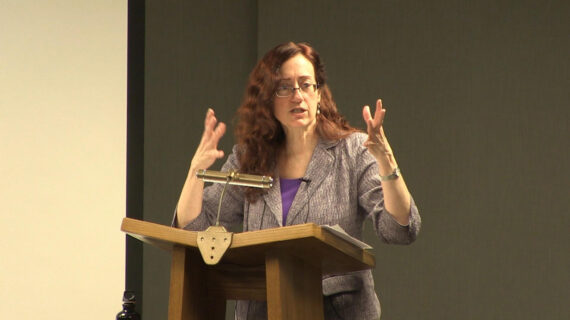
She is currently a librarian and archivist in South Dakota. Here today to discuss the personal life of Carrie Chapman Catt, please join me in welcoming Rebecca Rodriguez. (audience applauds) Hi, thanks for coming. I've never talked in front of such a large crowd before, so we'll see how this goes.
I'm Rebecca Rodriguez, and they asked me to come talk about an image galley that I created while I was a student at University of Wisconsin as part of my practicum. The gallery consists of, well, it was put together through a combination of using the journals and the pictures that she created while she was on a trip at part of her work, and we'll get more into that later. So this is Carrie. A lot of people don't know who she is, which always surprises me because she worked with Susan B.
Anthony. I grew up in South Dakota, and she did make a tour there once so I was familiar with her because we don't get a lot of celebrities. Most people, if they have heard of Carrie, they know that she's a suffragette, but she did serve a lot of other roles throughout her lifetime. We'll kind of go into her life and then I'l get more into the collection, talk about that.
All right, she was born in Ripon, Wisconsin in 1859, and, as far as I know, this is the only reason that the Wisconsin Historical Society even has this collection because she spent most of her life in Iowa. She moved to Iowa at a young age with her family. They moved there to farm, and at the age seven, they moved to Charles City, where they lived. Even at a young age, if you read her biographies, there are a lot of instances of her being really outspoken and opinionated and part of this is because her mother was formally educated at a school that was known for being kind of a feminist ideology type of school.
So she had that influence in her life, and it carried over into her activities. When she attended college, she went to Iowa State Agricultural School, and she was pretty active there as well. She started the women's military drill, which was just basically a way for women to get out and exercise similar to the men's military drill. She also participated in a literary society, where previously women were only allowed to write essays, whereas the men could debate and do oration and that kind of thing, and she thought that wasn't very fair so she fought to get women the right to also do debates and oration, and she succeeded.
So really early on we can see kind of her impact on everywhere she went. She just tried to make things better for women around her. When she graduated, she was the only woman in her class, and she went on to be teacher in Iowa for a while. She started out as the teacher and, shortly afterwards, the principal retired, and she was named principal and superintendent.
It was while she was teaching in Mason City that she met her first husband. His name was Leo Chapman, and he owned the only newspaper in the area. It was the Weekly Republican, and, when they married, teachers were expected to retire from their teaching post. So when they married, she went with Leo and helped him write this newspaper and edit it, and she wrote a weekly column about women and suffrage.
It would kind of detail the events of, like, the whole suffrage movement and, you know, any local events that were going on, that sort of thing. So she remained active in that area. Let's see, next she became a speaker. After Leo died, they were planning to go out to California, and he died along the way.
So after he died, she, at the suggestion of George Catt, who would become her second husband, got into public speaking as a way to kind of make some money and remain independent for a while because at the time it was a form of recreation. People would go and listen to other people talk about things, so she made a living doing this for a while. (audience laughs) And, yeah, she was actually pretty popular. She was successful as a speaker.
She was able to pay her bills. When she started doing this, she gained some attention in the realm of suffragettes and societies, and they asked her to join the Woman's Christian Temperance Union, which was in Iowa, her local chapter, and she did, and she was kind of their public speaker. And this went on for a while, but the Woman's Christian Temperance Union eventually dissolved, and after that happened, she was asked to join the National American Woman Suffrage Association, also her local chapter in Iowa. She was named secretary, and she continued to speak for them.
They would go to the suffrage rallies in various states. Like I said, she had been to South Dakota. She went to Wyoming and California and, you know, kind of all around the Midwest with her Iowa chapter, and she would do these public speeches for them. And this is where she kind of met Susan B.
Anthony and became more involved in the whole suffrage movement. Eventually, she was actually named president of the National American Woman Suffrage Association. She was first president from 1900 to 1904, and she was president again later in 1915. Okay, so as we know, the 19th Amendment was passed.
Women obtained suffrage, and this was while she was president, serving as president of the NWSA. Once this happened, she kind of stepped down as president and took a backseat. They reformed as the League of Women Voters once suffrage had passed, and she kind of turned her attention to international So, in that interim between 1904 and 1915, she spent a lot of time trying to get people on board with forming an international association for suffrage, and she succeeded. They formed the International Woman Suffrage Alliance, and that's still around today.
It's the International Alliance of Women, and she was the organization's first president there as well. Okay, so she sounds like a busy person. Even late in her life, she continued to advocate for causes that she cared about. She was obviously very concerned about the affairs of women, even internationally, and she had other causes that she cared about, one of which was world peace, and she lived through both World Wars, for the most part, and was an advocate of world peace that way.
Very active politically, traveling all the spending a lot of time in Washington talking to people. So these are some of the many roles that she served while she was alive. Okay, so the collection was formed as part of her, when she was president of the International Woman Suffrage Alliance, she went on this trip and this is how the collection came to be. She traveled to a bunch of different countries to kind of talk to women about the state of their affairs in the country as far as work, marriage, rights, voting, literacy, education.
And when she was traveling, she wrote these journals and took these pictures, and this is how she came to have this collection. You can see here is kind of a map. She went to Japan, South Korea, China, India, the Philippines, Ceylon, which is now Sri Lanka, Java, South America, Sudan, and the Palestine area. -
Man
Yeah, why you put Sri Lanka next to Ceylon, but you don't put Israel next to Palestine? It wasn't just Israel that she visited. But it was the Ottoman Empire at that time. It wasn't even called Palestine at that time.
She refers to it as Palestine, which is why I have it up there, but it wasn't just Israel that she visited. It was Saudi Arabia and Israel and a bunch of little countries in that area or parts of countries in that area, and she refers to the area as Palestine, so I use her terminology. So when she was traveling, she was also collecting data about women. It was kind of the first really big widespread data set about women at this time period, and she, like I said, focused on issues like education and literacy, and all of this is really evident throughout her journals.
She was a very avid journal writer her entire life, so they're very detailed. They're very fun to read. And, as I said, this collection is housed at the Historical Society, and that's how I came to get my hands on it and kind of work on it. Okay, so I mentioned that there are travel journals.
This is an image from the collection. The travel journals go into great detail about all of the events that she did. At the end of every day, she would take time to write about everything in great detail. Conversations that she had are pretty much in her journals verbatim, and any other thing that she did is greatly described.
So this is the picture of her woman's literacy society. We don't know the country of this picture, where it was taken or even if she took it, and I'll get more into that later. But she kind of gave clues about the pictures in her journals of what might be going on, and her journals provide a lot of insight about the conditions of women. Okay, so one of her journals from, it's labeled Palestine in the collection, is, it goes into a lot of detail about a conversation that she had with a woman who was married to a diplomat.
He worked in government. And it's just this really long conversation but it provides a lot of insight, which is great because, like I said, at the time there wasn't a lot of data on women internationally. So this woman, like I said, was married to a man who was in government, and they spent a lot of time talking about, you know, can you read, can you write, are you educated. The woman was not formally educated but her husband was kind of into the feminist movement a little bit, so he, by simply conversing with her, made her a very socially aware person.
And they talked a lot about this woman's daughter, who was being formally educated and who spoke both, I think it was Arabic and she spoke English and she could read and she could write. She was literate, but she still couldn't vote, and she was expected to stay home and raise a family and not have a job. It kind of talks about the changes from generation to generation and they look into the future and say, you know, when do you think she will be able to vote? When do you think she will be able to get a job and not just stay at home and be a wife and mother?
So a lot of her journals have these very interesting kind of glances into the life of women in different countries at the time. They're a lot of fun to read, actually. I had a great time reading them. Here's another picture from the collection.
This one has a bit of a crack in it but it's still very beautifully done. So Carrie was especially descriptive concerning working conditions. She traveled to fields, tea plantations, rice fields, mines, quarries, all of these very manual and labor intensive type jobs and she would describe the working conditions of these places. She talked a lot about the caste system, which was present in India and Sri Lanka especially, and the living conditions at the camp, the difference in wages between men and women.
She seems to be kind of the opinion that these people don't know that their conditions are very bad because that's all they know. They haven't ever known any other way of doing things. So she writes a lot about this. She travels to all these places and sees all these things and provides insight, you know, textile factories and different areas.
And she talks about how these kinds of jobs provide opportunity, even though they are not the most socially equitable kinds of jobs. For example, when she was visiting a textile factory in China, she talked about how it was the only way that family could possibly advance socially because previously those kinds of opportunities weren't available for families. She also writes about her awareness of the impact of foreign trade on these conditions and foreign visitors. She was probably in her 50s when she was traveling and doing this tour, and she had to get around a lot of rickshaws, the hand-pulled carts, and she just detested the idea of these rickshaws because she didn't think another person should have to pull her around.
And when she was visiting the tea plantation, she was so appalled at the conditions that she vowed never to buy that kind of tea again and encouraged other people to do the same thing. So she was very aware of her impact on these conditions, even at the international level with foreign trade and that sort of thing. Let's see, so these pictures I've had up, they're called lantern slides, and I'm going to talk a little bit about what lantern slides are before we get more in depth on this collection. Okay, so lantern slides are glass plates that are made to be displayed using a magic lantern.
A magic lantern is a very early form of a projector. It's a box and it has usually a candle inside and some mirrors and it projects the image onto a surface. Early forms of lantern slides were just hand-painted images on glass. And these early hand-painted images on glass, they're usually very whimsical and meant to entertain audiences at like magic shows or that kind of thing.
It wasn't until a little later, about 1850, that they began to be produced photographically, and how they would do this is they would take a light sensitive glass and take the image and then the image would be embedded on the glass and then it became popular to kind of hand-color these photographic productions. You could have your images developed and then have someone paint them in so that it looked like it was a colored photo. A lot of people when they were traveling used to buy photographic images as souvenirs and lantern slides were one of the formats available. So if you were visiting India, you could buy a lantern slide to commemorate your trip.
So here's an example of one of the kinds of lantern slides that we have in this collection. This is a 3.5 inch by 3.5 inch black and white slide. This one is not hand-colored, and the man in the image we believe is Dr. Thorn.
He was part of the International Woman Suffrage Alliance, and he traveled with Carrie on a lot of these journeys. She had a number of travel companions because this was a two-year long tour. They kind of came in and out as it was convenient for them, but he was with her through most of this trip. This was taken at Victoria Falls, which is in South Africa, and this style of slide, this size and the black and white, is about 20% of the collection.
This one is another example of the hand-colored slides like the one that we saw before. You can see that the coloring in here is very detailed. If you look at the leaves, you can see that everything is in the lines. It's very nicely done.
Someone was really practicing their artistic skill on this. This one is four inches by three inches, and there are about a hundred of these in the collection. Not all of them are online. We kind of had to narrow down which ones we were putting up, but this makes up the majority of the collection.
Okay, so I talked about the journals and the slides and putting together this collection was actually a lot more difficult than it would seem to be initially. So this is a picture of what we think might be a rice field or maybe a tea plantation, not a rice field because those are water. We're not entirely sure what this picture is of, and there's a reason for that. The lantern slides came in these boxes, and there was no index with them.
No description, no labels, nothing. There was nothing to indicate what these pictures might be except for the journals. So when I saw that we had these photographs and that we had journals in addition to them, I decided I was going to read these journals and try and figure out what the photographs were. And there are about eight journals.
It's a lot of reading to get through and her handwriting is very old fashioned so it was very time consuming. But she does have clues in here. Like I mentioned before, she wrote very avidly and very detailed descriptions about what she did. For example, this picture, in the gallery you can see that in the description I have a snippet from one of her journals just to kind of provide context to it, and the description I put in there is a quote from one of her journals.
It says, "The little brown women "picking tea was an introduction "to up-to-date economic problems. "They used both hands to gather "the young leaves and threw them into baskets. "The women get eight cents per day. "We learned that poor as are these wages, "the workers are frequently punished "for some error by cutting them down.
"The people are reduced to a virtual slavery. "Ceylon, like India, lives under "the perpetual humiliation of caste "and the tea pickers are very low caste "and it is difficult to escape from it." So reading through these journals and having the pictures to kind of look at help me to determine what these pictures are. It didn't give me solid information, but it gave me a general idea, which is really helpful when you don't have any idea what these pictures might be. We still can't say definitively that passage was from her Ceylon journal.
We can't say definitively that this picture was taken by Carrie in Ceylon. There's no way we can make that determination. So, instead, we use the excerpts to provide context to the photographs by placing the excerpts in the description, and this is not usually the way that archivists like to work with the photographs. We like to have some solid information, but when you don't have it, it is important to provide context because otherwise this picture is just a picture.
It's a beautiful picture, but it's just a picture with no information. So the context is important. Okay, another problem that we had finding context for these pictures is, I mentioned earlier, that travelers used to purchase these when they were traveling as souvenirs. We have no idea which pictures Carrie took and which she purchased.
There's a number of reasons. When she traveled to Palestine, we know that her party's cameras were confiscated because at the time you were not allowed to take pictures in Palestine. So we know that she doesn't have any pictures that she took herself from that area, that she could have purchased some. There might have been other areas where this occurred as well.
And we do have excerpts from her journal that indicate that people were taking pictures, people in her party were snapping pictures. So it's really difficult to say which is which. Also, if you notice on this one, the coloring is not as nicely done as some of the other pictures we've seen. The yellow in the flowers kind of overlaps onto other areas of the picture.
The colors are not as realistic. So this indicates that maybe she had the coloring done from multiple vendors or that they were purchased from someone else or maybe she did take them and then later had somebody color them for her. So we really have no way of knowing the origin of these individual photos. Some pictures we're pretty confident were taken by Carrie or other members of her party and this is because of the journals.
This is a picture of a hippo, and in her journal from South Africa, she talks about a boat tour that she went on. When she wasn't speaking or trying to encourage people to form organizations for women, she did the touristy things, and one of these was a boat tour. The passage is actually kind of funny because she gets really excited in her journal because she saw a hippo and she had never seen a hippo before, so she was ecstatic, and she said, "I didn't get a picture, "but I'm pretty sure the doctor did," and this probably refers to Dr. Thorn because he was with her in South Africa.
So we can't say definitively that Dr. Thorn took this picture of this hippo, but it's a good possibility. Then there are other pictures that we think were definitely purchased, like this one is very staged. It's in a studio.
If you look down in the corner there on the left-hand side, you can see a tiny bit of the label. It can't be read because it was actually placed between the photo matting so we don't know what it says. But because they're done portrait style and that the coloring is more professional, we think she probably purchased this style. These photos are kind of a minority in the collection.
There are only a few of them. Okay, so this is kind of what the gallery, the front page of the gallery looks like online. After I got done reading through all these journals and trying to find some context for them, you know, placing passages with the appropriate pictures, creating metadata, I put them all online, and it's available at WisconsinHistory.org. You can see all these photos and read some more excerpts from her journals.
Working with this collection really reminded me of the importance of using your resources because when you have limited resources like this it can be very difficult to put together a gallery. Another challenge I faced was that she has a lot of pictures of architecture and she has a lot of names in her journals but they're not matched up, so I had to do a lot of research online about what these places were or what they might have used to be called and now they're called something else. So using your resources is important when you don't have a lot of information about these things. There are a total of 1,100, or, sorry, 111 photographs in this gallery.
They're not all lantern slides. We decided to take the pictures that we had of Carrie, like this portrait picture, and put those in with the gallery as well. There's more biographical information in the gallery as well. If you're interested in Carrie, I highly encourage you to take a further look.
So this is the catalog record of Carrie Chapman Catt holdings as the Historical Society. We have the images, and we have her journals. They're the handwritten ones. They're not transcribed.
I think you can get transcribed ones at the Library of Congress. We also have a couple of biographies in the Historical Society library, and these journals are just great. When I was doing this, I was reading through all these journals various times, trying to get an idea of what these pictures were, and some of her passages are just hilarious. She's a great writer, especially for her time period.
If you've ever read anything from the 1910 area, it can be very dry, but her writing is not dry at all. So if you're interested in Carrie, I encourage you to go through these journals. Let's see, if you've never seen a lantern slide, I encourage you just to go look, and just to see the lantern slides too because these images really don't do it justice. They are incredibly beautiful.
The hand-coloring is really fun. You hold it up to the light and you can see through it, and it's just gorgeous. So if you haven't seen a lantern slide, go do that. Carrie is a really remarkable individual, and I'm glad I got to work with this collection.
I hope that she would be proud of the gallery I put together for her. And I think that's all I have for you. So I want to thank everyone for coming. (audience applauds)
Search University Place Episodes
Related Stories from PBS Wisconsin's Blog





Donate to sign up. Activate and sign in to Passport. It's that easy to help PBS Wisconsin serve your community through media that educates, inspires, and entertains.
Make your membership gift today
Only for new users: Activate Passport using your code or email address
Already a member?
Look up my account
Need some help? Go to FAQ or visit PBS Passport Help
Need help accessing PBS Wisconsin anywhere?

Online Access | Platform & Device Access | Cable or Satellite Access | Over-The-Air Access
Visit Access Guide
Need help accessing PBS Wisconsin anywhere?
Visit Our
Live TV Access Guide
Online AccessPlatform & Device Access
Cable or Satellite Access
Over-The-Air Access
Visit Access Guide




Follow Us