

 Passport





An Illustrated Journey From Dejope to Madison
05/27/14 | 53m 35s | Rating: TV-G
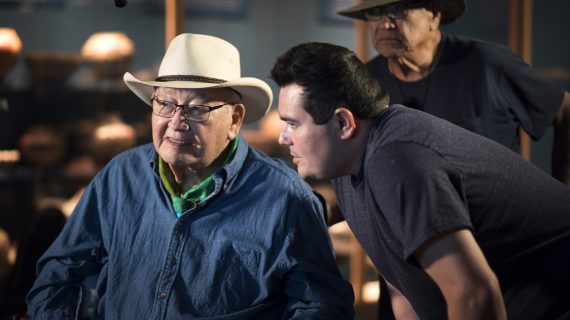
Aaron Bird Bear, Recruitment and Retention Specialist, School of Education, UW- Madison, explains how the UW-Madison campus landscape can serve as a classroom and can address learning goals for students. Bird Bear highlights the archaeological sites on campus and discusses the transformation of the land from Dejope (Four Lakes) to Madison.


Copy and Paste the Following Code to Embed this Video:
An Illustrated Journey From Dejope to Madison
cc Welcome, everyone, to Wednesday Nite at the Lab. I'm Tom Zinnen. I work here at the UW Madison Biotechnology Center. I also work for UW Extension Cooperative Extension, and on behalf of those folks and our other co-organizers, Wisconsin Public Television, the Wisconsin Alumni Association, and the UW Madison Science Alliance, thanks again for coming to Wednesday Nite at the Lab.
We do this every Wednesday night, 50 times a year. Tonight it's my pleasure to get to introduce to you Aaron Bird Bear who's with the School of Education. He'll be talking about free soil, the oak savanna, effigy mounds, and us, a journey from Dejope to Madison. This is pretty remarkable, I think, because as a graduate student, and I went to grad school here, I wasn't particularly aware of how long people have been living here at this isthmus.
I thought several hundred years, maybe a couple thousand years, 10,000, 11,000. It's a long time, and that's a remarkable thing. There are several places in Wisconsin that have long, long histories of habitation. Tonight we get to hear about that.
Aaron was born in Hanover, New Hampshire, and went to school at the U-Dub, otherwise known as the University of Washington, where he got a degree in physical oceanography, and he came to, as the folks in Seattle call it, the other U-Dub here at UW Madison and got a master's degree in educational policy. He's now working for the School of Education, but he gets to talk to us about some of the remarkable things here and how people have been living in this place for a very long time and how we hope we'll be able to live here for much, much longer. Please join me in welcoming Aaron Bird Bear to Wednesday Nite at the Lab.
APPLAUSE
SPEAKING IN OJIBWE
Hello, my name is Aaron Bird Bear, and the last greeting was in Ojibwe, the old lingua franca of the Great Lakes. The old language of commerce that used to be prevalent in the Great Lakes not too long ago. So once again, I'm a member of the Mandan and Hidatsa nations from what is now North and South Dakota. That's my father's side.
My mother is a member of the Navajo nation, or as they call themselves the Dine, the people. So I'm Mandan, Hidatsa and Dine, born in New Hampshire.
LAUGHTER
So my parents were part of an amazing scholarship program that took promising Native American youth and put them into prestigious prep schools. So my father went from the three affiliated tribes of Fort Berthold, North Dakota, to Phillips Exeter Boys Academy. My mother went from northern New Mexico where they had built their own home out of mud bricks to Santa Fe Prep School. My father subsequently attended Dartmouth, and my mother subsequently attended Sarah Lawrence.
And I was born after they met on the march on the war on poverty in 1968, and in those summers, that's where all these children came from.
LAUGHTER
So my parents were part of this long line of activists who went into law school and wanted to argue for the rights of Native Americans and getting preference in BIA hiring, of Indian Affairs hiring. And so it was fun watching a generation create so much space for my generation. As Ada Deer, the great Menominee 20th century intellectual who was fundamental in ending termination and assimilation, these incredible polices that shaped the lives of my ancestors in the 20th century. Ada Deer is just awesome.
She'd say, yeah, Aaron, you're a yuppie Indian.
LAUGHTER
So it just reminds me how much space my generation has, and we're very thankful to the generations before us. And I'm really excited to tell this story because it's an outgrowth of a tour. We used to give a walking tour to new Native American students on our campus. And although we're a very small community in the University of Wisconsin-Madison, we're a very robust community.
And we wanted to show the students how this institution has changed so dramatically over time from an institution that was complicit in the ethnic cleansing of the Indian nations of the Great Lakes, including the Potawatomi and the Ho-Chunk, who both faced intense military campaigns. So our university is complicit in the ethnic cleansing of a couple native nations here in the southern part of the state. But here we are today in the 21st century with this incredible shared future going forward. And so showing the students this incredible transformation of a place that wasn't fully respectful of their ancestors or the indigenous nations of this place to a place that's now hoping that we allow them to transform and grow into the individuals they want to be.
And that's where this talk comes from. It's taking that tour and showing them how federal Indian policies built into every building on campus, that every building showcases where we're at in that relationship between Indians and non-Indians, that we can just see it built into the landscape. And so we kind of walk them through time and federal policy to today's self-determination where Indians were politically, linguistically, and culturally allowed to be Native Americans again, and that lights what happens when I'm four. So I'm born in 1971, and the Self-Determination and Educational Assistance Act isn't passed until 1975, when we're loudly, politically autonomous Native American nations again.
When we fight and assert for sovereignty, our sovereign rights as Native American nations. 1978, the American Indian Religious Freedom Act is passed. In 1990, the Native American Languages Act. So within my lifetime, we see this dramatic shift from Native Americans and their languages and our cultures being viewed as impediments to the progression of America to the knowledge my ancestors and our communities have as being something valuable to America.
So it's an incredible transformation in my lifetime. And so I'm that first generation into recovery and renewal. The generation before me carved out an immense amount of space for us to grow and prosper here in the 21st century. So I'm very thankful for that.
So, here we go. So I love the picture here on the left. Does anybody recognize the building? It's the Washburn Observatory named after Cadwallader Washburn, who happens to be the governor during the last attempted ethnic cleansing of the Ho-Chunk in 1873-1874.
So we have a monument named after an incredible person who was committed to seeing the Ho-Chunk removed from this landscape. And next to it, and what's important and what's actually what I enjoy about this photo, is the tree, Bur oak. And that photo is from 1896. So back before we shoveled the sidewalks, apparently.
LAUGHTER
Just an important reminder of how that tree has been here for some time. It's pretty mature in this photo. We'll come back to that tree in a little bit. And the next photo is behind what's now called Dejope Residence Hall, one of the newest dormitories, the residence halls on campus for students.
Dejope is a Ho-Chunk word for four lakes. So the Ho-Chunk were asked to partner in naming that facility. And there's an important story of how and why we got to that point of collaborating with the Ho-Chunk nation and creating a cultural object of our campus. And that's an incredible shared future and now where we're in an unprecedented era of Indian and non-Indian cooperation that the history of our country has never witnessed.
We're in an incredibly new epic of relationships and compromise and working together, and we see it captured in Dejope Hall. And this effigy mound is on the ground behind Dejope Hall. Part of the Willow Creek effigy mound group, stewarded and protected within the Lake Shore Nature Preserve. And we're really thankful that our campus has been such incredible stewards of this ancient landscape for such a long period of time and that champions like Charles Brown, Lewis and Lapham and all these great names were part of the preservation of effigy mounds.
And my current hero, Daniel Einstein, on campus, who many people don't know about, but Daniel's been instrumental in elevated the stewardship of our ancient landscape, and I'm thankful for that. So we have this goose effigy, which has been tinkered with over time. So it's been manipulated a little bit. But we can kind of see a wing and a body.
We can kind of see these leaves have been pushed around it, so we can kind of see it a little more easily. I like to bring those up first because mounds are #notgoodforselfies. And that's those photos we take of ourselves. They're really hard to photograph.
Tom Jones is a Ho-Chunk photographer and he's in our art program and he tries to take photos of the mounds and he'd say these are really hard to photograph. So if you have a Ho-Chunk photographer who tells you it's hard to photograph, they're hard to photograph. That's about probably the expert you'd want to try to capture those incredible landmarks. So we can see some of the images of some of the effigy mounds that you'll find in the Four Lakes region and the Dejope region.
On the upper left-hand corner is what we'd call the double-tailed water spirit in today's anthropological lexicon. Back in the day we called it a turtle effigy, but today we call it a double-tailed water spirit. And we'll notice, it's hard to see, but there's like a Model T up there in the driveway. So we can kind of see that photo is from, I think, 1910.
we have a goose effigy on the ground kind of becoming obscured by trees. We see a long linear ridge in the lower left-hand quadrant. There's a person standing out on the far left of the photo. And then on the right is the conical mounds, those big kind of hemispherical mounds of Earth that are generally the oldest mounds.
And it's just reminding us they're kind of hard to see in the landscape if you don't know what you're looking for. And in the upper left-hand corner, somebody, they've outlined them with chalk to help us see them a little better. So they're very special. They're very amazing landscape features, and they can grow quite large in terms of humans have manufactured these on the landscapes.
The largest bird effigy is on the northwestern shore of Lake Mendota, and I believe it was 724 feet. And the largest bird effigy ever found, which is along the Wisconsin River, was about 1,500-foot wingspan. So they can be very, very large scale. But usually the ballpark is 100 to 120 feet in length in some way, shape, or form.
So I just wanted to bring the photos up because if you talk about effigy mounds and people are trying to guess what they look like, it's easier to have something to kind of think about in one's mind as we go forward. So, importantly, here we are in the 21st century, and I mentioned we're in this unprecedented era of Indian and non-Indian cooperation. And in fact, that's just an incredible story to tell. That we have this contest for the western Great Lakes.
We have these incredible Indian wars that play out regionally. We see some of that captured in some of the buildings we have on campus. And that in fact, when we tell our own story, that we're telling a couple skill sets that we want students to learn during their time on our campus, during the time they're within our community, and those two powerful skills are seriously taken into perspective of others and learning to work across difference or work across culture. In our own story as a campus community tells just those exact skills that we learned ourselves along the way, that initially there's this incredible contest for this space and there's six military campaigns against the Ho-Chunk.
We call it the erosion of accommodation. Despite the French having been here for some time before, the French had found a way to intermarry into the local native communities, and when the Americans arrive, that mutual accommodation breaks down and there's an incredible competition for this space. And so over that time from those initial kind of tense beginnings to the 20th century's legal battles over what is tribal sovereignty, when we see native nations assert their sovereignty, like in the spear fishing controversy in the state that happened in the 1980s, as I say, these are our treaty rights. When we entered into agreements all these times ago, they have lasting ramifications for both of us.
And we've learned to work across differences despite those tensions and learned to see each other's perspectives over time. And that's just an incredible, powerful story for us to tell. That we are not afraid of our history, and in fact we can tell our history with confidence. We can talk about the complications of this relationship.
We're unafraid of the messy parts because we are now in such a special place together today that Native American nations and governments around the United States and all state governments and federal governments, we're all finding what's the best compromise and path forward. And we see that as, I believe, President Barack Obama who was adopted by the Crow nation. For those of you who don't know, the Crow are, when the band broke up, sometimes bands break up, right? The Stones.
Wait, they're still together.
LAUGHTER
The Beatles. The Beatles, right? What a great band. They don't make it.
So the Hidatsa and the Crow were once one big community. And somehow along the way the Hidatsa and the Crow splintered, and they were originally called the Hidatsa Crow, now we find them in Montana, and the Hidatsa are still in what is now North Dakota. So believe it or not, President Barack Obama was adopted by the Crow as he was campaigning for president. And Barack Obama is going to go to a reservation to be determined in North Dakota.
And so it's amazing to see us trying to figure out what is this shared future together. And as we see presidential leaders communicating with tribal leadership, we see that incredible space we're in today. And this showcases these two incredible skill sets that we've learned along the way. And I just highlight these because we're starting to understand the value of this landscape in profound ways that this 12,000-year human story has a lot for us to learn from in terms of perspective and learning from one another.
And we're just beginning to start to share that knowledge in really significant ways. And we're seeing that particularly through the creation of Robert Birmingham's Indian Mounds of Wisconsin or
his Spirits of Earth
The Effigy Mounds of the Four Lakes, and this research he's doing in collaboration with the Ho-Chunk nation and other nations around that. We're starting to see this information kind of rising to the surface in significant ways. And that's just a testament to us really learning to take each other's perspectives and working across difference. So that's me giving lessons to some fourth graders and then I think some freshmen here on campus, some first-year students.
So this has really been really part of our campus that I know give freshmen convocation, the first-year convocation as we introduce this 12,000-year human story that our campus has to offer. And in fact, we make the claim to be the most archaeologically rich campus of any in the United States, and that's a powerful claim to make. And that we have 12,000 years of human layers right beneath us in this space in a particularly robust period called the effigy mound development period. So we're teaching students all about that today.
In fact, I gave a lesson to third graders today. Somehow, when working with third graders, it takes me longer to say less.
LAUGHTER
his Spirits of Earth
They're often running around. It's like, please stay together.
INAUDIBLE
LAUGHTER
his Spirits of Earth
So when I give the third graders a tour, they often think the forests around us in Madison have always been here. Like it just seems like this has been the natural state of this place for so long that the forests have always been here. In fact, this urban forested city that we have is pretty new. We planted all these elms back in the day and they died off so we redid ash and now we have problems.
We didn't learn. Monoculture is not the way to go. So we're about to lose our forest again to possibly the ash bore beetle. So Madison is going to be deforested for the second time in the last couple hundred years.
And so it just reminds us that when we came upon this landscape, it was a very different landscape with reflecting a few different societies that were here. So here we have the northern shore of Lake Mendota, and it's a little tricky to see. And we can see some effigy mounds in white on the ridges that are running around the north shore of Lake Mendota, Lake Monona. We see birds.
We see some linear mounds, what looks like water spirits, maybe a bear. A goose, I can see a goose with its bent wings. And then the red arrow is pointing to a couple of what we call effigy mounds that represent kind of the lower world, the animals that are walking on the Earth. And so at that spot you would find this incredible sculpture.
So back in the day, Harry Whitehorse, a famous Ho-Chunk sculpture artist, a tree was struck by lightning, and he carved that tree into an incredible figure of the clan animals that are in the Ho-Chunk nation. Thirteen clans and the bear clan for protection of the community, thunder bird clan, which is always civic leadership of the community. So these clans have different roles within their society, and he's kind of reminding us about this in this powerful carving that he did on this tree that's right next to this effigy mound group. And then it was later recast in bronze.
And we can see Harry standing next to his recasting of that tree that was originally carved and then was deteriorating. And I just want to bring this up because here Harry is a Ho-Chunk person, he's from the Four Lakes, he's from this landscape, and he's reminding us how quickly this place has changed. So let's hear in Harry's own words a little bit about this changed landscape. We heard about a man named Harry Whitehorse, a Ho-Chunk artist who knew a lot about Madison roads because his family had lived next door in Monona for a really long time.
We tracked down Harry and his wife Debbie in his studio. I think my dad come down here in 1929, 1928. This whole strip here was marshland. There was right away gravel.
There wasn't cement. And when we first saw it, my brother and I, we really liked it because it's where all the game is, in the marsh. Oh, right. I think we came down here to live about 1935, around in there, 1936.
By that time they were paving this road. There's Chief Auto Parts on Broadway. And there's Harry's house next to it. When he built his house, this was Blooming Grove.
This wasn't Monona. Oh, okay. Blooming Grove told him that he had to have a building permit, and he didn't really want a building permit. He says, okay, then do you have to have a building permit for a wigwam?
For a teepee? They said no, that's camping. Okay, so we camped right on the shoulder.
LAUGHTER
his Spirits of Earth
Put the wigwam right on the shoulder and then put the teepee right next to it. You could stick your hand out and touch a car that went by. And Blooming Grove didn't like that so they come and told my dad go ahead and build your house.
LAUGHTER
his Spirits of Earth
And we didn't have to buy a building permit.
LAUGHTER
his Spirits of Earth
Do you know of any Indian trails that were turned into roads. Well I think Femrite was built on a trail. Femrite. And I think Buckeye Road.
What's the other road down there? Is that Milwaukee Street? All those were trails to start with. And of course where this road goes to Madison was a trail.
When the roads were really bad, my two uncles would go to Portage, there was an Indian camp right outside of Portage, in a marsh of course, so we all got in this Model T, got halfway there, made camp, this is on the way to Portage.
LAUGHTER
his Spirits of Earth
And they cooked open fire and they set up their little tents and stuff, stayed over night. The next morning we got in the car and finished our ride to Portage. When I got out of the Navy, I got a '39 Buick, and I got in that Buick and as I'm going to Portage and I went down the road and I was there in about an hour.
LAUGHTER
his Spirits of Earth
And I couldn't figure out, this can't be the same Portage.
LAUGHTER
his Spirits of Earth
And he's just reminding us of the Ho-Chunk village life that was here before that erosion of accommodation, before the Americans and their Ho-Chunk become in a great contest for this space. And so it's amazing that the Ho-Chunk villages of Old Turtle, Four Lakes, and Broken Arm today are the cities of Middleton, Madison, and Monona. And in fact, Chief Auto Parts, the Madison Gaming Facility, and his home are still the last visible vestiges of Broken Arm. Right in front of our eyes.
Although, the technology changes. Everybody uses new technology in building their homes and living their lives because Americans sure don't live like they did in the 1800s, right? We changed our way of being a little bit. A little different fashion, right?
And so the Ho-Chunk similarly have changed a little bit. And we can still see Broken Arm right in front of our eyes in Chief Auto Parts and the Madison Gaming Facility just outside of Monona. So it's amazing to think about how we built our own civic life right on top of the former village life of the Ho-Chunk nation. And Harry is really capturing that really well as a youth of that great transition period as all these urban centers keep growing bigger and bigger and bigger in the region.
And so here we are, 174 years after the Oak Savanna and Prairie. I was asking the third graders today, so define the word savanna for me? And they came up with a lot of creative definitions And I'm like, you know, cheetah running on Africa savanna, trying to help them understand. It kind of conveys openness, right?
A savanna seems like an open place. And prairie, although the tall grass prairie, the grass was really tall, we still don't necessarily see the oak savanna and prairie in our region anymore. In fact, I think there's only one last little stand of Bur oak savanna in the state. If we look at this great map, although the colors don't translate really well because it's black and white, in the northern we can see that great block of the Northwoods.
We can see the incredible forests of the Northwoods. And in the south, it's kind of hard to see, but on the shoreline of Lake Michigan and then toward maybe La Crosse or Richland Center, we can see a couple pints of the southern hardwood forests. And then here we are. We see a little circle where Madison is at today, the Four Lakes, and we can see there's prairie to the north and Bur oak savanna around us.
So it doesn't necessarily feel like the Bur oak savanna or prairie anymore in that we have all this farmland and we have all these big buildings. The birds are saying, where did all these giant things come from? I've been flying through here for millennia. What are these new things here?
We have this urban forested city that's very different from just 174 years ago. And up top there's a great photo by Ho-Chunk photographer Tom Jones, and he's showing us the Ho-Chunk really interacted and worked with this great Bur oak savanna. Not only did their ancestors presumably have a lot to do with the fire ecology that shaped the Bur oak savanna, all this repeated burning in the region, kind of plants and man as they changed the landscape together. But we had this incredible openness with the repeated fire ecology used in this state.
But they also used some of these great oak trees to help them negotiate. We talked about those Indian trails and pathways. Well, they had to have signs, and how did they make those signs? They made marker trees, right?
And the tree in the upper right-hand corner, we can see an incredible dip in the large limb that is sticking out. And that humans have manipulated that limb over time, and it marked, actually, a spring in Bear Mound Park, which was close to the Henry Vilas Zoo here in town. That tree subsequently fell over a few years ago so we can't really see it anymore, but it's that last vestige of this village life with all these marker trees that cut through the forest marking trails and pathways in this oak savanna. And in fact, Tom Jones asserts that there is in fact a Bur oak marker tree pathway that takes you back to --, the first origin village of Ho-Chunk near Green Bay.
That they still have these pathways and these trees are still out there. And obviously they don't like to share a lot about the locations of the remaining marker trees for fear of defacement or vandalism or all sorts of things. So there's still many a marker tree hidden in plain sight all throughout southern Wisconsin and a kind of reminder of that Bur oak savanna that used to be here and prairie. Now on the bottom we have Bruce Allison doing acoustic tomography on that tree we first saw on the first slide, the 1896, the president's Bur oak.
Our oldest living being of campus. Our oldest tree of campus. The president's Bur oak is still there today I just visited it and gave it a big hug with the students, those third graders. Got to love those trees.
So our oldest tree, and he's measuring it, kind of looking for defects on the inside, kind of peering in to the inside using sound as a technology to see the health of the tree. Every time I go past the tree, I'm happy it's still there. Its days are numbered. It's toward the end of its lifespan, and we don't want it to fall over and hurt anybody.
So what happens is in kind of studying it, it's 300 to 330 years old. So it's a pretty aged tree. It's got some years in it. And I asked the students, now how old is the United States again?
Oh, that's right. Not 300 years. It's not 300 years old. So here we have a living being in our campus community that is older than the political idea of the United States.
And in fact, this tree's life when it begins is in and among the Ho-Chunk. The first half of that tree's life is in and among the Ho-Chunk village life that's here in the region. And they valued the tree because they've lived alongside this species of tree, the Bur oak, for so long that they in fact incorporate aspects of that species into their customary and ritual life today. That Tom Jones, the Ho-Chunk photographer, has showed us, kind of informed us about how they and this species coexist still today in the ancestral homeland of their ancestors.
And so it's a powerful reminder. We love it because it's old and Americans love old things. I'll tell you a joke at the end that kind of speaks to the newness of our nation. And the Ho-Chunk love it because they've lived alongside this species for so long.
They're just intertwined culturally with this particular species of tree. So it's just a testament. It's almost twice as old as Wisconsin, and it's older than the United States. And the tree tells two stories.
There's two distinct societies within that tree's life. The early life is in and among the Ho-Chunk nation. And there's obviously intermarriage on the borders between the Kickapoo and the Meskwaki and the Potawatomi and the Menominee. And then us today, a mixed Ho-Chunk and European American society.
And the powerful transformation is within this tree's life when the first Americans come survey what is now Dane County, there were four non-natives in what is now Dane County. Some Frenchmen, some traders. So you had like a 99% indigenous society living here. And then today, in 2014, Native Americans we are 1% of native society.
So we've had a complete switch from a 99% Native American society to a 1% Native American society during this tree's life. So it's just a testament to the incredible social change that has happened here in this region. So here it is. That Bur oak savanna.
Adolf Hoeffler's drawings of Madison. So here we are from College Hill. So the top photo is looking toward the capitol. We can see the early vestiges of State Street.
You can see this diagonal line kind of coming down the middle of the drawing. From the capitol, we can see the dome, the early State Street. And then we have State Street today. We can see a slight difference over time.
How quick this urban center has popped up. A lot to do with the shenanigans, I think, of this gentleman named Duane Doty and his land ownings, why the capitol is not in Green Bay. But we can see that Bur oak savanna. We can see this incredible openness and that a lot of the early surveys spoke to the incredible openness of this place.
They also said one of the most beautiful places I've ever been. Some diary during the Black Hawk War, a soldier wrote, most beautiful place, completely uninhabitable because there's so much marshland and swampland that used to be in this place that's now landfill in the city. So much of our town is just infill to reconcile with all the marshiness that used to be here. So just reminds us of what that Bur oak savanna might have been like just some time back.
And then, boom, if we looked from College Hill at the early life of the university, here we have 1858. North Hall on the left side was built in 1851 when we had all of two faculty members on our campus. 1854, we built South Hall. We have all seven faculty.
We can teach you everything. We've got it covered. And women were in the one hall, men in the other, and they apparently met in the middle. We can kind of see that happening.
LAUGHTER
his Spirits of Earth
We can see, we planted so many trees on this landscape. It was this open hill, this grassy hill back in the day. You can kind of see how open it really was. And then we've got State Street, we can see it a little more clearly in this photo.
And then today we have cranes going on, we have all these buildings now in place, and we've kind of lost the views from the early campus Bur oak savanna life. And in the early life, I don't believe there was a privy inside the buildings. I think we can see it on the far right side of the picture. I think they were famously complained about.
The outhouses were famously complained about on our campus. So it just reminds us of how quickly we've transformed from this Bur oak savanna and the growth of Madison as a new city in America as Americans come in after the War of 1812 when France and Britain and the Americans are all vying for control of the Great Lakes and all the treaties are made and set and the Americans finally start coming into the Great Lakes. And we start slowly seeing this city, this incredibly powerful research university that I'm part of and it remains an amazing university that's here in the Midwest. So if we broke our story down a little bit and we thought about the 12,000-year human story in our place, that in fact our oldest archeological find, there are several around the Four Lakes region called the fluted points, and that's a technology not unlike the iPhone or these little handheld devices that everybody keeps looking in and falling off into lakes and stuff.
We don't know what to do with ourselves with this new technology. But it's really a defining technology of this moment in time. That it really, when we look back and dig through archaeological, into the Earth and we find this little phone device, we'll know exactly when this was made. We'll say that was made in this period of time.
We know when they started making those things. And the Fluted Points are like that. There's this technology of the area and it dates our community back to 12,000 years. And there's a couple finds.
One near Picnic Point and then some of the northwestern side of the lake. And so it just kind of reminds us that's when humans really began entering in earnest. And we have to remember that 13,000 years ago there was a giant block of ice here, the last Ice Age. And as that ice moves back and giant Lake Yahara settles into the Four Lakes we have today and the land firms up, that we have people moving in in earnest.
And that takes us 12,000 years ago. Now, we'd have to go 75 feet to get to the effigy mound building culture. So we'd have to walk an incredible amount of time on this timeline just to even think about this incredible landscape. This rich archaeological landscape is actually kind of new when we think about this long human story on campus.
And that Sissel Schroeder in our anthropology department and Robert Birmingham have done village digs by Lake Kegonsa. 6,000-year-old, 8,000-year-old village sites. So we're not even talking about the incredible village life that's happening in this span or period of time. We just think about this rich effigy mound culture, this mound building culture that we have that's really in a period of time from the last kind of 25 feet of our story, the last 75% or the last 25% of our story.
And that arrow is in fact pointing to the Bur oak, the tree that's older than America. When we look at the Bur oak and we look at United States of America, we're actually looking at the last two and a half feet of the story. The last 2.5% of the human story is what we're telling often when we just worry about 1848 and forward. Right?
So we're just really, when we think about learning games for students and the message that we send students that we really need to reach deep into our toolkit to teach them about the deep human story of the Great Lakes, and Dejope Hall and other places on campus are doing just that. And that's important for our students. We now know that the learning gauge they have in their first year are so, so impressive that their social skills, particularly how they understand and might relate to people as they go forward as adults, is formed in this crucial first year of campus. I always tell them, laundry, it just keeps coming at me.
Make it stop. A crisis. Right? Learning to self-care, that's an entire skill set in and of itself on their own.
And so it's just an incredible amount of growing, academically and socially, that happens in that first year on our campus, and that perhaps two-thirds of all gains happen in the first year. We know how important it is, the stories we share about who we are and the human story that defines us is really important in how it sets the stage of how they'll continuing to be learned in our lifetime. And it's why Paul Evans, the director of housing, made that courageous move to say, hey, I think housing can contribute to this. I think we can really showcase the deep human story having interpretive components in a residence hall that feature this ancient landscape that we're so proud of.
And then free soil, right? I always tell people land-grant university. Federal government gives the state government surplus land. The state government has got to sell, lease, buy.
It's got to use that land to make money for education. Mechanical arts, agricultural, there's some stipulations. But I always tell students land-grant, surplus land, do you grow land on the land tree? Do you stretch the land you have underneath your feet?
So this notion of free soil, as Steve Kantrowitz in our history department writes, "The idea of free soil is cheap land claimed by the government, marked off into sections, and cleared of its indigenous inhabitants, upon which the future of free labor was thought to depend." So we have to remember that we're on the wrong side of the Mississippi River when we think about the Indian removal policies put into play by President Andrew Jackson. Most people know it as the Trail of Tears, but in fact the Indian Removal Act of 1830 says every indigenous person, every Native American person east of the Mississippi must be relocated west of the Mississippi. And I always ask the Native American students, so which side of the river are we on? The wrong side.
So we're within the zone of ethnic cleansing. And in fact we do ethnically cleanse two of our native
nations
the Ho-Chunk and the Potawatomi. And so it just reminds us that land-grants have somewhat a downside, particularly if you're on one side of the Mississippi River, and that our Big 10 partners, Ohio, Indiana, Illinois, there's no reservations in those states. They completely ethnically cleansed those states. And that Michigan and Wisconsin, we still have a lot of reservations because we're on the frontiers of ethnic cleansing policies and they play themselves out.
And we kind of see that reflected in our state seals. So we have the territorial seal from 1838, and if we read Latin it says civilizations succeeds barbarism. And we kind of see the farmers coming in and the Indians going out. There's actually a steamship waiting there to relocate the Ho-Chunk to a different place.
And then we kind of see the new model today. Forward, right? And we get that kind of agricultural roots and mining roots captured in that symbol. And that our own university history even speaks of this and that when we talk about forming the institution, this is from Reuben Thwaites' history on the bottom.
It says we can choose territory to which the Indian title has been or may be extinguished. So every institution knows it needs this land for revenue in some way, shape, or form. And so it's kind of captured our own institutional history of the contest for this place. And that in fact here is that 40-year story.
The Ho-Chunk endure six military campaigns from 1834 to 1874. So the first 28 years of our institutional life are in the midst of an intense ethnic cleansing campaign playing itself out here in southern Wisconsin. And so we see neutral ground, the river, across the river. Tough chunk of real estate.
Moved north. Starvation. All sorts of problems. Moved to another buffer zone.
So there's kind of cascading series of moves that happened. Then we see these dotted lines because the Ho-Chunk return to their homeland. That there is an incredibly resistant band led by a gentleman named Dandy that we know that led a persistent guerrilla war throughout Wisconsin during this period, as he did not want to be removed from the land of his ancestors. So it's just a reminder of this incredibly complicated story that's part of our history.
And the university is complicit in some way, shape, or form because the land used by the Ho-Chunk and the Menominee is tied to the financial origins and the financial maintenance of our university. And so that's just an incredible, powerful story. So Andy Thundercloud shared an incredible documentary at Dejope Residence Hall in the fall of 2013. And I said, you know, I do share this message of shared future, that we're in a very hopeful place, although we have all these outcomes of colonization we still wrestle with.
We've got health outcomes, we've got education outcomes, we've got substance abuse outcomes from assimilation. We've got all these challenges we're still trying to reconcile. And I said, so what do you think about this shared future message? And he thought for a long, long second, and he said, I'm still conflicted.
So we're still healing the wounds, in many ways, of this incredible contest for this space, but we're making those dialogs and we're having those discussions and we're learning how to move forward together. And that, really, these two regional conflicts have an amazing impact on what is Wisconsin. The Black Hawk War, which we know from the Chicago Black Hawks. The class of 1888, we see their marker.
Twenty-five years after the class of 1888 graduated, they give a gift to the university, and they want to remind ourselves of this great contest for the Great Lakes. They want to remember a bit of that struggle that maybe their grandparents or parents participated in some way, shape, or form. And so next to the social science building on our campus it says Black Hawk, Sauk Chief, retreated through these grounds, July 21, 1832, pursued by militia and US regulars, placed by the class of 1888, June 17, 1913. So just an incredible capturing of that contest and that period of time.
They must have graduated, they were probably born, if they were the class of 1888, maybe they were born in 1868. Treaty making formally ends in 1871. So maybe they're born just as the treaty making era is ending. So you think about all these kind of policies and contests playing itself out that must have influenced them as a class in some way, shape, or form to go in this direction.
Or maybe Charles Brown had something to do with it as well. So the 1832 Black Hawk War really sets in motion the ethnic cleansing attempt of the Ho-Chunk that it starts in 1834. So if this regional conflict can play itself out to the south of us, what's to prevent it from happening right here in southern Wisconsin? If we get rid of the Ho-Chunk first, then we don't have to deal with it.
Maybe that's the way to go. And then that ethnic cleansing attempt is sustained in the 1870s with the Dakota War that breaks out in Minnesota. And we see that captured in Camp Randall. So the lower plaque is an excerpt from a Camp Randall plaque, the arch of Camp Randall.
And obviously we can see that December 1862 President Abraham Lincoln, the land-grant president, the 25th regiment came to Camp Randall from a campaign against in Indians in Minnesota. So we see two incredible monuments on our campus capture this tumultuous time of conflict. And in fact, if you're an early student in North and South Hall, these regional conflicts would have probably dominated the news in many ways. Your early life would have just been witnessing in some way, shape, or form the conflict of the Great Lakes.
And then the names remind us this is the presidents during the ethnic cleansing attempts against the Ho-Chunk. So if we look at Lathrop and Barnard and Sterling, who's the father of the university, Chadbourne and Twombly and Bascom, these are all university leaders during this 1834 to 1874 period when the university is moving ahead at the same time the Ho-Chunk are attempting to be removed from their homeland against their will. And then, obviously, it's good to be a university president because your term limits are much longer because we have presidents on the right. So we can see from Jackson, starting into ethnic cleansing policy with the Indian Removal Act, through Lincoln and Johnson.
We can see all the presidents who were during the ethnic cleansing attempt of the Ho-Chunk. And in fact when I bring Ho-Chunk students onto campus and we see Lincoln, they're not especially fond of Lincoln as a president because he's the president during the attempted removal of them from their homeland. And so that conflict kind of interrupts our understanding of this place. That we don't fully understand the effigy mounds because we've had a break in knowledge with assimilation and termination policies, and this knowledge that Ho-Chunk have of the mounds, they're not fully sure about sharing parts of that knowledge because they're not sure how it will be used.
And I think we just tried to ethnically cleanse them, so maybe that trust hasn't been fully repaired yet and is somewhere we're going. But the fact that works by Birmingham and the Lake Shore Nature Preserve and others are trying to pull some of that knowledge to the forefront, and we've really only just begun to understand this campus landscape in really significant ways beginning with the Christensen survey that came out in 2005. So we've always kind of known, so now we're doing some deep research in the ways we know how as a research university, and that's making us very excited. And so when we think about this incredible effigy mound society, the map on the right reminds you of the span of this effigy mound society.
We can see that we're in a dark center in Dane County. There's a rectangle on the lower third of the screen, and the density of effigy mounds, 1,200 effigy mounds here in Dane County of the 15,000 that used to kind of span throughout southern Wisconsin. And we see that effigy mounds map pretty well with the open spaces that used to be here, the prairie and the savanna. That it's a little hard to build them in the deep woods.
But we kind of see that they map out. In this openness, the people had expressed their kind of kinship structures and their world views and their understanding of the universe around them in many ways onto this landscape. I find it amazing, as a Navajo person, my mother is Navajo, I think about the pottery and textiles we have, I think about the design and what those designs represent in our understanding of the universe, and I think we have appreciation of that pottery and textiles as an American society. And then I think, man, they were just doing it large scale.
They had taken it to the next level. So I find it very exciting as a person to think about this incredibly rich story they were telling on the landscape in this place. And that we can kind of see Charles Brown's incredible map, and clearly effigy mounds are riverine and lake shore environments on the left. We can see the dark dots.
They're hard to see on this map, but we can see where they were. And then, on the right, you can see the effigy mound groups that were here in the Four Lakes, this incredible density. The Ho-Chunk assert that this is in fact the cultural center of the effigy mound society. We don't have the direct chain of evidence as we, in the academy, would like to describe it as saying the Ho-Chunk are the direct ancestors of the mound building society, but they publicly say anthropologists, go away, we built them.
LAUGHTER
nations
So I've seen those claims made this year on this campus. So it just reminds us that we see the depth and complexity of this system of mounds around the Four Lakes and that Brown was capturing them all that time ago, like Lewis and Lapham before him, just doing incredible inventory and incredible preservation. I'm very thankful these individuals were so committed to protecting what we have today. We still have 4,000 effigy mounds of the 15,000 that used to exist in the state, in large part to all these preservationist's work and convincing people not to destroy them.
And in fact we have laws that protect them today, so that's very exciting. And that if we thought about the isthmus, if we were Americans coming in in the 1830s, and so here we have the isthmus on the top, there's the capital in the middle, that 1836 drawing of the isthmus of early survey crews that start coming into Madison after the War of 1812, the Americans just start moving into the Great Lakes, that we can see what they found. They found these incredible linear walls, these long earthen walls running down the hills into the lakes. These great burial sites.
It says a great many mounds, hundreds of mounds. And then if we look on the arrows on the bottom, they match the arrows on the top, that the bottom arrow says can see all four lakes from this hill. What is now Mansion Hill, the top arrow where the Edgewater Hotel is going up in our town, you can see all four lakes again. So from these large grassland hills and this oak savanna you have this unobstructed view all around you, and Americans even witnessed that themselves when they came in.
And they can see the incredible density of effigy mounds, these earthworks built throughout the entirety of the isthmus. And that the Ho-Chunks assert that this society itself radiates out from where the capitol is today. And that there are a great many mounds underneath what is Martin Luther King Boulevard and the capitol and the civic building, that they used to be there. So it's an amazing thing to think about.
If we'd been here just 200 years ago, what a different landscape we would have seen on the isthmus. And that leads us to Observatory Hill. We had this great drawing, it's flipped so we can kind of see it a little better, of a bird and a double-tailed water spirit. I believe there are founds mounds originally in this group of which two remnants are left today.
We see them repeated in the floor of Dejope Hall. So if you ever go in Dejope Hall, and you should, it's open to the public, it's a little social space on the west side of campus, great food court, that we're trying to help students understand this great landscape around them. And there's some interpretive components to it. And in fact, that double-tailed water spirit, of the 1,200 effigy mounds in Madison and another 15,000 effigy mounds in Wisconsin, is thought to be a unique object, the only one of its kind.
So if you're in the geographic and cultural center of a society that radiates out for thousands of square miles and on one of the highest points of ground you have a unique object, you probably want to protect that. So this is now you nationally registered historic monument. And I mentioned my hero Daniel Einstein, it's hard to read his name upside down and backwards, but it's on that document. And this is the register for historic places.
It's a national register for historic places, submitted and accepted. So just like North Hall, our first building of campus, this mound group is elevated to just an incredible valued cultural object by our society at large. Not just our campus community but all of us. This reminds us of this robust society and that this effigy mound of society is part of why we made the claim to be the most archaeologically rich campus of any in the United States.
So, powerful learning for the students. Residence hall, first year on campus, that incredibly important learning year and that for us to publicly try to claim this deep human story so that we can all learn from it in some way, shape, or form. That's that incredible shared future. That's that 21st century I'm so optimistic and excited about.
And it's not without its problems, but it's so exciting. And then we can see that picture of Observatory Hill, the double-tailed water spirit, that's that unique object that has pushed us on the national register of historic places. We can see a goose effigy kind of on the ground behind us. And often today the effigy mounds feel like they're by themselves they kind of feel alone, surrounded by buildings and forest instead of a savanna and openness and communicating to other mound groups around them or being part of this system of mounds that used to be here.
But we can see that goose effigy on the bottom is actually part of a constellation of goose effigies around the Four Lakes So we can see on the map all the goose effigies that used to be in this region. This major flyway for migratory birds. That it wasn't lost on the humans that have been here for so many thousands of years. And so I'll leave here with this joke.
When I gave this tour to a bunch of visiting French faculty, now the French had been here for 200 years prior to the Americans, but we just kind of say, yeah, Jean Nicolet, yeah, whatever.
LAUGHTER
nations
And they're like you don't say his name right. Jean Nicolet. So we say the French were here in what we call the middle ground society. They married into the Ojibwe nation.
And in fact, we see that deep legacy of the French middle ground where you can't dictate to Indians nor can you ignore them and you can't use violence to accomplish you means, so you must negotiate. You must have a shared cultural production society, and that is the middle ground when the French were in the western Great Lakes. And we see that because so many Ojibwe students on our campus today all have French surnames, Fershet, Cornelius, Scannendor. And in fact, a French person donated a great amount of money to sustain a birch bark canoe that was built on campus last semester and is now in Dejope Residence Hall.
So he joked that he was continuing the French tradition and that he had married a native a woman and that he was living the life. So when I gave French faculty a tour of this campus, they said, Aaron, it's been so bizarre. We've been given this tour of campus, and the story we've been told is that this fully formed city called Madison popped out of a cloud. Just, boom, here it is.
The curtain draws back and there's a city there. So they're like, but we know we were there, but we've been kind of minimized in the storytelling of this place, the history of this place. The French aren't drawn as much attention as we know our ancestors were part of the Great Lakes in some way, shape, or form. So here's this joke they had about America.
Now, I remind students when the War of 1812, Britain occupied DC, I believe they burned our capitol to the ground, and who helped us out? The French. There's Lafayette Boulevard in DC and all of that. So the French have always been our allies in many ways.
But here's the joke they have of us. What is the difference between the United States of America and a cup of yogurt? If you leave the yogurt alone for a long period of time, it will grow a culture.
LAUGHTER
nations
And so they're just reminding us of the newness of who we are as a settler state. Our society is comprised of Germans, of Africans, of Nigerians, of Australians, of Japanese. We're a settler state, and so whose voices are included in this story, whose values and principles guide our history? We're still working that out.
We're a new country. We have a tree that's older than us. So as a new nation, we're just learning to see the value and the many perspectives we have to share, and this kind of walking tour that I give and this story that I've told today just showcase all these new voices in the deep human story we're starting to include in how we tell our own story as a campus community. And that's a really exciting place to be.
We're on the cusp of innovation in the Big 10 as how we describe the landscape and the depth of human story that defines our community today. So, thank you so much for coming out tonight. I hope you enjoyed the walk from Dejope to Madison, from the Bur oak savanna to our urban forested city, and that maybe we have a little ways to go to catch up to some nations as they consider us much like yogurt.
LAUGHTER
APPLAUSE
Search University Place Episodes
Related Stories from PBS Wisconsin's Blog





Donate to sign up. Activate and sign in to Passport. It's that easy to help PBS Wisconsin serve your community through media that educates, inspires, and entertains.
Make your membership gift today
Only for new users: Activate Passport using your code or email address
Already a member?
Look up my account
Need some help? Go to FAQ or visit PBS Passport Help
Need help accessing PBS Wisconsin anywhere?

Online Access | Platform & Device Access | Cable or Satellite Access | Over-The-Air Access
Visit Access Guide
Need help accessing PBS Wisconsin anywhere?
Visit Our
Live TV Access Guide
Online AccessPlatform & Device Access
Cable or Satellite Access
Over-The-Air Access
Visit Access Guide




Follow Us