

 Passport






Healthy Minds
07/08/15 | 38m 10s | Rating: TV-G
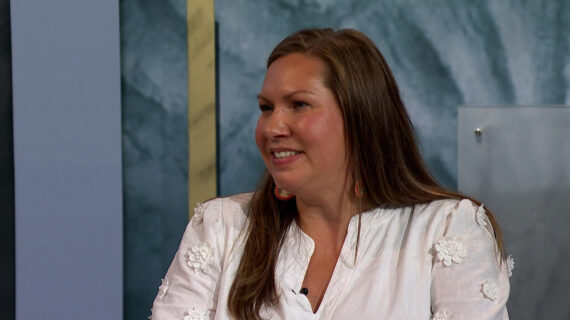
Robin Goldman, Assistant Scientist at the Center for Investigating Health Minds at the Waisman Center, joins UW Chemistry Professor Bassam Shakhashiri to focus on the neurobiology of well-being and how it can be trained.


Copy and Paste the Following Code to Embed this Video:
Healthy Minds
-
Goldman
So, hello. -
Audience
Hello. Nice to see all of you here and nice to be here. Thank you for inviting me to speak. My name is Robin Goldman and I am an assistant scientist and co-scientific director at the Center for Investigating Healthy Minds. I'm here to speak with you tonight about the neurobiology of well-being and how it can be trained. At the Center for Investigating Healthy Minds we are led by Dr. Richard Davidson and while he certainly is a part of everything we do, so are a great number of other scientists and postdocs, graduate students and scientific staff. In fact, I think at this point we have probably a total of 70-some folk working with us plus some number of hundreds of undergrads that help us do what we do every semester. None of this could be done without all of these people so I just wanna give thanks to all of them.
We're all working together under this mission here
to cultivate well-being and relieve suffering through a scientific understanding of the mind. Currently, like I said, we're working on many things. Dozens of projects we're working on and I'm gonna tell you about some specifically tonight to really try and get into understanding two main questions that we have. One of them is what factors influence well-being? The other is can well-being be trained? Bassam was talking before about how we used to think that once you became an adult your brain was your brain and that was it and now we know that that's not true. We know that new neurons grow. We know that synapses grow, that your brain actually can change. Is there a way that we can understand more about how this works and specifically if we can harness that to cultivate or train well-being? I'll start with what factors influence well-being. We in the lab put a lot of attention actually, to emotion. A lot of the work going on in the lab in some way, shape, or form, has to do with emotion so I'm gonna focus on that tonight and on both positive emotion and negative emotion. We'll start with the positive. What you see here, I'll walk you through. It's two different ways that we can conceive of people responding to something positive. If we were to show somebody something positive, say a picture of a happy baby here. Let's see, is this gonna, do you see my mouse? There we go, oh, it's tiny, okay. Happy baby. This here is time moving across the bottom. What you can see for two different people, and they're illustrated as person A in red and person B in blue, is that they have a different kind of response to this positive event. The person A in red has a sustained response over time. They're maintaining a positive response. The person in red also has a positive response, but as time goes on, their response falls off more. They're not sustaining the positive emotion as long as the person in red. The amplitude or the amount of positive emotion that each of these people have is different. Just a natural variation in the way that these people are responding or even the same person at different points in time. How do we study this in the lab? Well, there's a very common design that we use where we display different pictures to subjects. Positive things, of negative things, neutral things, like, for example, a happy baby. We measure people's responses in different ways. We can either measure behavioral responses, so how do you respond to this by saying if it's positive or negative or in some way showing us with a behavior something about how you feel about this image. We can also measure different physiological changes in the body. We can measure sweat response. We can measure changes in your facial muscles or in other muscles in the body that can tell us about ways that your physically, physiologically expressing this emotion, this response to the emotion. We can also measure it in the brain. How does your response to positive events affect your well-being? Well, we've done a study. Aaron Heller in the lab did a study where he did just that. He showed people this kind of series of images and looked at how people responded in the brain. There's an area of the brain here called the striatum, which is related to reward processing. Let me orient you to what you're looking at here. We're looking at, again, that sustained response versus less of a sustained response. As you go across this bottom axis here, moving more to the left, we're getting a more sustained positive response. On the Y-axis there, moving up, is greater well-being. What Aaron showed in these subjects was that there was a relationship in this part of the brain, the striatum, which again, is related to reward processing, when people were seeing these positive images. When this part of the brain had more positive response they showed greater well-being via a questionnaire that allows us to tap into that. The longer that you can sustain a response to positive images, the more psychological well- being you're likely to have. Can stress affect your ability to sustain positive emotion? I bet to many of you, if not all of you in this room, that's kind of a silly question. When you're stressed it's probably harder to sustain positive emotion. But we can look at that with various measures. Marital stress is one that can have a very large impact. We looked at marital stress on the ability to sustain these positive emotions. The way that we did that was through measuring the psychophysiology. You'll see this woman here has electrodes on her face, and they're in a very specific location on her face. This muscle right here we can measure changes when you make sort of a frowning or furrowed brow. Here we can look at changes in smile. Actually, we can see very subtle differences in people's changes in facial expression and measure very subtle changes in their emotional response in this way. Here we're gonna look at positive emotion by looking at a decreased response in the frown muscle. When these people were looking at, when they see a positive image how much does this muscle actually relax? Okay? Again, I'm gonna orient you a bit to what you're gonna see. We're gonna look here on the Y-axis is increased stress, so as people had more stress. On the X moving off to the left this is less sustained positive response, so meaning more brow furrowing. Okay? What these people showed was that the greater the marital stress they had, they weren't as able to sustain positive emotion just looking at these pictures, looking at these positive pictures. What do we know so far? We know that well-being depends on your ability to sustain positive emotion and that this ability can be affected by stress. What about negative emotion? What about negative events? How does this affect your well-being? We're gonna go back to this figure, but now we're gonna look at it in a different way. Now we're gonna look at it in terms of the impact of negative emotion. Now we're gonna show a negative image. We're gonna show a spider or some other such thing. Now we're gonna say, okay, what's the difference between person A and person B here? Here, person A in the red has a sustained response to negative, and person B in the blue is recovering more quickly from that negative response. So it's the reverse. Now what we're looking for is how quickly can people recover from a negative event. We go back to this same study design. But now we're gonna replace our happy baby with a negative image and we're gonna look at fear responses or responses to negative images and see how an inability to recover from negative events affects well-being. Okay? Again, we're gonna go to the brain, and we're gonna look at a part of the brain called the amygdala. This work was done by Brianna Schuyler, who is also in the lab and actually the other scientific co-director now in the lab. Here, what we're gonna look at is how people responded to these negative images. Let's see if my mouse will show up here. We're gonna look at this part right here. This bar, this is time going across the bottom here. This black bar here represents when we had that scary spider image shown to people. This is the response of the signal in the brain that we can measure with the MRI. We're looking at that here in this region of the brain called the amygdala. The amygdala relates to fear processing, to orienting and attentional type things. We're gonna look at this, this here is people's initial response to the image, and this here, this area is what we're gonna call recovery. How quickly do people recover from seeing this negative image? What she found is if she broke subjects that she scanned up into two groups, people who were high in neuroticism in red and people who were low in neuroticism in blue, they showed a different pattern in this recovery. Slower recovery, the people in the red, the higher neurotic people, is associated with greater neuroticism, okay? People who have a harder time or slower time recovering were also the people who were more neurotic. The people who were less neurotic were the people who recovered more quickly. Can anything affect your ability to recover from negative emotion? We have also looked at different kinds of measures of well-being. Here, we looked at something called an eye blink response or a startle response. This work was done by Stacey Schaefer in the lab. What she did was look at the startle response to negative images. Looking at eye blink magnitude because when you are more stressed your eye blink tends to be, you tend to startle more easily. You probably notice this when you're walking down the street and maybe not, having a difficult day and you hear a horn, you'll jump a little higher than if you were having a good day. This is what she's measuring with this eye blink. Again, let me orient you here. What we're gonna look at here on the X-axis, as we move to the left, is people who have greater purpose in life. These people were asked all kinds of questions about their purpose in life. People who felt, who reported having a greater purpose in life, we're gonna look at how that relates to this startle. Here, as we go down the Y-axis, people are having a faster recovery from this negative event. People down here will have a faster recovery. Going along this way, greater purpose in life. What she found was that there was a relationship between these two things. People who reported having greater purpose in life had a faster recovery from negative events. Greater purpose in life associated with faster recovery from negative events. Okay, so what do we know thus far? We know that well-being depends on your ability to sustain positive emotion and recover from negative emotion and that both can be affected by lifestyle or by things happening in your life. Now let's look at if these can be trained. Richie has a bit of a history with this and working with some folks who maybe are considered to be experts in specific types of training. This is with the Dalai Lama. We've looked at folks who dedicate their lives to training in meditation. We put them in MRI scanners. We've put electrodes on their head. What do we find when we look at them? Antoine Lutz did a study where he looked at expert meditators. Now these experts are folks who have spent hours and hours and hours practicing. The data that I'm about to show you, there was a range of practice that these people had. The minimum was 10,000 hours, which is about 10 hours of practice a day for three years, and the maximum was 50,000 hours, and for that person it was 10 hours a day for three years and five hours a day for an additional 20 years. That's a lot of practice. We hope, if we're gonna see changes in people's brains, we should be able to see changes in these people because these are like Olympians of this type of practice. What he looked at was something called gamma oscillations, which you can measure with electrodes that you put on someone's head looking at the electrical changes going on in the brain. Gamma, which is relatively higher, faster frequency is related to higher levels of attention, intentional focus. In these experts compared to non-meditator controls which you see here, they had a lot more of this gamma activity. Each of these numbers are an individual person. We can see even in the experts there's a lot of variability there in how much they show, but they all show more of this gamma activity. What does that look like? Well, this here is what those EEG squiggles look like when this one particular expert was just relaxing, sitting there not meditating. Then this is when he started meditating to give you an idea of the kind of thing that we're seeing here. Okay so long-term attention and compassion meditation practice can alter what we can see in the brain. Okay, great. But none of us are huge experts. It would be good to know if in these people, we can see a change in their emotional response, or in other people practicing meditation. It's fine if it changes squiggles in the brain, but what does that mean? How does that translate then into something that would have an impact? Let's go back to that study design that we've used a lot in the lab where we're looking at people's responses to positive and negative pictures. Again, just to remind you of what we're looking for here. Now we're gonna look again at people's response to negative images. We're looking at the difference over time in how people recover to these negative images. Do they recover more quickly, like in the blue? Or do they have a sustained response to the negative, like in the red? Again, we looked in the amygdala. Here in this study we looked in long-term meditators, not expert meditators. What does that mean? These people were not people who dedicated their lives to meditation. They weren't monks. They were people in the United States who dedicated a lot of time to meditation but still lived in the US, went to the grocery store, did all these kinds of things. These people, they practiced, the minimum was about 1,500 hours. That was, for this person it was one hour a day for four years. Okay, that sounds doable. Then 32,000 hours, which was 10 hours a day for three years and three hours a day for 20 years, but a range in between there. Let's look at what that looked like. In red we've got the long-term meditators that I was telling you about, and in blue we've got folks who've never practiced meditation before. What do you notice? It's the same. Now you're probably thinking, why is she showing me this if it's the same? Well, we looked at this and we thought the same thing. Why aren't we seeing a difference here? We decided that what we would do is just look at the long-term meditators. Now we're just gonna look at, we're gonna break the long-term meditators up into the folks who have a lot of practice and the folks who have a little practice. The least practiced in this group of long-term meditators is in green, and the most practiced is in purple, and now you see a difference. In this group of meditators that we studied, the folks with less practice had more of a sustained response to these negative images, and the folks with more practice had a quicker recovery. What might this mean? Well, it could mean any number of things. One way to really try to investigate this more, and we're headed that direction, is to start studying people over time, over longer periods of time. What was it that drew these people to meditation in the first place? Well, in the US it's very possible that somebody who dedicated that much time to meditation needed some help with something. Maybe they started off worse off and were looking for something to help them out. I think that's probably a lot of why people in our culture are drawn to meditation. You start doing it because you're stressed because you're having a hard time. We need to look into it more but it does look like the more practice these people do, the easier time they have recovering from negative things. The more hours of practice they have, that's associated with faster recovery from negative events. What do we know so far? We know that well-being is associated with sustained positive emotion and quick recovery from negative. We know that emotional response can be affected by life circumstances. So it's not set in stone and that mental training, meditation as a form of mental training, is a way to alter emotional response. But what about if we don't have 10,000 hours to give? It's probably pretty much everyone in this room. Maybe not. Let's say most everyone in this room, including me. I don't have 10,000 hours to give. What about for me? Can short-term training affect the brain? Well, Helen Weng in the lab looked at exactly that. She looked at a particular type of meditation training called compassion training. She looked at compassion meditation compared to cognitive reappraisal. Let me give you an example of what that is. Compassion meditation training, these people spent two weeks training for 30 minutes a day and they did a guided compassion meditation, which actually if you're curious you can go to the website which I'll show you at the end and you can hear it. In this meditation you imagine someone that you know and you say some phrases towards them. May you be happy. May you be healthy. May you be free from harm. These kinds of things. Then you work through to people you don't really know, to people you don't really like. You do this every day for 30 minutes. Then she had another group that did a similar type of thing, but they were learning cognitive reappraisal. What does that mean? That means you see the crying baby and you think, well, the baby's mom is gonna come soon or the baby's dad and it's gonna get fed and everything's gonna be fine, so really it's not so bad. Something like that is cognitive reappraisal. What did she find? What she did was after people went through this training she had them play a game, and in this game it basically measures how likely people are to share or to redistribute money. It's a little gambling type game where you can see how likely someone is to make the money that's being given more equal across people or to give money that could have gone to them to someone else. What she found was that in the compassion group they were more likely to share. These are the folks who went through the compassion training and the folks who went through this reappraisal. But she also found changes in the brain. She did this in an MRI scanner and this part of the brain here is the dorsal lateral prefrontal cortex. That part of the brain is related to goal-directed behavior. Goal directed, attention, sustaining positive things. Other studies have found relations there on those types of tasks. What did she find? Let me orient you again to this. Now moving to the left we're gonna have greater brain activity in this area. Going up we're gonna have more redistribution or more prosocial, more sharing. What you're gonna see is the difference between these two training groups. Oops, wrong direction. Here in red is the group who learned compassion. Just look at the red line there. The red line is the fit or the average of each subject. The red line, so these are the folks who did the compassion training, when they have greater activity in this part of their brain they are sharing more. The other group who did a different kind of training, goes the other way. So the trainings had different effect on the brain in these people. People who went through the compassion training were more likely to share, and we can see that in this part of the brain. Participants who completed the compassion training showed greater activity in this part of the brain when they engage in more prosocial or more sharing behavior. So a person's emotional response can be altered by long-term meditation practice, and it can also be impacted by short-term training. Short trainings, we can also see changes in people's behavior and in the brain. Great. Can we make it kind of fun to do this? Well, we're looking at that too. One way that we've been looking at that is looking at games to promote prosocial behavior and well-being or attention, training of attention, in kids. We've done-- we've built in collaboration with the Games and Learning Society here at UW. We've built a couple of iPad games. We've done a lot of testing of these games and now piloting of these games and testing of these games in adolescents. We've also looked at it in folks maybe with a little more practice with meditation. What are the games? We've got one game called Crystals of Kaydor and in this game we are training prosocial behavior. We have images of aliens that you can read the emotions of and I've got a video here to give you a bit more of an example. Let's see if this works. -
Video
We're all working together under this mission here
When sentient life is detected on the distant planet of Kaydor, a spacecraft containing four robotic explorers is sent to investigate. Their primary mission will be to study the alien culture through the interpretation of basic emotions. -
Robin
We're all working together under this mission here
The person playing the game. -
Video
We're all working together under this mission here
Leaving behind it's own solar system, the spacecraft begins it's long journey to Kaydor. -
Robin
We're all working together under this mission here
Is a robot and their mission is to go out and suddenly here they are on this spaceship. They're about to land on the planet Kaydor. Here they go. Off goes the pod. We tried to make this game something that would actually be fun for kids to play, that would be appealing to them. You crash land on this planet, and what you need to do is go around and find all the various parts that you've lost in order to be able to leave again. To do that, you have to understand the facial emotions of these aliens and make friends with them and try and do things to befriend and engage these aliens. Kids seem to like playing it. Here they're trying to say what an emotion is and also how intense it is to be able to read intensity of emotion. We have another game as well called Tenacity, which is more of an attention training game. Here it's a focus on breath awareness and attention to the breath. They tap the screen and count their breath up to 10 and then start again. They, for correct counting flowers grow on the screen and various things happen. We're also looking at ways to train these kinds of behaviors in school age kids in young preschool. We've been working on a kindness curriculum, which we've done a number of studies on now, preliminary studies. We use various books that deal with emotion and attention. We have a curriculum that's based on the ABCs. So A, attention, breath, caring practice, interdependence, emotions, forgiveness, and gratitude. We use different objects to help the kids. This is a mind jar. It's got little sparkly's in it and you shake it up, so a snow globe. Shake it up and the sparkles go everywhere, and then the kids can watch the sparkles settle just like their mind will settle. Their minds will sometimes be chaotic, and then they can sit and watch it settle. There are all kinds of little tools like that for teaching these kinds of things. For kids, kids aren't gonna be, we're not gonna be able to measure the changes in kids the way that we can in adults. We've had to come up with all kinds of other ways to test the impact of these curriculum on kids. One of the ways that we've done that in the young kids is through this little task they do with stickers. They get a bunch of stickers in an envelope, and then they get to give some stickers. Keep some for themselves, give some to their friend, maybe give some to a kid they don't really like, to a stranger, to a sick kid, and we can look at how they change this giving behavior before and after the training. What we've found is, preliminarily, in the kids who go through this training they're more likely to share than the kids who don't go through the training. We're now doing these kinds of studies in a much larger group of kids to really see what kinds of impact this curriculum has. We have some hints that prosocial games and that these curriculum can increase, prosocial behavior can increase well-being in kids. But there's a lot left to do. That's a good part of what we're doing right now. We're also doing these kinds of curriculum for adults. We're now developing a curriculum, or have developed a preliminary curriculum, in collaboration with the School of Business to teach a well-being curriculum in the workplace. In this particular curriculum we'll be delivering it in various places of work and looking at impact both on individual well-being, on changes in people's calling in sick, on productivity, all kinds of things like that. As part of this too, we're realizing that we don't have great ways to measure changes in people's well-being. Another aspect of this project is trying to develop new ways just like we did with the kids with the sticker redistribution. Are there new ways that we can measure well-being and changes in well-being other than somebody just saying, "Yeah, I feel better," "Yeah, I feel worse," which people always aren't so accurate at reporting. What have I told you today? well-being is associated with sustained positive emotion and quick recovery from negative emotion and this emotional response is affected by life circumstances, so it's not set in stone. That's great news. If it's not set in stone, then we can train it. We can use various practices, various curriculum, various different types of trainings to train well-being, to cultivate well-being. What we're now trying to do is understand really, how can we train well-being in children and adults with curriculum, with video games, with other things. Stay tuned. Thanks to all of you for listening, to Bassam for having me, to the scientists and the grad students and scientific staff, all of the development staff that we have. If you would like more information we've got many more studies that you can get more information about on our website. Like I said, we also have some of the trainings that we've done. We've got the compassion meditation. We've got the, I think we also have the breath awareness, the Tenacity game, a version of that that you can try. We've barely scratched the surface tonight, but thank you very much for being here and for listening and let me know if you have any questions. (applause)
Search University Place Episodes
Related Stories from PBS Wisconsin's Blog












Donate to sign up. Activate and sign in to Passport. It's that easy to help PBS Wisconsin serve your community through media that educates, inspires, and entertains.
Make your membership gift today
Only for new users: Activate Passport using your code or email address
Already a member?
Look up my account
Need some help? Go to FAQ or visit PBS Passport Help
Need help accessing PBS Wisconsin anywhere?

Online Access | Platform & Device Access | Cable or Satellite Access | Over-The-Air Access
Visit Access Guide
Need help accessing PBS Wisconsin anywhere?
Visit Our
Live TV Access Guide
Online AccessPlatform & Device Access
Cable or Satellite Access
Over-The-Air Access
Visit Access Guide




Follow Us