

 Passport






Grow Sweet Potatoes in Wisconsin
02/14/15 | 31m 29s | Rating: TV-G
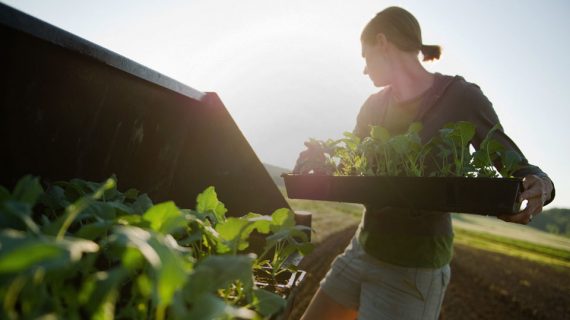
Noel Valdes, Owner, CobraHead LLC, demonstrates how easy it is to plant, grow, and store sweet potatoes. Sweet potato plants can produce large yields and these nutritious potatoes can be used in a wide variety of recipes.


Copy and Paste the Following Code to Embed this Video:
Grow Sweet Potatoes in Wisconsin
Morning, everybody. Thanks very much for attending our session on sweet potatoes. My name is Noel Valdes. I live in Cambridge.
If you don't know where Cambridge is, 20 miles due east of here, get on the Beltline, it's the first town you will hit. I've been growing sweet potatoes since I moved to Wisconsin in 1986. it's a very easy crop for home gardeners to grow. It's a crop that if you are a home gardener and you want to add a good crop to your list of things, sweet potatoes should be considered, and I hope I can give you some good information on how that can be done relatively easily.
Most people think of sweet potatoes as a southern crop, and there's a good reason for that because it is, but you can cheat Mother Nature and grow nice looking sweet potatoes, healthy sweet potatoes in your garden here in Wisconsin. That's in Cambridge. You can buy sweet potatoes at the store, and I often ask myself why am I doing this when I can buy them in the store for two dollars a pound, organic sweet potatoes at Willy Street. But we all know that the stuff you grow yourself is way better than what you're going to buy in the store, even the good stores.
So there's a nice little crop of sweet potatoes that I grew a couple of years ago. And getting crops, you can see very big roots, is not unusual. So if you're not getting big roots out of your crops, you're doing something wrong. You have to figure out what you're doing, and hopefully I can maybe steer you in that direction as well.
Sweet potatoes, if you didn't know this, are probably the healthiest single plant we can grow as gardeners. More nutrition and USDA rates it number one as healthy food for you to grow. It's good for people with health issues. Diabetics can tolerate it.
It's just got a lot of good health factors in it. Low calories, easy to grow, a lot of ways to prepare it, a lot of ways to cook it. I've got a line there that says high yields in relatively limited space. It takes some space.
It's not a very compact plant. It wants to spread out. So you do need a little bit of room. I grow them in raised beds and that helps the room issue tremendously because you can get a lot more food in a raised bed than you can planting them linearly in rows, but I'll show you again how that works.
They are definitely easy and low maintenance, especially once you get the plant started. It takes a little bit of finesse to get the plant started, but once they're started, there's nothing to do except wait until it's time to harvest. And the nice thing, if you use the right varieties, sweet potatoes will store at room temperature, the right varieties, for one year. That means you can harvest them in October; the next October you can still be eating those sweet potatoes.
And there's not other crop that you can do that with, just store them at room temperature with no preparation or minimal preparation, that will last you a year. We already talked about that. A good crop to grow. And you can grow nice ones yourself.
Okay, I'm going to give you a little sweet potato trivia. If you didn't know, the sweet potatoes came out of Central and northern South America. Probably been cultivated for close to 4,000 years. The second line is extremely interesting.
New Guinea and some of the other Polynesian nations have been growing sweet potatoes since about the year 1,000. So, guess when the Europeans got there. 1500, so what happened in that interim? How did sweet potatoes get from South America to Polynesia 500 years before the Europeans?
Most people think that there was some traffic. Could be. They are the seventh most grown crop in the world. Corn number one, wheat, and then whatever.
Most countries, not North America so much, but Africa, Asia, Latin America, very heavy consumers of sweet potatoes. For the horticulturalist in there, Ipomoea batatas. They're a morning glory, and if you grow them and you're lucky enough to see some flowers, undisputedly a morning glory. That's exactly what they are.
But, unlike the bindweeds and morning glories that we are used to growing, they're totally edible, every part of them. They won't give you hallucinations, and they are, even the leaves and the stems are non-toxic, and the leaves and the stems are actually part of the diet of most of the people that do use sweet potatoes in other parts of the world. In fact, even down South, sweet potato greens are a common dish. So you can eat those leaves.
The most interesting thing about the sweet potato from a home grower's point of view is all parts can be rooted. The stems can be rooted. The leaves can be rooted. The root can be rooted.
Parts of the root can be rooted. The thing wants to grow. It's seeking life for whatever reason, but it's probably the most easy plant to root for a vegetable-type crop that's out there. It's not hard to start your own plants.
Those are roots. I was told by a professor friend who taught me a lot about sweet potatoes that those are not tubers, they are roots. So don't call them tubers. They are roots.
And they are not yams. There's a reason sweet potatoes are called yams. When all the Africans came to North and South America to the Americas, there was a plant that they ate in Africa that they referred to as a yam. And so sweet potatoes looked like yams, and naturally the Africa word for yams made them yams in the nomenclature.
But it's a misnomer. And they're two totally different plants. And now the USDA requires sweet potato growers to call them sweet potatoes on the package even though they're the guys that contributed to part of the problem because they used to call them Louisiana yams or North Carolina yams in their marketing. But those are yams.
And those are yams. And if you go to the Asian markets around Madison or in any town, you'll see yams. Yams taste more like a potato. They're starchier.
They're usually larger. They usually require a much longer growing season. Nobody grows yams in Wisconsin, but they are yams. And it's crazy because even some of the sweet potato varieties out there are called yams.
There's a very popular sweet potato variety called red yam, but they are not yams. Okay, I'm going to talk a lot about starting and how to get your own starts and various ways to do that, but it's already middle of February and some people are going to say, hey, I'm not going to go out and try to get starts. I just want to buy some plants and get them in the ground. You can do that.
And a lot of the catalogs and some of the garden centers will cell you the starts. They're referred to as sweet potato slips. So if you want to shop for them, shop for sweet potato slips. And a lot of the catalogs will carry them, and that makes your life easy.
You get your sweet potato slips around Memorial Day, you get your garden ready, you go plant your slips, and you're good to go. The disadvantages to slips are primarily cost. They're very expensive. A sweet potato slip from a catalog is going to cost you $1.25 to $3 for a single plant, and you can get 50 plants off of a single sweet potato.
So you can see that if you can start your own starts, you're going to save a lot of money, but I'm not discouraging you, if you want to try sweet potatoes, to just go out and buy some slips and do it. You can grow your own starts from roots, shoots, or vines. And remember, this is a root. So that root will root numerous ways, as we will show you as we go forward here.
And sprouts will form on a root, if you just leave it out in the air, if you put it in the ground, or if you put it in water. In any one of those of cases, it'll start throwing out shoots and start throwing out sprouts, and I'll tell you which sweet potatoes you should kind of use. I think a lot of you have seen this. Starting you sweet potatoes in a glass of water.
If you're going to do that, we're kind of getting a little late this year to make a crop happen. You can try it, but I would, normally if I were going to start them in water, I'd start them in early January. You can try it now with February half way through, but whether you'll get enough good shoots and sprouts in time to get them into the ground at the end of May, it's dicey. You may make it, and you may not.
So I'll just say that. But it's a very easy way to start your starts. That's a sweet potato that was in storage and wrapped up in a newspaper. And those are the sprouts.
They're the same thing you see here, but you can see they're white because they weren't getting any sunlight. But each one of those little sprouts, as you see here, can be rooted, and any little section of that vine or leaf that has at least a nodule where there's some growth coming out, any one of those can be put in water or put in a potting soil and be rooted. The method you choose is up to you. Starting in water is usually the easiest for beginners, but I think after you've grown them for a while and it becomes part of your garden repertoire, then starting from vine cuttings or starting from rootings from an old plant is a lot easier and you can wait longer before you have to worry about getting your plant started.
So there's what happens if you put a sweet potato in water. And each one of those little shoots coming out can be snipped off, stuck either in another glass of water to form roots, or stuck directly into potting soil, a nice warm, deep potting soil, and those will all form a plant that you can stick in the ground and grow a sweet potato plant. But, as I said, it's easier to do it off of a sprouted root or a vine cutting that you have. There's a harvest where I've, there we go, that's the vine from a sweet potato.
If I can keep those alive, that's in October, if I can keep those alive until next spring, just bring them in the house and keep them alive, treat them like a house plant, then I can cut those all up and make starts out of them and put them in the ground and get sweet potato plants. It's crazy. They want to live. So that's kind of what you're seeing here.
Those can be cut up into multiple pieces. And that long one there, I'd really cut that one into about three pieces and pot off all three of them, as you see here. They will root very easily if you give it a couple of considerations. You can transfer them to water and let them root in water, and then go to a potting soil medium.
Or you can go directly to potting soil, but if you're going directly to potting soil, the soil needs to be deep, warm, and relatively rich. Once you get your potatoes in the garden, the soil doesn't have to be so rich, but your potting soil should be fairly nutritious. So that almost dead looking thing in no time will start to look like that. It'll become alive again.
It'll start throwing roots down below, and if you are going to pot them off, they don't like shallow soil. So you can't put them in a shallow flat. You want to put them in a deeper box or at least eight inches deep. And that's what will happen.
And you can see I've got them in a box there, and I've got my starts coming along very, very nicely. That's what they look like in a relatively deep box. As I said before, starting from the whole root in water, late January is about the latest you're going to easily get away with it. If you're starting roots in soil where you're just going to put the whole root in soil, any time in February you can get away with it.
From cuttings, you can go as late as the first of May and still get some root out there and still get them in the ground. You just need enough root to get the plant to start when it gets into your garden, but they have to be hardened off. Now, I'm going to have to, I know a lot of you know what hardening off is, but some people do not know what hardening off is. Hardening off is exposing your plants, and it doesn't matter, sweet potatoes, whatever it is you're going to put in your garden, I don't care if it's your tomatoes, you do it with your tomatoes, exposing them to weather gradually, a little bit at a time, from the indoor temperature to the outside temperature so they get acclimatized or used to that outside temperature, the outside wind, the outside sun, and it's not a shock when they get transplanted in the garden because you'll kill sweet potatoes if you shock them.
So you have to be a little careful. And we'll have time for questions This won't take a whole hour. So I'll have plenty of time for questions. People have asked that we hold questions off until the presentation is done, but if you have questions on any of these things, save them up and we'll have time to answer them.
I do this with my sweet potatoes in the house. I make a little mini greenhouse. That's a south-facing window. And you can see Wisconsin, that's out my backyard there, typical snow.
But that'll keep the temperature up over 70-75 degrees even if your room temperature in your house isn't that hot. That works great to give the sweet potatoes a climate that they will enjoy in the house. Just make a little mini greenhouse inside the house. So I'm assuming everybody's got their starts under control, whether they're from slips or your own cuttings or rootings in water or rootings from vines, whatever it is, but we're good to go now.
We're ready to get into the garden. You've got your plants hardened off. I always shoot for Memorial Day weekend or the last week in May to get them in the ground. If you get them in before the 15th of May, you're taking way too big a risk.
I will go through this again, but sweet potatoes will tolerate zero frost. They will tolerate zero frost. Don't try to cheat. You'll lose.
They do not like frost. They're a Central America plant, so you have to keep them in a warm condition. You have to both get them in the ground after the last hard frost, and you have to harvest them before the first hard freeze. I use what are called open raised beds, which you can see here.
These are about 20 feet long. The length doesn't matter, but three feet across the top of growing space. The nice thing about raised beds for growing sweet potatoes are that you can get a lot more plants in a smaller space, they warm up faster, and it's easier to achieve softer soil using raised beds. But if you don't have raised beds, you can easily grow sweet potatoes.
There's not problem at all. Just take your garden area that you want to grow in and make a ridge. So, essentially, what you're doing is just having that fall right down on the other side, and you have a ridge of soil at least a foot tall. But if you can get about 15-18 inches of soft soil below the top of that ridge, that's good.
They're going to want softer soil as opposed to harder soil. They will grow in hard clay, but if they have room to spread out and softer soil, fine. If you're in sandy soil, you won't have any issues. So, no raised beds, do exactly what I'm telling you except just do it in ridged hills as opposed to beds.
I work in a little compost to soften up the soil. They don't need or want rich soil, so don't go adding a lot of nitrogen-rich material. Don't go adding a lot of fertilizers. Once they're rooted in the ground, they're actually better off in just pretty plain soil.
You don't want too much nitrogen in there. I cover my sweet potatoes with a plastic mulch, as almost every northern grower does. Some people use the clear mulch. I've seen some people recommend it, but most people use a black plastic mulch.
It's the thicker mulch, I think, is what they sell. And you can get plastic sheeting extremely cheaply at places like Menards and Home Depot and the other construction stores. They sell it as protection for construction, and they got the size you need. Ag stores will sell it as well, but you can usually go to a home store, a home improvement store, and get it cheaper and easier.
Spacing on you sweet potatoes, they need room to spread out. You'll have problems if you grow them too close together. You'll get stringy roots. You won't get nice, big, fat roots.
They've got to have some room to spread out. Your spacing between plants should be at least 18 inches. I'm actually shooting more now for like two feet between each plant minimum spacing. There's the black plastic that I've laid down.
It's totally covering that bed that I showed you earlier. I've got holes cut into the plastic, and then I use a little plastic protector, which I'll talk about in just a minute. I wrap the edges of the plastic in long boards so that it's held down securely. And that's what it takes.
So lay that down before you're ready to plant your plants. And then it's just a matter of taking your starts and literally just sticking them into the holes that you set up to plant your plants in. If you buy slips or you're doing your own starts, this is the most fragile time for that plant. When it gets from your house or from the nursery or wherever it is into the ground.
This is the only time where you really have to baby the plants and take care of them to make sure that they're going to survive. So you have to protect them. You have to keep, make sure you keep them moist, not let them dry out. The wind will try to beat them up.
If you're not careful with how you have your plastic holes cut, that plastic can blow over them. So that's why I use those little protector rings. And that's most likely the time that the animals are going to find them the most delicate and delicious as well. I make little protector rings.
That's a core of a shipping tape. That's just PVC, three-and-a-half-inch PVC that I've cut down to two-inch things. You can do whatever works for you, but I just put a little box around the sweet potatoes to give them some protection when they're first taking off. And there you can see they're in the little holes there and just starting to pop out.
But once the vines start to sprout, once they start to leaf out, you're pretty much home free until harvest time. Very little has to be done from this point on. Once you get that far, it's going to happen. Now, as far as irrigation goes, most years in Wisconsin I don't even have to irrigate my sweet potatoes.
I don't even have to water them. There's enough natural rainfall. They don't need an excessive amount of water. I do put little slits in the plastic here and there to make sure that the water just doesn't run off, but it does drain down into the beds.
Obviously, it's going to pick up moisture from the holes in the plants themselves, and it's going to pick up some moisture from the edges of the bed. But it's rare that I've had to irrigate my sweet potatoes. And the leaves will tell you. They'll show a little distress if they need water.
If you see a little inward curl and you know you're watering the other rest of the garden heavily, then you might want to water them, but normally they don't need a lot of irrigation. So if you've done everything right, around the end of summer, that's what your sweet potato bed is going to look like. And the vines are very, very prolific. In fact, a lot of years I have a problem with too much vine.
I just end up, I don't cut them off because I want all of that nutrition from the vine to go down to the root. I just wrap them around and throw them back in there. But you can see vines are very prolific on the amount of vine that they put out. The things that are going to give you trouble in a home garden here in Wisconsin, primarily, voles can be the most destructive.
If you're familiar with voles, they're a little mouse. They're like a field mouse. You'll mistake them for a mouse if you see them in the garden. They look just like a mouse.
They will tunnel into your sweet potatoes, and they can ravage a crop in very short order. There's a worm called a wireworm. It's a little segmented gold worm. You'll see them a lot in carrots and turnips.
That same worm will get into sweet potatoes and tunnel into sweet potatoes. As far as under the ground damage, those are probably the only two things you really have to worry about. Wireworms will go away if you rotate your crops consistently and your garden soil is relatively healthy. The wireworms will pretty much diminish over time.
The voles, that's your best vole protector right there.
LAUGHTER
But you can see what happened to Boots over there. She got into the catnip and went to sleep one year.
LAUGHTER
And so I did have one year I had bad vole damage, but normally those guys do their job and I don't have much vole damage. You can see the sweet potatoes there are covered under a cloth, and I've got fencing around here. That cloth is called agricultural fabric. I'll explain it in a minute.
LAUGHTER
That was in my backyard, and they love sweet potato vines. They love them, love them, love them. They'll eat the over anything else in your garden. They'll go for the sweet potatoes vines number one.
So you have to worry about these guys, and I don't know where you live, but where I live, they're a big problem. So covering with that fabric that I showed you keeps these guys off of them. They won't try to figure out how to get through them. So I've had good luck protecting from deer with a cloth over the sweet potatoes or fence it or whatever it is you need to do for deer protection.
These guys, Japanese beetles, they weren't even around in Wisconsin 10 years ago, but now they're becoming a problem. They're actually diminishing now. They're not as bad as they were three or four years ago because natural predators are showing up. But they will do a good number on the sweet potato leaves.
They like sweet potato leaves. Obviously they like grape leaves and rose leaves and other things better, but they can do a number on you sweet potato leaves as well. And, again, that cover, that fabric over your sweet potatoes will help. Okay, so we made it to the end of the year.
This is already October. You can see I'm already pulling out some squash out of the garden I'm ready to harvest. This is imperative. Don't let your sweet potatoes stand through a hard freeze.
You'll lose your crop. You will absolutely lose your crop. What will happen is the leaves and the stems first will start to turn brown and black, and then if that blackness works its way down to the root, that root will spoil. You can harvest after your leaves have been damaged by frost, but you better harvest right away and not let that frost damage work its way back to the root.
So usually about the second week of October is about as late as you can get unless you've really got a nice hoop house system or something like that. But I try to cheat. I do what I can. I've done this, covering it with polyethylene and things like that, but they're super frost sensitive.
And there where I've pulled that poly, you can see there already the leaves are turning black there. So I'm right on the borderline of where I have to get those things out of the ground. I use pruning loppers, the same thing I prune my apple trees with, to cut the vines and separate the vines from the plant. Super easy.
Super fast. Cuts the work way, way down because they're tough vines and you got to cut them. A little hand secateurs is much harder work than using a big pruning loppers that you can get both hands on. So there you can see, there's my loppers, there I've cut all of the vine off the plastic, I peel the plastic back, and I'm going to tell you this about the plastic too, I know that black polyethylene isn't the most environmentally friendly thing we can use out there, but it's cheap and I can get three years out of them.
Okay, I'll take that off, rinse it off with the hose, let it dry out, fold it up, and I'll use the same cover again next year. So three years, I'm doing my part. So there we are. We've got it all cleaned off.
I'll pull the boards out of the plastic that were holding the boards down, roll the plastic back, and that's what you'll see. And if you're very lucky, you'll see that they're popping out of the ground, and I know I'm going to get a big lunker out of that one. It's already showing. But there you can see where I've cut the vines off with the pruning loppers.
And you can see, you can do it by hand with hand pruners, but it's so much easier with a heavy duty pair of pruning loppers. When your sweet potatoes are in the ground at harvest time, they're going to be super fragile. They're going to be very, very, very delicate. If you cut the skin, they'll exude a little white sappy juice.
They'll snap and break very easily. You have to be careful with them. This is where you want to get them out of the ground and they're not ready to eat when you pull them out of the ground. They need to be cured for a couple of weeks, and I'll go through that in just a second.
So you have to be careful. If you damage them, don't worry about then. You can still use the sweet potato and everything's okay, but obviously the less damage you do, the better. So I get a fork underneath them, a big fork, and then I'll clean them out as carefully as I can.
And you can see with that stray root how far that is from the mother stem, and that's why I said they like to spread out. But that's all one plant there. Dig them out, and there you go. And there's the one I broke off.
No problem. But that's about eight pounds of sweet potatoes out of one plant. And that's what they look like out of the ground. Now the big boys, when they grow sweet potatoes for money, the average yield in the United States is well less than three pounds.
In fact, it's just over two pounds per plant is what they get out of a plant. Home grower can easily get four or five pounds a plant, sometimes even eight, 10, and 12 pounds out of a single plant. So you can beat what the big ag guys are doing growing them in your own backyard. That's 80 pounds of usable sweet potatoes out of one 20-foot long bed.
So your yields are huge if you do it right, OK. The book says that you should cure your sweet potatoes at 85 degrees. Well, none of us have 85-degree environments in our house. I've had totally successful luck bringing the plants in, brushing the dirt off, you don't want to wash them if you don't have to, just brushing the dirt off, I lay newspapers down on the floor, put them under the kitchen table, and just leave them there for a couple of weeks before I put them into storage.
It's at 70 degrees, and I've never had a problem. So you can cure them at 70, but the growers, they'll have a special room, and they'll cure them at 85 degrees. If you don't cure your sweet potatoes, they don't store as well. If they're fresh out of the ground, they don't have any flavor.
They develop sugars and longevity by being kept in storage. I wrap each individual root in a sheet of newspaper. Just like any other plant, you use the lesser quality ones up first, the smaller ones, the stringier ones, the damaged ones, use those up. The nice, big roots that you're really proud of, wrap those up in a single sheet of newspaper, put them in an open box, and you will get long, long storage out of your plant.
The variety of sweet potato that has worked best for me in my garden is called Jewel. They spell it both ways with two Ls and with one L. you'll find these a lot in the stores because they're a common variety grown by the commercial growers. There's a handout that I've referenced on my handout, a handout of a handout.
A professor of agriculture at the University of Illinois in Champaign-Urbana named Chuck Voigt, who also runs the Illinois State Master Gardener program, is probably the North's expert on sweet potatoes in the whole United States. He knows more about sweet potatoes than any man walking. He has a handout that you can search through the handout that I gave you. It'll be a UI Master Gardener handout.
You got to scroll down. And he will give you a bunch of varieties that will do well in northern climates because a lot of varieties and a lot of reason people have problems with sweet potatoes is they're growing varieties that should be grown in Louisiana shouldn't be grown in Wisconsin, and they're just not going to do well here. You need a shorter season, a lot of different things. So he's gone through all these trials.
He's trialed over 400 different kinds of sweet potatoes, and he's got them listed. So I definitely recommend if you say what variety should I grow, look at that. The other thing I would look at is if you go to the markets and the farmers market and it's a Wisconsin grown sweet potato, pick one up. Pick a couple up and you can use those for rooting.
If the farmers in Wisconsin are growing them, so can you, and they're going to do well here. That's a Jewel. That is two of them. One year old.
All right? Unwrap them a year after we harvested them, and they're great. Delicious. After a year, they'll start to deteriorate, and that's what will happen.
Okay, they'll start to throw out shoot, and they'll start to get shrivelly. They'll start to feed the shoots and things like that. But you can easily get a year out of the right variety. Not every variety, some varieties store less than others.
And, again, that University of Illinois handout that I showed you will give you the best ones to try out. And there's our man. Okay, so that's the end of the slide presentation, and now we can take questions.
APPLAUSE
Search University Place Episodes
Related Stories from PBS Wisconsin's Blog








Donate to sign up. Activate and sign in to Passport. It's that easy to help PBS Wisconsin serve your community through media that educates, inspires, and entertains.
Make your membership gift today
Only for new users: Activate Passport using your code or email address
Already a member?
Look up my account
Need some help? Go to FAQ or visit PBS Passport Help
Need help accessing PBS Wisconsin anywhere?

Online Access | Platform & Device Access | Cable or Satellite Access | Over-The-Air Access
Visit Access Guide
Need help accessing PBS Wisconsin anywhere?
Visit Our
Live TV Access Guide
Online AccessPlatform & Device Access
Cable or Satellite Access
Over-The-Air Access
Visit Access Guide




Follow Us