

 Passport






The Geology of the Ice Age Trail
07/26/15 | 38m 6s | Rating: TV-G
David Mickelson, Professor Emeritus, Geology and Geophysics, UW-Madison, discusses the glaciers, volcanoes and tropical seas which created the landscapes of Wisconsin. The Ice Age Trail, across Wisconsin, provides examples of the various geological periods and formations.


Copy and Paste the Following Code to Embed this Video:
The Geology of the Ice Age Trail
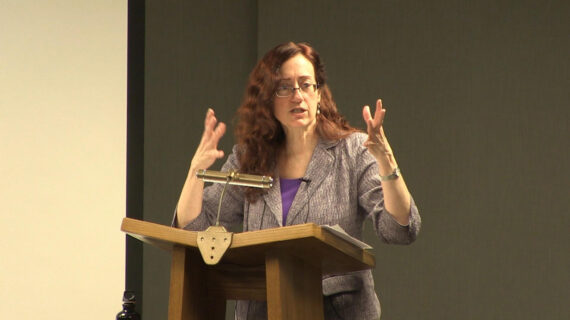
Our first presenter tonight is David Mickelson, and he'll be speaking on The Geology of the National Scenic Ice Age Trail. David retired in 2005 from the Department of Geosciences at UW-Madison for 34 years. He taught, among other things, Glacial Geology, Geomorphology, and the Geology of the National Parks. David and his students have worked on the Genesis of Glacial Deposits in Argentina, Tibet, Scandinavia, New England, Utah Alaska and Wisconsin.
His most recent co-authored book, "The Geology Of The Ice Age National Scenic Trail", was published in 2011 by the University of Wisconsin Press. And I believe we have a few copies here, if anybody would like to get a hold of one after the program. And, David, with that I'll turn it over to you and I'll try to plug in your mic. All right, well thanks very much.
I'm gonna spend the next 40 minutes or so talking about the ice age national scenic trail, a trail that runs about 1,200 miles across Wisconsin, about half of that is finished off-road, the other part is on road connectors but the plan is it will eventually, hopefully while I'm still able to walk around on the trail, to actually fill in the gaps and have a complete 1,200-mile trail. If we climb the tower of Potawatomi today and look up to the northeast, this is the view you get. But if you had been here say 14,000 years ago, this is what you would have seen. So this is in Glacier Bay, Alaska, and you're looking at a glacier front that's ending in water, so ice bergs are breaking off and that's called a carbon margin.
And I'm going to get my cursor here so you can see, you see the cursor? Yeah, okay, and, just to give you an idea of scale, that's a 21-foot long boat with three people in it right there. So the glacier did a lot on the land and obviously because it's the Ice Age Trail, it does tend to emphasize glacial features. But I want to step back in time, we gotta talk a little bit about Wisconsin's geologic foundations before we talk about these later events.
And the oldest rocks in Wisconsin are about 2.8 billion years old, that's billion not million. So that's not the oldest, there are older rocks. There are rocks that are another billion years older than that, but they're still very old. And there was a mountain range built at that time, and the rocks that were, that we see now at the ground surface in northern Wisconsin were deeply buried under that mountain range.
Miles, tens of miles below. And so they were heated and under pressure, and they became metamorphic rocks. So most of the rocks that we see in the north-central part of the state, get the cursor again here, up in this area are metamorphic rocks that have been subjected to heat and pressure under a big, high mountain range like that. The Ice Age Trail crosses those rocks, but you can only see them in a few places.
Where the Wisconsin river crosses the trail, where the trail crosses the Chippewa river, and a few other places. But for the most part what you see up there are glacial deposits, not the bedrock. The next memorable event in the geologic history of Wisconsin is volcanic activity in the central part of the state near Montello, but it was fairly localized and roughly the same time, within millions of years, there was a tropical sea that came into what is now Wisconsin from the South, and in this tropical sea was deposited sand, sand that was being delivered from what's now North into this sea by rivers. And that sand produced what's called the Baraboo quartzite, which I imagine many of you have been to Devil's Lake in the Baraboo area, and you can see features that indicate that this has to have been deposited by sandstone.
Ripple marks for instance, this is the bottom of Devil's Lake today, and you can see the ripples on the sand under the water, and then these are the ripple marks in the Baraboo quartzite. And quartzite is just quartz and grains welded together by heat and pressure. So that's another metamorphic rock. You probably know that it has a purplish cast to it, it's very recognizable, very hard, very resistant rock, and so through millions of years, the Baraboo quartzite has been more resistant than the rocks around, and has tended to stay up as a relatively high hill or ridge.
Okay, then we have a big gap in time again. We jump up 0.6 billion years and think of this geologic record as sort of like a book with a lot of the pages ripped out. So we get some information and then we're missing lots of pages, and then we get some more information, and then we're missing lots of pages. So we're missing that time between 1.7 billion and 1.1, and then there's evidence of a completely different geologic environment, instead of squeezing together and a mountain range running across northern Wisconsin, what we have now is the earth's crust being pulled apart, being pulled apart like is happening along the mid-Atlantic ridge that you may have heard of.
It's happening in Iceland, it's happening in East Africa, places where the crust is being pulled apart because of this plate tectonic movement, and at that time there was volcanic activity. And that was the time that the Lake Superior basin actually formed. The other Great Lakes didn't even exist then, but the Lake Superior basin formed early by this process, by this collapse of the earth as it was being pulled apart. We had volcanoes that were sort of localized, not extensive but there were volcanoes, and you can see volcanic rock in places like Copper Falls State Park, and there's actually this area of these rocks of this age run down basically from the west end of Lake Superior, down under Minnesota, Iowa, Nebraska, and into Kansas.
Now down there, these rocks are covered by younger ones, but we can see them at the surface in Wisconsin and parts of the UP. So this is at Copper Falls, associated with those rocks from the volcano are also some sandstones, but also we can see this rock, this volcanic rock called basalt, right out at the other end, the other, the terminus of the Ice Age Trail. So the Ice Age Trail starts here in Potawatomi State Park, and the western end is out on the Minnesota line on the St. Croix river, on these basalts, a very late what's called Precambrian age, so the purple and the lavender there are these rocks of relatively young age, and they're not metamorphic.
They're not buried deeply, these are volcanic rocks that are basically unchanged since they were deposited. Then another period of missing record, from about a billion years, to about 500 million. So 500 million years of record missing and then again we have a record of tropical seas coming in and depositing sand, much like happened 1,700 million years ago, rivers coming from the North. And in places, you can actually see these two different sand deposits, one on top of the other.
This is on the East Bluff trail at Devil's Lake, and the lower rocks are these older, welded-together Baraboo quartzite sand grains, and just above it, you can run your hand right along it, over that missing billion years, we get sandstone again, but it's not metamorphic, the grains haven't been welded together. You can actually pick up pieces of sandstone and sort of crush it with your fingers. So it's very different and yet it was deposited in a very similar ocean basin just a billion years different. So if you get down there, try that.
Walk up and see what it feels like to put your hand on that missing billion years of rock record. So this is when we start to see fossils in Wisconsin, the state fossil is a trilobite, as many of you probably know. And oftentimes these show up as just little pieces, fragments, not as whole fossils, another fossil that we get in these deposits are tunnels that were produced by worms, that have then been cemented together. And they are actually cemented enough so they're more resistant to weathering than the sandstone around.
So the black arrows there are pointing to a ridge and that represents the worm tube basically. And then the low areas between are the sandstone that hadn't passed through the gullet of the worm and gotten cemented together better. So the geography was very different then. This is a map that shows the little green Wisconsin as it moves through time, from the time of these sandstones up until present time, and of course it looks like Wisconsin's floating as an island out there, it isn't.
I mean it had North America around it, it wasn't just Wisconsin floating alone. But notice that 500 million years ago on the left there Wisconsin was below the equator it was 15 degrees below the equator, and it was tilted over. So what's now North was facing East. So through that time, that last 500 million years, what's happened is our whole landmass has rotated 90 degrees, so now what's North is North, and we've also migrated from well south of the equator to well North of the equator, basically 45 North.
So substantial changes in where we sat on the globe through time. So those rocks that I'm talking about are called Cambrian rocks, excuse me, about 500 million years old, the first fossils we find in Wisconsin, not the first in the world, but the first we find in Wisconsin. And they wrap around those older rocks so that, let me put the cursor on here again, so what you see here labeled is Cambrian the gray, that's mostly sandstone, and they kind of wrap around those older rocks that are shown in green, and the ice age trail crosses those up north of Eau Claire. And you can actually see places where there are exposures and relatively close to the trail find pieces of trilobite.
And there are also places down in the Central part of the state, as you can see, Dane County, basically northward up to say southern edge of Marathon county. Around that you can see some other colors. You see there's a blue that's called Ordovician and there's a purplish color called Silurian. In those the dominant rock types at least have changed, so by the time that we get into the Ordovician Age so we're talking about 450 million years ago or something like that, something happened to the rivers that were coming off the continent to the north into the sea.
And we had the sand diverted somewhere else. And so we changed from an environment in the Cambrian probably somewhat like the lower Mississippi delta area and out into the gulf today, in other words getting lots of river sediment, to a situation where we are here in Wisconsin, was missed by rivers coming in, and it was an environment more like we get in Florida. So Florida we don't get sand coming off the continent, there are no big rivers there and so what do we get instead? We get basically limestone forming that basically ground up sea shells, coral, and so on, so when the sand isn't being dumped in, then we get those things that are made of calcium carbonate.
That's a mineral that's deposited in the or, sorry, yeah, deposited in the ocean basin, either by microorganisms, by crushed up shells, or as I've said corals. A very early one was called a stomatolite. And you can see that these characteristics are these concentric rings here and they're produced by algae that secrete calcium carbonate. And this is what they look like today on the coast of Australia, these are heads of algae that get covered in high tide and the algae are out and photosynthesizing and so on, and depositing calcium carbonate.
And then in low tide, basically they're relatively dormant, and then the tide comes up and they're active again. By about 450 million years ago, we're starting to get lots of shells being preserved as fossils and those rocks are called Ordovician, and those are the ones in light blue there. And actually the fossils don't change much when we come to the rocks that are here under Door County, the ones of Silurian Age, the fossils change somewhat, here's a wall here in Sturgeon Bay that shows curled mollusk here and you can see actually quite a few fossils, some here. Almost any building you walk around here, weathered wall, you can see those fossils.
So over here in this part of the state, near Sturgeon Bay, Door County, the rocks aren't actually flat, they're actually tilted somewhat. This is very exaggerated, they're only tilted a few degrees but they tilt downward toward the East under Lake Michigan. And so these Silurian rocks, the rock name is dolomite, it's just calcium carbonate and magnesium carbonate, is pretty resistant to erosion. And so it's this fairly hard dolomite that produces a feature called the Niagara escarpment.
And the Niagara escarpment is really produces the backbone of Door County that you can see here, and it goes across the UP, and then comes back down, and ultimately it's what holds up Niagara Falls, and that's where the name originally came from. So it's a fairly resistant rock called dolomite because it's magnesium and calcium carbonate, and it was deposited about 400 to 450 million years ago. Then we got lots of record missing. We jump from there to 30,000 years ago, okay?
So we're talking 400 million to 30,000. Huge amount of time missing and that brings us to ice age Wisconsin. And the glacier probably came in here about 30,000 years ago. It probably came in through a very barren environment, tundra, permafrost environment like we get on north coast shore of Alaska today and is probably not trees, but probably just tundra vegetation.
And we were at the very southern edge of this huge ice sheet, you actually could have stepped onto the glacier here in Wisconsin and gone on ice all the way over into central and southern Russia, all the way to the Pacific Ocean, all the way to the Atlantic Ocean. Now over the Arctic Ocean, it would have been sea ice, it wouldn't have been glacier, but still you would've been on ice all the way over to southern Russia. So a dramatic mass of ice that was here. And the next slide I'm going to show you is a little movie that shows the advance and retreat of that glacier.
So it starts about 30,000 years ago and that's our best guess, we don't have a lot of information on where it was at various times, but this has been put together by people at the Geological Survey and myself to try to at least give an impression of what it was like. And what I want you to see is for the first 10 or 12,000 years, the glacier's out pretty much where the earth's maximum, but now about 18,000 years it starts to retreat and advance, and retreat and advance. So you get pretty dramatic changes and that's pretty when a lot of the action of the glacier was taking place. A time when the glacier was moving back and forth, and really producing lots of the land forms that we see.
So let's take a minute to talk about how glaciers operate. You need more snow falling in the Winter than melts in the Summer in order to have a glacier, when that happens, snow falls and accumulates, year after year, the snow, because of the weight of the overlying snow, turns into ice and when ice gets to a thickness of about 100 feet, it's behavior changes. Now if you drop an ice cube on the floor, it's brittle, it breaks, but glacier ice under a thickness of about 100 feet, starts to actually flow, flow like cold molasses, or room temperature tar. It's no longer brittle so the curvaceous, the cracks that you see on top of modern glaciers, those are the brittle result of the plastic movement that's taking place underneath.
And so as the glacier then moves, it can pick up debris, it slides along, picks up debris and carries it out to the outer edge of the glacier where melting is taking place, and that material gets dropped. So that's a fundamental thing is it's sort of running like a conveyor belt, picking up debris, carrying it out to the edge and dropping it. If we look at the glacier itself, many times it's very clean ice. This is in Alaska, and you're looking through clear ice, and you're looking at debris down on the bottom of the glacier.
That material is frozen in through the bottom. So the bottom of the glacier is actually sort of like coarse sand paper, sliding along the ground, plowing up material, grinding away on rocks, and so that's what's doing the work that the glacier does. The other thing that happens is we have lots of water flowing away from the glacier. And so that material has been carried by the glacier, gets picked up by steams, and moved away from the glacier.
And the effect of the water transport is to separate sizes, the glacier tended to mix things together, water separates them out. So you're looking at a stream here where the glacier would be off to the left, and here it's sort of one-inch gravel that's being deposited and the sand, and the finer grain material is going way downstream out in the distance, and the coarser rocks have been dropped somewhere closer to the glacier, where the stream was starting. So those streams tend to separate things out and that's what produces sand and gravel. So the sand and gravel that we mine for aggregate, for asphalt, or for concrete, that's not deposited directly by the glacier, that's deposited by streams flowing away from the glacier or maybe in a tunnel in the glacier.
And because streams have sorted those materials out by size, and that makes it a desirable material for aggregate. The other thing that is particular about glacial deposits is that glaciers pick things up and can carry them long distances. So for instance this is a wall outside of Picnic Point, on the UW campus in Madison, and look at the mixture of rock types, those aren't rocks that occur naturally around Madison. And they haven't been taken here by a truck.
Those were carried down by a glacier and they're called erratics, when they've been carried a long distance from one place to another and dropped. And so any glaciated area has erratics of some kind, and what determines an erratic is simply is it the local bedrock or is it something that's been carried from a distance? And so the erratics that we have in this part of Wisconsin, basically down the Green Bay lowland, probably came from this zone that you see marked up here in the east end of Lake Superior. So it was coming from somewhere up in this area and then coming down this way, it was not coming, for instance, from over in western Lake Superior this way, at least during the last glaciation.
So with that little introduction to geology, let's talk a little more about the Ice Age Trail and the kinds of things that you can see on it. The Ice Age Trail is in red here. And the Ice Age Trail was established by legislation, congressional legislation, back in around 1960 and also established at that time were nine Ice Age Scientific Reserve sites, and you can see those numbered sites on the map as well. I'll mention a couple of them as we go along here, in particular I'll mention number nine, which is the one closest to where we are now.
But as you can see, the Ice Age Trail starts up in here in Sturgeon Bay, runs southward down a feature called the Kettle Moraine that I'm going to describe in a minute, and then for the most part, across the rest of the state, it follows a feature called the moraine. And a moraine is a ridge that forms out at the edge of a glacier, so this conveyor belt of a glacier is bringing material out to the edge, the ice melts and the material gets dropped. If the edge of the glacier stays in one place for a while, then that material can pile up and produce a ridge. So what you're looking at in this photo from Greenland is a ridge on the left side which is labeled N Moraine, most oftentimes we just call them moraines.
It's a ridge that was deposited when the edge of the glacier was sitting out there for a while, now the glacier is retreating and what you're seeing on the edge of the glacier is debris-covered ice. So that's covered with rock and soil material that's melting out. If the glacier edge doesn't sit in one place for a while, if it keeps retreating, then it will just deposit a more or less equal thickness of material and you don't get a moraine. So you only get a moraine when the edge of the glacier stays in one place for a while, that's what the moraine indicates.
Oftentimes moraines end up having lots of buried glacier ice underneath. So you're looking at, again, the edge of a glacier in Alaska and the edge of the glacier is really out here. All of this area in here is covered by sand, and gravel, and rocks, and so on. It looks like this if you're down on it.
You see a couple of people in there for scale. And yet there's glacier ice under all of this. And this material is slowly melting out. The ice is melting out and the material on that ice is collapsing.
It's sliding off the slopes into this pond and then, if there's ice under the pond, eventually that will become a high spot and material will slide off that. So this material is slipping and sliding around on the surface, and then oftentimes when that happens, the last pieces of ice end up melting out and producing a depression. So here you could see diagrammatically a couple of pieces of ice that are partly buried by debris, the debris melts out and it produces these features called kettles. And we have thousands of kettles in Wisconsin.
If it weren't for kettles, we wouldn't have a tourist industry, well Door County would still have a tourist industry but up there in Vilas County and so on, all of those lakes are kettles and of course when you think about it, southwest Wisconsin, which was not glaciated, it's called a driftless area, doesn't have lakes, right? I mean it doesn't have lakes like Vilas County or Oneida County or so on. So these kettles are very important. And in moraines, they're abundant and deep.
So this is in Langlade County north of the Antigo. The Ice Age Trail runs right through this landscape, you can't actually see the trail. But lots of ups and downs, ups and downs through these kettles, some of them water filled, some are dry, but thousands of them across that part of the landscape. So across the northern tier of counties here that's characterized by having very deep kettles and so on, and let's see if I can go back to that, and then down here, as we get down closer to Baraboo and down toward Madison, there are kettles but they're not as deep.
They're much deeper in northern Wisconsin. The other part of the Ice Age Trail, other than the one following the moraine, is one that runs from down in Walworth County, down here, and follows what's called the Kettle Moraine, up to Door County, or almost to Door County. And this is actually the boundary between two lobes of ice, so ice, as it was flowing plastically, was controlled by the landscape it was going over, and it came down the Lake Superior basin and then down into the Lake Michigan basin, and then down the Green Bay a little bit, Green Bay Basin. And we call those lobes, so the Green Bay lobe came down to Madison, for instance, the Lake Michigan lobe went way down into Illinois, down past Champaign Urbana.
So the lobes were being created by the underlying shape of the land. But where the lobes came together, they produced this feature called the Kettle Moraine and the Ice Age Trail is very well established there because lots of that was public land to start with, state forest and so on. This is just a piece of it to get you oriented. Up in the far left corner of the map is the corner of Lake Winnebago.
So we're looking at-- well let's see-- Campbellsport is down here at the southern-- Yeah, so Campbellsport is right here, Highway 67-- there's an Ice Age Visitor Center here on Highway 67. And the feature that you're seeing running through that map is the Kettle Moraine. It's characterized by having sort of two ridges in many places, much like this moraine forming between two lobes of ice in Greenland. So you can see there's a lobe of ice here and another one over here.
And where it comes together, there's debris and that's because the two lobes are bumping into each other and the debris they're carrying is being brought up to the glacier surface. And so we ended up with lots of debris up on top of the ice surface and as that debris melted out between these two lobes, I mean the ice melted out between the two lobes, we ended up with a kettle moraine, that in many places, especially in the North here, ends up being sort of a double ridge with a low area in between that has glacial features that are fairly spectacular and for which the Kettle Moraine is well known. One of these features is called a moulin kame. A moulin is a circular, cylindrical hole in the ice that collects water, and mud, and debris that falls down it.
This is a moulin here in Iceland and here I'm hoping the students aren't going to fall down it. They're seeing who can get closest without slipping in, that kind of thing. But at the bottom of the moulin this is what debris that comes down, it's water, and mud, and rocks are tumbling down and forming a cone-shaped hill at the bottom. And these are common around modern glaciers as small features, this one that you're looking at is only 10-feet high or so, but in the Kettle Moraine, these are world-class features.
Look at the size of this one, for instance. Look at the barn for scale, that whole hill is a moulin kame. So, presumably the ice was considerably higher than that, lots of gravel on top, dropping down, holes in the ice to produce these. And this is a map, a topographic map of that area east of Campbellsport.
And let's see, yeah, so these dark places here are places where these moulin kames are. And these are world class, they don't know of any place in the world where there are more, bigger moulin kames than you see here, especially in the Northern Kettle Moraine, but not just in the Northern Kettle Moraine, they're certainly in the southern part of the Kettle Moraine as well. Lapham Peak for instance just south of I-94 some of you may have been to is a moulin kame. All that water that goes down through the ice has to go somewhere, and it goes through tunnels like this under the ice, and oftentimes the tunnel just remains empty, but sometimes the tunnel fills up or partly fills up with sand and gravel deposited by the stream.
And when that happens, we're left behind with a ridge that's called an esker. Eskers are fairly common, especially in the Kettle Moraine and in parts of northern Wisconsin. This is one outside of Campbellsport. There's some pretty nice ones in, oh gosh, western Ozaukee County, and over into the Kettle Moraine west of there.
southern Kettle Moraine has some and they're across northern Wisconsin, as well. Here's another one, a smaller one. So these are ridges of sand and gravel deposited by a stream flowing underneath the glacier. The Ice Age Trail follows the tops of these eskers in a number of places, this is in northern Wisconsin, northwest Wisconsin actually, up in well north of Chippewa Falls.
A spectacular esker to hike on. Whitewater Lake has eskers running through it. This is an air-view of Whitewater Lake, and all of those winding ridges are eskers. So those again are tunnel fillings, gravel tunnel fillings.
Yep. I want to point out another thing that happens underneath the ice. There's these tunnel fillings, but also back under the glacier, the glacier is sliding along and streamlining the landscape. Okay, it's streamlining whatever is there, and it produces elongate hills like this, that hill is called a drumlin.
And drumlins are not stream deposited in the tunnel, that's an esker. Drumlins are basically hills that are shaped by the ice, sometimes they contain some sand and gravel, but oftentimes they're actually glacial deposits. A material called till, but they're elongate hills, they're shaped by the flowing of the ice itself. So they show which way the ice was flowing.
Sometimes they're long and narrow like this, sometimes they're more equidimensional. This one is in Jefferson County, east of Madison. All right, y'all still with me here? (laughter) All right, so next time you have a chance to drive for instance from here toward Madison, when you hit Beaver Dam, you start to see these long drumlins, and you'll see drumlins going parallel to highway 151 all the way down to Madison, they're dramatic.
Or if you drive from Madison, east to Milwaukee, you're crossing across them. So there are many in that part of the state. There are also drumlins in northern Wisconsin, as well. Well, the thing I want to finish up with is glacial lakes.
Lakes were very abundant when the glacier was here, including a large one that sat in the area to the west of where Lake Winnebago is now, called Glacial Lake. I don't know why that always goes that way. And that was called Glacial Lake Oshkosh. Was extensive, and if any of you have driven down around Appleton in that area, flat ground down there and that flat ground is lakebed from this Glacial Lake Oshkosh.
So take 41 down through around Appleton and down to Oshkosh and Fond du Lac, you're on that flat lake plain all the way along there. Lake Michigan itself was at a higher level at times in the past, so for instance the lowland where say Two Rivers is was all under water at that time, and parts of the area here around Door County were under water at that time. Other times Lake Michigan was much lower than it is today, and we had rivers flowing from Lake Oshkosh across the Door Peninsula and down into Lake Michigan. And one of those, there were a number of them to the south here in the Kewaunee River and so on, but one of them was Sturgeon Bay which we are sitting along, very close to tonight.
The final event in northeast Wisconsin was the glacial advance that deposited a reddish clay deposit like this and it's well exhibited along the shoreline of Lake Michigan, right on Manitowoc County, Kewaunee County line. And this is a 14,000-year-old buried forest. It's wood, mostly Spruce, that was growing and then buried by a late glacial advance that came into this area, went as far south as the north end of Lake Winnebago and down to Two Rivers, and crashed into a Spruce forest. So by that time climate had warmed, we had forests growing here, and the glacier re-advanced into that, and you can find pieces of wood, the wood is as I said about 14,000 years old in calendar years.
And it's not petrified, you could put it in the fireplace and burn it just like any other wood. Here's a rooted stump, and I've seen logs, and I think Al Schneider, who was a glacial geologist up there in the Au Dans has seen them too, up to like 20, 30-foot long logs of this Spruce logs splayed out by the glacier as it came into that forest. So as the glacier retreated the final time, lake level here was higher than it is now. And the land was depressed, and so lots of Door County was actually under water.
And there are shorelines that run around the high parts of Door County that indicate those times of higher lake level. And if you go up to Potawatomi State Park, which is just outside of town here, this is, you see the tower is labeled in that slide, and there are raised shorelines, if you follow the Ice Age Trail from its terminus at the tower, heading south as if you were gonna march all the way to Minnesota, one of the first geologic features you'll see are these high shorelines that have been cut into the dolomite bedrock. And in this view from air-born what's called lidar, you can see not only drumlins here on the west side of Sturgeon Bay, see those are indicating the ice flow direction, but also very nice shorelines here and of course Sturgeon Bay is this feature right here. So with that the climate was warming.
We quickly went into a forest vegetation. We had Paleo-Indians here by that time. There were almost certainly Paleo-Indians hunting mammoth and mastodon all along the ice margin here when it was here that last time. So I will leave you with that thought and we've got a couple minutes for your questions.
Search University Place Episodes
Related Stories from PBS Wisconsin's Blog






Donate to sign up. Activate and sign in to Passport. It's that easy to help PBS Wisconsin serve your community through media that educates, inspires, and entertains.
Make your membership gift today
Only for new users: Activate Passport using your code or email address
Already a member?
Look up my account
Need some help? Go to FAQ or visit PBS Passport Help
Need help accessing PBS Wisconsin anywhere?

Online Access | Platform & Device Access | Cable or Satellite Access | Over-The-Air Access
Visit Access Guide
Need help accessing PBS Wisconsin anywhere?
Visit Our
Live TV Access Guide
Online AccessPlatform & Device Access
Cable or Satellite Access
Over-The-Air Access
Visit Access Guide




Follow Us