

 Passport






The Glory Days of Wisconsin Gas Stations
10/07/08 | 54m 1s | Rating: TV-G
Jim Draeger, Author; Mark Speltz, Author Co-authors of "Fill'er up" Jim Draeger and Mark Speltz present on the topic of gas stations, followed by questions from the audience and book signings.


Copy and Paste the Following Code to Embed this Video:
The Glory Days of Wisconsin Gas Stations
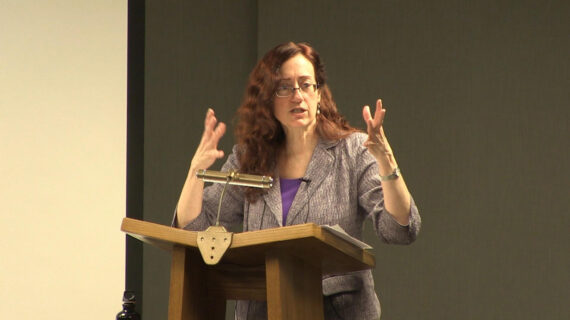
cc Good afternoon and welcome to another session of History Sandwiched In at the Wisconsin Historical Museum. Today we're lucky to have Jim Draeger and Mark Speltz coming to speak to us. I walk down the street and I see everyday things, and I don't pay attention to them. But sometimes if I see them through some else's eyes, they all of the sudden become fascinating.
And that's the case here. Gas stations. Jim Draeger and Mark Speltz have recently put out a wonderful book called "Fill'er Up" about the history of Wisconsin gas stations. Jim Draeger is our own, from the Wisconsin Historical Society.
He's an expert in Wisconsin architecture. And Mark Speltz is a historian for Pleasant Company out in Middleton. I'm sure you're all familiar with that. They've come here so nicely to speak with us.
They'll sign their books, too. So please give a warm welcome to Jim Draeger and Mark Speltz. (APPLAUSE) Thanks everybody. Before we start, there are a couple people here that I want to recognize.
First of all, I want to recognize O.J. Tomta. He's in a yellow shirt over there. Just stand up O.J.
O.J. was really helpful in putting this book together. O.J. is a collector of gas station memorabilia, and just really a great guy, who I met probably about 15 years ago at the Historical Society, when he came in one day with a box of gas station images and said, boy, I'd really like to give these to the Historical Society.
And since then we've gotten to know each other. And O.J. was very, very gracious in opening up all of the information that he collected over the years to us. Letting us use his photos and look at his research files.
It was really terrific, O.J., the book is much better because of all your help. So I just want to say thanks again for that. I also want to introduce a couple of people from the Wisconsin Historical Press. Kathy Borkowski and Melanie Roth.
Wave big, so everybody can see you, because they deserve fame too, for helping us get this book off the ground. If it weren't for the good people at the Wisconsin Historical Press, Mark and I would be here talking about, I don't know, gardening or God knows what, certainly not gas stations. Thanks a lot for all your help. And my wife Cindy Draeger, back there in the corner, as well.
Cindy, you could wave big, too. Being the patient, devoted wife that she is, she also made this book possible, as well. I'm glad that you introduced her, otherwise I was going to. I try to be the dutiful husband, as I can.
We brought fabulous prizes. We brought a bunch of Fill'er Up bookmarks. And I'm just going to pass these in the crowd here. And take some and pass them to your neighbors.
Take two, they're small. Or more. Okay, so what we're going to do today is we're going to give you a short presentation about gas stations. We're going to leave some time for questions and answers.
And then we'll sign some books for those of you who are interested afterwards. Let's see, we'll just try a button or two here. Whoa, that did something, but not what we wanted it to. Okay, we call this presentation "Feulish Thoughts." Oh, look at that.
This is probably not the best way to do this. Lessons learned from the lowly gas station. You're looking here-- Oh, point it this way? Which button?
I've tried them all. Okay, you can just leave it on that one. Okay, this one here is the one we want. It's called lessons learned from the lowly gas station, because gas stations are humble ordinary little buildings.
And to me, that's what's so special about them. And our premise in writing the book is that architecture is a container that holds the stories of the past. As we looked at gas stations, we'll tell you a lot about the architecture of gas stations and the history of them, but I think the reason why we're so interested in gas stations, is that they told stories about the automotive past of Wisconsin and America. And what we tried to do in the book was to connect the individual stories of the gas stations that we feature in the book to broader trends in society, because it's historical influence that shape how gas stations look and how they function.
So we tried to capture that interplay between history and architecture. Oops, no, that's not-- That's all right. You know we're just going to dispense with this. Paul, if you wouldn't mind, just advancing it manually.
We'll just let you know when to go to the next one. So we're ready now. Premium gasoline. Oh, look at that.
Here we go. As you can imagine, researching the book was a lot of fun. A lot of great people out there with great stories, like O.J. We used all types of sources.
And as everybody knows, who does research or looks into their own family history, it's sort of the unexpected accidents that are the most fun to discover. And the one on the left here, which you might be able to read, was one of our favorites. And this little story, this gas station owner was unhappy because the road was rerouted, and it bypassed his station. So he was going to lose all of this business.
And he went out in the middle of the night and repainted the highway signs to direct them to his station, which worked well. But the first person who showed up and tried to leave couldn't find their way back to the highway. So the cops came and made him get busy with his paintbrush, change the highway back to where it had been. So that was one of the fun ones.
Another one to the right is actually Frank Lloyd Wright's-- a little damaging accident that we came across along way. That happened to be right in front of a gas station. It pushed the other car almost into the pumps. So when we were doing the book, one of the most striking things we figured out early on was that gas stations, because they're created to produce a profit, the way to get to understand gas stations, and how they worked and how they changed over time was to follow the money.
The money tells you about how gas stations worked. And the images here are a couple of early promotional efforts for gas station owners. One of the challenges that gas station owners faced was how do you make your products stand out in the marketplace. They didn't want to compete solely on price.
They wanted to compete on things other than price. So how do you make one gas station stick out from the other? The answer is promotion, promotion, promotion. And the building on the left-hand side was Hill's Gas Station in Ripon.
And it was festooned with oil can art. You can see the guy standing on the pump island there. Next to him is an oil can dog. There was also an oil can windmill, and an oil can sculpture of a person.
And the entire name of the gas station, Hill's Service Station, was spelled out over the top of the station in oil cans, too. It was a tour de force of oil can art. And you could see all the oil cans in the windows, too. So that was his solution to self-promotion.
The image on the right-hand side is the Hellickson's Service Station on Park Street, which was owned by a local independent in Madison, called Pennco. And they made a parade float with a replica of the gas station building in oil cans on the back of a pickup truck and then paraded it down the street. So they were always using their imagination to try to find ways to market gasoline by ways other than price. So personal service was another great aspect of promoting early stations.
We also looked at the cultural context of gas stations. One of the things I find most fascinating about gas stations, it's architecture, is there was no real architectural precedent for gas stations. Probably the closest thing that existed in the pre-automobile days were the community horse troughs. So it was liberating for architects.
The public didn't have an idea in their head of what gas stations should look like. They literally could make them look like anything. And here are two really flamboyant examples from Wisconsin. The building on the left is a station in Weyauwega, that was shaped like a teepee.
The one on the right-hand side was one of the famous Wadhams Pagoda Stations. That one sat at 27th and Wisconsin in Milwaukee. If I could wish one gas station back into the world, it's the one on the right. I think it was just amazing as a building.
You can see the little plane at the top of the building there. That plane was motorized. It flew around in circles from the top of the station, which I think is really fun. So in the early 1920's, the architects looked at these really as architectural novelties.
They understood that people were traveling more. They were getting out from the places where they lived, so they tried to create real eye-grabbing designs that would pull people off of the roadside. They used the exotica of travel as that imagery. We looked at the social trends around gas stations too.
Architects sought to balance community resistance, against putting new gas stations into neighborhoods, by providing images that were familiar and reassuring to them. And you see a couple of examples here of cottage style or house style stations that the gas stations built. They built these stations because they were up against a lot of pressure from communities where they were demolishing houses in neighborhoods, and putting gas stations in on streets that were previously residential. It was a way of mollifying that.
They made them look like little houses, because you're not going to criticize a building that looks just like the house that you live in. The building on the left-hand side is in Monroe. It was a Pure Oil Station. We'll talk more about that in a minute.
The building on the right-hand side was voted the second-most beautiful gas station in the world. And it sat on State Street until it was replaced by a more modern Shell Station in the 1950's. And these stations were designed to appeal especially to women. If you think about it in the early days of the automobile, only the wealthy could afford a car, so it was really an upper-class pursuit.
So very wealthy women were out driving those new cars while their husbands were at work. They expected certain things out of their gas stations. And the marketers who sold gas were pretty savvy in realizing that they needed to appeal to women if they wanted women as customers. So they created these very elaborate stations that were architecturally sophisticated.
They came with these very large women's powder puff rooms. These stations, both of these, about half of the stations was devoted to the ladies powder puff room. They got very elaborate with tile floors, beamed ceilings, Persian rugs on the floors, oil paintings on the walls. There was wicker furniture that reflected the expectations of these very wealthy people who were the customers.
Now ladies keep that in mind, and you may want to talk to your neighborhood gas station owner. (laughter) Another thing that we learned to do when we were doing the research was understand the power of institutions that were going to regulate and then eventually did regulate gas stations. Local ordinances always sought to control gas station designs, or things related, such as curbside pumps located along Main streets. There might be a back up, cars waiting to get in, an erratic driver, like Frank Lloyd Wright might hit one, and you'd have a dangerous situation right on your Main street, right by all the businesses.
Other cities sought to ban the overall number of stations. Stoughton, on their Main street, there were so many at one point that they enacted a law so you couldn't build any more for the time being. The photographs here from the Wisconsin Historical Society collection were taken in 1933. And it's the leftover, the remains of the Kleinheinz Gas Station on Park Street.
And what happened here was the owners of the station knocked down a house, and were going to erect a station. They took it down to the foundation, filled the foundation in with gravel, and then built the station on top of that. Which is probably not the best way to go, as you can see. The tanks leaked over time.
Vapors were in the foundation, and faulty wiring exploded the entire station. The roof blew off. Large chunks of concrete, you can see down on the bottom left, were up in the air and flipped over. A gentleman who was walking along Park Street was blown out into the street.
It was quite a dangerous situation. The owner himself was standing right near by and ended up under rubble. And this was the second explosion in Madison that year. Accidents like this are what helped propel the Wisconsin Industrial Commission to extend its oversight into station design.
The regulations and their standards reflected the need for more safe and better designed stations. The Wisconsin Industrial Commission records, by the way, are owned by the Wisconsin Historical Society now. They were a great, great source of information to us, because they had to approve the construction of every single gas station in Wisconsin. The corporations also exhibited a pretty powerful force on gas station design.
This is the Freitag Service Station in Monroe, which we saw from an angle earlier. Pure Oil was really a leader, nationally, in looking at gas stations and how they function. The Wadhams stations, the pagodas that we saw before, were probably the first attempt to try to use the building itself as advertising. But Pure Oil went a little further than that.
Their architect, Carl Peterson, came up with the standard design for all of the Pure Oil Company stations, with this little kind of cottage appearing building with the flower boxes and the windows. But Carl Peterson thought out a lot further than that. He was really interested in what the relationship was of the architecture of the station to the company identity at large. And so, he came up with the now familiar blue and orange and white colors for Pure Oil.
They carried these images through everything that Pure Oil did. The gas stations, the pumps, the oil cans, the matchbooks, the road maps, even the company stationery all used the same familiar design and logo. And it's really the first instance of corporate branding. So when we talk about branding today, with companies that have identities that are communicated through their logos and their colors, Pure Oil was really the leader in that.
The station down on the bottom is a Pure Oil Station that still stands today in La Crosse. And in 1937, the owner of this station wanted to switch brands to Pure Oil. And Pure Oil paid for a $10,000 makeover to make his station fit in now with their corporate image, which Jim just mentioned. The station today is up on the top right.
But even the corporations were forced to abide by the regulations that states put in. In this particular one, there was a service bay on the left which had an indoor oil pit. By the time it was being remodeled, the Wisconsin Industrial Commission had decided that hydraulic hoists, the more modern hoists, were safer and should be used in all new construction, and projects over a certain dollar amount. In this case, they went back and forth with letters to Henry Aut, the owner of it, and eventually forced him to make his station, to update to a more modern hoist, and modernize and make the station more safe.
Aut spent $10,000 on the remodeling of that station. It was only seven years old at the time they gave it a face lift, which I thought was pretty interesting. Another factor that influenced the way gas stations look today was approaching business as a science. This wasn't something unique to gas stations.
It was a trend that began in the 19-teens in America, and spread to the gas station. But it has an absolutely profound influence on gas station design by the early 1930s, when there was a seminal study on gas station design by a man named Kay Lomberg Home that was published in an architectural trade magazine. Home took a very detailed look at gas stations. He convinced oil companies to open up their records to him.
And he looked at the records for about 2,000 gas stations in the United States, and crunched all the numbers, to try and figure out what makes gas stations profitable. He looked at things like what's the most profitable corner on the street. If you have four corners at an intersection, and there's a light, which one is the most profitable? There's a difference.
And there is a more profitable corner there. He looked at how far back the station should be set on the lot. How far away should the pump islands be from the station door. How big should the windows be for the operator room.
What colors are most visible against other colors, so they could be seen easier. He looked at how big the curb cuts are, and how broad those aprons are, so people could get in and out easily. He looked at the signage. How big should the letters be on the signs to be read from 500 feet, from 1,000 feet away.
He looked at where the lights should be on the station. Where's the best place to put your outdoor lights. He digested all of this, and created a comprehensive look at what makes gas stations profitable. And the real result of that study was that it favored a particular type of gas station building, which we call the box type station.
And we're looking at Parman's Gas Station. This is a historic photo when it first opened. And then down in the lower right is a picture of that building today. Once this study came forward, oil companies just changed overnight from those old house type stations to these more efficient, more profitable box type stations.
Can I ask a question? Sure. Are those the prices of gas? Yeah, that's the price, 16 cents for the economy brand there.
It was a whopping 20 cents for premium. I have to say that's expensive. And box type stations become popular because they work. They work better and more profitable than any station type that came before them.
And you could tell that because they lasted a very long time. The box type station emerged about 1930, and it lasts as long as full-service gasoline lasts. It changes slightly. They might wrap a roof around it the '70s, or make it look more like a ranch house.
But if you strip all of that away, underneath is this box type form. I have a first law of architecture. It's the only law I have, so I'm hoping some day I'm going to have second law. I'm very optimistic, so I named it Draeger's First Law.
And Draeger's First Law is that any style or form will remain popular, as long as it fulfills the functional and programmatic needs better than any subsequent style. So it stays as a style, because it works better than anything else that comes after it. Then once the parameters change, and something else is more efficient, it becomes replaced. The mantra of a gas station retailers was quicker, cheaper, and stronger.
They were trying to build stations in innovative ways to try to minimize the startup costs in locating new stations, and to provide a workable stations. And you can see a couple examples here, of the kind of innovation that occurred. The building on the right-hand side is a still functioning gas station in Prairie du Sac, Midway Oil Company. And it's also full-service, by the way, if you really want to experience full-service gas.
And it was designed and built by a company called Trachte out of Madison. Trachte they made horse troughs prior to getting in the gas business. They patented a method of corrugating metal. They corrugated a sheet of metal, then they'd roll it around into a hoop and they create a horse trough.
Well, one of the brothers got a Dodge. He got the brainstorm of taking that corrugated metal sheeting standing it up, bolting it into a metal frame, and then putting trusses across the top, and then bending some more over the roof and creating the building. Despite the fact that it was blown down in a windstorm almost immediately after it was built, he didn't lose heart. People came to him and they wanted one, too.
So they started out building auto garages, and then moved to gas stations in the late 1920s, and built prefabricated gas station buildings. You can see that distinctive vertical ribbing on that picture on the right-hand side. These are all over Madison. The building on the left-hand side was constructed by a company called Steel King.
Steel King also got involved in the same time in prefabricated buildings, frankly, I think they saw Trachte buildings and stole the idea from them, because the early buildings look much like Trachtes. But ended up specializing in gas station design. By the 1950s, they were building about 500 gas stations a year all over the United States. They were originally based in Milwaukee.
But when we did research on the book, one of the most startling discoveries we made was that the company was still in business today in Waupun. And not only were they and business, they still build for gas stations. They make the canopies over pump islands now. So we contacted them.
They opened up their business to us and let us look at all their historic images, and all their records, and were just gracious and really helpful to us. And we understood from that how specialized gas station construction was. They had architects and engineers on their staff, that worked just on the design of gas stations. So change in obsolescence is a common theme to gas stations.
You've seen some examples of it as we've been going along. Gas station retailing is a tremendously volatile industry. There are lots of ups and downs and it's highly competitive. Lots of people started out in the gas station business and made fortunes, and a lot of people went broke.
And that continual change was something that you just had to embrace if you were a gas station owner. If you didn't keep up with what everybody else was doing, you'd soon be left behind. As efficiencies were created, as regulators enforced standards and when people wonder what happens to gas stations, as they were historically, it was a result of some sweeping changes in the 1960s and '70s. There were environmental issues.
Leaded gasoline. They banned the lead from gas, because they found it was a major source of lead contamination in children. They discovered that gas station tanks were leaking into the soils around them. And there was a major crisis in the 1970s and early '80s as they tried to address that.
So gas station owners had to deal with all of that, but they also had to deal with the changing marketplace as market segmentors began to pull parts of what made gas stations profitable away from them. In the '60s, a certain type of gas selling emerged which the trade industry called high volume pumpers. And high-volume pumpers were stations that had multiple, multiple pumps, and they pumped a very high volume of gasoline. So they were able to shave their profit per gallon thin, because they made up for it in volume.
And they pushed a lot of the people who made little money out of the gasoline business. They also lost a lot of the service in that time. Jiffy Lube, Rapid Oil Change, Muffler Man pulled out many of the most profitable repairs out of the gas stations and into the specialty shops. So they've shaved out the most profitable part of the repair business.
These gas stations were left with trained mechanics twiddling their thumbs, who are very expensive to keep on the payroll. So the result of that was a really rapid shift from full-service gasoline to self-service gasoline. It happened in the course of about eight years' time. About 80% of the gas stations went from full-service to self-service in eight years, which I think is just remarkable.
If you could think of an industry that has so completely turned on its head in such a short time, it's really pretty remarkable. So that left gas stations in some perilous states. As Jim mentioned, the full-service model changed. We developed and went right into the convenience model and self-service model.
And stations changed in different ways because of this. Some of the service bays that were no longer needed were filled-in and used for selling convenience items, such as pop and chips, and things that we buy today. Another thing was the pump canopies, which you see here on the left, this massive canopy, those were gone from about the 1930s. They came back and affected station design, because now you and I were the ones pumping the gas.
They wanted us to come to their stations, so we could stay out of the rain and the snow. In this particular station is the most modern station in the book. It's in the town of Mequon. And it's the Town Market Mobil.
You can see it's constructed of brick. And it looks kind of like a rural building. The interesting thing, the pumps do not face the street. They're kind of hidden behind the building.
The town of Mequon, you know, worked with the station owners to build a station that fit within their communities. So in some ways, it comes back full circle to the earlier house stations that they situated on the edge of neighborhoods. And it's really a remarkable looking station. I might add for those of you who think that gas station people are ripping you off today because the price of gas is high, the guy who owns that station said that he makes more money on bottled water than he does on gasoline.
So the station owners' profits continue to be slim on gasoline today. So what happens to historic gas stations? Well in the '70s and '80s, it was tough times for a lot of independent, small mom-and-pop stations. They were undercut by price and burdened by regulations.
Many of them were forced out of business. People like Billy Schnabel, who owned the Wadham Station in Cedarburg, who you see pumping here, when he went into retirement, he just closed the doors of the station, and it stopped being a gas station. Many more were just abandoned and shuttered, left as eyesores in communities, as oil companies found themselves with thousands and thousands of stations in their inventory that were outdated, outmoded and no longer profitable. So they just left them.
Cities struggled with what to do with these sites. Sites had contaminated soils from those leaking underground tanks. Banks refused to lend financing for gas stations sites, because they're concerned what the liability and the risk involved. And it wasn't really until the Brownfield laws were passed within the last decade or so that many of these sites were allowed to be cleaned up.
Even some of the historic stations that were still attractive and had a potential re-use are threatened. This particular station is located near Hazelhurst. And just in the past year and half it was demolished. Jim was lucky enough to go up there and record a segment for Wisconsin Public Television for the documentary we helped with.
And sure enough, between then and now, since just before the book was published, it was demolished. And the ironic thing is that the owner knocked it down to build a rustic looking structure to sell rustic furniture way back on a lot. So rather than sell this with an added on showroom to sell furniture out of that, it's been demolished. We found a number of stations that were demolished over the course of the book.
That was one of our motivations, really, to try to show people that gas stations could be re-used in creative ways and become an important part of the communities again. You can keep it on this slide. The Copeland Service Station in Milwaukee was a station built in the '30s. And by the mid-'90s, it was just in such a dilapidated form that it was a community eyesore.
And the community neighborhood association organized and protested this. But they eventually came to see the station as an example of architecture of the time period and wanted to turn it into an asset for the neighborhood. With the help of a grant program for cleaning up the damaged grounds, which Jim mentioned, the Brownfield grant program, some help with the back taxes, strong neighborhood association, they turned it into a successful rehabilitation project. You can see it today, it's actually Sherman Perk.
They've taken the garage doors on the right side, where it says, coffee and cappuccino instead of saying lubrication and car washing. They kept a lot of the iconography of the old gas stations, and have done a really successful design there. The city of Milwaukee gave them a design award for that project. I want to recognize the architect of this station, too, who has my favorite architect name in the world.
He was a Milwaukee architect whose name was Urban Peacock. (laughter) And that's who Jim is going to be for Halloween. (laughter) That's right. I think if you're going to name an architect-- He designed movie theaters, too, which I think he's got a great movie theater architect name, too, Urban Peacock.
Let's go to the next one here. This one almost didn't make it into the book, although it's one of our favorites, and we put on the cover because we really love it so much. I was traveling between La Crosse and Eau Claire, and was trying to get to Eau Claire for some morning interviews I was conducting. I didn't have a moment to spare.
I really didn't have a moment to spare. I had just enough time to get there. I'm driving through Independence at about quarter to seven in the morning, and I see this station. And I thought I can't stop, I just can't stop.
I thought how can I not stop. I have to at least stop and take a couple of pictures, because this one is going in the book I'm sure of it. So I pulled over. The guy who ran it, Lauren Nelson, was already hard at work at quarter to seven.
He was underneath the car doing some servicing in the service bay so I decided to go and say hi to him, and get some information from him so we could follow up with him later. And Lauren told me an amazing story about his life. He had a brain aneurysm, and he nearly died. And at that time he owned three stations, a junkyard and ran an Internet business, so you can imagine he was a really busy guy.
And the doctor said, you can never work again. And Lauren said, I'm not one of those guys who likes to just sit around on my hands. So I decided I was going to work, but I was going to do the thing I love to do the most in the world. So he restored this 1927 Texaco Station and does auto service there.
And he told me I can't wait to get to work in the morning. The first thing I think of when I get up in the morning is getting to work. Because I love what I do so much. He was really remarkable guy.
He stripped off the banjo sign in the front and found the old Texaco porcelain sign underneath it. Put all that vintage signage back on it. The pumps are vintage pumps, but not functional. So lots of people pull up look sheepishly at the gas pumps and pull away when they realize they're just for show.
His wife bought him those pumps for their anniversary present. Nothing says love, ladies, more than a set of vintage gas pumps. (laughter) And now is our opportunity for a little shameless promotion. And in the true mode of gas stations and their screaming signage and architecture, we want to make sure that everybody knows that we did put a book together.
It's called "Fill'er Up." It's got 220 pages. It comes in hardcover. We have over 250 color and black-and-white images. Mark Fay was the photographer who visited 59 stations around the state and photographed them all in their current state.
Some of them changed quite dramatically since we had last seen them within the last few years. We profiled about 59 stations from Ashland to Janesville, and La Crosse, all the way over to Milwaukee. So we covered quite a bit of the state. We've got a number of book promotion events coming up, a couple during the Wisconsin Book Festival.
In fact, we're going to have one here on the Sunday of that weekend. I believe that is October 19. So if you had a really wonderful time today and want to send somebody back here, it will be here on that day. We're also doing one on Monroe Street this Saturday the 18th at Parmans.
I hear we're going to have coffee and doughnuts. Maybe we'll change the speaking and the Power Point a little so you don't have to sit through it again. But it's quite fun. But wait there's more.
We also have a blog
that we started called
fuelishthoughts.blogspot.com where we talk about things that the didn't make it into the book. We tell stories about stations that we've discovered since the book, or things we've learned since the book has gone to press. That woman right there is standing in front of an historic station we have in the book in Platteville. And we just couldn't believe it when the book had gone to press and this package of historic photos came to us after the fact, because this was one of the few stations we couldn't find a historic image of.
So we were delighted to put on our blog. So if you want to learn more visit our blog as well. Oh, and there's still more. If you haven't seen the Wisconsin Public Television documentary, "Fill'er Up," you can buy that documentary as well.
It's a 30-minute show. We interview owners of the stations, and people who are customers at them. It's just charming and funny, and really entertaining. It's been nominated for a Midwest Emmy Award, which we're keeping our fingers and toes crossed, and anything else we can think of to cross.
It was a winner of the Best Documentary of 2007 by the Milwaukee Press Club last year, too, so we're really pleased with that as well. Okay, so we've got a few minutes here for questions and comments. We'd like to hear anything that people have to say. I know some of you have got to get out and get back to your work, and that's fine.
We're happy to stay here for a few minutes to answer questions, and then we'll be signing books after that. What was the first station in Wisconsin? The question was, what was the first station in Wisconsin. We don't actually know.
It's hard to know the first of anything, unless you found every single one that ever existed. We know that the first station built in Madison was built in 1904, and it was on East Washington Street. It was really probably not much more than a shed that had some cans of gas in it. Gas was first sold in cans, jugs and bottles, before it was dispensed by gas pumps.
And my guess is that that's how gas was sold in that station. Where did the Clark Gas Stations fit in as far as history? They same sort of an anomaly that they have these small buildings, and aren't full service. The question is, where do Clarks fit in.
Will Clark is a great story. Clark was a carpenter. He ran a house building business and he built a gas station for somebody in the depression. The guy couldn't pay for it.
So he took it over. And he told this wife, I either want to be a florist or I want to run gas stations. And she said you might make a little more money on the gas stations. And she was right, because he took over the station and built it into a chain that became the largest independent gas distributor in the Midwest.
And he was quite successful. And the key to his success was he only sold premium gas. He only sold one level of gas, so he only needed one set of tanks in the ground. He was also a high volume pumper.
That's why they had the tiny little stations. And Clark didn't sell things out of the station, like convenience stores did. He just sold some basic essentials out of it, so it was a pretty streamlined operation. They're selling one brand of gas.
They put in their stations in a highly profitable locations. And they pumped a very high volume of gasoline. He was incredibly successful that way. And he really continued to be successful until the convenience stores came in and basically competed with him on the turf that he had owned on his own before then, and made it harder for them to make a living.
And about 10 years ago, well they were bought out in the mid- to late-1970s, and then they were bought out again about 10 years ago. The brand was nearly eliminated at that point. Do you know anything that's going to be coming in gas stations? The newest ideas that are starting?
Or are there any? I've got one thought on that. One thing that's hit me is the lack of community centers that gas stations were. And the interaction with the gentleman who'd come out and pump your gas.
When I go home to Minneapolis I go to some stations near my mom's place. And there are video pumps, so I can watch the weather, I can watch the news, you know. I can learn about their price specials. It just sort of hits me how it just doesn't compare to having that personal connection.
I don't even go inside anymore. You know, I just pay like that, and I'm out of there. I don't know what's coming. To me, what's here right now just completely cannot replace the relationships that existed before.
Going to gas stations used to be real personal experience. The guy ran the station knew you, you know him. He knew your family and your kids, and he knew how your kids were doing on the baseball team, and all of that kind of stuff. And you learned what was going on in the community by talking to the guy as he was pumping your gas.
Well today, you do it via the video screen, which brings you the news from CNN, or, you know, something like that. So it's very cold and very impersonal. Paying at the pump removes the whole personal aspect from gas retailing. As far as what's new, what's on the horizon, I think one of the big questions I have is what will happen to gas stations if we move to alternative fuels.
With gas stations, even though the convenience store today is our gas station, that's not going to last forever either as a model. And what happens if we move to natural gas, or fuel cells, or hydrogen powered vehicles, or all electric cars? Those technologies will certainly transform what used to be gas stations into something yet again. Growing up in the '30s, there's one story that I like to tell.
In World War II-- In those days, you didn't have TV, you listened to radio programs. It was a radio broadcaster in Chicago interviewing a gas station attendant on the day that the gas rationing ended. He asked him, can you tell me about some of the things people are talking about when they come in to buy gas. He said, the one guy came in and I said, "fill'er up?" And he said, "splash'er over." (laughter) Okay, I hope everybody heard that.
O.J. was recounting a story about the gas rationing ending. And a delighted customer pulling up at a station. And when he said, "Fill'er up?" He said, "Fill'er up and splash'er over." Because the days of hoarding and rationing are over.
Any other questions or comments? Can you explain a little more about, what did you call it, Brownfield, about cleanup? Well, gas station tanks, they buried gas station tanks in the ground, because they were such a threat having them above ground. In the early days, they just put them above the ground.
And obviously, you could think of the possible problems that would occur by having it above ground. Somebody hits it and knocks it off its foundation, the gas tank explodes. Gas leaks everywhere. Pretty quickly on, they started burying them in the ground.
Once they bury them in the ground, you can't see what's going on underneath. And gas tanks started leaking into the ground and contaminating ground water. So that became a huge environmental problem. And today, tanks have to be lined, they have to be replaced on a periodic schedule.
The companies have to buy liability insurance to cover the costs of cleanup. But the problem that the state faced is what to do with all these sites that were already problems? So the state created the Brownfield grant program to clean up contaminated sites. It's not just gas stations.
They also use it on old industrial buildings. The Goodman Center over on the Eastside that just opened, that site was contaminated with lead, because of the foundry that existed there prior to, and they got a Brownfield grant to clean that up. So they just come in and clean the soil. They either do it by picking the soil up and trucking it off to a waste site that accepts contaminated soil, or they actually bake the soil.
They put it in big ovens that they erect on the site, and they burn all of the Petroleum out of the soil so it comes in on one end by conveyor, and comes out of the other end with all the oil having been burned out of it. I think my greatest regret of the gas station that I didn't take a picture of was up in Antigo. Again, I was going somewhere and I had no spare time. There was a station that was an old Clark Station sitting on a spit of land.
And they had dug the entire site of the gas station out completely about 12 feet deep in the ground, except for a pillar of soil that the gas station sat on. So if you can imagine it's like a giant doughnut of soil taken out around it, and there is a little shaft of soil and this gas station is sitting on top of it, with all of the dirt gone around it. Wisco 99. Are you familiar with that name.
Wisco 99? I don't think so. How long have you been here? I've been here for about 20 years.
It goes back just about 20 years. It was a gas station. Where was it located? All over the place.
Oh, it was a chain, Wisco 99. I'm sorry, I've just never ran across that one. That's interesting. See, that's why we like questions and answers, and comments because we always learn something.
O.J. probably knows something about it. Yeah, it was up on University Avenue. They were around.
But the ones that we were talking about, where the gas tanks being buried, one of the companies that I dealt with, I'll never forget it. It was in Cross Plains. It was a gas station, a log cabin. I remember that one.
The pipe that went down into the gas tank would be so far off the bottom, so it wouldn't collect water. Because water would settle. What this guy did, the station owner, would take and pour water down there to bring the gas up to the pipe-- They were constantly being called out to Black Earth to clean up the water out of the carburetors. Yeah, there were shady operators out there in the world of gas retailing.
( inaudible ) I'm sorry I couldn't hear your question. Oil cans-- (inaudible) I think the question is, do you want to do
a Fill'er Up
the glory days of Minnesota gas stations, Illinois gas stations, Iowa gas stations. You know, we really focused on Wisconsin. Wisconsin's near and dear to our hearts. A lot of the stations are similar from one place to the other.
There are some regional variations in terms of the themes that they use for the more exotic stations. But at least for the 1930s, gas station design is standardized to the point that this Texaco station in Independence is a standard plan station that you could find at Texaco's like it anywhere across the territory that Texaco had its business in. To some degree, a gas station book of Illinois would look very much like the station book in Wisconsin would. The only thing that would differ would be the personal stories of individual people that own them.
A station book of Winston-Salem, North Carolina-- (inaudible) There is a historic building recovered by the community in the shape of a seashell. It's a three stories tall seashell. It's a Shell Gas Station that's been reconstructed into a community center. That's in Winston-Salem, North Carolina.
I visited that on one of my trips through North Carolina. It's a giant shell shaped station. It looks like a seashell. You know, Shell Oil was the company, the chain, that built that particular station.
That station really is famous nationwide, even internationally, because it's such a really flamboyant and interesting building. It's the equal of the Wadham's Pagodas here in Wisconsin. Okay, I think we've finished here, so thank you all for coming. ( applause )
Search University Place Episodes
Related Stories from PBS Wisconsin's Blog




Donate to sign up. Activate and sign in to Passport. It's that easy to help PBS Wisconsin serve your community through media that educates, inspires, and entertains.
Make your membership gift today
Only for new users: Activate Passport using your code or email address
Already a member?
Look up my account
Need some help? Go to FAQ or visit PBS Passport Help
Need help accessing PBS Wisconsin anywhere?

Online Access | Platform & Device Access | Cable or Satellite Access | Over-The-Air Access
Visit Access Guide
Need help accessing PBS Wisconsin anywhere?
Visit Our
Live TV Access Guide
Online AccessPlatform & Device Access
Cable or Satellite Access
Over-The-Air Access
Visit Access Guide




Follow Us