

 Passport





Ferguson Is America: Roots of Rebellion
11/07/15 | 31m 59s | Rating: NR
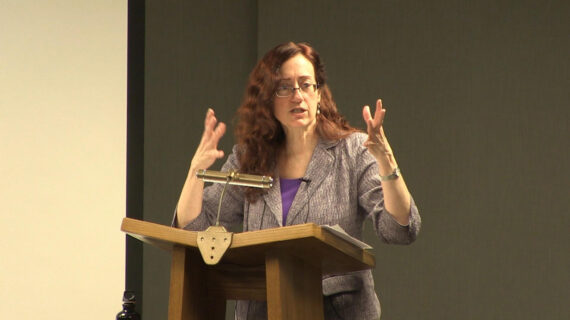
Jamala Rogers, Author and Community Organizer, St. Louis, MO, focuses on the history of racial injustice, incarceration rates and segregation in St. Louis and Ferguson, Missouri.


Copy and Paste the Following Code to Embed this Video:
Ferguson Is America: Roots of Rebellion
(audience applauds) Thank you and thank you for those kind words, Nan. I'm actually kind of glad you said them. One, because they're compliments, of course, but two, (laughs) because it's part of the reason why I'm so excited to introduce Jamala. I think, at least locally, people often tell me and often compliment me for the work that I'm able to do, but right now, I get the amazing opportunity to introduce someone who's very much at the terrain that has made me and my work possible, and not just my work but my generation's work, and so I'm very happy because I've looked to Jamala's work long before I even knew Jamala right, and I've looked to her work long before I knew her name, right?
So, I'm very excited to have this opportunity and be able to introduce her. So, Jamala Rogers is founder and pastor of the Organization for Black Struggle in Saint Louis where she lives and has devoted all of her adult life to creating a child-centered, family-oriented community, one that embraces, celebrates, and protects human rights for all citizens regardless of race, ethnicity, class, gender, sexual orientation, or religion. Because of the persistent barriers to this goal, it has naturally led her to being a leader in the struggle for justice, equality, and peace, and so, quickly to speak of Organizaion for Black Struggle, which I'm a huge fan of, and have been, as you know, many of the members Freedom Inc., Young, Gifted, and Black got the opportunity to go and participate in the urban rebellion happening in Ferguson and also the work, the rebellion happening in Saint Louis, and though, it was not clearly shown on TV necessarily or clearly stated, as much of the gains that was made was actually able to be possible cause there were people already organizing on the ground, right? So, mad love to OBS for that.
Mad love to OBS for that. All power to the people. Jamala has challenged the criminal industrial complex for decades, focusing on police violence, prison reform wrongful convictions, and the death penalty. She is associated with the exonerations of several Missouri men and women, including Ellen Resonover, Joseph Amrine, and Darrell Burton.
Currently, she is the coordinator for justice for Reggie Clemons' campaign, an inmate on Missouri's Death Row, who many believe have been wrongfully committed and sentenced to death. Jamala is a featured columnist for the award-winning Saint Louis American newspaper, Saint Louis' largest black weekly, and is on the editorial boards of Blackcommentator.com and The Black Scholar. Jamala was a Alston Bannerman Fellow and is the 2017 activist and resident at the University of Wisconsin, Madison. (mumbles) says hi.
(laughs) Jamala Rogers' first book, The Best of The Way I See It, and Other Political Writings, 1989-2010, features her essays from the Saint Louis American on issues ranging from the church to human rights to black conservatives, to war. Her latest book,
Ferguson is America
Roots of Rebellion came out this summer. As one reviewer put it, "Rogers does an amazing "job of bringing clarity to exactly "what's going on in our country, "writ large, and how long it's been happening. "Do not make the mistake of thinking this book "only applies to or commentates on the murder "of Michael Brown. "Rogers is giving all of America a sobering "primer regarding the dynamics of race "in our country, and anyone who reads it, "will most certainly consider it a call to action." So, with that, I'm very please to introduce Ms.
Jamala Rogers. My kindred. (audience applauds) Thank you again for getting up this morning. I am not a morning person.
So, to see other people up bright eyed and bushy tailed, I'm feeling already inspired. I do also want to thank all the folks who put this together, especially the sisters at Comparative US studies, and it struck me last night that the acronym is CUSS. So, I kind of like that cause it might be some cussing out that that group has to do cause they kind of off the grid doing great things and also to the Haven Center, who invited to me participate in the activists and residents. I'm so excited about that.
I got a whole year to prepare for it, but I'm still excited. So, without further adieu, because we started a little bit late and actually, I prefer to have more time for the discussion piece, either I'm going to talk real fast or I'm gonna to like zero through some of these slides and it's not a whole lot of em, but I did want to do a few things with the PowerPoint. One is, I want to lift up some of the points in the book because when I say Ferguson is America, Ferguson is Madison, Ferguson is Milwaukee, Ferguson is all the urban areas where this kind of racial injustice exists. I also want to provide some historical context, as well as some...
ways of jump starting the conversations later on and hopefully inform some of the other panel discussion. So, you know, hopefully, we have an engaging, lively discussion. I'm not thin-skinned. So, ask me hard questions.
Challenge me cause I do a lot of challenging other people. So, I figured Imma get the same back in return. So, I was really fascinated by the fact that the title of today is racial injustice, incarceration, and segregation because those are at least two of the four points that I lift up in the book, because these are the things that are part of the cauldron of inequalities, injustices that once that match gets lit, and usually the matches are police violence, then we have a Ferguson. So, Ferguson really could've been anywhere.
I was telling somebody last night that there are 91 municipalities all clustered together in the Saint Louis region, and a number of them have the same, in fact, in some cases, worse conditions than Ferguson. So, when we sort of peel back the layers, we know that it could've been anywhere but it just happens that it was Ferguson. So, it was interesting that Nan pulled out some of you all's contests that you have won, cause in the book I point out a lot of the things Saint Louis has been noted for, and sometimes we been on lists consistently. So, for example, most dangerous city, most racially-segregated city, most hyper-segregated city, least kid-friendly city, number one in racial mortgage rate disparity, the highest sexually-transmitted diseases in the US.
My God. Ranks 50 in state funding for public health programs. 50? - Stop it!
And so, I really have to sort of pin here that one of the reasons, and this is something that even Saint Louisans don't know, the reason that we have a city hospital that's been closed up, boarded, leaves hitting up against the front door, is because the lawmakers in Missouri had decided that they don't want to expand Medicaid. So, that hospital is closed down. It's a huge eye sore and so that is sort of the pain we talked about by living in America. So, I want to move right to the slide presentation, and I'm starting with housing patterns because in Saint Louis, that's been a key part, and you might know that I'm not originally from Saint Louis, but I'm from Missouri.
So, the same thing. It's no real difference between these things. So, for some of you all who are old enough to remember Hoovervilles, you don't have to raise your hand. I'm not gone embarrass you.
The interesting thing about Saint Louis is that we had one of the largest Hoovervilles and the longest Hooverville, and so, I'm not gone say what a Hooverville is. That's an assignment if you don't know what it is, but 5,000 people lived there on the banks of the Mississippi, and these were shantytowns that were put together because of the policies and laws of our then President Hoover. So, the interesting thing about Hooverville is that because there were a number of crafts people, folks who were put out of jobs based on the depression, it made for a healthy mix of people who were very resourceful. So, people were building their own places.
They were electricians. So, they were, you know, wiring. I mean, it was in fact a city, and the interesting thing, they even had it's own mayor. I mean it was like, you know, sort of not officially, but when you got people living together, you create a community, as messed up as it was.
So, almost concurrent with that was a place called Mill Creek, and Mill Creek Valley was a place where 20,000 people lived, sort of near downtown. 95% of these folks were African Americans. It was not the best place to live. In some cases, there were not running water, no sewage, some of the main things that make a community at least safe and sanitary, but it was a community.
You know, there were businesses there. Churches were there. All that was there, and it was over 465 acres. So, it was a huge swath of land, and somebody got the bright idea that, hmm, this is prime real estate.
Time to move the poor black people out. So, they did. I don't know what happened to my other thing. Okay, we gone go.
So, a lot of this is sort of places where there's overlap. In 1935, they decided they wanted to build an arch, and I know all of you all have heard of the arch, but it's got its own little ugly history, and the person that did the best job of exposing that is Tracey Campbell, who wrote about the Saint Louis arch because it was wroth with, first of all, there was no black workers on a federally-funded project. That was the first thing. Second thing, well, even before then, they had tricked the voters with voting for a bond for this, and so there were huge evidences of voter fraud, and then there was the whole question of whether or not...
Saint Louis had been trying to get this WPA money and other kinds of monies, and so they came up with this bright idea of doing the arch. Well, they applied for a fund under the Historic Buildings Act, huh? (audience responds) But what folks didn't understand, what they did was destroy historic buildings and those bricks were shipped out all across the country cause Saint Louis is the mecca for bricks. Then there was Pruitt-Igoe.
Again,
another failed policy in terms of
What do we do with poor people? What do we do with black people? And so, this was a time during the early 50s that they started building high-rise public housing and the most notorious one was Pruitt-Igoe, and if ever there was a case study in failed public policy, this is it and it has been studied. There's been documentaries about it and eventually in 1976, it exploded, demolished, as it should have been.
So, in Saint Louis now, and I talk about this in the book too, of the number of abandoned buildings. We have over 11,000 lots and abandoned buildings that actually belong to the city. So, the city is the biggest landlord, and I would say slum landlord best allowing pieces of property, some of them that once was in good shape to just decay. And so, you know, you'll have buildings like this all over Saint Louis, you know, and I can do this all day long.
I'm telling you, all day long, and so it's not just housing but abandoned manufacturing plants, and this one was next door to a youth center, and it had, you know, asbestos and everything else in it, but who cares about black kids? The other tragic thing for me as a former classroom teacher is that schools have not escaped this. This is a school called Carr School that was down in the projects that's been decaying literally for decades. This is another one.
There is a series of buildings that were designed by architect, William Ittner, and he's like renowned, and these buildings are languishing. They not being demolished really, but the other interesting part about the schools is they are real estate, and they're up on the market for real estate but only the schools that have been abandoned on the southside have been bought and repurposed, and those are the ones that are on the predominantly white side of town. So the ones on the northside are going to look like this. So, how do you create a viable community for real?
How bout if there only two houses on the block? How do you build a community there? And literally in some places, there's like one house on the block where all the other houses are abandoned. How do you build community if there's no institutions to anchor it, like schools or businesses?
If there's no private or public investments? If there are policies in place to abandon and disinvest? And if there are no jobs with livable wages? And so you see the role that land, real estate, housing, communities have because, that's also the place where you decide to live, grow your family send your kids to school.
And so, there's a very interesting dynamic that happens when black schools are abandoned or in some places, particularly in the outer ring where places like Ferguson are, that when they were predominantly black enclaves, those schools were closed and the black kids sent to white schools. So, in many cases, you saw destruction of communities on many different levels. You know, one of the things that I call out in the book is Bantustans. That's what I see them as because all of the black poor people have been like squeezed into certain areas where there's nothing there.
There's barren and this is likened to what they did in South Africa with African Americans, I mean Africans. So, Doctor Mindy Fullilove calls this root shock. When you have traumatic stress reaction to the loss of some or one's emotional ecosystem, and of course, it's not really just emotional. It's the cultural pieces.
It's the financial pieces. It's the social pieces that just get destroyed as people get moved and moved, and I knew about some of the removals in Saint Louis, like Mill Creek because it's really big. I knew about the demolition of the huge huge, buildings cause I didn't tell you, Pruitt-Igoe was 33 high rise buildings, 11 stories each, 33. That's a lot of damn people, ya'll.
So, when you talk about what happens to these people when they get removed, it's not just a rhetorical question cause we know what happened to em, but Fullilove puts a name to it and it is root shock. So, when we talk about, you know, post traumatic stress, these are some of the things that come up in terms of why oppressed people respond and react the way that they do. And we can talk some about gentrification and what impact that that's had on Saint Louis cause I know it's happening here too. Okay, I'm gonna do this.
So, I'm gonna move to incarceration because I really know incarceration well, but you see here the national stats and we got over 9 million people that are associated in some way with the criminal justice system, and you know, we are probably the only civilized, industrialized country that is incarcerating juveniles. You know, that's really sad. You know, the state corrections' expenditures are over like, you know, into the millions of dollars. So, you know, this information comes from the sentencing project, but you know, I pulled up, you know Missouri's and you know, our stuff is not looking that good.
We looking kind of raggedy. So, you got 11% population of African Americans, and the majority of folks just like here in Madison are folks of color. Now, I think it's interesting that Madison is 6% African American population but you know, you all got some bad, bad rates when it comes to incarcerating black males. It's almost twice the national average.
So, I really want to hear what's going on with that cause, you know, seems like there's a lot of work to be done there. So, why do we have an addiction to incarceration is really purely economic, you know. Some years ago, Ahmeti Baraka said that America has a negro problem. You know, they brought us here and then after you know, slavery, couldn't do that anymore they had to find ways of dealing with us.
So that's still happening. So in the US, it's 1800 state and federal facilities costing anywhere from 80 to 100 billion dollars to operate, and in the US, that's $30-$60,000 per inmate. Sometimes, it's less. Places like California's about $50,000.
In Wisconsin, it's $30,000 and Missouri, it's $21,000. So you got 3200 local and county jails, and sometimes people stay in those places almost as long as some people stay in prison waiting for trial. So, this is a very sad commentary in terms of we now have almost as many, in some cases we do, educational institutions. So, who thought that that policy was sustainable or humane?
So, I think it's, you know, part of what we've been doing in Ferguson and before Ferguson really, is challenging and changing narratives because, that's gone be really important. I tell young people the first battlefront is winning the hearts and minds of the people and so there are certain narratives that out there that need to challenged. They need to be checked. They need to be dismantled, and one of them is that criminals, they're just growing and exploding and you know, if we don't do something, that's why the crime rate is going up, but what we know, and these are statistics by the FBI, these are not Jamala's statistics cause I know ya'll ain't gone believe me.
These are people like the FBI, who say that the violent offenses have been going down ya'll. That's the blue line, but yet, the incarceration rate is going up. There's a big disconnect there. What are we gonna do about that?
Is that okay with us, because once that narrative, we buy into it, that means that now police departments have the entree to say, we need bigger budgets, bigger guns, and we saw some of those on the streets of Ferguson. Did we not? So, they're ready. This first box comes from and help me pronounce that ya'll.
That's one of ya'll. (audience laughs) Yeah! So, whatever that police department is, they been busy. (audience laughs) They have been busy.
So, you know, 60% of the folks that they arrested were black, even though black folks are only 4% of that population. So, here's the thing, when we see this kind of skewed numbers, when we visually see a courtroom full of mainly black folks, when we see prisons mainly black folks, do we conclude that black people are inherently criminal, cause that's what we've done ya'll. They must, something must be going on. They must be doing the crime cause look how many of them it is.
It's no white people in these courtrooms. The other narrative that has to be changed is, you know, and we use this one on October 22nd, which is the national day against police brutality, and we were just, you know, so sick of this whole thing about the number of officers who've been killed in the line of duty and it's off the charts. Well, looka here ya'll. In 2015, 1200 people have been killed by the police.
In 2014, 51 law enforcement officers were killed in the line of duty. Again, this is not Jamala saying this. This is ya'lls FBI that you pay for. 51 officers, but all you hear from law enforcement is, our men are afraid.
Our officer afraid. They been killed in the street. They're threatened. They feel threatened.
Ya ya ya ya ya ya ya. So, let's look at the numbers. I mean, I don't think anybody should be killed, but 51 compared to 1200. Really, you think ya'll got a problem?
So these are the kind of narratives that are out there, and I'm sure you can think of some more, and we can get into that. So, in the post Ferguson world, what are you prepared to do, and one of the things that we really been trying to do is to bring in all of the folks who based on the uprise and say, this is it. I gotta do something different. I didn't know all this stuff was going on, especially with the courts using black people as ATM machines, and I'm telling white people don't be feeling guilty.
Just get in here, do the work to transform it. We don't need the guilt, and I say that to black folks too cause some of them are kind of removed from situations once they try to move out into the suburbs, but this is the reality of black people in these municipalities and I'm sure here and if you have the leisure opportunity to read the DOJ report, you saw gross injustices all across the board. The racism in all levels, whether it be in the courts, the policing, all of that, and so, what you have is communities that truly are under siege with nowhere to go. The other thing that just recently came out by ProPublica is a investigatory piece on the kind of money that's been extorted from again the same people as it relates to citations for housing, for your property.
So, you got like nuisance things where you might have, you might get a citation because you had trash. Start's out with a $25 citation and somehow ends up to be $800. So, it's been cha-ching, cha-ching, cha-ching for a long time with no relief for these folks. So, when Saint Louis comes up on the map as one of the most unbanked areas, money requires what ya'll?
I mean, a bank requires what? Money. - Money. If all your money is going to all of these different entities, paying for fines, paying attorneys to get you off, all of these, losing your job as a result of being in jail; these are things that deeply impact the quality of life for people in Saint Louis and the region, and the other thing that I would add is just before Ferguson, there was a comprehensive report that was done by Saint Louis University and Washington University.
Where you live makes a difference in terms of life and death, not even quality of life, but life and death. So, there's one particular municipality where those people live 40 years longer than folks in the city. 40 years? - 40 years!
And in Saint Louis by zip code, there's a zip code that they compared in the report that's like 18 years difference. So, one of the things they try to point out in this report was that the health of African Americans in the region affects everybody. I thought that maybe them saying that might have an impact on whether or not the policymakers were going to do something different, but again, I think it's because black people's lives are devalued. It's like, so what?
I got my insurance. I'm living good. I'm living in Wildwood. I'm living 40 years longer than most people, and you know, I think the role of privilege and class shows up again and again and again, and even when you start to look at the exodus of white people from the city of Saint Louis, around like the turn of the century, Saint Louis was the fourth largest city in the country.
You know, it was a booming metropolis on the Mississippi. In about 1950, when it looked like there might be desegregation, there was white flight, and then in the 60s, when black folks started to get some of the better-paying jobs, they too moved out. So, really Saint Louis is a shell of a city reduced from 850,000 to now like 350,000. One of the reasons I moved from Kansas City to Saint Louis cause I thought it was going to the big city.
Now, Kansas City is bigger than Saint Louis. So, my thing that I've talked about in the book and even in my columns I write is that we have some lackluster racist policyholders with no imagination about how do you build a city. Now, if they knew, and seem like to me, this would be obvious, that there's gone be more people, working class people, middle class people than there are going to be rich people, but yet you try to create a city to keep rich white people in. (sighs) And so, policy after policy, project after project of tax dollars got us to the point where we've invested millions and millions in things like the arch, and you know, we've seen removal of black people, and we've seen total destructions of communities, including historically-black municipalities and nothing has been done.
So, those of us who came together post Ferguson are really about changing laws, changing policies that are going to bring some relief to these communities, and I think it's been amazing. I mean some of the alliances that we never thought would happen. We just did a radical reconciliation, couple of weekends ago where church people, you know, labor, students, folks came together, and we invited some of the policymakers and decision makers, cause I don't call em leaders. They are elected officials, but they aren't leaders.
So, we had a table. You told us to come out in the streets, come to the policy table to make these changes. Here we are, and the ones that had the most power to make decisions chose not to show up, even some of em who had already committed. So, we had to take the table to them, ya'll.
So, that was Sunday. Monday morning, we went to City Hall with a table like this. Said, mayor! Since you didn't come to us, we come to you, and did we not get a meeting with the mayor that's going to be a town hall on November 23rd.
(audience applauds) But here's the thing ya'll, I'm telling people we don't have time for these games. We really don't. People's lives are literally at stake. So, are you gone make us have to fight for the changes that you already know are happening?
There were 189 actions of recommendations that came out of the Ferguson Commission report. You know how bad this situation is and you playing games? You can't come to a meeting? Then, when they found it was 1,000 people there in the Saint Louis University, they started figuring out, how can they now get back in in good graces, but we had already liked, you know, muddied up their name, all over, you know, Twitter and Facebook and everywhere else we could.
So, we need to hold people accountable. We need to hold the people who have the power, and they only have the power ya'll cause we gave it to em. They're elected. They're using our tax dollars, and I have to remind people of that who, even the poorest people.
You still have a right to say what happens to your hard-earned money. So, all of us have a stake in this, all of us. So, I really want to open it now to hear about some of the things that you want to know about Ferguson or that you see some similarities between Ferguson and Saint Louis and Madison, but really, the challenge is what are you gone do in a post Ferguson world? How are you gonna change how you are as a person?
How are you gonna change the institutions, particularly the one that we in now, cause I know it's some blood on their hands and the communities, and even on a professional level? How are we gonna make these changes so that we have a better society where all people are valued? Thank you. (audience applauds)
Search University Place Episodes
Related Stories from PBS Wisconsin's Blog






Donate to sign up. Activate and sign in to Passport. It's that easy to help PBS Wisconsin serve your community through media that educates, inspires, and entertains.
Make your membership gift today
Only for new users: Activate Passport using your code or email address
Already a member?
Look up my account
Need some help? Go to FAQ or visit PBS Passport Help
Need help accessing PBS Wisconsin anywhere?

Online Access | Platform & Device Access | Cable or Satellite Access | Over-The-Air Access
Visit Access Guide
Need help accessing PBS Wisconsin anywhere?
Visit Our
Live TV Access Guide
Online AccessPlatform & Device Access
Cable or Satellite Access
Over-The-Air Access
Visit Access Guide




Follow Us