

 Passport





Dressing Children in the 19th Century
03/01/16 | 54m 17s | Rating: TV-G
Leslie Bellais, Curator of Social History at the Wisconsin Historical Society, discusses the changes in attitudes about children’s clothing beginning in the late 1700s. Instead of dressing young children as miniature adults, clothing which allowed children more freedom of movement became the fashion.


Copy and Paste the Following Code to Embed this Video:
Dressing Children in the 19th Century
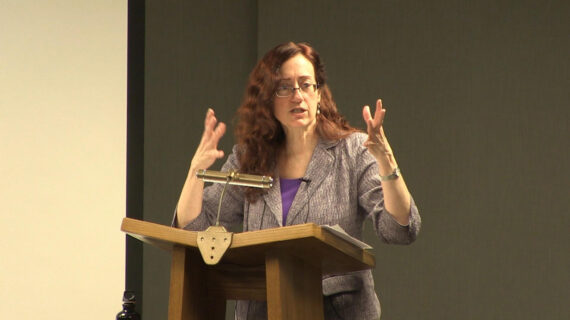
Today, I'm pleased to introduce Leslie Bellais as part of the Wisconsin Historical Museum's "History Sandwiched In" lecture series. Leslie Bellais has her Bachelor's Degree in Historic Preservation from Mary Washington College and a graduate degree from the College of William and Mary. She was hired as the Curator of Costume and Textiles of the Wisconsin Historical Museum in 1990, and has used her expertise to curate exhibits
such as Rituals of Romance
A History of Weddings 1800 through 1990;
History in Stitchery
Popular Trends in Quilting; and the more recent Wisconsin Women of Style. In 2014, her title was changed to Curator of Social History, expanding her areas of responsibility to other artifacts related to domestic life and women's history. Here today to discuss the history of children's clothing, please join me in welcoming Leslie Bellais. (applause) So let me just tell you what I'm doing today.
Actually... (laughs) (clears throat) So, first I want to thank people who are from the Costume and Textiles Affinity Group. If there's anyone here from the group today, thank you for coming. And I just want to let you know that I do have a Costume and Textiles Affinity Group.
If you're interested in learning more about it, what we do is have sessions like these where it's a little more intimate, where you can look at some of the artifacts. The next program will be to look at some of our samplers up close and personal. And we also have done behind-the-scenes tours of our collection,
and we'll probably take some trips
behind-the-scenes tours to other museums as I use my contacts to get us in there. So if you're interested, Mike Turner is standing at the back and he can help you sign up if you're interested in learning more about it. And to my horror and dismay, I realized I didn't unpack my notes, so I'm gonna have to look for them. So if you want to turn it off.
(laughter) I put them in the box, I thought. Ha, got 'em. Sorry, I should have done that first. I thought I was all organized.
So what I'm gonna talk to you today about is children's clothing in the 19th century. It's the long 19th century, so into the late-18th, early-20th century as well. And what I want to start by saying is that in the 18th century and earlier, children were dressed a little bit differently than they were nowadays. And in the late 18th century, a new approach to children's clothing took hold and that's what I'm gonna be talking about today.
The clothing changed as views of children changed. So in the eras before, babies and young children had been viewed as sinful beings that needed to be controlled. And you controlled them through their clothes. So that once small children could walk, they wore restrictive garments that mimic those of adults and emphasized on delineating gender.
So you could tell the boys from the girls. So here you're seeing an image of Infanta Margarita from 1656. She is wearing the pannier, and actually she's wearing a farthingale from that time period just like her mother would have worn at the same time. And here's some 18th century children from England who are wearing clothes just like their parents would have worn.
So the boy is wearing a suit similar to his father's and the girls are wearing dresses just like their mother's. It has the low decolletage just like Mom and everything else. So they are boys and girls, but they're being dressed as adults. So that's gonna change as we move into the late 18th century.
And there's two philosophers that helped change the way children were viewed. And one was John Locke and one was Jean-Jacques Rousseau. And they argued that this was the wrong approach to children, that babies and young children were not born sinful, but that they were actually empty vessels that were innately good and even saintly. So this kind of changes the way children are viewed and changes the way they should be dressed.
So that as we move into the late 18th century, we see children dressed like this now. So we have here in the Lord Willoughby de Broke Family from 1766, this is obviously English. There's two boys in the blue sashes and a girl in the pink sash, but they're essentially all wearing the same garment. The garment does not mimic their mother's; it's lightweight and easy to move in.
So Rousseau wrote in his book Emile in 1763, sort of the defining terms of what this child should be like or what this child should be dressed in. And I'm going to read it. It says, "The limbs of a growing child should be "free to move easily in his clothes. "Nothing should cramp their growth or movement.
"There should be nothing tight, nothing fitting "closely to the body. "The best plan is to keep children in frocks "or dresses as long as possible and then provide "them with loose clothes,without trying to define the shape "which is another way of distorting it." So what he's basically saying is that children, instead of being in their tight, restricted clothing that their parents wore, they need to be in loose clothing that made it possible for them to grow without distorting their limbs or their body. And modern parents at that time were quite willing to take this up and the De Broke family here was one of those modern families that did that. So the clothing for children, there's two major themes arose as Locke proposed these things.
One is that children, I mean clothing demarcated the difference between children and adults. You can't tell the boys from the girls necessarily. I realize they're wearing pink and blue sashes, but pink and blue were not defining; pink was not necessarily a girl's color and blue wasn't necessarily a boy's color at that time. That's really a 20th century phenomenon.
It just happens that that's the way they're dressed here. So it's more important now to tell the children have children's clothing and adult clothing, but no boys' and girls' clothing, at least for the younger children. So by dressing both genders alike, it protected, they thought it protected a child's ignorance and created an image of innocence and purity. And so that's what you're seeing here.
They wanted the clothes to be androgynous so that masculine and feminine elements were blurred and combined so that boys could be in ringlets, girls could be in short hair. Boys could be in lace and girls just could be in plain, rough clothing-- rough fabric clothing. The fabric was rough. In fact in 1802, in the book, Domestic Education of Children, the author wrote, "If young people were not dressed similarly, "then the attention of children might be excited "to the differences of the sexes.
"A circumstance that would deprive them "at an early age of their innocence and happy ignorance." So that was what they're thinking behind why you start dressing children like this. In our eyes, if I hadn't told you these were boys and girls, you might have looked at it and said there's three girls. And in fact, I found this, I'll let it run through. (laughter) So let me go back to this picture now.
So that artist, who was making fun of this painting, looked at this painting and saw three daughters. There are actually two boys. And we know that even if we didn't think about blue and pink, this boy is pulling a pull-toy. A pull-toy is usually the sign of a boy.
This boy is being mischievous and is... let me do it this way. So there's the pull-toy right there. And this boy's being mischievous and taking cookies from the cookie bowl, but the daughter is being a mommy's girl and hanging out with Mom, and being polite and girl-like.
So we know just from their activities, who is what gender in this picture. Well, I thought it was amusing that this particular artist saw this as all girls and made fun of the picture. So let's start, when we dress children, we have to start with dressing babies. And this is what babies wore before the late 18th century.
What we're seeing is a baby that has been swaddled, and this is how they're controlled. So these are these sinful beings that also can get in trouble. If they're crawling, they can walk into a fireplace. The home is not childproofed.
The child is proofed in a way. So they can't do anything. So the idea was to put them in swaddling and then put a longer garment over them because they felt that the baby was out of proportion with it's big head and little body. And if you put the long garment on it, it now puts the baby's body into proportion.
This is the beginning of what babies wore through the 19th century into the early 20th century. So they basically thought this made them look human and less animalistic. And they worried that babies looked like animals. And in fact, Queen Victoria in a letter after Prince Albert was born said that babies looks like frogs and she didn't really want to look at them until they were at least nine months old.
(laughter) So that's what happened with all of her eight children I'm assuming. (laughter) So babies aren't viewed as positively. So we move into the late 18th century and what we do is we take that longer garment, remove the swaddling and we have this garment that you're seeing on the left, which is a long, white baby dress. And the long, white baby dress is the garment of the 19th century for babies.
And so that garment can go, it can be about four to five feet long at its longest. And the idea for, we're talking about the Jane Austen era into the Victorian era, into the Edwardian era and that's sort of where this will end. But they felt that this dress gave the child substance, presence, and grace. That it gave them a stately, elongated image for infants, which they preferred at this time.
They also were always white because white connotes purity and shows the child's cleanliness, that it's kept clean. These dresses are easy to wash because there are no dyes in them worried about fading. The other thing with putting a child in white is that dyes at this time could have bad things in them. They could have metals, they could have chemicals in them that are not good for babies.
So keeping them in all white was also a protection. What we find in the lower classes couldn't always afford to be in all white. This means keeping that garment clean all the time. We find most, we have a handful in our collection, just a few, of non-white ones, and they're usually worn by farm-raised babies.
Or they're lower urban class is what we usually find. So that's the beginning of the long, white baby dress. And I love this picture of Genevieve because I think that's exactly what they wanted their babies to look like at this time period. So she has got presence, grace, she's stately.
She's a stately baby. She's got some substance. She's just not, you look at her and you think this is a beautiful child in a beautiful dress. Now the weird thing about dresses at this time, in the early period, if you look at the dress on this left side you see that it's off-the-shoulder with short sleeves.
And that is because John Locke, who's the other philosopher who came along in the late, actually he's earlier, but it's his ideas took hold in the 18th century. He felt that babies should be hardened. And hardening means that they are exposed to the cold so that they can get strong. Exposure to cold which made them resistant to disease and deformity; that's what he thought.
So the idea is to instead of swaddling them, have them be kind of just melting in that swaddling, instead they are exposed. Their shoulders are exposed, their arms are exposed. Mothers really like this because they put pretty jewelry on them and coral necklaces and that kind of, coral is considered baby jewelry. A baby stone, and you see a lot of that.
So the dress on the left is actually from Godey's Lady's book in 1852. The editor at the time said this is a highly-decorated one. And this is meant for christening. I just want to point out.
This is a dress the baby wears everyday. This dress with its elaborate embroidery. This is hand-embroidered and it's very dense and it makes it look almost hard on the front. We have a few that are not this decorated, but close to it.
She said this is only for inspiration and to get ideas, but don't wear this actual garment because this is too over-the-top. She showed it, but she didn't really want babies to be wearing it. So anyway, John Locke believed this kind of garment would help with the hardening process and make the baby stronger and live through its babyhood with a stronger constitution. However, by the 1860s this was being, actually before then, but really in the 1860s this was being challenged.
Lots of doctors said that this is not appropriate. Mothers were beginning to think maybe this is not right. Some mothers didn't want to give it up because they really liked, they thought the jewelry and the bracelets and the necklaces just were too cute to give up, but most mothers were willing to go for the other dress that you're seeing on the right here, which has long sleeves and a high neckline. So this is the dress of the late 19th century.
You'll see a mixture in the 1860s,
and then by 1870
it's almost all this; long sleeves, high neckline. And so the idea of hardening has disappeared. So this long, white baby dress is worn to about the age of four to eight months, though it can, it's really the mother's call. And in fact, some mothers adopt the abbreviation of the dress.
Godey's wrote in 1852 with that picture, "Some mothers adopt the abbreviation of the dress "as early as four months. "Others keep the graceful sweep of long drapery "twice that time." And you can tell which one she thinks is better. But this is what happened once babies hit that four to eight months, they went into short dresses. And again, this doesn't matter if you're a boy or a girl, you're going to go in a short dress and there's not a whole lot of delineation as to gender and I wouldn't be able to tell you which gender these babies are.
So this is when a baby is starting to walk. We don't want them crawling, so we keep them in the long, white dress through the crawling stage because that made them look animalistic and not human. So the idea was to just not let them walk on all fours. And long, white dresses were very good at preventing that.
So you put them in short dresses, generally, once they start walking. Again, it's the mother's choice what she decides to do and when she decides to do it, but eventually the baby will go into a short dress. So as we move into slightly older children, the toddlers, who are actually walking around and look more like kids now and less like babies, under the dress reform movement, they began life by wearing the same clothes. And these are you are seeing a girl and a boy from the 1840s, mid-1840s, from the United States.
But by the age of five or seven, they'll depart from each other. Boys will go off in their own boys' clothes and the girls will go off in their own girls' clothes. And that's what I'm gonna talk to you about for most of the rest of this talk. Now boys' clothing went through several, distinct stages.
You went to a dress, you were breeched, and then you wore long pants. Girls' dresses generally became more like their mothers' and lengthened over time. From the age of three to seven, they're both gonna wear, in the early 19th century, are gonna wear the same garment, which is a dress that's below the knee, usually with pantaloons or pantalettes. And that's these little white pants that are hanging out here.
You can see that both the boy and the girl are wearing that. So they're wearing a dress that has a full skirt and often puffy sleeves. Though they could basically be following any of two patterns here. One is they're dressing like women of the 1830s, which is what this dress is with the little puffed sleeve or they're wearing dresses like the 1840s, which is what this is with a tight sleeve.
So this mother is still carrying over from the 1830s and wearing the puffy sleeve look, which is what mothers wore. This garment, even though mothers' clothes change in the 1850s and the 1860s, young children continue to wear this dress through that time period. So it appears around the 1830s and then stays as the predominant dress through about the 1860s. And you can also see with the girl on the left that she is also being part of the hardening process.
She has an off-the-shoulder, short sleeve dress, which is continued over from her babyhood and she has on a coral necklace, which is again, children's jewelry. So there is one way to tell the boys from the girls, even if they're wearing the same clothes. These are two twins from Wisconsin who were born around 1898 I think, 1897, 98. And on the left they are babies.
And there is a boy and a girl, Jenny and Edgar. And I don't think you could tell who is who in this picture. They're both wearing the same clothes so it's up for grabs, but over here, as they got older, I mean I think their faces are pretty obviously he's a boy and she's a girl, but the other thing is girls generally have center parts and boys generally have side parts. And that's another way to tell the boys from the girls.
However, again, it's also mother's choice. And mother will do what mother wants. So as we get to this one, now that I have talked to you a little bit about boys and girls. I'm gonna have you tell me who's the boy and who's the girl.
So we're gonna start with the picture over here on the left. Is this a boy or a girl? -
Audience member
and then by 1870
Boy. -
Audience Member
and then by 1870
Girl. -
Leslie
and then by 1870
(laughs) It's Joseph. So, yes, this is a boy, but this is a little older so he's wearing more of that umpire, empire style, empire style that they wore in the Jane Austen era, the Regency Era, but he still has that dress below the knees with the pantalettes. How about the children in the center who are siblings? (audience talking, laughing) You're right.
You see, he's got a pull-toy. So there's the pull-toy. That's being held by Joseph and as I said, it's mother's choice. She has dressed her daughter's hair like a boy.
He is wearing clothes that either a boy or girl could wear, but she's holding a doll and that makes her a girl. How about this last one? (audience talking in low voices) Sounds like we're sort of 50/50, here-ish. It's actually a girl.
But you can see they're more or less wearing the same garments. The idea is not to be able to tell the boys and girls apart. That's what's important at this point. Now there is one exception for boys between 1770 and 1830.
They do have an option, the mother has an option, I don't think the boys make an option, that they can be in, what they call, the skeleton suit, which is that red suit in the middle here. It's this thing right there. So it's an option to a dress. And it was only worn by young boys, so generally and again, seven, three to seven years old for the most part.
It consisted of long trousers and a short jacket that buttoned together, often kind of high up. And the idea, it's called a skeleton suit because you can see the whole body. You can see the arms, the legs, the torso; you can see the skeleton of the child. It's not hidden with skirts.
And the idea was this was supposed to let the boy move freely. This also comes out of the late 18th century concept of that Rousseau was talking about about letting children be able to move and not be in structured garments like their mothers or fathers might wear. But it is a masculine outfit. Girls did not wear this, but it is not an adult man's outfit.
So this is a boy's outfit. So it is not only gendered here, but it's also creating, showing that this is an age difference. Grown men did not wear pants at this time. Trousers.
Men wear breeches at this time. That's below the knee. If you can think of our Founding Fathers in their breeches that went right below their knee and it buckled at their knee. That's what gentlemen are wearing.
Laborers would wear pants. So if you think about it, with the French Revolution, if you're walking around in breeches, you're more likely to get your head chopped off. So the idea is then for gentlemen to stop wearing breeches and start wearing pants so that they couldn't be as easily discerned as the upper class and that they're dressing like the laborer. So this is what's happening as they're putting the boy in that outfit.
Gentlemen will in England don't have to worry about that as much. And this is an English picture, but in France you did have to worry about it. And you are seeing this compared next to a young boy who is obviously very poor. And he is dressed more or less in the clothes of his father, except they're just short.
And it could be that he's in short pants, but it's hard to tell from this picture whether they ripped off or whether they are actually short. So this was one option for children; However, Charles Dickens did not approve of them. And in Sketches by Boz, which was written in 1836, by this time they had disappeared. They disappear around 1830 and little boys go into dresses full time.
There's no option after 1830. And this might help explain why. Most of these, even though this one is red, most of these are blue. So he wrote that skeleton suits were "one of those "straight blue cases in which small boys used to be "confined before belts and tunics had come in." He called it "an ingenious contrivance for "displaying the full symmetry of "a boy's figure," that's the skeleton part, "but by fastening him into a very tight jacket "and then buttoning his trousers over it "as to give his legs the appearance of "being hooked on just under the armpits." And that's what it looks like because it buttons like right here, right under the armpits.
And so he just thought it was silly-looking, and so by 1830 that has disappeared, definitely by 1836. And here we have the Stuyvesant children and you can see that John is wearing, it's dress-like, but they're calling it a tunic. He's still wearing it, though, as you can see over pantalettes, and that's sort of, that's still that feminine aspect to this. His sister is wearing that same off-the-shoulder short sleeve dress with a full skirt and her pantalettes are right here.
So that's what happens as we move into the mid-19th century. Now the other thing that I haven't brought up about this is the girls in pants business. It looks kind of nice to us, very feminine. It's got little lace on the pantalettes and looks very girlish.
However,
this was more the issue
Putting a boy in a dress, no one had problem with that. Putting a little boy in a dress, no one had a problem with that. People have problems with putting the girls in pants, in pantalettes. And it was mainly in America that it was a big issue, not so much in Europe.
So a mild controversy arose in America when girls began to wear pantalettes. And this pantaloons, pantalettes. Pantaloons I think of as men's pants. Pants is the short of pantaloons.
Pantalettes are a feminized version of pantaloons. So I'm trying to use the word pantalettes primarily. But anyway, the style began in Europe to have girls having pantalettes sticking out underneath their dresses in the 1800s. So we have an Italian girl and a Russian girl in pantalettes in that time period.
It arrives in United States in the 1830s. Putting boys in pantalettes, no problem, even though they're lacy. You know a little boy is associated with his mother, so he can dress like his mother. As he gets older, he'll be associated with his father and he'll dress like his father.
So there's no problem putting boys in this dress and pantalette combination. For girls, it was controversial. And it's controversial because females have never worn pants before. They've always worn skirts or dresses.
Americans were afraid that girls would lose their modesty. You know, if you don't have anything underneath your dress, like drawers, then you might be willing to do somersaults and cartwheels if you don't, and it's sort of like free shot underneath there. Then you want to keep your dress down and be a proper young lady. They're also worried that girls to become as coarse and wild as boys because they could play roughly, as I said, without fear of exposing themselves.
So, for girls it was a little more challenging. And I did find this Godey's quote from later in this century and this woman was reflecting on her childhood that, "It was an abomination unto the Lord, "for women to wear men's apparel." That is to wear pants. "Nothing was so revolting to the sense of grave people "of both sexes, as was the first use among us "of ladies' pantalettes. "The fashion, however, went first for children "until it got familiar to the eyes." And that's essentially what happened.
When these children grow up, it becomes the 1850s. We put them into hoop skirts. Hoop skirts are much easier to fly up than dresses without hoop skirts underneath them. They want something underneath that covers their thighs.
So pantalettes make sense, but it's very controversial. Having grown up with this and being more aware of pantalettes, they are more willing to accept them. Ministers and conservative groups tend to rail against women in pantalettes and girls in pantalettes. The other thing that, I just want to point out from this time period, is there's no problem with boys in pink.
The concept of girls in pink and boys in blue did not become kind of a hardened belief until the post-World War II era, and it really actually didn't come deep into our zeitgeist until the 1980s. What happened in the 1970s, is we went for a very let's not tell the boys from the girls, they wanted sort of asexual clothing. So you see a lot of yellow, for example, where you can't tell the boys from the girls. The yellow and green and all that.
And then there's a backlash to that in the 1980s so that we now have this overwhelming girls in pink that we did not have in the 1960s or earlier. But now in these later decades we have had girls in pink and also being able tell boy babies from girl babies is very important to the parents, which didn't exist, especially in the 70s. So boys wore pink because red was considered a male color. It was related to blood and war, so just sort of thinning it out made it appropriate, as pink made it appropriate for boys.
And that was the thought process behind that. A lighter red supposedly, appropriate for boys, but generally, there was no color associated with boys and girls in general like there is today. As we moved into the middle-to-late 19th century, things changed. That off-the-shoulder dress disappears both for babies and for children, and they begin dressing a bit more like their parents.
So we have a number of children from the late 19th century here. We start with Stanley McCormick. He is interesting because he is wearing a kilt and the whole Scottish rig. This became popular for boys when Queen Victoria started dressing her children, her boys, in kilts after she became enamored of her Scottish roots.
But what's interesting as opposed to a grown-up man wearing kilts is he is wearing pantalettes with his kilt. So he's in adult clothing, but it's still childish. It's still been child-ized or feminized. The child in the middle, the little girl in the middle, is wearing the exact duplicate of what her mother would be wearing so we're going back to this whole thought that children should be wearing what their parents are wearing.
She's wearing in-style, in-fashion for 1880, just in miniature. And then Jack and Hilda Jackson of Milwaukee, a brother and sister, they're essentially wearing the same outfit. In this case, mother is dressing them, this is not adult clothing, this is clothing of children. So by, I think in the late 1880s into the 90s, there's still a sense that children should look like children even though boys and girls can dress the same.
So as we get into the late 19th century, there seems to be a mix of what mother might do and what she has options for doing and how dressed up they need to be for that, for whatever event they're being dressed for. So those are young children. As we get older for girls, girls start wearing their mother's clothes even more and more, so I think this image in the center really sums it up. There's that off-the-shoulder dress from this is 1859 for a five-year-old with a short dress and the pantalettes showing.
When she gets to be 12, she's essentially wearing what mother wears, but she has about six inches off the floor and then as she hits 15, she's wearing full-rig adult clothing. And then you can also see the girl on the right is wearing what Mother would wear. Again, it's about 12 inches off the floor. So this is what happens with girls' clothing.
It starts below the knee and eventually gets longer until it hits the floor, and at that point she's considered a grown woman. And she is dressed like a grown woman. So that's pretty much in a nutshell for girls. The image on the left is from the 1840s.
That dress is very in-style for women's clothing in 1840s. She's probably around 12 or 13 and she's being put into appropriate adult clothing at that age. Now boys go through a different set of dress changes. Around the age of five to seven generally, mother's wish again, they would be breeched.
And that means put into breeches, which is short pants as another way they might describe it. So these are pants that go below the knee. As you can see on, there it is right there, just below the knee. And this boy has also been breeched.
He's no longer in dresses like his sisters. Oh, I'm gonna go back for a moment because I really don't want to lose this quote. A lot of girls who turned 12 or 13 and had to start having their hair put up and their dresses lengthened really... were depressed about losing their childhood and moving into womanhood.
So that in 1837, Lucy wrote about her past and said, "I was a tall girl at 13 and my older sisters "insisted upon lengthening my dresses and putting up "my mop of hair with combs. "I felt injured and almost outraged because "my protestations against this treatment were unheeded "and when the transformation and my visible appearance "was affected, I went away by myself and had a good cry. "And the greatest pity about it was that I, too soon, "became accustomed to the situation." So sorry about that. So with boys, it's a little different.
Being breeched was mother's choice. If the boy was husky and masculine kind of little boy, he probably got breeched earlier. If he was kind of an effeminate, small, little boy, he probably got breeched later in life, but ultimately it was mother's call. We also know that many mothers delayed the symbolic loss of their son's innocence and his babyhood and his childhood and of losing, as it says here, the baby in the boy.
They wanted to keep that child a baby as long as possible. Once he's breeched, he's moving into a man's world away from mother's world. So short pants differentiated boys from men, and then boys would go into long pants around the age of 12 to 14, and then they are officially dressed like men and are going to mimic men as much as possible. One of the interesting outfits that came out of being breeched is the Little Lord Fauntleroy Suit.
And it's based on a book by Frances Hodgson Burnett written in 1886. Little Lord Fauntleroy was about a five year old boy who came from impoverished aristocracy and he went off to live with his uncle. His mom and him went off to live with his uncle who was an earl.
And this is what it says
"What the earl saw was a graceful, childish figure "in a black velvet suit with a lace collar "and with love locks waving about the handsome, "manly, little face whose eyes met his "with a look of innocent, good fellowship." This is the boy mothers wanted. And so they started dressing their boys in little black velvet suits with lace collars. And the whole look is based more or less on the cavalier look of the 17th century or the 1600s. This is the look of The Three Musketeers.
That's what they're dressing them in. So they have these cavalier collars, ooh. Uh oh. Have to do this.
They put them in, like, this cavalier collars and then cavalier cuffs. So that's what they're wearing here. The child who's standing at the table, that's the same child with a double exposure. Mom wanted back and front versions of this child.
(laughter) In his love locks. (laughter) So he has the whole nine yards. So this is considered formal, or party dress, for six to ten-year-olds. Like I said, it's used with black velvet or satin.
It has a jacket or tunic over short pants. This is called a vandyke collar and cuffs and it's often worn with long hair. It was not popular with boys. It was popular with mothers.
(laughter) So boys did not want to be dressed like this. And sometimes I get asked questions when I give talks like this that are kind of along the lines of, "Yeah, but this happened in Wisconsin. "Is this a Wisconsin thing?" And I want to show you that what I've just shown you is part of the European American Western thought zeitgeist. Whether you are poor as a rock or you're rich as Rockefeller, this is how you're dressing your child.
The quality of the clothes might be different, but the long dresses, the short dresses, the breeching, that is all done, as much as possible, by the parents of this child. So here are two Wisconsin boys from the 1890s. The first one is Forest Middleton from Madison. We have in our collection his pictures through childhood.
So I thought it'd be fun to watch him grow up. Here he is, if I can get this to work, here he is as about a two-year-old. He's wearing a kilt skirt with a Little Lord Fauntleroy top. His mother then puts him into a dress and big bow just like little girls would have worn at that time.
So you cannot tell he is Forest Middleton, boy, in these pictures, but by the age of six, he's been breeched and there he is sitting in his boy clothes. This, however, is all the same child. Just so there's no confusion about that. I think this mother was a little over-the-top in keeping Forest in this kind of dress so late in life in the 1890s when it's starting to kind of lose favor a bit.
Edward Cary Bass of Montello is probably more typical. So here he is as a probably an 18-months-old I would say, somewhere in that range. And as a two-year-old, both cases he's in dresses. By the age of, I think, of three or four, he's in his Little Lord Fauntleroy suit and I would say by the age of five, he's definitely in his regular, breeched clothes.
And what's also interesting about this is that when he's with Little Lord Fauntleroy suit he's with mother and when he's with his breeches, I think this is actually his grandfather and not his father, but he's moved into the masculine world by being breeched. Little Lord Fauntleroy is still a little bit of mother's influence there. So what happens as we move into... I also wanted to point these two out because Madison is obviously an urban community and Montello a rural community.
So they're both the rural and urban areas are following the rules of society here in dressing their boys. Now, at the turn of the century, we start seeing a change away from boys in dresses. Boys start staying in dresses for a shorter time. They start being put into short pants or breeched around the ages of two of three and this did upset some people.
In fact, Charles, not Charles, Charlotte Perkins Gilman in 1910 wrote, "The most conspicuous evil is in the premature "and unnatural differentiation in sex "and the dress of little children. "A little child should never be forced to think "of this distinction. "It does not exist in the child's consciousness." So this was this, if you remember, this sort of the same argument made in 1828 by that same doctor, it wasn't a doctor, but in that child's book, raising book. She is still continuing that argument.
However, what's happening is that psychologists are learning that children are aware of sex differentiation, that they know they are a boy or that they are a girl. And so psychologists, especially, and then mothers as well began to worry that boys in dresses would feel effeminate. And so we're going to stop putting boys in dresses as soon as they have that kind of age of awareness, which is around two at least at this time. So what happens is that children are kept in long dresses through babyhood 'til through the 19-teens and then the long dress completely disappears and is fossilized, as the way I think of it, as a christening gown.
So that now when you see a baby in a long dress, you assume that dress is a christening gown. However, that is a leftover element of previous clothing that has continued into the present. They wore short dresses until about the 1940s and then I find in baby books, baby-care books that dresses are no longer mentioned starting in the 1940s for babies or for boys. So what we have instead are rompers.
And this little suit that you're seeing in these two images from Sears catalog from 1913 and 1915, which is kind of a, the boy's been breeched, but the breeches are shorter. They are right at the knee or above the knee, and he's wearing a long tunic. It's not a dress. A long jacket or coat.
And this is considered a suit. He's in a suit. He's not in a dress with pantalettes, but it has that essence to it as well still. So I just wanted, now that we've had a little more...
a little more education, we're gonna do this again. So we're gonna start with this child over here on the left. Is that a boy or a girl? (audience murmuring) It's a boy, you're right.
(laughter) The blue sash should not be the defining reason here. I think you can see he's a boy more in the face, though he has a kind of a slightly effeminate face. How about the child in the middle? (audience murmuring) And you're looking at the pink probably, right?
Actually it is a girl. But the thing to notice here is these are 25 years apart, but they're essentially wearing the same outfit. They're wearing a white dress with a high waist, and you can see her pantalettes, though you can't see his yet 'cause they haven't really come in. How about the child up here?
(audience murmuring) And how about the child below? (audience murmuring) That's Forest again. That's Forest Middleton again. (audience murmuring) He's got his dog in the baby carriage.
(laughter) It's not like it's a doll, but yes this is a mother who did dress her child like that. What I want to end by doing is showing you some actual garments from our collection. Most of these have a Wisconsin history, but not all of them. And so let me just put on my gloves.
And this will go more or less in the order that I just presented my talk. So the first garment I'm going to show you is, I'm gonna do long, white, baby dresses. This is one from 1796. This is before they get super long.
So the early dresses are kind of short, but they're longer than the baby. They also have no buttons or pins and they just tie in the back. So it's all open in the back. It makes it easier to get to the diaper, if that's what you need to get.
But it has the high waist of Regency clothing just like mom would have worn. This is by the 1850s, dresses are at their longest, so this is the longest dress in our collection. So the baby ends right about there, but the idea here is that it looks graceful in the arms. And this is before you have baby carriages because there's no sidewalks or anything to take a baby carriage down.
So babies are not going outside very much. Hold on one moment. And they are being carried when they are being moved. So this is how, this is what they want to see.
-
Audience Member
And this is what it says
Would this have been hand-made right there or...? The idea was that mother should make this while she's pregnant. That's the ideal. That changes at the end of the century because then they worried that mother, she asked, in case you didn't hear, she asked if these would be hand-made.
These are all hand-made mainly because there's no sewing machine yet, and there's no mass industry for clothing. But the idea by the end of the 19th century, when you can buy these at the store, is that mother should save her energy and not get all worked up doing needlework because that will hurt the baby. Supposedly. And then to show you, so that was off-the-shoulder short sleeves.
This is the last era, which is the high collar, long sleeves, still long dress. Not as long as that one, and they will get shorter again 'til about the 19-teens when they're back at the same length as the ones from the 1790. They also removed the waist at this time. This one has a waist and this one doesn't.
So they finally are willing to acknowledge that babies don't have waists. (laughter) -
Audience Member
And this is what it says
When is that one from? This is from 1882. -
Audience Member
And this is what it says
Okay, was that manufactured or was that-- -
Leslie
And this is what it says
Nope, -
Leslie
And this is what it says
This was hand-made. The lace is manufactured. So this is a hand-made garment. So the idea was mother was showing off how much she loves her child by dressing them in this.
This is called, this kind of hourglass shape is called "en tablier" and that's what it's called in the magazines at that time, but the idea was to lose the waistline and to still give that sense of waist, but not do it with a waist seam. The other difference now is that we start having buttons at the back. These side buttons were okay for babies, finally, and they didn't need to just be tied. And then the baby would go into a short gown.
This is a short gown for a toddler. And these can be in color. These can be prints, anything. They don't have to be white.
In fact, very few of them are white. But this is from about 1875. And so that's what this could be boy or girl we have no idea what gender child wore this. And then to look at girls' clothing, this is a dress from, we know it was worn by a little girl which is why we are calling it a girls' dress.
This one is from 1865. It's the off-the-shoulder short sleeves, puffy sleeves, left over from the 1830s. In case you know your American Girl dolls, this was made into Addy's dress in 2003. But she would not have worn this without her pantalettes, which would have hung out just below the dress.
So these are pantalettes from a little bit earlier, but they are linen and I think they're pretty darn nice. But this is what she would look like when she was dressed. As would her brother or brothers in the same age. Now, I'm gonna show you some clothes worn by boys, oh no, one more girls' dress.
So as girls got older, as I told you, their dresses became more like their mothers, but they were still short. So this is a dress from 1883 that was worn in Wisconsin by a girl, obviously. So she is dressing in the latest style from that time period, but it would show her ankles. So the look at this time period was to have tight bodice.
Let's see we let go here. Have a tight bodice and have these sort of side draperies; that's very 1880, 1883-ish. It's a little before the bustle comes back, but it is a little bustle. This has been replaced, this is not original to the dress.
She's looking like exactly like mom with a slightly shorter dress. -
Audience Member
And this is what it says
Were there underpinnings on these? Oh yeah. So that girl, he asked about underpinnings. That child is wearing some form of corset.
It's probably not going to be as tight as mom's. At this age, I think she's around 12 at this time, it'll get tighter as time goes on. So now let's look at some boys' clothes. This is a skeleton suit from 1811.
Here's the top and the pants and there's the buttons where the pants button up to. So you can see it is right under the armpit. Just like Charles Dickens said, which he thought was just silly. That's a boys' outfit, this is a skeleton suit from 1811.
But it's still cut like mom's with the deep sleeves. This helps pull the shoulders back. I don't know if you can see how deep cut in, so that the back is only this wide. This is the sleeve right here.
-
Audience Member
And this is what it says
It must be like tailored or who would think of sizes? This was probably made by mom, so it wouldn't be tailored. Tailors are for adult men's clothing and for equestrian wear, generally, for women. This is a dress worn by a little boy in the 1850s.
He has a nice belt. So this is sort of the, it looks like a dress and we would call it a dress and they may have called it a dress, but it's sort of that tunic-and-belt look that I showed you. He still would have pantalettes hanging out from underneath here. And we have two of these garments.
One is this brown color and one is blue, light blue. But this is a known boy. We know which boy wore this, so we can say with definity, with confidence, that that's a boy's dress. The other thing is you then you've got breeched.
And here is a breeched, here's breeched pants in pink and white stripes worn by a little boy in the 1890s. Whoops, sorry about that. So, I'm not getting this nicely. But here is a little boy in pink in his short pants and his mom probably thought he looked darling.
And just cute as a button. And then the last pieces I just want to show you are Little Lord Fauntleroy pieces. This is it in dress form. So if the boy's not old enough to be breeched, you can still put him in a dress Fauntleroy suit.
So it has the vandyke collar, the vandyke cuffs, and it's velvet. So we know that this is supposed to be read as a Little Lord Fauntleroy suit. This is what they actually look like. This one was purchased at Marshall Fields in Chicago.
Let's get it up here. And there's a little boy in the Little Lord Fauntleroy suit. So this was purchased, actually. This one we know was purchased.
So I'm sure he felt just very silly in this (laughter) outfit at this point, but mother made him wear it. So I want to thank you for coming and putting up with this and we'll have questions in just a moment. So I just want to say thank you for coming-- (applause)
Search University Place Episodes
Related Stories from PBS Wisconsin's Blog








Donate to sign up. Activate and sign in to Passport. It's that easy to help PBS Wisconsin serve your community through media that educates, inspires, and entertains.
Make your membership gift today
Only for new users: Activate Passport using your code or email address
Already a member?
Look up my account
Need some help? Go to FAQ or visit PBS Passport Help
Need help accessing PBS Wisconsin anywhere?

Online Access | Platform & Device Access | Cable or Satellite Access | Over-The-Air Access
Visit Access Guide
Need help accessing PBS Wisconsin anywhere?
Visit Our
Live TV Access Guide
Online AccessPlatform & Device Access
Cable or Satellite Access
Over-The-Air Access
Visit Access Guide




Follow Us