

 Passport




Creole Wisconsin
07/20/10 | 50m 39s | Rating: TV-G
Isaac Walters, History Teacher. Isaac Walters looks back in time at the after effects of Wisconsin's fur trade, specifically discussing how this influenced the early Creole settlements. He also defines the term "Creole" and offers a look at their culture.


Copy and Paste the Following Code to Embed this Video:
Creole Wisconsin
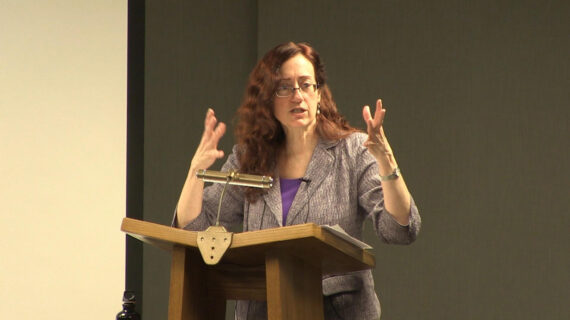
cc >> Good afternoon and welcome again to History Sandwiched In. Today I'm especially pleased to be able to present our speaker, who I've known for several years now, and he's going to talk about the, he's been here, this is his third time here, I should say. He talked about fur trade topics, and now he's going to talk about essentially the aftermath of the fur trade. His name is Isaac Walters. He teaches school at Blair in Blair-Taylor in Wisconsin. And he's also an interpretive ranger and historical interpreter at the National Monument at Grand Portage. So please welcome Isaac Walters to History Sandwiched In. ( applause ) >>
Isaac Walters
Thank you. What I'm going to talk about today is basically, as he called it, the aftermath of the fur trade. I would not call it the aftermath. That is kind of a doom and gloom kind of a sound to it, but it is definitely an anomaly that this kind of strange after effect, unintended effect of the fur trade, and that's this Creole settlement, a strange early settlement in Wisconsin. And when we think of settlers coming into Wisconsin, we normally think of the 1830s, 1820s-1830s, people coming into the southwest part of the state to do lead mining. Americans coming in, trail blazing, starting farms in southern Wisconsin. Eventually timber in the north. But what we don't realize is almost a hundred years prior to that there were European style settlements forming with agriculture, with all the works in Wisconsin already, in places like Prairie du Chien, Portage, up in La Bay, or Green Bay as we call it today, up at La Pointe on Madeline Island. So that's kind of what we're talking about. And what I'd like to do is talk a little about the history, why I use the term Creole, what it was, who these people were, as well as tell you a little bit about the history, and then go into their culture and what makes them interesting and unique. What I'd like to do is actually start with an image. I'll tell you right away this guy isn't a Wisconsinite. Kind of expanding a little bit beyond to other areas of the southern Great Lakes. This guy is actually from the Indiana-Michigan border around 1830. However he is very indicative of what you would have seen here in Wisconsin at the same time as well. And I'd like to start by just making you think a little bit. Who is this man? What is his name, do you think? What might be his name? What race or ethnicity is he? Language, what do you think he speaks? What's his profession and do you think he has any hobbies and what could those be? Anyone want to try one? Throw something out? >> Part French. >> Okay, part French, good guess. >> Native American. >> Native American, not a bad guess. >> Merchant of some kind. >> A merchant, perhaps, for a job as trader. I'll tell you this guy actually has two names. The main name that he was mostly known by was Jean Baptiste Brouillette, a very French name, Jean Baptiste being one of the most common French names you'll hear in what was Canada and then the United States. He was also known by the name of Tahquakeah, which was a Miami Indian name. He was born in 1796. He father was French, Michel Brouillette, a French trader from Vincennes, and his mom was a Miami woman. His ethnicity then is mixed blood, mixed race. He's part French, part Indian. What language does he speak? Well, lots. He spoke French. He spoke Miami. He spoke a large number of other Native languages and dialects. He also spoke English quite fluently, which kind of leads to his profession. One of the main professions that he had was he was an interpreter for the US government. He did a lot of work as an interpreter between the French people who were living there yet, the US government and the Americans coming in, as well as the various Indian nations, mainly the Miami and the Potawatomi in that area. Also, he was a farmer. You don't do a lot of work and have a lot of money as an interpreter part-time, so his main thing was he was a farmer. And we know for sure, I know from George Winter who actually did this painting from his journals, he had pigs and poultry for sure and probably had some cattle and other things as well. So quite an interesting arrangement of professions. And not only that but he was also noted for being a good medicine man. A person who actually dealt with medicines of Native origins, old Miami and Potawatomi types of medicines. So we have Native and French and English things going all on with this guy. And an interesting thing with hobbies, we don't know a lot about him and his hobbies, but I do know he played a mean fiddle and that's mentioned of him. So this guy is all over the place. And if you look at his clothing, he has an interesting arrangement. He has a pair of moccasins on here. Ribboned leggings. Native, basically, from the waist down. The fact that his shirt is untucked probably means that he is not wearing britches or trousers, but rather he's wearing a breechclout. But from the waist up he's very European, or at least his neck, very European in dress with a nice European shirt, a cravat, a waistcoat or a vest, a nice jacket. Then on his head he has what was very common among the Miami and the Potawatomi, a wrapped silk turban. And he has a large amount of trade silver in his ears and his earrings. So he is quite the combination again. And this is what we're seeing with these people in Wisconsin. So let's take a minute and talk about terms. I use a lot of different terms, and there's a reason why I normally pick the terms that I use. First of all, when historians talk about the people in these areas, one of the terms that often comes up is Metis, and I'm going to separate Metis into two different words, metis with a lower case M and Metis with an upper case M. The lower case M literally means mixed blood. It's someone of mixed racial parentage. Normally, and what we see in the French period especially prior to 1760, is that these people generally acculturate into one of the parent's cultures. There were mixed blood people who became more or less French Canadian, that adopted britches and shirts and hats and Catholic religion and became more or less French. There were also metis people who basically acculturated into their Native, generally mother's, family as well. And you wouldn't have really been able to differentiate them from any other person in that Native village. They had lots of other names that they used with this. Some of them are somewhat derogatory, sometimes not. Chicot was a common French one which I think means something like burnt stump. When they had fields and they would slash and burn I think the French called those chicot. Bois brule which literally means, once again, burnt wood. General versions of anything with breed on it. Half breed, mixed breed, breed commonly used by Americans as they were coming in. A lot of different terms but basically meaning mixed blood. We also have then the capital M Metis which generally by historians today is noted as being something different. It's not just mixed blood but also now mixed blood that's creating its own unique culture that is also a mixed culture. It's a little bit of both. Whereas, the Metis earlier, especially during the French period in Wisconsin would have been acculturating back into one of the parent's cultures. We now have them creating a unique culture onto their own. A culture that's a mix of European, American, and Native traditions. I don't like to the use the word Metis, although that's what historians have commonly used in the 1970s up until more recently for these people in Wisconsin. I prefer Creole. Because what we have happening in Wisconsin is we have these settlements where we have Metis, a large number of Metis and if it weren't for the Metis these settlements wouldn't have formed. However, they weren't all Metis living in these settlements. There were full blooded Indian people. There were people who were full blooded European or Euro-American, Caucasian people. We had people who were of African American descent living in like Prairie du Chien and even coming up into Green Bay. We had quite a mix and because of this multiracial, multiethnic community it really, Metis isn't a good term for it. Creole is a much better term because Creole doesn't use more racial determinance but more cultural determinance. We're looking really at the culture that's forming. The clothing, the food, the traditions, not necessarily the race of these people. One of historians that most recently has kind of reinvigorated the use of the word Creole for these people in Wisconsin is Lucy Eldersveld Murphy in her book "Gathering of Rivers," which is a history of Prairie du Chien. She probably states it the best that it can be stated. And I'm just going to quote her directly instead of trying to explain it any more. She wrote in that book, "Although the families who lived in these towns had Metis children, that is of mixed Indian and Caucasian races, it would not be accurate to call these towns Metis. To do so would be to miss the point that these towns were not only multiracial but also incredibly multiethnic. A typical family might include a French Canadian husband, a Dakota or Ojibwa wife, their Metis children and kin, servants, and other employees, some Winnebago, Mesquakie, Menominee, Pawnee, Scottish, or even African ethnic heritages." So really we're seeing a huge culture made up of many, many, many other ethnicities. So a little bit of history on this. Basically, this all starts with the fur trade with the Metis. There's always a joke among historians, and even other people that live in areas where this happened, when did the first Metis children, when were they first born? Well, normally nine months after the first Frenchman came into this area. ( laughter ) And we had French coming into Wisconsin in the early 1600s, really with large numbers in the 1660s and '70s. And we started to see people actually settling into Wisconsin. European people and then having mixed blood offspring. Already, offspring is a horrible term, it sounds like I'm talking about animals, children already by the late 17th century, by the 1700s, the 18th century, we start to see more of this. And it's because of the fur trade. Why are people in Wisconsin? It was the French coming in for the fur trade. Why did the British come in after the French regime ended after 1760? It's because of the fur trade. And because of the need of people to interpret, a need for people to be cultural brokers, these Metis children start to take on an important role in the communities. But not only that, but as you have the fur trade happening, we start to see a certain amount of mixing of cultures, adaptation, not just among Metis people, mixed people, but just the French themselves, the Indians themselves. We start to see Native folks in Wisconsin wearing and using a lot of European goods. I mean they're goods that they're trading for their furs. We also see Europeans and the French early on coming in starting to adapt and use a lot of the Native types of things. Moccasins, leggings, the use of the birch bark canoe and toboggans and snow shoes. All of these things are very common. And it wasn't something unique to Creoles, it was something we're seeing all across the Great Lakes and what was French Canada. In 1749 a Swedish botanist, a naturalist who was traveling through Canada and also through the colonies in what are now the United States and the British colonies, a guy by the name of Peter Kalm mentions that "many nations imitate the French customs, yet I observed, on the contrary, that the French in Canada, in many respects, follow the customs of the Indians with whom they converse every day. They make use of tobacco pipes, shoes, garters, and girdles," that would be sashes, "of the Indians." And then he goes on to mention a number of other things. Jonathan Carver, a British man traveling through Detroit in 1766 right after the fall of new France, says, "It is not uncommon to see a Frenchman with Indian shoes and stockings," stockings being the leggings, "without breeches," wearing a breechclout then, "wearing a strip of woolen cloth to cover what decency requires him to conceal." And then this comment is brought up by many people the fact that the Canadians, the French, not just people that had already married in or a descent of married mixed race people but just people in general coming into this area because of the needs of the climate, the area, what they were doing, were adapting to other traditions. Of course this leads to what was called "mariage a la fashion du pays," marriage in the fashion of the country. Country marriages as the British called them. Basically what we see quite early on with the French, and then it was continued by the British fur traders coming in, was that a lot of these people would end up settling down and marrying Native women. The reasons for this are numerous and that could be a whole presentation onto its own. But the idea was that oftentimes these were marriages, relationships that were formed for somewhat political economic reasons to get the best interests of the tribe on your side, to perhaps help get someone who could help make snow shoes, help make birch bark canoes, maybe translate for you. There were tons of reasons that this happened, but what we do see is we see a lot of intermarriage between the French, later the British, and the Native Americans here in Wisconsin. And this, once again, is called country marriages. Of course, out of this then as some of these men decided to retire from the fur trade, some of them went back to Montreal, the majority of voyagers, for example, that when their contract had ended went back to Montreal. Some, however, decided to stay with their Native families out here in the northwest. These men were known as "gens de libre" or free men. And free men started to, quite early, settle around fur trading posts. They weren't the norm, they weren't the majority of fur trade workers, but they were significant in numbers. In Wisconsin this occurs much differently than it does in the northwest up into Canada towards Winnipeg and areas like that where the free men would settle down in the Native families with the Native villages and basically live more or less a fur trade lifestyle, yet although they were no longer working for the company contracted in, normally they were doing work on the side, helping out the fur trade, doing some interpreting, doing some extra trading, hunting for food, and helping these people out. Here in Wisconsin, as well as in other areas of the southern Great Lakes, we see something different. When they settled down they didn't settle necessarily directly in Native villages. They started to form more European style settlements. They started to go back to agriculture using European crops and Native crops. And doing both Native and European traditions of agriculture. Building homes that were more European in design but using Native elements as well. And what we're going to see is then the development now of a new culture, a new type of people, a Metis people but also really a Creole settlement here in Wisconsin. Something different than you see elsewhere further north with these people. And by the way, while I'm going through this, if anyone has a question, please throw up a hand. I'm going through a lot of information very quickly. If you have a question that I think I'm going to answer later, I'll let you know and I'll hold you off, but if it's something I can answer right at the moment, I'd just as soon answer it. Yes? >> Is the sash in fact a Native American costume element or is it a French thing interpreted through the Native culture? >> Sashes occurred in Europe for numerous reasons, and sashes were common in the 17th century as they were becoming common in Canada, the more finger-woven sashes that we think of when we think of French Canadians. Sashes were oftentimes used for military in Europe as a signifier of rank. One thing that we do see though is that the art of finger weaving, the traditions of finger weaving and finger weaving yarns and cordage was definitely a Native American thing. There are countless, a number of the accounts from the 17th century that talk about them using, out here, buffalo wool as well as other animal spun into fiber, using other types of cordage, plant fiber, vegetable fiber, but that actual style of weaving is a Native art. By the early 1700s a lot of the French Canadian women had already learned this art and were starting to make their own sashes, and by 1800, if you were to go through Canada, it was very common to see the French wearing these. In 1749 Peter Kalm mentions it. And it wasn't just voyagers that were wearing them. We oftentimes think of the sash with voyagers, actually if you were to meet a lawyer or a doctor or a common farmer in French Canada, in Montreal or Quebec, most likely they would own or probably be wearing a sash like that. But it's this kind of mixing of cultures that becomes interesting. And the fact that others, not just these Creoles in Wisconsin, are making these mixing, or these adaptations and acculturation is going to be something I'm going to bring up later. But once again, the whole idea of these Creole settlements comes from the fact that you have Euro-Americans, Indians, Metis, African Americans in a few cases, all comes into these settlements, creating settlements, I should say, not just coming into, making these settlements early on. Just to kind of give you an example of some of these settlements because this is a really neat set of maps. This is Green Bay, during the French period it was known as La Bay. This is 1821 as Americans were coming in, they were plotting out land and everything, but what you'll see here is this is the Fox River going up into Green Bay. You have the American Fort Howard shown right up there. I'll use the laser pointer. Right here. But what we have along the river are plots of land. If you notice this is very different from the way that Americans plotted out the land using a rectangular survey. What you would see in a plot book today, a plat book today. Instead of nice square even plots, what we're seeing is long lots. This was called a long lot system. It was a French system that was seen in Canada. We see this a lot if you still go out to Quebec and Montreal and even down into New Orleans you'll see this, but otherwise you don't see it a lot in the United States. You see it in Wisconsin in Green Bay here where you have long lots. The reason was because everyone then had access to the river, which was your major highway. It was a major road. You could canoe back and forth into everyone's house. You lived more or less in a village with your neighbor just a hundred yards, 200 yards away from you so you had the ability to have basically a village. But then you would have your farm which could be up to 20 arpents or more, French measurements, but many acres, 20-30 acres, jutting behind you. And you would slowly clear out land as you went back, putting in fields, and you'd have your tree line and your woods normally in the back where you'd get your lumber, your firewood and everything from. And then as you'd clear more land, you'd slowly continue to work your way back, and this is what we had in Green Bay. And if you were for look at the names, you'd see things like a lot of names here which are -- you see a lot of French names. You're starting to see American and English names as well, John Law, a very famous guy in Wisconsin history because this is 1821, but using that French system. Yes? >> They're not equal, why? >> If you look at a plat book today and look at who owns land and how much land they own, it's not equal today as well. A lot of it has to do with who had money, who had the ability to get the land, what you were doing with the land. A lot of these names that you see over and over again, like for example the --, the Laws, these were people who were very influential in the community, who had a lot of money, who had done well. The -- family actually were descendants of Charles Langlade. If you've ever heard of Langlade County and Charles Langlade who was the one of the first Wisconsinites they call him. He was a mixed blood person himself, a Metis person. But they were a big trading family, fur trading family. And that's a quick answer, maybe a not so quick answer. Here's another nice map. 1820, the year before that. This is Prairie du Chien. This is the Mississippi River here. This is St. Feriole Island which, if you go to see the Villa Louis today for example, it's on this island here. And then this is the rest of what's Prairie du Chien and then the bluffs here. But what you see once again are long lots. Very French in set up, but what you would have seen on these would have been a much more mixed culture. So to give a quick timeline of what's happening here just so you kind of have some more reference on what I'm talking about. Around 1670, or 1760 excuse me, we have some settlement at La Bay for sure. We know that there were probably people settling there earlier, but at the time the French regime ends we have settlers living, farming, in Green Bay at La Bay. As Carver comes in the 1760s, Jonathan Carver, as Peter Pond, he's actually an American, he's from Milford, Connecticut, comes in for British fur trade reasons, they come through Green Bay and they mention black cattle, swine, poultry. They mention the farmers there growing crops. We have a settlement already for sure pretty heavy, not many families, but definitely established by 1760 in La Bay. By 1780 we start to see more settlements, real true settlements popping up. Green Bay or La Bay has really started to grow in size. We see Prairie du Chien establishing as a real settlement. You see a lot more happening around Portage. You see up at La Pointe by Madeline Island more community forming. And also at this time we see what historians and anthropologists like to call a Metis ethnogenesis. An ethnic development of a community, of a people that is uniquely, capital M, Metis. Basically mixed. And it's at this point that we're definitely seeing these settlements. But these settlements aren't just normal European settlements. They're not Indian villages. They're not Menominee, Mesquakie, Potawatomi, Ojibwa, Ho-Chunk settlements. These are something that's a complete mix of these things. And by 1780 we're seeing that really seriously in Wisconsin. A side note, 1783 Wisconsin becomes American. Officially according to the Treaty of Paris. The Revolutionary War ends. Of course Wisconsin is pretty much unaffected by this. We're still more or less British. Although we claim to be American, there are British traders here, British people working here. The Americans never really get a good foothold in. They don't really try too hard either until about the War of 1812. Early 1800s, these Creole settlements really grow in size and numbers. They're starting to really expand and become large. And 1815-1816, end of the War of 1812, the Treaty of Ghent makes us officially American, and we have American soldiers coming in and taking over, setting up forts at Green Bay, Fort Howard, down at Prairie du Chien, building Fort Crawford. We have this becoming truly an American place now. But we have Creole people still living here. And what happens with them afterwards becomes an interesting story which we'll get to a little bit later. So looking at this culture. What is Creole culture? I've talked a lot about this mixing and all of what's happening, and we have an interesting blend of cultures, well what is it? Basically, what it is, is a Metissage, a mixing of culture. Mainly French, as well as a little bit of other European nations, especially during the British regime. We have Scottish and British people coming in mixing with this. Some Irish. We have various Native American Indian groups. We have, in the Green Bay area especially, Menominee and Ojibwa, some Ottawa from out towards Michilimackinac, and some Ho-Chunk. As you get down to Prairie du Chien you start to add in other groups like the Dakota and the Sauk and the Mesquakie, but what we have is interesting mix of those as well as unique local adaptations as well. So we create a really interesting group. And with this we have all sorts of things going on. We have the clothing being a mix. If you remember that picture I showed of Jean Baptiste Brouillette earlier, that interesting mixing of clothing, the wearing of clothes, I'm going to show you a number of images a little bit later on that we'll just run through showing this mixing of clothing. We see a mixing of a lot of different things. We see the use of the fur trade still as a means of employment and making money. We see a lot of these people, even if they're not directly voyagers or traders, some of them are, but even those are aren't, they're still doing contract work, maybe working as interpreters, working on the side, bringing in food, whether it's food that they've grown themselves or have hunted or trapped, fished for. They're still engaged in some means to the fur trade. And then you see a lot of subsistence farming which becomes much more European in nature or more Euro-American in manner. Where they have beef cattle, they have swine, they have poultry, chickens, geese, ducks, where they have a lot of things going on, European crops as well as Native crops. And early on, by the 1760s and up to about 1800, a lot of this is more subsistence farming, this is farming just for the family. Extra food for us. Slowly it becomes more and more if we have extras, we're selling it to the fur trade, to these fur companies to help outfit them. Not just food, well yeah food, eggs, things like that, other produce from the farm, maple sugar that they're making in Native tradition but something that these people are doing. Feathers from their poultry started to be sold for use in feather ticks and mattresses for the different people coming in for the fur trade. And then especially as the Americans came in and built those forts, that was a huge source of economic wealth. We have now all these American soldiers coming in that need food and need feather mattresses and need all of this different stuff we can provide to them, and that made a source of income for these Creole people in Wisconsin. The farming itself, however, was considered rather crude by most people coming in. Of course, at the time that these settlements were forming, it was right at the heart of the agricultural revolution, and who started and led that? It was the British. Well these people are mainly French descent, and the French were considered a little behind the time with agriculture. They don't really use a lot of manure for fertilization or fertilization at all. The plows they were using were pretty archaic. Oxen were still plowing not with a yolk but with a harness that actually strapped as a board across the foreheads and tied to the horns of the oxen, which was very medieval. That goes back to the dark ages and the middle ages. People were using yolks in England. So as the British were coming in, they were looking at these French thinking, you guys are pretty behind the times. And that was the way it was for most of the French. And even the French were complaining about the people out in Wisconsin and Michigan. Lotbiniere, an engineer for the king, actually comes out and was up in Michilimackinac in what is today Michigan, and complained about the French Canadians living there and said these guys, all they want to do is walk around the parade grounds of the fort smoking their pipes, and they're happy to live off of Indian corn, if they'd just grow a little peas, or if they'd be a little more productive. But of course the French were thinking, and so were the English later, of these people in terms of what use are they to us economically or militarily. And economically the use that they were getting out of them was mainly through agriculture. That makes them money. If they're not being productive, it isn't making them money and they're going to complain. So the French were doing this. The British especially did this because these guys were far behind the times in agricultural practices. And then as the Americans came in the 1800s, they were looking at these people as just backwards. If you look at the things that the people mentioned they're like the only reason they're at all successful is because this is just a beautiful area for growing crops. James Biddle, one of the early Americans that came into Wisconsin, mentions that with numerous small farms under good cultivation and lands very productive in corn, wheat and grass, etc, so rapid was the vegetation that it was gravely assumed they could hear and see the corn growing. And a lot of people are saying they could just throw stuff on the ground and it grows here. These people are so negligent with their crops, but they get good crops, I can't believe it. And they complain, though, about how they're farming. Ebenezer Childs mentions that sometime after 1820, after he came here, he was the first guy to make an actual oxen yolk. That up to that point they were still using the board across the head method of harnessing oxen. These people were just far behind the times and they're hardly even farmers, mixed food ways. The foods that they were eating, of course they were growing Indian corn, something that was kind of scorned at by most European folks. Even today in a lot of European countries they don't eat a lot of corn compared to Americans. But at this time, it was pretty odd to see people eating Indian corn. They were growing Indian corn, beans, squash, melons, pumpkins, but also European crops, wheat, a lot of peas, that was a pretty staple crop for the French, and having all of these foods. One of the coolest stories of mixed foods ways and just talking about mixed culture comes from a number of different accounts. Elizabeth Baird, she married a Baird who moved in here, she was Elizabeth Fisher prior to that, she was a Metis woman herself, mentions that growing up the tradition of the mixed blood people and of the people that would become Creole was to go out during the springtime and make maple sugar. And you would tap the maple trees, as people still do in Wisconsin today, we're a pretty big producer of maple sugar or maple syrup, but they would go out and they'd go from their log European style homes out to the sugar bush where they would have wigwams, and even people who weren't at all Indian-blooded would live in these wigwams, and they would make maple sugar. Well, while they were making maple sugar it just always seemed to work out that's about the time of Lent. And with Mardi Gras and Lent and the celebrations and what, it was pretty common for them to have celebrations out at the sugar bush in the wigwam, Catholic Lenten practices. A big thing was crepes. They were making crepes, a very French food, sweetening them with maple sugar, bringing their chickens with them so they would have eggs for the crepes. You just see this mixture of the European, the crepes and the eggs and Lent and Catholicism, with birch bark wigwams and making maple sugar, and it's just a beautiful blending of cultures. Actually Elizabeth Baird also mentions that women weren't fit to be married until they were really good at flipping crepes. And she tells lots of stories about crepes, the guys trying to flip crepes and becoming a melee and crepes flying across the cabin. Just some neat stories. But a huge amount of mixed food in food ways. French architecture for the most part. Most of these building that we see and I'll show you some examples of this later, are going to follow French Canadian architecture which was a local variation of the architecture you saw in France, using more wood though. And I'll show you these wood cabins, not like the Lincoln log notched corners cabins, but a slightly different construction and using it, adapting it by actually sometimes having birch bark on the roof or elm bark on the roof. James Lockwood mentions that the houses were built of planting posts upright in the ground with grooves in the side so that the sides would be filled with split timber or round poles. And then it was plastered over with clay and whitewashed with white earth found in the vicinity. And then covered with bark or clap boards of riven from oak. Both Elizabeth Baird, who I mentioned earlier, and Juliette Kinzie, Juliette Kinzie was the wife of John H. Kinzie, the Indian agent at Portage at the Indian agency house there, and when she came in 1830 she and Baird both mentioned that the common floor covering in the common people's homes were bulrush mats that were woven by the Natives. And I'll show you some bulrush mats later. But it was a Native floor covering, Indian floor covering that they were using in the French Canadian homes. So you just get this really interesting blend of all these things, cultural, material culture and just ways of living. Predominantly French language. The language spoken is going to be predominantly French. And this continues well into the American takeover of Wisconsin, when they came in. Although it was predominantly French, you still have a lot of Native language being spoken. And actually it was the children of these marriages, these country marriages that became the main translators for the fur trade. One of the most famous translators probably in this area is Pierre Pauquette. I don't know if you go to the Portage area you hear of Pierre Pauquette, there's Pauquette Park. My home town is Poynette, Wisconsin. Poynette is just a corruption of the original Pauquette, and Pierre Pauquette was half Ho-Chunk, half French. He worked at times as a trader but his main business was actually to haul goods over the portage at Portage between the Fox and the Wisconsin Rivers. And he made a good business of it. He also worked as a translator for the US government. He's a really well known translator and worked with a lot of the treaties in the early part of the southern Wisconsin history. He also was a translator during the Blackhawk War. He did a lot of different things, and he also farmed on the side. He was the perfect example of maybe one of these Creoles that we're talking about. But they became very, very important for the fact that although they were French Canadian mix, stuff going on here, Creole, a lot of them had very good use of a lot of the Native languages. Religiously, the Creole culture here was predominately Catholic. And actually the Catholicism becomes an interesting thing. There were some Native practices used and you see this even by non-Metis people, some of the French Canadian voyagers doing weird things that were definitely more not-so-Catholic and more Native religion. But Catholic religion was definitely the mainstay. And actually it becomes interesting, a woman by the name of Susan Sleeper-Smith wrote a book called "French Men and Indian Women," and in it she explores this concept a little bit more. But she even talks about non-Catholic Native people being brought in to baptism ceremonies, becoming godparents and a lot of this back and forth between these people because it became a way of tying them together, binding them together, politically as well as culturally. So the religion part becomes interesting. Something that comes up a lot with these people then is that this is a unique culture. This is amazing. These people are so different. And we hear this already in the 1800s as the Americans are coming in. Wow, these people are different, this is unique. Maybe not so positive most of the time. But this was weird. Jacqueline Peterson describes Metis fashion in an article, well she's done it in a lot of articles and books that she's written, but in "Prelude to Red
River
A Social Portrait to the Great Lakes Metis" she writes, "But 60 years later Metis fashion was still distinctive. Metis voyagers were visually identifiable, as much by their blue pantaloons, capot and fiddle, as by their leggings, finger-woven sash, moccasins, hair feathers and tattoos." And a lot of people like to look at these physical material cultural elements as being unique. I would argue, however, that they aren't. If you were to look through French all the way to Montreal and Quebec, as well as where you see mixing of cultures with the French elsewhere, Senegal for example in Africa, you see a mixing of cultures. Wearing of moccasins, of sashes, of all those things were done by completely French French Canadians in Montreal and Quebec, and I'll show you pictures later. And this was common. It might have been odd for the Americans, maybe a little bit odd for the British coming in, but it wasn't odd for the French across North American. What was really, really, really unique about this culture though, is it is really a culture of interdependence and cooperation between multiple ethnic and racial groups. We really see a situation where you have people of lots of different backgrounds that needed each other for the functioning of their society. The fur trade was all about the idea that we have different groups, culturally and racially, that we need their stuff, they need our stuff, we're going to work together in order to get this done and we're going to benefit both out of this. And that's how these communities formed. And what we see is really, really little ethnocentrism. We see lots of, well very multiracial, multiethnic community forming without any strong examples that I've read of, found, and I've looked, of ethnocentrism, and this is interesting because as the Americans come in, they're coming from a society that has said that social status and race are linked. When they came to Wisconsin and came to Michigan in some of these areas and they saw people of color having prominent positions in society and being important people with power and wealth and prestige, this was bizarre. Not only that, but of course then you have the mixing of race and you have all sorts of stuff that to the Americans seemed very weird but to the French it wasn't so weird. And also with the Americans coming in, this is extremely strange compared to their political policy, and this is going to be the doom for the Creole culture in Wisconsin and elsewhere is that this is very different than the Jacksonian policy. There's actually a really strange but interesting book that was written by a professor of English literature out of University of Michigan, a guy by the name of Edward Watts that's called "In
This Remote Country
French Colonial Culture in the Anglo-American Imagination, from 1780 to 1860." And what he does is he analyzes how Americans looked at the French in these different places and at the Metis in these different places and how some of them actually went, wow, a lot of the Jeffersonian political thinkers were thinking wow this is a great example of what we can do in America, and a lot of the Jacksonians were like no, this is bad, you can't do this, we're going to make them assimilate or push them west just like we are the Indians. And there was a lot of interesting things going on within both what people were writing at the time but also even literature fiction that was being written. And he examines that quite a bit. But that would be, once again, way too much to talk about today. And anyway, with this, the American differences and the strangeness to them, in 1860 as the Americans come in we start to see a slow marginalization and systematic kind of getting rid of the Creoles. What we see is fur trade laws are being made. The French and the Metis here, they are the fur trade, the British knew that. They needed them to run the fur trade appropriately. As the Americans came in, the American fur trade company set up, they actually, Congress made laws saying you had to be an American citizen to work in the fur trade. French Canadians were not given American citizenship. They were told that, you guys sided with the British in the War of 1812, you're enemies of the state, we're not going to allow you to take oaths and become American citizens, and that became an issue at first. Laws were made against that -- the country marriages. And that actually, retroactively they fined people and took people to court for having illegal marriages. For example, Judge Doty, James Duane Doty, a famous judge in early American Wisconsin, in 1824 put a number of people up on trial and actually arrested them for fornication and adultery for having really solid marriages that weren't just marriages that were sanctioned by civil systems according to the American system. The British, when they came in, well, the French when they were here, they considered these country marriages okay. And actually according to the Coutume de Paris, the law in France, they were. When the British came in they actually allowed the Coutume de Paris to continue as the law of the land for the French Canadians. So they continued to have the country marriages. Americans come in in the 1820s now they're saying no you can't have these marriages anymore, you need to revoke your marriage, get remarried according to our way of doing it or we're going to throw you in jail. And actually that worked as a way of getting a number of prominent figures out of power and away from their land and away from situations where then they could replace them with others. And with land deals and a number of other things what we slowly start to see is that Creole culture starts to disappear. What we have is by the 1840s and '50s a lot of this culture leaves. And what we see is a lot of these people continue to live in the United States and Wisconsin especially. A lot of these people just become really American. They leave Catholicism even, they leave the French language, they leave a lot of the things that are unique and interesting and they start to live in American homes and basically just kind of blend into the rest of the culture. And we still have people around with the last name of Roulette or Brisbois or Brisbois as it's normally called now. And things like that that they just become American. What we also have is that some of these Metis become Indian, especially some of the Metis people who are more maybe Indian than European, they just joined and assimilated and acculturated into the Indian communities. And if you go to a lot of the reservations around here you'll see a lot French surnames. St. Germain, this and that, Le Meur, Ducharme, a lot of names that are French names. The reason that they are Metis is that reacculturated back into the Indian communities. We also see some leave and go further west. A lot of those that wanted to maintain being Creole, maintain being uniquely Metis, took off and headed west. And a lot of them especially went to the Red River area of northern Minnesota and over to Pembina, North Dakota, and are some of the reservations we have over there as well as the Metis that are up in Canada. Most, however, do assimilate. So I'm just going to quickly go through images. I know we're running out of time. I'm just going to plow through them, and if someone needs to cut me off, cut me off. If you have questions, please shoot them out. Prairie du Chien, 1816. Done by Rindisbacher, Peter Rindisbacher. Interestingly, he wasn't there when this all happened and he was commissioned to do it. He was actually up by Winnipeg at the time. But he does this and interestingly one of the guys they put in is notably Metis. Feathered top hat which is mentioned a lot. He's wearing a blue capot with a big red sash. He's wearing leather leggings and moccasins. Very much a Wisconsin boy. Here is, also by Rindisbacher, this is up in the Red River area, but once again a lot of Wisconsinites headed there by this time period. And what we see is some settlers, some of them wearing some very Scottish things, most of them Swiss, but what we see is that these guys are wearing amongst their very European clothing, they're also wearing leggings, moccasins, sashes, Native style of pouches and powder horns. Here's some leggings and moccasins. This guy, the classic Metis-looking Peter Rindisbacher character. This is actually by -- in the early 1800s. This isn't even Metis. This isn't even near Wisconsin. This is out in Montreal and Quebec. He did pictures of French Canadians, and what you're seeing is a lot of the same stuff. Capot, sashes, the hats with the feathers. Things that we kind of think of as unique Creole Metis, what Peterson mentions as being a uniquely Metis dress, this is just French Canadian dress. Here in the 1780s. This is from an anonymous, we don't know who painted it in the Bibliotheque de Montreal, in the Library of Montreal. And if you look at the guy, he's got the feathers in the hat again, he's wearing Native finger-woven, what appear to be finger-woven garters, definitely moccasins, but he's just a French Canadian in Montreal. French Canadians, again, this guys is wearing leggings and moccasins and Native adorned pouch, the sash. This guy is wearing moccasins as well. Straw hat actually is mentioned by Kinzie with black plumes, a very, very Creole or Metis thing in Wisconsin. More people. Even she's wearing moccasins. These are just in Montreal and Quebec by various artists in the 19th century. So these aren't things that are unique once again, but they are very, very common of what you would have seen here in Wisconsin. Once again, the uniqueness is more in how they gelled as a community, way more than the actually material culture. Rindisbacher, voyager, sash, the hat fancied up. Here's a nice Metis voyager as well. More from Rindisbacher. This is Joseph Roulette Jr. This is actually at the Minnesota state, I think the big huge pastel of it is in the capitol. He was the son of Joseph Roulette, who was the American fur trade guy out of Prairie du Chien, then he worked his way up the Mississippi. By the time of the Minnesota territorial legislature, he became the champion of the Metis in Minnesota. Actually himself very, very little Indian blood, but you see here in this monumental image that was made of him, and it's up on the state capitol, he's wearing Native leggings and moccasins and the beaded garters and the sash with the traditional tobacco pouch and a knife slung in there, but yet very European up here. And you see the same with an actual Francis Godfrey, he's a Miami chief, same kind of thing going on out in Indiana. Wisconsin, right here. Augustin Grignon, one of early, he was the grandson of Charles Langlade, very European dressed. Of course, they, in order to keep some sense of prestige in the state, became more American but in this picture he's got to be shown with that piped tomahawk, one made by Jordan. Rachel Law here, a beautiful picture of her done, actually, I believe I was told she was wearing her grandmother's clothes here. But she was wearing a short gown which was a European style of dress that was very common among Natives. She's got a ribbon work match coat or shawl. Lots of beads. Trade silver in the ears, hair pulled back Native style. Early Wisconsin woman but showing that mixing of cultures very, very much. I like to show this side by side with an earlier image from George Winter, again from Indiana, but this is a Miami mixed blood woman, and you see a lot of the same stuff. All the beads. All the blue beads. The trade silver and cross. Trade silver and cross. Short gowns, skirts, the shawls, hair pulled back, you can't see it in this image but she also has the cone-clustered earrings. This was that Metis Creole culture in Wisconsin. Over by Green Bay we have this in the museum, beautiful, beautiful wedding dress of Sophia Therese Rankin. She was actually a mixed blood woman herself. Married to a Grignon at one point, later married to another man. This was her wedding outfit. Again the short gown. Very, very highly ribboned, European trade goods coming in but Native fashion gown. This is one of her great-grandchildren or grandchildren wearing the outfit in the early 1900s dressed up. But this was her wedding dress. A mixed blood woman marrying a Frenchman here in Wisconsin. >> Is that just a wrap around skirt? >> It's a wrap around skirt, and actually this wrap around skirt and this match coat or shawl are very similar in construction. And these are just stripes and stripes and stripes of silk ribbon and this is all cut ribbon work. Applique that you still see traditionally among a lot of people, especially the Ho-Chunk, today. And that's it. And then the construction, this is the -- or Greenleaf house down by Prairie du Chien. It's that classic Canadian style of architecture. The roof, I'm sure, has been replaced multiple times. This was over by Green Bay. This was built in, I think, 1804, but it was moved to the present site at Heritage Hill, the park, and this is very French Canadian style of architecture with the uprights slotted, and then these vertical logs slide down through and the roofs would have been of anything from clapboard to bark to whatever depending on the situation. This is the -- house down in Sainte Genevieve in Missouri, down on the Mississippi a ways down south of St. Louis. A different type of architecture where you have the vertical posts, that was also seen in Wisconsin. Very, very French Canadian. And you would have seen, here in Wisconsin, the house, the gardens for the family gardens, then you would have seen the fields, all the way back to the farm, to the woods and going back and back. Michilimackinac, once again the -- the post in the ground straight upright vertical, in this case now with cedar bark for a roof, more of a Native style. Interesting stuff. Upstairs, second floor, bulrush mat. Native made, you can see the dye strips. This is the flooring, the carpet of these homes as mentioned by Kinzie and Baird and many, many others. This was Wisconsin. So if you have any other questions, I'll answer them, otherwise. ( applause )
Search University Place Episodes
Related Stories from PBS Wisconsin's Blog





Donate to sign up. Activate and sign in to Passport. It's that easy to help PBS Wisconsin serve your community through media that educates, inspires, and entertains.
Make your membership gift today
Only for new users: Activate Passport using your code or email address
Already a member?
Look up my account
Need some help? Go to FAQ or visit PBS Passport Help
Need help accessing PBS Wisconsin anywhere?

Online Access | Platform & Device Access | Cable or Satellite Access | Over-The-Air Access
Visit Access Guide
Need help accessing PBS Wisconsin anywhere?
Visit Our
Live TV Access Guide
Online AccessPlatform & Device Access
Cable or Satellite Access
Over-The-Air Access
Visit Access Guide




Follow Us