

 Passport





Communicating the Stories of Science
05/19/15 | 49m 45s | Rating: TV-G
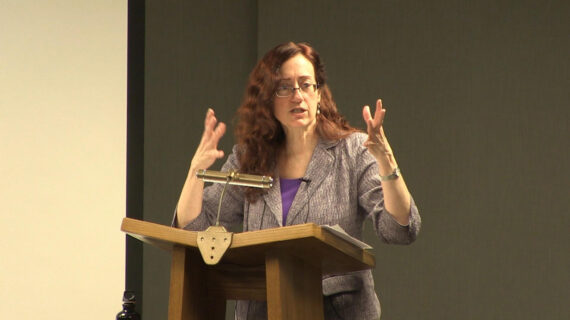
Deborah Blum, Professor, School of Journalism and Mass Communication, UW-Madison, discusses the corrupt atmosphere in the 1930s which lead to forensic scientists joining with the police to determine cause of death. Blum focuses on poisons often used in the early 20th century to commit murder.


Copy and Paste the Following Code to Embed this Video:
Communicating the Stories of Science
Welcome to Wednesday Nite at the Lab. I'm Tom Zinnen. I work here at the UW Madison Biotechnology Center. I also work for UW-Extension Cooperative Extension, and on behalf of those folks and our other co-organizers, Wisconsin Public Television, the Wisconsin Alumni Association, and the UW-Madison Science Alliance, thanks again for coming to Wednesday Nite at the Lab. We do this every Wednesday night, 50 times a year. Tonight, it's my great pleasure to introduce to you Professor Deborah Blum. She's with the School of Journalism and Mass Communication. She was born in Urbana, Illinois, but she quickly saw the light and moved to Louisiana. (laughs) Her father was a professor of entomology there, and he moved on to the University of Georgia, so she graduated from high school in Athens, Georgia, and got her undergraduate degrees at the University of Georgia, and then she came here for her graduate studies. In 1992, she won the Pulitzer Prize for Beat Reporting for a series of stories she did on primate research. She's been here for quite some time. The sad news is that she's leaving this summer to go to MIT to run the science journalism program there. So, while we have her here, it's great. Tonight, she'll be talking about communicating the stories of science and, in particular, "The Poisoner's Guide to Life." It's a sad/happy evening for us. Please join me in welcoming Professor Deborah Blum to Wednesday Nite at the Lab. (applause) Yeah, it's a sad/happy kind of event for me too. I'm going to talk to you about poison and kind of my obsession with poison, and why I think that at some level, everyone should be obsessed with poison, and I am not going to do my best not to give you too many instructions on how to kill your fellow audience members, but I do know a lot about that too. So some of these begins when I wrote a book that came out in 2010 called the, "The Poisoner's Handbook," and that book I had been working on for about three years before it got published. So I've now been obsessed with poison pretty much officially for about, what, seven, eight years. And this book actually came to be for a couple of reasons. As Tom says, I'm a long-time science writer. I'm also a lapsed chemistry major. I tell this story a lot, but when I was an undergrad and I was a chemistry major, I had long braids. I was working away in the lab when the poor postdoc who was overseeing the lab came up and he goes, "Deborah, smell smoke?" (laughs) And there were my braids sizzling away in the Bunsen burner. (laughs) I hadn't even noticed. And about two or three weeks later, I generated a poisonous cloud and forced them to evacuate the chemistry lab. (laughs) And about that time, I decided that chemistry was probably not the profession for me, but I love it. I just love the fundamental, beautiful way that explains the world around us, and I love the fact that it's slightly sinister. And so, as a long-time science writer, I hassled my agent endlessly about the fact that I wanted to tell a story that was partly kind of an Agatha Christie, and partly a chemical murder mystery in which the reader was going to solve the crimes with me. And finally she said to me, "Oh, just write it." And that ended up being "The Poisoner's Handbook." And it became a film on PBS, (mumbles) was referencing, also called, "The Poisoner's Handbook," but with this really cool poster with the toe tag, with the posters on about two years ago. And since then, I've continued to write about toxic substances in a number of different ways. I had a blog at Wired called Elemental, and I'm currently an environmental toxicology reporter for the New York Times, and I write a semi-regular blog for the health section there called "Poison Pen." So poison, poison, poison. But what I really want to do is talk about from the perspective of history and a little bit of Poisoner's Handbook what I found so intriguing about this from the beginning. Both if someone who loves slightly sinister chemistry but also someone who's interested in stories. And so, this is actually an image of New York City in 1918, and the train you see running through there doesn't exist anymore. It's the Third Avenue elevated. And during this time period, there were a lot of very dangerous, in fact, elevated trains. But there were other issues that were interesting to me at the time. 1918, the City of New York, under a reformist mayor, issues a report looking at the nonexistence of forensic science in the city at that time, and they literally published in this report a statement that said the clever poisoner can operate with impunity in New York City. Why would that be? It's an incredible thing to announce to the public. It's almost like poison me now, right. But what was it that was driving that? Well, this is photograph from the New York City Municipal Archives of a murder about that time, not a poison murder, I think of this as kind of statement killing. This was a gangster murder in Brooklyn. You know, when someone turns up in a pipe in a public park, it's don't mess with us, right. That's kind of the message here but what makes this one particularly interesting to someone like me is that you see here the gentlemen over there in the fedora, but you're not going to see any forensic scientist there at the crime scene. He's a cop. There are some cops there. There are no scientist. No one to do any kind of testing of the scene. No one to do blood analysis. No one to do fingerprinting because that science didn't exist and because the framework for forensic science did not exist in the United States at that time. And people today take for granted that we live in a kind of CSI age, in which we have scientist working with the criminal justice system to solve all kinds of crimes but in fact, that's a very recent idea in the United States and the first program to train people in forensic medicine in the United States was not launched until 1934. And it was launched in fact, by the two scientists or at the heart of my story, who I'll talk to you about in a little bit more. At this moment, when we see only the policeman and no scientist at the crime scene in Brooklyn, the system in place is a coroners, a politically appointed coroner system and in this particular system, people are appointed to coroner's office when they have done a favor for a very powerful machine in New York City, which was known as Tammany Hall for its original location. I'm using New York as kind of a microcosm of what's going on elsewhere in the country because similar situations were true elsewhere. In New York, if you go through the kind of roll call of coroners and assistant coroners at this moment, you can find sign painters and milkmen, funeral home operators, lawyers, bakers, ticket takers, but what you will never find is a scientist. You will find some doctors, and these are doctors in general that have lost their practice for killing too many patients, and done a favor for the machine. And in fact, in this particular year, the chief coroner of New York City was a doctor named Patrick Reardon, who was such a notorious alcoholic that if you go back and you look at the stories about him in the New York Times, at that time, you'll find he had two permanent assistants and their job was simply to hold him upright at crime scenes, right. And you'll find something else, I mean this is a corrupt system, right. So there's two other things going on. One is you can buy the cause of death, right. And all of these coroners are in it for the money. And so, in this New York City report I was talking about, they demonstrate a whole series of crimes in which the cause of death is altered at the will of the family or the friends or of crime syndicate. And my personal favorite was one, it wasn't poison, but it was one in which a man had committed suicide, and he committed suicide by taking a gun, putting the barrel here, pulling the trigger, the bullet blew out the top of his head, and the listed cause of death on the death certificate was ruptured aneurysm. (laughs) So we know something ruptured right, but it wasn't exactly the cause of death. And the other thing that you find on death certificates of the time, and again, this was not just in New York City. The National Research Council did a survey across major cities in the United States to tally up the kind of examples I'm going to give you. But basically, these guys don't know anything about medicine. They don't want to look at dead bodies. They don't show up. And so, they'll just write whatever occurs to them on the death certificate. So sometimes from this National Research Council study, you will find things on death certificates like, it could be diabetes or possibly an auto accident. Or they'll just go, "Oh, act of God." Act of God, which it could've been, but it doesn't really help you solve a murder. So the other thing that you find in this 1918 report is both police and district attorneys are saying, please keep your so-called scientific experts away from us. We don't want them there. We don't want them to do the analysis. We don't want them at the crime scene. they've made all of our investigations worse. And that year, the state of New York comes to the City of New York and says, basically, you're a national embarrassment, and we're going to fix this and we're going to force you to hire a trained medical examiner. And so, New York City in 1918 hires a medical examiner. He's the sort of big guy in the dark suit with a beard looking out the window and sitting down named Charles Norris, and Charles Norris takes this extraordinary step. He hires, and this is the slighter dark-haired gentleman looking over his shoulder. He hires the first forensic chemist ever attached to an American city, ever. They just didn't exist and this chemist name was Charles Norris. And so what was interesting to me, when I was going further into this story is you have these two scientist trying to invent a science. How did they do it and what did they find? And this was a very challenging period if you are interested in trying to catch poisoners. Not that it isn't today but these are a few of the common medicines that you would find in pharmacies and frankly is often in people's houses in various forms. There's atropine which is used to treat the eyes. Over on the other side of that row, you see strychnine sulfate. Strychnine was a very popular pick-me-up tonic of the time. It was you're a little tired, you'd take a little strychnine, give your nerves a little jolt and you'll feel peppier, unless you took too much and then you died. (laughs) And the one in the middle, you cannot really see it unless you get into the fine print there, but it's mercury bichloride, which is also sometimes called corrosive sublimate. And mercury bichloride was used quite commonly to treat infections like syphilis. So these are all over the place. And so, to give an example of how formidable a challenge this is, I'm going to take another of the popular medications of the time, arsenic trioxide. This is really my favorite poison in the world. Arsenic is such a cool poison. It's cool on so many levels. It's a wonderful homicidal poison. It's a really important environmental contaminant today. We worry about it in ground water here in Wisconsin in fact. There's a quite famous arsenic belt that runs through up the state north of here. We worry about it in food products like rice, but what I'm going to, today anyway, now that we can measure down at the low dose level but what I want to talk about here is arsenic trioxide. Arsenic trioxide is a wonderful homicidal poison because it's tasteless and odorless, and at this time, it's just so easy to get. And arsenic was used in all kinds of ways even though it was homicidal poison. This is 19th century newspaper ad for harmless arsenic wafers which were used to treat the complexion. Arsenic was heavily advertised to women as a way to make themselves more beautiful at the time. I like this one because if you get down to the bottom, it says perfectly harmless in French. (laughs) If you're taking French arsenic, you'll be more lovely, right. And the most popular of these was actually a solution called Fowler's solution which again, was used to improve the complexion. Literally, people go back and they look at that famously pale, ethereal Victorian complexion and they realize a lot of it was low level arsenic poisoning. Women were just taking this every day. They were pale because they were suffering from chronic poisoning and they would look very beautiful that way of course. And then, if they were particularly irritated by husband, family, friends, they had arsenic right at hand, and arsenic is tasteless and odorless, and very poisonous once you start notching it up. And so, you found in the 19th century in particular that arsenic was such a popular homicidal poison, you could just go down and buy it for your face, and then dump it in to the oatmeal, right, no one would notice. They'd just get sick. That by the 19th century, arsenic's nickname is the inheritance powder, right, and it in French, poudre de succession. And it's the number one homicidal poison, and there's one other problem with it, it's amazingly good poison, right. You can't taste it. It mimics a natural illness. You can't smell it. You have no warning. The murders are misdiagnosed, and there are zero test for poison in a corpse. When you come into the early 19th century, not a single test exist to detect any toxic substance in a corpse. And so, the standard method if you really thought someone had been poison was to take their last meal, or the contents of their stomach and feed it to a dog, or a cat, or you know, some unfortunately animal. And if that animal died, it may or may not have been poisoned, right. So people easily escaped, and this was a wonderful opportunity for homicidal poisoners until about the mid-19th century, when a British chemist named James Marsh, who had actually seen too many people walk away, and then come back and kind of thumb their nose at the system, developed a test for detecting arsenic in a corpse, and it's called the Marsh test. And I love this cartoon of it because it shows you what a primitive test it was. Basically, what you did is you took the stomach contents or the stomach or some tissue from the stomach, and you dissolve it in acid, you minced it up, you dissolve it in acid, you heated it up in this device here, and as the contents vaporize, and come out this tube, you see the scientist holding the test tube upside down over the end of the tube. If there's arsenic in that vapor, when it deposits on the interior of the tube and cools, it forms something called an arsenic mirror, a shining, dark layer on the glass. And so, if there was arsenic in the suspect tissue, and if you did this test just right, and if this arsenic mirror formed on this glass, then you could make a case in the courtroom that that was an arsenic poisoning. And this was the beginning of actual forensic, blah, can't say that, science testimony in the 19th century. People were convicted based on this test. It was since refined by a series of other chemists, but the Marsh test is fundamental to a lot of the beginning of this. And there's one other thing that happens. Well, the other reason I wrote the book is that poisoners are interesting to me, kind of as a species of killers, right, if that makes sense. Because of all the ways that we kill each other, the only way, only weapon in which we always have to use premeditation is poison, right. Anything else, a gun, a knife, a baseball bat, a heavy cookbook, a brick, it doesn't matter, you can lose your temper and you pick up the weapon and go, right. You can kill on impulse but no one does that when they poison. You don't say, "You know, I really want to get rid of you, "and so, what I'm going to do is carefully researched "the best possible poison and the delivery method, "and about three or four months from now, "that's going to go in "and I'm going to have a cover story by then." Poisoners are really interesting, calculating killers, right. They distinguish from all other killers, and it's actually one of the reasons that people will argue that they're rare, right. Poison killings are rare. They take a lot of work and planning, and you have to be pretty cold about them, right. So, what you see in the 19th century, I'm going to give you an example of that from more recent times just because I like it, but what you see in the 19th century is that poisoners then start shifting to plant poisons, right. You have arsenic. It's a naturally occurring metalloid element, and the other metallic poisons, lead, mercury, antimony which is fairly closely related to arsenic in some ways. All of these start becoming detectable as people kind of go down that tree, but the plant alkaloids are not detectable at all, right. And you see a shift in the poisonings in Europe in the 19th century toward plant alkaloids because now you can get away with those. So, morphine, right, suddenly ratchets up as a form of killing people. Cyanide plant alkaloid, right. Strychnine plant alkaloid. All of those start ratcheting up. And this ends in about late 19th century, 1860s to '70s, when a Belgian chemist, his name was Jean Servais Stas, finally solves this problem, and the poison that he solves it with is nicotine. There had been a murder in Belgium in which a man had murdered his brother-in-law for his money by stewing tobacco leaves in one of the barns. And when sure he would get away with it because it was not detectable and Stas, who was actually apparently is a pretty brilliant chemist but also a completely obsessive nutcase, just locked himself up until he solved this. It took him weeks, and weeks, and weeks, and weeks, but when he solved it, they took the guy to trial and convicted it. So you start to see the shift, and even as you start to sort of catch up with some of these naturally occurring poisons, of course, we have the rise of industrial chemistry. And so now, we have this new wash of other toxic things, and all of that is sort of flowing through culture at the time of my story. So to give you an example then, of what it's like to be a forensic chemist at this time period, I'm going to shortly ask you to become one. If you go back and you look at the work of Alexander Gettler and Charles Norris, you see them inventing this as they go. Alexander Gettler was the first person in the world to be able to tell that someone was drunk at time of death. It took him 6,000 brains, all from Prohibition when drinking was illegal. But 6,000 brains of people suspected of having died drunk before he was able to work out that system, and he published that in 1930. And about three years later, there was an Indianapolis toxicologist named Rolla Harger who published, developed that into the first breathalyzer, which he called the drunkometer. I really love that. (laughs) Gettler was the first person, they were looking at radium in occupational health, to show that bones remain radioactive years after death. And he developed the techniques for doing that. He was the first person to actually be able to calculate a chloroform death. His work on cyanide was so fundamental that the EPA still cites it but when you're watching them do this, you can see how much they're trying to catch up with current events. And one of the poisons that was particularly interesting to me, and I actually had two different chapters about it, is one that is featured in this particular story. If you know the history of New York City and you can tell from this picture that I'm going to tell you a story that's set in a tenement district. And, in fact, this was a particular event that occurred on the lower east side of Manhattan, and it was in a district filled with tenement families, right, immigrant families. They were very poor. Lots and lots of people crowded into really inadequate and sort of under housing without much to it. This is an image. If you're ever in New York, this is a modern picture from the Tenement House Museum, which is now in lower Manhattan. It's really a wonderful museum. It walks you through the life of a tenement family in an old tenement building. And this is a room that they have not refinish but it gives you a good example of what the basic feel of these places were like. Even back in the day, the walls were often peeling. The floors were splintered. They tended to be called water flats, right. So there was not hot water, and there was not electricity, right. This particular story is from 1923 and I think we have this idea that by the 1920s, everyone was cooking away with their electric power. But in fact, that was if you could afford it, and if you couldn't afford it, what people got was a form of gas that was generally known as illuminating gas. And it was called illuminating gas because it was the gas that was used in lighting but it was also used in stoves, refrigerators, heating. And these systems were generally pretty leaky, right. One of the things Charles Norris began was actual tallies of causes of death. He was beloved by the insurance industry because no one had done that before. And as he's tallying up causes of death related to illuminating gas. In New York City, either they're running between 1000 and 1500 deaths a year from accidental illuminating gas poisoning. In this particularly story, oh, and one more thing about illuminating gas. So what made illuminating gas so dangerous? It is coal derived and it's primarily two gases. One is hydrogen so it's explosive and there were plenty of cases where people would walk into an apartment with an illuminating gas leak, light a cigarette and blow up their apartment and themselves, right. And the other thing and in even larger proportion is carbon monoxide so it was poisonous. And in this, this is another photo from the New York City Municipal Archives, I'm going to ask you to be as Alexander Gettler was, the forensic chemist in this case. My story doesn't have a body in front of the door so you're going to have to visualize yourself stepping over the body and you're going to go into the room on the other side. It's really a two-room apartment and there is clearly an illuminating gas leak. The police have opened all the windows, right. You walk through the front room, and it is about what I described, very shabby, you know, splintered floors, peeling walls, everything's pretty rickety. When you get into the back bedroom, there is a wall lamp where clearly the fitting has broken and illuminating gas has been seeping out of that break, and there's a young woman in the bed, and she's clearly been dead for quite a while. She's stiff, and she's pale, and she's cold. And you take one look at her and turned to the police, and this happened, and you say, "No, this is not an illuminating gas death." Because? Anyone know why? Color of the tissue. - Yes. That's exactly right. If it was carbon monoxide, she would not have been pale. She would've been flush pink. Carbon monoxide, (laughs) carbon monoxide, this is my little slide about how carbon monoxide works but the point about carbon monoxide that's most interesting for me is, so carbon monoxide, it is a very efficient killer. And the way that it works, it has a much stronger bond with hemoglobin which is the protein, the metalloprotein in your blood that carries oxygen, then oxygen does. People estimated it at least 200 times as strong. So that if you are in a room that has both oxygen and carbon monoxide, it's not going to matter that much if there's enough carbon monoxide. It just muscles the oxygen out of your bloodstream, and your blood becomes saturated with carbon monoxide, and you die a death which is chemical suffocation but that bond between the carbon monoxide and the hemoglobin is so phenomenally strong that it actually alters the color of your blood. And your blood will become, as it interacts with the hemoglobin, a deeper cherry pink, and it's so strong, it will flush the color of your skin to pink. People who have seen the corpses of fairly recent carbon monoxide deaths will actually describe them sometimes as healthy-looking, right. They just have that wonderful flush. So when you see this young woman and she's pale, you'd think that cannot be carbon monoxide. They take the corpse back to the lab. They do a blood draw and in fact, that's absolutely right. They find no carbon monoxide saturation of the blood but they do find saturation of another gas and that gas is carbon dioxide, and what does that tell you? Yes. Carbon dioxide is an indicator of asphyxiation, right. And it's just basic mechanics. We inhale oxygen, we exhale carbon dioxide but what if you can't exhale. If you can't exhale, if you're strangled, if you're suffocated, if you're smothered, if you cannot get the carbon dioxide out, you're going to see those rising levels of that gas in your blood. So in this case, this is what CSI looked like in 1923 which is not nearly as jazzy as what we see on TV today, hand-drawn sketches but in this case, they then went and took a closer look at the body. And what you can't see on this is that these marks that are all clustered together here are actually down the back of her neck, and her hair was covering them up. But if you can read it, you'll see it says abrasion one, abrasion two, abrasion three. These are really the bruises left by his finger prints. Her husband had taken a life insurance policy out on her, suffocated her with a pillow, and he held it so hard here that he'd left almost perfect marks of his fingers and thumbs down the back of her neck. And after she was dead, he'd broken the fitting and filled the room with carbon monoxide trying to stage, thinking this was hidden, and trying to stage an illuminating gas death. And after this was all put together, he went to prison as he should have. Alexander Gettler, who was a completely obsessive kind of guy went on to do a whole lot more experiments with carbon monoxide and one of the things he wondered was what if we hadn't found the body so quickly? What if she had stayed in this apartment with illuminating gas leaking and concentrating, leaking and concentrating, we come back, you know, maybe a day or two later, there's a lot of orifices and openings in the body, would we have found higher levels of carbon monoxide in the blood and would we have missed the killing? And that'll tell you just how primitive the science was at that time. They literally did not know this. So he did something that you could not do today. He just went to Charles Norris and said, "Can I have some bodies?" And Norris said, "Sure, take some." (laughs) And it's sort of how I imagine it. They had a lot of unclaimed dead bodies because of alcohol poisoning deaths and Prohibition. Stacking up in the morgue and he took some of those and he built a kind of metal coffin, and did three different experiments at different lengths of time up to three days. Put the dead bodies in it, piped in carbon monoxide and let them marinate, and at the end of three days, there was zero elevation in carbon monoxide. The body does not absorb carbon monoxide after death, and that's fundamentally important understanding in forensic science because you need to know, if you find a lethal dose of carbon monoxide in the blood that actually killed them, right. And I'm going to tell you one brief quick glory story to illustrate that point which is this. About three years later, there was a very interesting case. It was in December of 1926 and it started with a policeman patrolling the docks on the Brooklyn side of the East River at night, and he hears someone kind of sneaking through the fog. It's super foggy and it's right in the middle of the night and when he follows this guy, he sees that he has a bag on his back. And he says, "Wait, let me see what's in your bag." And instead the guy kicks the bag into the river. So they chase this man down and take him back to the police station, and they're trying to ask him about what's going on and he won't answer them. He's just looking at his feet, right. I'm looking at my feet. And, unfortunately, they start looking at his feet and his feet are soaked with blood. So when they go back to his apartment, they find this phenomenally gruesome scene, right. On the kitchen table, they find there's a hacksaw and an ax. Is it an ax? A cleaver, some big knives, lots of blood, and on the floor, there's a body of a woman. It's just half the body of a woman, the upper half. They immediately charge him with dismemberment murder. Charles Norris is the medical examiner on call that night. And Norris is a fantastically interesting medical examiner. He comes from a very wealthy east coast family, old, wealthy traditional public service. The Norris' who had founded Norristown, Pennsylvania had stripped the lead gutter off their home in the Revolutionary War and had them melted down for bullets for the Continental Army. On his mother's side, his grandfather was a banker who brokered the first $100 million loan for the Union during the Civil War. So he comes from this long history of public service and a lot of money and this turns out to be very handy because as he works his way through a number of very corrupt city administrations in New York, he funds them when the mayors take the money away, which happens pretty often. He's super dedicated guy, really believes that they need to have this forensic science to provide justice, right. He has this idea that science is justice. But having said that, he would never show up at a crime scene unless his chauffeur drove him. And so, at four o'clock in the morning, Charles Norris shows up at this shabby little apartment, his chauffeur, whose name was Charlie Lieberman, opens the door. He sweeps into the apartment. Super big guy, he had played football at Yale, and there's a lot of legends that surround the Norris examiner period. And this one says, that he takes one look at the half body on the floor, kind of like my previous story and says, "Boys, this is not a dismemberment murder." Anyone know why? I haven't actually given you the perfect clue, but the body was pink. Even with this massive blood loss, the skin is flushed, this amazing recognizable pink, and Norris looked at it and probably more realistically, he just said, "That doesn't make sense." Why would the body still be pink? That sure looks like an illuminating gas death. And they this woman's body back to the morgue, do the blood draw and sure enough, she has a lethal saturation of carbon monoxide in her blood. And we know because of Alexander Gettler's work that you can't have a lethal saturation in your blood unless it killed you, right. The lethal saturation kills you. You didn't absorb any more after that so they go back and they say, "Listen, we think she was dead when he cut her up." And the police say, "Who do you think you are?" We have this long history of horrible relationships with scientists, so-called scientist, and we have a half a body and a lot of blood, and a bunch of bloody instruments, and we're charging this guy with dismemberment murder, and you can shove it, basically. And so they act, there's this phenomenal courtroom scene in early 1927 in which you have these two city departments taking opposites sides and the police are prosecuting this guy for dismemberment murder. And Norris and Gettler, or both are witnesses for the defense. And Gettler gets up and he testifies about the lethal level of carbon monoxide in the blood, and then they called the guy's landlord, who testifies that when he finally was allowed back in the apartment, someone had knocked over a coffee pot on the stove, put out the flame, and there's illuminating gas seeping all through the apartment. And then, they've called the defendant. He was a dock worker named Francesco Travia and he says, admits that he and his neighbor were drinking illegal whiskey and they got a lot drunk and a little carried away and had an argument, and then the next thing he remembered, and at that point, apparently knocked this pot over, was waking up on the floor and she was dead beside him. And he makes a decision, and we'll call it a bad decision that he's murdered her and he has to get rid of the body but unfortunately, she's a very large woman and he cannot carry her out in one piece. (laughs) So he cuts her in half and it was the lower half of her body that had gone into the river. He gets convicted of illegal dismemberment of a body but he's found not guilty of the murder. And this is a huge, when you think of tipping points, this was actually a literal tipping point in New York City at least, in the relationship between the police and scientists because clearly science had something to say here, right, and clearly, if they had all worked together, there would've been a mutual agreement. This had happened and so you start seeing from this point on a much closer collaboration. Norris has the police over to train them, they go over and give lectures to the police department, and by the time Norris and Gettler found this first Department of Forensic Medicine at NYU in 1934, they've integrated police officers into the teaching program. And you also find defense attorneys complaining that it's unfair to go up against Alexander Gettler because juries always conclude he just knows what he's doing and they can never win a case. So you start seeing this much more kind of cultural acceptance of both this partnership and the fact that science can tell us stories that matter. I would love to tell you stories of all these other amazing poisons, but I'm going to mention wood alcohol just briefly. Wood alcohol was one of the primary alcohols during Prohibition. And mostly, it got ginned up because people made their own alcohol, right. One of the things that happened during Prohibition is that you couldn't get legal alcohol so you made it yourself. One of the things that happened was that, you know, I need to make, I'm going to distill organic material. I can't get my hands on those, you know, golden waves of grain out there in Nebraska or whatever, so I'm just going to distill whatever organic material is close to hand. So people distilled their furniture, right. (laughs) There was a famous case in 1927 of some moonshiners in Tennessee distilling poison ivy vines because that was what's left that winter. People distilled sawdust. They distilled what they could find and they made a phenomenal amount of wood alcohol or methanol which is really poisonous. Why is methanol so poisonous? I love this slide. Because if you go down the middle of this slide, you'll see ethanol which is what we drink in wine, and beer, and bourbon, I'm a bourbon drinker, and all of these drinks. And what you see is the basic metabolic pathway. You drink ethanol. It's broken down by an enzyme called alcohol dehydrogenase. It becomes acetaldehyde. Acetaldehyde is a nasty compound, right, in this pathway. Acetaldehyde is what will give you a hangover and if you were a alcoholic and you take a drug called antabuse say, what it does is it stops this metabolic pathway from continuing. It sticks you in the acetaldehyde state and you get really sick when you drink, right. So it's a straightforward kind of chemical. We'll just do this. Normally, what your body does is breakdown the acetaldehyde. This does not show this but there's another enzyme in that pathway, acetaldehyde dehydrogenase, and it becomes carbon dioxide and water, very benign, right. And our bodies are very good at doing this. If I go over to methanol, it's a really different system. I still get acetyl alcohol dehydrogenase but it makes formaldehyde. And the formaldehyde breaks down to form a formic acid and basically, it's the metabolism in you, right, which is one of the really interesting things about poisons, right. It's also how our body processes, right. So it's our metabolism. We metabolize ethanol really well. We don't do a very good job with methanol and so, in the process of metabolizing the methanol, we're ginning up this poison. There's a huge epidemic of blindness during Prohibition because formic acid attacks the optic nerve, and there were a lot of people who died. Lots and lots of people who died, and one of the things I discovered when I was doing my research is the US government, in an effort to enforce Prohibition started requiring industrial alcohol makers because the bootleggers were stealing a lot of industrial alcohol to add methanol, huge amounts of methanol to that. So that people would, their idea being that people wouldn't drink because it was more poisonous. Of course, that didn't happen. A good 10,000 people were killed by this government program. Charles Norris wrote a really wonderful essay about this called, "Our National Essay in Extermination." Over here is ethylene glycol. Just really quickly, that's antifreeze. It's also in the alcohol kind of pathway. It metabolizes in a slightly different way but if you get down to the bottom, and you like this stuff as much as I do, what you see is that you eventually end up with oxalic acid and calcium oxalate, which means that it forms crystals in your kidneys, right. And that's how antifreeze actually kills you, right. It does so much kidney damage that it will kill you. So don't drink it is the short answer. It's a very popular homicidal poison in the United States today. It's one of the most common poisons because in the same way that people loved, I mean antifreeze, arsenic back in the day, they like antifreeze, it's easy to get. There's no particular, you know, paper trail. You went, and you needed antifreeze for your car, you had it in the garage. It's not tasteless like arsenic but it's very sweet. There was a woman in Georgia who killed two different husbands by putting it in Jell-o. The moral of that is don't eat Jell-o. And I want to finish this by telling you one quick other story and that is also from Poisoner's Handbook, and that makes a point that's really important for someone like me. I think understanding these poisons how they work, where they are in our lives is really important because we live in a chemical world. We're walking collections. I mean, we're, you know, chemical compositions ourselves. I'm standing here inhaling chemicals. And eat them, drink them, most of them don't do any harm. So it's important to understand the ones they do. If you understand how they work, you can even be smarter about whether you should be concerned or not, how to protect yourself or not, right. I think, you know, too often environmentally, we end up with kind of poster child chemicals that aren't necessarily as dangerous as some of the other ones, right. So, the more we know about these, which ones count, the more we can apply I hope some common sense to them. This is one other point that I want to make. One of the stories in my book is in arsenic chapter. It's about a mass arsenic murderer who has a grudge against a particular restaurant in New York, and goes in and mixes a bunch of arsenic into their bread and pastry dough. The next day, when they served lunch, they poisoned a lot of people, about a dozen people died. One of them was a 16-year-old girl who was working as a stenographer to support her family. And I found her story, I was looking at the newspaper accounts of this killing and there's this interview between the police and her mother, and her mother is saying, you know it was a really hot day and she tried to make her daughter a boxed lunch and she said, "No, it's too hot. "I'm just going to get sandwich at the lunch counter." And she couldn't talk her into it and the daughter ate at the restaurant and died. And there's this moment, if I'm a working mom, where you're just there in the moment, that moment where you could've save your kid, right. If I'd said the one more thing, if I'd pushed a little harder. The million if's that you would have, and it just really stuck with me so when I started my arsenic story, Poisoner's Handbook, every chapter is about a poison and there's a lot of stories. I started the first arsenic chapter with this story. And not too long after the book came out, I heard from a man in Seattle who said, "Well, you've solved the mystery of my great aunt. "Her name was Lillian Goetz." He said, "No one would ever talk about her." But I had used her name in the book and he said, "That's my great aunt." This explains a lot of things and he sent me, he had two things of hers. He sent me this picture. She's the little girl in the flowered hat. And he sent me some poetry. He had some poems that she loved in this picture but he said she was the daughter of a eastern European immigrant family. And his great grandparents never went to synagogue after this happened. They did not, would not believe in a God that would let their daughter die like this. He was the third descendant of someone in this book set in the 1920s mostly, who wrote me. The others were the grandchildren of murderers. And that slide I showed you, the autopsy slide, I got not from the New York City Medical Department but from the grandson of Harry Freindlich, the killer, who very much had wanted to prove that his grandfather was innocent. He'd gotten out of jail and apparently been a pretty nice guy for the rest of his life, and didn't. But I went and talked about this at the city medical examiners in New York City, and I said it was so amazing to me. There were these deaths that had happened almost 100 years ago and they were still haunting these families, right. And they said, "Oh, of course." We have people who come back to see us for decades, right because they need a better answer or a different justice because it's never felt right to them, and they'll come back and back and back to the medical examiner trying to make the answer come out differently and that was a hugely important thing for me, and the way I thought about the way I tell stories because I don't write fiction, right. I only write about real people, things that happened in the real world. There's an extraordinary power to that and there's a lot of responsibility. So the most important thing I think I want to leave you with here is that although I love chemistry, it's beautiful and sinister, and fundamental and I love talking about it, it's important because of the way we use it, and change the world with it, and change each other's lives with it. And in the end, all the best stories of science are stories of us. Thank you very much. (applause)
Search University Place Episodes
Related Stories from PBS Wisconsin's Blog









Donate to sign up. Activate and sign in to Passport. It's that easy to help PBS Wisconsin serve your community through media that educates, inspires, and entertains.
Make your membership gift today
Only for new users: Activate Passport using your code or email address
Already a member?
Look up my account
Need some help? Go to FAQ or visit PBS Passport Help
Need help accessing PBS Wisconsin anywhere?

Online Access | Platform & Device Access | Cable or Satellite Access | Over-The-Air Access
Visit Access Guide
Need help accessing PBS Wisconsin anywhere?
Visit Our
Live TV Access Guide
Online AccessPlatform & Device Access
Cable or Satellite Access
Over-The-Air Access
Visit Access Guide




Follow Us