

 Passport






Civil War Quilts and Stories
02/19/13 | 32m 18s | Rating: TV-G
Pat Ehrenberg, a quilter from Ripon, WI, shares the stories behind the quilts that were sewn during the Civil War and distributed to the soldiers on the battlefields. Quilts that were made for the soldiers were a different size and shape than what most quilters would have made for their homes and they were made out of unusual fabrics due to a shortage of material during the war.


Copy and Paste the Following Code to Embed this Video:
Civil War Quilts and Stories
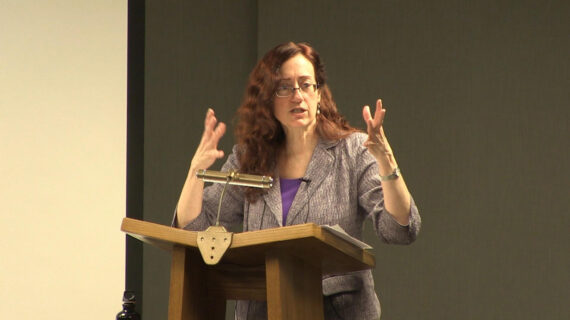
cc >> Today we are pleased to introduce and host Pat Ehrenberg's presentation on Civil War quilts and stories as a part of the Wisconsin Historical Museum's History Sandwiched In Lecture series. This presentation is in conjunction with the Wisconsin
Art Board's Wisconsin Folks
Masters of Tradition exhibit at the Dane County Airport. Pat has been making quilts for almost 30 years, and several years ago started a quilting guild in Ripon called the Sew Happy Stitchers. The opinions expressed today are those of the presenter and not necessarily those of the Wisconsin Historical Society or the museum's employees. Please join me now in welcoming Pat to the stage as she shares her knowledge and stories of quilts during the Civil War.
APPLAUSE
Art Board's Wisconsin Folks
>> Thank you, thank you. I'm just really pleased to be here today with such a nice, big crowd. I know our time is going to go by really quickly, so I just want to show you quilts and talk about quilts. Do we have quilters in the crowd here? Oh, yes. Yes. Okay, my main love of quilting is about quilt history and I really enjoy researching Civil War quilts and life during the Civil War and such. So I've got a lot of quilts to show you, so I'm going to hold them up and tell you what I know about them, and we'll save our questions and stuff until a little later. Okay, I have a friend that's going to be my helper here. So, the first quilt, now you'll have to excuse me, you quilters will understand this, that some of my tops are not quilted because they're fairly recent pieces. Okay, this is the right way up. So, this quilt is a very large quilt, and just looking at the fabrics, typically Civil War fabrics were darker, sort of muted colors to a certain degree, and I will touch on that a little bit later, but this was kind of a typical style during the Civil War and before that where it started with a medallion in the middle and then borders were built around that to make the quilt bigger. So, this piece in the middle actually was a pre-made panel that I found that was a reproduction piece. And then I just designed the rest of the borders to go around it. But very typical blocks of that time would have been flying geese. For you people who are not quilters, some of this terminology might be foreign to you. But this is a flying geese unit. The eight-pointed star was very popular. And these stripey sort of fabrics were also quite popular fabric of the time. This is the kind of quilt that women probably would have made as a fund raiser because back then when the war broke out, they did very much the same thing that we, as quilters, do nowadays where we have craft fairs and fund raisers to earn money for a cause. And they would tend to make their fancier quilts as fund raisers to earn money to buy supplies for the soldiers or money that went to pay for the gun boats that were needed during the war. And the women of the north were more likely to be familiar with that sort of thing, the fund raising and making things for a cause, just because of their lifestyle, but the women in the south were a little less likely to know how to do that because generally they had their slaves do things for them and they weren't in tune as much to doing these things themselves. But, eventually, they did get on board with that and made quilts to sell at fairs. Another thing that they also made were quilts to give to the soldiers that had gone off to war. To start out with, mostly they gave their family quilts to their soldiers to take off to war. And, eventually, those wore out or were used up, and so then they had to start figuring out a way to make quilts to send to the soldiers. So, this quilt right here is typical of what a soldier's quilt would have been like, and you'll notice that it's a long, narrow type of quilt. The reason for that is there was an organization that came to be at that time called the Sanitary Commission, and what their job was to implement women to help the soldiers, and one of their requirements was quilts for the soldiers. And they were asked to make the quilts four feet wide by seven feet long because that was the typical size that would have fit on a cot. And it also was a good size for rolling and carrying in a bedroll or a backpack as they marched along. It was a good size for that. So this typically would have been the type of quilt that they made with just odd blocks that they had left over from other projects that they just put in there. As the war wore on, I think this probably would have been too fancy, that they wouldn't have had time to do this anymore because it's estimated that there were, like, 250,000 quilts that were made during the Civil War for the soldiers, and there just wasn't enough time to do all this piecing. So, eventually, they used their draperies and their carpeting and anything that they could get their hands on and made anything for the soldiers. But, originally, I think, this is probably what they did. And, unfortunately, I don't have anything authentic Civil War in my stash because Civil War quilts, especially soldiers' quilts, are incredibly hard to come by because the soldiers either wore them out and used them up or if they did come home from the war and they brought the quilts with them, often they had such bad memories with those quilts that they were destroyed, or they often were burned because they were afraid that they had disease and such in them, or the soldiers were buried with them. So, it's very rare to come across a soldier's quilt at all, let alone in good condition, let alone that you could afford to have. So, eventually, for you quilters out there, fabric became so hard to come by, particularly in the south because they couldn't get it into their ports anymore, that a yard of cotton, eventually the price jumped up to $25 a yard. So, the quilters we're complaining now about the price of fabric that cotton has jumped dramatically in the last couple years, and fabric that used to go a few years ago for, like, maybe $8 a yard is easily $10, $11, $12 a yard. So, if you think about their income compared to what we have and we're complaining about $12 a yard, they had so much less income than us and the fabric was $25 a yard. So it just wasn't a doable thing for most women to go and purchase fabric to make quilts. So, let's see, I'll show you the patriotic ones here. Often the ladies, okay, this one, Judy, you can help hold if you want. Patriotic quilts were incredibly popular during the Civil War, just as they are for us during election years or something like that. Now, this one is part wool on the top and cotton on the bottom, which is coming to be more of a popular trend in our day and age here that wool is getting more fun to work with. So, this one actually represents a flag with the 13 stars on the top to represent the original colonies, and then often on the patriotic quilts they would have eagles on them. And so if the eagles, they also were on arrows and they had the olive leaf with them, if the eagle's head faced towards the olive leaves, that meant that the person that made the quilt was in favor of peace. And if the eagle's head faced the way that the arrows were pointing, that meant that they were in favor of the war. Because during this time most women were not allowed a voice, they couldn't have an opinion, their social etiquette was much different than ours is today, and so a way that they could put forth a message to the public is through their quilts. So they would put signs such as that in there to make a statement on what their beliefs were. And then this star in the middle here is often called a patriotic shield. That is often seen in patriotic quilts. So that's just a small one there. This one is a little bit larger one that, again, is unquilted because I just finished this one, and I thought I may as well bring it along to show you. So, Judy, I'll let you grab that corner. Now, this one typically, because it's red, white, and blue, I don't know that the pattern of this necessarily was common, but it would have been a good quilt that they used up strips and scraps. So, you can see how the reds are a little bit more muted than what the bright Christmasy kind of reds. Different kinds of blues in there and beiges. So, that would have been a patriotic one, and then I think I have another patriotic one to show you too. So, often the ladies in the north used a lot of navy or indigo because that represented the Union. Now, this one here, okay. This one is one that I actually made, and you quilters will understand this terminology, it was a block of the month, which means that a quilt shop, you get a block every month to work on. So this quilt was designed with a special fabric that's on the inside of all of these squares here, and printed on here are emblems of the 13 original colonies. So, there's Connecticut and New Hampshire and Virginia and that sort of thing, and the blocks were designed around that state. So, it was a rather interesting piece that kind of represented the original 13 colonies, and then again down on the bottom here, you'll notice the eagle emblem and the head is facing towards the arrows this time. So that would mean that they were in favor of the war. Then on the backside here, I like to piece some of my backs. I actually found a panel that was the Declaration of Independence. So I thought that this would be a cool thing to put on the back, that it carried the whole theme through. And this little piece up here has the presidents of Jefferson, Washington, and Adams on that, and originally, that was supposed to go on the front of the quilt, but I liked the eagle thing on the front better and just this on the back. So it kind of makes a statement with that panel in there too. It was a good place to use it. Okay, let's see, what's the next pile here? Well, this is a nice big one that I can show you. This particular quilt is very typical of the type of fabrics that they would have used. And this outer border piece, they often had very large floral pieces like that. This is a quilt that when I made this I was determined it was going to have a scalloped border on it, but I really struggled with it because when doing quilts, when you do a scalloped border, there's so many things to think about. How many scallops they'll be, how deep they'll be, what you're corner treatments is going to be, and the fact that this quilt was an oblong quilt really frustrated me because that meant that it wasn't symmetrical. So, I tried for like a year to get this border to work out right, and I put it away a lot of times and finally just stayed with it and actually got the math to come out, and I'm not particularly good at math, but I'm glad that I stayed with it because I think that the scalloped border really adds to the quilt a lot. And then, on the backside, because it was such a pretty piece of fabric, I didn't want to chop it up so I just put what I had left on the backside to make a really interesting backing too. Now, someone was asking me about the quilting on my quilts. Generally, it take my quilts to someone that does it professionally. They are called long-arm quilters, and they have a big machine that they layer your backing and your batting and your top together and either have a computerized program that does the quilting on it, or they customize it because a quilt like that or like this one that's hanging up here is just a lot of fabric to handle and to hang on to and to get the quilting design in it. So, I pay people to do a lot of the quilting for me on it. So, Judy, as long as you're down there, let's just hold those up too. So, this one, another big one, this quilt is typical, again, of Civil War fabrics. And the name of this is called Prairie Suites. And if you go to the exhibit out at the airport, you will find the smaller version of this quilt. And the story behind that is that when I made this quilt, I wound up making five blocks too many.
LAUGHTER
Art Board's Wisconsin Folks
Well, when you lay a quilt on the diagonal, it's hard to kind of judge sometimes how many blocks that you need. If it's set on a straight set, it's easier to count three blocks across and four down and all the sudden you know how many blocks you need. But when you're laying a quilt on a diagonal, sometimes it's just harder to figure out. So I just made extra blocks and wound up with five too many. And because I like to piece my backs, I was tempted to put those five blocks on the back, and I was talked out of it. So I made a whole different piece that is the same pattern as this, and that is hanging at the exhibit out at the airport there. But I started with this border fabric and kind of worked my way in with fabrics that I liked and that worked, and it's a good example of the variety of what Civil War fabrics looked like. And it's heavy. Okay. So, while Judy is folding here, I just want to talk to you a little bit about different types of fabrics that are in quilts, Civil War quilts, and I brought some samples here to show you. The most popular colors that were in Civil War fabrics were indigo, which is blue, and there's many different shades of that, and madder. Madder is a dye that was made from a plant called the madder plant. And it dyes fabric in ranges anywhere from dark browns to oranges to muddy purples to depending upon what kind of fabric you're dying it with. But if you can kind of visualize like what Carhartt pants look like. When you go to Fleet Farm and you buy the work clothes that are Carhartt pants that are there, kind of that. Kind of like your color pants right there, sir. They're kind of that khaki, brownish kind of color. That color was very popular during the Civil War, and it was called butternut. And so when you hear the phrase, often when they talk about the different sides, the north and the south, they will be called butternut and blue because often the soldiers wore those sorts of clothes because uniforms were hard to come by, and they weren't all dressed in gray, as we visualize, and the other side all dressed in blue. They kind of wore a lot of what they had. So this butternut color was very common for the Confederate soldiers to be wearing. So, those were the most popular colors, as was, these fabrics are called double pinks, and what that means is that they are pink on pink. And these were incredibly popular during the Civil War. Used very much. And they stayed in style all the way to the 1900s. I don't know if we want to pass these around. If you guys want to have a better look at them, that's all right. The other two colors that were definitely the most popular during the Civil War were these types of greens, and these were called poison green. And we always joke that they called them poison green because they didn't go with anything.
LAUGHTER
Art Board's Wisconsin Folks
But they range in a wide variety of different greens, but if you would go looking for fabrics today in the fabric store, unless you were looking for reproduction fabrics, you might have a hard time finding these kind of odd sorts of greens. But they were very popular during the Civil War. And this is where they got a little bit more of the brightness in their quilts versus some of the duller sort of colors. And then the other ones that were very popular, these were called cheddars. And, again, if you went looking for fabric today, unless it was reproduction stuff, you would not find this color because it's just kind of an odd sort of color. But I always like to say that even back then they were Packer fans.
LAUGHTER
Art Board's Wisconsin Folks
That would make a good Packer quilt, wouldn't it? So I'll just pass this around in case you want to have a better look at them. And there's a variety of different prints and that sort of stuff. What was popular also was, paisleys were very popular, plaids, stripes, shirting fabrics. Now, a shirting fabric is something that has tiny little dots on it or triangles on it. If you imagine what a man's shirt would look like, that is what a shirting fabric is. So there's lots of those in this quilt. One of the other really popular fabrics was ombre prints. Now, I don't know how well you can see this, but you can kind of see the shading in it where it goes from dark to light. And these were a popular type of fabric, particularly when the ladies did applique, because it gave them the shading of different flowers, different leaves, that sort of thing. So, that one you might want to look at close up too. So, speaking of applique, I think we'll grab this one right here. So, the most popular type of block during the Civil War was often called a four blocker, meaning that four identical blocks were made and put together to make a quilt. So, this one is one that I made that is hand appliqued but machine quilted, and a very popular color combination would have been the reds and the greens on a beige background. Rarely did they have white backgrounds. White was pretty much saved for the more elite society because if you think back to the way they lived, they didn't have the washing machines and they didn't have all the things to keep their houses clean like we do today. And so beige was much more advantageous than white. So, this is a typical design of what an applique quilt would have looked like with the greens and the reds. And nothing interesting on the back for that one. Let's see. Let's take that one, Judy. Yep. This is another unfinished top. I think I have more unfinished tops lately than finished ones. But this particular quilt, whoops... The name of this quilt is just called bricks. Easy enough to figure. The reason I made this is because it's just a really wonderful showcase of all the varieties of what Civil War fabric would be. So you will see some of the cheddars and the poison greens in there. A lot of the pinks and the browns and the muddy purples. It's just a good study in what Civil War fabric looked like. Oftentimes, way back then if you find these quilts, a lot of the fabrics have faded because the natural dyes tended to hold their color better than what the synthetic dyes did, and purple often faded to brown, as did a lot of the greens faded to brown, and so sometimes I think that's where we get the conception that a lot of the Civil War fabrics were more on the dull side, the browns and the muted colors. Okay, let's see. And then I'm going to tell you about, let's see, I'll take this pile right here, some of the popular blocks that were common back then. And for you quilters, you'll get this, and for you others, it's a learning thing. This would be an example of a churn dash block. And, often, these blocks went by different names, like hole in the barn door, monkey wrench. Lots of quilt blocks have a lot of different names, but, generally, churn dash people know what that is. It was a very simple type of block, and this was a popular color combination with the pinks and the browns in it. And I think I have another one that has the churn dash in it too. Oops, I'm sorry, Judy. Other popular blocks and patterns back then, too, would have been the clam shell, the eight-pointed star, the flying geese, which are in this quilt here, the postage stamp. Some of our most traditional blocks came into being during the Civil War period. This is another little one that just has the churn dash block in it, but it's set on point so it has a little bit of a different look to it. Speaking of popular blocks, a lot of people think that the log cabin block actually was very popular during the Civil War, and actually, it became more popular after the Civil War in that they kind of think that maybe it was created in honor of Abraham Lincoln. So, more quilts were documented after the Civil War using the log cabin block, and popular ones that they used as fund raisers would have been like a silk log cabin, particularly after the war ended. These ladies had a lot of their gowns that they used, and there was no place to go anymore after the war. People just didn't have that sort of social life anymore. So a lot of them cut up their gowns and their fancy clothes and put them into quilts, and silk was a very popular one there. Speaking of silk, they had the big, puffy skirts to them, and how they got that to be like that is that they actually added chemicals to silk to stiffen them and give them that rustly sort of sound. And so, oftentimes now if you find an antique silk quilt, the silk is all deteriorating and just flaking away because it's those chemicals, those metals that they put in the silk that is making them deteriorate, and they're not lasting very good anymore, and they are very hard to restore. So, let's look at this pile down here. These are just some little ones that could be doll quilts, could be wall hangings, but fun little pieces to make. Another little one here. I didn't have so much trouble with this scalloped edge.
LAUGHTER
Art Board's Wisconsin Folks
This was much easier to do. Actually, this is a piece that I bought as a kit, and I'm usually not a kit buyer because I like to pick out my own fabrics and stuff for my quilts. I bought this as a kit and got halfway through it and realized that I was shorted about half of the fabric. And I had bought it years ago. So I guess I just had to make due with what I had. So, my quilt was a little bit smaller, and I just got a little creative with the border on it to make it special, mine. This little quilt, this is another block that was fairly popular. This is the tumbling block, and a number of years ago I made this because at our local quilt show we had a miniature category. So if you really look right in the middle inside the tumbling block here, there's little mini tumbling blocks in there. So, this was a technique that's called English paper piecing where you actually used paper as a foundation to actually piece a quilt like this together. And if you should ever find a quilt that still has the paper backing to it in it, leave it there because it's way more valuable because oftentimes they would use greeting cards, newspapers, any sort of paper that they could get their hands on as the foundation. And they often left the paper in it because it added another layer of warmth to their quilt. So, if you would find a quilt with the paper still in it, it's valuable because it dates the quilt, and that's important. So don't feel compelled to take any of the paper out of it if you ever should find a quilt like that. But this one was a challenge because there was little pieces to do. And this one I hand quilted, and a good showcase of fabrics there again. This little one, too, is just a nice little sampler quilt. Now, these two quilts are my original designs, and, for you quilters out there, if you are interested, I do have the patterns up here if you want to look at them later. The eight-pointed star is probably one of my favorite blocks to do because it's got such versatility. So this was just a little sampler to show what you could do with a specialty ruler that I use, along with this quilt here too. So, this one actually was my design in that there's 12-inch eight-pointed stars and six-inch eight-pointed stars in the middle, and then the border is what pretty much sent me over the edge.
LAUGHTER
Art Board's Wisconsin Folks
Because I was on a deadline for this quilt too, but I thought if I had to make one more star I was just going to be seeing stars all the time. But the border was still worth doing. They are little four-inch eight-pointed stars, and then in between them are the little flying geese units. And so when they get tiny like this, they're hard to do, but there are specialty products out there on the market that help us to achieve those sorts of things. I don't think we showed this one yet. And I'm watching the clock here for you guys. This one, again, this one would have been very, very typical of something that they would have done back then, and you'll see the cheddar and the indigo. Very popular color combinations. Because that cheddar is kind of bright, it was kind of hard for me to use that much of it in a quilt because it's a pretty bold color, but it works well with indigo. And, again, you'll see the repeat of the flying geese stars and the eight-pointed stars, and then just in the middle, those are just a four patch. Let's see. I'm just trying to think of something else that I can tell you before our time runs out here. One subject I'll just touch on quickly is the underground railroad. That was a very typical thing during the Civil War, of course, to help the slaves escape, but there's a lot of controversy about underground railroad quilts, and that surfaced a number of years ago with a book that came out called Hidden in Plain View. And it was an oral documentation of a woman that told about these blocks that helped the slaves to escape. And there's really not a lot of documentation on quilts that are helping slaves to escape. The most popular story probably is that if you saw a log cabin quilt with the black center hanging on a fence, that meant that that was a safe house that the slaves could go to. Well, if you really think about that, slaves ran mostly at night because that's when it was safe, and when they're running through the woods or a marsh way over here and there's a house way over there and there's a quilt hanging on a fence and it has a little square of black in the middle, it doesn't make much sense that that actually really was a sign that that was a safe house. I do think that quilts were used to signify safe houses, and that, often, the women of the house would put the quilts out on a clothesline or perhaps on a roof, and any kind of quilt that was out, may have signified a safe house to go to. But actual blocks themselves, not so sure about that. But we like to, actually it's kind of unfortunate in that they are teaching that concept to kids in school as part of Civil War history, and it's really just kind of a fabrication of what people have twisted the story to be. So, there's really not a lot of fact to go with that. So, I guess I'm looking at the clock here, and our time is getting short here. So, I know it went very quickly, but I hope you enjoyed looking at the quilts, and when we have more time, I can tell you more Civil War things. So, I'm glad you came and spent your lunch hour with me, and come back again.
APPLAUSE
Search University Place Episodes
Related Stories from PBS Wisconsin's Blog


Donate to sign up. Activate and sign in to Passport. It's that easy to help PBS Wisconsin serve your community through media that educates, inspires, and entertains.
Make your membership gift today
Only for new users: Activate Passport using your code or email address
Already a member?
Look up my account
Need some help? Go to FAQ or visit PBS Passport Help
Need help accessing PBS Wisconsin anywhere?

Online Access | Platform & Device Access | Cable or Satellite Access | Over-The-Air Access
Visit Access Guide
Need help accessing PBS Wisconsin anywhere?
Visit Our
Live TV Access Guide
Online AccessPlatform & Device Access
Cable or Satellite Access
Over-The-Air Access
Visit Access Guide




Follow Us