

 Passport







Children Are Not Colorblind
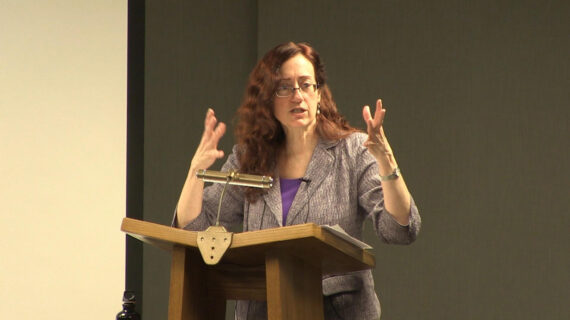
Erin Winkler is the Associate Professor and Chair of the Department of Africology at the University of Wisconsin-Milwaukee, where she also serves on the advisory boards of Childhood and Adolescent Studies, Ethnic Studies, and Latin American, Caribbean, and U.S. Latino-Latina Studies, and is affiliated faculty in Urban Studies and Women's Studies. She earned her PhD in African American Studies at the University of California-Berkeley, and was a post-doctoral fellow in African American Studies at Northwestern University. She is the author of the book, Learning Race,
Learning Place
Shaping Racial Identities and Ideas and African American Childhood. We are very, very lucky to have her here with us tonight, and thank you for all of your collaboration on this project. I hope all of you enjoy the presentation and thank you for being here. Thank you, thank you.
Well, I really need to thank all of you for being here tonight. I really appreciate it, I know sometimes, even when you get announcements about things, and they sound like something you might be interested in,
by the time Tuesday night at 6
30 rolls around, you're not sure about going out, so I appreciate you for being here this evening. So the title of my talk for tonight is-- it's on three different screens here--
is Children Are Not Colorblind
What Young Children Understand, When They Understand It, Why It Matters, and What It Means for Talking with Young Children about Race and Racism. So, for today, this is what you're getting into, at least from me. I want to take about an hour for me to talk, and then we'll spend the rest of the time on question and answer. So, for my talk, I want to talk about, first, how ideas about race form...
different kinds of ideas about race, what children learn and when, why they learn certain things at certain times, why all of this matters, and finally, what you can do as parents, educators, and adults in young people's lives. So, I was already introduced, but like Stacy said, I'm the Chair of the Department of Africology at the University of Wisconsin-Milwaukee, and sometimes I do get questions. What is Africology? It's basically the study of issues facing people of African descent all over the world, and it's also a shorter name for African, African Diaspora, and African American Studies.
So, I do research on how young children develop their ideas about race and their racial identities, as well as how they cope with and negotiate racism and racial inequalities in their everyday lives. And I grew up in Ann Arbor, Michigan, which thinks of itself as a liberal college town, and which generally sort of pats itself on the back for being very diverse and open-minded. You may know cities like that. However, growing up, I witnessed a great deal of racial inequality and discrimination, in school and around town, and so I was always really perplexed by the inequality that I saw growing up, and especially racial inequality, and I felt extremely disempowered by the fact that the sort of dominant narrative that I was learning in school, about colorblind meritocracy and everyone has a chance if they work hard enough, were not jiving with the experiences that I was seeing around me with different groups of friends and things like that.
So I was very interested in studying issues of racial inequalities, and so, as part of that, I got interested in studying, well, how do people develop their ideas about race in the first place? Where do these ideas come from? And so part of what I wanted to study in my work is, how do ideas about race, many of which are racial stereotypes, come to be? So, if we were to make a list of racial stereotypes tonight, which I'm not going to make you do, I sometimes make my students do, they think, "What is this crazy lady making us do?" So they wouldn't have to be stereotypes that we believe in or that we think are true, but we do know that racial stereotypes exist, and we've heard many of them, okay.
And so we actually would not have trouble making a long list of racial stereotypes, about white people, about black people, about Native American people, about Latinos and Latinas, about Asians or Asian Americans, about Arab Americans, we could make such a list, and there would be long lists for each. And one thing that would tie them together would be that they would be dehumanizing, right? They would judge what people are like, what they're good at, based on just simply a racial category, okay? So they would have that in common.
But they would not be entirely equal, right? They would be unequal in terms of how harmful they are for people's life outcomes, say, if a person were looking for a job or housing. And what I mean by this is, a stereotype, if there were a stereotype about me as a white person that I had no rhythm, or I can't dance, or I'm uptight, or I'm bossy, those things are less likely, or unlikely, to have an impact on whether or not my teachers see me as capable of learning, whether or not I'm judged as intelligent, whether or not I'm likely to have access to safe housing, and things like that, whereas racial stereotypes about groups as being criminal, lazy, unintelligent, not caring about school, not having good English-speaking skills, being illegally here in the United States, things like that, those kinds of racial stereotypes are very likely to have an impact on learning, access to safe housing, access to medical help, life outcomes, those kinds of things, right? So the first thing that I want us to think about, and don't worry, there's only three, in terms of ideas about race in general, and racial stereotypes in particular, is that they are not all created equal.
So that's the first thing. The patterns that we see, although there are stereotypes about all groups, and although they're all dehumanizing, and although even quote-unquote positive stereotypes are actually negative, right, in our thinking, we have plenty of good research on that, that stereotyping even when it's a positive stereotype
is negative in two ways
one, it's dehumanizing, people don't like being judged based on their racial group, regardless of whether or not you think it's a positive stereotype, but two, when we engage in stereotyping of any kind, it primes our mind to do that, right? It sort of tells our mind subconsciously that it's okay to do that. So even quote-unquote positive stereotypes have a negative impact on our thinking about race. Okay, but we also, another thing that we see in terms of not all stereotypes being equal is that we see a privileging of whiteness, okay?
So while there are racial stereotypes about all groups, and while they can all be hurtful, they are not all equal in terms of how they impact life outcomes. So, children see these stereotypes in their everyday lives as well, so they get these ideas, both subtle and overt, about different racial groups, even if it's not being explicitly stated to them. So they see these kinds of ideas through media, through, perhaps, neighborhoods in which they live, through stores, through school, through textbooks, and more. So even if adults are not explicitly sharing ideas with them, these ideas are in the air and in the environments in which these children function.
So that's the first thing I want us to think about, in terms of ideas about race, that not all-- although there are stereotypes about all groups, they're not all created equal. The second thing I want us to think about in terms of ideas about race is the way in which race gets falsely naturalized. So, what do I mean by this? Well, in contemporary U.S.
society, ideas about race are often consciously or unconsciously thought of as natural, just the way things are, right, common sense, okay? So the attributions of behaviors, what people are like, what they're good at, what they're not good at, strengths and weaknesses, this often gets treated as common sense, and what this means is that it can become part of our unconscious thought. But actually, race is not natural, right? Race is something that we construct as societies, and that's why what we think of, what we call black, for example, in the United States, is not the same as what is called black in the U.K., is not the same as what is called black in South Africa, is not the same as what is called black in Brazil, and that's because societies construct racial categories based on their own social, political, and economic histories, right?
So, race is something we construct, and what that means is that our ideas about race are also social understandings, and those are things that we create and learn. So we have to disrupt the notion of, that's just the way it is. So, that's the second thing. First, all stereotypes are not equal, and second, race becomes falsely naturalized.
So here's an example of this, right? Here, now, this was just, we just had the 10-year anniversary of Hurricane Katrina and many of you may be familiar with these images, but these are images from newspapers the day after Hurricane Katrina, the day after the levees broke, so this is August 30th, 2005. And what we see here are newspaper images of two sets of people engaging in the same behavior. So, they're in New Orleans after the flood, they need things to survive, so both are going to a store, the store is not open, they can't pay for stuff, they're taking stuff out of the store that they need.
But as you can see by the circled text, if it's not too small, right, the newspaper on the top is describing the African American individual engaging in the behavior as looting, and the newspaper on the bottom is describing the white, or light-skinned, people engaging in the same behavior as finding, right? So this is just an example of the ways that things that white people do get seen as normal, or portrayed as normal, while things that black or brown people do gets sort of othered, okay? So that's an example of this false naturalizing of behaviors. Now, I was working with a preschool that was being very proactive in-- it's not the Preschool of the Arts, that was being very proactive in addressing racial issues in their school, they gave me some scenarios of things that had come up that they would like to discuss, and they gave me this list here, right?
They were working very hard, and I noticed that all these scenarios, when they were talking about the children of color, they identified them as children of color. But when they were talking about white children, they just identified them as children, right? So this is an example of a way in which whiteness can get sort of subconsciously normalized even in a context where they were working very hard to address issues of race, right? Now, this is also a situation where the race of the children in the scenarios was very relevant, right?
It was part of what we were talking about. So I want to be clear that noticing race, right, noticing race is not the problem. So normalizing of whiteness should be distinguished from being colorblind, right? It's not a problem to notice race, especially in conversations where it's important and relevant, right?
The problem is the othering, or the exotification, right? The othering of behaviors. Okay, so, I'm not saying you should be colorblind, in fact, quite the opposite, but I'm talking about the sort of normalization versus othering. The other thing about this sort of false naturalization is that one way that this happens is through the normalization of whiteness.
Now, this is actually a concern I brought up with the organizers about the title of the event. I was a little worried when I heard that the title for the series was Why Are You Brown? I thought that his maybe presumed a white lens, right, that it would be from a white perspective, that it would be a white child asking, "White, "well, being white is normal, why are you brown?" Right, but they were very clear with me that they were interested in asking provocative questions that might bring in a little bit of discomfort and that adults might say, "Well, "how would I answer that question "if a child asked that?" And I want to be very clear that is actually a very normal question for a preschooler to ask, but it's also just as normal for a child who identifies as brown to ask, "Why are you white?" or "Why are you pale?" So I just wanted to disrupt our notions of who's the asker in these kinds of situations, what's normal and what's othered. And same as with these scenarios that I had up there a minute ago.
Let me go back to those. If you are a person with young children, or you work with young children, I imagine that some of these scenarios might look very familiar to you, right? And all of these questions, all of these experiences, as well as the question, "Why are you white?" or "Why are you brown?" or "Why is your skin x color?" right, are actually very, very normal developmentally for preschoolers, So we'll get back to the content of those questions later, but I just want to point out that a time in children's lives that we are asking them to categorize all kinds of things, shapes, colors, animals, we shouldn't be surprised or traumatized when they're working on also categorizing people. So what I am not saying is that children are little bigots and racists when they ask these questions, I am not saying that.
Quite the opposite. What it does mean is that these are the beginnings of their forming their ideas about race, and how we respond is going to be a big part of how those ideas end up forming. So, often, adults aren't sure how to answer, or if they're embarrassed, they may shush children or silence children, which is sort of the very worst thing that we can do in terms of their racial thinking. We often think, "If I say something "about race, I'm just going to put ideas in her head.
"Let her be innocent a little bit longer, "let her enjoy childhood, "and we'll get to that a later time." In fact, quite the opposite is true, right? Actually, you're putting ideas in their head by not saying anything, so we'll get to that in a moment. But now I'm off track, let's get back to stereotypes about race. So we had, one, not all stereotypes or ideas about race are created equal, two, race can become falsely-- or is falsely naturalized frequently in the United States, and then three, the last thing I want to say about stereotypes about race, is that they are not based in reality but in the perceiver's beliefs.
Now that's psychology talk for you there, I must apologize, perceiver's beliefs, right? But what this mean is that, I often hear, well, all stereotypes are based in a kernel of truth, right, all stereotypes have a little bit of truth in them. But actually what psychologists tell us is that's not true. We find stereotypes when we're looking for them.
Okay, so when I'm the perceiver, and I believe that all people in a certain group act a certain way, I'm looking for that kind of behavior, and in fact, we have very good evidence that, if I see that behavior in someone, I do what's called generalizing. "Ah ha, I told you they were like that," right? But when I see an equal number of individuals engaging in an opposite behavior, I'm quite likely to do what we call exceptionalism. "Well, he's just not like the rest of them." Okay, and so these are the ways in which stereotypes are in the perceiver's belief.
They're not based in truth, they're in what we've decided. And so when we've categorized someone and when we have a stereotype about that group, we're looking for behavior that confirms it. And, in fact, even when we see behavior that disputes it, we're likely to explain that away. So I was curious about this as a researcher, how did these beliefs come to be in the first place?
So I set about looking for, when do these ideas start? So I started with adults, and then I went to teenagers, and then I went younger and younger, and I had to go very far back to see when children first begin developing ideas about race. So let's talk a little bit about what we know about what children learn and understand and when. First, we know that infants can categorize people by race by three-to-six months.
The reason I'm saying three-to-six there is that that '97 study I have cited there had found it very solidly at six months, but they only looked at, they started at six months. So then, these later studies you see cited there, studied three-month-olds, and in fact saw it there too. Now, you may be saying, how is a three-month-old telling you that they understand race? So, clearly the infants are doing this non-verbally.
The way these tests are done are, how long infants gaze or look at a new face, a face of a person whom they don't know, who's unfamiliar to them, who has the same race or skin color as their primary caregiver, and a new face of someone who has a different skin color of their primary caregiver. Now, of course, that gets a little bit messy especially with children who have primary caregivers who are different races, and so generally in these studies, they're looking at households where everyone in the household identifies as the same race, so I just wanted to explain that. So then we know that two-year-olds are using racial categories to reason about people's behaviors, and then we know that three-to-five year olds are in fact expressing bias based on race. I should stop here, because I know you see that I have long lists of citations.
That's because I want you to know I'm not just making this up, but I haven't put the full citations on here, that can be something that Brianna can send out as part of the electronic resources, if you're interested in reading these studies yourselves. In a study that followed approximately 200, a little more than 200, African American and white American children from the ages of six months to six years old, Katz and Kofkin found that infants are able to non-verbally categorize by the age of six months, right? And they were certain because it was so clearly happening at six months that it probably happened earlier. And in fact, we do have those studies now, later, showing that it does happen earlier.
Okay, so what does this mean here? Right, I'm telling you that three-to-five year olds are expressing bias based on race, so I feel like maybe this is the second time tonight it sounds like I'm saying, children are little racists. So that's why I want to talk a little bit about the difference in some of these terms. We often hear, in popular culture, the terms categorize, stereotype, prejudice, and racism used interchangeably.
Well, we do not use them interchangeably in psychology, and usually, generally, in sociology, the social science field. So I wanted to talk to you a little bit about the differences between these terms and the way that I'm using them. So, first, categorization, right? Categorization is a natural process.
Again, we're asking children to categorize all the time, okay? So categorization just means, when you notice a person, you put them into a category. Now which categories into which you're placing them is largely socially defined, right? So when we're talking about racial categorization, it has to do with where you grew up, in what context, and how, for example, in a U.S.
context, we define race and we define racial groups. Now, this is done subconsciously, all day long, and, in fact, frequently, the only time it actually comes to consciousness is when your subconscious is having trouble categorizing someone, right? And that's when it can come to consciousness, because it's not happening automatically, right? And I'm sure people, many people in this room, and many people who have had experience with this, if other people see them as ethnically or racially ambiguous, they get asked, "Well, what are you?" right?
And they know what that question is, they know what that question is directed at, right? It's directed at their race and ethnicity. So we are doing this categorization frequently subconsciously, right? That becomes stereotyping when you add, I'm calling it here cultural baggage, but you could say, basically, cultural presumptions, right?
So it's not that you notice that I'm a woman that's the problem, it's when you then presume that I'd be too emotional to be a strong leader that it becomes a stereotype, right? So it's not noticing that someone belongs to a group, gender, race, or otherwise, but it becomes stereotyping when then there is a presumption about what they would be equipped to do, what they would like, what they would dislike, those kinds of things, right? Then it becomes a stereotype. Now, when we add to that what we call in-group bias, what that means is simply, it's not only that I'm judging, it's not only that I'm adding a presumption to the category, but that I'm presuming that my group's characteristics are better than your group's characteristics, right?
That's when it becomes prejudice, okay? So it's when my group's way of doing, what I presume my group's way of doing things are, are better than whatever I presume your group's way of doing things are, okay? And it's only when we add to that group's social power that we talk about racism, okay? Now, this is not about individual power.
This is about which groups in society have the power so that their presumptions or prejudices, their ways of viewing the world, are the ones that get normalized, through media, through legislation, through curriculum, through textbooks, all right? So the idea is, any group could have the power to have prejudice, to think their way of doing things was better, or natural, right? But it's only once there's power to sort of normalize that through these broader social structures that we talk about that structural racism, okay? So I'm not saying that children are doing this, right?
We're talking, but what we are saying is that children can categorize and show in-group bias by the age of three-to-five. So what's going on here, right? Well, one thing we often think is that, "Hey, someone mus be saying something to them at home." So when we hear children expressing biases, we often think, "Well, where did she hear that? "Because she didn't hear it from me." Right, and often there can be a battle between teachers and parents, teachers thinking, "She must have learned that at home," and parents thinking, "She must have "learned that at school," right?
But actually, and perhaps surprisingly, studies show that children's racial beliefs are actually not significantly or reliably related to those of their parents. So if it's not adults directly teaching children these things, what's at work? Where are ideas coming from when we hear children expressing racial bias at this age? Well, I want to talk about both internal factors and external factors.
And so, by internal, I mean biological and cognitive, what's going on with them developmentally at this age. And by external, I mean environmental and social factors. So first, kids at a preschool age have still-developing, immature cognitive structures, right, so one of the things about those particular structures is that, while they're often able to categorize people by race, they're often not able to categorize them by multiple dimensions at once. And so they engage in something that we call transductive reasoning.
Do you remember the transductive property? Right, remember if, like, if A equals B and B equals C, then A equals C? Does that sound familiar, right? So that's why we call it transductive reasoning.
The idea is that if they see people who are alike in one dimension, such as skin color, then they engage in transductive reasoning and presume they're alike in another category, for example, abilities or intelligence. So this is where we might see kids saying things like, "Well, Mommy's nice, and she has light skin, "and I'm nice, and I have light skin, "so light-skinned people are nice," right? So that would be an example of transductive reasoning that we're seeing happening at this age. But that doesn't explain everything, right,
because the question becomes
why race? Why skin color, right? Why not height? Why not left-handedness?
So these internal factors don't explain everything, and that's where the external factors come in. So, society tells children that race is a social category of significance. So let me give you an example. Rebecca Bigler and her colleagues at the University of Texas-Austin have found that young children learn from their environments which categories seem to be the most important, and then they attach meaning on their own.
So they are learning from us, as adults, which categories seem to matter. But they don't need us, as adults, to tell them what presumptions to make about those categories. They will attach that meaning on their own. So, in another study, Patterson and Bigler found that even an innocuous statement like, "Good morning, boys and girls," can make children, increase prejudice in children about gender.
So they did a study in a preschool where they had a control group and a test group. And in one of the classrooms, they had the teacher use that greeting, "Good morning, boys and girls," right, and in another one of the classrooms, they had the teacher use a gender neutral greeting. And what they found is, at the end of their study, the children in the classroom that had the gendered prompt were showing more gender bias than the children in the classroom that had the gender neutral prompt, and they were attaching the meaning on their own. So they had ideas by the end of the week, they were showing more bias by the end of the week, "Girls are smarter," "Only boys can be president," right, these were some of the things that were coming out, and these were not things that the teacher had said to them, right, and so the researchers argue that what they're learning from us are which categories are important, to which categories adults seem to attach meaning, and then they are reasoning about those on their own, right?
So children can also learn about which categories seem important by observing their environments. So they're likely to notice that people in the their family or neighborhood are all different heights, and have all different hairstyles, but perhaps all have same skin color, or most have same skin color. Therefore, a child may assume that she should avoid or dislike people with different skin colors than her own, even if no adult tells her that, right? It's sort of the take-home message from her environment.
She's seeing that it doesn't seem to be height or hairstyle or left-handedness or all these other things that she can categorize people on, it seems to be race that is deciding who is where, for example, right? And children may notice, if they're going to the store or the doctor's office or school, who is in what kinds of jobs or positions. They may notice if they ride the bus through various neighborhoods that skin color seems to have a lot to do with who lives where and who is in what kinds of positions, but height, for example, doesn't. So these patterns call, what Bigler and her colleague Liben call, a cognitive puzzle for children to solve, right?
Children at this age, the whole world is their cognitive puzzle, they're trying to figure it out. And so when they notice patterns, if they're not getting explanations for why these patterns exist, they often infer that these are norms or rules, that this is how it should be, and in fact that there must, these things must have been caused by meaningful or inherent differences between groups, and so this is why, although it can seem counterintuitive, our silence about race can in fact, and does in fact, increase prejudice, right, because children need us to explain to them what's going on, and why they're noticing these patterns. So let's talk about this a little bit more. So we're talking about both these internal factors, in-group bias, and external factors, societal norms.
Okay, so Katz and Kofkin followed 200 African American and white children over six years. Right, they started at six months and they went through the age of six. Now, talking about in-group bias in particular, in this group, they found at two-and-a-half years old, all of the children were showing in-group bias. So in-group bias is a psychology term, but it basically means that we tend to have a bias towards the groups of which we are a member.
And there are so many studies showing this. There's studies showing that if I put you in groups right now, within 10 minutes, you'd think your group was better than the other groups, okay? So, but, we can see this for, also for things like social categories, okay? Gender, race, sometimes if you meet someone who has the same birthday or the same middle name as you, you all of a sudden like them more, right?
But here we're talking about in-group bias, particularly around a race, so how did they test this? Well, with the two-and-a-half year olds, they gave them photos of children who they didn't know, they weren't children from their own school or anything, but they gave them same-race children and different-race children to choose from. So, who would you like to be your friend, right? And, at two-and-a-half years old, both the black and white children, by and large, not exclusively, but mostly, are choosing same-race potential playmates.
Now, just six months later, by three years old, a significant majority of both the white and the black children were showing a pro-white bias, meaning, more likely to choose potential white playmates. By five years old, in the study, the pro-white bias was holding, but it was decreasing. Now, because that study was in 1997, I don't want you to say, "That's too old." So I have a newer one for you here, too. Lam and his colleagues found very similar study in 2011, and they did this in suburban London.
So, very similar findings, especially around age four, although they also found them at age three. So, what explains this? Well, the authors are arguing that this has a great deal to do with how society is seeping in, right? They're hypothesizing that at two-and-a-half years old, because of the things we talked about, the cognitive structures, right, the children are sort of having this transductive reasoning and thinking, "I want a friend who looks like me, "because I'm nice, so they must be nice," right?
This would not have changed by three-years-old, but what they think is starting to seep in is messages from society, because remember, the white children are not going away from their in-group bias, in fact, we rarely find studies where white children show anything but a pro-white bias, right? What's changing in this study is the African American children also, at this age, and it does go down with age, right, but at three years, significantly also showing a pro-white bias, right? And so what the authors argue is that this is where that normalization of whiteness and in fact more than normalization, privileging of whiteness in the broader society, may be seeping in, right, from images in books, from images in Disney movies, from those kinds of things, right, that that societal message about whiteness being better may be seeping in. Why do we see it decreasing at five years, and although their study stopped at six years, I can tell you that we also see it decreasing as children get older, for children of color, right, it doesn't decrease for white children, but we see that pro-white bias decreasing, right?
What might be happening? Well, this sort of external influence of the normalization or privileging of whiteness is why families feel they have to fight back with what psychologists call racial socialization. Now, this will not sound like a surprise to many of you, I'm sure, but racial socialization is a term that was coined in the mid-80s to talk about, by psychologists, but it's been going on in real life much longer than that, to talk about strategies that particularly families of color in the United States use to rear competent and effective children in a society that's largely stratified by race. Okay, so if I'm raising children in a society that is telling these children that they are less than, I need to actively work against that current.
Okay, so, this is something that we know is happening, and we understand why it is happening. However,
two things
one is that we know that, actually, racial socialization, at least active, verbal racial socialization, is more likely to happen much later, not until more like ages seven, eight, nine. And we also know that active, verbal racial socialization in white families is even less likely and happens later, if it happens at all. And I'm generalizing here, right? So the question becomes, is it too little too late?
Right, so moving back to preschoolers, we do know that black, Latino, and Asian American and Native American parents are more likely than white parents with their preschoolers to talk about racial identity and culture, so this would be things about your heritage, where you come from, cultural practices, right? And these can be used in an anti-racist way, but the focus tends to be more on racial identity and culture. What we don't see in either families of color or white families, to a large extent, at all with preschoolers is talking about racial inequalities. So, in other words, what we think to see, we see, is that we are generally more comfortable, generally more comfortable talking to little kids about racial identity and culture, which sort of feel friendlier and less scary, than we are talking with children about racism and racial inequality.
And other studies confirm this as well. So, why are parents avoiding this? Generally, what we know from research is that they think their children are too young to understand, or they're worried about scaring them or making them feel like victims, right? But, from psychological research, we know that children are already developing their ideas at this age, and so, if parents aren't talking, or adults aren't talking to them about these things, does that mean that children are delaying the development of their ideas about race?
No, actually, quite the opposite. They are still observing the world around them, they are still trying to solve that cognitive puzzle, and they are still filling in the gaps that we are leaving with our silences. Quite counterintuitively, right, we often think that if we're silent, we are preserving their innocence, we are not filling their minds with ideas about race, we are letting them have more time as children, but in fact, despite our best intentions, we are, in fact, in some ways increasing their prejudices, because we're allowing those ideas, them to develop those ideas, complete their cognitive puzzle without the more complicated explanations from us about why they're seeing things like segregation and inequality all around them. So why does this matter?
Well, it matters for a lot of reasons, and we don't have time to talk about all of them tonight. It certainly matters for society, right, because children's ideas about race develop into adults' ideas about race, often subconsciously. And when that happens, those ideas can justify and reinforce current social hierarchies, right, and so if they are trying to fill in their cognitive puzzle by using transductive reasoning, and applying it to what they see around them, their explanations will actually often lead to rationalized in-group bias and victim-blaming, right? So this is something that would perpetuate racial inequalities.
It also matters for individuals, in a lot of ways. A few of which we know of are things like self-esteem, mental health, and academic engagement and achievement. And because we don't have time to talk about all of these today, because I know you have questions, I'm just going to take that last category here, the example of academic engagement and achievement. So I want to give a few examples, just a couple, and there's 10, of how children's racial identities and ideas about race, and the racial socialization they receive at home, impact academic engagement and achievement.
So I'm going to give two examples. So the first is that we have very good research that shows that colorblind approaches actually increase racial bias in schools. So there was a study done at Northwestern University in 2010, with eight-to-11 year olds. So this is a little older than we're talking about here.
And they were given a lesson, and there were two different groups, right? So there was a colorblind version of this lesson, and then there was what the researchers called a value-diversity version of this lesson. The different groups of children got different storybooks that were the same story, the same plotline, but one was written in sort of a colorblind way, and one was in a value diversity way. So here's an example of what the colorblind version
would have said
"We need to focus "on how we are similar to our neighbors "rather than how we are different." Doesn't sound bad, right? But in fact, it turns out that it's negative for children, it increases their bias.
Here's what the value-diversity version sounded like
"We want to show that race is important "because our racial differences make us special." So here's what happened. The different groups of children had different lessons in these two different styles, and after they completed the lessons, the students listened to three stories featuring various degrees of racial bias, and I want to read this to you so that I get the details correctly. So, first they heard a control story, in which a white child was marginalized by his white schoolmate's contribution to a science project. So that was supposed to be sort of the control story, where race didn't really come into play.
Then they had an ambiguous story that they heard where a white student excluded a black student from his birthday party, but we aren't really sure, it wasn't clear whether or not it was due to race. And then they heard a third story that had very clear, explicit racial bias in it, in which a white student engaged in an unprovoked attack on a black student at a soccer game. So after the stories, the students were asked to explain the stories, what happened in the stories, and their answers were video-taped. And what the scholars found was that the students who had received the colorblind prompting and lesson beforehand, when they heard those stories, they had trouble recognizing not only the subtle racism as possibly a problem, but in fact, they weren't even able to clearly identify the explicit racism.
So fewer than half of the students who had been prompted in the colorblind way were able to identify explicit racism, and only 10% of them were able to say that maybe there was a problem going on in the more ambiguous story, right? And it was quite different for the students who had had the value-diversity version of the storybook. More than three-quarters of them were able to identify the clear racism, and more than half of them were able to identify that perhaps in the ambiguous story, there was something going on that wasn't quite right. And so, what the authors argue is if we can't identify racial bias in ourself or in others, we can't address or reduce it.
And so if we rely on colorblind statements, even seemingly innocuous ones like, "We should like, we are the same as our neighbors," right, what it teaches children is to actually not be able to identify racial bias where it is happening. It's very counterintuitive, because we have well-intentioned engagements in sort of colorblind or even surface multicultural kind of lessons, right? So when children do tend to get multicultural education at school, it is often something like, "There used to be racism, it was really, really bad. "Martin Luther King and Rosa Parks came along.
"We are so lucky, aren't we so lucky that they did. "They fought for us, and now look, "today things are much better," right? It's very well-intentioned, but the takeaway message for children is, oh, that used to be a problem, it's all handled now, now everyone is equal. Right, these kinds of messages, everyone is equal, which we understand as adults what we're saying when we say that, the takeaway message for children is, "Oh, well, then any remaining racial inequality "I may see around me must be those peoples' fault, "because Martin Luther King took care of that," right?
And we may not see it that way, because it's well-intentioned for us, but in fact, that kind of surface multiculturalism has the unintentioned result of increasing biased thinking in children. Another example of a way in which these kinds of issues can impact educational outcomes for children is the example of stereotype-threat. And I'm sure some of you have heard of this. Yes, you've heard of this, okay.
We won't spend too long on it, don't worry. This is a psychologist named Claude Steele, and now I'm gonna, I think he's at Berkeley now, but when he started this research, he was at Michigan, and then he continued at Stanford. I'm going to tell you a little bit about both of those studies. So, basically, what stereotype-threat means is, when you're part of a group that is stereotyped, even if you know that you don't fit that stereotype, you spend some of your brain power worrying about the fact that people are stereotyping you, okay, often unconsciously.
Okay, and the irony of this is that it then completes cognitive resources, which leads to underperformance. So, for example, let's say that one of the stereotypes they studied was women and math. So what they're arguing is that, if I'm a woman, and I am good at math, but I know that people think women aren't good at math, some of my cognitive energy when I'm taking a math test is going to worrying about whether or not I'm going to fulfill that stereotype. An irony is that then I don't do as well on the math test, right?
Okay, so they look at this in many different contexts. The two I want to talk about today are the quote-unquote achievement gap, the racialized achievement gap in the United States on standard tests, and also the aforementioned example of women and math. Okay, so let me tell you how they did this, right? They looked at standardized tests like SAT or the GRE, and they knew that these tests had a reputation for measuring, like, how smart you are, right, or how good you are, or something, whether or not you're smart enough to go to a particular college, right?
So first they did an experiment with male and female college students at the University of Michigan, and these had to be students who were already really doing very well at math. So they had to have math SAT scores in the top 15%, and they had to be earning a B or higher in college calculus so they already had to be doing well in math in those ways. What they found is, when they gave standardized tests, the women were still underperforming men, even under these circumstances. So here's what they did.
They had a test group in which experimenters worked to remove the threat for women, and here's all they did, before they gave women this section of the math exam, they said, "You may have heard that women "don't do as well as men on standardized math tests, "but that's not true for this particular test. "For this particular test, women always do as well as men." And what happened? The gap disappeared. That was all it took to remove the threat and the gap disappeared.
So they thought this is too good to be true. So they tried it again, and it's been tried many, many times since here. They did another one, this time at Stanford, and here, they were looking at the issue of the racialized achievement gap. So here they did an experiment with black and white college students at Stanford, and here they used the verbal section of the GRE, or Graduate Record Exam.
And again, in the control group, they were finding, from the initial test, they were finding that black students underperformed compared to white students. However, once again, the gap entirely disappeared when they were able to remove the threat.
And here's what they did to remove the threat
they told the group, the test group of African American students, that the test was just a task for studying problem solving in general, and they emphasized that it did not measure intellectual ability. After that, the gap was disappeared, the black test-takers performed just as well as the white test-takers. So there are a lot of cognitive strategies that people use when they're the targets of prejudice, when they know that their group is stereotyped, right? And one of those is what Steele and his colleagues call disidentification or disengagement, right?
So this is when one disengages one's self-esteem from an area in which they know their group is stigmatized, okay? So here's an example where I say, "I love math, I'm good at math," and then I become aware that women are stereotyped as not being talented at math. And so what do I do to sort of defend myself against that threat is simply say, "I don't care about math, who cares about math, "math is stupid, why would I care about math," right? So I'm reconceptualizing my self-identity so that it doesn't involve math, so that no matter what happens in math, I can still feel good about myself.
Now, what this means is that, I know that my group is stereotyped in this domain, so I don't care about this domain. Now, while that may protect my self-esteem, right, initially I was identified with the domain, I loved math, then I became aware that women weren't supposed to be good at math, so then I disidentified. It does have the effect of protecting my self-esteem, but it also, again, is going to lead to underperformance in that area. So those are just two examples of some of the many, many, many ways in which ideas about race and learning about race impact children in the area of academics, but that's just one area we could talk about.
So I want to talk a little bit about what we can do. I think the first thing, and I'm sure some of you are already there, but I think the first and most important thing is to just get comfortable talking about race, racism, and racial inequality, period. And what I mean is, if we are not able to talk about these issues with other adults, we're going to find it impossible to talk about it in age-appropriate ways with three, four, five, six, seven, eight, nine year olds or even teenagers. So, if we're not able to answer a question about, why does racial segregation exist, for example, I mean, a three year old may not say, "Why does racial segregation exist," right?
But they may say, like, "Why do these people "seem to live here and these people seem to live there?" If we can't answer that for ourselves, if we don't know the answer on an adult level, it's going to be very, very difficult, impossible, to talk about that in an age-appropriate way with a four year old, right? So the first thing is that adults need to get used to talking about this, and find spaces to talk about it if they don't already have them. I'm sure many of you do, but dedicating time on this, right? If this is something that we care about with our children, we need to really put our money where our mouth is, and our time, which I know is all of your most valuable resource, into really dedicating time to this.
So this needs to be an ongoing process, and so thinking about making a concerted effort in that way and ways in which you can support one another in that way, that's very important, and I'm sure that many of you already do that in your daily lives. The second thing is we really need to be able to talk with children in age-appropriate ways. And I think it's the age-appropriate way that we don't always feel comfortable with, and that's part of the reason, besides the fact, of course, that the Preschool of the Arts invited me here, that I decided to focus on preschoolers, right? Many of you may have children in elementary, middle school, and high school, and I'm happy to answer questions about kids in those age groups too, but part of the reason why I focus on preschoolers is because that's where parents and adults seem to be the most unsure about exactly whether they should be talking with kids about race, and if so, how they should do so.
So the answer is yes, you should be doing so. And so, when adults think that very young children don't notice or understand issues of race, they often avoid talking with children about it in a meaningful way, but the interesting thing is that many studies have shown that parents talk very freely about gender, and gender inequality, with their three, four, five year olds, so it's not that parents are not interested in talking about issues of justice and social inequality, but it seems to be that there's some unevenness here, and uncertainty about how to talk about race. Let me assure you that this does not prevent children from developing racial biases and prejudices. It just keeps them from talking about it, right?
So if children ask questions, say, about the skin color of someone they see, and if a parent's reaction is some kind of colorblind response, like, "That's not nice," or, "We don't hurt feelings," or, "We don't talk about people," right, or even shushing them, it does not teach children that race doesn't matter. It does quite the opposite, it teaches them, if you want Mom to get really worked up, ask her about race, right? And so they're noticing that this is an important category, and they're showing them that adults get very worked up about this, that it matters a great deal, and they're already getting those messages already that race is an important social factor in society, right, and so that leads to the cycle we've discussed, where they make their own conclusions, based on what they see around them, and they're not getting help from us in problematizing what they're seeing around them. So it has this, especially colorblind reactions, have this counterintuitive result of increasing racial prejudice in children.
So I want to read you a quote from Van Ausdale and Feagin, their 2001 book is a study of preschoolers in a multiracial preschool in a Chicago suburb, and they offer the following advice,
to caregivers of children of preschool age
"Don't encourage children to believe "to believe that negative racial talk "or discriminatory action is the conduct "of only sick individuals, or that it indicates "a peculiar character flaw or just bad behavior. "Talk about the fact that the social world we live in "is often unfair to people of color "simply because they are people of color, "and that persisting racial ethnic inequalities "are unjust and morally wrong. "Make it clear that racial ethnic prejudice "and discrimination are part of a larger society "that needs reform and not just something individuals do." And so, they're making the argument that when we just sort of say, "That's bad," or, "Only bad people do that," that kids think, "Well, I'm not bad, so this has nothing to do with me. "It's not my responsibility, it's over there." And we see those same reactions in adults, who will sort of think, like, "Well, if I'm not "in a white power group, I'm doing okay," right?
I mean, I'm being silly, I'm exaggerating here, but the idea is that if we just think of it as bad individuals who hate people, we are not looking at the problem how it functions, right, socially and structurally, and systemically, and then children, we're not teaching children to see themselves as part of that society and the solution to making change, and that can also continue into adulthood, where adults also don't see themselves as either part of the problem, or therefore having responsibility for making change. So one thing I want to say that's difficult to do is not to dumb down or brush over, right? Well, we do need to talk about this in age-appropriate ways, and make sure kids feel safe, right? So the psychologist Beverly Tatum, have any of you read that book, Why Are All the Black Kids Sitting Together in the Cafeteria?
Okay, so some of you may have, and Other Conversations About Race. She gives an example in there of her preschooler, or maybe, um, around preschool age, maybe kindergartener, asking at the grocery store about skin color, right, and she gives the kid an explanation about skin color, about melanin, and why we have different amounts of melanin in our skin, it has to do with from whom we descended and how much protection they needed from the sun, where they lived, and these kinds of, how much Vitamin D they needed, she gives a very good explanation, and then she thought that was the end of it, right? And so she was telling him, "Well, our ancestors "were in Africa, and they needed "more protection from the sun, "and so we had more melanin in our skin." And he was like, "Okay," and she thought they were done with it, and then he was like, "Well, if we're from Africa, why did we end up here?" right? And so here she is in the grocery store, getting into a discussion of enslavement with her five year old, and yet she's very clear that it's very important not to dumb it down, and to tell him what happened, but to do it in a way that doesn't scare him, right, so that he can feel safe.
And she handled this by saying, "A long, long time ago, "before Grandmommy was born, "before Grandmommy's grandmommy was born, "people came to Africa and kidnapped "and took people away against their will "and made them come here and work for free." But she was very clear that this was something that was a long time ago, this was not going happen to you, you're safe, you are safe here with us, right, so she was using this, but she appealed to his sense of fairness, and this is something that I want you all to use in your own lives, because if there's one thing you know, if you have young children in the house, there's a lot of, "It's not fair!" Right, they have a heightened sense of fairness, right? And so in this conversation with him, she talked with him about, "Do you think that's fair? "Right, do you think that it was fair "that people would be made to do this "simply based on their race or their skin color?" And this was something that I would argue, or I would encourage you to use as a tool in your own life, right, because I know, maybe when I was reading that quote about not just talking about sick or bad individuals, but really talking about sometime the society simply-- well, not society, young people, sometimes, people of color are treated unfairly just because they're people of color, and for no good reason at all, right? But that can be very scary to children, particularly children of color, it can be-- it can cause despair, right?
And so we need to talk about these things in age-appropriate ways, and that's where fairness really comes in. You can also talk about empowering children. And so I would ask you to appeal to their sense of fairness, but also to work on empowering them. Actively seek out anti-racist role models in your community and in the broader society, and expose young children to those role models.
I know that there are people in Madison, including many in this room, who are doing active social justice work, right? So find ways to say, "Mr. Johnson down the street is working on this, "right, let's go see if we can talk "to him about what he's doing. "Do you have any ideas of how "you can help address the unfair things "that Mr.
Johnson is trying to address, right?" One thing we know is that we as adults are not doing a great job solving these issues, right? So let's bring children in, right, let's bring children into the problem solving. They likely have ideas, excellent ideas, about fairness and social justice to which we should be learning, right? So let's get children invested in making positive change, show children that they can help and be empowered, and then, I should have switched that order of three and four, but another thing we can do is encourage complex critical thinking, right?
So we often-- there's sort of a common sense notion that racism is about ignorance, right? But what we actually know is that it's often, at least in children in studies, not just because they don't know stuff, but because of this issue of not thinking critically, right, not thinking in multiple dimensions, right? So in very young children, we can actually show them evidence that their in-group bias is incorrect, and they'll stick with it, right, because of where they are in terms of their thinking and that transductive reasoning. So one of the best things we can do at this age is try to get them thinking in complex ways, right?
So try to get them out of that transductive reasoning. So try to think to them about ways in which they, if they're doing something where they seem to be reasoning, for example, based on skin color or any other category, say, "Huh, well, let's see. "Molly seems to have the same skin color as you do, "and Molly doesn't like swimming, but you do like swimming. "So do we think that skin color "determines whether or not people like swimming?" Right, so you can sort of get them examples in their own lives that will get them engaging in that more critical thinking.
So, I think I'll stop there for now, but maybe we can get into some of, maybe some of your questions will prompt more discussion about examples of the ways in which we can engage children in this way. So thank you very much for listening, and I'm looking forward to our discussion. Thank you, thank you.
Search University Place Episodes
Related Stories from PBS Wisconsin's Blog







Donate to sign up. Activate and sign in to Passport. It's that easy to help PBS Wisconsin serve your community through media that educates, inspires, and entertains.
Make your membership gift today
Only for new users: Activate Passport using your code or email address
Already a member?
Look up my account
Need some help? Go to FAQ or visit PBS Passport Help
Need help accessing PBS Wisconsin anywhere?

Online Access | Platform & Device Access | Cable or Satellite Access | Over-The-Air Access
Visit Access Guide
Need help accessing PBS Wisconsin anywhere?
Visit Our
Live TV Access Guide
Online AccessPlatform & Device Access
Cable or Satellite Access
Over-The-Air Access
Visit Access Guide




Follow Us