

 Passport






Celt, Anglo-Saxon, and Scandinavian Encounters
02/28/13 | 58m 41s | Rating: TV-G
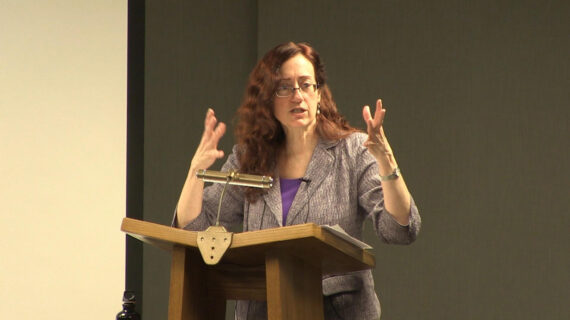
Tom DuBois, Professor, Department of Scandinavian Studies, UW-Madison, joins University Place Presents host Norman Gilliland to delve into the art and history of encounters and connections among the Anglo-Saxons, Celts and Vikings in the years before 1066.


Copy and Paste the Following Code to Embed this Video:
Celt, Anglo-Saxon, and Scandinavian Encounters
>> They're the stuff of great action movies. Those Vikings raids on the British Isles. The wielding of the sword and the seizing of loot. But the deeper we dig into the encounters involving Celts and Anglo-Saxons and Vikings in the years before 1066, the more we learn that it was not all about fighting. And the deeper we dig, the more we learn from a particular source, probably an unexpected one, namely the art of the time. We'll look at some of that art and find out what it tells us about those early encounters among the Anglo-Saxons and Celts and Vikings. My guest today is Thomas DuBois, professor of Scandinavian Studies and Folklore at the UW-Madison. Welcome to University Place Presents. >> Thanks for having me. I'm looking forward to it. >> Well, one group that we left out of this equation, maybe because they left relatively early, was the Romans. >> The Romans are an important group to think about, and one of the reasons for that is that they transformed the British Isles into, in a sense, a partitioned space in which there's an area that belonged to the Roman Empire for four centuries and that was acculturated into, at least to some extent, Roman ideas and Roman culture, and the rest of the island where the Romans said, well, forget about this, we can't control it. And that was the places that we today call Scotland, and then in the west Wales, and then, of course, across the water, Ireland. The parts that they couldn't get to. >> And we have the famous Hadrian's Wall. Not the only wall, though, I guess. >> It's not the only wall, but it's perhaps the most famous and, I think, beautiful of the walls. In a sense, it was one of the great achievements of Roman architecture and Roman craft, because it's full 82 miles, stretching across England at its narrowest, and it was, when it was originally constructed, probably about 12 to 15 feet tall. So, a pretty impressive work. And, as you can notice that slide from the center of the island, it goes over some pretty rough terrain and must have been a tremendous amount of work to produce. >> And did they actually do anything with the wall or was it just a passive barrier? >> Well, often when we look at walls like this, we think of them in terms of the culture of siege that there was on one side of that wall the angry Scots trying to get in and the other side the Romans trying to push them down, but in fact, probably the wall was a conduit of material, of personnel, and also of culture to the frontier of the Roman world. So, it was more of a link with the people on the outside than a barrier. >> You could do how many dissertations on walls? >> There have been many. >> How they have worked over the course of time, whether it was the Chinese, the Great Wall of China. >> Absolutely. >> Or the wall between Texas and Mexico. >> Well, there's always walls being built. >> Somewhat porous in almost all cases, I guess. >> Sure. >> The Emperor Constantine is one of the ones the we equate with power over Britain. >> Absolutely. He's one of the great highlights of Roman Britannia or the triumph of Rome in the region, and he's one, in some sense, of the British contributions to the Roman history because Constantine spent some of his time in Roman York in the north, close to the wall in fact, and it was from here that he headed down to Rome, to the city of Rome in 312 to take over. Things were not being done right and he was going to make sure that Maxentius, his rival, was out. And so, he headed down there picking up soldiers along the way, but a lot of those soldiers in that force were from England. >> Really? >> They were part of this British force that was moving down. >> And Constantine is the one that we associate with that famous phrase, in hoc signo vinces? >> Exactly, yeah. Which is an art experience. He has a dream as he's almost to Rome where he sees this sign in the sky, and he says, what is that? And this voice tells him, you will conquer. He wakes up and asks his advisers, who happen to be Christian, of what that sign could be, and they say it's the Christian cross. So he has that put on his shields of his men and he wins the day. And from that we get legislation that makes Christianity legal. So Christianity becomes not the official religion of the Roman Empire at that point but a permitted one and very soon rises to the top. >> And we'll hear that phrase again a little later, and we'll also find out where this Christianity came into the British Isles, but first we have this excavation scene here. >> Yeah. This is a high point in archeological history. It's the actual excavation as it was being done in 1967 of Sutton Hoo, which was a really important royal burial site in the southeast of England. In a power vacuum that happened as the Romans left England in the 5th century, Anglo-Saxons and Jutes, people from southern Scandinavia, pushed in, and they settled, particularly, the area that had been part of the Roman Empire, Britannia, and they started their own kingdoms. And this is one of the royal burial sites of the kings who resulted from that. This is probably from, we think now, 625. >> And one of the richest troves, I guess. >> It's an unbelievable trove of remarkable art and treasures. And what's interesting about it is that it is, in its form it shows us that these kings had very clear connections to Scandinavia already then in the 600s. They were either from not only Denmark but also from Sweden and Norway, and we hadn't realized that before. The texts that we had, the histories, told us that everyone was from the north of Germany or from Denmark. But if we look at, this is the famous burial of a ship in Oseberg in Norway, and in that burial the ship actually survived. The soil type was different. England is very difficult to have things survive, wood survive, in the soil. So this is what it must have been like, the ship that was buried there in Sutton Hoo. >> And this one is in Oslo? >> It's today at the Viking Ship Museum in Oslo. >> And what else excavated at Sutton Hoo that did survive? >> Well, some wonderful things. One of them was a ceremonial helmet that mustn't have been for battle because it was made mostly of gold. And gold is not real effective.
LAUGHTER
>> A little soft. >> It's way too soft. And as you can see in this reconstruction, only pieces of it survived, the metal, but this is probably an image of what that helmet looked like. It had kind of a ceremonial front part to it as well, which is, this must have been the sign of a very, very powerful king or chieftain. >> We find all kinds of things that seem to have a really more ornamental than practical use. All kinds of pins and buckles and things that wouldn't have been easy to wear just every day. >> Well, we're not so sure how often people wore them, but they sure liked very fancy jewelry. Really expensive elaborate jewelry like clasps that would hold a cloak onto a shirt or that would clasp together two parts of a shirt tunic clothing. And these were items that were noticeable, they were important, and they were gifts that a noble could give to one of his cherished retainers or that a king could give to another king. And there's, interestingly, in the Sutton Hoo find we find that the king was buried with some items that are of unbelievable beauty and that are absolutely certainly from Sweden. There's a wonderful clasp made for his cape that is clearly Swedish workmanship. >> And that's what we have here. >> Yes. It's a Cloisonn piece. So it's gold with filigree of iron and silver, and then it's got, applied to the top of the metal, little bits of glass that give it this shimmering, wonderful effect. >> What's the real size of this? >> It is, on my shoulder it would be about that. >> Oh, pretty good size. >> It's pretty hefty. It's pretty weighty. You want this to be seen by everybody and say, what is that? >> Now, the fact that some of these artifacts are from Sweden, for example, doesn't prove that the recipient was Swedish though, does it? >> It doesn't prove that he's Swedish; it proves that he wanted to look Swedish. >> Oh, really? >> It's just like when an American wears Italian shoes, they want to look like they have continental knowledge or the taste. So, this person probably was the king -- of Anglesey. Probably his dynasty had Swedish roots or liked to think that it had Swedish roots. And the belt buckle that he was buried with is another example of that incredible workmanship that was clearly either made by a Swedish artisan in Sweden and the imported or perhaps he imported the Swedish artisan and he lived there in England and made that piece there. But the incredible convoluted spaghetti of that intertwining design that we find on that and other Sutton Hoo pieces is clearly a Swedish style at this time. >> So, we're talking about the 600s, the 700s, the 800s, even into the 900s for these Viking incursions, I'll call them, into Great Britain. >> It's starting already in the 600s, yeah. We're having these connections, trade or cultural, or migrations of people. >> So, not all these raids were a matter of hit and run and go back home? >> No, absolutely not. They were clearly in some ways a relocation. And probably because of changes in the climate because it was getting warmer in northern Europe at the time. In fact, soon after this period, it's even possible to grow grapes in England. They're actually a wine producer. And during this warming of the climate, the population of Scandinavia is getting larger and larger, and those excess people have to go somewhere, and they end up going to England. >> But they're not all raiders, and some of them are just kind of slipping into the country and maybe taking up farming or something. >> Taking up farming, intermarrying with the locals, working as merchants, working as craftsmen. All sorts. >> If we look at the 7th century, the beginning of these movements, what's the religion of the British Isles? >> Well, that's a really interesting, complicated process because the Romans, under Constantine, made it possible to have Christianity as a legal religion. And Constantine and his mother St Helena pushed Christianity very, very vigorously. And that came to Rome and Britain but then seemed to have disappeared as the Romans pulled out. The Anglo-Saxons knew nothing of Christianity. But part of that Roman influence spilled over to Ireland and St Patrick, who had been a Roman, Roman-Britain, was a very important missionary in Ireland. So, Ireland Christianized very early and in the 400s and just as Rome was departing. And then when the Anglo-Saxons came back in, they were Pagan again, and they needed to be re-Christianized yet again. And that influence came from Ireland. >> Really? It came from Ireland? >> It did indeed. The Irish and especially in the very north of Ireland in Ulster, the aristocratic families there had very close trade links with the west coast of Scotland. And they had a vested interest in unifying both sides of the water with the same religion. And they did that, in part, by setting up monasteries in the coast of Scotland and places like Iona that then become the conduits for the new faith, for Christianity, which was at this point the old faith, into Britain. >> Well, we'll get into that a little bit later too, how attracted some of those monasteries were to non-Christian visitors. >> They were the country clubs of the day, in certain ways. But they had all kinds of alluring aspects. >> Any famous conversion stories? >> There's a famous conversion story that echoes Constantine's. Remember, Constantine falls asleep there and has the dream of a sign in the sky, art in the sky. Well, that was a really good story, and according to medieval texts, the same thing happened in England in 633 in the eve of the battle of Heavenfield where the Northumbrian king, Oswald, who is a Pagan, is battling against the kings of Scotland and particularly the king of Wales, and he wants to win the day. He falls asleep, he has this wonderful dream in which he sees a sign in the sky, and wakes up and he hears the voice say, you will win in this sign. He wakes up and asks his advisers, who are Irish monastics, and they say, well, that must have been the cross. >> Of course. >> So, he has that painted on his shields, and he erects a cross, a wooden cross, at that place. And they have the battle in what is today a very nondescript little field where there's a few cows munching grass. There's still an old church there. And they have an immense battle there, and he wins the day and, because of that, converts to Christianity. He converts his whole kingdom because if I'm Christian, the rest of you are too. >> Did that site become something of a place of pilgrimage for later Christians? >> It absolutely did. People went to that cross and they chipped off little pieces that they could use in healing because they believed that if they had a piece of that holy cross, it was pretty much like having the true cross that Jesus had died on. So, they could use it in healing leprosy, they could use it in healing infertility. By the 8th century it was so chipped away that it fell over, and they had to put up a new one. But there is a little kind of humble cross still marking that site even today. >> We mentioned some of these monasteries. Lindisfarne was one of the most famous. >> Absolutely. That was one that Oswald founded as a result of the battle of Heavenfield. He said, okay, I've got this new religion, I'm going to start a new monastery where we can train people to be Christian priests and monks. But he didn't quite want it to be completely under the thumb of the Scots and the Irish. And so, he wanted to create a kind of hybrid space where the Scots and Irish would teach Anglo-Saxons how to be Christian, and Lindisfarne was that place. And it was a really important monastery. >> And where is it? >> It's on the west coast, on an island. Just about, not so far from Carlisle, which is the end of the Hadrian's Wall. >> And what kind of things, other than teaching, went on there? What sort of places were they? >> All the kinds of things, interestingly, this monasticism that the Irish came up with was what we call permeable. Monasticism is in the sense that wealthy people went there for periods of their life. Often in adolescence, royal daughters or aristocratic girls went into the convent for some years. Young men went into the monastery for some years. They would get trained in reading and writing, they would hear about the faith, and then they would leave, have a life of battle and consorting and so forth, and then they would often retire back to the monasteries. Oswald retired back to Iona, in fact, when he was done being king. But Lindisfarne is a really interesting place because the art and works that were produced there were very intentionally a fusion of Anglo-Saxon and Scandinavian influences and the Celtic that were being taught by the monks who had come over from Ireland. >> When we talk about fusion, a fusion of ideas too? If you're going to try to attract converts? >> Absolutely. They want the knew faith to be familiar in some ways. To say I recognize that, that's part of my heritage. Now is see a Christian meaning to it. Or, the way that the monks explained it was, you were always yearning for Christianity but you didn't quite know it. And here's what all those writhing snakes on your artwork meant. And so, there's a very, very deliberate attempt to merge the artistic styles to give people a feel that this is also your cultural heritage as well as your new faith. >> Where do the illuminated manuscripts begin? >> When we think about art in a modern sense, we think of paintings as number one and then maybe sculpture as number two, but in the medieval world, manuscripts were the be all and end all of art because they were the place where you could do the very finest art in the very finest way and use the most expensive ingredients or pieces. And they required this incredible skill, which was writing which most artisans wouldn't have. So, they were the number one art. And monasteries were very important for copying texts and for producing manuscripts that would be used in church services, but also copying other things, medical tracts, philosophical tracts, things from the ancient classical world. All of the knowledge that we have today came through the dirty hands of little monks scribbling it down because we wouldn't have those manuscripts otherwise. >> I guess occasionally, I don't know about Lindisfarne or any of those British sites, but occasionally we have those little kind of like editorial marginalia from the scribe. >> Absolutely. We have plenty of those marginalia, and they're wonderful to look at with the different manuscripts. Sometimes they'll have little fingers pointing saying here's an important point. Sometimes someone will write in I disagree or you'll see that. Sometimes they'll have little kinds of shocking things in the marginalia that are in a sense saying why are you looking at the margins, pay attention to the middle. And sometimes the commentary is kind of subtle in the sense of if you think of the great page that everyone looks at for Lindisfarne, which is the opening page of the Gospel of Matthew, what gets large type on that is the name Jesus and the book of the generations of Jesus, son of David, son of Abraham. Almost crammed in in the lower corner as if to say, well, we've got to fit this on the page but he's not really important. >> And now we have an image that appears to be of the Vikings themselves. >> Absolutely. The Scandinavians came with their own art and their own religion, and they didn't give it up all that easily just because there was really nice art coming with Christianity from Ireland. They had their own very important ideas, and it was linked to raiding, it was linked to travel, and we often find on carved stones back in Scandinavia symbols of where we'll have what we call pictures stones. For instance, on the island of Gotland, which was very important to the Vikings traveling east at least, often on the top of those stones you'll see images of the god Odin and in battle, glorious battle, because if you die in battle as one of Odin's men, you get to live an afterlife of battle, drinking, carousing, having battle, and drinking. >> What luck. >> Yeah. What could be better. And often in the middle of those stones we see images of Viking ships, and whether this is a ship like we saw in the Sutton Hoo burial, a ship that maybe is symbolizing the passage to the next life, passage to Odin's hall, Valhalla, or maybe it's just simply saying the good thing to do is to go raid. >> Could have been a recruiting poster. >> Right, a recruiting poster. This is the life for you. So, we don't know. But, certainly, in the top of those stones we often will find the image of Odin and the image of often Odin being served something to drink by a woman, a queen or a princess, with a drinking horn, giving that gift to say do great deeds in my memory. And you'll often find dead people on these stones too because death was not an end to the great battles that you could have as a Viking warrior. >> Just that transition. >> Transition. >> Did they actually make reliquaries in the British Isles or were those brought in? >> They were made right there, and they were, the monasteries, as they develop, become, in a sense, factories for all kinds of art going on. There's the manuscript work that the monks were doing, but they're also hiring people to make fine reliquaries, boxes to hold holy bones, and bones are one of the things that you trade with different monasteries or they're one of the prime gifts. >> You try to get a complete set of something. >> You never quite get a complete set. You get, sometimes, a skull, which is a very valuable reliquary, or an arm, and often the arms are, there's wonderful reliquaries that are in the shape of an arm. >> Right. >> And then you sometimes have kind of nondescript little bones that are kind of the more budget minded monastic gift or you weren't a very important monastery after all, and those ones are given little kind of boxes that are very valuable. They're beautifully made. They're in silver with gold. >> Here's another one. >> They often have Cloisonn and they're ones produced in, this one for instance was almost certainly produced in Iona, and it today lives in a museum in Edinburgh in Scotland. >> So, we'll look at this one again. >> Well, this one got kept in Scotland. They dumped out the bones during the Reformation, kind of unceremoniously, there's some very powerful bones sitting there, giving miracles to sheep or whatever somewhere in Scotland. But at least we have this one surviving. But these were really cool gifts. And they were also very attractive to those Viking raiders because one of the ways that you keep people happy in that Viking society is to give them gifts, and it might be jewelry but it could also be really nice things like boxes. Who cares if this was a religious box that had bones. Who cares about those. >> Keep your hairpins in it or whatever. >> We could use this for hairpins or for spoons. And there's one reliquary almost certainly produced in Scotland that winds up in Denmark as a result of that. It's one that is today in the National Museum of Copenhagen. It looks a lot like that one that we saw from Iona. It's more expensive. It's got more silver and gold to it. It's got the remainders of some really nice Cloisonn using glass on top of metal. But this one has a girl's name scratched in the bottom. This must have been given probably to a warrior who gave it to his wife or to his daughter, and she scratched in the bottom. This is mine. This is for my bobby pins or whatever or for the jewelry clasps that I'm not wearing at the moment. It was a jewelry box in a sense. So this is the way in which the monasteries became really wonderful things to raid because there we have these relatively unprotected producers of beautiful art that can be grabbed. And if you steal from them one time, they'll go back into making some more, and then you can come back the next year or the next year. The very first recorded account of a raid of one of these monasteries is Lindisfarne. And so, that is one of the prime places where the Vikings said, hey, this place has good takings. >> We've seen that the Viking soil or the Scandinavian soil is good, and the water for that matter, are good for preserving wood and boats. >> Yeah. >> And the metal is pretty much capable of being preserved in most soils, but what about textiles? >> Well, textiles you have to have a really ideal set of chemical conditions. And it happens that that happened better in parts of Scandinavia, particularly in Denmark, than almost anywhere else. All of those bogs that make Denmark so murky and difficult to do agriculture in have all sorts of tannins that are wonderful for preserving textiles. >> Really? >> And also for preserving human flesh. So, they are wonderful places for storing items that would have decayed within a decade within Britain but have survived for centuries in Denmark. >> So this one I find incredible. This is like Viking-age cloak. >> This is some of the fashion. This is high fashion. One of the things the Vikings are getting when they come down to Scandinavia isn't just looting. They're also buying things or trading things. There's a trade going on and they're in England and Ireland producing unbelievable textiles. They're, in fact, weaving in wonderful linen but sometimes even in silk, and they're using fur lining that they probably imported from Scandinavia. Stolen, but that's another story. And they're making these wonderful cloaks. And we have in the sagas accounts of, for instance, King Athelstan giving one of his retainers a cloak that he himself wore and that was red because these things were valuable, not just because they were beautifully woven, but because they used really expensive dyes. And dyes were, again, something that was hard to get, that took a lot of technology, and that linked clothing very directly to the manuscript tradition. >> We hear occasionally too about the taking of hostages or the taking of prisoners or just the taking of women and children in particular or slaves for that matter. >> Well, slaves were a major commodity for this trade that went on between the British Isles and Scandinavia, and more widely, all the way into Russia and to central Europe as well. There's some theories that the term slav comes from the root that means slave. >> Yeah. >> Because what do you call these people? People we can enslave. The Vikings set up settlements in various places, particularly some of what we think of as coastal cities in modern Ireland, Dublin, Wexford, Limerick. These become really important Viking centers. They are Viking cities, and they use those in part of slave trade. Dublin was probably the largest slave trading nexus in the northern world. And many of those slaves were stolen from farms in Ireland but also farther afield. From the west of England, from Wales. St Patrick himself was a slave. >> Right, right. >> That's how he got to Ireland in the first place. And the Vikings saw this as good trade. And they produced and we find in the archeological remains of Dublin lots of evidence of that slave trade, including, as in this slide, some of the manacles that were used. >> They still have those. >> They still survived. And in the Viking museum in Dublin today, Dublinia, you'll see this presentation or this mannequin representation of what that slave trade must have looked like. >> What were they using the slaves for? You didn't have the kind of big agricultural need for them, did you? >> Well, there was a need for slaves to do agriculture, for part of the year anyway. Medieval agriculture needed a lot of people for planting and a lot of people for harvest, and then you kept them kind of hungry for the rest of the year. But slaves were a temporary commodity, in the sense that within the Scandinavian tradition you kept somebody a slave only for a certain number of years, and then you made them a freed man. So, they actually were emancipated in a sense, and then they became more or less like a tenant farmer after that, and their children would be free. So, you needed always new slaves because you were going to be freeing the slaves that your currently had. >> Was there a practical reason for that or why would they free them? >> I think you get more work out of people that know that they're... >> Invested somehow in what's going to happen. >> They're invested. They've got to do this for a while and then they can kind of graduate to being more trusted. And I think that there's so few people, really, the populations in places like Iceland are so small that you're probably going to marry one of those slaves. So you have to have a legal status for the children of slaves, even if there's going to be probably a lingering status differential between somebody who has aristocratic background and somebody who's got a grandmother, often they were women, grandmother or mother who was a slave still, do you want to give that person a status within the society. >> It went beyond just a need for labor. It actually included a need for those people in the fabric of the society. >> In the fabric and also in the gene pool. >> Right. The gene pool, right. >> You need to have somebody to marry. You can't marry your cousin. So that's the way it goes. >> Now, not all of the art, I assume, was a one way. Not all of it came from Scandinavia to Great Britain. There must have been some flow the other direction. >> There was flow in both directions. And we can often talk about things like fine textiles flowing northward along with honey and wine. These were some of the major exports to Scandinavia. And nice things like furs, furs were extremely valuable, coming down from, and sometimes nice sculpture or carvings or jewelry coming down from Scandinavia. But we also have other things that are being produced and sometimes surprising things like the famous Louis chessmen. >> From the Isle of Lewis off Scotland. >> From the Isle of Lewis. One of these places that today seems really remote, who would ever go there. But, from the Viking perspective where you get everywhere by ship, this was very much a crossroads of culture and society. And somewhere on that island, on the coast in fact, in 1831 these wonderful carvings appear out of a sand hill where a cow is rubbing up, and suddenly these pieces fall. The shepherd notices then and says I wonder what these are. They become a really important archeological find. I remember 72 or 78 pieces all together in that collection all told, and some of them live today in the National Museum in Edinburgh in Scotland, but most of them live in the National Museum in London. So we have a little colonialism going on there. But they're almost certainly produced in Scandinavia. >> These are made out of, what, walrus bone or something? >> They're made out of walrus tusk. That was an extremely valuable ivory of the time. Ivory would have, elephant bone was hard to get all the way to the north, but walrus tusk was just as valuable, and you could harvest that in the north of Norway. There were walrus at the time there. Also, to some extent, in Iceland, but mostly Greenland. So those are probably harvested, that raw material probably came from Greenland, was probably, from the stylistic details that we see of them, when we look at the back of these pieces, you can see all kinds of carving that shows us very clear stylistic links to Trondheim. >> Norway. >> Yeah, to the west of Norway. A very important Christian site because that's where the holy relics of King St Olaf were stored and then end up on the Isle of Lewis. So they really are a sign of this travel of commodities from one place to the other. >> And here's the detail. This is a king, I think, of a chess set. >> This is one of the kings, and a great reminder that new ideas are coming into the region. Chess is kind of a new idea. It's something coming in originally from India. That game originates in India. It's transferred to the Middle East, transferred again to Europe, medieval Europe, and then probably through the Crusades is making its way north to the north of Europe. And here we have it in the Isle of Lewis. Somebody wanted to show that they were aristocratic, that they new the way that noble people spend their time, and they were going to play chess. Great, also, reflector of the kind of culture where king is not the strongest person on the board. >> It is the queen, yes. >> It's the queen. It's the queen. In the Indian version of the game, there isn't a queen. It's actually a kind of adviser. An elephant I think is the Indian version of it. But, within the context of Europe, those marriages and the queen had a lot of power. And so, that's what we see reflected there in that game piece. But that king is wonderful because you see that he says I am in charge, darn it. I've got this sword. I'm the boss. I'm going to be the last person on my team left. >> Well, that's true. Often the case in a chess game. >> When I play chess with my son, that's what happens. >> High casualty. Now, what about boat building? We know, of course, these great Viking boats were built in Scandinavia, but as the Vikings come down into the British Isles, are they building boats there out of the native materials? >> They're building boats wherever they can and with whatever materials they can. We can find, again, one of the wonderful preservations of boat materials happens in Scandinavia because the water in the Baltic is cold enough that shipworms can't live there. It's changing right now because of global warming. >> Uh-oh. >> Archeologists worry that they have to find these shipwrecks fast because they're going to be eaten by these worms. But in the British Isles, shipwrecks were largely eaten up by worms. But in Roskilde Bay in Denmark, you'll find a whole set of Viking ships that happened to go down in a storm, and they can tell us wonderful stories about where ships were built. There's one that was rescued from that that has, actually you can see that in the reconstruction of it, which is now on view at the museum in Roskilde, you can see that there's the original boat and then it must have gotten into a big battle or storm and they actually repaired it. So you can see that. It probably was produced in Sognefjord around 1030, I think, based on the tree rings of the wood that is in that old part of the boat. And then there's a repaired part that was from Oslofjorde. >> Oh, really? >> Yeah. We've got to do something with this boat because we just lost half of it. >> A quick patch. >> Yeah. Yeah. >> This one looks big in the picture. >> It's the biggest boat ever preserved in any Scandinavian find. It's another boat from the bottom of the bay in --. And this is a fascinating boat. This is the, when they were making the replica of it in the early 2000s, it became named the Sea Stallion of Glendalough because when they looked at this, the wood that was made in this ship, they found that it was produced outside of Dublin. So this was a boat that was produced in Dublin by Scandinavian craftsmen in that Dublin unifying context in which Irish and Scandinavian laborers were working together. They produced this huge boat, and they took it up on a trade mission, and it sunk.
LAUGHTER
>> Lucky for us. >> Lucky for us. And in the 2000s, archeologists produced a new version of it, a replica, and then they sailed it back to Dublin in a really wonderful event that was covered on the Internet and so forth. It taught us a lot about how difficult it is to work one of these ships. >> I would imagine and I seem to recall something about how they were jointed so they actually move with the flow of the water. Instead of resisting and being more likely to break, they would just bend with the water. >> The distinctiveness of the Viking boat was that it was clinker built which meant that one slat was attached to the next overlapping, and then you link them that way. And that gives the boat a kind of snake-like ability to flex in a way that the other kind of way where you build a core that's rigid and then you just nail the slats on, that is very rigid and you get into an ice flow, boom, you're dead. So, the Viking ship design was very important. >> Now, what kind of attitudes, as we get into Christianity, what kind of attitudes do we see in the art, in this Scandinavian art? >> Well, the Scandinavians are coming upon Christianity in the British Isles. It's their trading partners or their victims, depending on what you want to call them, and also sometimes their marriage partners, and Christianity had a
rule
you could only trade with other Christians. So, the Vikings in Scandinavia, although still Pagan, start to realize that we've got to at least nominally Christianize. And gradually, they learn more and more about the religion, and gradually, Irish and Anglo-Saxon missionaries start to make their way up to Scandinavia. It's in part vested interest because if they can calm these people down and teach them the Christian ways, they won't get attacked from them as much. But what we see in the artifacts that are produced in early Christian Scandinavia, a really distinctive kind of visceral muscular kind of Christianity. >> It's more like the warrior Christ. >> It's a warrior Christ figure. It's a wonderful depiction of Christ on the crucifix from -- in Denmark. Probably the first generation of Christians in Denmark. It was probably produced stylistically there in Denmark. But you can see this wonderful kind of make my day Christ, where he says, okay, I'll be crucified but I could step down from this cross any time I want and punch you out because his arms are really big, and there's no kind of, all of that kind of later medieval suffering Christ where he's sagging and he's hungry and he's looking down, none of that here. This is a warrior Christ who's ready to take on anything. >> Do we have runestones in the British Isles? >> Well, there are runestones in the British Isles. Often they show us signs that the Scandinavians were making the same kinds of monuments to their family and to their relatives that they were doing back in Scandinavia, but then we also see them naming their kids more and more British sounding names and sometimes changing the language in which they're making the inscriptions. So there, an interesting thing, but we also find the runestones back in Scandinavia changing. And we see where Odin had been that guy, number one on the top, we're a culture of conquest and warfare. Now we put the new guy up there. We put the crucifix and we put the cross. So, in precisely the same place where we used to find Odin, we now find runestones in places like Sigtuna, where this runestone comes from, having a cross. >> And what's the purpose of a runestone? >> Well, a runestone is, more or less, a marker, probably a public marker, to say there was a great man who lived here and I'm his heir or I'm his wife and this is my property because it was his. So they have, usually, kind of a territorial function as far as we can tell or property function. But there's some, like this one that a man named -- made for himself, and he says I'm putting up a sign, I'm honoring myself. It's not quite clear why he would have done that. Maybe he didn't trust that his sons would have done one for him. Or that his wife was estranged and he said, okay, I'm going to have to do this myself. But he's hiring an artist because he wouldn't have known how to do this on his own. He's having a rune master carve this. Probably it was painted. This would have been something you could see from a long way off, and he's siting it right near the Christian church to say I'm a good nobleman of standing. >> We have also, you mentioned these clasps. This is, I guess, pre-button technology. >> Pre-button technology, yeah. >> But it gives you opportunity to do some serious embellishment of you wardrobe. >> Oh, yeah. Brooches are a big thing. I always think of broaches as something my grandmother used to wear. They were little kind of unimportant items. But a brooch was something that held together a cloak and that was very important and very noticeable because it was right there on the chest. And the brooches were a prime gift. They were a prime thing that artisans worked on. And we can often see, in those brooches, the fusing or hybridizing aesthetics of the place. So, in this one that we can see from today, it's in London, it was actually recovered not so far from London, we see a mix of Anglo-Saxon and Scandinavian styles that the artisan or the wearer want to say I have both of these heritages or I'm somebody who's comfortable with both those cultural backgrounds. >> And so, what would, in this design or the next one we have too, what would be British and what would be Scandinavian? >> Well, it has to do with all the little kind of details that you can't quite see unless you're looking really closely. But the way in which the figures writhe around each other, the balance of whether there's little up-raised kind of nodes like this. In this one, what's interesting is you notice on both sides of the brooch there's five nobs sticking up. >> Right. >> Or five raised circles. Those are almost certainly, that's a reminder of the five wounds of Christ which were very important on cross designations. So this is a way of saying I'm Christian but I'm a fashionable Christian.
LAUGHTER
rule
And that was a very British Isles thing to do, and we find it particularly in Anglo-Saxon art. >> And here's another one. This has, also, the couple of different cultures represented. >> Yeah. This is one that gives you a fusion of Celtic and Anglo-Saxon art. So, there's parts of this that, Celtic and Scandinavian art. So, we have some elements of the detail here that remind us of Scandinavian workmanship, and others, the way in which the gold is used in this one and some of the other balance issues are things that would have come from an Irish sensibility, or Scottish. >> Well, I mentioned, earlier we talked briefly about the sort of fusion of ideas. >> Yes. >> We find that in this most famous of manuscripts. >> Hwaet!
LAUGHTER
rule
>> The open word of Beowulf, which means listen up. >> Yeah, listen up here. I'm going to tell you a great story. Beowulf is a fascinating text because its very first line there, Hwaet! We gardena, we have heard about the Danes. >> But this is in old English. >> It's in old English. It's the oldest, longest surviving epic poem we have in old English, and it's about Scandinavians. So we think of it as English epic, but it's about, in fact, events that happened in Denmark and Sweden. >> I don't think there are any English or Anglo-Saxons in it, are there? >> Ah, nobody who's called Anglo-Saxon in it. There have been, especially in the later 19th century, attempts to say this must have happened in England. Certainly, the poet was Anglo-Saxon. He was clearly somebody who was from a monastery, and he makes it emphatically clear that. >> Yes, he has these little editorials, doesn't he? >> All the time. God was the one behind this and so forth. >> Right. >> But it's a text that, again, is a hybrid. It's possibly, scholars argue about what century it was produced in, but I think one of the most convincing arguments is it was probably from the 900s, a time when now the Scandinavian population is major part of the eastern half of England as well as Scotland, and the western and southern half is still Anglo-Saxon and they're intermarrying. And this is an attempt in a sense saying we have both these heritages, and the Scandinavian heritage is part of our heritage too. >> It all kind of went to wreck and ruin in 1066, didn't it? >> Alas. >> It was pretty much all over. >> 1066, the Battle of Hastings. There's first the Battle of Stamford Bridge where a Norwegian to the throne comes in, he gets defended, rushes down to the east coast to stave off another Viking background guy, William the Conqueror, or as some prefer to call him, William the Bastard, who arrives with his own Scandinavian heritage and says, this realm is mine now. And so comes the French language and kind of a Frankish Carolingian cultural influence into Anglo-Saxon England. >> Which they all forgot how to speak by, what, the 14th century. >> Yeah, very soon. It's pretty clear that the number of Normans who came in were fairly little, and they began to intermarry, and they lost active command of French. Although, a huge number of the words in modern English are from French as they are from Old Norse, as well as from Scandinavian, the ancestor of modern Scandinavian languages. So the language shows all of these hybridizations. >> Now, we have this one fantastic commemoration of William taking over. >> Yes. >> It's an absolutely fascinating, partly mysterious story. >> There's a wonderful set of issues surrounding the Bayeux Tapestry. We think this was produced by the Bishop Odo, who was the half brother of William, and it very much, in some ways, tells the Norman side of this battle. We won because it was ours to win. It was our right. William was in the right. The Anglo-Saxons and Harold was in the wrong. But, interestingly, to commemorate this, Odo has a fabulous tapestry made, 70 meters long. >> It was huge. 200 and some odd feet long. >> It's amazing. It's an amazing work. >> And it still exists? >> It still happens to exist, and in France of all places. But what's interesting about it is that from the style and from the workmanship, it's almost clearly what's produced in England at one of the monasteries where probably most of the people, including the women who had to do the embroidery work, were Anglo-Saxons. >> The losers. >> The losers having to create this to the winners and say how they won rightfully. >> Did they do anything to get their own opinions into this? >> Well, there's these wonderful little hints that these women had their own opinions of what had happened. And there's a great moment on this very long tapestry where we see a young woman, Alfifa, in what seems to be, maybe this is representing a monastery, maybe this is her father's castle, but this is probably the young princess, daughter of William. And we know from textural accounts that she was supposed to marry Harold. And if that had happened, there never would have been grounds for William to come over and take over England. >> It would have been all in the family. >> In fact, the Anglo-Saxons would have been in charge of Normandy in time, because William would have died, and his son-in-law would have taken over both thrones. >> We have no idea why the wedding didn't go through? >> We have no idea. The woman who, on the tapestry, is called Alfifa, which is a different name in some of the French texts, we know that she stayed in the monastery afterward, but those women who were making the tapestry had their own opinions probably. And there's this one place, on the tapestry where they've put in -- where they're saying a certain cleric, and if you look at that image, we see this kind of cleric stretching into the frame and touching her face in a really interesting way. >> There he is there. You can see on the right-hand side reaching in. >> Yeah. Making very emphatic kind of, invading her personal space. Let's put it that way. And then, really interestingly, in the place where the bishop doesn't seem to have proofread very carefully, let's put it that way, there is this really very, almost pornographic image of a naked man with his pudendum showing, reaching out in just the same way in a kind of mirror image. >> But reaching to her feet or perhaps even under her clothes. >> So you're reading it that way. Interesting. >> Hard to know. >> It's hard to know what that means, but it's a suggestion that maybe something happened to the princess before the wedding, before the planned wedding that she was in some way damaged goods and that it wasn't Harold's fault that he didn't marry this girl but that something had happened with unos clerigos. But we don't know. >> Something happened to change history in a big way, though. >> Something happened to change history. And it was something that the artist, in this case embroiderers, women, wanted to record as well as the official story that they were being employed to do. >> Well, it's fascinating to see all of these relationships among those Celts and the Scandinavians and others being voiced, if you want to say, voiced through the art. You would ordinarily think it would be something else, but all these artistic expressions that expressed the coming together of these people in way or another. >> Absolutely. They give us an image of an England that's constantly getting new influences, new impulses of people and new ideas, and an England that continues to change long after 1066. You could look at the art of modern day London and find lots of Pakistani art. That's part of the same wonderful tapestry of new ideas coming in, new influences, and new people. >> And those Celts, Scandinavians, and Anglo-Saxons all blended in there very thoroughly long since. >> Blended in and yet, at the same time, through the art we still can see the strands that make up the fabric. >> It's fascinating. Thomas DuBois, thanks for joining me today. >> Thanks for having me. >> I'm Norman Gilliland, and I hope you can join me the next time around for University Place Presents.
Search University Place Episodes
Related Stories from PBS Wisconsin's Blog




Donate to sign up. Activate and sign in to Passport. It's that easy to help PBS Wisconsin serve your community through media that educates, inspires, and entertains.
Make your membership gift today
Only for new users: Activate Passport using your code or email address
Already a member?
Look up my account
Need some help? Go to FAQ or visit PBS Passport Help
Need help accessing PBS Wisconsin anywhere?

Online Access | Platform & Device Access | Cable or Satellite Access | Over-The-Air Access
Visit Access Guide
Need help accessing PBS Wisconsin anywhere?
Visit Our
Live TV Access Guide
Online AccessPlatform & Device Access
Cable or Satellite Access
Over-The-Air Access
Visit Access Guide




Follow Us