

 Passport





Biosafety, Compliance, and UW Influenza Research
03/07/12 | 47m 9s | Rating: TV-G
Rebecca Moritz, the research compliance specialist with the Department of Environment, Health & Safety at UW-Madison, discusses some of the many steps taken to mitigate the inherent risks involved with influenza research at UW-Madison.


Copy and Paste the Following Code to Embed this Video:
Biosafety, Compliance, and UW Influenza Research
cc Welcome, everyone, to Wednesday Nite at the Lab. I'm Tom Zinnen. I work here at the University of Wisconsin Madison Biotechnology Center, and I also work for UW Extension Cooperative Extension And on behalf of those folks and our other sponsors, Wisconsin Public Television, the Wisconsin Alumni Association, and the Science Alliance, thanks for coming to Wednesday Nite at the Lab. We do this every Wednesday night, 50 times a year.
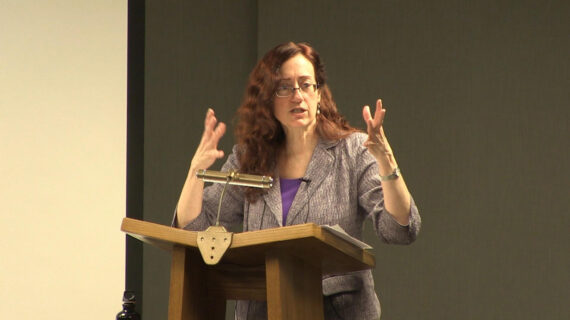
Tonight, I'm delighted to be able to introduce to you Rebecca Moritz. She's a Research Compliance Specialist and an Alternate Responsible Official for UW-Madison's Select Agent Program. I told her I would tell a joke about being a compliance specialist and asked if she could come and talk to my children.
LAUGHTER
I think my children would talk about alternate responsibilities.
LAUGHTER
In addition, Rebecca is a certified biosafety professional with the American Biological Safety Association and a specialist microbiologist with the National Registry of Certified Microbiologists. She's from Manitowoc. She received a bachelor of science in bacteriology and a master of science in medical immunology, excuse me, medical microbiology and immunology, both here from UW Madison. She has conducted research in academic and private sector laboratories where she developed a knack for biosafety, biosecurity, and research
compliance. Her title tonight
"Biosafety, Compliance,
and UW Influenza Research
The Real Story." Please join me in welcoming Rebecca to Wednesday Nite at the Lab.
APPLAUSE
and UW Influenza Research
Okay, my battery is green, can everybody hear me? Okay, so I apologize, first of all, this picture, the PC to Mac inverse didn't really work very well. I've been invited to talk to you this evening because there's been a significant amount of media attention regarding two influenza research studies. The first one was conducted here at the University of Wisconsin Madison in the laboratory of Dr.
Yoshi Kawaoka. Now, that manuscript was submitted to the journal Nature, and the second manuscript was done in the laboratory of Dr. Ron Fouchier at the Erasmus Medical Center in Rotterdam, the Netherlands. Now, these studies have been in the spotlight since November of 2011 when the National Scientific Advisory Biosecurity Board reviewed both manuscripts and came to the unprecedented decision that the journals should not publish all the scientific information.
Now, they came to this conclusion based upon the dual use potential of this work to be used as a biological weapon. There have been many attention grabbing headlines, of which I have chosen a few to show you. Too Dangerous for Words. Contagion.
Now, the New York Times in an editorial referred to these viruses as the Dooms Day viruses. And some journalists have gone as far as comparing this work to the Manhattan Project. Now, this unprecedented decision and resulting media attention has caused debates among various scientific circles, among influenza experts themselves, government's biosafety and biosecurity circles, and the end results of these debates we obviously don't know yet. We're still in the middle of everything.
But it will not only affect the research in these two manuscripts but will also affect all research going forward with potential dual use concerns. So tonight we're going to cover a couple different topics. We're going to go over some brief information about UW's Select Agent Program, exactly what it is. We're going to talk about influenza virus in general, a little bit about the manuscripts, what I can tell you, the time line, the National Scientific Advisory and Biosecurity Board, and then we're going to get into biosafety and biosecurity.
My goal this evening is to show you what is not routinely being discussed in the media. Most importantly, the tremendous amount of oversight involved in this research, and what we do to mitigate influenza research risks here at UW. There's been a lot of misinformation and omission of facts regarding these studies. I hope to set the record straight about this research, and I'm going to give you what is hopefully enough information so you can come to your own conclusion about this research.
So I think the best place to begin this unprecedented journey is to say exactly how I'm involved with it. So you know that I'm the Research Compliance Specialist for UW's Select Agent Program, and I'm one of two Alternate Responsible Officials. So what is this program? Now, after the 2001 anthrax attacks, the federal government set up a program that requires all registered laboratories and entities that work with select agents to be preregistered.
Now, this list of select agents is comprised of various bacteria, viruses, and toxins. As a result, UW created their own Select Agent Program. Currently, we're comprised of just under 200 individuals who are registered to either work directly or indirectly support the laboratories of seven principle investigators who work with bacteria, toxins, and viruses, including highly pathogenic avian influenza virus. Now, each entity is required to have a Responsible Official, and our Responsible Official is Dr.
Bill Mellon who is the Associate Dean for Research Policy, and, in his absence, myself and another individual, as Alternate Responsible Officials, have the authority to act if necessary. Now, essentially, my job is to manage the day to day operations of the Select Agent Program and to make sure we are in compliance wit the regulations at all times. At the same time, I need to be able to help our researchers do their research that they want to do safely. So I wear many different hats to be able to do this.
I have to know microbiology. I have to know the regulations and guidelines. I have to know permitting, training, containment, and even from time to time I have to be able to speak engineering. So what happens if I do not do my job correctly and we have a violation of the regulations?
Well, worst case scenario, Dr. Bill Mellon could go to jail. There could be a hefty fine or select agent research as a whole on campus could be stopped. Now, it is a privilege to be a registered entity and to work with select agents, and that privilege can be taken away at any time.
Now we're going to get on to the bug of the hour. We're going to talk a little about influenza virus. Now, UW Madison has a long history of ground-breaking influenza research starting in the late 1940s. Swine influenza viruses were first isolated here, and it was also shown by Dr.
Easterday, who's sitting right there, that swine influenza viruses could go from pigs to humans, and from humans to pigs. Now, influenza virus is a single-stranded, negative-sense RNA virus. Now, its genome is comprised of eight genes, which you see here. Now, these eight genes are translated into 10 to 11 proteins depending upon the virus.
Now, like all viruses, it has proteins coming off of the virus particle. Now, in the case of influenza virus, you have spikes coming off of the particle. Now, this rod-shaped spike is known as the hemagglutinin, otherwise known as the HA. Now, it is responsible for attachment of the virus to cell and then an initial penetration of the cell during infection.
Now, the sequence of this HA, the hemagglutinin, determines what type of cell it can attach to, albeit a human cell, a pig cell, a poultry cell. Now, there are 16 different subtypes of hemagglutinin that exist and have been found in nature so far. Now, this mushroom-shaped spike right here is the neuraminidase, which is also known as the NA. Now, the NA plays a role in release and spread of new viruses.
Now, there are nine different subtypes of neuraminidase that have been isolated in nature so far, and a subset of antiviral compounds are the target of those compounds is the neuraminidase. Now, influenza viruses are named by their hemagglutinin and their neuraminidase subtypes. So, H1N1 is type 1 of the hemagglutinin and type 1 of the neuraminidase. H5N1 or H3N2, for example.
Now, because these stick outside of the virus particle, this is what our bodies form an immune response to. When we get infected with influenza virus, our body forms the immune response to the HA and the NA. When we get the influenza vaccine, if you actually get the shot, you are getting certain sequences of the HA protein and then the NA protein. Now, what happens if two different influenza viruses infect one cell?
Albeit, a human cell, an animal cell, or a poultry cell. As you can see, the two particles, they infected the same cell and none of the resulting virus particles look like parents. Now, when this happens in nature, there are technically 256 different types of virus particles that can be created. Now, this does not take into account the fact that every single time influenza virus replicates, mutations occur because there the viruses do not have the capability to fix replication errors like our cells do.
So this is where the potential for scary things to happen exists. This is how viruses are generated that create, that have resistance to antiviral compounds. A mutant virus arises that is resistant to antiviral compounds because there is a selective pressure, say that person is taking an antiviral drug, and a virus, one of these mutants occurs and it can keep growing. So the virus develops resistance to the antiviral compound.
Now, this is also how mutant or reassortant viruses could arise. For example, how an H5N1 virus could arise that could transmit from person to person. Now, influenza viruses have been around a long time. There have been episodes of respiratory illness back to the middle ages and before.
Now, a pandemic virus is a virus that has the ability to sustainably and efficiently transmit among humans. In the 20th and 21st century there have been four pandemics, most notably the Spanish influenza pandemic of 1918. Now, this pandemic killed between 20 million and 40 million people with a mortality rate of roughly about 2.5%. And most recently was the 2009 pandemic virus, which actually was a virus that was a reassortant of three different swine viruses.
Two of the viruses they've been able to figure out what they were, and one of them they have not. Now, the majority of the human population has only ever been exposed to the H1, the H2 and the H3. Now, also people of the younger generation have not even been exposed to H2 because the dominant seasonal influenza strains right now are H3N2 and H1N1. Now, influenza viruses are currently known to infect many different mammals.
For example, humans, horses, dogs, pigs, poultry, and most recently influenza viruses have been isolated from bats. Now, a virus that infects one species might not be able to infect another because of the sequence of the receptor of that hemagglutinin gene. But selective pressure can cause this jump. An example is a few years ago in Florida at a racetrack you had horses and greyhounds in close proximity to each other and because of selective pressure, a virus that infected horses was able to mutant and infect canines, and as a result, we have canine influenza circulating across the United States.
Now, bird flu, what is the big deal about bird flu? Now, in 1997, bird flu first infected humans in a poultry market in Hong Kong. Now, there were 18 cases with six deaths, and the only thing that these people had in common was the fact that they had been at a live poultry market the week earlier. As a result, Hong Kong authorities ended up culling 1.5 million poultry to remove the source of the virus.
Now, since the virus' reemergence in 2003, it has spread from Asia to Europe and Africa. Now, bird flu has become entrenched in poultry populations of some countries, resulting in millions of poultry infections. Now, in these countries the poultry infections have impacted the livelihood of the economy and international trade. Now, as of early February of this year, there have been 584 confirmed cases of H5N1, otherwise known as bird flu, that have led to 345 deaths.
Now, that is a mortality rate of roughly 59%. Now, the three hardest hit countries have been Indonesia, Egypt, and Vietnam, in that order. As of December 15th of 2011, Indonesia had 182 cases with 150 deaths. Egypt had 155 cases with 53 deaths.
And Vietnam had 119 cases with 59 deaths. So you have sick poultry and a human comes into contact with that poultry, and then they get sick. Currently, there has been very limited human to human transmission of bird flu viruses. There have been a few cases of direct contact when an individual has been taken care of by a close family member or also a caregiver.
Now, in these instances, the sick individual that passed it on to the second individual has had extremely high titers of virus in their bodies. Now, some influenza experts debate whether or not it is even possible for bird flu to transmit from one person to another person, but H5N1 viruses could transmit from person to person, we would have another pandemic because the majority of the human population has never seen that type 5 hemagglutinin, thus, it's critical to know whether or not these viruses can be transmitted. In 2006, the National Institutes of Allergy Infectious Disease had an influenza panel, and the panel determined that more work needed to be done to understand the transmission of influenza viruses. Then in 2009, the World Health Organization published their research agenda for influenza and said this exact type of research needed to be done.
So what would make bird flu transmissible in humans? Now, this was one of the main goals of Dr. Kawaoka's research. One of his research projects was to determine what was required for bird flu to transmit from person to person.
Now, this work began in 2006 when Dr. Kawaoka received a grant from the National Institutes of Health entitled The Pandemic Potential of H5N1 Influenza Viruses. Now, in 2009 he also received an additional grant from the Gates Foundation to identify influenza virus amino acids that are responsible for human to human transmission. So what did Dr.
Kawaoka do? So they took H5N1 virus and then they took the pandemic 2009 influenza virus and they made a reassortant virus. Now, the HA, the hemagglutinin gene was from the H5N1 virus, and the remaining seven genes were from the pandemic 2009 virus. Now, they took that virus and they infected ferrets.
One day later, they put another ferret next to the infected ferret. Now, the only way for this other ferret, this uninfected ferret to get infected with influenza virus is through respiratory droplets. Now, these ferrets are right next to each other, but they are not touching. So the only way the one ferret could infect the other ferret is through respiratory droplets.
Now, what were the results of this experiment? Well, with this reassortant virus, there was no transmission amongst the ferrets. So they made a second virus where they made mutations in that H5 hemagglutinin gene and infected ferrets. Now, this time all six contact ferrets were positive for influenza virus.
Now, why use ferrets to do this research? Ferrets have a similar respiratory tract to humans, and they also have very similar symptoms when human and ferrets get influenza. While the ferret model is a good model to study the influenza transmission, it is not a good model to study transmission of influenza viruses amongst humans. Now, the ferrets used in these experiments are incredibly susceptible to influenza.
They are screened to make sure that they have zero antibodies to influenza virus before the experiments start. Whereas, us humans, we have antibodies to influenza virus. But since it is scientifically unethical to do experiments on humans, the ferret model is the best model we have. So what does this data tell us?
This data suggests that it could be possible for H5N1 bird flu viruses to transmit from person to person via respiratory droplets. So let's go ahead and go into the time line of events. So the manuscript was submitted to the journal Nature at the end of August of 2011. Now, internally we were worried about putting out a manuscript that talked about the potential of a virus to transmit from person to person when a movie called Contagion was coming out which talks about a killer virus that spreads around the world and panic ensues.
Well, luckily, we didn't have to worry about that, but we had a different matter to deal with. So instead of being published initially, the manuscripts went to the National Scientific Advisory Biosecurity Board. Now, what is this board? This board was established in 2004, and its first meetings began in 2005.
Now, their charter is to provide advice, guidance, and leadership regarding biosecurity oversight of dual use research, which is defined as biological research with legitimate scientific purpose that may be misused to pose a biological threat to public health and/or national security. Now, currently, the NSABB has 23 voting members and 18 non-voting members. The members are appointed by the Secretary of Health and Human Services in consultation with other federal departments that have an interest in life science research. Now, the NSABB members serve for four overlapping years, and the members provide expertise in a wide variety of areas.
I would name all the areas off but there are 20 different areas that are listed on the NIH Office of Biological Activities website. But, essentially, they cover microbiology, infectious disease, public health, intelligence, security, biodefense, etc. nd the NSABB also has ex officio members from 15 agencies and departments which are very on law enforcement, national security, things like that. Now, the NSABB's roles as it's stated in the charter is to be an advisory board.
They do not review manuscripts unless there is extenuating circumstances, and this is the first time to my knowledge the NSABB has reviewed a manuscript, and it is most certainly the first time there's ever been a manuscript that significant data should be withheld from. So, the NSABB came out with their statement on December 20th that the manuscripts, as a whole, should not be published. Those mutations that are required for transmission should not be published, but the information should be disseminated to individuals who need it. Now, that posed the question, how do you disseminate information to the surveillance teams that need this but make sure it doesn't get to anybody else?
But as the saga unfolds, on January 20th, 39 influenza researchers published a commentary that they would voluntarily give up this research for 60 days. And I don't think it is fair of me to paraphrase their words, so I'm going to read a little bit from their commentary. "We recognize that we and the rest of the scientific community need to clearly explain the benefits of this important research and the measures taken to minimize its possible risks. We propose to do so in an international forum in which the scientific community comes together to discuss and debate these issues.
We realize that organizations and governments around the world need to find the best time to find the best solutions for opportunities and challenges that stem from the work. To provide time for these discussions, we have agreed to a voluntary pause of 60 days on any research involving highly pathogenic avian influenza H5N1 viruses leading to the generation of viruses that are more transmissible in mammals. In addition, no experiments with live H5N1 or H5HA reassortant viruses already shown to be transmissible in ferrets will be conducted during this time. We will continue to assess the transmissibility of H5N1 influenza viruses that emerge in nature and can pose a continuing threat to human health." Now, up until this point, Dr.
Kawaoka had not spoken publicly about his research. He requested and received permission from Nature to discuss a few key details of his study in a commentary that was published in Nature. Now, the first and most important, the H5N1 transmissible virus here at the University of Wisconsin does not kill ferrets. I'm going to repeat that again.
Our virus does not kill ferrets. Our virus is also susceptible to current antiviral compounds and also currently available vaccines. The second piece of critical information is that a subset of the mutations that are required for transmission are already circulating in nature. And then the last piece of information was that Dr.
Kawaoka's data suggests that influenza transmission is more complex than anticipated, involves not only the receptor binding properties of the hemagglutinin, but also other biological and physical properties. Now, the first step in trying to bridge the gap between these varying opinions occurred February 16th and 17th when the World Health Organization had a meeting in Geneva, Switzerland. Now, this meeting was an invitation-only meeting. The people that were invited were influenza researchers from around the world, including Dr.
Kawaoka and Dr. Fouchier, the chair of the NSABB, the head of NIH, and then the heads of the WHO Influenza Surveillance Centers, and also the editor from the journal Nature. Now, again, I'm going to read a little bit of the WHO news release. "The result of this new research have made it clear that H5N1 viruses have the potential to transmit more easily between humans, underscoring the critical importance of continued surveillance and research with the virus." Now, this meeting, there were four key points that came out of it.
First of all, the group decided that this research must continue. They agreed to extend the moratorium on the research for an unknown amount of time. They also agreed that delayed publication of the entire manuscript would be more beneficial than urgently publishing a partial manuscript. And that, lastly, there needed to be increased public awareness and understanding of the research through communication and review of biosafety and biosecurity aspects.
Then last week another incident was thrown into the loop, I guess. So, the American Society for Microbiology had their annual biodefense in emerging disease conference. Now, during this conference, they had a panel discussion which had the chair of the NSABB, another NSABB member, the director of the National Institutes of Allergy and Infectious Disease, the editor of Science magazine, and then also Dr. Fouchier.
Dr. Fouchier gave a few key pieces of information also about his research. Most importantly that his virus as well does not kill ferrets when it is passed through transmission experiments. But when he inoculated that virus directly into the trachea, so basically directly inoculating the virus into the lungs, it did kill ferrets.
And also during this meeting, this discussion, it was announced by the director of NIAID that he has asked the NSABB to review these manuscripts again and also to review new data that has come to light. So they are hoping that the NSABB will look at these manuscripts again at the end of this month. So keep paying attention. We'll see where this goes.
So, that brings us to, looking at my notes, that brings us to biosecurity and biosafety. Now, what measures are taken here at the University of Wisconsin Madison to mitigate risk with influenza research? Now, there's a tremendous amount of oversight involved with H5N1 research or any influenza research on this campus that falls underneath the select agent regulations. Now, this research is under a microscope at both the institutional and the federal level.
Now, the first level of oversight applies to the entire university. All laboratories that work with recombinant DNA at UW Madison must abide by the NIH recombinant DNA guidelines. Now, these guidelines lay out the framework for how work with recombinant DNA should be conducted, but then also how an institution should review this type of research. So each laboratory conducting recombinant DNA research must have a biosafety protocol.
Now, this protocol describes the research, including genes, the vectors, organisms, cell lines, plants, animals, facilities, exposure response, and then also where the research falls in the recombinant DNA guidelines. Then this protocol is submitted to the Office of Biological Safety, and then the Office of Biological Safety works with that principal investigator to work out all the details of the protocol and to make sure everything looks right. Then that protocol is submitted to the UW's Institutional Biosafety Committee. Now, the Institutional Biosafety Committee is comprised of subject matter experts.
There are public members, and this committee also has a group of consultants at its disposal, of which I am one. Now, the IBC will determine if the protocol and the risk assessment meet the NIH recombinant DNA guidelines. And they will also take into account the CDC's Biosafety and Microbiological and Biomedical Laboratories, which is also known as BMBL, and those also are a set of guidelines. Now, this protocol will either be approved or it will be sent back to the PI for revisions depending upon what the IBC determines.
Now, no research on this campus with recombinant DNA can be done without and approval from the Institutional Biosafety Committee. Now, just as a side note, animal research on this campus is not reviewed by the Institutional Biosafety Committee. It is actually reviewed by one of the five Institutional Animal Care and Use Committees that exist on this campus. Now, the second level of oversight comes from the federal Select Agent Program.
The Centers for Disease Control and Protection and the Animal and Plant Health Inspection Service, which is part of the USDA, are in charge of the federal Select Agent Program. Now, the Criminal Justice Information Service, which is a division of the FBI, does the background checks for everybody that works in this program. Now, all registered individuals must pass that background check before they can work with select agents. Our file is held by the CDC, but we also have oversight from APHIS because we have agents that fall underneath both categories.
Now, an entity is registered for a limited amount of time which is no more than three years. And at the end of that renewal, I'm sorry, at the end of that registration time, a renewal inspection has to occur, and federal inspectors come in. They look at our facilities, they look at our documents, they look at our training, and they follow checklists that are based on the NIH recombinant DNA guidelines and the CDC's BMBL guidelines to determine whether or not our renewal, our registration should be renewed. Now, renewal of an entity's registration is never a given, and, also, at any point in time during that registration period, the federal inspectors can come in unannounced and to go through the facilities.
Now, at the heart of both of these levels of oversight is something called biological safety. Now, biological safety is the discipline of addressing the safe handling and containment of infectious microorganisms and hazardous biological materials. The two main principles of biosafety are containment and risk assessment. Now, the goal is to protect the laboratory worker, the environment, and the public from exposure to infectious microorganisms that are handled and stored in the laboratory.
Now, how does biosafety do this? Biosafety does this with layers. Now, the first control of biosafety is engineering, and when I'm talking about engineering, I'm not just talking about the facility itself, but I'm also talking about equipment used inside the facility that is used as primary containment when working with an agent. Now, you know you want conduct work with H5N1 influenza viruses, what type of facility do you need?
Well, if you look at the NIH recombinant DNA guidelines, it states that this work needs to be done at biosafety level 3 with enhancements. If you look at the CDC's BMBL guidelines, it states that this work needs to be done at biosafety level 3 with a shower out and a clothing change. And it also states that infected loose-housed animals need to be worked with at BSL 3 agriculture. Now, what do these mean?
Now, biosafety level 3 has a large range of requirements depending upon the agent. There are a few things that are required, and then depending upon the agent, other things are added. Now, the goal of a biosafety level 3 is that everything stays inside the laboratory. An individual goes into the laboratory, equipment goes into the laboratory, materials goes into the laboratory, everything that goes in is contamination free.
Now, everything that comes back out of that facility, including the worker, equipment, materials, waste, including air, water, or solid waste, is also all contamination free. So what is required for a biosafety level 3? Well, first of all, you need to have controlled access. Not just anybody can get into this area.
The doors have to be self-closing. Work has to be done inside of a biosafety cabinet which is considered primary containment for working with an agent. It collects all the aerosols. There has to be directional air flow in the facility.
So air basically flows from clean to dirty, never the reverse. Always clean to dirty. Now, that air, to get out of the laboratory, has to go through a HEPA filter which will remove all bacteria or viruses that are in the air. All penetrations in the facility are sealed.
So electrical outlets, screw holes, nail holes, all of those are caulked so air cannot get in or out. There has to be an autoclave. Now, an autoclave uses heat and pressure to kill bacteria in solid waste and viruses in solid waste. Now, another piece of safety equipment is centrifuges.
They have those O rings around, let's see if you can see, right here. That's an O ring to help keep any aerosols inside the centrifuge. Then also, you see that worker's got a special cup in their hand. Now, that cup itself has an O ring going around.
So that cup can be taken out, taken into the biosafety cabinet, and then opened. So any aerosols that were generated when those tubes were centrifuged stays inside the biosafety cabinet is not exposed to the worker. Now, we said that this work according to the NIH and CDC guidelines had to be done at something called biosafety level 3 enhanced. Now, what is enhanced mean?
So there has to be a personal change and a shower room. So you can't just walked into the lab. The doors have to be lockable. The doors are also interlocked so that outside door and that inside door can never be opened at the same time.
Only one door can be opened at any given time. There has to be bio-seals on an interlocked double-door autoclave. So this is an example of a large bulk autoclave that animal cages can get pushed in to. So we're looking at the clean side right now, and on the other side of the autoclave it opens up into the containment facility.
There has to be independent air and exhaust, and our facilities have redundant systems. So if one system fails, we have a second system to back it up. There has to be a visible means of displaying the pressure differential. So when I said there had to be directional air flow, so to make air flow directional, it goes from an area of higher pressure to lower pressure.
Now, this gauge will tell you when you walk into a room that that pressure of the room you're going into is negative and exactly what it should be. Now, we're also required to collect liquid waste, like I said, that come out of facility. Now, we go one step ahead of a normal BSL 3 enhanced and we have something that's called an effluent decontamination system. Now, this large tank here collects all the waste from the laboratories, and these smaller two tanks down here are used to cook, essentially boil and sterilize, all the liquid waste that come out at the facility.
Now, all the duct work that leads up to those HEPA filters in the exhaust system, we have to make sure that there are absolutely no leaks in that duct work. So the only way for that air to get out is to go through the HEPA filter. And lastly, our facility has backup power. Now, this was the level of the facility that was used to generate the transmissible H5N1 viruses, just the actual propagation of the virus.
Now, what is the BSL 3 agriculture suite. Now, BSL 3 agricultural suite builds upon a BSL 3 enhanced suite and just takes it to a whole new level. Now, this facility is considered primary containment. It is designed to be a box within a box.
So take a shoe box and inside of that shoe box, you have another box. And inside of that little box, you have an animal that is in a cage. A pig, a horse, a cow. That's what these facilities are designed for.
The walls of our facility are 18 inches of a continuously poured concrete. They have overlapping layers of three-quarter inch rebar throughout the entire walls. Now, on the inside of those walls they are epoxy-coated so that nothing can get through the walls and everything will wash off of them. Now, to get into the facility you don't just enter into one room and go into the laboratory.
You actually have to go through a series of rooms to get into the laboratories. Also, all the doors for the perimeter are air-locked doors. As you can see, they kind of look like submarine doors. The black right here are actually redundant seals, that air gaskets that fill with air, and that is how the containment seal is made.
So the facility and the duct work itself are also pressure decay test which means a facility has to hold air within a certain for a certain period of time. So basically, you blow up a balloon and that balloon holds that air for a certain amount of time. That's what these containment facilities have to be able to do except you do the reverse. You pull it negative and make sure that there are no leaks and the facility can hold the pressure for a certain amount of time.
Now, the requirement of BSL 3 is an EDS system which is why all of our containment facilities are connected, all of our containment laboratories are connected to it. We also went one step ahead and instead of having loose-housed animals inside, when we do our ferret experiments inside of this facility, they're actually in isolator cages that have HEPA filters on the cages that collect all the virus particles. And then, lastly, we have to be able to gas decontaminate this entire facility, and, for us, we use chlorine dioxide. Now, the higher level of a containment that a laboratory is, the more expensive it is.
Containment facilities are incredibly expensive to build, operate, and maintain. It is also difficult to find qualified personnel who know how to work in these facilities and also facility engineers that actually understand how these facilities operate and how to perform the maintenance. Now, since the select agent regulations went into effect, the cost to do one research paper on Ebola virus, which is a biosafety level 4 virus, went from $59,000 to $333,000 to make one peer reviewed journal article. Now, all those systems in our facility are redundant.
Now, with redundancy comes a high price tag. Our BSL 3 and our BSL 3 agricultural suites were built exactly for highly pathogenic avian influenza virus. We built this facility explicitly to do this type of research. In the end, our building costs were roughly $12.5 million.
So we have the environment that is protected. Now, what about the worker working inside the facility? Now, this is personal protective equipment comes into place. You need to protect the portals of entry for a virus.
Now, in nature influenza virus infects somebody through the inhalation of respiratory droplets. So the most important piece of personal protective equipment for a worker working with influenza virus is the respirator. Now, in this instance we use something called PAPRs which are powered air purifying respirators. But also in the laboratory you are working with agents at a high concentration and you are manipulated them.
So you also have to protect your others portals of entry. So individuals working in these types of facilities take off all their street clothes, and they put on scrubs. Then they put on a Tyvek jumpsuit. They put on booties inside and outside of garden clogs.
They have double gloves on, and they have their PAPR respirator. So it basically looks like you're wearing sort of like a space suit. So now you have the environment protected and you have the laboratory worker protected. Now, how else can we mitigate risk inside the laboratory?
Now, we use something called standard operating procedures which basically help prevent practices that could potentially put a worker at risk. Now, an SOP needs to get different individuals doing one thing the same way and achieving the same outcome. Now, when you think about it that way, it's actually quit difficult to write an SOP because every one who reads it must understand it, interpret it the same way, and have the same outcome when performing the same procedure. So SOPs are written for all aspects of the containment facility, including entry and exit, how to shower out of the facility, I kid you not, there is an SOP for how to shower, working with viruses in animals, moving equipment, how to decontaminate facility equipment, and all aspects of emergency response.
Now, the last element of biosafety is the administrative side which puts engineering, the personal protective equipment, and SOPs together and into practice. Now, one of the first and most important administrative tasks is training. I cannot emphasize to you how important hands-on training is. We're required to give program and laboratory specific training on at least an annual basis, and when the CDC and APHIS inspectors come in, they look through all of our training documentation to ensure that every registered individual has received the appropriate training.
Now, I'd like to note that to work in one of our containment facilities with an H5N1 virus you have to go through an extensive mentoring program before you're aloud to work in these facilities with these viruses by yourself. Now, documentation is another large task for the Select Agent Program. There is a significant amount of paperwork involved in every single thing that we do, and a large majority of time there is always additional approvals to start new types of work or to just do a simple task even. We're required to do inspections on an annual basis.
So myself and the other Alternate Responsible Official, we go through all of our registered facilities. We look at the laboratories. We go through their documentation. We look at their mechanical spaces.
Just like we were the CDC and APHIS inspectors, and we use their exact checklists as well. Now, lastly, we have a few administrative policies in place to mitigate any additional risk. All of our staff that work with H5N1 influenza viruses have to get seasonal influenza virus to prevent symptoms and infection with seasonal flu. In addition, individuals cannot have pet birds.
There is a quarantine policy, and if you were in the containment facility, you cannot go to a zoo or a petting zoo where there could be birds for five days post-working in the containment facility. And also, we have an immunocompromise policy which asks you to disclose any health changes you have to your principal investigator that would make you more susceptible to the bugs you work with. Now, our influenza program has an excellent track record, and as part of our entity Select Agent Program we have invested a significant amount of training, oversight, and engineering into this program. Now, a lot of the questions we've been getting from the media are what-ifs.
What if this happened? What if that happens? What are you going to do? So I can tell you we have a written incident response plan that covers all natural and man-made disasters from fires to blizzards to earthquakes, gas leaks, floods, tornadoes, explosions, and power outages.
Now, we are required to review and revise and conduct drills on this incident response plan on an annual basis. For any incidents in a select agent facility, the Responsible Official and the Alternate Responsible Officials are notified immediately, either by the principal investigator or by the UW Police Department depending upon the nature of the emergency. Now, it is the responsibility of the Responsible Official then to immediately contact the CDC and let them know we have an emergency. Now, what about medical emergencies?
Staff are trained how to handle medical emergencies such as heart attacks or if somebody falls. Staff know how to move a conscious or unconscious individual out of the containment facility, remove their PPE, decontaminate them, and hand them off to emergency personnel. Now, because of the risk to first responders, they will never enter our containment facilities that work with H5N1 influenza viruses. We have conducted drills with the Madison Fire Department using a neutral hand-off site that works best for both parties.
Now, I can also assure you there are medical plans in place to deal with potential exposures or in quarantining staff who have influenza symptoms. Now, another question we've gotten about criminal acts. We also have plans in place to deal with suspicious packages, thefts, bomb threats, suspicious people, work place violence, and cyber security. And, again, these plans we're required to review, revise, and drill on an annual basis.
We teach our registered individuals what type of threats to look for. What type of people, insiders, outsiders, visitors, people in inclusion, and also what type of actions these people could take against our facilities. Safe guarding our people, our inventory, our facilities and documents is absolutely essential. The main intent of the select agent regulations is to protect inventories from theft, loss, and release.
Now, because of this, our Select Agent Program works incredibly closely with the UW Madison Police Department, and we also have a good working relationship with our local FBI officials. Now, this brings us to biosecurity. Now, biosecurity is a term that is becoming more prevalent in recent years. It is the protection of microbial agents from loss, theft, diversion, or intentional misuse.
Now, we do not publicly talk about the security measures we have in place for our Select Agent Program, but what I can tell you is that the UW Madison Police Department does a thorough security risk assessment of all our facilities that house select agents before they are occupied. We have multiple physical barriers in place, our facilities are monitored extensively, and we also have cyber security. We run drills each year to test security, to test staff training procedures and also other measures. Now, UW Madison has something that, from what we know, is very unique, and it's called the Biosecurity Task Force.
Now, the Biosecurity Task Force was established by former chancellor John Wiley as an advisory tool to the Responsible Official. Now, this task force is chaired by the Responsible Official and is comprised of key individuals from around campus who have a vested interest in the security of our select agents. Now, represented on this task force are the Alternate Responsible Officials, representatives from the colleges that have select agents, the Environmental Health and Safety including the Office of Biological Safety and Occupational Medicine, I'm sorry, Occupational Health and also the director of Environmental Health and Safety, UW Communications, Legal, UW Police Department, IT staff, the Wisconsin State Laboratory of Hygiene, and also the Wisconsin Veterinary Diagnostic Laboratory. Now, the Biosecurity Task Force meets monthly to discuss all issues pertaining to select agents on campus with a focus on security and constantly improving the program.
We have been told by multiple federal agencies that this is the best practice. Now, we've talked about the how, the what, the where, but not necessarily the why. There's been a little bit of why in between. So why do this research?
Well, the answer is quite
simple
it is for the overall benefit of global public health by preventing disease. Now, outbreaks and pandemics happen. They happen quickly and we do not have years to figure them out. The goal is to figure out what could happen in nature so we will be prepared in case it does happen.
Now, it is only a matter of time before this map is covered with more orange and more poultry are culled and death tolls increase. Since this graph was published by the journal Nature in the beginning of February, there have been at least three more deaths, two in Vietnam and one in Bangladesh with additional infections in Vietnam, Bangladesh and Egypt. And also most recently as of this week, it appears that there's an outbreak in the live bird market in Bangladesh. In addition, in the state of Bihar in India there are crows that are dying from bird flu.
Now, the H5N1 study done here shows that the possibility exists that bird flu could mutate and transmit from person to person, and we already know that a subset of these mutations required for transmission is already circulating in nature. Now, this research shows that it is absolutely essential that surveillance teams know what mutations to look for and that countries stockpile antiviral compounds and vaccines that are effective against these mutations. Now, with that, I would like to have a few acknowledgments. First of all, I would like to thank UW Madison for investing in the Select Agent Program.
When the regulations went into effect many institutions stopped the research that would eventually become select agents. Now we have one of the larger programs in the country, and we have very good support from our administration. I would like to thank our Responsible Official, Bill Mellon, for sharing his knowledge, his vast expertise, and allowing me to grow into my role in the UW Madison Select Agent Program. I'd also like to thank my fellow Alternate Responsible Official, Darren Berger.
He's listening hopefully. He is a facility engineer, and, in a nutshell, I could not fully do my job without his help and expertise. I'd like to thank Dr. Kawaoka.
It's not always easy being a forerunner in science and doing cutting-edge research. He has embrace biosafety and biosecurity and made it the number one focus in his laboratory. And I would also like to thank his lab managers who, from what I understand, are also watching online. You guys do a wonderful job of making sure everything runs smoothly.
I'd like to thank the Office of Biological Safety and Environmental Health and Safety. They are a knowledgeable group of coworkers who work hard and are always willing to help, but also, at the same time, they know how to have fun and laugh. But lastly, and certainly not least, I want to thank Terry Devitt and Jill Sakai from UW Communications. I really cannot thank them enough for their help and guidance and trust during these last six months.
They have handled every single media request that has come into this university during this unprecedented journey in an exceptional manner. From all of us involved in this saga, it has been truly unlike anything we have ever encountered before. And needless to say, it has been educational for all of us. And with that, I will take any questions that you guys have.
APPLAUSE
Search University Place Episodes
Related Stories from PBS Wisconsin's Blog






Donate to sign up. Activate and sign in to Passport. It's that easy to help PBS Wisconsin serve your community through media that educates, inspires, and entertains.
Make your membership gift today
Only for new users: Activate Passport using your code or email address
Already a member?
Look up my account
Need some help? Go to FAQ or visit PBS Passport Help
Need help accessing PBS Wisconsin anywhere?

Online Access | Platform & Device Access | Cable or Satellite Access | Over-The-Air Access
Visit Access Guide
Need help accessing PBS Wisconsin anywhere?
Visit Our
Live TV Access Guide
Online AccessPlatform & Device Access
Cable or Satellite Access
Over-The-Air Access
Visit Access Guide




Follow Us