

 Passport






American Women in Environmental History
09/13/12 | 41m 4s | Rating: TV-G
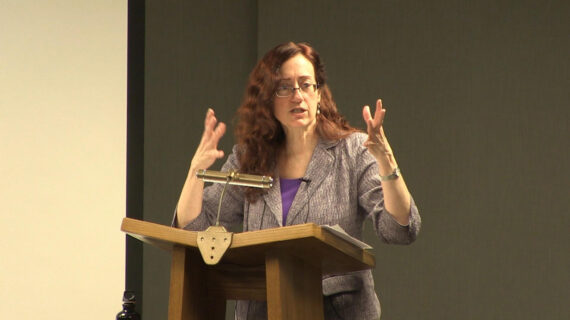
Nancy C. Unger, an associate professor of history at Santa Clara University, examines how the unique environmental concerns and activism of women framed the way the larger culture responded. She also highlights the contributions of Wisconsin women to environmental history. Unger is the author of “Beyond Nature's Housekeepers: American Women in Environmental History.”


Copy and Paste the Following Code to Embed this Video:
American Women in Environmental History
cc Today, we are pleased to introduce and host Professor Nancy Unger's presentation of Wisconsin Women in Environmental History. Opinions expressed today are those of the presenter and not necessarily those of the Wisconsin Historical Society or the museum's employees. Please join me in welcoming Professor Unger to the stage.
APPLAUSE
Thank you for that very nice introduction. It is a great pleasure to take part in another "History Sandwiched In" here at the Wisconsin Historical Museum. I want to thank Beth Lemke for letting me speak and the great staff here for the publicity that brought you all here and everybody for setting up all my bells and whistles, and particularly I want to thank all of you for coming, taking time out of your busy day to be here. When John Jones became carried away with the idea of crossing the continent to live in California, his wife's first
reaction was
oh, let us not go. But Mary A Jones' objections "made no difference, and on the 4th day of May 1846, we joined a camp for California." Used to the privileges and relative ease of white middle-class life, Mary Jones was exhausted by the rigors of the overland journey. She was also pregnant. Upon their arrival, she was occupied with the new baby and preferred not to travel any more than was necessary.
She relented, however, when her husband, who had been scouting the countryside for a home site, insisted that she come and see his selection. We camped that night, she recalled. My husband stopped the team and said, "Mary, have you ever seen anything more beautiful?" The young wife and mother was repulsed rather than impressed, noting with horror "there was nothing in sight but nature..."
LAUGHTER
reaction was
Nothing except a little mud and stick hut. Mary Jones, noted historian Lillian Schlissel, "found nothing grand, nothing wonderful, nothing to suggest what her husband so clearly saw. She and other women did not find the new country a land of resplendent opportunities. They heard their children crying and longed for home." So why did so many men and women of the same race, the same class have such different and visceral reactions to the same landscape?
Why did the majority of white middle-class men on the overland trails embark eagerly, and why did so many of their wives accompany them only reluctantly, apprehensively, writing home to their loved ones of their fear and their dread? And once in the west, the reactions of men and women to the environment frequently remained polarized. Some 60 years later, however, many women were focused on protecting the natural resources, including trees and soil, land, birds, animals, that so many men of their same race and class were determined in the name of progress to exploit for profit. Lydia Adams-Williams represented the views of many women when she proclaimed in 1908 "man has been too busy building railroads, constructing ships, engineering great projects, and exploiting vast commercial enterprises to take the time necessary to consider the problems which concern the welfare of the home and the future." But her contemporary, George Knapp, called views like hers unadulterated humbug and dismissed the conservationist's dire prophecy's as baseless vaporings.
According to Knapp, men should be praised not chastened for turning forests into villages, mines into ships and skyscrapers and scenery into work. So, why and how did this gender divide develop, and what was its impact? These are the questions that I am answering in my new book. And I begin with pre-Columbian Native Americans, and then I move on to enslaved women and their unique interactions with the environment.
So, the book tells a national story, but since we're in Wisconsin, today I'm going to highlight the activities of this state. So I'm going to pick up the story when Wisconsin was considered the west by people in the east. So, the way that husbands and wives of the same race, class, and ethnicity responded to the idea of making the journey west, both the Midwest and the far west, as we've seen already, highlights gendered differences. The trip was nearly always planned at the instigation of a man or men.
Men were responding to the calls by Horace Greeley, "If any young man were about to commence the world, we say to him publicly and privately go to the west. There your capacities are surely to be appreciated and your industry rewarded. For land and freedom lay to the west." Peter Burnett, the future governor of California, provided this added incentive. In Oregon territory, he says, "The pigs are running around under the great acorn trees round and fat and already cooked, with knives and forks sticking in them.
You can cut off a slice whenever you are hungry." Women like Mary Jones had good reason to be less enthusiastic than their husbands about making this journey, and not because they were fussy princesses. Most routes westward including rivers, deserts, mountains. Men tackled these challenges while in their physical prime, as did women, but physiology as well as gender made women view differently walking those routes or riding in a wagon across the country and facing as many obstacles, for they would do so while experiencing menstrual cycles or pregnant or having just given birth. Some women experienced all three at various points in a single journey.
Until the first mass production of the disposable sanitary pad in 1919, menstruation, I know this is a fun topic, menstruation significantly hindered women's freedom of movement. The clean rags that were used to staunch a women's menstrual flow were quickly saturated, making leaks such a concern that women of the upper classes took to their beds during the heaviest days. Women's monthly sickness confirmed perceptions of women as the weaker, inferior sex, and proved a particular burden for women travelers. At home, saturated rags were left to soak before being laundered, then dried on a clothesline.
In preparing for the journey west, all a woman could do was pack a supply of rags and hope for the best. Days spend crossing the desert or plains without access to rivers or any other water sources precluded the rinsing or washing of saturated rags, and heavy rains left no opportunities for clean rags to dry. They had the same problem with baby diapers as well. Pregnancy carried its own unique burdens.
For a class of women mortified to have to carry out bodily functions, the routine lack of privacy on the trail was a particular humiliation. Frequent urination common in the first trimester proved a special embarrassment on the plains and deserts that afforded no trees or bushes. During childbirth, infection or other complications led to high rates of maternal and infant death even in the best of circumstances. On the trail, childbirth could take place at the most inconvenient and dangerous times and places.
Halfway up a mountain pass or during a hailstorm. And traveling parties rarely stopped for more than a day to accommodate a woman's labor and recovery. Fears of Indian attacks, the need to reach grazing land and to gather fuel supplies and the specter of being trapped by an early snowfall trumped any inclination for a longer period of rest. Mothers of newborns faced immediate travel in a wagon with no springs.
Even over relatively smooth trails, travelers would attach a churn to the front of a wagon and fill it with cream. The jarring motion of the wagon over the course of a day was sufficient to produce butter but also was extremely uncomfortable for anybody who had just given birth. More than physiology, however, determined women's attitudes and experiences on the trail. Eighteen-year-old Molly Sanford reveled many internalized qualities of what women were told made them true women.
A schoolteacher, she enjoyed the benefits of schools and churches and of the best of society in Indiana. She knew she would be "deprived of all of these things in the wild, unsettled country of the west, but deemed it her womanly responsibility to not shrink from unpleasant and untried realities. Nevertheless, she spoke of the sadness of my heart for all of the bright anticipation of the probable interest of our trip does not compensate me from the sorrow at parting from friends. She and her best friends wept as only loving friends can weep.
To think we must part, perhaps forever." Now, most boys and men would also miss their friends, but friends were less integral to their identities. Riding in the shade of our prairie schooner on their first day of travel, Sarah Herndon observed when people who are comfortably and pleasantly situated pull up stakes and leave all, or nearly all, that makes life worth living and start on a long, tedious, and perhaps dangerous journey to seek a home in a strange land among strangers with no other motive than of bettering their circumstances by gaining wealth, of heaping together riches that perish with the using, the motive does not seem to justify the inconvenience, the anxiety, the suspense that must be endured. She lamented, why have we left home, friends, relatives, and loved ones who have made so large a part of our lives and added so much to our happiness? Or as one young woman put it, bitter at having to leave, "One of the most beautiful of all beautiful little villages of the east for the wilds of Wisconsin in 1855.
What will men not do for money? I would rather live very poor and live where I can see the bright streams and green hills of old Pennsylvania." But her father was bent on improving the family's material status. As much as was possible on trail environments, women remained ladies. Making clear their intention to maintain that identity and to reclaim their rightful position once established in the west.
All but a few persisted in wearing long dresses and aprons even on the trail. Mothers worried especially about the dangers posed to their daughters of prolonged exposure to the trail. The girls in Sarah Herndon's traveling party wore not only sun bonnets, of course, but riding habits that covered their clothes completely as protection against mud and dust. Nevertheless, because they wore thick shoes and short dresses, that is ones without trailing skirts, these are the scandalous short dresses, some of the girls suffered mortification at the thought of townspeople seeing them thus attired.
Anna Shaw remembered well her mother's response of the log house that would become their home on the Michigan frontier. "Something within her seemed to give way. She sank upon the ground. She buried her face in her hands, and in that way she sat for hours without moving or speaking.
Never before had we seen our mother give way to despair." Other women broke into tears when they saw the crude structures that the culmination of their long trek away from family and the comforts of the east, where it had brought them. A 17-year-old bride took in her home's mud roof and dirt floor and then proclaimed with indignation, "My father has a much better house for his hogs."
LAUGHTER
reaction was
When Debbie Allen, newly arrived on the frontier, learned that a panther was menacing the area, she cried to her husband, "This is a terrible region, Peter; do let us go back home." Not surprisingly, depression plagued frontier women, but they had no choice but to stay. The reactions of families, like this one, to the physical surroundings of their new home in Wisconsin highlight gendered attitudes about what constituted success on the frontier. For example, Chauncey and Kate Elwell left Rupert, Vermont, in 1852 for 168 acres in West Salem, Wisconsin. Chauncey, as befitting a white, middle-class man, sought material gain.
He found satisfaction in his achievements in the world outside his home. His letters to family back in Vermont detailed the amounts of corn picked, wood chopped, water drawn, livestock sold, and, particularly, payments received. He exalts over his new life in Wisconsin, telling his mother that although he is working hard, he has never felt better. Kate's letters, as befitting a woman whose sphere was almost wholly within the home, are more restrained in their enthusiasm for pioneer life.
While she recognized that others view Wisconsin as "a grand project for young people to start for themselves and to get a position in the place and society first, and by that way can exert more influence," she frequently expressed embarrassment over her own reduced standard of living. She calls herself poorly off and destitute. She's "ashamed to describe their home, while Chauncey claims to be not ashamed of his honest poverty." Kate closes her detailed description of my poorly furnished log home with, don't laugh, it is the best we have. My house is scoured, and clean and all the things are in order even if it is poor.
Kate Elwell took some comfort, however, in carrying out a practice very common among women on the frontier. Bringing beauty and diversity into her home and garden through the exchange of seeds and cuttings with family members back east. In the words of one pioneer's descendant, "What better way to stave off homesickness than to have flowers from your mother's garden growing in the garden at your new house?" Now, many women on the frontier saw themselves as crucial to the civilizing of the wilderness, a task that some took on with great relish. So this is a close up of this.
So see these women have their brooms? And this one is pouring from the silver pot into a China cup. They're going to civilize this wilderness. A generation later, many women saw their civilizing roles as one of wilderness protection.
Clara Burdette, the first president of the California Federation of Women's Clubs, established in 1900, spoke plainly of the gendered divide that existed across the nation on issues of natural resource conservation. "While the women of New Jersey are saving the palisades of the Hudson from utter destruction by men to whose greedy souls Mt. Sinai in only a stone quarry, the word comes to women of California that men, whose souls are gang saws, are mediating the turning of our world-famous sequoias into planks and fencing worth so many dollars." Pioneer educator and psychologist Stanley Hall claimed that women like Burdette suffered from "effeminization because caring for nature was female sentiment, not sound science." Even some men were criticized for promoting wilderness preservation. John Muir was a prime target, rendered both impotent and feminine in this cartoon that depicts him elaborately clothed in an apron, dress, and flowered bonnet fussily and fruitlessly attempting to sweep back the waters flushing Hetch Hetchy Valley, flooding Hetch Hetchy Valley.
By 1910, Muir's crusade to preserve the glories of the valley in its natural state was supported by 150 women's clubs nationwide. But San Francisco city engineer Marsden Manson spoke for many when he described Hetch Hetchy's defenders in thinly veiled homophobic terms as "short-haired women and long-haired men." We all know what that means. Despite such assertions, some women's sentimental approach to nature earned them grudging male respect, if not outright admiration. In 1894, Adda F Howie, Milwaukee Society leader, walked away from the many comforts and conveniences of the city to return to the farm life of her childhood.
She began raising what would become the largest herd of pure bred Jersey cows in Wisconsin. Howie criticized modern men who farmed with what she called reckless waste and hurried oversight in their rush to make a profit. She denounced the crudely prepared many acres and advocated instead for the carefully cultivated few. Howie, reported the Farm Sentinel in 1902, put a great deal of sentiment into her work and believes that there is more pleasure in living than in just the mere sake of striving after and grasping every dollar that one can hoard up.
The first woman to serve on the Wisconsin State Board of Agriculture, Howie was, by 1925, recognized universally as America's outstanding woman farmer. The secret to her success was her conviction that a dairy barn should be as clean as a champion kitchen. Thirty years before legislation required the sanitary production of milk, Howie's feminine dairy wisdom demanded that the interior of the barn and other out-buildings at her Sunny Peak Farm near Elk Grove be whitewashed, then scrubbed once a week with soap suds and boiling water. The barn's windows were cleaned and curtained.
She had curtains for her cows. The cattle were brushed and petted and everything done to make the barn as sanitary and attractive as possible. Howie's contention that cattle tenderly cared for produced higher and better yields, that was born out when many of her prized cows regularly set production records. The milk from a single cow, Ferns Gypsy, produced 5,671 pounds of butter in one year.
Howie's application of the domestic sphere's standards of cleanliness and comfort to the farm environment was so unusual and ultimately so successful that her methods were widely studied. She spoke on dairying and homemaking to agriculture experts across the country as well as in Canada and in France. The Japanese government purchased cows from her herd to improve its nation's dairy stock. Adda Howie's humane and sanitary feminine approach to dairying, one requiring no expensive or equipment, markedly transformed the farm environment.
And here's another experiment. The female band serenading the cows. Other women risked ridicule to protect the nation's natural resources. According to Clara Burdette, I love this quote, "A lot of money-making wood-sawers would have split up our giant sequoia, pride of the world, into tooth picks and lead pencils if we women hadn't caught them at it and raised such a shriek that men couldn't help hearing.
We are reinforcing the denuded mountains, and we are pumping up our rivers into irrigating ditches and canals. She observed sardonically, ever so many things like these we are doing and the best of it all is we have got the men interested by letting them believe that they thought of it first and are doing it all, and we are getting ever so much help and good work out of them just by letting them hold the reigns and shout at the team while we drive."
LAUGHTER
reaction was
"Seriously speaking," she said, "we believe that organized womanhood has so impressed itself on the commonwealth that good men court our helpfulness and active strength and all reforms that make for higher moral standards and the protection of the home and that bad men fear the power of an organized force that demands, through public opinion, pure homes, clean life, clean politics, and pure religion, the only sure basis for continued prosperity." Wisconsin women continued to claim environmental authority by virtue of their sex. As the Depression challenged women's thrift and skill at conserving household resources, club women strove to reassert women's authority and power as protectors of the environment. The Conservation Division of the Wisconsin Federation of Women's Clubs, for example, called for women to not only save and recycle within their homes, but also to campaign for forest preservation, protection against water pollution and more humane animal traps to replace what they called the steel trap atrocities. When storms of dust and sand ravished green seedlings in many Wisconsin counties in 1934, women advocated soil erosion prevention practices which is halting the cutting of trees, shrubs, and vines along streams and fences so that their roots might keep soil in place.
Nothing is more important than conservation, chairwoman Genevieve Branstad urged. She noted that the Conservation Division's "most important work of all was its outreach to schools, fostering an environmental ethic and respect for nature in the next generation, most notably in its Trees for Tomorrow program." To that end, Branstad also worked with the Eastman Kodak Company on a campaign that urged Wisconsin parents to buy their sons cameras and encourage them to shoot pictures instead of guns. Leaders in the Conservation Division included Wilhelmine LaBudde, conservation chairwoman serving Milwaukee County in the 1930s and liaison officer between the Wisconsin Federation of Women's Clubs and the US Forest Service. LaBudde frequently cited gender differences throughout her 25-year crusade to protect her state's natural resources and beauty.
She believed that women "are more foresighted and able to look more clearly at how actions today will impact the environment in the future." She noted in the Milwaukee Journal in 1932 that women had only begun to interest themselves in conservation, "yet in that brief time they have better grasped its real significance than all the male rod and gun clubs." Men, she said, continue to think dully of conservation in terms of preserving enough wildlife to facilitate fishing and hunting. While "women think of it in its terms of land use, scenic beauty, agriculture, and the national environment." "When men get over quibbling about shooting and join with the women in fostering major projects, LaBudde scolded, we'll get some real conservation." She criticized the Cecil and Nelson Timber Company for its plans to clear-cut the old growth in the Flambeau Forest for immediate profit. LaBudde suggested to the company the wisdom of a longer term alternative. "You know, there are other things, aesthetic values in life, which cannot be figured in terms of dollars and cents." LaBudde consistently pushed for safeguarding the future, noting that conservation "must enter into the very fiber of our daily life, and its essence must permeate every civic activity." Only by conserving resources at every turn "can we hope to project nature's wonderful heritage into the distant future of the human race." LaBudde successfully pushed for conservation education in all Wisconsin public schools.
Under her leadership, the Wisconsin Federation of Women's Clubs submitted a formal resolution to the governor, the Wisconsin Conservation Commission and the legislature endorsing the creation and maintenance of shelter belts to check the drying and eroding winds created primarily by the large scale removal of timber. By 1953, Wisconsin had 6,000 miles of such plantings. Now, I have a whole section in my book devoted to the "We Say What We Think Club."
LAUGHTER
reaction was
A program produced exclusively for women on radio station WIBA out of Madison beginning in 1937. It ran for 20 years. 20 years. The broadcast provided advice and information on matters including agriculture, education, and home economics.
The scripts of this monthly program provide an unprecedented window into the thoughts of these five rural Wisconsin women. This article, it was an article first, it was published in the Wisconsin Magazine of History, and it was submitted for a prize, a national prize, and it got honorable mention. And one of the readers in the report said, I looked at this picture and thought I don't think I'm going to learn a lot from these gals, and then she said I read the articles and I changed my mind pretty considerably. So I got a big kick out of that.
This cast, like women all across the country, grew up in a culture still steeped in the belief that the masculine drive caused men to focus more on the short-term, they had to support their families, by exploiting nature in order to acquire profits. The perception of women as naturally driven by altruism and the desire to protect future generations also persisted. The club's program reveals the cast's fundamental belief in the environmental forces of rural living that they shaped their own lives and the lives of their listeners, and it was women's obligation to protect that environment. Even in the midst of the Great Depression, the We Say What We Think Club asserted that the Wisconsin farm wife "has more opportunities to enjoy life in her work than the city wife who has to coop herself up in some small, hot, stuffy apartment." They were very sensitive as being perceived as hicks from the sticks.
So they were constantly talking about how great rural life is. And during World War II, city women could buy only what their local stores were able to stock and were further restricted by the rationing system. Farm women, on the other hand, could plan at planting time for the year ahead and "as long as the weatherman is at all cooperative, they'd get what they needed." Because of the ability of farm women to raise and preserve their own food, the club reminded listeners in 1943, you won't need to spend 16 of those precious ration points for a number 2 can of tomatoes. Haunted by the specter of the Dust Bowl, club leaders asserted that every farm woman was obligated to know about the dangers of soil erosion as well as the strategies to combat it.
They warned against men's relentless quest for immediate profit, emphasizing, instead, more long-term and ethical considerations for the sake of our children and our children's children on the farms. The described each remedy in considerable detail. The cover principle entailing keeping steep land in grass and trees to avoid runoff. The contour principle, planting crops in rows along the contours of intensely farm sloping land.
And the principles of diversion, constructing ridges to divert surplus water in fields during hard rains. "Man must work with nature, not against her." In addition to the We Say What We Think Club, I featured two other women's environmental organization in Wisconsin. The first is Women for a Peaceful Christmas. Citing Gallup poll figures in 1971 that 78% of American women wanted the United States out of Vietnam, these women decided to "speak in a language that all men can understand, refuse to support a wartime economy." "Money talks," noted one of the group's founders, "This is our non-violent form of pressure." Added another co-founder, "We do not want to support the economy which is killing our sons." Members of Women for a Peaceful Christmas wanted more than just peace.
They sought a reordering of national and personal priorities, beginning with the turning away from waste and conspicuous consumption. "What we're really aiming for," explained Nan Cheney, "is a change in attitudes. We're trying to raise people's consciousness about the wartime economy and what they can do to control their own consumption of resources." If our economy is based on dishwashers that must be replaced every five years and automobiles that we can't find parking places for, then something is seriously the matter with our values." The group lamented the fact that Christmas, in particular, had become for the middle-class "a time of tremendous waste of resources with mountains of wrapping and packaging materials thrown away and tremendous pressure to buy badly made toys." Commercialism had distorted the message of peace, love, and joy, persuading consumers, instead, that peace is the product of exploitation, that love is measured by material possessions, and that joy abounds in compulsive consumption. Their goal was not a holiday boycott, but rather they offered alternatives designed to make celebrations more meaningful, less commercial, less wasteful, and more peaceful.
Their suggestions ranged from gift ideas, including handcrafts, this is a pattern to make your own Christmas tree ornaments out of felt, environmentally friendly canvas shopping bags, and organic cleaning products. They wanted these as substitutions for energy, consuming outdoor Christmas lights. They had all kinds of ideas. "If you don't want your Christmas celebrations to be controlled by the monoliths that corrupt governments and pollute environments, Women for a Peaceful Christmas urged women, the sex that did the vast bulk of the holiday shopping, take matters into your own hands.
Don't buy the pre-packaged disposable Christmas; make your own Christmas." Under the slogan "no more shopping days until peace," Women for a Peaceful Christmas organized ostensibly powerless homemakers into a quiet revolt against what it called an economy which thrives on war and the destruction of our Earth's resources. According to the press, its membership entertained no illusion of making much of a dent in an economy that encourages over-consumption, and yet in five months time that movement had spread to almost every state with members ranging in age from teenagers to grandmothers. The Wisconsin chapter was inundated by more than 15,000 queries and request for its informational starter packet, its buttons, its bumper stickers. Their messages spread rapidly, aided by press coverage ranging from church bulletins to national publications including Women's Day, the Christian Science Monitor, and Newsday, as well as support from the NAACP.
Members in Madison held and annual peace fair, promoting environmentally friendly ideas and gifts and celebrating women's ability to however infinitesimally slow the breakneck speed of American consumerism and to preserve precious natural resources When asked during the group's fourth year of operation if its goal was to undermine the American way of life, founder Nan Cheney responded I hope so. She says, we have to rethink the way we live. I can't believe we're so dependent on frivolous manufactured things that we can't learn to make useful things instead of what Madison Avenue tells us that we want. Simplified, environmentally friendly alternatives allow individuals to decide what's really important in life and what just gets in the way.
One headline summed up the group's emphasis on the long-term goal of controlling waste. "Christmas can be saved for future generations." As the war in Vietnam came to a close, the focus of Women for a Peaceful Christmas shifted increasingly to environmental issues. Mindful of worldwide food and energy shortages, pollution and economic uncertainty, its members campaigned especially against waste. The final Wisconsin highlight I'd like to share from my book is the story of LAND.
This is Wisconsin's League Against Nuclear Dangers, LAND. On December 1, 1973, the members of LAND staged a highly publicized release of red balloons that were tagged with postcards describing the various radioactive substances that they represented. The cards' finders, the balloons' finders returned the postcards to LAND from as far away as West Virginia, vividly demonstrating the traveling range of airborne contaminants. The league, made up Wisconsin homemakers without any experience as activists, had been formed earlier in the year by Gertrude Dixon in opposition to a proposed nuclear power plant in her hometown of Rudolph, Wisconsin.
Although the plants proponents touted nuclear power as safe, cheap, and virtually unlimited source of energy, LAND members remained unconvinced. They expressed publicly their concerns about the potential for accidents and leaks that could result in an uncontrolled spread of toxic radiation. The organization's members were white, middle-class women in their 30s and 40s. Most were raising children and not employed outside the home.
They were, claims one scholar, naturalists for activist work because their prescribed gender role as the primary caregivers to their children had previously involved them in broad, humanistic, and nurturing issues. Their interactions with other activists were minimally contentious, they all got along, and their dearth of conventional power left them with nothing to lose. Ridiculed for their lack of scientific credentials, many, like co-chair Naomi Jacobson, had no college education, and dismissed by utility officials as "illogical, emotional housewives," LAND members educated themselves about nuclear hazards. Most significantly, they worked to educate and gain the support of the entire community, not just appeal to those perceived to be in power.
Every time the nuclear people would send out experts, they'd say to the expert now tell me, what is your degree in? And it was often in marketing, it was their PR person or whatever, and they'd done their homework looking at all these documents and so forth. And they said we're more of an expert than you are, go sit down. They were just great.
In 1980, the Wisconsin Public Service Commission bowed to widespread opposition, much of it generated by LAND, and canceled plans that had grown to include eight proposed nuclear power plants. "We won, we beat the monster," noted one LAND member, adding that the sweet victory was gratifying all the small Davids to confront Goliath and come out on top. By the time the group formally disbanded in 1988, the world had witnessed events that proved LAND's concerns were not just emotional vaporings. The partial core meltdown at Pennsylvania's Three-Mile Island in 1979, the Chernobyl accident in the Ukraine in 1986.
Many former LAND members became active in state, national, and international groups concerned with nuclear issues. Well, I could go on like this all day long, but in the interest of time, I will stop here, but I hope I've at least whetted your appetite to learn more about American women in environmental history. So I welcome your comments, and I thank you very much.
APPLAUSE
Search University Place Episodes
Related Stories from PBS Wisconsin's Blog







Donate to sign up. Activate and sign in to Passport. It's that easy to help PBS Wisconsin serve your community through media that educates, inspires, and entertains.
Make your membership gift today
Only for new users: Activate Passport using your code or email address
Already a member?
Look up my account
Need some help? Go to FAQ or visit PBS Passport Help
Need help accessing PBS Wisconsin anywhere?

Online Access | Platform & Device Access | Cable or Satellite Access | Over-The-Air Access
Visit Access Guide
Need help accessing PBS Wisconsin anywhere?
Visit Our
Live TV Access Guide
Online AccessPlatform & Device Access
Cable or Satellite Access
Over-The-Air Access
Visit Access Guide




Follow Us