

 Passport





American Poets on Death and Suffering in the Civil War
03/30/14 | 39m 55s | Rating: TV-G
Beth Lueck, Professor, Languages & Literature, UW-Whitewater, discusses the poems written during the Civil War to come to terms with the death of loved ones and to bear witness to the losses. Poems focused on loss, displacement and sorrow.


Copy and Paste the Following Code to Embed this Video:
American Poets on Death and Suffering in the Civil War
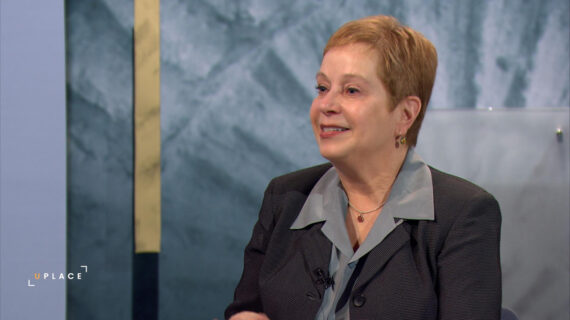
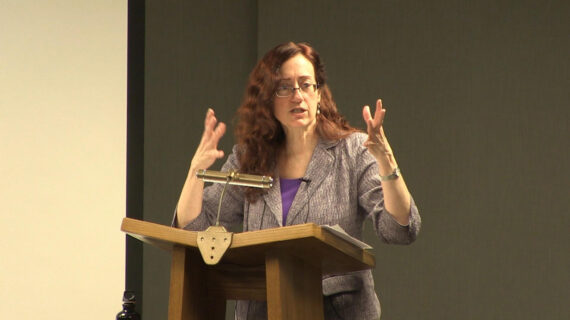
I'm Kari Borne. I'm from the Office of Continuing Education at UW Whitewater, and I'll introduce today's speaker. Beth L Lueck is professor of English in the Department of Languages and Literatures at UW Whitewater. Her most recent book is
Transatlantic Women
Nineteenth-Century American Women Writers and Great Britain, co-edited with Brigitte Bailey and Lucinda L Damon-Bach. President of the Harriet Beecher Stowe Society, she directed the international conference Nineteenth-Century American Women Writers in Great Britain, Ireland, and Europe in 2008 and directed Transatlantic Women in Florence in 2013. She teaches courses in American literature, 19th century women writers, Gothic literature, and the Civil War. Although she was born in Pennsylvania, Dr.
Lueck's roots in Wisconsin go back to the 1840s when her mother's family emigrated from the east coast to Lodi, Wisconsin, to farm. Her younger son, who is a 2013 graduate of UW Whitewater, will deploy to Afghanistan in May. Welcome Dr. Beth Lueck.
APPLAUSE
Transatlantic Women
Thank you, Kari, and thank you, all of you, for coming out today. This maybe a bit unorthodox but I want to dedicate my lecture to two people. One is to my aunt, Jean Larson, who was a resident at Fairhaven for a number of years, and she was a Rosie the Riveter during World War II. I'm also dedicating this to my younger son Daniel who will deploy to Afghanistan in May.
The topic of my lecture is
Bearing Witness
American Poets on Death and Suffering in the Civil War. The number of soldiers who died in the Civil War, about 620,000 between 1861 and 1865, is roughly the same as the total American fatalities in the Revolutionary War, the War of 1812, the Spanish-American War, World War I, World War II, and the Korean War combined. This is a war that was the bloodiest in American history. One that touched nearly every American living at that time.
In addition to the deaths of soldiers, historians estimate that about 50,000 civilians died, including women and children who died of starvation and disease. While death was intimately familiar to 19th century Americans, carnage on this scale was heretofore unknown. This shared suffering, as historian Drew Gilpin fast describes it, would outlast the war, making sacrifice and its memorialization the ground that would ultimately reunite the north and the south. Before the war, the prevalence of death and the lives of Americans, largely due to disease but also deaths from child births and other causes, led to an understanding of what they call the good death, as the 19th century Americans imagined it.
These elements included the diseased awareness of his fate, his willingness to accept it, his showing signs of belief in God and in his own salvation, and messages and instructive exhortations for those at his side. Death in combat disrupted these expectations. The condolence letters and elegiac poems tried to replace the idealized deathbed experience with reports on the conditions of soldiers who knew that death was approaching. What I would like to focus on this afternoon then is not the nationalistic poems that celebrated the glories of the Civil War, such as Julia Ward Howe's Battle Hymn of the Republic, but the poems that were written to help people understand the meaning of death and the war, whether the death of a loved one or the loss of many lives.
This poetry fueled war, as one critic describes it. Feature poetry written by those who later were acclaimed, such as Walt Whitman and Emily Dickinson, and by ordinary people who were trying to express their feelings about the death of a loved one. These poems were published everywhere. In newspapers and periodicals, in scrapbooks, letters and books, or just read at memorial services for the dead.
Poems might express the writer's innermost feelings of loss, displacement, and sorrow. Or they might try to communicate with those on the home front, describing the circumstances of a soldier's death in order to comfort the bereaved. Above all, the writer's of these poems were bearing witness to these losses, individually and by the thousands and tens of thousands. We'll look at poems by famous poets, Walt Whitman and Emily Dickinson, although Whitman was a published poet and Dickinson was still largely unknown during the Civil War, and poems by relatively unknown writers.
One of the poetic forms we'll discuss will be the soldier elegy, others will be more familiar to readers of 19th century poetry. Whitman's involvement in the Civil War began in December 1862 when he traveled from Brooklyn, New York, to Washington searching for his brother who had been wounded in the Battle of Fredericksburg. If some of you are aware of the history, that was a horrendous battle with thousands of casualties. The poet stayed on.
He found his brother was fine, but he stayed on at the camps near Washington. And the result was a collection of poems called Drum-Taps, which offered a quiet testimony to the pure democracy of courage and suffering of the soldiers. Whitman's experience of the need for news of his brother at the front and his brother's expressed wish for news of the family back made him determined to provide a link between the war and the home front, between soldiers and their families, with letters and poems. As an amateur amanuensis, Whitman wrote thousands of letters from soldiers to their families, both for illiterate soldiers and for those too ill to write.
Among these were many letters to families, many telling of their son's or a husband's death. This gulf between soldiers and civilians, he believed, could be bridged by his reports to newspapers, his poems and these letters to the families of soldiers. When he could, Whitman tried to set the suffering and death of the soldiers in a larger, redeeming context which emphasized the transfiguring courage of the sufferer, along with the love and care that attended him. Like the writings of Louisa May Alcott, she's the same person who wrote Little Women, she wrote about her experiences nursing at a hospital in Washington in the early years of the war.
Whitman stressed the love and care that surrounded the wounded and dying soldiers, consoling those at home with the belief that their own soldier might have been similarly cared for and comforted. In two poems, this transfiguring courage is underscored, and you have copies of both of these. One is Vigil Strange I Kept on the Field One Night, and the other is A Sight in Camp. And we're going to talk about Vigil Strange first, and then I'm going to hold off on the other one until the end so that if we don't have time, then we can skip that one.
So, first I want to ask if anyone in the audience would like to read the poem for us. It's Vigil Strange I Kept on the Field One Night. Thank you so much. That was beautifully read.
This is a poem about mourning as well as a poem of mourning. And the scene is, of course, a battlefield, and I should point out that the poet never saw a battle in the war. He was never on the battlefield itself, but because he nursed so many soldiers during the war, he had a very lively imagination and he was able to understand what it was like to be on the battlefield and what it might have been like to bury a comrade like this. If I were teaching this in a class, the first thing I would ask you is, what is a vigil?
Because I found that many of my students don't know. A watch. It's a watch. Yes, thank you.
It's a watch. And, interestingly, the word vigil is repeated 12 times in this poem. So the idea that this is a vigil is very important to the poet. And he's writing as if he were the soldier himself, as if he were on the battlefield.
Clearly he's an older man, old enough to have a son who's old enough to fight with him. And sometimes students ask if this was common, and it wasn't but it was not unknown for a father and a son to fight together or for brothers to go into war together. In fact, that was common well into World War II where we had several brothers or even more all serving in the same place at the same time. So this is a vigil, and it's taking place in the middle of the night.
And maybe for poetic reasons, the poet has inverted, we would say strange vigil, but he calls it a vigil strange, emphasizing the strangeness of it. And who is that person that he's keeping vigil with? The person he eventually buries? It's a younger person.
Do we have any other clues as to who it might be? I think it's his son. Yeah. Yeah.
Some readers think that it could be any sort of younger soldier, but he says several times, he calls it his son. And he says, "Son of responding kisses," and it sounds like somebody who brought up this boy, who tucked him into bed at night, who kissed him. Or a very sensitive man like Walt Whitman. Yes.
Thank you. And so he's imagining this man, his son being mortally wounded and having to say I need to go, I need to go to the battle and finish my job, but I'll come back. And when he comes back, his son is dead. That much is clear.
He's died in that moment while his father was gone. And so the rest of it is simply the vigil. He's keeping watch. Watch over his son at night.
And part of the poem is a meditation on the comradeship of the battlefield. The comradeship here between father and son, but that could be experience between any two men, and they were certainly almost all men who were fighting. The comradeship that they experienced through fighting together in a battle. And here he's beyond tears.
He says, "Not a tear, not a word." It's a silent vigil. The two of them together. And one of the things I think the poet is doing is he's assuring those people at home who are reading this that someone was there when their soldier died. Their soldier did not die alone.
Because if he were at home, dying, the family would be all gathered around the bed, they'd be holding his hands, they'd be talking to him, they'd be crying, and they'd be listening for those last words. That was considered very important, that the person might say something really significant as they died. And so I think the poet is saying to his readers someone was there. Someone was there with your soldier when he died.
And, interestingly, Louisa May Alcott does the same thing with a particular soldier dying in the hospital. She describes it at length. She describes him holding her hand so hard that after he died they had to pry his fingers off her hand. So she was standing in, as Whitman is standing in, for the family at home, the family that couldn't be with their soldier when he died.
So, by the end of this poem, Whitman says, he says, "Along the way I think we shall surely meet again," a reference to his hope that they would meet in heaven. And he buries his son kind of oddly, almost as if he were tucking a child into bed, wrapping the blanket around him carefully, burying him, and he says and buried him where he fell. And at the end in that penultimate line, he says he "folded my soldier well in his blanket." There's that sense of ownership, that sense of kinship. He's my soldier.
He's not just any soldier who's being buried. We'll come back to Walt Whitman if we have time for the second poem at the end, but I wanted to talk about two others first. One is a poem that's written by
a man with a wonderful name
Obadiah Ethelbert Baker. And as far as I know, he has remained relatively unknown as a writer. This poem is written in the form of a soldier elegy. It's a poem written to commemorate the life of a particular soldier who died in the war.
Baker was a former teacher who served in the Iowa cavalry volunteers. He and his wife wrote journals back and forth to each other during the war. And they wrote dear, wife. They were definitely addressing their journals to each other, and then they would mail the journal to the loved one and exchange back and forth throughout the war.
His own journals included poems that he wrote about his experiences in the war and love poems to his wife. And sometimes he would end an entry with just a couple lines of poetry that he'd written for his wife.
One poem concluded
"Oh God, when will the strife be o'er? When will we learn to war no more?" So by this point, he was very, very tired of war. The poem The Unknown Grave, that we're going to read, was written long after the war. Would anyone like to read The Unknown Grave?
Okay, I'll go ahead and read it. This is called The Unknown Grave. He's sleeping in an unknown grave, A boy who wore the Blue; He was an idol of my heart, a soldier good and true. 'Twas after the siege of Vicksburg; we held that great stronghold.
The starry flag of the Union waved o'er its heroes bold. Yes, 'twas after months of fighting; he'd wrote one letter more. Peace dwelt on the mighty river; Cannons had ceased to roar. July of sixty three had gone, and August passed away.
Next month brought tidings of His death, no word where the hero lay. He lieth in a distant state, Far, far from home and friend; Parents, nor brothers, nor sisters, can o'er his ashes bend. Perchance near the mighty river, holly blossoms and waves. Its branches of green above him, Or ashes of the brave.
Somewhere in the sunny south land, His ashes they must lie. But his spirit is in Beulah, We'll meet him by and by. His testament came with his clothes, And told of usage strong. And many landmarks on the way, Of route he went along.
His watch came also in the box, And in the back of case they wrote, Died third of November, But did not name the place. Somewhere in the sunny south land, Far, far from friends most dear; His grave will never once receive, A loving mother's tear. This is a simple lyric poem, contrasting to Whitman's long, free verse lines. In this case, it has short lines of alternating iambic tetrameter and iambic trimeter, which is known as hymnal stanza.
And you can see the second and fourth lines of each stanza rhyme. So we have blue/true, hold and bold, etc. The speaker in the poem may be the father of a dead soldier, calling him "the idol of my heart." The poem clearly identifies the subject as a Union soldier. He's a boy who wore the Blue.
And he's a soldier who survived the siege of Vicksburg, which ended in July 1863, only to die a few months later. In this poem, although the soldier himself is not identified by name, he's clearly known to the speaker, probably his son. So this is not a poem about an unknown soldier. What then is the problem for the speaker in this poem?
The problem is his boy is lying in an unknown grave. He doesn't know where the soldier is buried. So he and his family cannot visit the grave to mourn him properly because that's what you would do. People do that, of course, even now.
They don't even have a body to bury themselves. So the poem presents the problem of many families who lost sons or husbands or fathers in the Civil War. They don't have a body to bury, and they often have no idea where it's buried. Baker writes, "He lieth in a distant state, far, far from home and friend; parents, nor brothers, nor sisters, can o'er his ashes bend." So the family must grieve without the body of their loved one, and imagine him in heaven, Beulah, where they'll meet again.
Their one consolation, other than their pride at his giving his life for the Union, is that his possessions, clothes, a watch and his bible, are returned to them. And notice the father's very proud that that bible is well used. So clearly his son has been reading the bible. The poem closes on a mournful note.
His grave will never once receive a loving mother's tear. And, again, that would be the normal course of things that someone who died would be buried close by. You'd be able to go to visit the grave, and the family would be able to go and weep over the grave, and this is not possible for many, many families in the war. So we turn from this soldier elegy by a relatively unknown poet to a poet whose work was mostly known to her family during the Civil War.
Fame came late for Emily Dickinson. First, a note on her life. As her Civil War poems attest, Dickinson was very much involved with current events in the 1860s. Far from being isolated in her room, as her biographers once assumed, she was reading the newspapers, responding to developments in the war in her poems, and observing the reactions of her fellow citizens in Amherst to their losses in the war.
Dickinson's letters and poems on the death of Frazar Stearns, the son of the president of Amherst College and a friend of her brother, illustrate how deeply involved she was in the war. Stearns died in March 1862 at age 21 at the Battle of New Bern, North Carolina. In a letter to her cousins that same month, Dickinson writes, "Tis the least that I can do to tell you of brave Frazar, killed at New Bern, darlings. His big heart shot away by a Minie ball.
I had read of those. I didn't think that Frazar would carry one to Eden with him. Just as he fell and his soldier's cap with his sword at his side, Frazar road through Amherst, classmates to the right of him, classmates to the left of him to guard his narrow face. Dickinson echoes Tennyson's Charge of the Light Brigade in her description of him riding through Amherst, and she conflates his departure to the war with his return from battle, dead, where all his classmates were in mourning, walked in precession through town with his body.
Dickinson's letter suggests that Stearns both lived and died nobly. His bravery and heroism unquestioned. In a letter to a family friend, Dickinson describes her brother's and possibly her own feelings about Stearns' death. I'm quoting from her letter.
She says, "Austin," her brother, "is chilled by Frazar's murder. He says his brain keeps saying over, 'Frazar is killed; Frazar is killed.' Two or three words of lead that drop so deep they keep weighing." The words of lead Dickinson refers to here are conflated with the bullets of lead the killed him. Both kinds of bullets, the words and the Minie balls, wound those they hit, both the poet's brother and the soldier himself. And just a note on the Minie balls, I think it might have been said Minie.
That was a new kind of bullet that was especially explosive in the human body. So it did a lot of damage. And she says here that it lodged in his heart, so that's how he died. In a poem written at about the same time, Dickinson reflects again on the violent death of her brother's friend.
And this is the poem number 426, which you have on the same page as The Unknown Grave. Dickinson is a little hard to read, but would anyone like to try to read one of her poems? Okay, now that I've told you it's hard, nobody will want to read it. It's hard because she leaves words out sometimes, and I'll try to make sense of it for you.
It don't sound so terrible-quite-as it did- I run it over-"Dead", Brain, "Dead." Put it in Latin-left of my school- Seems it don't shriek so-under rule. Turn it, a little-full in the face A Trouble looks bitterest- Shift it-just- Say "When Tomorrow comes this way- I shall have waded down one Day." I suppose it will interrupt me some Till I get accustomed-but then the Tomb Like other new Things-shows largest-then- And smaller, by Habit- It's shrewder then Put the Thought in advance-a Year- How like "a fit"-then- Murder-wear! This poem is written in a very fractured version of hymnal stanza, which actually is the same kind of form that Baker's poem is written in, but you can just see by looking at it how different Emily Dickinson's rhythms are. This is her favorite poetic form, and it's her favorite and she breaks it all up constantly.
So here, the shifting and the broken meter, along with the barely rhyming lines, suggest the troubled aftermath of this soldier's death. After the initial shock, she suggests, the death doesn't sound so terrible as it did at the first. She tries out the words. Dead, brain, and dead again.
Perhaps translated into Latin, she thinks, the words don't seem to shriek quite as much, confined here in the broken meter of her poem. In the second stanza, she seems to turn to the thought of his death. She turns at first one way and then another. Looking at it full in the face, she says, a trouble looks bitterest.
But turn it slightly in another direction, and it seems to get better. When tomorrow comes, she writes, she will have gotten through another day of grief. So she kind of looks ahead, thinking it'll be better; it'll be better eventually. In the last stanza, the poet looks ahead into the future, a whole year ahead.
Perhaps then the thought of his death will fit better and it will be more acceptable to her. Yet, the unexpected word "murder" in the last line undercuts the poet's attempt to reason away his death. Instead of a heroic death in the battle, she views his death as murder. I don't know any other writer who uses this term about someone who dies in battle.
So it's an individual life unlawfully destroyed. In this way, she resists the impulse to view the soldier's death as part of the larger narrative of collective sacrifice for the greater good of the nation. Critic Faith Barrett suggests that this also signals her resistance to the Christian narratives of acceptance and closure offered by local newspapers in their obituaries about Stearns' death. So instead of the acceptance of Baker's poem The Unknown Grave, with its only sadness in the heroes anonymous burial far away from home where his family cannot grieve for him, Dickinson's poem resists that simple acceptance of death in wartime as heroic.
Both were patriotic young men. They were boys who wore the Blue. But while Baker's soldier is assumed to have died a heroic death, the loss of Dickinson's friend and neighbor is characterized as murder. His classmates may have marched in procession when his body was returned home, and at least this family in town are able to bury their own where they can frequently visit his grave, but the poet herself questions the collective acceptance of the loss.
Each of these very different poems, Whitman's Vigil Strange, Baker's Unknown Grave, and Dickinson's poem on Stearns' death, responds in a different way to the loss of a soldier in wartime. Yet each one has a larger aim. Each poem bears witness to the dead, whether the soldier agrees or disagrees with the meaning of the war and to the tens of thousands of individual losses occasioned by the war. Like hundreds of other poets writing for publication in a newspaper or a book or just pasting verses in a scrapbook, these poets bear witness to their losses, both individual and collective.
150 years later, we read these poems and remember the dead. And I will just simply ask you, that's where I have stopped, but if you would like to read A Sight in Camp in the Daybreak Gray and Dim, I'd be happy to do that. That's the second poem on the Whitman handout. Thank you.
Again, that was beautifully read. This is called A Sight in Camp in the Daybreak Gray and Dim, and like the Vigil, it emphasizes something visual, a sight. And in this case, it's kind of like a spiritual insight, an epiphany. And I should tell you the background is that Whitman, when he was looking for his brother who had been wounded, he actually saw a hospital tent and there were three bodies in front of it covered by blankets.
So this is a real, based on a real experience of his. And it would be probably just like the poet to lift the blanket on each one and to peek under to see who it was. And, of course, we have three people here, an older man, someone who's almost a child, and a young man. The grandfather and the child and the self.
Yes. And we have a trinity, and the three, the number three has symbolism in many cultures, whether Christian or otherwise, and I think clearly the reference here is Christian since he invokes Jesus at the end of the poem. And so it's really just visual. It's just he sees the forms, the lifts the blanket, and he comments on what he finds.
And he asks them who they are. He says, who are you, elderly man? And he calls him my dear comrade. So there's this feeling of comradeship between the poet and the dead.
And, as I said, although he didn't fight himself and he never was on the battlefield, he was very close to the soldiers. He nursed, we think, between about 80,000 soldiers during the war He ruined his health doing it. So here he is at the beginning looking, looking at these bodies. And then he says, who are you, sweet boy, with cheeks yet blooming?
And the youngest people on the battlefield would have been what we would call children. They would have been 12-year-old boys, and they were the drummer boys. So you had to be 12, which was considered an adult in those days. So it's very possible it was a boy who had died.
And he turns to the third, he says it's not a young face, it's not an old face. And he says, I think I know you. And he says, I think this face is the face of the Christ himself. Dead and divine and brother of all and here again he lies.
Why do you think he might recognize not Jesus but Christ in this figure? What have all these men done that Jesus also did or Jesus did as Christ? Sacrificed. They had sacrificed, yes.
They had sacrificed their lives for this larger cause. And so in the third one he sees the face of Christ who sacrificed himself for all humanity. And he calls him dead and divine, so, God-like, but brother of all. So he brings us in.
He's the brother of all of us. And I think it is sort of sad, tragic way that this is all happening again. Jesus has already given his life. He's giving it again.
All of these young men, these old men, even boys are dying for this, what Whitman would have considered this great cause. He was very deeply patriotic, and Drum-Taps poems suggest that. But for now, let's go ahead and thank Dr. Beth Lueck for a fantastic lecture today.
APPLAUSE
Search University Place Episodes
Related Stories from PBS Wisconsin's Blog






Donate to sign up. Activate and sign in to Passport. It's that easy to help PBS Wisconsin serve your community through media that educates, inspires, and entertains.
Make your membership gift today
Only for new users: Activate Passport using your code or email address
Already a member?
Look up my account
Need some help? Go to FAQ or visit PBS Passport Help
Need help accessing PBS Wisconsin anywhere?

Online Access | Platform & Device Access | Cable or Satellite Access | Over-The-Air Access
Visit Access Guide
Need help accessing PBS Wisconsin anywhere?
Visit Our
Live TV Access Guide
Online AccessPlatform & Device Access
Cable or Satellite Access
Over-The-Air Access
Visit Access Guide




Follow Us