

 Passport






African American Degree Attainment
11/16/10 | 1h 34m 35s | Rating: TV-G
Dr. James Minor, Senior Program Officer, Southern Education Foundation. Dr. Minor discusses the correlation between the level of education and quality of life, especially relating to the African American and Latino communities. Dr. Damon Williams and Dr. Jerlando Jackson join in a panel discussion.


Copy and Paste the Following Code to Embed this Video:
African American Degree Attainment
cc
Clifton Conrad
Welcome to this morning's session. It's a pleasure to be with you all in this magnificent new building, including this one among many sanctuaries. It's a pleasure to be here in every sense. I will begin by introducing our speaker, Dr.
James Minor, who, as I think many of you know, is being presented with the Alumni Achievement Award from the School of Education here at the University of Wisconsin. He will speak for about 25 to 30 minutes, as I understand it, at which point I will introduce the two panelists immediately to my right who will make some comments. Then we'll have an open discussion of the topic as well as Dr. Minor's remarks.
So let me begin, if I could, with a brief introduction, somewhat formal but also informal as well. The University of Wisconsin-Madison is a great public university. And I think from my perspective it stands upon two pillars in particular. One of those is that faculty, students, everyone, is passionately engaged in the pursuit of promising ideas.
That's what fuels us each and every day, not simply acquiring knowledge but pursuing ideas in a meaningful sense. And the other pillar for me, and I know many, many others as well, is that great universities, faculty, staff, students, everyone, is committed to making a difference in the world. If I can think of anybody who embodies those two pillars, it's the gentleman standing to my immediate left, Dr. James Minor.
He reminds me of why many of us have chosen to spend our lives in a public university and a great public university like this one. It's a great pleasure and honor, really, for me to introduce someone who graduated only nine years ago but has moved on so quickly and already made such a difference in the world. Let me add a few more formal comments, if I might, following the instructions given me as to what I might say about James Minor. He got his PhD, as I indicated, in 2001 in the Department of Educational Leadership and Policy Analysis.
He is now the Senior Program Officer for the last couple of months and director of the higher education programs at the Southern Education Board, which you may or may not know, he'll probably say a bit more about it. It's now been around for almost 140 years, roughly. It's had a major impact. He's clearly one of the major up and coming, in the most meaningful sense, scholars in the field of higher education.
His work for the last nine years now has focused on institutional governance and decision making, in general, in particular in minority-serving institutions including HBCUs or historically black colleges and universities. And particularly their role in providing, advancing equal educational opportunity for students. He's currently engaged in and just beginning a three-year project, a funded study, looking at the capacity of HBCUs, and Hispanic-serving institutions as well, a project aimed at informing federal and state policymaking across the country. His research productivity is really very exceptional.
He got tenure at Michigan State last year. What's most important about his work is not just the volume of productivity, it's the quality of the work. I refer, in particular, to a piece he wrote a couple of years ago in the American Educational Research Journal called Segregation Residual which was in every sense an exemplary piece. And I think that's the kind of work that those of us who work at a university like this are proud of most of all.
He has long been involved in educational reform. I won't say a lot more about that now because that's clearly what he's doing and will do for many years to come. I think one of his colleagues provided us with these comments and I take the liberty of
repeating them
"What impresses me most is I believe that James is motivated by a true sense of purpose. His commitment to improve the lives of people through the transformative power of higher education is what distinguishes James Minor from so many others in the higher learning." I'm not only pleased but delighted and honored to present, on behalf of all of us, to Dr. James Minor the School of Education Alumni Achievement Award. Dr.
Minor.
APPLAUSE
James Minor
Wow, thank you, Clif. And thank all of you for being here this morning. I had no idea what he would say. So when they told me Clif would be introducing me, I sort of held my breath.
If you all know Clif like I know Clif...
LAUGHTER
James Minor
The fact that he was able to stick to the script somewhat surprises me.
LAUGHTER
James Minor
But I'm very grateful. You can tell by the bow tie, right? I'm very happy to be here this morning. I'm very honored and in many ways I'm humbled to be here and to be here to receive this award.
This is a very special place. Many people have commented as such over the last couple of days. But it's also a very special space for me. In about six months this coming May will mark my 10-year anniversary since receiving my doctor agree from this School of Education.
Until this day, I've been a part of many other higher education organizations and institutions, to this day when people ask me about my experience at all of these places, I am very quick to tell them that the University of Wisconsin-Madison was the richest intellectual community that I've ever been a part of. And I'm very proud to say that. So I thank you for welcoming me back so warmly. Being back here makes me, it forces me to remember my educational journey that led me here.
I can remember after completing a master's degree in sociology at the university of Nebraska I returned home to Detroit, but the master's thesis that I completed involved me working with a national data set on quality of life indicators. And so if you all know sociologists like I do, it's this huge national data set and one of the things that quickly came to me was the correlation between the level of education in almost every indicator or quality of life in this data set. So while conducting research I was able to manipulate this national data set to show this correlation. Invariably, but not surprising, the people who had more education were more likely to score higher on these quality of life indicators.
So they tended to be more optimistic about life. They had health insurance. They were more optimistic about their children's future. They lived longer.
They voted. They volunteered. They were less likely to get divorced. The list went on and on and on, you can imagine.
More disturbing for me, however, was the disparity for people of color in this data set in this sample, again not surprising but a moment of intellectual clarity for me nonetheless. African Americans and Latinos were disproportionately low on all of these quality of life indicators, and they were less likely to earn a college degree. So with this new level of awareness, I earned a master's degree, I returned home to Detroit, I was working in the community center and I had the opportunity to see firsthand, research and practice, the effects on the lives of individuals, the effects on children, the effects on family, the effects of being uneducated or undereducated on communities. So before I even had the opportunity to pursue a degree, I had somehow morphed into an educator.
So I'd gone from sociologist to educator probably without even knowing it. Now, remember this is the summer after graduating with a master's degree, I returned home to Detroit and in that moment, without any plan, only motivation, I packed up my Ford Mustang, I had a hatchback at the time, and drove without any plan whatsoever, only motivation. I drove about 45 miles west of Detroit. There's a university there.
LAUGHTER
James Minor
And I found my way to the School of Education. I walked in the building with no appointment, hadn't sent an email, no postcard, no nothing. Walked in and I said I need to see Dean Cecil Miskel, and to my surprise he saw me for about 30 minutes. And I went on to talk to him about my plan and my goals to save the world via the virtues of education.
And after listening to me for about 20 minutes he said to me, young man this is all very impressive but based on what you're telling me I think your talents and your ability and your interests may be better suited for the program at the University of Wisconsin-Madison. Now, at the time I don't know if he was just trying to get rid of me...
LAUGHTER
James Minor
Or if he was being sincere, but for me it didn't matter. So I packed up my stuff, I went back home to Detroit and the very next week I packed up my Ford Mustang hatchback once again and set out for Madison, Wisconsin. No appointment, no phone call, no email, no telegram. I was just going.
I found my way to Bascom Mall to the School of Education, walked in the front door here and said I need to see Dean Charles Read. I didn't know they called him Chuck at the time. And his assistant, who was very nice at the time, greeted me. She said, is he expecting you?
I said, no. She said, well Dean Read is on vacation, and he's not expected to be back for another two weeks, what's the nature of your visit? So I laid it on her.
LAUGHTER
James Minor
I was indiscriminate. I went on about my story and what I had to accomplish and achieve and why I needed to be a part of the program here. She said, well the Associate Dean, Michael Subkoviak, is here, let me see if he'll see you. He agreed.
I talked to Michael, laid it on him. And he said to me, I'm going to place a phone call for you to the coordinator of the doctoral program, George Kliminski. And if you all know George like I do, you can imagine that that was the beginning of my educational journey here at the University of Wisconsin-Madison. So a true story, but an interesting story.
And for me I tell you all that, not for the entertainment value, but because in a lot of ways my personal educational journey informs my work and in many ways even my presentation here today. There's a certain irony, if you will, in educational opportunity. You all have heard this before. The inner-city kid who overcomes the ghetto and social odds to go on to have a successful life, right?
You all heard the story of the three doctors, the three teenagers in Newark, New Jersey, who make a pact in high school to stay and to graduate high school and stay in college and become doctors. Or even the kid from the east side of Detroit, a product of the Detroit public school system, who goes on to become a professor at a university that didn't accept him as a high school applicant. All of these stories sort of influence my work a great deal, and so what I want to share with you today for a short while, as Clif has instructed me, how I think these things come together. There are a few things I want to combine my experience and my training.
All of these have led me to a single premise that informs my work. Now I've tested this out, it's a working premise maybe I should say, but here it is, it's that going to college is the single most transformative thing that can happen to a young person. I'm testing it out but I've stuck to it pretty much. Going to college is the single most transformative thing that can happen to a young person.
And I've been known to ruffle the feathers of my K-12 colleagues in a very cooperative way by commenting that in today's world graduating from high school doesn't change your life, graduating from college does. Now, I don't say that to ruffle their feathers intentionally, but really I do it in a way to push them to suggest that to prepare students to graduate from high school only or to pass a high-stake exam, an exit exam for high school is not enough and that the job is really to prepare high school students with the social capital and technical ability to enter college. That's what really matters and that should be the work of high schools across the country. So if, in fact, college education is important as I'm claiming it to be for social and economic mobility, then we must be concerned with who goes, who doesn't go and what the landscape is in terms of enrollment and graduation.
Who's participating in higher education and what are the social consequences of such. So for years, educators and policymakers have debated the merits of educational access and equity, the methods by which it is accomplished and the effects of particular policies on our social equilibrium. You all have heard this, right? Proponents of improving access and equity to higher education argue for policies and practices that would alleviate the disparities we currently experience in college enrollment and graduation between whites and ethnic minorities because it's the socially just thing to do.
Social justice, in many ways, has been the impetus for diversity, affirmative action, inclusion, ethnic studies, race-based admissions, chief diversities officers, keep your seat Damon, Plan 2008, you all have heard of that, campus climate studies and a host of other practices aimed at improving the representation or under-representation and inclusion of minorities on college campuses. And in some ways these have been remedial practices for decades of discriminatory policies because, after all, it's socially just and it's the right thing to do. Since affirmative action and the diversity movement began, we might all agree that the nation is very different, economically, socially and demographically. Right now in the south, I live in Atlanta, the southern region of the United States right now minority students constitute the majority of enrollment in public K-12 systems.
Right now, today, they're in public schools, we can count them, we know that they're there and we've all heard about the projections about the change in demographics the nation is expected to experience. Still, the fastest growing populations in our nation are the least likely to earn a college degree. Two fastest growing populations in the nation are the least likely to earn a college degree. So here's where I touch down concerning my talk today.
If the fastest growing populations in the country are least likely to earn a college degree and at the same time the nation has sort of philosophically changed concerning race and race relations and the nation economy now requires a more educated workforce, you all see the challenge here. So conversations about disparities and college enrollment, in my view, have shifted in the last several years away from social justice to what is economically necessary. So college enrollment and gains in the disparities are now tied more than they ever have been to the economic well-being of the nation. So the conversations have moved from morally correct to social just, to what are the levels of educational attainment to sustain our nation's economy.
So you all have heard this sort of brewing educational storm, if you will. If you listen, like I do, you've heard, according to the OCED which is this organization that accounts for the percentage of educated Americans or educated citizens across many nations, the US now lags behind somewhere between nine and a dozen other developed nations in the percentage of college educated citizens. You all hear that now college is unaffordable and tuition has risen faster than household incomes and any other indicator. Too many students who start college don't finish and particularly those from low income families.
So we all know that we've got this sort of rub, the need to drastically increase the number of degrees that we produce. We know that there are disparities in our system from pre-K through higher education and then our workforce needs dictate that we need to do something relatively swiftly. All of our workforce analysis data will show us this. A recent report claims that America will need 22 million new degree holders in just the next eight years.
22 million new degrees in just the next eight years. The nation will also have vacancies for at least 4.7 million new workers with a post-secondary credential. And you all can see from the workforce trends here the change in demographics of working aged individuals in this country. And, again, these challenges have shifted conversations about college access from debates about social justice to the importance of college educated citizenry.
The percentage of Americans with a college degree has been inextricably linked to our economy. Some have even linked it to democracy and national security. As a result, the federal government and the nation's largest education foundations, policy analysts, workforce analysts, have all responded by establishing what is commonly known as the big goal. President Obama administration has vowed to make the U.S.
number one among developed nations in terms of the percentage of educated citizens we have. The philanthropic community has endeavored to increase the percentage of Americans with a post-secondary credential from the current rate of 39% to 60% by 2025. This will require nearly 40 million new degrees. In what seems to me a very short time horizon.
Now, this is the goal that has been set. I think there's a lot of interest in the goal and who could argue. It's like No Child Left Behind. Who can argue about leaving a child behind?
It's the how. So nobody's in conflict or disagreement about the goal, it's how do we get there. And especially if you keep in mind that the population of individuals who we need to include are the least likely to be included as we currently stand. One thing is for sure about this it's virtually impossible, numerically it's impossible to reach these goals without dramatically increasing the enrollment and degree attainment among minorities in this country.
It's impossible. With that in mind, if you look at the current educational attainment, here becomes the challenge. Now, the easiest way to interpret this slide is if you think about a hundred 9th graders who enter high school, what you have is sort of very round percentages of the number of individuals who will graduate and then the percentage who will enter college immediately following high school and then the percentage by ethnicity of those who will graduate within six years. And in the community college system it's within three years.
So you can see if you start with a hundred 9th graders who are white, black and Latino what the pipeline issues are as they move throughout the system. Now, here's a different way of looking at these data. Now obviously people who don't go to college right out of high school, people who don't graduate in six years eventually do, but if you look at the working age population in the country, individuals who are between 25 and 64, and you can debate that age range, but most of the data sets we use sort of use this range, here's what the percentages look like. And you know they're in exact conflict with what our workforce data say.
Okay? So if you look at these percentages, you see where we need to go in terms of accomplishing the nation's big goal. One of the things I want to talk about today and one of the things I've been interested in is the role of minority serving institutions as degree providers. And Clif mentioned very briefly in the introduction is my interest in enhancing the capacity of minority serving institutions.
Now, you think that traditionally we've thought about historically black colleges and universities. More recently we've talked about Hispanic serving institutions and tribal colleges as a part of this mix. Now, for the of sake of our talk today or my talk today, I want to stick with the HBCU conversation. We are moving quite aggressively to get our arms around the HSI community because the designation is based upon the percentage of enrollment not the mission of the institution.
So it's a very different concept. The Higher Education Act of 1965 is amended to find HBCUs or historically black colleges or universities established prior to 1964 whose principal mission was and is to educate black Americans. Many of you know that HBCUs were established at the turn of the century to provide educational opportunities, higher education opportunities, to African Americans who could not attend, at that time, the University of Mississippi, the University of Alabama, the University of Georgia, Michigan State University and many others across the country. Little known facts, HBCUs, there are about 103, represent about three percent of all post-secondary institutions.
But they graduate roughly 25% of African American baccalaureates. 75% of African Americans who have a PhD were undergraduates at HBCUs. 50% of African American MDs were undergraduates at HBCUs. So a relatively small collection of institutions have made a tremendous contribution in the production of African American baccalaureates and professional degrees.
So the question for me became how do we enhance, if we're going to reach the big goal, how do we enhance the institutions who are most dedicated to serving the population of students that we need to make advances in terms of degree productivity. Now, here's where I want you to pay attention because the policy questions that I'm going to force is about public investment in higher education relative to the goals. And I would make the case that we have a high degree of what I'm calling policy incongruence. In other words, we've got rhetoric but none of the higher education policies that we enforce actually sort of line up with our goals as stated.
Now, about 85% of students who were in post-secondary systems are in public colleges and universities. Now we can argue and debate about public investment and higher education or declining financial support or what the federal government role is but for now we're just going to take a picture. I'm going to give you a snapshot of two states. Now, the reason why I showed you the graphic before, let me just go back one time, is that the majority of HBCUs are located in the south, you all heard me mention, but the south still has the highest concentration of African Americans, the highest rates of poverty and the lowest levels of educational attainment and quality.
So I want to just highlight for you two states in terms of our investment and the public policy. So without getting into, where's Jay Stampen? In the back here I saw him. So without getting into public policy and higher education finance and funding formulas, I just want to show you in two states, Mississippi and North Carolina, what our public investment is in higher education relative to the students who were in these systems.
Now, Mississippi is an odd state. It only has eight public colleges and universities, a relatively small state. But when you look at the numbers here you'll see the larger investments are made where you have the least number of minority students attending. And you'll see, and we've broken this down in other cases in sort of the per pupil appropriation, but if you look at where state investment is it's in large research universities and not where the majority of students where we're going to make up the gains in terms of accomplishing the big goal.
North Carolina, I think, evidences this to a greater detail. North Carolina is a very different state in the last decade. They've had a 400% growth in the Hispanic population. North Carolina has about 16 public colleges and universities.
Five of them are HBCUs. One of the things that interests me here, when you look at data, enrollment data and appropriations data in the state of North Carolina, 30 years ago UNC Chapel Hill enrolled the same percentage of minority students as it does today. But if you look at the state's investment, and we can argue these later, but I just want to show you a snapshot, if you look at the state's investment, right now UNC Chapel Hill enrolls about 7% of black students in their state. White students are actually over-represented at UNC Chapel Hill and NC State.
But if you see here, the three HBCUs or four that I have listed Winston-Salem, UNC Central, Fayetteville State University and Elizabeth City who are enrolled in high percentages of minority students and recently, to a larger degree, Hispanic students in the state are receiving, comparatively, very small dollars in terms of the state investment. So the question becomes what makes sense in terms of public policy and investment in public higher education if in fact we're going to reach the big goal? Now, let me just take one other shift. F.
King Alexander, for those of you who heard his talk yesterday, made some provocative comments about the for-profit sector. And I think the arguments are valid. But I want to evidence something here relative to African American degree attainment. Now, this is what it looks like in the public sphere.
If you look at African American degree providers and who's producing African American baccalaureates, two years ago the big story in the HBCU community is that the University of Phoenix had surpassed Florida A&M as the number one producer of African American baccalaureates. Now, one of the things I will also, you can't ignore the gender disparities that you see on the board here. So we've got some institutions, now those of you who can't follow my color coding, there's not a key on the side, the institutions that are in yellow represent for-profit institutions. Whatever this blue is on your screen represents historically black colleges and universities.
And the gray are more traditional institutions like Georgia State or traditionally white institutions. I'm not sure that's true about Georgia State these days but Florida State University and the University of Memphis. Now, these are the top 10 undergraduate producers for African Americans. Now, for those of you, I hear the sighs in the room, maybe those are of being dismayed or surprised, I'm not sure what it is, but I can forewarn you, perhaps, that it gets worse for the production of master's degrees.
Let me show you what I mean. The University of Phoenix, and what's interesting here is that they are so far ahead of some of the other institutions it's unbelievable. So there is something to be said about the contribution of the for-profit sector as degree providers. Now, certainly individuals who are choosing to attend these institutions, this is the difference between the two slides I showed you and the very traditional educational trajectory students who graduate from high school, who enroll in college right away and then graduate within six years.
What this tells me is that there is a population of individuals of adults who are out there who perhaps didn't go to college right out of high school and are looking for degree opportunities but they're not packing up, giving up their mortgages, quitting their jobs, returning to live in a dormitory on campus. So the question is systematically, now the big deal here with the for-profit sector is quality. The verdict is still out on quality. What does this mean?
The for-profit sectors, we've heard about rates of loan default and delinquency and the ability of students to pay back loans once they complete. And the graduation rates. But this is a reality I think we have to face and figure out systematically how do we dramatically increase degree productivity and how? One thing for sure is that the current investments that we make right now and public higher education won't get us there.
Obviously, the for-profit sector is making a contribution. There's something to be said there. As much as I don't like it either, I can't deny this. I just can't get around it.
I can't deny it. Something's happening here. So what I want us to talk about today I could lecture on and on and on but I won't. I want to stop and I want to ask the panelists a few questions as a part of our discussion.
I think this is an appropriate place to pause. But I've sort of alluded them that I'd be asking them a couple of questions, and I hope you all will ask also. For Jerlando, one question might be, what are the one or two policy decisions at the local or federal level that might improve the number of ethnic minorities who graduate from high school eligible to enter college? I ask the question because I'm often overwhelmed by the magnitude of the problem.
So if I narrowed it down to one state and one policy decision or two policy decisions, what might they be? For Damon Williams, I'm curious to know how do contemporary perceptions of race influence public will to make education decisions that account for the current racial disparities? And for Clif, who is our resident expert on desegregation and higher education, I'm curious to know if the US Supreme Court case around Fortis which guides public states about investments in higher education and what might be considered funding disparities between black institutions or historically black institutions and more traditional institutions, whether or not that holds up. And whether or not that is a suitable precedent that might alleviate the challenges we see here with respect to the funding disparities.
I currently work for the Southern Education Foundation, Clif alluded to that, which was established in 1867, two years after the 13th Amendment was ratified to abolish slavery. The foundation was started to provide educational access, opportunity and quality to newly freed slaves in the south. Today, as I mentioned before, the south is still the blackest region in the country. It's still the poorest and it's still the least educated.
So I'm very thankful to the University of Wisconsin, it's given me an opportunity, a credential, has sanctioned me to do this work and we're very excited about what we're doing and I'm very excited about the opportunity of being here. Thank you very much.
APPLAUSE
James Minor
Let me provide some brief introductions. Forgive my brevity, but in the interest of time-- At first, if I might, to my immediate right, I'd like to introduce Dr. Damon Williams. We're delighted to have him with us.
Damon joined us a couple years ago from out on the east coast. And we were able to attract him to serve as the Chief Diversity Officer at the University of Wisconsin-Madison where, among other things, he is vice chancellor vice provost, and a member of our ELPA faculty as well. We're delighted to have him as a member of the faculty. In a bit of an understatement, a dollar per three, Damon for the last two years has been at the absolute epicenter of initiatives at the University of Wisconsin-Madison to advance diversity, including, notably among other things, diversity in terms of students and faculty, diversity in terms of our teaching and learning in our classrooms, diversity and difference, if you will, in terms of leadership development and so on.
In so doing, it provides strategic leadership, he's got something like whatever it is, $15 million or so that he's in charge of, for various diversity initiatives on campus. And I just want to mention a couple of them because under his stewardship I think they've grown and prospered and are doing very, very well, including one of the nation's largest K-12 through college programs, the nation's only hip hop urban arts learning community program, and the Posse program. I think it's the largest Posse program, if you will, in the country. He has formidable energy, as you might be able to surmise if you didn't notice already.
He's also a scholar, takes a little time in the evenings and weekends once in a while and he just finished a monograph on chief diversity officers and also has a forthcoming book with a similar title and looks at various dimensions of being a chief diversity officer, including at major universities like ours. So I'm delighted to introduce a gentleman who has already made very much a difference in terms of advancing diversity and difference or our campus. Let me also introduce my colleague and friend. I could go on and on about him as well, Dr.
Jerlando Jackson, who joined our faculty a number of years ago. He's now an associate prof of higher and post-secondary education in the Department of Educational Leadership and Policy Analysis. He's also coordinator of the higher education, post-secondary ed and continuing ed program in our department. And notably, recently, he's now heading up the-- He's director, official title, of Wisconsin's Equity and Inclusion Laboratory here at the university.
He's been a prodigious scholar in the years that he's been here. He's, in a bit of understatement once again, in particular looking at workforce diversity and we all know from a search and otherwise the importance of a diversity workforce in advancing diversity, including student diversity. He's got among his many publications some 90 publications already. He's done four or five books.
In fact, one of them just came out, a wonderful little volume, an Introduction to American Higher Education, that I would highly recommend and I'm not on commission let me add.
LAUGHTER
James Minor
But he's published, now, four books in the last few years and is a very highly valued member of our department, the School of Education and most assuredly the University of Wisconsin. So I'm merely the moderator, and so I'll try to help facilitate the discussion. Gentlemen, you're invited to respond to Dr. Minor's questions and add anything you'd like to about the burning question that Dr.
Minor has posed for us today.
INAUDIBLE
James Minor
I'm sorry? Could the questions be repeated as they go along for those of us whose... I should think so. Gentleman, so feel free to repeat the questions if you could.
Sure, I'll abbreviate for my response. I've been asked to think about any types of policy decisions or implementations that would help to, in many ways, address the concern expressed relative to increasing the number of what I interpreted to be people of color in general, low socioeconomic status groups, to be able to competitively enhance our United States workforce. And I'd like to kind of contextualize my response and say thank you for the well positioned argument and to frame an important discussion here today, the work that we take here very seriously at the School of Education. I would say that two approaches to think about this, and they both require collective efforts between K-12 schools and higher education.
And that's where you will be able to think about a problem like this because oftentimes these spaces operate independently but we depend on each other to actually supply the work demands, opportunities, educated citizens and morals of society. So it is a collective effort even though we often do it independently. That said, two spaces that sit well to approach something like this would be, the first would be to find synergistic opportunities where we work currently in conjunction with one another on these types of issues. We've had, for quite some time now, a program administered through the Council for Opportunity in Education to deal with these major issues.
Arnold Mitchem, who we can partly claim here, spent some time, at least two stints at the University of Wisconsin in Madison, has led this nonprofit in Washington, DC, for quite some time. I'll give you a couple notes about it and then eventually it will make sense because it's the housing umbrella for a major set of programs that will sound clearer to you. But the Council of Opportunity in Education was established in 1981. And its primary purpose was to clarify, support and articulate the college preparatory aspirations for low income, first generation students of color as well.
And it administers the TRIO programs that we've known for quite some time have been very effective in helping us to address these issues. And what's wonderful about supporting this work in the TRIO programs and even our take on the philosophy and our implementation of the PEOPLE program is that it's a space where both K-12 and higher education are working collectively. And we're working collectively because we understand that while we may point to K-12 schools as places where the primary objective is to prepare them for colleges, we also know at the very same time that K-12 schools are very taxed in their current responsibilities, largely having to rely heavily on governmental funding to carry out these responsibilities. That said, it is in our best interest to find ways to supplement and enhance those efforts in ways that would allow us to maximize these opportunities that are there.
Just a couple of points about how effective the TRIO programs have been in line of some of what they do. They help students through the college selection process. They help students with tutoring on subject matter, topics that they have challenge. They help to really articulate a transition, an individual set of plans, activities, in ways that independently K-12 schools, parents, social organizations might not be able to do.
But it also allows us to have formal relationships in place that can be build very powerful long-term relationships. The program has helped to graduate approximately two million students from college and universities. And that's fairly significant if you think about the timeframe that it's worked with and the fact that the premise is based on the argument set forth by James Minor and that is the group that's least likely to go to college is the group that they've vested their energy, spirits and space to reverse that as well. And in the spirit of the programs, for institutions that don't have these TRIO programs, they've adopted the spirit of those and developed initiatives very much in line with the PEOPLE program which is unmatched.
The second space I'd like to articulate as a golden opportunity would be supportive programs or supplemental programs and interventions. And let me clarify what I mean by that. Here I'm talking about working in spaces that are outside of the formal education organizations, and that would be after-school, high quality after-school and summer programs. Again, this is built on the premise that K-12 schools get taxed, there's only so much that you can get into the school day.
I spent the weekend at the Educational Testing Services in Princeton, and this weekend they had a forum dedicated to similarly the larger question but they wanted to get more specific and deal with the educational challenges of African American males throughout the educational pipeline. And it's built, in many ways, on the argument that James Minor laid out for us. And at that event, there were a set of us that came in to present research on a topic but they also brought in highly effective practitioners running programs. And one of the programs that was featured that's been highly effective was an after-school and supplemental program.
And it's the Brotherhood and Sister Sol program which has its inception at Brown University. There were two seniors, these gentlemen were in college. They incubated the idea at Brown in their senior year and eventually moved it to Harlem where they've been in place for quite some time and highly successful. And when you hear about the program it talks about providing supplemental programs for both their target audience being black and Latino youth to help eliminate their surroundings that are often connected to poverty, drugs, violence, racism and mis-education is what they have documented.
30 to 7
30 Monday through Friday. And in this timeframe they spend, not only efforts to enhance in-class necessary knowledge, but also they think through the whole person development. But this is where it becomes key. It requires parental involvement and engagement in significant ways.
So they have a culture of meeting on Saturday so that the parents can be involved and engaged, and in fact an interesting note, it's part of the curriculum that is fueled, it comes from a student parental survey and involvement. I probably should stop there because I don't recall how much time we had.
LAUGHTER
30 to 7
But those would be two appropriate responses. I think we'd be mindful that there's probably only so much we can put in the instructional day, realizing that we still have significant ways to go and oftentimes when groups may not have highly educated parents or involve these supplemental initiatives out of the classroom, paired partnerships with the parents is going to be key dealing with this problem. I'm also very appreciative of the opportunity to be here today and I appreciate the question posed to me and I want to repeat that and as I captured it was, how do the perceptions of race influence the public will to make educational decisions that account for racial disparity? So in what ways does perceptions of race influence public will to make educational decisions that account for racial disparity?
And I want to reframe that question a little bit. And the way I want to reframe that question just a bit is what do you do when you face the brutal facts of your reality? What do you do when you face the brutal facts of your reality? And Dr.
Minor did a wonderful job of presenting some of those brutal facts, brutal facts that we see with respect of under-representation of males versus females in terms of African Americans. Brutal facts in terms of where we are nationally with respect to global competition in terms of education attainment. Brutal facts that we cannot overcome the disparity that we see at the global level if we don't do more to educate individuals who are underrepresented. Brutal facts that we see in terms of HBCUs and other mission-focused niche, strategic institutions, dying slow deaths.
Brutal fact that is we see with respect to the ways in which higher education appropriations are offered and the implication that we see in terms of various educational outcomes. Brutal facts that we see also, too, in terms of organizations, institutions like HBCUs, other minority-serving institutions which are hyper-underfunded, hyper-undersupported but yet still find a way to stand in the cracks in the dam to make a difference every day at a rate which greatly exceeds what we would expect in terms of their productivity. Brutal facts in terms of a world that has changed because post-secondary institutions and where students can go have shifted in many regards and what's the implication of that for HBCUs. And as I think about those issues and I think about facing those brutal facts, I come back to the question, not just at a global level or at a scholarly level or at an intellectual level, but I come back to at my day-to-day work here at the University of Wisconsin Madison and it's will we act in ways that are grounded in strategic diversity leadership or will we act in ways that are perhaps grounded in some type of other form of leadership?
Will we make decisions that are evidence-based? Will we make decision that is are grounded in the data that we see? And then will we have the courage of our convictions to do different to do better? Those are the types of issues that I think about, and I oftentimes find that I can be on the same side of many of my colleagues, but I also times find that I can be on another side with my colleagues.
Because sometimes you have to face the brutal facts of your reality and you have to make hard decisions. As I think about particularly the topic that was undergirding the entirety of the discussion led by Dr. Minor around HBCUs, several ideas come to mind for me. And I have several presidents who are friends, colleagues and mentors of mine, one of them being the president at Howard University who recently released, not too long ago, a set of recommendations with respect to how that institution wanted to position itself going forward into the future.
A couple things I think will become incredibly important. Number one is the ways in which these institutions will grapple with the challenge of heritage and possibility as an overarching idea. How will they grapple with heritage and possibility as an overarching idea. In what ways will they find the space to continue the things that have historically made them great but yet, at the same time, pivot towards the brutal facts of a reality that they face.
A couple things I think become key. Number one will be the need for these institutions to probably become more streamlined, as will all of post-secondary education need to be become more streamlined, including the University of Wisconsin at Madison. We're facing incredible financial exigencies which are requiring us to do business in ways more and more that will become more strategic, more corporate-like, making hard decisions about where we have to get streamlined and get focused. Institutions that are facing the most dramatic financial exigent circumstance always must be the most focused on where they are, who they are, what they're going to do.
So some of the institutions will be forced to close, as has happened with single gendered institutions. Others will be forced to shift their mission and look to become even more diverse in their student populations if they want to expand the possibility of who they with potentially serve. Additionally, it will be important to think about the ways in which technology can be leveraged at these institutions which, in particular, have great expertise and a great history of success with educating the same students that are now being done a criminal disservice through degree programs like Phoenix online and other for-profit agencies. Additionally, it will also be important that some of these institutions will need to look toward strategic partnership.
Strategic partnership at the K-12 level in terms of charter schools, strategic partnership in terms of corporate reeducation programs that they can put in place, strategic partnership in terms of two-year institutions and bridge programs, strategic partnerships like the one that exist at -- university and also that exist at Spelman University in terms of Georgia Tech and Florida State University, in particular, as it relates to stem-based degree programs. Those types of innovative solutions and clear thinking, I think, present some of the possibilities for these institutions. At the same time, I think that some of these institutions will be forced to turn the lights out. And that's unfortunate.
It's not something I think that is at all easy to swallow given the historic and incredibly influential role that they've played and continue to play but the current economic moment that we find ourselves is not going to turn anytime soon and the quicker that leaders can embrace new possibilities like the ones that we talked a little bit about Mississippi, there were possibilities that were under discussion about the combining of three HBCUs into a supra-institution and really getting more strategically clear around these things. My final point, and I know that my time is limited, I had the good fortune at present to be working on an evaluation project with the Kellogg Foundation whereby my research team has been charged to examine an effort which has been funded at the seven figure level to transform male youth of color education at the primary levels in four different school districts across the country. So Lansing, Chicago, Polk county Florida and Peoria. And one of the things that was interesting, and it takes me back to the beginning of the question which is how does race influence public will to do what's required, and I'll never forget being in these focus groups with teachers, being in focus groups with administrators, being in focus groups with principals and leaders at the superintendent level, being in focus groups with parents and hearing about this very racially focused themed grant which was focused around enhancing the educational possibilities male youth of color.
We saw those data. But yet even faced with the brutal facts of those realities, there was a deep resistance to that. There was a deep resistance to saying we must act now aggressively, intrusively, strategically to make a difference on this. And it was washed and it was obfuscated in a liberalism.
It was obfuscated in a well, we need to do things broadly to serve and to meet the needs of the entirety. And my response is yes, we do, but in the same instance too without deep intrusive aggressive action to really address what is one of the greatest challenges of the 21st century which is what is increasingly happening, not just with males of color, but with males overall that we're seeing at primary levels then we will continue to find ourselves continuing to go opposite to the strategic goals that have been outlined nationally by the president and others. Thank you. I'll just say a couple words here.
James asked me about the Fortis case. Let me quickly, or try to relatively quickly, address two questions beginning not with that one, but with another one. Why have HBCUs been so successful in advancing equal opportunity for African American students? If it's okay if I address that question.
I have spent I guess the last 30 years involved in the higher ed deseg cases across the south and visited about half of the nation's HBCUs, public HBCUs and a couple of privates in Atlanta. It's been an ethnographic journey. I've done studies and so on, major big studies of program duplication and inequality but I think I've learned some things from HBCUs about why they do so well. And for me it has to do, from my ethnographic standpoint, with cultures that cultivate a welcomingness and a support that is absolutely precious.
I've been outsider hanging around these places for sometimes three, four, five days at a time. From Prairie View for North Carolina A&T to Kentucky State and so on. There is, not only by the way to African American students, but often to students of other races and ethnic backgrounds, and I want to accent the point because I think it gets lost. It's an ethos, a welcomingness that is absolutely precious, particularly for a young man such as myself from North Dakota who appreciates when people reach out and give you a genuine hello.
And I've noticed with so many students at HBCUs that they felt that from the very beginning instead of a fear factor it was support. And it seems so subtle and obvious and yet it's very different from talking about campus cultures at 75,583 feet, if you get my drift. And it's an openness and constant with my point about fear, instead of fear it's about support. And I'll never forget the first time I went to Elkhorn, since James did the Fortis case in Mississippi, the welcomingness and support that people got where the academic skills parlor was right in the center at Elkhorn.
It was right in the center of campus, and people weren't embarrassed to go there. That building was filled all day. People cultivating some of their basic literacy skills and higher order thinking skills, and it was a welcomingness and a support for learning that I found to be relatively precious in the higher learning and found it again and again in many of the nation's HBCUs. And I think that the fact that they've done it with relatively few resources has been quite remarkable and severely under-appreciated, namely cultivating an ethos and support systems that genuinely support African American, and some white students in many cases, to go to their institutions.
So I do think it's important to begin with that as a point of departure. Now, you asked a question of what can be done. These institutions are, relatively speaking, severely underfunded. What are the ultimate ways to address, you asked the question in terms of funding.
Well, I've spent a lot of years trying to address that question in remedies in states like Texas and Louisiana, Alabama, Mississippi, Louisiana and so on. And for me, especially in a 21st century that is really an entrepreneurial environment, it's an economic environment, what helps is when you get graduate programs, in particular, because they bring in funding, they do, they enhance reputation, and at the policy level building high demand graduate programs in fields like engineering and so on, that's what needs to be done. We've done remedies like that or I've seen great examples of that where it's made quite a difference where you put in a new engineering program at North Carolina A&T and it makes kind of a big difference. Not only does it help to desegregate North Carolina A&T, which is now up to I think 15% white students, but it also creates extraordinary opportunities for African American students.
So building on those kind of programs that we need for in the next, as James pointed out with great clarity and so on, building those kind of programs can make all the difference. And a lot of HBCUs didn't even have, when we were doing these programs we were going to an engineering program at Virginia State, south of Richmond, Virginia, if you've ever been there, they had an engineering tech program. That's a land-grant school, 1892 Land Grant Act, and they did not even have an undergraduate engineering degree. Meanwhile, a school not to be mentioned, well I'll mention it, Virginia Commonwealth University was led by an individual who formally worked at the University of Wisconsin system, came down and built a heck of an engineering school.
Well, finally we put in an engineering school at Virginia State. Those kind of programs, graduate programs that are going to draw lots of students and they're going to draw resources in a 21st century in which those programs that bring in resources, let's be candid, engineering, business and the sciences and so on, I think those are really critical. You asked about whether Fortis, Fortis, I don't know if many people know, is a higher ed equivalent of Brown. Brown didn't work in higher ed so the government had to begin in the late 1970s with some cases going after Tennessee, then Alabama, Mississippi and Louisiana.
And the Fortis decision in 1992, decision by the United States Supreme Court, was that there were still vestiges of segregation in higher education including dual and unequal systems, if you get my drift. And that is still being pursued in states like, which I can't say much about, including the state of Maryland and the state of Oklahoma. So the Fortis decision is still on the table. It's unclear, some parties in some of these cases are arguing that the Fortis decision in 1992 is now 18 years old and history, that remains problematic.
We'll see what happens in the courts. But I do think that we really need to build on the history to come full circle, this extraordinary history and ethos of welcoming us in supporting HBCUs and begin to couple that with building up programs, which in turn will bring the resources. And I think HBCUs, clearly, along with HSIs and tribal colleges are going to have an increasingly and should have an increasingly prominent role on the landscape of higher education because they can do more with less and they have a history of showing that. And so I remain somewhat optimistic about it, but we'll see what happens.
And they have certainly, to this point, done an extraordinary job with fewer resources. Now I think we should probably open this up to some comments and questions that others may have. Feel free. I think we have a mic here, Ashley has right there.
Dr. Minor or anyone else. I recently read a report from the Lumina Foundation that said that by 2025 if Wisconsin continues its current growth in graduates we will only have 47% for a population actually getting bachelor's degrees, AAs or BAs. And I'm wondering if you have any advice for the state of Wisconsin.
I don't even know where to begin. What's interesting, that's an excellent question, during my time here I worked not only in this building but up the mall a ways, and one of the responsibilities I had was to walk down State Street to the capitol in some version of an odd lobbying capacity. For some reason they thought sending students was better than sending administrators to sort of speak about the interest of the University of Wisconsin Madison. Here's one of the things I learned.
We ended up talking to people who were on a finance committee who were making decisions about investments and public entities, not just higher education. And so we go in and we talk about why it was important to support higher education. And you'd only get about four and a half, five minutes. And when we left there was somebody standing there for Child and Family Welfare, Roads and Commissions, the Criminal Justice System, all going in to give their five minute spiel.
So what is interesting to me about state policy and support of higher education, it's interesting to hear Damon's comments, it really means we have to work more cooperatively as a public system of higher education. One of the most fascinating things I've learned, I was spending time in a public board meeting. So this was a particular state who had a state system much like Wisconsin. All the presidents arrived.
The appropriation from the state goes to the system and then the system decides how to disperse these funds. And it occurred to me that everybody around the table was asking for more for their particular institution without any regard or respect to what Damon calls the brutal facts. And so it occurred to me that unless institutions are willing to work more cooperatively then I don't see there being many opportunities to change the trends that we see in educational attainment. And that's very unfortunate.
It's interesting, some people tend to be a little heavy-handed with regard to the role of the state. The other thing is when you walk into a legislator's office and I say, listen this is what your state looks like demographically, here are the educational attainment rates, what are you going do? How can I help you here? It's interesting, somehow that has to translate into decisions, systematic decisions about public systems of higher education.
And unfortunately I don't think we're there yet. Part of the problem is turnover. New administration is elected, the seats of power change and you almost seem as if you're starting over from scratch. I tend to think that a lot of the work has to be done in cooperation and collaboration with campus leaders who can collectively go to legislators and say here's what's good for our system.
And I think that's where we have a good chance. Yes?
INAUDIBLE
30 to 7
I want to thank you for your presentation. And Clif Conrad, thank you so much for informing all of us and reminding those of us that know the role in which HBCUs have played in higher education. But yes we are being confronted with some real issues in terms of the economics. So the question that I raise to Dr.
Minor is what is the Southern Education Foundation and NAFEO which represents the HBCUs in terms of leadership, what are they doing to come together to try to see how they can develop some strategic models that would really address really the continuation, but maybe in a different form, of higher education for students of color, specifically African Americans? Thank you. Let me just, I appreciate the question, let me answer it this way. You all remember the Civil Rights Movement, right?
You with me here? It wasn't that long ago. The Civil Rights Act of 1964, the point I want to make here is how contemporary the desegregation argument is. It blows my mind how contemporary this issue is.
The Civil Rights Act of 1964, Title Six of that act was a provision that disallowed state entities to receive federal funding that had discriminatory practices or as a policy of employment, and public colleges in university sort of fell under Title Six of the 1964 Civil Rights Act. What that meant is that you could not receive federal financial aid if you had policies that were blatantly discriminatory, right, across race, gender, sexuality and the like. Just about two months ago I sat next to the assistant secretary of education. Shortly after that, the Fortis case that Clif spoke about in 1992, this is a US Supreme Court decision that found the state of Mississippi, in 1992, liable for discrimination based on race.
This was in 1992. I'm sitting next to the assistant secretary of higher education, there were six, at the time maybe 12 to 15 open cases. The NAACP Legal Defense Fund sued the federal government for not enforcing Title Six. In other words, they continue to give federal funding to institutions that clearly had discriminatory practices.
Just one example, the University of Mississippi, as a condition of admission, requires students to have three letters of recommendation from alumni. This is just one example. Now, this was in, I mean these are early 1970s when Fortis began. So 20 plus years later, almost 30 years later, the US Supreme Court finds the state of Mississippi liable.
Two months ago I'm sitting next to the assistant secretary of education. There are currently about six open cases around Title Six enforcement, two of which closed right before President Obama took office. There's six open cases investigating practices of discrimination in terms of state appropriations to institutions based on race. The fact that this is a contemporary issue blows my mind.
So the question that was asked is what is the Southern Education Foundation doing? Part of the issue is to really, my question to Damon was actually loaded. It bothers me that the social justice argument I don't think is a very salient one at this particular day and time. I think what moves legislators to act is that if I can tie the economic condition of that their state to their investment in public higher education, I think that's the salient argument for them.
And so the Southern Education Foundation along with NAFEO and the Thurgood Marshall College Fund and the UNCF have collectively tried to make a push to states to say forget about what's socially just or morally correct, let's talk economics and what your state needs to do to be viable. The students are in the K-12 system. We can count them. We know that they're going to graduate at some point and move into post-secondary institutions and we know if they don't go to college they don't make certain kinds of contributions economically and civically to your state.
So our goal is to really make the case, on the one hand. On the other hand, we really try to work with institutions to increase or enhance their capacity to serve students. Quick example, 25 years ago Morehouse College, which is perhaps to some a beacon in the HBCU community in terms of their ability to produce African American leaders and particularly men, 25 years ago Morehouse College enrolled 3,000 students. Today Morehouse College enrolls 3,000 students.
And somehow we've got to try and figure out how HBCUs in this particular climate could expand their capacity to serve many more students. If you look at the enrollments, even in the public sector, especially in the private, many of them are enrolling somewhere around 600 students, 800 students, 1200 students, Edward Waters I think in Florida is somewhere around 650, and even the larger HBCUs, North Carolina A&T, Florida A&M, none of them are much more than 14,000 students. So there's not a model there that will enroll 35,000 students. So the challenge is there.
We know the students are coming. So on the one hand we want to approach state legislators and the powers that be who can really make strategic investments in their public higher education system, but, also at the same time, work to expand the capacity of HBCUs to serve more students. David. I want to ask you a question using the analogy of accountability in K-12 systems.
State test scores are disaggregated, there are improvement targets set for schools that are disaggregated by race, what if you use college degree production in the same way? And what if you said not just the number of students admitted into the college but to reach the proportion of students of different ethnicities in a state? So the long-term goal for a public university would be to achieve the proportion of students actually completing college successfully. And then you required each institution to create a problem-solving strategy like you see in districts in school to accomplish it.
So it's an accountability with incentives tied to maybe Pell Grant money or some kind of money coming in as a requirement. Would that approach work very well? Maybe it's already being done, I'm sorry to not know, would that be a very powerful way to create a process of improvement and database look at completion rates? Thanks, David.
That's an interesting question. And we have some examples of very strong accountability measures in state supported systems of public higher education. The one that comes to mind very quickly is the state of Colorado which some years ago instituted what are known as performance contracts. And what the state legislature has said is listen public colleges and universities, we have an appropriation here, if you take it you've got to sign a contract to act and behave in particular ways that are good for the state of Colorado.
Now, can you leave it on the table, you don't have to do it. But if you want the appropriation, and they are public documents, I'm fascinated by how specific they are. So they outline strategic goals for each campus, for each college or university that receives public support to serve particular populations in their region, to offer these degrees, to produce this kind of workforce, it's amazing. Now, some might call it very heavy-handed.
The challenge, David, is that the governing structure looks so different from one state to the next that most legislators don't always have that authority. So in a state like Michigan, for example, that doesn't have an overarching governing body, every institution is sort of governed very autonomously. So your pitch in legislature, the only answer you have is to make to the board. I think it would be fantastic if we could systematically say here's what's happening in our state and here are the ways in which we need our public colleges to perform.
Here are the students that we need to serve, and make very strategic decisions based on the brutal facts. I think I like that term. Can you use that, Damon? Well I borrowed it from Jim Collins, but I'm sure he won't mind.
Well we'll cite him. But the challenge is that currently we don't have that. And it's interesting to address the issues that we're talking about here is really not on the top of the agenda for many colleges and universities. It's really not.
INAUDIBLE
30 to 7
Are we still recording?
LAUGHTER
30 to 7
I think the camera is still rolling, David, you better be careful. I think what you see the federal government trying to do is some version of this. Race to the top funds, the support for the community college system, but I don't think you're going to have the kind of traction without very strong measures. Now here's the challenge, and this is why my question to Damon was so loaded, what that implies, David, is we make strategic financial investments based on race to some degree.
Because the target we're attracting are minorities. What we have to tended to do in this country is make investments based on merit, to a large degree. Or tests. Or tests, which is some proxy for merit.
That's to say if you work really hard and you score really high, we'll support you whether you need the money or not. The worst and best case example is the state of Georgia and their Hope Scholarship. And the idea is that we're going to award students based on merit because we want to keep the best and brightest students in our state. So we're awarding state funds in this case based on for students who score really high because we don't want them to go to the next state to go to college.
But what that means is that we're now awarding funds to students who really don't need money to go to college. So it's an inverse and that's why I really ask about the American conscious. What fascinates me about this is that there is a democratic legislative process here that there has to be some level of public will to strategically invest in advancing degree attainment among minority students in this country. And that's what I'm really curious about.
I don't know if we're ready to sort of proclaim that as a nation. I don't know if we're really ready to divert billions of dollars to really make your child able to compete with my child by making sure that they've got a college education. We understand the economic crisis and the facts but are we really ready to make federal investments? Is it popular politically?
Is it viable politically? On the state level it's really tricky, but what you're asking is that we're going to make strategic investments to increase the degree productivity and support minority students in a particular state or across the nation. And I'm not quite sure that there's public will for that. I hope I'm wrong.
Damon, you want to comment on that? Oh, no, you commented very well.
LAUGHTER
30 to 7
Maybe one last. Maybe two questions. I have a question for Mr. Williams.
Mr. Conrad mentioned the support that many HBCUs have for their students, as a student here I was just, there is support here but it's not known to many of the students and there's a lack of that. And I feel like a lot of students don't benefit from this. So what are your efforts to, like, promote these aids of help because I know I've been here for two years and I'm just now finding out about a lot of stuff.
What are you doing to help that? That's a great question and I appreciate it so much. One of the things we've done I think a tremendous job at this university with respect to supporting and trying to enhance outcomes for our underrepresented students is we've built a tremendous number of student diversity kind of learning programs. So we've built the Chancellor's Scholars Program, the Powers/Knapp Program, the Posse Program, the First Wave Program.
We've made investments into the AAP program. We've made investments into the CEO program. We've done a tremendous amount of work building all those programs and the PEOPLE program, of course, is one of the majors as well. But in doing that I think one of the things that we've done, and I see our new director of admissions sitting in the room, Ms.
Adele Brumfield, we're working on some new strategies right now because I think one of the things that we've done is we've put too much of a burden on those diversity programs to bear the sole responsibility of supporting students like yourself and others to have an inclusive and an engaged experience on campus. And so the first thing I want to say is I want to say I think we've done a good job in one way, but in some other ways I think we've abdicated some responsibilities for some others that need to be critically involved in some of that work. So you're question specifically is what I am doing, and more broadly I'll say what are we doing, with respect to this? A couple things.
Number one, we're working on some new scholarship programs as we speak right now that would really focus around how do we not just package students into those diversity programs, but how do we help our students get packaged into to what we refer to at this campus and nationally as high impact learning experiences. So how do we help them get packaged into undergraduate research programs which are supervised in faculty mentoring relationships. How do we help them get involved with community service learning opportunities. How do we help them get engaged in residential learning programs like Chadbourne that we have on campus.
How do we help our students to get involved and be able to actually participate in study abroad efforts. All types of experiences that we think help our students to say, hey, this is our campus too, we're engaged fully in the life of what this place means. In the same instance that we're looking at some scholarship programs that will help fund and get students priority package there, we've been working with those programs and they've been holding slots for us to strategically say, hey, we can get folks engaged in some different ways. Wren Singer, who is the director of the first year experience program, Wren is taking a look at SOAR, and she's asking how can we re-imagine SOAR as an experience.
One of the critical parts of that is how would SOAR become a better platform for our underrepresented students. Another thing that we're doing is going forward the new director of admissions is looking at the entirety of our operations. One of the things that I'm very hopeful for with her is that we'll be partnering on some new communications that we can do to underrepresented students so that when they're on their way into the university they're getting something that says, hey, first off we want you here, secondly this is not going to be all peaches and cream, there's going to be some challenge but hey, these are some of the place that you can go to get supported and you can go to get engaged. And so it's a multiplicitous type of strategy that we've got to put in place.
And let me say this and let me say this publicly, even in the face of doing all that there will still be students at this campus who are walking around feeling marginalized, who are walking around feeling silenced, who are walking around feeling not included and engaged, and the unfortunate reality is for those students that experience is mirrored at every predominate white institution in this country whether you're talking about Harvard University, University of Michigan, our institution or one of our fellow institutions in the state of Wisconsin. And that's the unfortunate reality of the racialized dynamics of living in the United States and living in North America. And it's an unfortunate reality. But my final point is that HBCUs are not the land of milk and honey either because they are also, even within those context, factors which create division between student and community.
So oftentimes the factors that are there, it's very deeply economic. And so it's are you a person of privilege walking around at Spelman University or Howard University and some other institutions. Are you a third, fourth, fifth generation. And also, too, let me put one final point out there, there are times where these issues even become anchored in some things that are deeply, historically a part of the culture of the African American experience of color and hair texture and those cultural identity factors.
To be completely candid, and I'm not saying that those things are overarching and everywhere, but they're a part of the realities of those institutions that they struggle and grapple with just as we at these institutions have dynamics that we have to struggle and grapple with. That's fair enough. But on the other hand I feel a hell of a lot more welcomed sometimes at HBCUs than I do at certain Big Ten universities. Fair enough?
LAUGHTER
30 to 7
Absolutely. I do too, Clif.
LAUGHTER
30 to 7
The question is why. One last question if we could. Thank you for taking my question. I'm Ruby Paredes.
I'm Assistant Vice Provost for Diversity and Climate, and I work with Damon Williams. And it's great to welcome you back, JT. Thank you, good to see you. What you shared with us about the differential in funding is really sobering, and I'm wondering what you might think of the strategy of strengthening the linkages between HBCUs and large public universities that are much better funded as a way, albeit indirectly perhaps, of sort of equalizing those differentials in funding and opening up more opportunity.
It's an interesting question. Clif alluded to the idea of programs. If we had more time here I would probably have showed you a slide that not only show the disparities in state appropriations funding but also the disparity in academic programs. Absolutely.
He mentioned very briefly that there is a land-grant institution in the state of Virginia that doesn't have an engineering program so that when you account for the opportunities to pursue a degree in a particular field in HBCU there are disparities. I think there are a number of partnerships, and the couple of institutions that come to mind, Xavier, for example, has produced pharmacists, Tuskegee has produced engineers. These are people who go on as undergraduates at these HBCUs but go on to pursue advanced degrees. Here's what strikes me about this.
If you look at state funding formulas, Jay Stampen is in the back, he taught me everything I know about higher ed finance. If you look at the funding formulas, here's what they're based on, generically, they vary across state but generically here's what they're based on. FTE, so the number of students, full-time enrollment. You all heard me talk about the disparities in enrollments, academic programs and the cost of programs and sort of this sort of base budget, you what you got last year in a lot of ways determine what you'll get this year.
So if you continue the funding formulas, they almost perpetuate the funding disparities in the states. Now, here's why this is the case. Program duplication is a big deal. There's an HBCU in Maryland and then there's a traditionally white institution right across the street.
And the system or the legislature has to grant the authority to establish a new degree program. Where does it go? So I think there are some things that we can do legislatively and legally, perhaps, to invest not only just state appropriations dollars but academic programs. Southern University which is in Baton Rouge, the enrollment in their law school is about 50% white.
Interesting. They've got a program but how many law schools in the hundred or so HBCUs are there? I could probably count them on one hand. So when you talk to HBCU presidents, they're interested in partnership no doubt because of the benefits that involve for their students but they would much rather have a high quality academic program on their campus that would attract not only African American students but all students in the state.
So I think that's what we're trying to move towards. We can point to a number of partnerships that already exist but when I talk to HBCU presidents, they're happy for their students when they leave with an undergraduate degree and they go to Harvard, Princeton, Yale, Stanford, UW Madison to earn a graduate degree in some field, but they'd much rather have those programs on their campuses. So I think that's what we want to work towards. I think we'll continue to see the partnerships flourish and blossom because students will continue to need opportunities.
But how do we establish and enhance programs on these campuses will be a big part of it. Thank you.
APPLAUSE
Search University Place Episodes
Related Stories from PBS Wisconsin's Blog




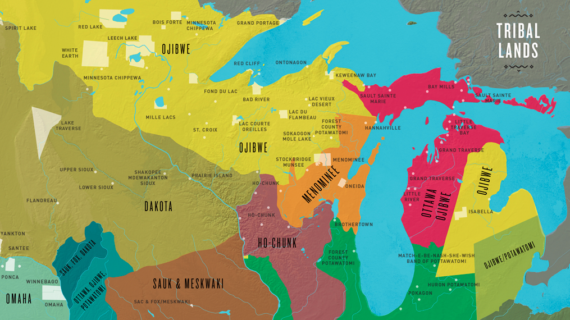





Donate to sign up. Activate and sign in to Passport. It's that easy to help PBS Wisconsin serve your community through media that educates, inspires, and entertains.
Make your membership gift today
Only for new users: Activate Passport using your code or email address
Already a member?
Look up my account
Need some help? Go to FAQ or visit PBS Passport Help
Need help accessing PBS Wisconsin anywhere?

Online Access | Platform & Device Access | Cable or Satellite Access | Over-The-Air Access
Visit Access Guide
Need help accessing PBS Wisconsin anywhere?
Visit Our
Live TV Access Guide
Online AccessPlatform & Device Access
Cable or Satellite Access
Over-The-Air Access
Visit Access Guide




Follow Us