

 Passport






Addressing Cyberbullying
03/10/16 | 58m 21s | Rating: TV-G
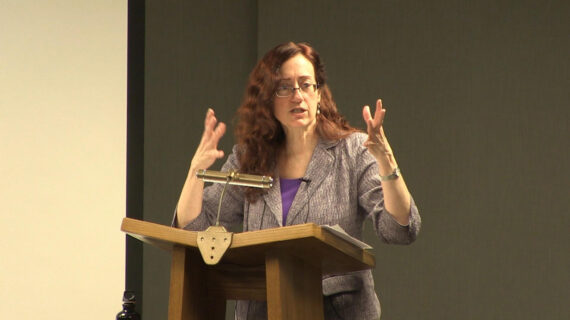
Justin Patchin, Professor of Political Science at UW-Eau Claire, delves into the issues surrounding technology and adolescents. Patchin shares stories of online bullying and discusses the challenges schools and the police face in their attempts to stop the behavior.


Copy and Paste the Following Code to Embed this Video:
Addressing Cyberbullying
I'm guessing that for many of us in this room, social media has in many ways taken over our lives. Some of it's been for good use. I remember my daughter trying to connect with her college roommate she's never met. And she used social media.
I remember other students talking about when I would welcome the freshmen basically. They were looking for their roommate they had a picture from Facebook, but didn't know where they were. So we helped them. Not really, I wasn't very good at that, actually.
But it was, you know, it was a start to connect. So obviously technology has been very, very important to us. Unfortunately, that same technology is being used for very nefarious purposes. Such sites as Yik Yak, where comments are anonymous, and very, very painful and hurtful, and other things that are being posted on other sites including Facebook, including the tweets that students receive.
That's a bad turn in terms of technology. When looking for a speaker, for the Mogensen's Lecture, and I wanna thank you all of the Mogensen family very, very much for this. Many times we look around for an expert from around the country. In the case of cyberbullying, or teens, young people, young adults using technology, the national expert was right here.
Right here at UW-Eau Claire. And I'd like to introduce him to you. There's a lot written about him in here, so you can take a look at that. I'm not gonna read that part, okay?
Some of it might be made up. (crowd laughter) I'm teasing, you know that. Okay. I'm a statistician by training, so I deal in numbers.
Let me just roll off a few. This man has written six books, nine articles, six book chapters, 192 presentations to school districts, 165 invited addresses, 9 webinars or video conferences, 50 scholarly presentations, five refereed presentations, 49 other community presentations, and I could go on. How many of you, and I'll raise my hand for this one, how many of you watched "Dora the Explorer"? Oh, come on.
It's nothing embarrassing, I did. Okay. And for those of you who didn't watch Dora, she was wicked cool. But some of you might have looked for those "Where's Waldo?" books, right?
There's a few of you in here that might have looked at "Where's Waldo?" Kind of an intriguing book. Well, sometimes we wonder out loud, "Where in the world is Justin Patchin?" And I wanna just give you an idea of the last couple years where this man has spoken. Minneapolis; Wichita, Kansas; Erie, Pennsylvania; New York City, New York; San Diego, California; San Francisco, California; Chicago, Illinois; Scottsdale, Arizona; St. Louis, Missouri.
And I could keep going. That's not all. It is "where in the world is Justin Patchin?" He came back recently from Dubai. He's also spoken in Montreal, Canada; Berlin, Germany; Oslo, Norway; Melbourne, Victoria in Australia.
In other words, around the world. The issue of cyberbullying and the teen's intersection with technology is now a worldwide phenomenon. Please join me in welcoming Dr. Justin Patchin.
(audience applause) Whoo. Provost Kleine, I'm gonna take you on the road with me. That was good, I dunno if I've ever had a better introduction. Thank you for that introduction, thank you to the Mogensens, I really appreciate it.
I can't believe this many people turned out. I know some of you are required to be here. (audience laughing) Some of you were encouraged to be here, either by me or one of your teachers. But there are a lot of friends and colleagues and neighbors, and some who fit in multiple molds, different groups in which I associate.
This is amazing. I remember doing a presentation in Altoona a few years ago. It was a parent presentation for the schools and one parent showed up, so the fact that there's so many of you here is incredible. So I wanna take a little bit of time to talk about my research.
I wanna thank, you know, the University of Wisconsin-Eau Claire, the Office of Research and Sponsored Programs. I've been fortunate enough to work with many amazing undergraduate students over the twelve years I've been here and they have a hand in many of the studies that I'll be talking about this afternoon. But I wanna talk a little bit about what teens are doing online, and what we can do as teachers, future teachers, caring adults, to help guide them through the tumultuous time that is the intersection of adolescence and technology. I certainly don't need to convince you of how important technology is in the lives of adolescents.
The vast majority of teens go online, they go online every single day. It has been pretty interesting to trace the trajectory of the type of technology that's popular among teens. So when my colleague Sameer Hinduja and I first started studying these issues about 15 years ago, it was all about email and chat rooms, and now it's all about social networking and texting, and who knows what it's gonna be like 15 years from now, right? I have a kindergartner at home and I'm equal parts really excited for the future and scared to death because I have no idea what device he's gonna ask me for next month, and what kinda power that device is gonna have, the capabilities.
The average teen these days sends and receives 2000 text messages a month. That's according to the Pew Research Center. And I actually think that number's a little light. I've definitely heard, at least anecdotally, young people who text much more than that.
A friend of mine from high school posted on Facebook, I think this was about a year ago, that her 12 year old daughter, it was two days before the end of their cell phone billing cycle, and her 12 year old daughter had already sent and received 12000 text messages that month. And, of course, that jumped out at me, right? Being that I'm interested in these kinds of things. And I thought, "That's a lot of texting." And so I tried to figure out how many texts that was per waking hour.
And it ended up being a lot, I mean, I don't even know, right, it's a lot of LOLs and OMGs, and it's a big part of their lives, right? One of the things that we do in our research, I'll talk a little bit more about the research a little bit later, but we start on all of our surveys of students, middle and high school students, by asking them where they're going online, what they like to do, the places they're hanging out, and so these results are from a sample of middle schoolers, and we asked them what kind of activities they engage in at least on a weekly basis, okay. And you can see that there's nothing too surprising here. A lot of what they're doing these days involves their mobile device, right?
Texting and taking pictures and using apps. You can see Instagram is more popular among middle schoolers than Facebook or even Snapchat. Twitter's kind of interesting because the survey we did right before this, Twitter was at 5%, and that was a survey of high school students and middle school students. So in this survey, Twitter is at, what, 12, 16%?
My guess is if we were to survey high school students in the Chippewa Valley today, Twitter would probably be about 40%, it might be a little bit higher than that. And I was talking to a teacher recently about this. She had noticed that her daughter was spending more time on Twitter, and so she asked her daughter, she said, "What's the big deal with Twitter? "Why's everybody moving to Twitter?" And the daughter said, "Mom, "because adults aren't on Twitter." And so this teacher's telling me this and I said, well, that's not right.
I've been on Twitter for like eight years, I mean, adults are on Twitter. But then I thought about it more, and you know, she's right. Parents aren't on Twitter, right? Parents are on Facebook, grandparents are on Facebook, aunties, uncles, they're all on Facebook.
So teens are looking for alternative environments in which to associate with their friends where their parents aren't, right, so if parents wanna do away with Snapchat, just take over Snapchat, right, start hanging out on Instagram. You know, the teens will go to other environments. The other kind of interesting, kind of, I dunno, point, about this chart, is that in every survey that we've done over the years, every single one, using the internet for school work is always among the top five activities reported to us, okay. And in the survey right before this that included high school students, it was number one.
So more students told us they used the internet for school work than any other activity, okay. And that's pretty important because a lot of what I do, you know, I'm an action researcher, so I do research, but then I go out into the schools, and I do assemblies for students, and I talk with staff, and I do parent presentations, right, and you know, I'll do a parent presentation in a school district and five parents will show up, right. Usually it's a little bit better than that. But when I'm talking with parents, I'm talking about some of the bad things their kids can get involved in, experience, or do, whether it's cyberbullying or social networking problems, and my biggest fear is that parents will leave that presentation with their heads spinning, thinking, "How in the heck am I gonna protect my kids?
"Well, I know, I'll just take away the technology, right? "If they're not on Facebook, "I don't need to worry about bullying. "If they don't have a cell phone, I don't need to worry "about inappropriate pictures being sent back and forth. "If I take away the technology, "then everything will be great." Of course, we can't take away the technology, nor should we try.
Technology's not the problem, right? Bullying's been around long before Mark Zuckerberg was born, right? For generations. So technology's not the problem.
It has created some additional challenges, but, you know, I'll talk about those a little bit later, but it isn't the problem, okay? Look at it this way, I'll give you an example. I remember like it was yesterday, my first day of seventh grade. Okay, I grew up in a small town in northern Minnesota.
And the one class I was most looking forward to in seventh grade was shop class. Right? I'm kind of a hands on, fix it guy. My senior year of high school, I took all shop classes.
Right? This is definitely the path you get on for a PhD, right? So now I know just enough to get myself in trouble around the house, and so I try to fix something and then end up usually making it worse. But that first day of seventh grade, I was really looking forward to shop class, and I remember walking into the shop classroom, and it's a facility that's probably twice the size of this ballroom, it's huge.
And I walked in and I saw all the machines and the tools, and, you know, the radial arm saw, the band saw, there's a dozen lathes on the side wall, and I thought, now I've finally made it, now I'm gonna learn something of substance, some practical utility, something I can use in life. Right, finally, I'm in seventh grade. The other thing I remember about that classroom, I mean it's more than really a classroom, but I walked in and you could see all those machines. Off to the right, there were a couple dozen desks facing a blackboard.
Right? And on that first day of school, we as students went into those desks. And we didn't leave those desks for like six weeks, right? Because we were learning all the safety procedures for every one of those machines out there on the floor.
We were taking them apart on paper, we were putting them back together. But this is what I remember most vividly about my first couple months of seventh grade shop. When I finally got to go over to where the fun stuff was, where the tools were We're all standing around the table saw, okay? And we have our eye protection on, our ear protection on.
And my teacher is a tall bald-headed Mr. Clean looking guy, his name's Mr. Lasco. He was pushing a piece of wood through the table saw, and he tweaked it just a little bit, and it kicked back behind him and put a dent in the wall, okay.
Now, I'm still scared to death of table saws, even to this day. I'm not kidding you, a couple months ago I was using a table saw, I'm like, okay, be very careful. I learned as a seventh grade boy don't stand behind table saw, okay? But I also, in reflecting on this, am only mostly sure he did that on purpose.
I mean there were a couple other dents in the wall. But the lesson I learned that day was, you know, you need to be careful with this piece of machinery, this piece of technology, because if you mess up, something very bad is gonna happen. And I'm not kidding you when I tell you that I'm still nervous when using a table saw. It's the same thing with technology.
We expect that our students use technology. We need to teach them how to use it responsibly and appropriately, and let them know what the potential pitfalls might be, because, certainly, Mr. Lasco wasn't gonna turn us loose on the table saw without some kind of instruction, so I'll come back to that. What is bullying?
I don't need to spend a lot of time on this. You guys know what bullying is, right? It's being mean, hurtful, disrespectful. It can be physical, but it doesn't need to be, right?
Could be relational, could be rumors, could be gossip. I imagine everybody in here has experienced bullying in some way in their lifetimes. Maybe you've been bullied, maybe you've done something you realized after the fact could be defined as bullying, maybe like me it was both. I was bullied in middle school, and then to get the heat off myself, I turned on and bullied somebody else.
Course that backfired, cause not only was I being bullied, but then I got bullied by this other kid-- got in trouble for bullying this other kid. But we've all seen it happen, right? A lot of--since this is my world in terms of research, a lot of academic types, we like to debate, kind of, definitions of bullying and what is and what isn't bullying and I imagine in your education classes you talk a little bit about this. I think that the term bullying is being misused.
I think it's being used to apply to a whole range of behaviors that don't constitute bullying, okay? And for me, the two primary criteria to distinguish bullying from other hurtful behavior is intent and repetition, okay? So if I'm walking down the hallway and Biff accidentally bumps into me, okay, that's not bullying, right? It was an accident, okay?
If I'm--said another way--if I'm walking down the hallway and Biff shoves me into the lockers purposefully and my books go flying and I go on the ground, is that bullying? Well, if it only happened one time, it's not. It's assault. Biff should be punished, right?
But it's not bullying. If it happens once, I'm gonna be upset about it. I might even be physically hurt by it. But if it never happens again, if I see him and it's fine, then, you know, it's not bullying.
Now, again, Biff should get in trouble, should be disciplined, but it's not bullying. If Biff shoves me into the lockers every time he sees me, or with some repetition, every day, every other day, every week, that's bullying, okay? And that's different. Now, I'm gonna change my behaviors as a result of that.
I'm gonna avoid certain areas of the school, right? I'm not gonna go in the bathroom, cause that's a danger zone. I'm not gonna go to my locker cause Biff's is two doors down. I might be sitting in algebra class, I have no idea what x squared means, but I know where Biff is, cause I know if I run into him or one of his cronies, it's gonna be a bad day for me, and that's what the repetitive nature of bullying does.
I got an email about three years ago from a 65 year old man, detailing his experience with bullying when he was in the fifth grade. And it was one of those emails I get occasionally where it's like, here's my story, keep up the good work, what you're doing is important work, and so he detailed his story. And his story was when he was in the fifth grade, a couple of his friends started calling him a mean name. And that mean name was a variation of his first name.
And so then more of the students in the school started calling him that. They knew it bothered him, they knew it hurt his feelings, they didn't care. Then even some of teachers started calling him that name as well. And it happened in middle school, high school, and it was so bad that when he got into his early 20s, he legally changed his name, right?
That's what the repetitive nature of bullying does. It wasn't that he was physically bullied at all. He was just called mean names. But not a day's gone by that he hasn't thought about it, right?
Because of that repetition. Trudy Ludwig is a children's author. She's written quite a few books, "My Secret Bully," and "Confessions of a Former Bully," and she lives in Portland, Oregon. She's a good friend.
She was coincidentally working with the school near Racine, Wisconsin, and they articulate the difference between bullying and other hurtful behaviors this way. When somebody says or does something unintentionally hurtful one time, they're being rude. Right, that's rude. So, Biff bumping into me in the hallway, that's rude.
When someone says or does something intentionally hurtful one time, then they're being mean. Right? Biff purposefully pushing me into the lockers, that's mean. But when somebody does something intentionally hurtful and they do it over and over and over again, that's bullying, okay?
Now, I'm not saying we should ignore those top two points, we definitely shouldn't, we need to address all forms of hurtful behavior among students and peers and things, but labeling everything bullying is a disservice, does a disservice, it's a problem. Especially now because many states-- well, all states have anti-bullying laws. But they require schools within states to take certain action, so once something becomes defined as bullying, certain steps need to be taken. Plus, I think it in some ways inflames the situation, if a parent goes up to another parent and says, "Your kid's bullying my kid." It's just all of a sudden, stress level just increases.
Especially if it's not really bullying, okay? You know, again, I used to not worry too much about what bullying is and isn't, I used to focus on the behavior, but now I really do have to make sure we're using these terms appropriately. What is cyberbullying? Well, Sameer and I define it as willful and repeated harm inflicted through the use of computers, cell phones, and other electronic devices.
And because I've studied this a long time, because I've debated, kind of, the brightest minds in these areas, I know this is an imperfect definition. Right, so if I take out my cell phone and start whacking you on the head with it, is that cyberbullying? Well, it's willful, it's repeated, it's harm, it's using a cell phone, so it meets all the criteria. But that's not what we're talking about, right?
We're talking about using technology as a means to cause harm to others. And I can stand up here for the next 24 hours giving you example after example of cyberbullying. I do see the worst of the worst. It's like asking a police officer, what's crime like in our community, right?
I mean, they see kind of a particular slanted view. I get on average an email a day, probably a phone call a week, I've gotten two or three this week, from a parent, from a teacher, from a principal, from a police officer. I've had situations where the parent, the police officer, and the principal all call me about an incident and none of the others know I'm talking to the other, right? So I see the worst of the worst.
Nothing really shocks me anymore. But I do wanna give you a general sense of how it typically plays out, okay. So imagine your friend takes your picture, okay. Your best friend, so you pose for the picture.
Maybe you're worst enemies and that picture's taken without your knowledge, right? Every teen these days has at least one cell phone. They all have the ability to take pictures. They can be taken in places where privacy's expected, right, you don't even know your picture's taken, okay.
But even if you're best friends, if it's one thing we know about adolescents, it's that "friend" is a fluid concept, right? One day, we're best friends. The next day, we're worst enemies because you looked at my boyfriend the wrong way or wore the same color halter top as me. Whatever it is, I'm mad at you.
So I upload that picture to HotOrNot.com where people can rate your attractiveness. And when enough people vote on this, I'll send a link to everybody in the school so they can vote and see how not hot you are. And once they all rate your attractiveness, then I'll send a link to the target herself, so she can see how not hot she is. And I'm gonna send this over and over again just because, you know, I'm that kind of guy.
I wanna sort of remind her. Now, as adults, if somebody created something like this about us, we'd be like, "I don't care, I'm not hot." Big deal, right? I mean we've kinda sorta moved beyond where those kind of things matter. Especially if you're gonna be a teacher, better get that thick skin now, right?
But you gotta remember, probably at least, I dunno, two thirds of you were adolescents at one point in your lifetime? Maybe a little bit higher than that. And you gotta remember what it was like back then. It was all about what other people thought, right?
And in this case, it's not just your bully that thinks you're unattractive, it's the whole school. It's the whole world wide web, it could've been the bully clicking on this thing a thousand times, but from the perspective of the target, everybody's in on the joke. Maybe you've got some more technological creativity, you make a whole website where you can vote for the ugliest freshman girl, the stupidest sophomore boy. These aren't things that, you know, happen one time and that was it.
This incident that just happened last December, somebody created a straw poll about a young woman at a private school, you know, basically showing how unattractive, how ugly she was. And she responded in a pretty neat way, and went to Facebook and kinda went public with her story, but these things happen pretty regularly. In fact, it was web page bullying that really put cyberbullying on the map. This is one of the first kinda higher profile incidents that Sameer and I first encountered in our research.
I mean, it's gotta be 10 years old, I don't even remember. But I still talk about it today, quite regularly, because it's instructive about how not to handle a cyberbullying situation. So 17 year old Dave Knight receives an email from his friend, saying, hey, check out this website. So he clicks on the link and it takes him to the page that makes fun of Dave Knight.
And there're all sorts of rumors and gossip and hurtful comments and pictures. There were no threats. They were sort of your typical adolescent meanness. So, he looked at this and he was pretty upset about it.
He did this strange thing, he told his parents. Right, that is strange, very few targets of bullying or cyberbullying tell adults about their experience. In our first study, it was less than 15%. 10% had told a parent and 5% told a teacher at school It's never been above 30% in any of our research.
But he told his parents, and his parents were really upset about this. So they printed it out, they printed out the website, and they took it to the school, and they went to the principal, and said, "You need to do something about this." And the principal looked at it, actually it was an assistant principal, looked at it, and said, "Wow, this is mean, this is really hurtful. "But the students created this from home. "On their own computer, on their own time.
"This isn't a school responsibility. There's nothing we can do." So then the parents took those printouts to the police department and they went to the sergeant behind the desk, and said, "You need to do something about this." And the sergeant's looking at this and saying, "Wow, this is really mean. "Kids these days, I tell you, wow, really hurtful. "What do you want us to do about this?
"There's no crime that's been committed. "There's no threat. "What do you want me to charge them with? "This isn't a law enforcement responsibility.
"There's nothing we can do." So then the parents called up Yahoo, cause Yahoo was hosting the site. It's like if somebody creates a mean Facebook page about you you call up Facebook, right? As if you could do that. So they called up Yahoo and said, "Yes, there's been a mean page created about our son.
"You need to take it down." And Yahoo said, "Well, we're not the internet police. "This is free speech. We're not gonna take it down." So this website actually remained active for more than seven months after Dave found out about it. Nobody was willing to do anything.
Not my problem, nothing we can do. And look, if there's one thing I want us to agree upon here today, as a community of caring individuals, it's that this is everyone's responsibility. Right? Everybody has an obligation to do something.
And I'm not saying the school should expel the students that created this. By the way, they knew exactly who did it. The students admitted to doing it. It should tell you something about this particular situation that the parents didn't require them to take it down, but that's a topic for another day.
I'm not saying the cops should go in there and handcuff these kids and drag them off to juvie. I'm not saying the internet service provider should ban internet access for these kids. But I am asking for service. Everybody has an obligation to do something.
Thankfully, I think we've gotten better. Schools now better understand their role. It is true that schools can discipline students for their off-campus behaviors if it's shown that those behaviors result in a substantial disruption of the learning environment at school. And I think you can make the case for Dave here, that life is pretty miserable at school as a result of this.
Okay, so I think we know better, and there are laws that now apply to these things a little bit better. It's not perfect, but we have some avenues in order to pursue this, okay? But even if you don't know what your role is. Maybe your child's friend is being bullied and you don't really know what you can do.
It could be as simple as saying, "Dave, I see what's going on here. "I'm not entirely sure what to do, but I'm on your side. "I stand with you, because this is wrong, okay?" Everybody knows this is wrong, I think we would agree on that. The problem is how do we move forward.
And if you're being bullied, and especially cyberbullied, you feel completely alone. You feel like nobody understands, nobody cares, it's no big deal, just turn off the computer. So expressing to that young person that this is a legitimate complaint and that I'm on your side, I stand with you is definitely a step in the right direction, okay? Finally, after seven months, in this particular case, Dave Knight's parents contacted Yahoo again, this time through their lawyer, and Yahoo said, "No problem, we'll take it down." So it took the threat of a lawsuit before they would take it down which they wouldn't have won, they wouldn't have won a lawsuit, right?
Cause if I pick up the phone and say I'm gonna kill you, are you gonna sue AT&T? No, it's not AT&T's fault that I'm misusing their technology, right? A lot of people tried to sue Facebook over the last few years for different things. Nothing has stuck.
There's actually federal legislation that protects service providers from the misbehavior of their users, okay. But I feel that Yahoo, by leaving this up for seven months, contributed to the victimization, right? And I'm not asking them to remove it within 30 seconds, but 24 hours, 36 hours? Everybody has an obligation to do something, and again we're getting better.
Even the social media companies, whether they're obligated to or not, recognize that this is an important issue, and they're doing some things to make it better, okay. Just a little bit more about the research, otherwise they'll take away my PhD. So we've actually done 11 surveys of adolescents over the years, and this is a chart with the most recent nine. All random samples of known populations of schools, and we can talk more about the research methods if you'd like.
But across those studies, about one in four students has been cyberbullied at some point in their lifetime. Middle and high school. About eight to ten percent have experienced it in the previous 30 days, okay. And we ask about nine different behaviors, so it covers the gamut of experiences online.
About 16% admit to us that they have cyberbullied others at some point in their lifetime. About four or five percent say they did it in the last 30 days. The number one kind of motivation for this behavior, well, two things. The first thing these young people tell us for why they engage in the cyberbullying is revenge.
They did it because the other person did something to them first. But the number one reason is they just thought it was funny. It was just a joke. Why are you making such a big deal out of this?
Okay? So they just don't understand the harm that it's causing. A couple of other quick facts from the research. We know that cyberbullying is relatively stable.
It might be increasing slightly, but it's not shooting up at epidemic levels like is sometimes portrayed in the media, okay. There's only basically three surveys that I know that have looked at this longitudinally, and it's pretty stable. We're really looking forward to National Crime Victimization Survey and Youth Risk Behavioral Surveillance data for 2015. When those data come out, we'll have a better sense of kind of the trajectory of these behaviors, but it's not, you know, this epidemic, but it's still something we need to take care of, right?
Certainly. Couple other quick facts from our research and others. Adolescent girls are involved in cyberbullying at least as often, if not more often, than boys. Okay.
A lot of it depends on the type of behavior you're asking. If you're asking about kind of relational forms of aggression online, then girls are much more likely. Boys are more likely to post mean videos online, or engage in cyberbullying through online gaming networks. Okay.
Cyberbullying is linked to low self esteem, depression, suicidal ideation, all sorts of negative psychological indicators, so. And traditional bullying is still happening more often than cyberbullying. I wrote this blog post a couple years ago, "Ban School, Open Facebook." A little controversial, I mean some people had some-- you know, I got some emails about that. But we hear this sort of hue and cry about social media and Facebook being the devil's spawn, you know.
If it wasn't for social media, we wouldn't have cyberbullying or, you know. It's still true, in every study that we've done, every study that I know of that has collected data on both traditional bullying at school and cyberbullying online, kids are experiencing it more often at school than online. Okay. And the other thing is we know that schools are the safest place for kids.
There's a lot more problematic behavior happening in the neighborhood. But to suggest that, you know, technology is where the main problem is, is misguided. Okay, so there are some issues specific to cyberbullying that I'd like to talk about. Because a lot of people ask me, you know, you study cyberbullying, why do you need this whole term, "cyberbullying"?
Isn't bullying bullying no matter where it happens? Yes, it is. Technology does create some challenges, okay. So lack of supervision and monitoring.
Parents have a tough time keeping up with what their kids are doing online, okay. I don't know about some of you, but when I was growing up, my parents knew exactly what I was getting into. Especially my mom. Even half the time, before I got into it.
I dunno what it was. I'd be out in the community doing something I probably shouldn't have been doing, by the time I got home, mom already knew about it, right? So it's just the nature of growing up. When I grew up, we had one phone in our house.
Okay, it was in the kitchen. And as much as my sister and I went to Radio Shack and bought that super long cord, I mean, we had no privacy, right? So if I was talking to a friend, stuff started to get a little heated, Mom could intervene or deal with it at a later time, even if I was in my room playing games with my friends, the walls are thin, so again, she could sort of observe, right, she could eavesdrop and deal with issues as they arose. Nowadays, these conversations become a lot more hidden.
Right, so the example I like to give is maybe mom is driving her daughter to some after school activity. And they stop and they pick the daughter's friend up and they're carpooling to whatever it is that night of the week. And they're driving along and mom looks in the rear view mirror, and sees her daughter in the back seat is texting. And like any good mother, she says, "You know, it's really rude of you to be texting "while your friend's sitting right next to you." And the daughter says, "But, mom, I'm texting "the friend I'm sitting right next to," right?
And why is she doing that? Well, because she doesn't want her mom to hear what she has to say, you know, and a lot of parents now check on their kid's cell phones, they look at the text messages, right? But, students are smarter than that. They're using Kik and WhatsApp and, you know, all these different apps to try to communicate to avoid that supervision.
So it's hard, it's hard for parents to keep up. Computers in teen's bedrooms, look, this has been one of those pieces of advice that's been around for at least 100 years. I mean we know we shouldn't put a computer hooked up to the internet into the bedroom of a 10 year old, right? Not a good idea.
How about a 12 year old? No? 15? 35?
(audience laughs) Well, if it's under my roof, it's my rules. Well, so here's the thing. As parents, we need to give our kids privileges, privacy, responsibility, in measures that are appropriate for them. And every kid's different, right?
If a parent has multiple children, each child is a little bit different in terms of what they can handle. I certainly can't stand here and say what's right for your kid, any more than you as a teacher can say what's appropriate for your students and their families. What I can tell you is if a student wants private access to technology, they're gonna find it, right? They'll go to Joey's house, because his parents are cool, they let him have a, you know, computer in his bedroom.
They'll go to the public library. I've been into hundreds of public libraries across the United States. Tiny little towns with like one room, maybe one shelf of books, but they got free Wi-Fi, right? Every McDonald's, free Wi-Fi.
Sometimes the parents don't realize the power of the technology they're giving their kids, okay? That Xbox, that PlayStation, that Wii? They all have internet access. Parents don't realize it.
Okay, I was talking to a mom who, this was last year about this time. She gave her eight year old son an iPod Touch for Christmas. And I thought, "Well, that must be nice. "This $200 device for an eight year old." I said, "You wanna adopt me?" So she's looking over his shoulder, it's like a month after Christmas, she's looking over his shoulder to see what he's doing, and he's putting toys in his Amazon cart with his iPod.
Mom had no idea that the iPod had internet access. The eight year old figured it out. Right, probably with his nine year old friend. Another kind of example of that, I was talking, this past fall, I was talking to a couple, a mom and a dad, and they asked me about kind of what the appropriate age was to get their child a cell phone, and that's a question I get a lot, and it's a difficult question to answer because again, every kid's a little different.
Typically, when it comes to parents getting their children a cell phone, they get their child a cell phone when it's convenient for the parent, right, as opposed to when the kid's begging for it. And so my advice typically, when I'm asked that question, I usually say, get your child a cell phone at an age that's a little bit younger than your gut is telling you is appropriate. Cause your gut's probably saying, "Well, I'll give them a cell phone when they turn 26." You know, so the key to that question is you wanna be the one to provide them with technology, and if you provide them that cell phone at a relatively early age, whenever that is for your child, you can put a lot of restrictions on it, right? So you can say, alright, when you turn X years old, we'll get you a cell phone, but the only people you can call are mom and dad for a month, maybe two months.
Right? And then, after that month, you show them the cell phone bill, you see, I can see everybody you called, right? See that number in the corner? That's how much money we're paying for you to have this, right?
It's a privilege, okay? If you mess up, we're gonna take it away. So they demonstrate responsibility, maybe you open it up to other people, other relatives, grandma, grandpa, maybe then you open it up to a little bit of texting, right? You put some controls on it.
If you give them, you know, a cell phone when they're 16 or 17, it's harder to get away with that, right? So, anyways, back to this family. They decided that they were gonna give their son an iPhone when he turned 13. And that's probably a little bit later than average, at least what I see in schools.
And so I can just visualize how this played out. So the mom and dad go up to the son and they said, you know, "Your father and I discussed it" and this is a week before his 13th birthday, "and we've decided we're gonna get you an iPhone for your birthday." You know, just expecting, sort of fireworks and awesomeness and "you are the greatest parents in the whole wide world." And he says, "What do I want an iPhone for?" And the parents are like, "Well, don't you wanna "call your friends?" "Oh, I can call them with my iPod, right? "I got Skype, I got FaceTime." "Well, don't you wanna text? "No, I use WhatsApp and Kik." So he had been doing everything that he could've done on an iPhone on his iPod for like three years.
Mom and dad had no idea, right? That's the thing. And that's also the kind of problem with this piece of advice is, if they have a smartphone, they got a computer in their pocket, right? So the whole computer in the bedroom thing is really outdated I was talking to a school resource officer.
This is about three, four years ago after a presentation in southern Wisconsin. And he came up to me and said, "Yeah, me, the wife, three kids, we all have cell phones." I said, "Well, you're a 21st century family." He's got three teenage daughters. God bless them. So, he says to me, "We have this rule as a family, "that on school nights, all the cell phones "need to be in the chargers in the kitchen "by 9 PM until 7 AM the next morning." And I said, "That seems like a pretty legit rule.
"How's it working out for you?" And he said, "Well, I thought it was working out great, "until one night I was thirsty in the middle of the night, "got up to get a drink of water, went into the kitchen, "and saw that my daughter's cell phone "wasn't in the charger, so I went up into her room "and sure enough, she was texting her boyfriend "at two in the morning." And I said, "Well, you know, teens do those kinds of things. "How did you respond?" And he says, "Well, I took her cell phone away for a month." I said, "A month? "Did anybody call Child Protective Services?" Wow, that's hardcore, a month without a cell phone? I said, "Alright, you're the dad.
You know, "you gotta do what works for you." I said, "How did that work out for you? He said, "I thought it was working out great." It's like famous last words. Until the next month he gets his cell phone bill and he saw that there'd been 5,000 text messages sent from his cell phone. And he's never sent a text message in his life, right?
You know the funniest thing about that story is, I've been telling it for a while because I think it's hilarious. It's kind of a little dangerous that I tell that story here because about two years ago, I'm sitting in my office on campus, and it's the start of the semester. I'm getting my classes ready, and there's a knock on my office door. "Hey, Dr.
Patchin, my name's Ashley. "You know my dad?" His daughter attends our university, right? It's like, I changed her name just in case she's here. I said, "You ever get your phone back?" It was just weird, I mean, she was right there and I've been telling that story.
I mean, there's a lot of times students will come and say, "Hey, you came to my school, you did an assembly," and that happens all the time. But this student? I'd been telling that story, and then she took my class, I was gonna watch you. So the point is, you know, if you push too hard to restrict the technology, they're gonna find a way.
I've had principals in different parts of the country tell me that 18 year old seniors go to Walmart, pick up a track phone that doesn't require a contract, give it to their 16 year old girlfriends. Mom and dad don't even know she has it, right? So, I love it when parents say, "I would never let my kid on Facebook." I say, "Okay." If they wanna be on Facebook, they're gonna go on Facebook, right? What I used to get, 10 years ago, "I would never let my kid on MySpace, but Facebook is okay." Said, "What are you talking about?
They're like the exact same thing." The worst thing is if they don't go to Facebook, maybe they go somewhere worse, that's not as highly regulated, where grandma and grandpa aren't, okay. So if you don't want your kids on Facebook or using certain apps, you need to have a conversation with them about why they shouldn't be using those or visiting those places, okay, it's all about that connection. Another thing about cyberbullying is those who bully can remain virtually anonymous. Right, you set up that fake email address, that fake Facebook page, and now of course, we have all sorts of anonymous apps that we can use.
Well, what we know from our research though, is the vast majority of the time, the one being cyberbullied knows who's doing the bullying. 85% of the time, it's somebody from their social circle, a former friend, a former romantic partner, the new romantic partner of the former romantic partner. I mean, there's almost always that connection, alright, very rarely is it this stranger trolling the internet looking to cause harm, okay. That does happen.
It actually happens more often among adults than teens, but it doesn't seem to affect teens as much as when they know it's somebody from their school, okay. The other reality is by definition, with cyberbullying, there's always evidence. Always. So it's important to encourage young people to keep the evidence, okay?
Because the two most common things that a teen will do when they're being cyberbullied are the two worst things they can do Okay, the first thing is they delete the message. What's the second worst thing they do? They respond, they respond. They say something mean back.
I see it happen all the time where, maybe I'm saying mean things to you at school and you're ignoring it, maybe I'm posting mean things about you online, you're deleting it. This keeps going on and on and finally you snap, and you say something mean back to me, and now you get in trouble. Happens all the time, okay? I was talking to another school resource officer recently.
He said a student came up to him after class, after school one day, and said that one of her classmates was sending her mean text messages. And so this officer said, no problem, just bring in a copy of these text messages, I'll take a look, see what I can do. So the next day, this student brings in three pages of text messages, right? But every other one is blacked out with a sharpie, okay.
So the officer's like, "well, "what's up with the one's that are blacked out?" And she said, "Well, that's what I was saying to her, that doesn't matter." Well, of course it does, right? So but that's the inclination, if you're being mistreated online, you wanna fight back. But that makes it really difficult for those who are tasked with dealing with these problems. So, if there's one thing you take from the presentation, today is if you're dealing with an issue, don't retaliate, and again, I've seen it happen so many times.
So the viral nature, stuff spreads around schools like wildfire, technology just makes it worse, okay. So when I was picked on in middle school, the bully was there and maybe his crony was there. A couple of other people maybe found out about it, but that was it. Nowadays, everybody finds out about it, and if they don't find out about it it seems like they know about it, right, because it's online, okay, it just spreads.
Also, which is related to the limitless vulnerability, the fact that, you know, when I was picked on in middle school, if I had a particularly rough day, I would go home, I'd go into my room, I'd slam the door shut, I'd turn inappropriate music up nice and loud, and forget about life for a while, right? I was protected for 15 hours or whatever it was. Nowadays, kids go home, they slam their door shut. They got their Instagram, their Snapchat, their cell phone, their computers, they're connected around the clock.
One of the victims described it as being tethered to your tormentor. You can't escape, right? And you might say, well, just don't look at your cell phone, right, don't go onto Facebook. Well, that's great, I'm being cyberbullied, now I can't use technology?
I didn't do anything wrong, right? Plus I don't need to be on Facebook to be cyberbullied on Facebook. You could create a whole page about me or spread rumors about me. So I'll give you another example of this.
Maybe I'm being cyberbullied. I tell my parents. They go to the school. The school looks at what's going on, and says, "Sorry, didn't happen at school, there's nothing we can do." Which is wrong, right?
That's completely wrong. So my parents are upset about it, I'm upset about it. My parents move me out of that school. Let's just say for the sake of argument they move me halfway across the country, okay, to a new school.
And things are going pretty good. I mean, it's a good school, I like the teachers. Principal's awesome, right, making some new friends. Things are going really well.
But maybe after a few weeks, those new friends Google my name and they find that Facebook page that was created at the old school, or that video that was created at the old school. Now that bullying just followed me wherever I go. You can't escape it, it's always there, right. And then finally some fancy psychological terms, disinhibition and deindividuation, which basically means we do and say things online that we would never do and say in the real world.
Right, it's actually pretty difficult for most of us to be mean in a face to face situation, but as soon as you get online, it's like free rein. I have this rule not to read news articles linked to Facebook pages, right? Worse yet, don't read the comments. As adults, we have this problem too, okay?
Like, I don't know if I should say this, it's probably gonna get me in trouble but if a student sends me an email, "Hey, Dr. Patchin, I missed the exam yesterday, "can I make it up?" Nope. Send. So easy, right?
But if a student comes into my office, "Hey, Dr. Patchin, can I please make up the exam?" Aw, dang it. I guess. Right, it's hard when they're right there?
So, if you're in my class, you're not allowed to use that. But so the point is, again, it's different when these insults are delivered from a distance, right? It's different, for adults and for teens. So what can we do about all this?
What can do about this? How can we deter teen bullying? How can we respond? Here's some things you shouldn't do.
You shouldn't increase formal sanctions. Okay, since I'm a criminologist who studies cyber bullying, I get a lot of calls from people who think, you know, if we just had a law, then bullying would be solved. Right, because that "don't drink under the age of 21" law is really working out, that war on drugs, that's really working out, right? Yeah, again, I'm a criminologist, I know what the limitations of the law are.
So what I know is that teens aren't deterred by the threat of formal punishment. They're not deterred by a law. They're not gonna stop and think, "Well, I better not send this mean message because I might get arrested." Okay. Sameer and I actually just wrote a paper on this and we basically looked at the influence of parents, schools, and the police.
And what this fancy chart says is basically only about 30% of those who we surveyed, these are middle schoolers, about 1000 middle schoolers, only about 30% thought they'd get punished by the police for their behavior compared to 77% punished by the school for bullying. Cyberbullying, very similar. So they just don't think they're gonna get punished. But in addition to that, again, fancy table, lot of numbers, what we also found is the likelihood of punishment from the police did not affect their own behavior.
So if they thought punishment was likely from the school, they were significantly less likely to engage in bullying. Same thing with parents, significantly less likely. But their likelihood of punishment from the police, it was less, but it was not statistically significant, so it might as well have been zero, okay. Same thing with cyberbullying, we're seeing the same thing.
Significant differences for school and parents, not for the police. So the reality is teens really aren't deterred by the threat of formal punishment, so passing a new law isn't gonna work. We should update our laws to account for these behaviors and I talk with legislators all the time, and one thing that irks me is all 50 states have bullying laws and 48 of them include some mention of cyberbullying. Can you guess which one of those two do not?
Wisconsin. I've been doing this research in this state for 12 years. I've talked to how many legislators, and-- (sighs) Just keep trying, right? So what I'm interested in is clarifying the law so that schools know their responsibility, their authority, you know, so that they're given resources.
I was talking to a legislator, I think it was last year, maybe it was two years ago. He said, "What do we need in a law?" And I said, "Well, we need resources." "Oh, we don't have any of those." So it's politically popular to come out against cyberbullying or regular bullying, but we don't wanna provide any resources to actually do any of this stuff. So passing a law, I don't think is gonna work. I also don't like zero tolerance policies.
You know, these are kind of popular but I don't think they're really that effective. I don't mind the rhetoric of "we have zero tolerance for bullying." We should have zero tolerance for bullying, but a zero tolerance policy forces you to take the same action in every incident, every case, when that action might not be appropriate for this particular situation. I mean, we've all heard the examples of the misuses or the abuses of zero tolerance policy. What was the thing two years ago?
This kid gets expelled or maybe it was a 10 day suspension for biting his Pop-Tart in the shape of a gun. Really? I mean, we don't want them to do that. He should be talked to, but should he be suspended?
So we also know that what little research has been done on zero tolerance has proven pretty ineffective, so American Psychological Association basically concluded that the way we're implementing zero tolerance in schools these days is not working, okay. So it's not effective. The other thing I don't like is public shaming. This has been--seems like the popular thing to do these days.
If a kid misbehaves, their parents marches them out there on social media holding a sign saying, "I'm an idiot, I did bad things," right, and then we put them on a pedestal. You know, they're on The Today Show and Good Morning America and it's like, no, right? This is not good parenting, okay? When I see a parent who engages in public shaming of their child, I see a parent whose got a problem.
Really, cause I feel like if I'm doing this-- so it's basically I'm trying to account for my inadequacy. See, I'm not a bad parent. See? I'm punishing my child.
Not my fault, you know, she should've known better, right? See, everybody, I'm punishing my child. Look, it's crazy, right? And I don't think it accomplishes anything&.
Shame is a very powerful influence in terms of our behavior. It's been used in indigenous communities for millennia, centuries, right. But the parent child relationship is so important that if it's misused, it can sever that relationship, result in disintegrative shaming, and create all sorts of problems, okay. When I talk with my friends about this perspective, they say, "Well, look, if my kid's misbehaving in the supermarket, I'm gonna punish them right then and there." And I say, "Fine, do it.
"But if they misbehave at home, you're not gonna "drag them to the supermarket to punish them, right?" My perspective is praise publicly, punish privately. Okay. We need to support our kids. This isn't gonna accomplish anything and again, the research is pretty, you know, it's clear, right, that stigmatizing makes bullying worse.
Okay. Braithwaite's kind of a pioneer in this research, and I was also interested in this comment from a paper. "Forgiveness has a bigger effect than reintegrative shaming and stigmatization," but in particular, "A nurturing school environment can make up for the adverse effects of bullying." Ah, so what should we do? Give students a stake in conformity.
Give them a reason to conform, give them a reason to care. If I'm not going to college, what do I care about getting good grades, right? It doesn't matter to me. If I've got nothing going on after school, detention doesn't hurt me, it doesn't deter me.
Big deal, right? In our criminal justice classes, we talk about how if I've got no job, no family, no house, is a couple of nights in jail really a deterrent? Nope. So we need to bring our kids into the fold.
We need to get them involved in extracurricular activities, in drama club, in whatever. So they've got this activity after school that they don't wanna miss because, you know. So they're not gonna engage in inappropriate behavior cause they don't want detention cause they don't wanna miss that great activity after school. So bring them into the fold.
Give them a stake, give them a reason to conform. Okay, connect and interact. Develop relationships with our kids, with our students. You know, it's all about the relationships.
Some people think it's all about the base, but it's really all about the relationships. Okay, I mean, the reason, for those of you who are current teachers, the reason you are teachers, and for those of you who are gonna be future teachers, the reason you wanna be a teacher is because you care about kids, right? That's the bottom line, you wanna see them succeed. So develop relationships with them, that relationship is hugely popular.
You wanna deter them from engaging in inappropriate behavior? Develop a relationship with them. Because we have this thing in criminal justice called virtual supervision, where if I have a strong connection or relationship to another person, whether it's a parent, a coach, a teacher, whoever, that when I'm confronted with a situation where I could engage in deviant behavior, even if they're not around, I'm gonna behave as if they were. So I'm gonna be confronted by a situation, maybe my friends are trying to talk me into doing something.
I'm gonna think what would Mrs. Smith think if she found out that I did this? And if she would be disappointed in me, I'm not gonna do it, because I really like Mrs. Smith and you know, I don't want her being disappointed.
I'll give an example of this. When I was 14 or 15, I couldn't drive yet a car, but I was driving an ATV from my house in northern Minnesota to some place in the community, I don't remember where I was going. But I got there and I was hanging out with my friends, and just chatting with them, the usual kind of high school stuff. But probably five to seven minutes after I got there, a police officer arrived, and pulled me aside, and started chewing me out for driving my four wheeler on the roads and for speeding, and I went to your house and I was gonna give you a citation.
You can't be doing that, you knew better than this. First of all, I don't think I was going that fast, but. But I felt terrible. Okay, I felt terrible.
I didn't feel terrible that this cop was gonna give me a ticket for speeding. I felt terrible because this police officer was my hockey coach the year before, right. And he didn't have to write me a citation to have that impact on me, I felt bad. And from then on, I drove really slow on the roads.
My friends made fun of me for it. But it has an impact, okay. That relationship is what resulted in that change in behavior. If it had been just any old police officer, I'd have been upset about getting a ticket, but it would not have had the same impact, so develop that relationship, okay.
The other thing is develop a positive school climate. We know that the quality of the climate at school is related to, you know, less bullying, less fighting, better academic achievement, staff like working in these schools better. We also know that the quality of the climate leads to, better quality of climate at school leads to less online behavioral problems. Okay, we did a study on this a couple years ago.
We wrote a book, School Climate 2.0. Basically, the better the quality of the climate at school, the less online behavioral problems, precisely because the students said, "Look, "I don't wanna disappoint my teacher "who I really care about," okay. So, again the relationship and the nature of the environment, really creating that. Take time to talk with the students, get to know their names, give them a high five when they're coming off the bus.
Right, create that school spirit. The other thing we need to do is make kindness go viral. We need to make kindness go viral. I look at kindness and compassion and caring as the opposite of bullying, so we need to encourage our students to choose kind.
And we can choose technology for that as well. So, for example, this is Kevin Curwick He was a high school senior, Osseo High School just outside of Minneapolis. And he was so tired of seeing all the negativity online that he set up a Twitter feed called Osseo Nice Things, where he tweeted out nice things, about his classmates, about teachers, and celebrities would retweet his stuff. He started a movement, a nice it forward movement.
Here's Jeremiah Anthony, same thing. Him and a couple of his friends at West High in Iowa set up West High Bros, where they posted compliments, or comps they called them, about classmates and others in the school. Just being nice. "Nice job at the track meet yesterday," "good luck on the exam tomorrow," simple stuff.
Here's another example. This happened last year. Konner Suave, for a whole year, anonymously posted every single day, a picture of a classmate with something really nice about that classmate. For a whole year.
In some cases, he didn't know who they were, but he just found something nice to say about them. For the whole year, he kept doing this. Went all the way down the whole list of everybody in the school, and then he was the Valedictorian of the school, and when he was giving his speech at graduation, he revealed himself and said, "Yes, this is what I was doing, and I wanted to basically be nice." And it doesn't even take technology. This is Sanah Jivani, you know.
Has a disease where she basically lost all of her hair and she was getting picked on for that, so she created Natural Day. She tried wigs for a while and she tried to be fake and she said enough is enough, I'm gonna be natural. So 2000 Post-It notes all around the school, creating kindness and love. So I think that's the future, and in fact, I think us as adults, we could learn a thing or two from the students that we're supervising.
Thank you very much. (audience clapping)
Search University Place Episodes
Related Stories from PBS Wisconsin's Blog












Donate to sign up. Activate and sign in to Passport. It's that easy to help PBS Wisconsin serve your community through media that educates, inspires, and entertains.
Make your membership gift today
Only for new users: Activate Passport using your code or email address
Already a member?
Look up my account
Need some help? Go to FAQ or visit PBS Passport Help
Need help accessing PBS Wisconsin anywhere?

Online Access | Platform & Device Access | Cable or Satellite Access | Over-The-Air Access
Visit Access Guide
Need help accessing PBS Wisconsin anywhere?
Visit Our
Live TV Access Guide
Online AccessPlatform & Device Access
Cable or Satellite Access
Over-The-Air Access
Visit Access Guide




Follow Us