

 Passport






How To Talk About Suicide
09/18/25 | 52m 2s | Rating: NR
Brooke Ammerman, assistant professor in the Department of Psychology at the University of Wisconsin–Madison, addresses common misconceptions and how to recognize warning signs of suicide. She also explores responding with empathy and having open, supportive conversations, while sharing practical tools for connecting people with the help they need.


Copy and Paste the Following Code to Embed this Video:
How To Talk About Suicide
[gentle music] - Kenneth Mack: Hi, everyone.
Thank you for joining us here today.
My name is Kenneth Mack.
I'm one of the adult services and engagement librarians here at Appleton Public Library.
I organized this talk with Brooke Ammerman, Dr.
Brooke Ammerman through Badger Talks, the University of Madison-Wisconsin Extension office.
I felt compelled to bring this talk to our community in the Fox Valley, in Appleton in particular.
I've spoken with plenty of patrons, and as someone who personally has dealt with suicidal thoughts and suicidal ideation, I thought it was a good idea to have a community lecture about it and bring in a professional and share their ideas and their information, and the research and studies that they've done to help support those who are struggling with their mental health.
So, I present to you, Dr.
Brooke Ammerman.
Thank you.
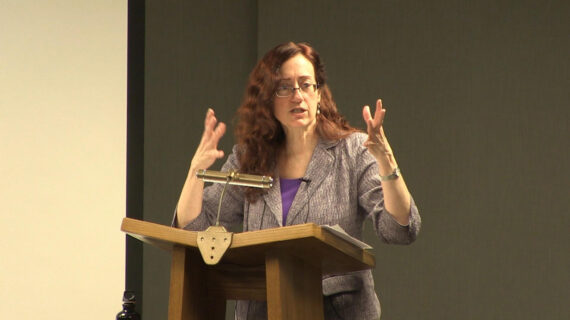
[audience applauds] - Brooke Ammerman: I feel very fortunate to be able to be here today and to talk to you a little bit about my work, and really to just spread awareness about suicide prevention and how we can all become a little bit more comfortable talking about suicide.
So, I'm an assistant professor in the Department of Psychology at University of Wisconsin-Madison.
So, I'm coming at this talk from multiple angles.
One is from that perspective, right, one of a researcher.
So, I've been studying the topic of suicide for over a decade.
And a portion of my research line focuses on the disclosure of suicidal thoughts and behaviors.
So, what that experience is like, what is helpful, what's not helpful, who do people disclose to, who don't they disclose to.
So, I'll be using some of that information to kind of inform the lens.
I also come at it from the perspective of a licensed psychologist.
So, having worked with individuals who are struggling with suicidal thoughts and behaviors, from a broad range of backgrounds using some of that information as well.
And then finally, coming at it from the perspective of a community member, right?
I also have been touched in some ways by individuals struggling with suicidal thoughts and behaviors.
And so, having that kind of personal lens, I hopefully will make this a little bit more relatable for everyone in the audience.
So, before we get into the meat of the talk today, I wanna ask everyone to take just a moment to reflect.
When you hear the word suicide, what feelings or images come to mind?
Pause for a moment and just notice those thoughts, feelings, maybe images that come up when we think about it.
Think about where do these associations come from?
Maybe they're personal experiences.
Maybe they're your own experiences or someone that you know or love.
Maybe it is how things have been portrayed in the media or in the news.
Or maybe it's the cultural messages.
So, what people around you are saying.
So, it's really important for us to be aware of what we're bringing to the table when we think about suicide, right?
These associations really matter.
They shift how we think about the topic, and they shift how we talk about the topic.
So, as we go through today's talk, I want you to just kind of keep some of those things in mind.
Right, what lens are you viewing suicide from and how is that helping you have these conversations?
Or maybe sometimes, how is it hindering or making you a little bit more hesitant to have these sort of conversations?
So, before we begin, I want to share a little story to hopefully bring this closer to home.
I want you to think about someone like Maya, right?
She's a 28-year-old school teacher.
She's passionate about her students.
She's the one who stays late to help them.
She volunteers at community events.
Her friends call her dependable.
When you would ask her friends, suicide is the last thing that would come to mind when they think about describing her, right?
But Maya's inner story is different.
Over the last several months, she's become increasingly exhausted.
She's finding work harder and harder to manage, and is feeling overwhelmed by all these additional things she's engaging in.
She's pulling away from her friends, not responding to text messages.
When she does respond or does talk to those around her, she's saying things like, "I just don't even know if I'm making a difference anymore," right?
And so, one day, after a particularly bad day at work, Maya's mind turns to suicide.
And not necessarily because in that moment she wants to die, but because she wants to stop the pain, she wants to stop the pressure.
And she thinks about talking to someone in her life.
But then, she hesitates.
"Who would I even talk to?
"Would they understand what I'm going through?
"How would their reaction be?
Would it change what they think about me?"
And that fear keeps her silent.
So, Maya's story isn't unlike that of a lot of people, right?
That suicide affects those people in our lives who we view as strong and we view as caring, right?
It can affect anybody.
And we know that most of us have been affected in some way, shape or form.
And so, I think keeping in mind that it's not just one type of person, right, that suicide affects can help us approach things in a little bit more compassionate and nonjudgmental way.
So, as shown in Maya's story, we know that the impact of suicide is broad reaching and is often closer to home than we realize, right?
So, there's over 49,000 suicide deaths per year, which is about 1 life every 11 minutes.
This is also true of Wisconsin residents, so it's about 1,000 Wisconsin residents die by suicide each year.
If we look at this graph here, what we can see is that rate has been rising steadily over the last 20 years.
So, we're almost a 35% increase in suicide over these past 20 years.
And if we look at almost every single year that the rates in Wisconsin are above the national average.
So this really is striking in how much our own communities are being impacted by suicide.
Importantly, we know that it's not just suicide deaths that impact all of us.
There's also a multitude of people who attempt suicide.
So, almost 1.5 million adults attempted suicide this past year.
And if we think about youth, that's even more striking.
It's 1 in 10 high school students reported that they attempted suicide in this past year.
Almost 13 million adults thought about suicide in this last year.
That's almost 1 in 20 individuals.
That's almost one of us in this room.
And we know that it's one in five high schoolers that have thought about suicide.
So, these are sobering numbers of the number of us who have been impacted.
And more so when we think about almost half of adults in the U.S.
know someone who has died by suicide.
Right, so this isn't just one person's problem.
This isn't just mental health professionals' problem to fix.
It's not just widespread community efforts that are going to change it, right?
All of us can help change this.
Suicide is preventable.
We've also talked about or kind of reviewed these overall rates of suicide and how people-- how many people experience that.
But we also know suicide rates don't affect society equally.
So, there are certain groups of people who are more likely to potentially die by suicide.
So, I'm gonna show you some graphs of different statistics from the state of Wisconsin.
So, this first graph here shows suicide rates by age group and by sex.
What we can see here is that on average, males are more likely to die by suicide across their entire lifespan, right?
And we can see that's particularly the case if we look at the ages between roughly 20 and 60 and again at 75 and over.
The numbers for women aren't insignificant, though, especially when women are in their 20s, 30s, and 40s.
We do see this discrepancy, though, that males are more likely to die by suicide.
And one of the reasons that's the case is that males are more likely to use firearms as a method in their suicide attempt, which are more lethal.
Women, on the other hand, report being more likely to think about and attempt suicide.
So importantly, suicide is significantly impacting both men and women across all age groups.
It's not only who a person is that can impact the rates of suicide, but also where they live.
So, this graph here shows rural versus urban counties within Wisconsin.
And what we can see is that individuals living in rural areas, and this is true across all of the United States, have higher rates of suicide.
And this is due to a multitude of reasons.
It's due to poor access to services.
It's due to longer wait times when they have those services.
We know that firearm ownership is greater in rural areas.
And we also know that stigma is very real, right?
So, the idea of admitting to suicidal thoughts may be harder in these areas.
There may be concerns about who's gonna find out and what are they gonna think about me.
And then, a final demographic that I really wanna point to are U.S.
veterans, right?
Across the United States, that U.S.
veterans have a much higher rate of suicide than non-veterans.
We can see here in Wisconsin, that rate is almost three times higher.
We know service brings its own unique risk factors, such as exposure to trauma, chronic pain, and a different set of service barriers than non-veterans may experience.
And, of course, a lot of our veterans have shown incredible resiliency.
But this really highlights that there's still an unmet need with regard to mental health care.
So, we have these groups of individuals who are at greater risk for suicide.
And it's not just these groups.
We know that there's other demographics as well.
So, for example, individuals who have a non-heterosexual sexual orientation are at elevated risk for suicide as well.
So, we have all of these factors at play that are contributing to suicide risk.
And we're gonna talk a little bit about what are some of those factors that may lay the foundation and build upon each other to contribute to this risk?
But before we do that, I want to spend some time talking about the purpose of suicidal thoughts.
So, we'll spend the latter half of the talk really getting into the practical.
How do you actually talk about suicide?
What words do you say?
But I really like to lay the foundation, first, of our understanding of these suicidal thoughts.
What it can really do is help us approach these conversations with more compassion and more empathy.
So, we're gonna talk about when someone thinks about suicide, why, right?
When we all-- We all have moments of distress.
We all have moments of feeling upset.
But not everyone copes with these moments with suicidal thoughts.
So, when someone does, what are some of those factors that are contributing to their role?
And that might serve to kind of maintain or reinforce the reoccurrence of these thoughts.
So, the first one of these is that suicidal thoughts can serve as a way to cope with overwhelming and powerful emotions.
For many, suicidal thoughts can feel like a way to manage emotions that are otherwise unmanageable.
So, if we think about emotions like waves in the ocean.
For some people, those waves are small and rolling and we can see over the crest of the next one.
For some people, those waves are large, they are crashing, and they feel like they're going to pull us under.
For those individuals, suicidal thoughts can feel like a life raft.
Not because it's safe, but because in that moment, it kind of feels like the only thing that's going to keep you afloat, right?
So, these suicidal thoughts then serve as a way for us to try to manage or to overcome or get through the moment of those really intense emotions.
We've all had those moments in life where we're feeling so overwhelmed that we just wanna hit pause on life, right?
Even if just for a moment.
Well, for individuals with suicidal thoughts, that feeling of just wanting to pause can be directly linked to suicide, right?
So, these thoughts can serve to reinforce themselves by helping manage these emotions that otherwise feel too overwhelming.
Suicidal thoughts could also be a way to express needs that are otherwise hard to explain.
So, for some individuals, they may be feeling so much pain and so much hurt that they don't know how to communicate that pain in any other way.
So, if you think about a time maybe when you were feeling hurt or upset and you tried to explain that to somebody and they just didn't understand, and you tried to explain it another way and they just didn't understand.
So, you notice yourself maybe getting louder.
Maybe you notice yourself saying things a little bit more strongly.
Suicidal thoughts can be just that, a way to express this pain when other methods of communication maybe didn't work.
Maybe other words weren't strong enough to explain what you're going through.
And a lot of times, I think this can be misinterpreted as attention seeking.
I think we can better reframe that as connection seeking.
We all just want to be understood, right?
And for individuals, sometimes in the moment, expressing these suicidal thoughts and having these thoughts is one way that they can effectively communicate how much pain they're going through.
Suicidal thoughts could also feel like a way to solve life's problems.
So, when we're feeling incredibly overwhelmed, when we have a high level of distress, sometimes we can get tunnel vision, right?
And really, what that does is it narrows the potential solutions to our problems.
And it might feel like there's only one door left open, and that door might be suicide.
That if we're getting overwhelmed with different life struggles and we just want them to go away, right?
So, maybe I feel like a burden to my family.
So, my thoughts might be, "If I wasn't here, my family wouldn't have to deal with this."
Right, suicide is a potential solution for that.
Maybe it is feeling so much pressure, so much pain, you just want that to go away.
Suicidal thoughts can feel like a solution to that, right?
So, these thoughts are really centering on a very dangerous solution to problems that don't otherwise feel like you can manage.
So, when we think about the purposes that suicidal thoughts can serve, I think it also brings up the question of, but why do some people's mind turn to suicide and other people's don't?
To answer that, we really kind of need to take a step back and think about the whole picture.
So, the first thing we can think about are early life factors, right?
And some of these are biological factors.
So, for some of us, from the time that we are born, we simply experience things differently.
Some of us for feelings hit harder, they stay longer, and it takes a long time for us to get back to a state of baseline, right?
And for other people, when those emotions are high, we'll also be more likely to act impulsively on them, to want to get rid of them, to want to fix them, to want to change them without thinking about the long-term consequences, right?
So, we can think about these emotions and these emotional experiences maybe like a volume knob, right?
For some people, that volume knob is turned up high and it is stuck there, right?
The emotions are loud and it's hard to hear anything else.
For some people, that volume knob is low and maybe they have control of it.
But really, it's hard to navigate life when that volume knob is so high, right?
It's hard to find a moment of calm and it's hard to think about solutions.
And these are just natural temperaments.
They're not flaws in who we are as humans.
They're truly no different than some people being taller and some people having curly hair, right?
We're simply born to experience emotions differently.
The problem is, is that when we're born to experience emotions really strongly, when distress hits, it can be a lot harder to navigate life.
These factors can also be compounded by early childhood environments, right?
So imagine that you are a child, you're out playing on the swing set and you fall down.
You go inside because your knee is scraped and it hurt.
You tell your parents about it and the response is, "Oh, my goodness, what happened?
"How are you?
Let's get that fixed up."
Right, that sends the message that your emotions are valid and you can come to me when things go wrong.
On the contrary, you come inside and your parents say, "Oh, toughen up, you're fine.
Go back out and play."
That can send the message that you need to deal with your emotions on your own.
It's not that big of a deal.
When these experiences happen over and over and over again throughout childhood, and when they pertain to different areas of your life, so not only physical pain, but it might be pain that came from interpersonal situations, your own anxiety or pressures that you're placing on yourself, that these things can become an instruction manual for how to deal with emotions, and those might carry forward for the rest of your life, right?
So really, the interaction of these two things can really impact how we navigate life as an adult.
They don't necessarily decide our future, but they can definitely shape the path that we start on, right?
So we enter adulthood with having these key vulnerabilities and how we can cope with and handle emotions.
So, people may be more emotionally sensitive from birth, or they may not have learned strong coping skills.
That really sets the stage, but the story doesn't end there.
We know that life is stressful, right?
Things come up and they can continue to add on to that vulnerability for people.
As I walk through these stressors, I really want you to think about times that maybe you or someone in your life has experienced these sort of stressors, so we can really develop a sense of compassion for how hard these things can be.
We know that these are stressors that are often bound to contribute to suicidal thoughts and behaviors.
So, it might be people's retrospective self-report of what they're experiencing when they're thinking about suicidality.
But we've also learned this from psychological autopsy studies where we do interviews with family members after someone has died by suicide.
So, we know that feelings of being left out or disconnected, or put another way, what we call "thwarted belongingness" can be a factor that contributes to suicidal thinking, right?
So, this is feeling like you can't connect with those around you, that no one understands you.
It might feel like that you're standing on the other side of the glass, and you're looking in and you're seeing everyone else getting along, and you just can't get into that circle, right?
And you might have feelings that "This is never gonna change.
"This is just always gonna be the case.
I'm never gonna be able to have that connection."
And having that hopelessness feeling about never being able to develop strong connections is something we know can contribute to thoughts of suicide.
We also know that feeling like a burden is a strong contributor to suicidal thoughts.
So, this might be relying on family members, relying on friends for a lot of different reasons.
So, it might be emotionally, it might be financially, it might be other resources.
So, this can come up a lot when individuals have health issues, financial strains, or maybe you feel like you're being an emotional burden on somebody, and it's that subjective experience of feeling like a burden, right?
It doesn't mean that you actually are, but that feeling as if you were can bring a lot of guilt and a lot of shame, and contribute to suicidal thoughts.
We also know that life has ongoing stressors, right?
These can be small, day-to-day things that pile up.
We've all had those days where it seems like nothing goes right, right?
And by the end of the day, we're so overwhelmed.
We just want the day to be over.
Or it can be bigger daily struggles.
So, maybe things like job loss, financial strain, health problems.
We know that these things can feel particularly overwhelming for individuals struggling with suicidal thoughts.
So, it might feel like they're wearing a backpack, and each of these things is one more rock getting put into that backpack that they're carrying around each day.
And that backpack just gets heavier and heavier and harder to walk through life with.
We know that carrying trauma can shake the whole foundation.
So, whether that's trauma experienced in adulthood or childhood, that that can really serve to make our life unstable.
How we view the world around us may be constantly changing or it may be negatively impacted.
So, this isn't just one more rock in our backpack, but it's really like saying, "Walk with that heavy backpack uphill," right?
And so, it just feels like too much.
These things may never occur one at a time.
They may layer on top of each other, but when we know there's a multitude of these, it makes it that much harder and for life to feel that much more overwhelming.
Now, let's shift to what we might think of as the final piece of the puzzle, what we call warning signs.
So, these are short-term triggers or crises that happen that really set the stage for a suicidal crisis.
So, to put this a different way, we can think about building a campfire.
So, we can think about these early life vulnerabilities as logs at the base of our campfire.
And then, we can think of our daily stressors as the kindling.
We have the base for our campfire.
But a fire isn't going to start until we light a match, right?
And these warning signs we can think of as that match that are going to spark the crisis, right?
So, these can be things that vary for each individual.
But these are things from the research that we know most commonly occur in the 24 to 48 hours before someone attempts or dies by suicide.
So, these are the things that we should be looking out for in ourselves if we're struggling with our mental health, but also in those around us, right?
So, one of those is trouble sleeping.
And often this is sleeping too little, right?
We know that sleep is the glue that holds everything together.
So, when that's off, it sets the stage for things to go downhill.
We can also see a change in arousal levels, so high negative arousal.
So, things like agitation, irritability are often things that we see in the period leading up to a suicidal crisis.
We also see that people may be pulling away from others, right?
So, this might be socially we're not reaching out to people, but it can also look like things of maybe not wanting to go to work, not wanting to engage in our usual activities, pulling away from just social experiences in general.
External crises may also start kind of this pathway.
So, things like conflict, job loss, substance use.
We know that interpersonal negative events are a huge contributor to kind of setting off a suicidal crisis, that anywhere from 40% to 60% of individuals who died by suicide had an identifiable interpersonal conflict in the 24 hours prior to their death, right?
So, this is a big piece for a lot of people.
And then there's internal crises as well.
So, this is maybe getting stuck in a negative thought pattern.
It might be feeling hopeless that things are never going to change or feeling trapped in your current situation.
Right, so, these things matter when we think about impacting those around us.
So, they're not going to be the same for everyone, like I said.
But what we do know is that these are the most common experiences, and they can be the thing that really kind of sets the stage.
So, in a little bit, when we talk about asking about suicide, one of the first steps that we're gonna talk about is the idea of connecting with others and noticing when something feels off.
So, it might be these factors that you're starting to notice in someone.
So, we know that when people get to this point, this point of suicidal crisis, that actually not that many people reach out.
I think there's this myth or preconceived notion that, "Well, if it got that bad, why wouldn't somebody just say something," right?
We know that only half of people who think about suicide ever tell someone.
So, if we think about the fact that in the past year, 13 million individuals have thought about suicide, that means 7.5 million of them have never told anyone about these thoughts, right?
So, if we're just waiting for someone to disclose to us, we're potentially missing a lot of opportunities to help somebody.
So, I think the question is often in people's minds, "Well, why don't they disclose?"
We know that there are a lot of barriers to talking about suicide.
One of those biggest barriers is fear of judgment, right?
So, there's a concern that if I were to tell someone, they might think I'm crazy, they might think I'm weak, they might think I'm unstable, right?
We know that stigma around suicide is still really strong, right?
We're doing a great job as a society to try to change that, but it's still there, right?
Especially when you're the one who's being vulnerable.
We can become particularly tuned in to that.
There's also a lot of shame and guilt around having suicidal thoughts.
So, people might have thoughts of, "Well, I shouldn't feel this way.
Things really aren't that bad, right?"
So, the concern of, "If I were to tell someone, "what are they gonna think about me?
"My life isn't that bad.
Look at the hardships somebody else is going through," right?
So, there can be a lot of this comparison in downplaying one's own experience.
So, we talked about there's also that worry of being a burden on others.
"How is someone else gonna deal with "the heaviness of this if I tell them?
"I don't want my friends and family "to have to deal with this.
"I don't want them to have to think about it.
So, I'm just gonna keep it to myself," right?
And all this really combines to this idea of having uncertainty of how people in our life are going to respond when we tell them.
There's a big fear, and one of the biggest barriers to disclosure is that people are going to overreact, that they're going to panic, that they're going to call 911 and they're gonna hospitalize me, right?
We know that's the number one barrier.
And so, we're gonna talk a little bit about times when it's worth kind of "panicking," if you will, and times that it's not.
On the contrary, we know there's a lot of great reasons to be having these conversations.
I like to think about if silence is part of the problem, then conversations are part of the solution, right?
By having these conversations with individuals in our life, we can provide them emotional support.
We know emotional support is the number one reason that people do disclose their suicidal thoughts, and we are all capable of providing that.
We can start to open that door for folks to become more comfortable talking about their experience.
We can create a sense of connection, help provide them a sense of hope, and potentially save their life.
So, then the question is, why don't more of us talk about suicide, right?
A lot of us are hesitant to have these conversations.
And for some people, that hesitation comes from myths that we've heard or we believe about suicidality.
One of the common myths that we often hear in society as a whole, or have kind of stemmed from that long-standing stigma around suicide and mental health, is that people who say they're suicidal aren't serious, right?
Or they're just seeking attention, right?
We know this isn't the case.
We know that this is incredibly false, but it's still something that people believe.
And because of this, there's the belief that if I engage in this conversation with this individual, I'm gonna reward the attention seeking.
But we know that all thoughts and all expressions of suicidality should be taken seriously.
They all come from a sense of pain.
They all come from a sense of unmet needs.
And so, by having these conversations with individuals, we're actually just helping them understand what they need.
And we can help provide that, right?
There's also the myth or this persistent idea that once someone decides they wanna die, there's nothing we can do to stop them, right?
That intent is irreversible.
We also know that's false.
Peak suicidal crises, so that time when someone moves from planning their suicide to actually acting on those thoughts is short lived.
It's minutes to hours.
So, what that means if someone can ride that wave, we can help get them through to safety.
We can help get them out of that really intense period of risk.
We know and we'll talk about some lethal means safety counseling, which really creates space between someone's method and themselves in those times of crisis.
We know that that can actually help save lives.
Really supporting this idea that we can interrupt the cycle.
Someone can decide that they wanna die, and we can still help them before they act on those thoughts.
One of the biggest myths that's out there is that asking someone about suicide will put the idea in their head.
How many people have heard this myth?
A lot of head shakes and hands, right?
We know that this also isn't true.
Because this is such a common belief, even among medical professionals who come at it from a really good point of intention, right?
We don't wanna hurt people and we don't wanna upset people.
There's been a lot of research in this space.
And all this research has shown us is that asking about it is not gonna put the thought in someone's head, and it's not gonna increase the likelihood that they think about suicide now or in the future, right?
We've followed people over six months and found that there's no difference if we ask them or if we don't ask them about whether or not they're going to develop suicidal thoughts.
Really, asking opens the door for conversation.
Rather, it actually helps decrease anxiety around the experience.
And that relates to the next myth, the idea that talking about suicide will make things worse, that it'll push people towards it, that it'll be so upsetting and so distressing that they won't be able to handle it, right?
These thoughts are already in someone's head if we're asking about it, right?
So, we're not putting anything in their mind and we're not pushing them in any way.
We actually know these conversations can be beneficial, right?
We've conducted research to this end in my research lab.
So, we've asked 400 people with a recent history of suicidal thoughts about their experience in disclosing to someone in their life.
So, what was that like and what was your experience?
What we found is that the majority of people reported reduced distress, reduced shame, and reduced hopelessness after talking to someone about their suicidality.
And 75% of those people reported that their suicidal thoughts actually decreased in intensity after those conversations, right?
So these myths can keep us silent, but the data and personal experiences really tell us different things.
Having these conversations is actually more beneficial than not having them.
So then, that brings up the question of, well, how do we do this?
Right, how do we talk about suicide?
So, we're gonna talk through kind of some practical steps, if you will, about how we might go about this.
If you're talking to someone who you have care and concern about, these steps might be appropriate.
And if someone discloses to you that they're thinking about suicide, some of this is still gonna be applicable.
So, there's a lot of acronyms out there in this space.
And I'm gonna share yet another new one with you.
But that's because I think that this acronym represents the state of the research really accurately.
And I think it's easy to remember, right?
So that acronym is CARE.
That stands for connecting with the people around you, right, so noticing if they're struggling and then connecting with them about that.
Asking directly and nonjudgmentally about suicide, responding with compassion and without panic, and then encouraging support and safety.
So, we're gonna talk through each of these steps individually.
All right, so our first step in the CARE acronym is Connect.
So, what we mean by that is tuning in to those around you, right?
So, noticing when something seems off, showing up for people in a way that communicates you care.
So, it's true that mental health conditions like depression, substance use, bipolar disorder can all increase the likelihood that someone may eventually die by suicide, but that doesn't tell us moments when someone is struggling, right, when we might be best to connect with someone or help them through a hard time.
So, really, that's where connection comes in, right?
It's being tuned in and noticing when something seems off.
So, that might be like these warning signs that we talked about, so noticing behavior changes, so changes in sleep, changes in substance use.
It might be changes in the way people are talking, right?
So, they might be talking about feeling trapped or giving up or that they just can't do it anymore.
People might also tell you directly that they're thinking about suicide.
We know that when individuals disclose these thoughts, they're most likely to disclose to friends and family, not professionals.
So, what that means is our connection with those around us may be one of the most important things to help open that door for disclosure.
It also might be more subtle.
Something that we just feel is off, right?
Something in your gut that you're like, "I don't know, things just don't seem right."
Trust your gut.
Check in.
It's always going to be worth it, okay?
So, the next step is to Ask.
So, the first step really helps build the bridge to these questions.
These are uncomfortable things to ask.
These words are hard to say.
We're often worried, "Am I gonna say the right thing?"
Right, and it makes us anxious.
And if you feel that way, you're not alone, right?
In a study of U.S.
physicians, so these are trained medical providers, over half of them said that they're uncomfortable asking about suicide.
Even though they know it's beneficial for them to do, right?
There's also a seminal study back in the '70s where they found that simply talking about suicide produced a physiological response, right?
People were physiologically reactive to this topic, so it is scary.
It is uncomfortable, right?
The hope is that today, we can help kind of add some language that makes it feel a little less scary.
So, one of the biggest things we wanna do when we're asking about suicide is be direct and compassionate, right?
So, saying straight words like, "Are you thinking about suicide?
Have you had thoughts of killing yourself?"
Right?
These direct words feel scary.
But what they communicate is, I'm not afraid to have this conversation with you, right?
I'm right here with you.
Please tell me what's going on, right?
But because these things are scary, sometimes we have the tendency to wanna soften them, right?
We wanna say things like, "Well, you're not thinking about suicide, are you?"
Right?
But really, what that does is it can be dismissive.
It can feel like your hand is still on the doorknob of that door you just opened, ready to walk away, not quite ready to hear the truth, right?
We think we might be giving someone an out if they're not thinking about suicide, but we know that's actually not the case, right?
So, being direct, having that conversation, looking someone in the eye is the best way to go, right?
We also might have concerns of like, "Well, what if they're not?
Are they gonna be offended that I even asked?"
And to be honest, they might be.
But what you're also communicating to them is I was willing to have this conversation with you.
I care enough to check in about you and to see how you're doing.
So, maybe they're not thinking about suicide today, but maybe in the future, that's a thought that's gonna come up.
Or there's another topic that they're struggling with.
You've told them, "I'm here for you.
I can have hard conversations," right?
So, it really opens the door to further your connection with that individual in the future.
We can think about asking about suicide in the same way that we think about chest pains, right?
So, if we're asking someone, "Are you having chest pains?"
We're not putting the heart attack in their body.
We're simply asking about something that, if goes unnoticed, could be deadly, right?
So again, we're not putting this idea in someone's head.
And I think that's a really important thing to hit home.
We're simply asking about an experience that may already be happening, okay?
So, let's say you ask someone directly and they say, "Yes."
That's a really powerful moment.
But that's also a really scary moment, right?
What do you do with that?
How do you handle that?
And most of us aren't mental health professionals, so we worry we'll mess it up in some way.
But here's the good news.
You don't have to be a trained provider to help somebody.
What matters is that you respond without judgment and without panic, right?
So, giving simple, compassionate responses can be way more important than any advice.
So, saying simple things like, "Thank you for telling me."
"That sounds really hard."
"I wanna hear more about what you're going through."
"I'm here to listen," right?
This is all we're asking for.
Most people just want emotional support.
Saying that I'm willing to sit here with you.
I really like the parallel of grief.
When we have someone in our life who's lost a loved one, we know that there's nothing we can say that's gonna take that hurt away, right?
So, most of the time, we just say, "I'm sorry.
This has to be hard."
We sit there with them.
We listen to whatever they wanna talk about.
Suicidal thoughts are the same way.
There's no expectation that you're gonna have magic words, that you're going to be able to fix whatever problems are contributing to it, right?
Just sitting there and being willing to talk with someone is an incredible, incredible thing.
I think it's also important in these moments to not panic.
We know that not everyone who thinks about suicide is in imminent danger of hurting themselves, right?
So, a lot of people think about suicide without having a plan, without knowing if they're ever gonna act on it.
And that should be remembered.
So, in these moments, we wanna think about, "Is this person in danger?"
And if they are, we'll talk about that.
But most of the time, they're not.
We know that only 15% to 20% of people who think about suicide go on to attempt suicide.
So, what that means is some people live their entire life with these thoughts coming and going without ever attempting suicide, and simply having the conversations about those thoughts can really reduce distress and can help improve the quality of their life and the quality of your connection with them.
So, sitting with them in that, as opposed to jumping to "I need to call 911.
"What should I do?
Does this person need to be hospitalized?"
Sitting and connecting and listening is first and foremost, right?
So, we've asked individuals who have had recent suicidal thoughts and behaviors and have disclosed, and we've asked what was helpful about that experience.
And what we see is common themes coming up over and over and over again.
And those are being compassionate, right, responding with genuine concern and not pity, not getting scared or angry.
So, we can see this from individuals who have disclosed what they need out of this experience, right?
By and large, folks are disclosing with the goal of getting some sort of emotional support or getting connected to professional help, right?
And we can do those things.
We can help with that.
So, like I said, first and foremost, we wanna connect with somebody.
We wanna sit there with them.
We wanna be present.
Then, when we feel like the time is right and the person's ready, we can talk about encouraging support, right?
I know that support isn't readily available everywhere, right?
So, we might talk about connecting with a counselor, a therapist, a psychiatrist.
And that might be really hard to find.
We know that there are significant provider shortages throughout the state.
We know there's incredibly long wait times.
And so, the goal isn't for you to become the therapist, and it's not for you to solve the system problems.
It's just to help reduce some of those barriers, right?
So, this might look like, "Let me help you search."
Right, "Let's figure out who's even available.
Let's see who takes your insurance," or "I'll sit with you while you make the first call," or "I'll come with you to your first appointment," or even knowing when they have an appointment and following up afterwards and asking how it went, right?
So, small things that can help reduce the barriers that are, typically make finding help scary and hard.
Like I said, I also recognize that's not gonna always be possible, right?
So, we can give people other options.
And I know that these are probably options that most of you have seen and heard of, but I always like to go over them, right?
So, we have our national crisis supports.
So, there's the National Crisis Prevention Lifeline and the Crisis Text Line.
So, these are available 24/7, free to anybody, and they're confidential.
So, there are trained providers on the other-- or trained volunteers.
And with the Veterans Crisis Line, they are trained providers who are going to respond and are going to help through moments of crisis.
And these aren't just for individuals who are on the verge of dying by suicide.
These are for people going through any sort of emotional crisis, right?
They can help.
I know that there is some negative beliefs and negative experiences with these national resources.
I encourage folks to try again, to try something different.
You can call, you can text, you can chat online.
There's a lot of options.
There's also a lot of local options.
So, if you're with someone and they don't wanna call one of these national resources, there are local hotlines as well, right, that are specific to areas, specific to counties within Madison that you can be looking up and providing options to folks.
There's also Warmlines, and I think this is something that folks know a little bit less about or are less advertised.
And what these are are trained peers that are available just to talk.
You don't have to be in crisis.
They're also free, they're also confidential.
Some of them, you schedule an appointment in advance where you can talk to somebody, but some are just available for you to call.
Most of them just ask that you wait more than an hour in between your call or limit your call to an hour, right?
So, here are a couple options of those.
And I think they can be really great just to feel like there's someone there to talk things through with, right?
So, after we've connected with someone, really helping them kind of bridge that gap between where they're at and where they might wanna be with regard to the support in their life can be really helpful.
There also might be times when you're still worried about someone's safety, right?
You're talking with them, and they have a really clear plan of how they wanna die by suicide.
And they're really intent on dying by suicide, right?
So, we think of this as a suicidal crisis.
And in these times, what we wanna do is create time and space.
So, what that means is we're creating time and space between an individual and their planned method for suicide.
So, like I talked about, we know that suicidal crises are short lived, that period of acute risk when someone is most likely to act on their suicidal thoughts.
And so, we want to create a barrier between the individual and the crisis and lethal suicide methods.
We know that this works.
There's evidence from a global perspective that this works.
So, examples of this are the Golden Gate Bridge, right?
We knew that the Golden Gate Bridge was a hot spot for suicides for a very long time.
And then they put barriers up.
Suicides have dramatically decreased, right?
So, there's this thought that if someone has a plan to die by suicide and they're thwarted from that method, they're gonna move right on to something else.
And that's not the case.
We know that if we can stop the plan that someone has, they're less likely to attempt suicide.
We also see this in other countries with regard to pesticide use and availability.
So, in a country where a certain pesticide was a leading cause of suicide, they banned the pesticide, and suicides in that nation went down, right?
We see similar things with firearm ownership when it's blocked for sale under certain conditions, right?
So, there are some states in the U.S.
that have a voluntary Do Not Sell list.
Individuals can put themselves on a list that say, "Do not sell me a firearm," right?
'Cause they know it's something that could be dangerous for them.
And Wisconsin is one of the states that's looking to do that.
We also know this works at an individual level.
So, one of the main crisis tools we have is called safety planning intervention.
And a big part of that incorporates lethal means counseling.
And so, that talks about how can we make your environment safer.
When you're in crisis, what can we do to create space between you and that method?
And we know that these plans save lives, right?
That they're effective in reducing suicide attempts and death by suicide.
So, if we can do this at the individual level, we might be able to save a life, or we might be able to help someone get through a crisis.
And I know that it feels really overwhelming to think about that.
But you don't have to be a trained clinician to do this.
If you're in that situation, we just wanna think about concrete steps.
What can we do?
And so, it might be things like storing the pills in a locked closet.
It might be asking if we can store your firearm ammunition in a different room, right?
And the key thing about these is that it's temporary.
Our goal is not to take anything away from anyone.
It's just to help them, in these acute periods of risk, get through the moment.
And if you're still worried, and you're like, "I don't know what to do, but I'm concerned."
There's a lot of resources to help.
Those crisis lines, they can help you through those moments too, right?
They're there to support you if you're working with someone who's in crisis.
You can also call your local emergency services.
A lot of areas have mobile crisis units that are really great in these sort of situations.
The number one thing is just to stay with that individual though.
We know that if someone has physical support during these times of crisis, the opportunity to act on those thoughts are much more minimal, right?
So, just staying with them if you're concerned is one of the biggest things that you can do.
That's a way that you can help provide safety if everything else feels a little too overwhelming.
So, you don't need to be a clinician to make a difference.
Many people who think about suicide are looking to communicate the pain that they're in and getting support around that, and that's something that everyone in this room can do.
So, hopefully this kind of simple sequence of connect, ask, respond, and encourage is something that you can take with you.
So, when you potentially have concerns about a loved one or a friend or a coworker that you feel a little bit more confident in some of the steps that you can take to help them.
Before we wrap up today, I wanna revisit the story of Maya, who we talked about at the beginning of the talk today.
So, 28-year-old teacher who was feeling overwhelmed, isolated, and silent in her pain.
Well, Maya's story didn't end there, right?
A couple weeks went by when she was in this space of disconnecting and isolating, and one of her friends began to notice.
And instead of letting it slide, her friend reached out and said, "What's going on?"
Right?
"Something seems a little off.
Are you doing okay?"
Right, and by asking how she was doing, Maya was able to open up that she's struggling a little bit.
She doesn't feel like she's making a difference anymore.
And her job just feels so overwhelming that she can't take it.
They were able to have this great conversation and connect.
And her friend asked, "Have you been thinking about suicide?"
And because that connection was there, Maya felt comfortable to say, "Yes."
Right, she felt like this is a safe space for me.
My friend has genuine concern.
Her friend responded with empathy.
They sat together and talked about Maya's experience, and then she helped her get connected to care, right?
So, Maya started feeling a little bit better each day.
Life didn't get easier automatically, but she at least knew there was someone in her corner.
There was someone she could turn to when things got rough.
She had a little bit more hope, and she was able to slowly get back to feeling like her old self, engaging in life, finding joy in work again.
So, I hope you can take away that we can all be that friend.
We know that suicide comes from a place of unbearable pain.
If we can connect with those around us, if we can start to notice signs of that pain, we can be the friend to reach out.
We can be the friend to have those conversations, which might be being the friend who can help save their life.
I'm happy to answer any questions, but my contact information is up here, if there's questions that you have that you don't feel comfortable asking in front of the group.
If you're also looking to plan any speaker engagements in the future, there is the contact information for the UW Badger Talks, where there's a whole host of talks as well.
But I just wanna thank you for being here today, and thank you for allowing me to speak with you about this topic.
I know it's heavy.
And I appreciate everyone being here.
It truly shows your commitment to mental health and suicide awareness, and demonstrates the care and concern that you have for those that are around you.
So, thank you, and I'm happy to answer any questions you have.
[audience applauds]
Search University Place Episodes
Related Stories from PBS Wisconsin's Blog









Donate to sign up. Activate and sign in to Passport. It's that easy to help PBS Wisconsin serve your community through media that educates, inspires, and entertains.
Make your membership gift today
Only for new users: Activate Passport using your code or email address
Already a member?
Look up my account
Need some help? Go to FAQ or visit PBS Passport Help
Need help accessing PBS Wisconsin anywhere?

Online Access | Platform & Device Access | Cable or Satellite Access | Over-The-Air Access
Visit Access Guide
Need help accessing PBS Wisconsin anywhere?
Visit Our
Live TV Access Guide
Online AccessPlatform & Device Access
Cable or Satellite Access
Over-The-Air Access
Visit Access Guide




Follow Us