

 Passport






Kissel, Wisconsin's Luxury Automobile
05/04/15 | 37m 38s | Rating: TV-G
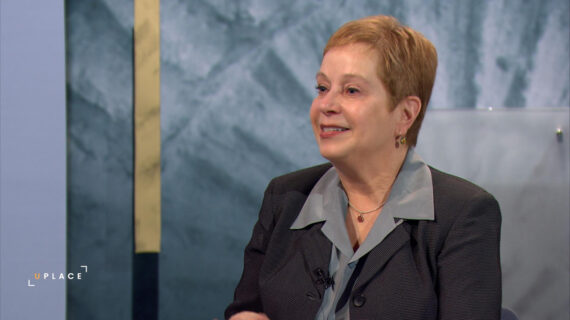
Dawn Bondhus Mueller, Executive Director, Wisconsin Automotive Museum, Hartford, presents the history of the Kissel Motor Car Company, the manufacturer of custom built automobiles, located in Hartford from 1906 until 1931. Although fewer than 200 complete cars exist today, Kissel produced around 35,000 cars within a twenty five year span.


Copy and Paste the Following Code to Embed this Video:
Kissel, Wisconsin's Luxury Automobile
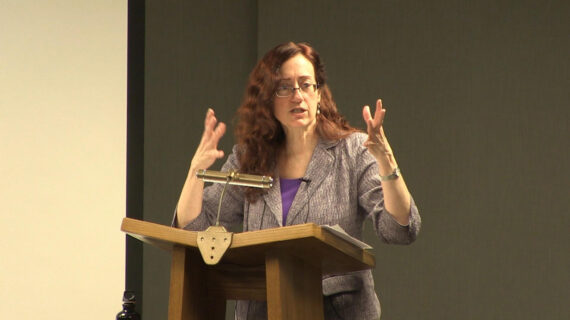
>> Today, we are pleased to introduce Dawn Bondhus Miller as part of the Wisconsin Historical Museum's History Sandwiched In lecture series. The opinions expressed today are those of the presenter and are not necessarily those of the Wisconsin Historical Society or the museum's employees. Dawn is a Minnesota native who has a love of history. For over 15 years she worked at Living History Farms near Des Moines, Iowa, in a number of positions, including registrar, collections coordinator, and site supervisor. For the past four years, Dawn has been with the Wisconsin Automotive Museum and for the last two as executive director. Here today to share the fascinating story of the Kissel Motor Car Company, please join me in welcoming Dawn Bondhus Miller.
APPLAUSE
>> Good afternoon. Many people have only heard of Nash and AMC as Wisconsin automobile manufacturers. It's very common at the auto museum that people come in and they've never heard of the Kissel Motor Car Company and they were surprised to learn that there was another car company around for 25 years in Wisconsin. And part of it is the car company has been gone for over 80 years. It was not made, the Kissel was not made by the millions the way Ford and Chevrolet were during that time, and this was a nicer, higher end car. It was not as inexpensive as those Fords and Chevys. In the first quarter of the 20th century, there were a multitude of auto manufacturers in Wisconsin and other states. And a large proportion of those were centered around the Great Lakes area. Those lakes provided the easy access to the materials necessary to make the vehicles and then a transportation source for the finished product. This is the Louis Kissel family, and Louis emigrated from Germany to the United States in 1857 and lived in northern Washington county until moving to Hartford in 1883. There, he owned and operated a hardware store and farm implement business. The museum does have a few agricultural items on exhibit. Corn shellers, plows that say L Kissel on them. And in the 1890s, he purchased, he and his sons purchased the majority share of the Hartford Plow Works. And the primary brothers who were part of the automobile are George and Will, and they are the two gentlemen, young men, on the end of the photo. In 1903, the brothers purchased a 1904 white steamer, and they actually wound up selling a few of those at a profit. This spurred their interest to produce a car on their own. And after they built one sample car, they decided this was what they wanted to do. And the Kissel Motor Car Company was formed on June 25, 1906, and the brothers Otto, Will, and George were officers, and Judge HK Butterfield was also an officer and an investor in the company. Their first vehicle was assembled, and there was an order of a hundred more from Joseph McDuffie in Chicago. And that's another early Kissel. That's on Main Street in Hartford. Looks like a lovely day.
LAUGHTER
And I don't envy them. It's difficult to see in the photo, but it does say Kissel car, with a K, at the top of the radiator. And those early Kissels were known for winning hill climb contests and other endurance contests. One of them involved driving from Milwaukee to Madison and returning without having any problems, which doesn't sound like a big deal to us today. We do that all the time, but this is in the good old days. The roads were not, they were a lot more iffy. There was a variety of surfaces, especially in those very early years. In San Francisco, a Kissel took a 17% grade in high gear and finished at 20 miles an hour. There was a dentist in Los Angeles who claimed that he had 284,000 miles on his 1911 Kissel. And that was a number of years later. He was in the article, he was teased a little bit saying you have such an old fashioned car, and he said no way, I'm not giving this car up, it's too good. There was a Kissel, at this time, that was also driven 13,000 miles in 30 days. So, again, for the first part of the 20th century, that's pretty impressive. And the roads, it wasn't just Wisconsin. This was all over the country that there was a great variety in the roads, so durability in vehicles really was a must. And that's also in the Hartford area with an early Kissel. Again, it looks like fabulous conditions. And this is the Kissel design department. The gentleman on the left is Fritz Warner, and two of the key employees of the Kissel Motor Car Company were Herman Palmer and J Friedrich, typically known as Fritz, Warner. And they arrived at Kissel about the same time, about 1907, and they would stay with the company for the duration of the company's existence. Palmer signed on as chief engineer, and Warner was designer. And Warner, Fritz Warner had been trained in Germany as a coach builder. We do have several of his tools on display at the museum. And other people, when they see this photo, they've noticed that there were women working at the company, and there were women working at the company in a number of positions, whether it was a upholstery, offices, but there were definitely women employed by Kissel. That's an early exterior shot of the factory. And in the early years, there were a lot of mentions in the Hartford newspapers about regular expansion of the factory. It was almost at least an annual basis. By 1912, the factory was over 300,000 square feet. And with the expansions, there was an opportunity to produce trucks as well as cars. The first trucks were simply made on a car chassis, and then it was, after some of those expansions, they were able to work on a variety of vehicles. Fire trucks were one of them. There are two fire trucks on exhibit at the museum. One is a Hartford fire truck that was used by the Hartford Fire Department. One is from the city of Juneau. And the one in Hartford goes out in the Fourth of July parade, so not too bad for 90 some years old. And that's a grocer's truck. And Highway Department Pueblo. And Kissel products were shipped all over the country, so they were, there's currently a fire truck, 1911, in Colorado that's waiting for it's second restoration, and it has been running but the engine needs to be reworked and they're trying to get funding for that. But over a hundred years old and still going strong. And George Kissel is behind the wheel here. This is an early Kissel, another shot taken in Hartford.
A couple of things to notice
it's right-hand drive. And those early Kissels were right-hand drive. The transition took place about 1913, and that was common with a lot of auto manufacturers. If they hadn't made the switch already, they were a lot of times doing it at that time. And the tank on the running board is for the acetylene headlamps, and that's where the term headlamp comes from is because they were in the early days literally lamps. And about that 1913 time is when Kissel was offering and electric starter and electric headlights. It came as standard equipment; however, you didn't have to take it. There was at least one year where you could say no, no, I want the acetylene and they would reduce the cost of the vehicle a little bit. I'm not sure how many people took them up on it. Electric starter and electric headlights really sound like a good deal to me, but at least for a year or so you didn't have to take it. You could still keep it the old way. And this is another one from about that same time. Schwartz Brewing in Hartford and it says it's a 10-foot wall, no damage to the truck. So, not sure exactly what happened there, but it was evidently able to survive. And we do have, these are some interior shots of the factory. And these are early. You can tell the radiator shape is a little more squared off. That's one of the ways to tell it's just an earlier vehicle or a later vehicle. The later vehicles you start seeing a more rounded radiator. A lot of supplies on hand. This one they chose to do while they were open. The other ones, obviously, while they were under way. And the trucks, the trucks were done in a variety of weights. They did go up to a five-ton capacity for those commercial purposes. And the fire trucks a lot of times were not finished out by Kissel. Pierce was one that was doing a lot of the finishing out for all of the fire equipment. One of the things that's distinctive about the Kissels is you see on the front of the radiator where that badge is, and I'll talk about the badges in a little bit, but it was always that off-center of the radiator up in that corner. So if you get a glimpse of that, that's kind of a flag that it's a Kissel. That's an exterior shot of some of the supplies they had on hand. And Kissel did experiment with an electric vehicle. That was something that a lot of companies did about 1912, 1913, 1914, and Ford did it in conjunction with Thomas Edison. That's the only photo that we have, and it didn't go anywhere. Nothing was ever put into production. There were other companies that were doing electric vehicles at the time. So it's fun to talk to kids about electric vehicles, and it's like, hey, this isn't a new idea. This is something that's been around for quite some time. This is one of the first celebrities who drove a Kissel car. And Anita King was a big name in 1915. She was known as the Paramount Girl and was considered the first woman to drive across the continent alone, and that's her 1915 Kissel touring car. She drove from San Francisco to New York City, and she kept a log of her excursions and had a lot of interesting tales to tell with encounters. Everything from the expected flat tires to literally wrestling with a coyote. And it's just wow, okay. And she did visit Hartford as well, after her trip. And with the All-Year car, this debuted in 1914, and it combined the favorable attributes of both a touring car and an enclosed car because most cars at this time you either had a closed car or a touring car, and here in the Upper Midwest, that touring car in the wintertime isn't so attractive. But the All-Year car had a detachable top and a touring body. And the design was patented by Will Kissel and Fritz Warner, and they did win an award from the National Automobile Chamber of Commerce in New York. So this was really Kissel's big, big thing at the time. And the price is, if you can't see it, the price is four cylinder at $1,050 and a six cylinder at $1485. And that's another one for the All Year car, and it's showing the winter and the summer versions of it. And this is some literature that we have in the museum collection, and March, wintery, yes, blustery, dreary March, the month that tests the All-Year car to the limit. The All-Year top is built in, not on, as solidly, secure as a permanent closed coach. The result of the exclusive Kissel coach design and building that commends the All Year car to particular men and women. And then April, the month of showers and sudden changes but is all the same to the owner of an All Year car. He and his family are always sure of reaching their destination in comfort and tranquility. Perfect ventilation is afforded by the double windshield and the adjustable door windows. And then you switch, it goes through every month of the year, and then May and June here is where they transition into showing it in the summer mode. The month of flowers, when all nature is awake, it is then that owners easily and quickly remove the All Year top, changing their All Year car into an open, roofless touring car. Its artistic lines and symmetrical appearance are keeping with its superb riding qualities. And in June, the All Year car in summer form has that distinctive appearance that is decidedly a Kissel characteristic. Due to proved Kissel structural superiorities plus original and exclusive features of engine efficiency, chassis perfection, and body design. And in later years, when they weren't making the All Year car, it is interesting, the company did some tracking of which cars sold best in what months. And it's no surprise the open cars did not sell as well during the winter, and the open cars, yeah the speedsters and such, their numbers went up in the summertime. So it's fun to look at that. It's like, yep, that logic follows. And those are some Hundred Point Kissels loaded and ready to go. And this was around the same time as that All Year car, but when they're talking about the Hundred Points, they had a six cylinder engine and it was supposed to be a hundred points of efficiency, refinements, comfort, economy, more bushings, bearings, etc. The other thing about Kissel is there were 22 coats of paint on each car, which was eight more coats than any other car in its class. So it was meant to last. It was also around this time Kissel was, no surprise, the largest employer in Hartford. It was about the mid-teens where they peaked out about a thousand, 1100 employees, and Hartford was only around 3,000 people. So it wasn't just people coming from Hartford. There were a lot of employees coming from the area to work at the Kissel Motor Car Company. And in World War I, Kissel's contract, just like many manufacturers during the World Wars, you went into military production. And it was actually a subcontract to FWD, Four Wheel Drive of Clintonville, Wisconsin. And the trucks Kissel built had the FWD nameplate. And Kissel did make about 2,000 trucks during World War I, and there was an order for 1500 more, but then it got cut because the war ended. So that's at the plant. That was actually on Flag Day in 1918. That's where they have some of the vehicles loaded and ready to go. And these do have the solid rubber tires on them. Some of the trucks, there would be, you'd see some of them that would have all solid wheel, solid rubber tires, and some of them would have pneumatic or air-filled tires on some of the wheels, and the others would be the hard rubber. One of the things that was always a sign of success when you see pictures of the factory, whenever they had images of the factory, they always wanted to have that smoke coming out of the chimneys because it made it look like, hey, they're really going at it, they're successful, they're productive and not thinking about the pollution aspect of it. And this is some of those FWDs on a road, road test. Also during World War I, there was a publication that came out about once a month called the Kissel Graph, and that was done by Kissel and it was local news, kind of a supplement to the newspaper, but a lot of the employees did go off and serve in the war and then came back. So it was keeping up with some of what was going on overseas, but it was a local publication. And I think they published about one after the war ended, and that's the one from October 15th. And Kissel had a couple of different badges or logos that they used. And this is the first one that they used that you would see. And the "Every inch a car," it's interesting because after Kissel didn't use that anymore there are some of the ads, it'll say "Every inch a Packard." So I think, it's just a personal guess, but I think that Packard maybe got an idea from that. Some of their advertisements, "Every inch a Packard." But "Every inch a car," and this badge was dropped because of the anti-German sentiment following World War I. And the Kissels were a German family, but they decided to drop that badge. This is the one that was used from about 1918 to around 1928. And that features the messenger god Mercury, and the badge location was in the same place that, if you're facing the radiator, left of center and up high on the radiator. But at the end, the last few years, Kissel had what they were calling the white eagle. And there is a late 1920s Kissel upstairs here at the museum, and that's what is on that car. Simply a white eagle in the radiator shell. And then prior to beginning their production in the late 1930s, the auto company Mercury, Henry Ford did request permission to use Mercury for their upcoming car, and the Kissel family gave it. And the Kissel Speedster is the best known vehicle that was made by the company. It first appeared in 1918, and chrome yellow, which is that color, became its signature color. Milwaukee Journal writer WW Rowland drove a Speedster for a month as a promotion and later held a contest to name the car. When we was driving it around, he was doing it to promote the car and that it was durable, again durable enough for the roads, etc. This is, like I said, still back in the good old days with great roads. And there was a young girl who came up with the nickname of the Gold Bug because of the color and she thought the car looked like a bug, and the name stuck. And this is one of the earlier Speedsters, 1921. And towards the back there you see the outrigger, also known as suicide seats. And there's one on the other side too. So, theoretically, it could be a four-passenger car.
LAUGHTER
A couple of things to notice
I'm not, you know, with some of the speeds you could take, that I'm not sure you'd want to do that. Prior to the Speedsters, Kissel did make a semi racer, which was their sporty car at the time. And then a few years after the Speedster was introduced, they also introduced the enclosed Speedster. So it had the sporty lines of a Speedster like this, but it was enclosed so it was supposed to be more practical for places like here in the Upper Midwest. And literature promoted it that it was perfect for doctors because they were supposed to go somewhere in style and yet be somewhat practical, and there were special mountings on those cars for golf clubs.
LAUGHTER
A couple of things to notice
So you could be at the ready there.
LAUGHTER
A couple of things to notice
It was during this time, the mid-1920s there, the Lakeland is a ship that went down in Lake Michigan, and it's received some more attention lately partly because of a dive that the Wisconsin Historical Society archeology team has done on it. And we were able to identify some of those cars. There were over 20 cars that were on that ship. So it was a mixture of Kissel and Nash and Rollin, which that was a car that was made in Cleveland, Ohio. So there is an exhibit upstairs, an interactive exhibit, where you can see some of those and where the cars are and it's neat. It looks like there's still air in the tires of the cars. And the ship went down on December 3, 1924. This is speculation on our part, for those of us who gathered to look at this. There was a Detroit auto show coming up in January of 1925, and with a lot of those cars, when you look closely, you can see that they have double whitewall tires on them. Most the time, you didn't see a double whitewall on the outside and the inside unless it was going to an auto show. And too, with some of the Kissels and the Nashes, it was difficult to distinguish exactly, you could tell it was a Kissel or a Nash, but it was hard to tell specifically which model it was. But it looked like there was probably one of each type of Kissel made, so it made more and more sense. We think they were probably going to the auto show in Detroit. And this is some of the literature for the Speedster from the collection. And Amelia Earhart had a Kissel. There were other celebrities of the day. Fatty Arbuckle, Douglas Fairbanks, Mary Pickford, Greta Garbo. A lot of people haven't heard of them now but they were big names at that time. So this was a car of the stars. And she also, she did drive her Kissel cross-country. And the Earhart vehicle still exists. It is at the Forney Museum in Colorado. So if you're ever out in Colorado, you can go see Amelia Earhart's Kissel. William Randolph Hearst owned a Kissel in the 19-teens, and that's something that was significant because he had enough money, he could have owned any car that he wanted, and he chose a Kissel. So that spoke highly of the car. And it also made the grade to transport US presidents. I have read that Woodrow Wilson was transported in a Kissel. I have not found a photograph of that yet, but this is Theodore Roosevelt in a Kissel. You can see that badge pretty prominently there. And he was in Arizona at this time. And that is William Howard Taft in a Kissel, and he was on a trip to South Dakota. So this was, both of these were taken between 1910 and 1915. And even Henry Ford drove a Kissel at one point.
LAUGHTER
A couple of things to notice
Which is just fun. Kissel would paint a car any color a customer desired, and even interesting combinations, like pistachio green and lavender, and I'm not making that up. That car was actually made. There were standard color combinations for every model, and you can see some of that. In some years, there would be three standard color combinations for a model. If you deviated from that, it would be an additional $50 charge in the earlier years. In the later years, it was an additional $100 charge. And this is from the mid-1920s, about 1924-1925. There were colors, just like now there are colors that are in style or popular. You see that throughout any time period. Same thing was true in the 1920s. A Brewster green, a very dark green, was a common color at the time. You see some dark blues. You see different grays there. At this time you saw a lot of the cars with black fenders, and then I would have the main body color. The later years with Kissel you saw more of the neutral colors, more of the tans, and then typically not the black fenders. It would either be the same color as the car, or the body color and the fender color wouldn't be that different. And that's true of the Kissel that's here at the Wisconsin Historical Society too. And it's neat to see a Kissel that has all of this. When some of them are restored, they don't have that triple body stripe or you don't see all the time the wheels that are the right color and the pin striping in the wheels, and all of that was done by hand. All of that was done by hand. So it is really just gorgeous when you see one that's done correctly. Then there's one, people ask a lot of questions at the museum about all the cars were black back then. There's the famous Henry Ford. You can have it any color as long as it's black. I mentioned the number of coats of paints that were going on a car at that time. I'm not sure throughout the years how many coats of paint Ford was putting on their cars, but Fords were not always black. In the early years, you did see dark blues, you did see reds, and it was about that 1912, 1913, 1914 range where Henry Ford made his famous you can have it any color as long as it's black. The reason for that is black dried more quickly than those other colors at that time. So he was in it for production. He was in it to be efficient, which was what helped lower the price of those Fords. So just a little side note on that. And Kissel was considered a custom built car. You see that on a lot of their literature where they're talking about custom built, and that is one of the Speedsters there, of course, next to a stagecoach. The frames were wood, and the vehicles were not made on an assembly line like I mentioned with Henry Ford. It was considered a hand built car. The Kissels, they started out about $1500. Some were around $1,000. Some were getting up to $3800. And it varied by what you had. If you had a limousine, if you had a fire truck, of course that's going to be more. It was, of course, high for the time period. And there were standard equipment and additional equipment just like now. In a lot of cases, bumpers were not standard equipment on the lower model of cars. You had to purchase a bumper, if you wanted that. Sometimes on the deluxe models it was standard equipment. But you look at some of the cars from the time period, whether it's a Nash, whether it's a Kissel, whether it's a Ford, you'll see those double and triple bar bumpers. They look the same because chances are they are. They were purchased at the same place. And with some of the prices here, touring seven-passenger $2675, a Speedster $2675, coupe $3275. that's the deluxe models, touring car $2175, and this is for 1922. So it was an expensive car. Kissel was never in it to make an inexpensive car like Henry Ford was. Henry Ford wanted to make a car for the masses, and he did that. Kissel wanted to build a high quality vehicle. Same thing is true with auto manufacturers today. Some are in it to build a higher quality vehicle, and some are in it to build something affordable for just the very average citizen. And with the Kissel calendar year production, this does not include everything. It does not include the municipal trucks or fire trucks, those types of vehicles. But it does go down, Kissel's peak was really around 1923, overall. There was a little dip post-World War I. There was an economic downturn, whether you were a farmer or in several other areas too. And Kissel did rebound there. And Kissel was literally selling cars around the world. They had dealerships, in the mid-1920s, they had dealerships in Australia and in South America and in Europe. So there are still Kissels in Europe that have been there the whole time. There was one Kissel that's rumored that it belonged to the Danish royal family, and that one is still around. And this is just funny. This is an earlier Kissel, but they're saying, "A little slower, Bill, I'm losing my teeth." And the one gentleman is saying, "Wow, isn't she a corker? See her come a mile a minute, a big 660 Kissel car." And when you see that 660, that means it's a six cylinder engine and 60 horsepower. So you'd see some of them that had a four in it and a 45, that would be a four cylinder engine with 45 horsepower. And towards the end of the auto manufacturer, Kissel was involved in the production of an early front-wheel drive vehicle called Ruxton. And New Era Motors was the combined forces of the Moon Motor Car Company of St. Louis and Kissel. Most of the vehicles that were made were actually made at the Moon facility. The open cars were made at the Kissel facility in Hartford. And Kissel was also making the transmissions and drive axles for the car. Everything wound up getting shut down, but they were talking about moving more of the production up to Hartford because Kissel had a better plant than Moon did. And, of course, the timing of the vehicle was not good. With the stock market crash in 1929, both Moon and Kissel ceased manufacturing vehicles within months of each other. With the Ruxtons, only fewer than a hundred were made and only 19 survived today, and one of those is Will Kissel's personal Phaeton. And Will and George Kissel each did keep their Kissels or keep their Ruxtons for a number of years. That's Will Kissel's Ruxton. It is still that color combination, but that is not the original color of the car. We only have black and white photos of the car originally, but you can tell it was not that color combination. It was not that dark. It was lighter. But Will kept his until the early 1940s. So this was around the time that the Cord L-29 was coming out. Kissel and Ruxton were kind of in a competition to see who was going to hit the market first. So it was two of the early front wheel drive cars with bad timing. And that's a rear view of that Phaeton. But the Ruxton was, you don't see running boards on a Ruxton. That first photo showed how much lower a Ruxton was and that you could see over it so it was an easier car to get into. And then Kissel was also, during the end of its manufacturing phase of cars, they were working on Bradfield taxis and Kissel hearse ambulances. So they made a multitude of professional vehicles. So those are some of those Bradfield taxis ready for shipment. And many auto manufacturers did not survive the Great Depression. Kissel was obviously one of them. By the end of the 1930s, Auburn, Cord, Duesenberg, Pierce-Arrow, a lot of people have heard of those, none of those survived the Great Depression either. Kissel went into voluntary receivership and reorganized as Kissel Industries. And they made the Waterwitch outboard motor for Sears and Roebuck. In 1944, two years after the death of George Kissel, the company was sold to West Bend Aluminum, and they continued to make outboard motors under the Elgin name for Sears and Roebuck too. And then in 1965, Chrysler Corporation purchased the company and made outboard motors through 1984. And that's a closer shot of one of the outboards at the museum, the Water Witch. The idea for a museum in Hartford was around for a number of years before it became a reality. It seemed a natural idea with the strong automotive history in the community The successful car show was held for years at the Hartford Airport, and a nonprofit organization was formed in 1984 and the former Libby McNeill Cannery building. It was Seneca Foods for just a couple of years. The building was donated to the nonprofit organization. The Kissel plant still stood at that time, but it was, excuse me, it was in very poor condition, even worse than the cannery building. So it was donated in 1984. There was work that was done on the building for two years, and the Wisconsin Automotive Museum opened to the public in July 1986 with 46 cars on exhibit. Today, the museum exhibits over a 110 vehicles at any given time, of which 50% to 55% are on loan. Currently, there are 25 Kissels at the museum. So you can see we've got a variety of colors there too. The museum is also home to the Nash Car Club of America. They have a designated space there for Nash automobiles and memorabilia. And also within the museum is the Soo Line 1003 steam locomotive. It's a functioning locomotive, and it goes out for special occasions such as the Hartford Christmas parade, and that's when this photo was taken. The Southeastern Wisconsin Short Track Hall of Fame also has a designated space within the museum, and that was remodeled and updated last year. And I thank you for coming today.
APPLAUSE
Search University Place Episodes
Related Stories from PBS Wisconsin's Blog





Donate to sign up. Activate and sign in to Passport. It's that easy to help PBS Wisconsin serve your community through media that educates, inspires, and entertains.
Make your membership gift today
Only for new users: Activate Passport using your code or email address
Already a member?
Look up my account
Need some help? Go to FAQ or visit PBS Passport Help
Need help accessing PBS Wisconsin anywhere?

Online Access | Platform & Device Access | Cable or Satellite Access | Over-The-Air Access
Visit Access Guide
Need help accessing PBS Wisconsin anywhere?
Visit Our
Live TV Access Guide
Online AccessPlatform & Device Access
Cable or Satellite Access
Over-The-Air Access
Visit Access Guide




Follow Us