

 Passport






Door County Maritime Archaeology
07/26/15 | 27m 32s | Rating: TV-G
Carolyn Rock, Natural Resource Educator, Wisconsin DNR, explores the multitudes of shipwrecks around the Door County peninsula. Rock explains that maritime archaeology is the preservation of our cultural heritage providing a glimpse into the economics, culture, industry and daily life at the time of the shipwreck.


Copy and Paste the Following Code to Embed this Video:
Door County Maritime Archaeology
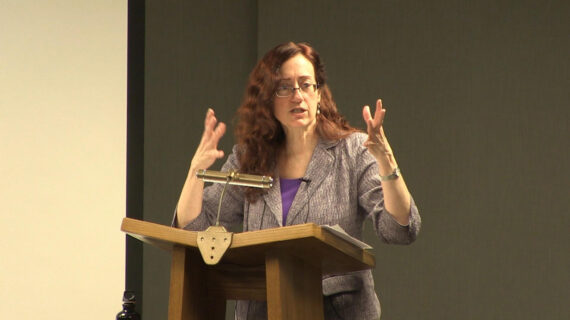
Our next speaker is Carolyn Rock, who is noticed in the Glidden Lodge Newsletter to their friends, and customers, and what have you. They called Carolyn Door County's favorite naturalist. So, I thought if they're gonna do it, that's how I'm going to present her, is as our favorite naturalist here in Door County. And, she's been rescuing pieces of the thirteen known shipwrecks in the Whitefish Bay from burn piles as various bits wash up from the beach at the state park for the past 15 or 16 years, collected fragments of shipwreck planking and frames and reassembled them during her summertime educational events called "Junior Underwater Archaelogists" at the park's big red tent. And so, Door County's favorite naturalist Carolyn Rock,
thank you
Carolyn. (applause) Just let me get my microphone here so I don't trip on it. Thank you guys very much for having me tonight and we'll get on to shipwrecks. How many of you have ever gone out and dived? I just want to see how many divers are in the group. Oh, four, five, excellent. How many snorkelers? Any snorklers in the group? Good, a few more of those. How many have been on a boat and actually looked down in the water and have seen a shipwreck on the bottom? Good, yeah, a little bit more. How many people like to stay on dry land? (laughs) Don't like to get in a boat, okay. There's a couple of folks that like to do that. Well, Wisconsin, you know, is a proud state and we love to, if you look at our logo and our flag and our coat of arms you'll actually see a lot of maritime history right into it. So, we see the sailor on our coat of arms, but we also see the four emblems of industry which is the plow, the mining, the anchor for maritime, but if you look at the what we call industry today is actually a caulking hammer. And, a caulking hammer is used to build ships. So, now we if you look at some of the older ones it's more of a caulking hammer design, newer ones have it as a real hammer. So, Wisconsin has a great history or maritime. We cover almost 860 miles of shoreline on the Great Lakes. We have 14,000 lakes and miles and miles of rivers and streams all covering archelogical treasures all from shipwrecks, fishings weirs, canoes, fur trading posts, things like that. So, a lot of great maritime history here in Wisconsin and I'd like to talk a little bit about that. So, there's over 700 wrecks in Wisconsin over all. In Door County we figured there's about 300 plus miles of shoreline and these are the known and confirmed and unconfirmed sightings of the shipwrecks we have, that we know today. And, we're still finding them today, still finding them even in this day and age. Just this week down in Two Harbors area two shipwrecks have been rediscovered. Of course they knew, the people who were on the shipwrecks knew where they went down, but today they may have been forgotten and we've actually just rediscovered some of them. The key about maritime archaelogy is discovering which shipwrecks are which and we'll talk about how that designed. So, only a small for it we know about Death's Door. How many people have heard the legend of the Native American war tribe that crossed the canal and they crossed over and a sudden storm came up and they wrecked against the rocks. Raise your hand if that's the story that you heard. Okay, that's the legend that we all hear about. They've done a lot of research on that and they say well maybe that was a French fur trader trying to keep other people away, by having that. But, we do know that the Death's Door is very violent. It has violent storms coming there's strong winds, strong currents, and has caused a number of shipwrecks within it's bay. Just between the 1830s and the 1912 over 43 wrecks occured and they were lost completely. Over 100 more were sunk and then salvaged either by floating away or by craned away or by dug out. So, you can see identifying some of these the shipwrecks that are the three are together are the Gilmore, the Forest, and the Nichols and they all ended up on Pilot Island prior to Pilot Island having a light house. So, you can imagine that crew. One crew ended up on there and then the second crew, and then the third crew ended up. And, the one crew was able to haul away, row the way the rest of them. So, Plum and Pilot Island were installed. Plum, of course, in 1848 and then 1896 again it was rebuilt. And then, Pilot Island was in the 1850s, an very important navigational aide. But, even after that navigational aide 43 ships still went down and lost. So, let's talk about maritime shipwrecks. So, why is it so important to not only find the shipwrecks but the artifacts that are involved in them. The artifacts tell a story, shipwrecks tell stories. One of the things that I like to think about is archaelogy is the study of what people did not the study of people said that they did. (laughs) 'Cause, you know what you said you did and what you actually did sometimes is a little bit different. So, maritime archaelogy is the preservation of our cultural heritage and it's belonging to all of us, all of us here in Wisconsin and those who visit us. It tells the story of what had happened, of economics, of culture, of industry, of daily life, 'cause if you think about it what's an archaelogist loves to find a garbage pit because it tells us the life of real people. And yes, and garbage pits are really exciting. If you've never experienced it, go look in your garbage. (laughs) And, the great thing about Wisconsin is about 20% of it is underwater, so we have a lot of great maritime history. One of the other great things about Wisconsin maritime history is that Wisconsin has this lovely cold water, fresh water, which actually helps preserve our shipwrecks. So, shipwrecks are time capsules. They tell about what people lived at that point in time in life. They have artifacts that tell about their indvidual lives, about the culture of that time period, about their personal items, what they might have held importance to themselves. And also teaches the role of the vessel in the whole bigger picture in terms of industry or in terms of commerce or in terms of society. So, we weren't the first. Now, maritime archaelogy here in Wisconsin have been going on since 1988. So, relatively new in the grand scheme of things. But, that doesn't mean that they haven't salvaged some of the shipwrecks. The shipwreck on my right-hand side is from the Wisconsin, the Wisconsin shipwreck here. It sunk in 1929 just off of Medicine Kenosha area, And, within a couple of months went and dove on the wreck to see if they could catch it. Now, unfortunately that shipwreck happens to be 200 and some feet down. So, you can imagine they didn't actually salvage anything from it. They did try to blow a hole in the side and try to get the safe out of there, but they didn't do much more besides cause a lot of damage. Now, the shipwreck on the left-hand side happens to be one that's in Whitefish Bay. This is the ship Australasia. And, the Australasia went down with 300 tons of soft coal on board. So, if you can imagine, soft coal is very valuable even in the turn of the century, 1896. So, in 1897 they salvaged it and you can see the salvage operation, you can see the little bit of Whitefish dunes in the background, the dunes and the hills. So, even then they were salvaging. So, a lot of times shipwrecks were salvaged if they were close enough to shore or they were able to. So, let's talk about what or how they do it. So, here's some two fantastic divers Tamara Thompson and actually Keith Meredith there here. And, they're actually doing a survey of it's called the Success. And, they are mapping it out, you can see the grid line that they have. Every shipwreck is gridded out and they have a little template and they follow it. Each person is gets a section of grid and then they have to draw and measure their pieces within the grid. Think of it as a big puzzle, okay. Each grid piece that you've drawn in you put the pieces of puzzle together and then you end up with the big ship, or at least a big picture. You also, while you're underwater you actually measure it and you actually take photographs or videos. Now, one of the problems is is it looks a little murky doesn't it? You can't really see a big 70 foot shipwreck here, or sometimes a 200 and some odd shipwreck underwater. And, so we have video is really good, but it really doesn't provide everything. That site map is really key. The site map actually tells us the basis of what is there. One of the things that we think about shipwrecks is that just we're looking for the vessel itself, the framework, the cabin deck, the anchor, the steering mechanisms, but more than that the way it landed on the bottom and the refuge of it, the salvaging of the artifacts, looking at where the artifacts landed. How much is buried? How much is not buried? All those things tell part of the story of the ship and how it went down. So, when we think about a shipwreck if we see it going down, and you see it where it landed and suddenly there's a debris field off to the left and then suddenly you see that there's more things off upper and to the right you can tell a little bit about the ship. Say it went backwards or it twisted or it cracked we can tell the story of how the ship sank. Which tells the story about those sailors what they went through and what the ship went through in it's last moments. Which, if the sailors all went down with the vessel there's no record of that, so we're able to interpret that story and show that story with the rest of the world. One of the things about shipwrecks also is between measuring is this is pretty shallow. You can see that the diver here has just a single tank on and has a kind of an under arm, has an emergency tank, but once you get a little deeper like this shipwreck. This is just off of Milwaukee. You can see that there is quite a bit more tanks. He's got some tanks on his back, got two tanks on his back and he's actually have two reserve tanks underneath his arms, there's one on each side. And, he's going to be down for about 60 minutes. This is most times when you're in Wisconsin waters. How many people have gone swimming today or yesterday? It was kinda nice, wasn't it, the water was cooling you down. Well, when you're out in Lake Michigan water and Lake Superior water the average water temperature between the two is between 40 and 60 degrees. Can you imagine spending an hour in there? Your body temperature is 98, how long are you gonna survive before you start getting hypothermia, start beginning getting cold. And so, they wear a lot of dry suits, they actually wear insulation long underwear underneath that. So, you can imagine if you're on a vessel today, like we were, putting on a long underwear, going out on the lake, it's hot out there, and then suddenly putting on your dry suit and then putting on your tanks. You're putting on about a hundred and some plus pounds of gear and then we're gonna shove you off the side of the boat, which is always my favorite thing, 'cause I get to stay up on top. I love that. (makes splash sound) Push them off, but they work. And, so we have here is a lot of equipment on and a lot of weights to pull you down but also some bouyancy to keep you floating so you don't crash into the wreck. This is really some new stuff that's coming out. This year we had two volunteer videographers come on to our vessels and they've been working with Tamara Thompson who's the maritime archaelogist, and Caitlin Zant is the other maritime archaelogist for the state of Wisconsin. And, they are working with two Johns as we like to call them and they have taken video of our shipwrecks, and two shipwrecks specifically. One was the Wisconsin where they actually videographed the top of it and then they go inside as much of the rooms as they possibly can. And so, what they do is all those videos will then be converted into a 3D model and you on your computer will be able to dive down onto that shipwreck and move your mouse around and see and go into it. Now, not only do you have to just take video, Caitlin and Tammy have to go down and they have to do measurements, because you have to not only have to do the filming of it, but you have to make sure the measurements are right so you can actually get in and out and you actually can see things in the correct angle, 'cause whenever you take a picture of it doesn't mean you have the exact size of it. So, that is the newest thing coming out there so wait, in a year or so and we should have that up on the WisconsinShipwreck.org website. So, photomosaics. Photos are taken if there's clear enough light, thank you for zebra mussles for clearing our water. That's probably one of the positives on zebra mussels in the Great Lakes is it does have a clearing of our water. We're actually able to see in greater depths and more light fixture going down below. And then, we can compare that with this, this is a site map. This is a scow schooner which is actually in Whitefish Bay. So, one of the things I'd like to talk to you about is a little bit about shipwrecks and how they wreck. Most of the time could be a storm comes up, the Great Lake crashes. And, if you think about it the turn of the century, early 1800s, 1900s storms come up unexpected. They didn't have satellite, they didn't have radios like we have today. So, the storm comes up unexpectedly and Lake Michigan is not a good place to stay, 'cause there's not a lot of safe harbors to go to. Sometimes if you're trying to haul the ships you try to get that last load in before the end of the winter season you kinda get stuck in ice. And so, a number of ships did get stuck. This one actually gets stuck in the Sturgeon Bay area. And unfortunately, it did crunch and break up. Sometimes, this poor ship, this is actually in Washington Harbor. The Louisiana actually was battling the storm of 1912. And, just 70 mile per hour winds going through Death's Door, just wasn't making it. Found harbor, tried to have safe harbor in Washinton Habor and it got up against the rocks. And unfortunately it started to burn. So, you're in a storm in a burning ship, hmm not a good situation to be in. And so, the crew and the captain were able to row to shore over a three hour period of time to get to shore and was able to safely. Unfortunately, the ship burned. Now, you can imagine the Australasia, which is the shipwreck that happens to be in Whitefish Dunes, Whitefish Bay is the wooden sailing vessel and it has soft coal on board and it had a fire on board, not a good combination to go with either. Navigational aides were really a great help. They help with telling where coastlines were with the light and the sounds. And, we have, of course, 11 lighthouses here in Door County, the county with the most lighthouses in the nation, which really quite a spectacle if you've ever seen the lighthouse weekend. And then, there's just navigational aide, captains running into each other in the fog or in storms, or not sure which way... I'm sure you've run into the story of, you know, the sea captain that says, "I'm a navel vessel "and I need you to move to the right. "We have the right of way." And the lighthouse guy going, "No, I'm a lighthouse. "You're going to have to move to the right." (laughs) Well, you know, there's the rights of the road just the same as there is rights on the water. And, of course ships run into each other, crack into each other and sink. Bad drivers. This is a small shipwreck that actually occured in Whitefish Bay. It's called the Otter, and the Otter was at Whitefish Wharf, used to be known as Bossville. And, it broke anchor during a storm and was kind of being going out to sea and being twisted around. And like the captain and the crew, there were seven people aboard decided that they were definitely not going to be making it and so they called the lighthouse on the lifeguard station up in Sturgeon Bay. It's 11 miles away and it took 'em two hours from the time that they got called with the horses and wagon, with the rescue equipment, with the breeches bouy and the cannon to haul themselves all the way up to Whitefish Bay and shoot a cannon across, which is a one time shot, nice job, and start hauling the guys off. Within two hours between the call they were able to get the first guy off quickly, successional they got the rest of the men off. And, the vessel actually ran aground and twisted completely, was a complete loss in that respect. And so, these are pictures that were taken by a young gentleman with his Kodak camera. He was always carrying it with him, he was able to carry it and he was able to get some great shots of this rescue at Whitefish Bay, really quite amazing. You imagine trying to get on to breeches bouy and being hauled across in those waves. The Adriatic is the first self unloading vessel in the world, and we have it here off of our shoreline in Sturgeon Bay. (laughs) Self unloading vessel, it is, you know if you think about it rocks and stones how do they get the stuff out of there? They used to haul it out by carrying it by containers. The Adriatic was the first vessel that they decided to be, "Hey, we're going to do this." And so, they built a wooden self unloader in 1912 on the vessel and by 1914 it could unload at the rate of 290 yards an hour, which is actually pretty slow in today's standards, but it was actually quite fast back then. During the 2013 scuba season as the maritime archaelogists like to call it, they had East Carolina University students, maritime university students come out and actually help them with the survey dive. So, we had about 16 folks come out and help us do it, now this is only in 13 feet of water. Now, look at the clarity of the water there. It's not very clear. The vessel is actually quite long, it's almost 150 feet long. And, this is what they had to work with. This is why we do drawings instead of pictures. This is a really good illustration. This is the self unloader, doesn't look like much today, does it? But, it was wooden and it's down, it's actually in 13 feet of water just right next to Bay Shipbuilding, one of their docks. So, this is a federal historic site, per se. So, this is a picture of it. There is actually more of it but it's been silted in and until we can actually get the funding to unsilt it this is what we will have of it right now. One of the great history about the Great Lakes is the scow schooners. The scow schooners are these square bottomed vessels. They were used to haul around, kind of like a delivery van. The delivery van goes from shop to shop delivering their goods. This one from village, to village, to village along the piers and the wharfs delivering goods and supplies. The scow schooners are also know as the "Mosquito Fleet" and we're not quite sure why they're called the "Mosquito Fleet", but you can come up with your own terms if you'd like as to why they were known. This is a unique carving, what do you guys see in this picture? (murmurs from crowd) Like a duck maybe? I heard a duck. (murmurs from crowd) Seagull, okay. A crow, okay. At least you can see it's a bird, right? This is what's called a "Screaming Eagle". This is really unique for a scow schooner. Scow schooner's are kinda like the little early cheapy vehicles of the day. They were kind of like the throw away vehicles, it was a cheap vehicle. It was easy to build any cabinet maker or wood worker could have made one. And, if you could build a barn you could build a scow schooner is what the historians say about the scow schooners. But, this scow schooner was apparently made by a gentleman who really like scow schooners 'cause he built himself the only one of the few mastheads that we actually see in the Great Lakes system. This is off of Whitefish Dunes, per se. This is quite a quick sinking. The scow schooner actually ran into some log, or something we figured. And, it sunk quite quick enough that actually the cabin and most of the items remained intact and we can see that the cabin is still constructed. The cabin was really well built. The unfortunately thing is that the hull, when they did the investigation of the site, was that the hull was really weakly constructed. So, whoever built this was great cabinet maker and built great buildings, but was unfortunately not a great shipbuilder and didn't build a strong enough hull to your vessel. If you can imagine that if a log could puncture your hull of your ship and sink it, that's probably not a good idea. You can see the bow of the boat here with the cabin really well intact, but not much more to it. It was carrying a load of limestone from Moonlit Bay southward. You can see the picture, this is the site plan yet again. You can see the detail that goes into that and it really is, I always ask the maritime archaelogist 'cause, you know, you can dive with them in the studies and they actually do a lot of volunteer dives where they use a lot of volunteers to help do these site plans. And I said, you know, "How much of an artist "do you have to be?" And they said, "All you have to know is the measurements "and distance and maybe you'll have to write it underwater." (laughs) Scow schooners are so varied that we have a lot of them here in Door County. And there are so many coming up again and again and again. This one's called the Success, and it's pretty much intact underneath sand, just off of Whitefish Dune State Park. And, I apologize for all of the Whitefish Dune ones, but those are the ones I really know about. This is one of the heating units on the vessel. And then we also find just a few things that the planks are exposed per se on the ship. And, the ship is quite unique in the sense that it is almost completely intact, but it's underneath the sand. So, for those who don't want to get your feet wet hang on for a second we're gonna go into the diving world first. So, if you haven't checked out WisconsinShipwrecks.org I strongly encourage you to. It has amazing pictures of it and all the shipwrecks that we have known, including the Griffin are listed. And, the Griffin was the first sailing ship in the Great Lakes and it's actually listed too. And, it has GPS coordinates for all the ships that we know their location of. And, what we strongly recommend, don't be moving any artifacts around on the vessels that you see. Leave them there where you have them so other people can just discover them. And, these dive bouys are great to hook your boats to, even your kayaks to. We have a lot of 'em are in shallow enough waters that you're able to kayak out to or boat out to. And then, you can also scuba dive or snorkel on them. This is the Australasia in Whitefish Bay. Now, I'm just going to give you a size of the vessel that the diver right there is 6' 5". So, you can imagine the size of those beams. So, the Australasia is in shallow enough water, it's in 25 feet of water, that you can actually kayak out there and you can get this view on a clear day. There's shipwrecks in Baileys Harbor, Egg Harbor, Fish Creek, also off of Gill's Rock, Washington Harbor, Jackson Harbor that you can actually see from your kayak, or your canoe, or from your boat. So, say you don't want to get your feet wet. Say you wanna stay on dry land. There's something called Maritime Trails. Not only is this a great website to check out to start with, but it gives you a key to all the maritime trails in Wisconsin. There is a lot of them here in Door County specifically. This is, of course, the ocean wave which is at Whitefish Dune State Park, but we have over 20 of them here in the county. Northport, telling each of a different history about either a landmark or a shipwreck or a maritime structure. The stone fleet, so even the quarrys here are important maritime history tells. If you ever go to the stone quarry, or George Pinney Park take a look around and see where The Arches is, see where the old train tracks used to be. There's a lot of history that's still out there that tells you that connects it to the maritime history. Does anyone know where this is? (murmurs from crowd) Yeah, Anderson, (mumbles) This is Jacksonport. Jacksonport has Reynold's Pier which is a federal historic site or the National Historic Places landmark. So, not only can you see those maritime trail signs but you can go geocaching. How many people like to go treasure hunting, find things? Treaure hunting is really great and GPS units allow you to do that and it's just the coordinates and you have to bring along a pencil and paper, because you'll be doing some math. And, you can be leading along so these lovely ladies all found the great archives, found great information. There's also land based exhibits. This is the shipwreck exhibit at Whitefish Dunes. But, there's also the Maritime Museum. There's the one up in Cana Island.
There's all the lighthouses in Cana Island
Eagle Bluff, Pottatwatomi, Sherwood, the Great Lighthouse walk. And, I'd like to thank the volunteers that do a lot of the work with the Maritime Historical Society program. They are actually the bank's backbone. Seagrant is a lot of the funding for the entire program for the Maritime Historical Museum, the Maritime Historical program in the state of Wisconsin is actually grant funded. And, it's run by Tamara Thompson and Caitlin Thompson who really have really funded this through grants. And, if you ever have an opportunity to go out and listen to Caitlin or to Tammy and experience some of their digs or some of their site visits I recommend that to do. So, I'm going to take quesions now of what you can all the shipwrecks of Door County. (applause)
Search University Place Episodes
Related Stories from PBS Wisconsin's Blog




Donate to sign up. Activate and sign in to Passport. It's that easy to help PBS Wisconsin serve your community through media that educates, inspires, and entertains.
Make your membership gift today
Only for new users: Activate Passport using your code or email address
Already a member?
Look up my account
Need some help? Go to FAQ or visit PBS Passport Help
Need help accessing PBS Wisconsin anywhere?

Online Access | Platform & Device Access | Cable or Satellite Access | Over-The-Air Access
Visit Access Guide
Need help accessing PBS Wisconsin anywhere?
Visit Our
Live TV Access Guide
Online AccessPlatform & Device Access
Cable or Satellite Access
Over-The-Air Access
Visit Access Guide




Follow Us