

 Passport






Climate Change, from Global to Local
05/11/15 | 46m 32s | Rating: TV-G
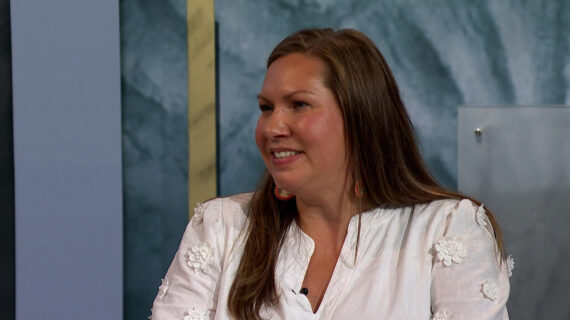
Brenna Holzhauer, Director of Exhibits, Aldo Leopold Nature Center, Madison, explores how to talk about the local effects of climate change and global warming with your children, students and families. Holzhauer discusses the basic science surrounding climate change and simple changes that can help the environment.


Copy and Paste the Following Code to Embed this Video:
Climate Change, from Global to Local
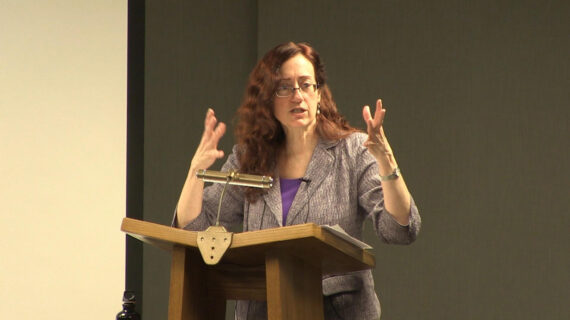
Welcome to UW Space Place. Tonight is our monthly guest speaker night and tonight I'm pleased to introduce Brenna Holzhauer, who is with the Aldo Leopold Nature Center here in Madison, not really too far away from Space Place, where she is the director of exhibits and digital curricula. And Brenna is an alum of UW-Madison and works, of course, on educational programs at the Aldo Leopold Center, sometimes with us. We've collaborated with Aldo Leopold on a few programs. But her talk tonight is related to some of the educational programs and exhibits that they have over at the Aldo Leopold Center. So, if you haven't been there, I think she's got a brochure to hand out or something and I'm sure you can find Aldo Leopold Nature Center on the web. So, tonight, Brenna is going to talk about climate change from global to local. So, we should welcome her here. (applause) Thank you. Can you hear me okay? I'll talk loudly. So, thank you very much for having me. I'm really excited to be here and talk to you a little bit about some of the climate education programs that we have at the Nature Center and just some things that I've learned along the way as I've been developing curriculum. So, here's a really brief overview of what we'll be talking about tonight. First, I'll give a quick background and bio, so you know who I am and why I'm here. We'll talk very quickly about climate change basics, which is a challenge to cover in just a few minutes, but I'll do my best. We'll be talking about climate change locally, some of the impacts and what we're seeing in Wisconsin. And then I'll talk more about teaching about climate change and some things that I've learned and tips and tricks I have for teachers and educators and general citizens who are interested in teaching about talking, sorry, teaching about climate change and talking about climate change. And then we'll just end with some things that we can all do and places we can learn more. So, who am I and how did I get here? I was born in Milwaukee. I also grew up part-time on a farm in Gays Mills, Wisconsin, which is in the rural southwestern driftless area of the state. And I also went to grad school in Washington, DC. So I've done a little bit of bopping around and ended up, I'm very happy to be back in Madison where I got my undergrad degree in anthropology. I changed majors several times and covered a whole spectrum of science and social science. I ended up with anthropology and then I worked a few different museums and educational centers in Milwaukee. I went to grad school at the George Washington University in D.C., where I got my master's in museum education, and then I moved back to, I worked at the U.S. Botanic Garden in D.C. I also was involved with the D.C. Environmental Education Consortium, and I managed the education department at Earth Day Network. And then I came back to Madison, and I've been with the Aldo Leopold Nature Center for going on five years where I've been the director of exhibits and digital curriculum. And I also have been coordinating Nature Net, which is a consortium of different environmental education sites and centers in south central Wisconsin. And then I've, along the way, I've taken an interest in environmental issues, science, and, in particular, climate change and climate science. So I've done a lot of education along the way and then professional development. I took a graduate course through the Ohio State University. I've been very involved for several years in the NOAA Climate Stewards Education Project. I was a regional leader for a couple years in the central region. And then I was selected last year to be trained by the Climate Reality Project where I learned a lot about communicating about climate change, and I went to South Africa and did a three-day training, pretty intensive, which was a great experience. I got a lot of fresh perspectives and a good global perspective. I've been involved with WICCI, the Wisconsin Initiative on Climate Change Impacts, and I'm currently on a committee with the Wisconsin Academy talking about climate and energy initiatives in Wisconsin. So, I think, I just wanted to mention all of those things because I think as climate change is such a broad topic and it's constantly evolving and there's so much science, and then when you add different educational approaches and solutions and all the different things that are involved, it's really helpful for me to just keep on learning, making new connections and partnerships and relying on a lot of the great experts and resources that are out there. So I work right now at the Aldo Leopold Nature Center where we, our mission is to teach the student to see the land, to understand what he sees, and enjoy what he understands, which is a quote from the famed Wisconsin conservationist Aldo Leopold. So we infuse his land ethic into all of our teachings and programs. We do a lot of hands-on guided, high-tech, high-touch experiences. Children and adults come to discover and explore the wonders of the natural world. So, for about 20 years, we've been doing environmental education programs, mostly outdoors and then in our classroom spaces, and about three years ago we did a big renovation and added a whole new wing full of indoor exhibits and technology to teach about climate and climate change. So that's been my main project is developing the curriculum and all of the exhibits over there. So, just a quick overview of what we have there so you know where I'm (laughs) coming from with all this information. We do all of our programs, no matter what, even if they use the indoor technology, we always have some connection with the outdoors. We're always getting kids involved in hands-on environmental learning. And then now we have the capacity to do a lot of interactive investigations using touchscreens and lots of hands-on indoor technology as well. We have a science on a sphere, which is an exhibit put together by NOAA, the National Oceanic and Atmospheric Administration, and it's basically a spherical, global projection system. So we have hundreds of data sets and real time satellite information and visualizations we can use to talk about all different kinds of Earth science and more. A new project that I've been working on, which will be opening in a couple weeks, I'm really excited about, is our immersion theater where we'll be able to have this immersive environment with a panoramic screen where we can show even more Earth science visuals and then we're going to have a whole new suite of astronomy software as well, so that'll be really exciting. I hope all of you can come check it out. And then we just have a whole bunch of different other hands-on exhibits kind of infused throughout this area. So, now I'm going to talk a little bit about climate change basics. And I sort of use that term ironically because (laughs) it's really hard to talk about the basics of climate change. It's a very complicated topic. I know you can't necessarily read this chart, but I put it up here just so you can see. This is the framework that I developed when I was starting to put together a digital curriculum, and I soon realized that there are so many interconnecting topics and different things to talk about and they're all overlapping with each other in so many different ways. So the main themes that I broke out are climate, energy, green building, weather, renewable energy, phenology, which is the science of appearance, so observing and recording things that are happening in nature, humans and society, and then local stories. So those were kind of the main themes that I wanted our visitors and our students to understand. And as you can see, they all sort of weave in and out of each other. So, tonight I'm going to talk a little bit about some of the, I'm pulling some things out of our curriculum, namely focused on what is climate, how does climate work, how is it changing? Then we'll talk a little bit about some local impacts, and we'll talk a little bit about solutions as well. And if you want to learn about all the rest of the topics, you can come visit us at the nature center. So, as I'm talking, this is basically what I've put together as far as climate change basics. We mainly teach students. Our main focus is K-12, but we also have a lot of adult and upper level content as well. So, my apologies if I sound like I'm talking to kids because that's who I'm used to talking to most of the day. But I do think it's a great way to kind of tie everything together and make sure people have a basic foundational understanding, even adults. So we've broken down a lot of these really complicated topics into something hopefully that's a little more easy to understand. So, the way we've been defining climate is climate is made up of the weather of an area averaged out over months and seasons to many years. Many scientists define climate as the averages over a period of 30 years. And climate helps us understand what to expect in our area. It's a series of patterns and averages. It's large-scale and really complex. It has to do with the long-term condition of all parts of the Earth's system that are exchanging energy. So that includes land, oceans, air, even things coming in from outer space. Each of Earth's systems affects and is affected by the others. They're constantly changing, but overall they're largely balanced, and they make up the conditions of our planet called Earth. Another topic that we try to make sure people understand right off the bat is the difference between climate and weather, which can be very confusing because weather is a huge part of climate, but they're not necessarily the same thing. So, weather is what's happening in the sky and the air around us right now, and it's constantly changing. And when you add up all the weather that's happening for a long time across Earth, you get climate. So we say climate is what you expect, weather is what you get. And climate, another way that I think helps kids understand is climate helps you know what kind of clothes to have in your closet, and weather helps you decide what to wear today. Another good analogy is climate is like a long book about the Earth, and weather is what you read on one page. So, talking about how climate works, really, everything comes back to the energy that Earth receives from the sun. Earth receives a large amount of energy from the sun each day, and it's not distrusted evenly across the whole planet. It hits the equator more than it hits the poles. So Earth's climate system is what distributes and uses the energy through a variety of interacting cycles and systems. So these are some of the many cycles and systems that are involved in the climate system. So we have the atmosphere, then when you have the atmosphere plus solar energy, you get the greenhouse effect. I'll talk more about all of these in just a minute. We talk about the carbon cycle. We talk about the water cycle. We talk about energy and how plants use energy and chemistry, energy from the sun, to make food for themselves which then feeds, through photosynthesis, feeds into the food chains and relates to ecosystems. So there's all of these different, broad things that are happening all over our planet, but they're all interconnected. So, when we're talking about the atmosphere, we're talking about the air that surrounds us and the planet, and it helps to moderate solar energy and temperature. It's where the water cycle and the energy cycle interact to make weather. The greenhouse effect is a naturally occurring layer of gases around Earth that are protective, insulating, and really help to regulate the temperature on our planet. They allow sunlight to enter, and they trap heat on the way out, similar to the walls of a greenhouse. The carbon cycle, every living thing and many nonliving things on our planet all contain carbon, and it's, they all store energy in carbon and release as they decompose, as they breathe, as they are burned, or as they're eaten. One of the basic physical properties of carbon dioxide is that it traps heat, which will come up later. (laughs) Then, when we talk about the water cycle, we always tell kids that Earth has a limited amount of water, and it's always moving around the whole planet and changing forms. It's really important in our weather system, and it's important in all of its different states. So, liquid water obviously is a huge freshwater resource. It's also the oceans, which make up 70% of Earth's surface, play a very important role in regulating Earth's temperature, carbon levels, energy exchanges, weather and climate, ice helps regulate temperature, and then water in its gas or vapor form is a really key component of the atmosphere and the greenhouse effect. And then ecosystems, Earth is covered with an infinite number of overlapping ecosystems that connect its plants, animals, and all the different specific ranges of habitat, including the land, air, and water. So, when we talk about climate change basics, we're pretty much (laughs) talking about everything. So, just to take a closer look at atmosphere and the greenhouse effect, because I think this is a key point to understand if you're going to understand what's happening with climate change and with global warming. So, solar radiation in the form of light waves passes through the atmosphere, and light waves are shorter so they can penetrate the atmosphere. And then they enter Earth's system, they're absorbed by Earth's land and oceans, and then some of it is radiated back into space in the form of infrared waves. Infrared waves are longer than the light waves, and so some of them bounce back out into space, but some of them get trapped by the atmosphere on the way out. So, some of this outgoing radiation then stays around the Earth and starts to warm the atmosphere, the land, and the oceans. I put this little tip because in my programs that I've been teaching, I started to realize that some people had no idea what the greenhouse effect was at all, and some people have heard of the greenhouse effect but they think that it, in and of itself, is bad. And so I think it's important to point out that the greenhouse effect, in and of itself, is not bad. It's a major reason we have life on Earth, but when it's amplified is when it starts to have consequences on the other systems of our planet. So, without the greenhouse effect, Earth would just be a huge ice ball the same temperature as outer space. And because I'm speaking on Space Place, I thought it would be good to show (laughs) some planets. But I think this is an interesting way to talk about how important Earth's atmosphere is. Earth is sometimes called the Goldilocks planet because it's just right. We have just the right amount of atmosphere and we're just the right distance from the sun that our temperature allows us to have life, and it allows us to have the water cycle and be home to the three different states of water so that we can house water in solid form, liquid form, and gas form, which is really important for sustaining all of the other systems on our planet. So we have, you can see here that Earth, on average, is about 15 degrees Celsius. Then our next neighbor over, Venus, is about 457 degrees Celsius. And you might say that's because Venus is closer to the sun, but if we look at Mercury, you can see that it's not as hot as Venus, and that's because Venus has a really, really thick atmosphere. So the greenhouse effect on Venus is off the charts. And I think an interesting fact is that Earth and Venus have about the same amount of carbon dioxide, but on Earth the carbon is buried and on Venus it's all in the atmosphere. So it's just kind of an interesting case study we have. And that image of Venus, I should point out, was actually taken by radar. Because the atmosphere is so thick, we can't see the actual planet. So, just an example of a run away greenhouse effect. And then I threw this picture on because I think it kind of helps to point out how fragile and thin our atmosphere is. So, I've heard it compared to like the varnish on a globe or the skin on an apple, if you're comparing the atmosphere with the Earth. If you're driving a car at highway speeds straight up, you would reach the top of the sky in about five minutes. So think about all the distances on Earth you could cover in five minutes, and then driving straight up helps you realize how vulnerable and fragile our atmosphere is. Okay, so now we're going to talk a little bit about how climate is changing. And it's good to note that changes are happening in all of Earth's systems. I'm gonna start out by talking about how kind of our energy cycle is changing. And that has to do with, (clears throat) excuse me, fossil fuels. And so fossil fuels, many of you probably know, but they're the remains of plants and animals that have been trapped and pressurized for millions of years. And so the carbon has been kind of locked away from the carbon cycle for all that time. But humans have figured out how to convert this concentrated stored energy into heat and electricity, and now it's starting to be released through combustion into the atmosphere. So you can see, since 1850 when the Industrial Revolution really took off, the global carbon emissions from fossil fuels have really increased. And you can see I have this graph which shows carbon dioxide concentration and temperature over a couple hundred thousand years, and you can see they've ebbed and flowed over the years. There are these natural cycles. You can also see the red line is temperature, the blue line is CO2, and you can see the very close relationship between the two. And then, it's a little hard to see, but if you look at today way over in the right-hand corner, you can see the blue line is off the chart, and that's carbon dioxide concentrations. This, I know it's tiny, but I just wanted to mention that we talk a lot about carbon dioxide, but there are other greenhouse gases that are released through our industry and technology as well, including methane and nitrous oxide, and those are all sharply increasing at the same time. And so, this figure, again I know these things are tiny, but I'm just gonna kind of move quickly. We can always go back if you have questions. This figure shows the amount of warming influence, which is all the red bars, or the cooling influence, which is the blue bars. And then it shows human influences, which is the top part of the chart, and then there's that tiny little bar that shows natural influences, which is mostly solar, and then you can see the very last bar is the total net. And so you can see that when you add all of those things together, the warming and the cooling and the human and the natural, that red bar at the bottom shows the warming influences that humans are having. And this is another way of looking at the information that you can read a little better. This is change in annual global temperature from 1880 to 2010. So you can see every year fluctuates a little bit. And we're talking average global temperature. So this is all the local temperatures of all the different regions added together. And some years are warmer, some years are colder, but in general you can definitely see a trend. And I think it's important, this is a good example of why it's important to look at long-term averages in order to paint a clear picture. If you just took a small chunk, like a decade or so, it would tell a different story than when you average out the entire time period. So, we're gonna talk about how these changes are affecting all of the other systems on Earth. So I mentioned we have natural warming from the greenhouse effect, and then now, because of carbon emissions and other greenhouse gases that we're adding to the atmosphere, we have amplified warming, which means the greenhouse effect, the atmosphere is doing a better job at keeping our planet warm. And so then this has consequences for all of Earth's systems. So we have consequences for the water cycle. So, first of all, as the atmosphere warms, then the oceans are also warming. They're helping to balance it out. They're sucking a lot of heat. As water warms, it expands. So this is causing sea level rises and also causing glaciers to melt, which then adds to sea level rise. There's also more energy in the water cycle because of all this extra heat and energy, which is flowing around and contributing to more extreme weather. And with each additional degree Celsius of temperature, the atmosphere's capacity to hold water vapor increases by 7%, which is why we're seeing a lot more extreme precipitation events and extreme weather. The oceans, in addition to helping to absorb heat, they're also helping to absorb all the extra carbon that's in the atmosphere right now, which is having consequences on marine life, and all the carbon in the oceans is starting to acidify the oceans and having, it's starting to eat away at hard-bodied marine life such as corals. So there's having a lot of impact on marine ecosystems and then also ecosystems on land. You can see these different colors represent different forest types, and you can see how they're shifting northwards. So, in the recent past, from 1960 to 1990, Wisconsin and some of the northern states and the southern states had very different forest composition than they will by the end of the 21st century. And so with those forests changing, you can imagine all the other plants and animals that live in those ecosystems are going to have to either migrate or adapt or die off. Arctic ecosystems are especially sensitive because they rely on the cold, and all of those animals have adapted to their habitats being cold and they can't go any further north, or south of they're on the South Pole. And so those ecosystems are especially vulnerable. And then, of course, this is just a few of the changes, but all of these impacts are effecting humans and society as well. So now we're going to talk a little bit about climate change in Wisconsin and how some of these changes are happening close to home. So, this maps shows changes in average temperature from 1950 to 2006. And here's the temperature scale. So you can see not every part of the state is being affected equally. The northwestern parts are warming up, or have been warming up a little more quickly. But you can see that the Madison area has increased by about one degree over the past 50 or so years. Then this second map shows how much the average temperature is predicted to increase from 1980 to 2055. And then, again, talking about those ecosystem shifts and the different forest types, this is a snapshot of kind of the Midwest and the northeast, and you can see how those have been changing already and are predicted to change. And so, if you extrapolate those forest changes to other types of plants, if you're a gardener or a farmer, you know that if the plant zones are projected to shift one half to one full zone every 30 years, then we're going to have to change the plants that we're planting. It'll change crop yields. It'll change the hardiness of different species. This is another local example. We're fortunate here at the University of Wisconsin. We have one of the longest running ice covered data sets in the world. And so, scientists at the university have been keeping track of ice-on and ice-off dates each winter since the late 1850s. And so, over the course of those records, we now have about a month fewer days of ice in the winter on Lake Mendota. And, actually, I think Lake Monona is even more. I think it's about 36 or 38 days. So that's just a good example of a very gradual shift that's happening. Some of you who are older might remember the days when there was more ice or you could do more ice fishing. And I always hear of these things anecdotally, but it's nice to see some actual graphical information that shows this. And I want to point out, because this is another question that I get a lot, so we're talking about one degree or six degrees of change, and that doesn't seem like a lot to some people. I bet the temperature changed six degrees outside today (laughs) just with our weather, but it's just good to reiterate that we're talking about averages over long periods of time. And so those little, those small increments can really add up and make a big difference. So the length of time that Lake Mendota is covered by ice each year has decreased by six days per decade since 1956. The average temperature during this time has increased less than two degrees. So that two-degree difference is having that bigger difference on the ice cover and all the other systems. So, just a couple more changes I'm going to run through that are happening here in Wisconsin. So we talked a little bit about temperature changes. So our hotter summers that we can expect will make the Midwest feel more like the South. So, averaging 15 different climate models with a middle of the road carbon dioxide emission scenario, WICCI, the Wisconsin Initiative on Climate Change Impacts, has predicted that by around the middle of the century, Madison's climate will be similar to that of present day central Illinois. And then because changes are even more extreme in the northern part of the state, using the same modeling tool and parameters, a location near Minocqua, which is northern Wisconsin, is predicted to have a climate similar to that of Whitewater, Wisconsin, which is far southern Wisconsin. So that will have impacts on all the ecosystems we talked about, all the different species. It'll also have impacts on the drought that we're seeing and all the different temperature scales. These are just a quick example of some of the different species that are especially vulnerable to climate changes. Some species, like the deer tick, are actually thriving because of some of these climate changes. So they have different impacts on different species. And they're leading to an issue that we are calling ecosystem mismatch, where some species are reacting differently to the climate changes, some species are able to migrate and some aren't, and so we're starting to find that some species are blooming earlier in the spring but the birds that eat them haven't migrated yet, and so there's all these different mismatches that are happening that are having myriad impacts on different ecosystems. So, we talked a little bit about hotter summers, but winters are actually going to be, the changes we're going to see are even more drastic. So, you can see the predicted change in winter average temperature from 1980 to 2055 is anywhere from about six to nine degrees. One change we've been noticing is decline in our lake levels. So this is a graph from Lake Michigan, which also feeds into Lake Huron, so they average it all together. And the annual average lake level, you can see in recent decades, is much lower, and that's because there's a lot less ice cover on the lakes, and warmer water evaporates faster. And, on average, as temperatures are increasing, it has less time to replenish itself and spends more time evaporating. And so we can think about how these changes are going to impact our culture around Wisconsin, our lifestyles, our livelihoods, and our economics. Just some other examples I don't have up there, besides recreation, we can talk about fishing and hunting, we can talk about maple syruping, maple sugaring. Maple trees are especially susceptible to changes in weather and changes in climate. There's a crucial period in early spring where they have to freeze at night and thaw during the day to get the sap running, and a lot of times in recent years it sort of skipped right from winter into spring. Spring is coming earlier, and so that's changing our maple sugaring season. Lake levels are impacting fishing and shipping. So there's a lot of impacts, and I'm happy to talk more about that, if you have questions at the end. So, now I'm just going to talk a little bit about teaching about climate change, and some of the things I've learned with different ages and audiences that I've worked with. So here are just a couple things I wanted to point out. And this is a common theme when you are learning about climate change. A lot of times you'll see really scary graphics and extreme things that are happening. And there are a lot of really terrifying statistics when it comes to climate change. There are a lot of scary things that are happening. I think one of my favorite scary statistics is from James Hansen, the former director of the NASA Goddard Space Institute, and he said that the energy trapped by manmade global warming pollution is now equivalent to exploding 400,000 Hiroshima atomic bombs per day. So, there's tons of statistics like that, and sometimes they're really impactful depending on your audience. They can give a sense of urgency and encourage people to act quickly, but it also depends on your audience. And my audience tends to be kids a lot, and so this stuff doesn't work as well. It's tempting to lay all the harsh realities on the table. Talking about extinction and extreme weather and all these ways that people and animals are going to be impacted, but you have to take a slightly different approach with younger people. And I think it's also important to factor, this is something I learned from the Climate Reality Project, we talked a lot about factoring our audiences' various budgets. And some audiences have different time budgets. You might only have five minutes with them, so you're going to talk about different things than if you have a full hour. Some audiences have different complexity budgets where they understand science and more complicated issues. And then some audiences have a different hope budget, which I think is something that's really important. And kids' hope budget is completely different than different audiences of adults. So, when I'm teaching about climate change with young kids, these are some of the things I try to keep in mind. I think it's really important to cover the basics. There's so many technical details and it's good to remind myself that I'm not going to cover everything in the one-hour program that I have with some first graders. So I just pick a couple basic concepts that I really want to hit home, try to keep things multidisciplinary, keep them interesting and fun and engaging. It's also helpful to keep things standards based. So whether you're a classroom teacher and you have curricular standards to follow in your classroom, or you can find other frameworks that exist, I used the climate literacy frameworks a lot, which was put together by a bunch of different federal agencies, and it's the essential principles of climate science that they recommend can be used for individuals and communities of all different ages and backgrounds. So it's just nice to have kind of a framework with benchmarks so you know what your learning objectives are. It's great to use visuals, metaphors, and models. A lot of this stuff is either invisible or happening at such a scale that it's really hard to show concrete examples. And as environmental educators, we're very used to, when we're talking about aquatic insects, we just go to the pond and scoop some up and have concrete examples right there. But that doesn't work as well with a lot of these topics. So it's important that we have technology where we can show a lot of visuals, models. This is our ecosphere exhibit that we have at the nature center. And it's completely sealed off, self-contained ecosystem. And there are shrimp, and there's algae in there. And so everything balances and there's great examples of food chains, photosynthesis, carbon and oxygen balance, water cycle, and so we can kind of scale things down. Kids really get this when they know we don't have air holes in it. They really start thinking about how life works and how everything is working together, and then we can scale it out and compare it to how our planet works. The only thing coming in from the outside is energy from the sun, much like planet Earth. So it's a great model. We also use just very basic stories. Sometimes we'll talk about, especially with really, really young kids, we'll talk about Earth being sick or Earth having a fever and the different symptoms and what we can do to make Earth feel better. We use real data. I just pulled up our Science on a Sphere where we can show real satellite data, which is really impactful. We can pull up current events and things that are happening with weather. So if it's something current, kids are more likely (laughs) to remember it and know what we're talking about, so we can draw those connections. And then, again, being experiential, having active learning, getting kids outside measuring the weather that's happening, measuring wind speed, and then comparing that to other records over time. And just keeping things age appropriate with content and vocabulary that we're using. And then, I mentioned before, avoiding kind of the doom and gloom scenario and being too overwhelming because I think kids just get really depressed and shut down. (laughs) And so some more types. Just lay good foundation and get kids familiar with concepts and with vocabulary that you can build on later. Connecting with kids and things that they're interested in and that are affecting them. Kids, especially like upper elementary, really start to understand fairness and empathy. So you can talk about kind of environmental justice and working together, integrating across subject areas. It doesn't always have to be a science lesson. You can bring up all these different topics in other curricular areas. If you're not sure about something, if you're a teacher and you don't feel qualified to talk about climate science, there are tons of outside resources and experts, or you can go on field trips, like to the Aldo Leopold Nature Center where we're happy to talk about it for you. (laughs) You can also use controversy and questions as teachable moments. Build open communication, encourage inquiry. These are just some other tips that I've kind of come across. It's important to explain how averages and probability work. That's a concept that's sometimes difficult for young kids. So, flipping coins and talking about things like, one metaphor that I came across that I liked is if a baseball player is on steroids, we can't be sure that every single home run he hits is due to this, but we can say that the steroids definitely increase the likelihood of big hits. The same can be said for extreme weather events and climate. Climate science is very non-intuitive. We're talking about large scales and complex interactions. Lots of cycles and nonlinear processes, which is difficult to grasp for kids. It's abstract and it also extends beyond their lifespan. So if we're talking about things that happened a couple decades ago, they can't really comprehend what that even means. So, spend extra time discussing this and making comparisons. And then, again, hands-on learning really sticks. So get them outside collecting data or talking with older folks and hearing anecdotes and stories. I also think it's important to listen to your audience and learn what they already know or what they think they know so you have a good starting point of what you need to teach and any misconceptions that need to clear up right off the bat. And always allow for open discussion and communication, get various perspectives, appreciate people's different values and assumptions, don't get bogged down presenting both sides. I have that little graphic showing that 97 out of 100 climate experts think that humans are causing global warming, so I think it's safe for us to consider that when we're (laughs) talking about the science. Use reputable sources and sound science, stick with facts, and let students draw their own conclusions. It's also important to acknowledge all the natural cycles. There are tons of things going on that are outside of human control, but there are some human factors, and those are the ones that we need to focus on because that's what we do have control over. And then focusing on the big picture. So, these are just a couple quick examples I threw in that we use in our digital curriculum. So, we talk a lot with younger kids about systems and cycles. Again, clearing up that basic foundation of the difference between weather and climate. We talk a lot about the nature of science and how scientists use tools and technology and models and observing and recording what they see. We talk about the relationship between Earth and humans, which goes both ways. We talk a lot about what we can do. We're very solutions and choices focused. We talk about adaptation versus mitigation, and also just innovation and technology. And then we integrate games and quizzes to kind of reinforce a lot of the content. So when we're talking about climate change, so I've mostly been talking right now about talking to kids and students, but I think it's really important just for adults and general population to be talking about climate change too. Oh, it looks like this graphic didn't show up. I had a graphic that shows that there was a recent study done by the Yale Project on Climate Change Communication, and they showed that 67% of Americans strongly or somewhat trust their family and friends when it comes to climate change and global warming, and that was second under climate scientists. There was a whole list of other weather reporters, the president, like all different celebrities and media personalities and other kinds of scientists, family doctors. But, basically, family and friends was their second most trusted source above all those people. So, more Americans trust you than nearly any other source for information about global warming. But the other graphic that didn't show up showed that 61% hear people they know talking about global warming one time per year or less. So even though it's a very trusted source of information, they're just not really hearing it. So, hopefully these (laughs) show up now. But the point of all that was to just show that I think this should just be an ongoing conversation that is really prevalent in our daily lives, and you can bring it up anytime, anywhere. And specifically when we're talking about our families and friends, I think it's important to just get kids outside and connected with the environment using anecdotes and personal stories, things that might just come up organically in conversation, and using that as a starting point for your discussion, asking questions and learning together. If there's something you don't know, you can look it up together. You can do research, you can explore the topic. I don't think many people know every single thing there is to know about climate or climate change. So, it's okay to learn together. So, moving on to what we can do. I threw this graphic in here. This is the Blue Marble, which is the most recent human-taken space photo. It was from December 7, 1972, by the crew of Apollo 17, and it's called the Blue Marble photo by NASA. And this photo was really important for kind of showing all of us Earthlings how our planet looked from outer space just floating in the big black void, and kind of showing how precious and fragile our planet is and how important it is that we take care of it. So, when we're talking about solutions and things we can do, it's really important, especially for kids, that they take action so they can feel in control. And so these are just some examples we use with the kids. And it's really important to focus on things that families can do together, like changing light bulbs, turning off lights when you leave a room, planting a garden, composting. Maybe you could do research into installing solar panels on your house. You can get kids involved in school. They could join or start environmental clubs or make small changes in their cafeteria. So, getting kids very active in the solutions helps them feel like they have some input in what's happening. And the most important thing is to talk about why you're doing all these things. You can show by example and you can instill good habits in your kids, but it's important to explain to them why they're doing what they're doing. So, thinking about all of our actions is part of a bigger picture. Where do things come from? Where do they go? What is the life cycle of a product that you're using from cradle to grave? And talking about the pros and cons of upfront costs versus long-term tradeoffs. It's also helpful to involve technology in the process, and, in addition to getting kids outside in the natural world, you can also use a lot of tools and resources, citizen science projects, and mobile apps and iPads and cell phones. You can look up species. You can record and analyze data really easily. So it's a great way to have conversations together and just have an ongoing conversation where your actions and behavior changes and conversations are always evolving. Talk about what you know and learn more about what you don't know. And then I'm going to, I think there's just another minute or two left, so I'll go through these really quickly. But there are so many great resources out there, if you want to learn more. I know I covered things really quickly, and I'm happy to keep in touch. My information's in the back, if you'd like more information on any of this. But there's also tons of other resources you can find. This is a booklet by the Wisconsin DNR that has great lesson plans and hands-on activities for teaching a lot of the concepts I talked about today. Paradise Lost is a program that infuses art in teaching about climate change in the Great Lakes region. There's the Wisconsin Initiative on Climate Change Impacts, which I've mentioned a couple times, they put together a huge report on how climate change is impacting all these different sectors of Wisconsin, different lifestyle categories and all the different environmental sectors and municipal sectors, and suggestions for adaptations to those changes. So they have really great resources online. Of course, Aldo Leopold Nature Center, we have our exhibit area and we have tons of great family programs and information on climate change and also just kind of environmental and nature issues. The Will Steger Foundation, they're based in Minnesota but a lot of the information is the same, and they talk a lot about the same habitats and species that we have, and they have really great curriculum. There's the Wisconsin K-12 Energy Education Program. The US Energy Information Administration has a great kids page on energy. The NASA Global Climate Change Climate Kids web page, the Northern Great Lakes Visitor Center in northern Wisconsin put together a really great curriculum called G-WOW, which stands for, I'm going to botch this, but it's an Ojibwe phrase "Gikinoo'wizhiwe Onji Waaban" which means guiding for tomorrow, and they talk about climate change is impacting all these different native lifeways and different species and cultural traditions. Then there's the US Global Change Research Program, which has really great global and regional information. The EPA has a student's guide to global climate change, which is good for all different ages of students. ClimateWisconsin.org is a great website. They worked with WICCI, the Wisconsin Initiative on Climate Change Impacts, and the ECB, the Educational Communications Board, and they put together this really great online resource where they kind of pulled out different stories that were in the WICCI report, and they interviewed different people from all walks of life around Wisconsin, and it talked about some of these impacts that are happening. And then CLEAN and the NOAA education. CLEAN stands for the Climate Literacy and Energy Awareness Network, and that has a whole plethora of information all divided by age level and curriculum and topic. So those are some great resources that I recommend, and I'm happy to share more information on any of those. And, at this point, I'd like to say thank you very much for having me. It's been great talking to you, and I look forward to answering your questions. (applause)
Search University Place Episodes
Related Stories from PBS Wisconsin's Blog





Donate to sign up. Activate and sign in to Passport. It's that easy to help PBS Wisconsin serve your community through media that educates, inspires, and entertains.
Make your membership gift today
Only for new users: Activate Passport using your code or email address
Already a member?
Look up my account
Need some help? Go to FAQ or visit PBS Passport Help
Need help accessing PBS Wisconsin anywhere?

Online Access | Platform & Device Access | Cable or Satellite Access | Over-The-Air Access
Visit Access Guide
Need help accessing PBS Wisconsin anywhere?
Visit Our
Live TV Access Guide
Online AccessPlatform & Device Access
Cable or Satellite Access
Over-The-Air Access
Visit Access Guide




Follow Us